Showing posts with label CDC. Show all posts

Sunday, May 7, 2023

Measles

В России вспышка заболеваемости корью. Так бывает каждые несколько лет

 - BBC News Русская служба


В России за последние месяцы зафиксированы тысячи случаев заболевания корью - это во много раз больше обычных показателей. Эксперты подчеркивают, что подъем заболеваемости не является чем-то необычным, но призывают не ослаблять мер контроля и советуют непривитым прививаться, если есть подозрения на контакт с заболевшим.


Сообщения о заболеваниях корью участились еще в конце 2022 года, однако ограничения стали вводить недавно: 12 апреля на внеплановые каникулы отправили студентов Московского университета нефти и газа, затем один за другим стали вводить "дистант" другие столичные вузы: Политех, МАИ, МИРЭА. 2 мая о дистанционном обучении на трех факультетах на Ленинских горах объявил МГУ. Все изменения в расписании ограничивают тремя неделями - именно столько длится максимальный инкубационный период возбудителя кори.

Растет заболеваемость и в регионах России. 3 мая власти Краснодарского края сообщили, что с начала года выявили 31 случай кори (против шести случаев заболевания за весь прошлый год). Как сообщил РБК со ссылкой на управление Роспотребнадзора в Самарской области с января по март заболели 118 человек.

В Петербурге на середину весны зарегистрировали 31 случай кори, в то время как в предыдущие два года фиксировали лишь единичные случаи. В середине апреля Роспотребнадзор фиксировал подъем заболеваемостью в половине регионов России, всего, по заявлению главы агентства Анны Поповой, на 26 апреля были зафиксированы более 1 тысячи случаев заражений. Это в 10 с лишним раз больше, чем все выявленные заболевания корью в 2022-м.

Данных о том, сколько заболеваний послужили причиной для ограничений в московских вузах, нет, но известно, что тревогу в МГУ подняли из-за подозрения на корь у одного-единственного студента. "Корь - самая заразная вирусная инфекция, которая есть в человеческой популяции, - подчеркивает Наталья Тураева руководитель лабораторий профилактики вирусных инфекций в Московском научно-исследовательский институте эпидемиологии и микробиологии им. Габричевского Роспотребнадзора РФ. - Индекс контагиозности, заразности, почти 100%. Все восприимчивые к кори заболеют при контакте. Это и затрудняет борьбу с корью - достаточно незначительного контакта с больным, чтобы заболеть самому. Именно поэтому противоэпидемические меры так активны. У нас есть 72 часа. Как только человеку ставится диагноз "Корь под вопросом" тут же начинается вакцинация "контактных" в очагах заболевания, а источник заболевания изолируется".

Рост заболеваемости корью цикличен. Сильные всплески инфекционной статистики были отмечены в России в 2014-м и 2019-м годах (4711 и 4491 заболевший соответственно). "Во время вспышки часть населения переболевает и приобретает таким образом иммунитет. Где-то проводят "подчищающую" иммунизацию - вакцинируют тех, кто не был привит вовремя, но может быть привит, чтобы не заразиться "здесь и сейчас". Повышается иммунная прослойка, вспышка прекращается, - объясняет динамику этого процесса Антонина Обласова, руководитель АНО "Коллективный иммунитет". - Потом происходит постепенное накопление людей без иммунитета (хотя бы за счет рождения новых детей). В популяции появляется кормовая база для вируса и если он соприкасается с этими восприимчивыми, то они, ожидаемо, заболевают и начинается новый виток".

Антиваксеров не посчитали


Нюансы в эпидемиологическую картину вносит существование прослойки антиваксеров, убежденных, что прививаться от кори не стоит и болезнь эта не так опасна, как утверждают врачи.

Еще до ковида Би-би-си подробно разбирала взгляды и поведение таких людей в России. При том, что в целом Россия охвачена вакцинацией против кори неплохо и заболеваемость даже на пиках не такая высокая, как во многих других странах, скептическое отношение к вакцинации в родительской среде встречается и приводит к тому, что многие дети (в национальном календаре прививок вакцину от кори они должны получать дважды - в год и в шесть лет) не защищены от этой инфекции.

Российские власти уверены, что последствия вакцинного скепсиса статистически ничтожны. "В РФ, если говорить о детях, охват прививками составляет 97%... практически все привиты", - заявила 26 апреля глава Роспотребнадзора Анна Попова в телеэфире. В среднем по России по данным РПН, оглашенным в середине апреля, иммунизировано против кори 95% населения.

Насколько достоверны данные, которыми оперируют медицинские чиновники, проверить трудно. Проблемы с вакцинацией против ковида в России оживили разговоры о том, как несложно - при нежелании вакцинировать себя или ребенка - сделать поддельную справку о прививке. До последнего времени не было даже учета привитых в федеральных компьютерных базах.

"Мы чаще других требуем справку о вакцине против кори, которая представляет опасность с точки зрения заразности и требует карантина, если вспышка заболевания произойдет. Вот корь и подделывают", - рассказывал Би-би-си Валентин Ковалев, инфекционист в петербургском Детском научно-клиническом центре инфекционных болезней ФМБА России.

"Мне кажется, эти 97% не имеют никакого отношения к реальности, - говорит Антонина Обласова из АНО "Коллективный иммунитет. - Было бы 97%, не было бы никаких вспышек, потому что очень маловероятно, что оставшиеся 3%, размазанные по территории страны, встретились бы. Были бы единичные завозные случаи. Сегодняшняя ситуация - доказательство того, что статистика в нашей стране недостоверна. И это - вина системы, а не отдельных учреждений".

Когда гром грянет


Наталья Тураева из института им. Габричевского, уверена, что ведомственная статистика верна и подчеркивает, что в экстренной ситуации непривитые часто меняют точку зрения. "Когда поднимается шумиха, люди более охотно откликаются на вакцинацию, мы это отмечаем по тому, как люди начинают прививаться в очагах болезни, - говорит она. - Им объясняешь: ваш ребенок может заболеть и заболеть тяжело, а если сейчас его привьем, то с вероятностью в 95% ваш ребенок не заболеет. И люди охотно на это идут. В очагах более 70% подлежащих вакцинации (а это те, кто не привился раньше) прививаются".

Где-то, однако, вакцинный скепсис не сдается - даже когда болеют родные, знакомые и коллеги. Недавно Залимхан Омариев, руководитель дагестанского управления Роспотребнадзора, сообщил, что даже на фоне роста заболеваемости убедить сограждан срочно сделать прививку не удается. "Речь на самом деле даже не о числе случаев заболевания, хоть это и важная характеристика, а именно о том, что люди в ходе проведения противоэпидемических мероприятий зачастую не идут на контакт и отказываются прививаться", - сокрушался Омариев в интервью РИА "Новости".

Собеседники Би-би-си сходятся в том, что санкции против России никак не повлияют на вакцинацию против кори, так как абсолютное большинство иммунизаций проводятся отечественными препаратами. Но при скачке заболеваемости дефицит возможен.
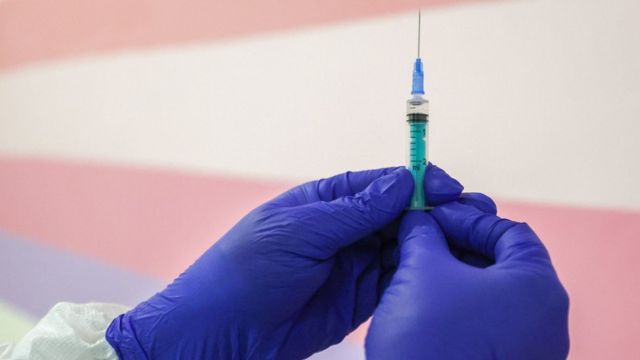
  
"В целом, если нет пиковой нагрузки, отечественного производства вакцины вполне хватает. А вот когда начинается вспышка, резко растет спрос, сразу возникают перебои, - отмечает Антонина Обласова. - Невозможно просто взять и сделать еще несколько партий вакцин, как нельзя просто взять и вырастить дополнительный урожай картошки, если весной не были произведены посадки. Ситуацию серьезно осложняют недобросовестные СМИ, которые дают слово не очень грамотным медикам, вещающим о том, что от кори нужно делать регулярную ревакцинацию. Это чистой воды отсебятина. 
От кори нужно делать две прививки за всю жизнь".

Опасаясь дефицита, медики в некоторых регионах ограничивают иммунизацию теми, кто - при отсутствии прививки от кори - находится в очагах заболевания. Так, о том, что вакцинация здоровых непривитых временно поставлена на паузу в Екатеринбурге недавно сообщало издание Е1.ru.

"Пока в городе [вакцину] придерживают для экстренного реагирования при выявленных случаях кори. В той ситуации, что сложилась, нужно иметь запас, который позволит спокойно провести массовую вакцинацию, если это понадобится", - сообщили изданию в областном Центре общественного здоровья и медицинской профилактики.

Чтобы продолжать получать новости Би-би-си, подпишитесь на наши каналы:
Подпишитесь на нашу рассылку "Контекст" : она поможет вам разобраться в событиях.

Wednesday, December 15, 2021

U.S. Hits 800,000 Covid Deaths 22 Months After the First

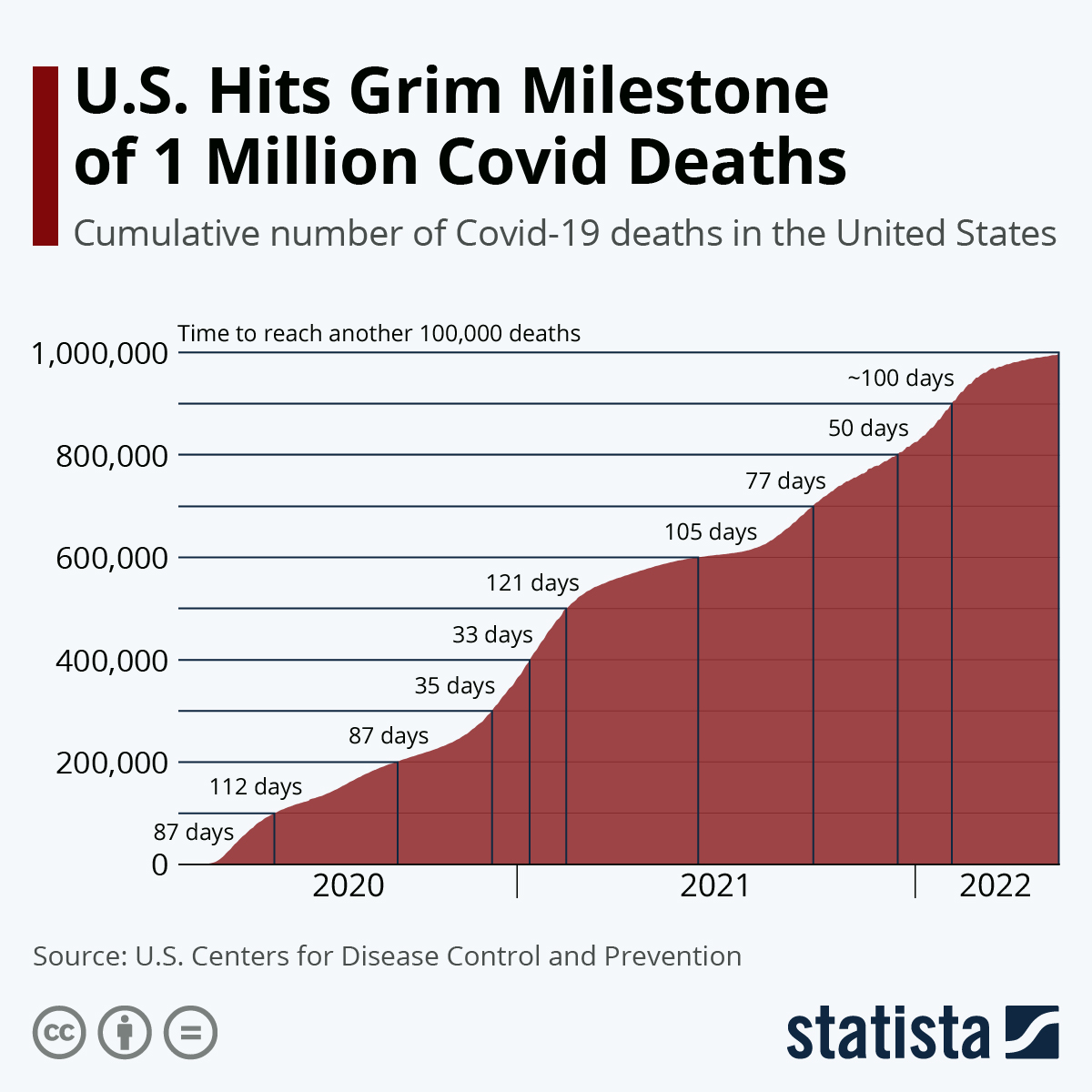
As the world is still trying to fully understand the threat posed by the new Omicron variant of SARS-CoV-2, the United States is about to hit another grim milestone in the pandemic. Less than 22 months after the CDC recorded the first official Covid-19 death in the U.S. on February 27, 2020, the country is on the cusp of surpassing 800,000 deaths, making it the worst affected country in terms of Covid-19 fatalities.

After a brief respite in the spring/summer of this year, when vaccinations and warmer weather combined to slow down the spread of the virus and consequently the number of deaths, the Delta wave that hit in late summer/early fall made things worse again. As the following chart shows, it is going to take less than 80 days for the U.S. to report another 100,000 deaths since hitting 700,000 in late September. It previously took 121 days to go from 500,000 to 600,000 and 105 days to go from 600,000 to 700,000, indicating that the pandemic is still far from over.

If the Omicron variant turns out to be as transmissible as early data from South Africa, Denmark and the UK suggests, a steep winter wave looks almost inevitable, especially considering the research showing that the current vaccines are less effective in neutralizing the new variant without a booster dose. In Denmark and the UK, Omicron cases currently seem to double every 1.6 and 1.8 days, respectively, which would result in very high case numbers in a short amount of time if sustained.Infographic: U.S. Hits 800,000 Covid Deaths 22 Months After the First | Statista
с днями разобраться не могу :(
по ссылке совсем другая картинка 

Monday, May 3, 2021

Burned Out People Will Keep Burning Up the Planet

Arianna Huffington

Founder and CEO at Thrive Global

In the last few years, two major issues have moved to the center of our collective conversation. One is climate change, and the other is well-being and mental resilience. It’s time we connect the dots and bring the two conversations together. They’re not just both existential threats, they’re also deeply connected: simply put, burned out people are going to continue burning up the planet. It’s clear that the way we live and work is not only burning us out, but causing us to make decisions that are destroying our own health and the health of our planet.

The scale of this crisis is staggering. First, the health of the planet:
  • The last seven years have been the hottest seven years on record.
  • Levels of carbon dioxide in the atmosphere are higher than they’ve been for the last 800,000 years.
  • Coming into 2020, the biggest story in the world were the wildfires in Australia, which killed 34 people, burned over 44 million acres of land and killed or displaced an estimated 3 billion animals.
  • In 2020, the planet lost 100,000 square miles of tree cover — about the size of Colorado, and nearly 7% more than were lost in 2019.
  • 2020 saw the most named storms in the Atlantic ever, and was the worst California wildfire season ever, as was each of the previous 10 years before that.
And then there’s the destruction that’s been wrought on our individual and collective health — including our mental health, which was already in crisis by the time the pandemic arrived and intensified it:
  • According to the C.D.C., an estimated 90% of our healthcare spending goes toward treating mental health conditions or stress-related chronic conditions that can be managed or prevented, like heart disease and diabetes, which by the year 2035 will afflict nearly 600 million people.
  • Worldwide, over 264 million people are struggling with depression.
  • In May of 2019, the World Health Organization officially recognized burnout as a workplace crisis.
  • According to a study by Asana of 13,000 knowledge workers across eight countries, an astounding 71% had experienced burnout in the past year.
The connection between what we’re doing to ourselves and what we’re doing to our planet isn’t metaphorical. We know the science on climate change. The consequences of what will happen if we don’t change how we live are dire. So if we know the science, why aren’t we acting? Because it’s hard to break out of habit and embrace any new ideas and ways of living when we’re burned out.

We need to acknowledge both the science of how the planet works and the science of how humans work, because we’re not just ignoring the science of climate change, we’re ignoring the science of how we make decisions when we’re burned out. When we’re burned out, exhausted and depleted, we operate on short-termism and day-to-day survival, just trying to get through the day, or even just the next hour. We’re not just less able to create new and more sustainable habits, we’re also unable to think about the future, make the wisest decisions for the long term and come up with creative and innovative solutions to complex challenges — like climate change. We’re much less likely to spot the iceberg before it hits the Titanic. Or to stop living in a way that melts the glacier the iceberg is attached to. In our always-on and screen-saturated world, we have a hard time looking up, looking out, looking forward and being part of the solution. So the best intentions and climate targets remain just that: intentions and targets.

Dealing with the realities of climate change is going to require a culture shift, but not one based only on how we burn fossil fuels. It’s also going to require a shift in how we burn energy as individuals. The solution is renewable energy at every level. That’s why achieving a sustainable planet must go hand in hand with living sustainable lives.

It’s all the more amazing that so much of our culture is still based on burnout denialism, given that the truth about how to live our best lives and perform at our best can be found in ancient wisdom going back centuries. And the latest science has validated that wisdom by uncovering how we think and make decisions under stress.

The prefrontal cortex is the region of the brain that governs higher-order cognition and decision-making. It’s what allows us to plan and organize for the future, regulate our emotions, be flexible in response to change and make long-term decisions. But as Yale neuroscientist Amy Arnsten, who studies how the brain responds to stress, explains, the prefrontal cortex is taken “offline” during stressful events, and our brain’s more primitive and reactive regions come to the forefront. This can be helpful if we find ourselves suddenly being chased by a lion, but not in a situation “which requires thoughtful evaluation and planning for survival.” Even worse, under chronic stress, neural connections to the prefrontal cortex can be weakened, and connections to those primitive regions can grow. “Thus, we can be more reactive than reflective at a time when we need thoughtful responses to survive,” she says. Like, for instance, when we’re facing an existential threat like burning up the planet.

Then there’s sleep, which our culture has held in contempt since the Industrial Revolution and Thomas Edison, who declared that “nothing in this world is more dangerous to the efficiency of humanity than too much sleep.” In fact, there are few things more dangerous to both humanity’s efficiency and humanity’s future than sleep deprivation and burnout. The growing science of sleep has now proven sleep to be foundational for our physical health, our mental health and our cognitive abilities. Studies have shown that sleep deprivation impairs attention, long-term memory and vigilance. And the list of sleep deprivation’s side effects, compiled by the Walter Reed Army Institute of Research, includes reduced empathy, reduced impulse control and a greater reliance on magical thinking. Not exactly a recipe for the kind of clear-headed, long-term decision-making required to deal with climate change.

A study by researchers from the University of Surrey found that being burned out makes us less likely to engage in rational decision-making and more likely to hew to “avoidant decision-making.” It’s hard to come up with a more concise description of our approach to climate change in recent years. Or in recent months. In the Texas blackout in February, officials said the state’s power grid was “seconds and minutes” away from an even more catastrophic shutdown that would have left large parts of Texas without power for months. At the same time, it was also revealed that experts had been warning Texas leaders about the vulnerability of the state’s power system for a decade. And yet, year after year, those same leaders chose short-term gain over the long-term health of their state and their people.

Our health is also directly affected by our stewardship of the planet. And we can see this in the pandemic itself. For years, Dennis Carroll, one of the foremost experts on pandemics and zoonotic diseases, has been warning that continued human incursion into wildlife habitats is going to lead to more “spillover events,” like the coronavirus. “It was predictable” he says, noting that just knowing the science isn’t enough if we don’t translate it into action: “Your thoughts can be absolutely right on, but your practices can be completely divergent.” As Fareed Zakaria, put it: “There’s no question that the way we live now is, in a sense, a kind of invitation to various reactions that nature is going to have. We live at a pace and a scale that is really unprecedented in human history — because we are just one species among many.”

Another example of this two-way relationship: plastics. Right now, we produce an estimated 350 million tons of plastic each year. And yet in the U.S., less than 9% is recycled. A report by the Ellen MacArthur Foundation estimates that by the year 2050 our oceans could contain more plastic than fish. And that’s not just bad for the fish. In the ocean — and on land — plastics get broken down into microplastics, which end up in our drinking water, our food supply and our bodies — we ingest a credit card’s worth of plastic each week. John Oliver recently did an entire segment on how little plastic actually gets recycled despite all our good intentions, and how impossible it has been to bring the industry in line with the science we’ve known for decades now. “We have to make them change,” Oliver concludes. “And if not for our sake, or the sake of future generations, let’s at least do it for all the fish who are about to be outnumbered by plastic in the ocean.”

So why have so many of our leaders — political leaders, business leaders, media leaders — been making such terrible decisions when it comes to our planet? Why are we addicted to short-termism and magical thinking, even as we know what that will mean for the planet and for us? It’s not a lack of I.Q. And it’s not a lack of money. As John Kerry, President Biden’s special envoy for climate, said in January, our short-term thinking means we’re spending huge sums of money on the downstream consequences of climate change, like hurricanes and other natural disasters that are on the rise: “We’re spending more money, folks. We’re just not doing it smart. We’re not doing it in a way that would actually sustain us for the long term.”

And it’s not a lack of data. The problem is that we’re drowning in data but starved for wisdom. To stop simply dealing with the increasingly costly, deadly and catastrophic downstream consequences of climate change, we need to go upstream, where we can tackle the causes of burnout. When we begin leading sustainable lives, we’ll have the foundation from which to build a sustainable planet. As Archimedes put it, “Give me a place to stand, and I will move the world.” Burnout and exhaustion make it impossible to find that centered place of strength and wisdom on which to stand.

Fortunately there are more and more leaders in business who get this. The pandemic accelerated the realization that the long-term health of every company’s bottom line is increasingly connected to the long-term health of their employees. And that we can’t separate our health from the health of the planet. As Lisette de Jonge, Global Health and WellBeing Leader for IKEA, put it, “One of my main goals is to ensure that we operate in an environmentally sound manner while protecting and supporting the health and wellbeing of our co-workers.” On my podcast “What I’ve Learned,” Salesforce CEO Marc Benioff spoke about how meditating informs his decisions as a leader, including his work on climate change. He recounted a lunch he’d had with Jane Goodall at an environmental conference. He was talking about his projects for clean oceans, and she asked what he was doing for forests. He didn’t have an answer, but that conversation led to his project 1 Trillion Trees, using trees to trap carbon. “That was a meditative moment,” he told me, a reminder that “I need to listen more deeply.”

And even if we don’t run companies, we can take action in our own individual lives — both for our own well-being and for the planet’s. As Laurie David and Heather Reisman argue in their new book, Imagine It!: A Handbook for a Happier Planet, that’s how culture shifts happen. “Many people making individual changes ultimately leads to a collective will and inevitably business and government action,” they write. “Making small everyday changes helps develop our overall mindset and ultimately results in shifting our attitudes on the big issues.”

Climate change is real. Burnout is real. We can fight both crises the same way: by committing to address our own burnout, which will give us the energy and the wisdom to address the burnout of the planet. By leading sustainable lives we can create a sustainable planet.

Tuesday, December 8, 2020

Rochelle Walensky

To rebuild CDC, Biden picks Rochelle Walensky


The chief of infectious diseases at Massachusetts General Hospital will take a top role in helping the new administration curtail the coronavirus pandemic.


A sign marks the entrance to the federal Centers for Disease Control and Prevention in Atlanta

By TYLER PAGER

President-elect Joe Biden has selected Rochelle Walensky, the chief of infectious diseases at Massachusetts General Hospital, to run the Centers for Disease Control and Prevention, according to two people with knowledge of the decision.

Walensky, who is also a professor of medicine at Harvard Medical School and an expert on AIDS and HIV, will be tasked with rebuilding a critical health agency that has been sidelined by the Trump administration amid a pandemic.

Walensky will replace Robert Redfield, who assumed the role of director in March 2018, and take a top role in helping the Biden administration curtail the coronavirus pandemic.

Last semester didn’t go too well. But colleges and universities across the country are looking for a do-over in the Spring. POLITICO’s Juan Perez reports on how schools are trying to beat coronavirus next semester — and what lessons they’ve learned from the past year. Plus, the U.K. plans to start vaccinations Tuesday. And Trump says Giuliani has tested positive for Covid.

Biden is planning to announce Walensky along with a slate of top health officials this week, including Xavier Becerra as secretary of Health and Human Services, Jeff Zients as the Covid-19 coordinator and Vivek Murthy as surgeon general. Marcella Nunez-Smith, a professor at Yale who is an expert on health care inequality, will have a senior role focused on health disparities.

The Biden transition declined to comment on Sunday. Walesnky could not be reached for comment.

In the Biden administration, the CDC will take on a much larger and public role, with plans to revive regular media briefings and give a central role to career officials who have been pushed aside by President Donald Trump. Biden and his advisers have emphasized that they want to prioritize scientists over politics in responding to the pandemic.

On Friday, the CDC recommended for the first time that people wear masks at all times when they’re not home. That guidance echoes Biden’s call for a nationwide mask mandate, which numerous Republican governors have rejected.

The CDC will also play a critical role in managing the distribution of a Covid vaccine, an incredibly complex process that will be one of the largest immunization campaigns in U.S. history.

Health care leaders celebrated Walensky’s appointment after the news broke on Sunday night.

“In selecting @RWalensky, Biden has chosen one of the most respected infectious disease docs in the world,” Jen Kates, a senior vice president at the Kaiser Family Foundation, wrote on Twitter. “She has a long history working on HIV and has, in the past year, become a tour de force in addressing COVID. She’ll take the helm of CDC at perhaps its most critical moment.”

While Covid-19 will be the priority of the administration, the CDC will face a swath of public health challenges in the next year, including the opioid epidemic and HIV.

Tuesday, July 28, 2020

Forecasts of Total Deaths

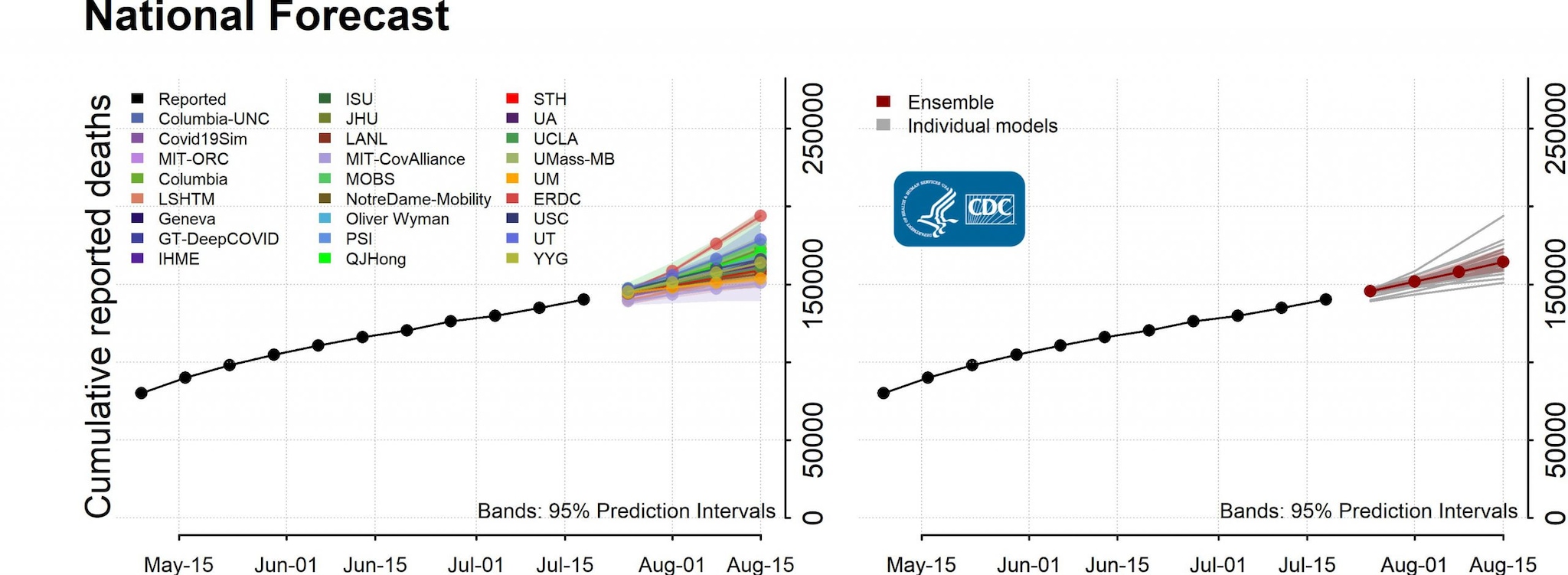
Observed and forecasted cumulative reported COVID-19 deaths as of July 20, 2020.

Interpretation of Cumulative Death Forecasts

  • This week CDC received 26 individual national forecasts.
  • This week’s national ensemble forecast predicts there will likely be between 160,000 and 175,000 total reported COVID-19 deaths by August 15th.
  • National and state-level ensemble forecasts suggest that the number of new deaths over the next 4 weeks will likely exceed the number reported over the last 4 weeks for the US overall, as well as in 25 states and 1 territory. The jurisdictions with the greatest likelihood of a larger number of deaths include Alabama, Florida, Georgia, Idaho, Nevada, Oklahoma, South Carolina, Texas, and Utah.

прогноз
  • The figure shows cumulative reported COVID-19 deaths and forecasted deaths for the next four weeks in the United States.
  • Models make various assumptions about the levels of social distancing and other interventions, which may not reflect recent changes in behavior. See model descriptions below for details.
со списком прогонозистов полезно познакомиться (линька в самом начале)

Thursday, April 9, 2020

How to use a Condom

Steps to Care

STEPS to Care is an online toolkit designed to support diverse agencies with three evidence-informed strategies to improve initial and ongoing engagement in HIV care: Patient Navigation, Care Team Coordination, and HIV Self-Management. This animated video describes how to use a male condom to reduce the risk of HIV transmission.

Sunday, September 24, 2017

Sharon Elizabeth Kirmeyer

Sharon Kirmeyer

May 22nd 1949—Sept 24th 2016
Sharon Elizabeth (Williams) Kirmeyer, PhD passed away September 24, 2016. She was an internationally known demographer and an expert in the discipline of morbidity (disease) in women and infant mortality. Dr. Kirmeyer earned her doctorate at Brown University. She was initially employed by the United Nations in New York, NY for 10 years. She then spent 10 years at the Futures Group in Raleigh NC and retired after another 10 years at the internationally recognized CDC in 2016.
Dr. Kirmeyer's reputation was such that she was asked for by name by heads of state to do studies and write software for their national interests. She was a person of integrity, strong faith and family values. She is survived by her three brothers, David, Spokane WA; Ben, Laguna Beach CA; Doug, Shoreline, WA; her cousin Lynn Brady, Tallahassee, FL, and numerous caring friends and colleges around the world.


View the online memorial for Sharon Kirmeyer


Published in San Jose Mercury News/San Mateo County Times on Oct. 23, 2016

Sunday, September 25, 2016

Leisure-Time Aerobic and Muscle-Strengthening

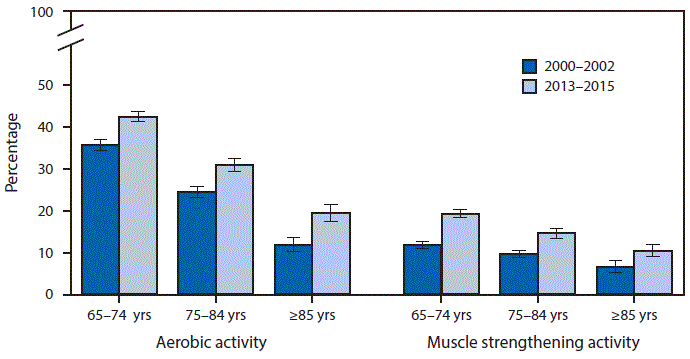
QuickStats: Percentage* of Adults† Aged ≥65 Years Meeting 2008 Federal Guidelines for Leisure-Time Aerobic§ and Muscle-Strengthening¶ Activities, by Age and Type of Activity — United States, 2000–2002 and 2013–2015 Weekly / September 23, 2016 / 65(37);1019
Percentage of Adults Aged ≥65 Years Meeting 2008 Federal Guidelines for Leisure-Time Aerobic and Muscle-Strengthening Activities, by Age and Type of Activity — United States, 2000–2002 and 2013–2015. MMWR Morb Mortal Wkly Rep 2016;65:1019. DOI: http://dx.doi.org/10.15585/mmwr.mm6537a9
* With 95% confidence intervals indicated with error bars.
† Estimates are based on household interviews of a sample of the noninstitutionalized U.S. civilian population and are derived from the National Health Interview Survey sample adult component.
§ Performing at least 150 minutes (2 hours and 30 minutes) per week of moderate-intensity, or 75 minutes (1 hour and 15 minutes) per week of vigorous-intensity aerobic physical activity, or an equivalent combination of moderate/vigorous-intensity aerobic activity.
¶ Performing moderate/high intensity muscle-strengthening activities that involve all major muscle groups on ≥2 days per week.

From 2000–2002 to 2013–2015, the percentage of older adults who met the 2008 federal guidelines for aerobic activity increased from 35.7% to 42.5% among persons aged 65–74 years, from 24.5% to 30.9% among persons aged 75–84 years, and from 11.9% to 19.4% among persons aged ≥85 years. The percentage who met the guidelines for muscle strengthening activities increased from 11.7% to 19.3% among those aged 65–74 years, from 9.6% to 14.6% among those aged 75–84 years, and from 6.5% to 10.4% among those aged ≥85 years. In both periods, within each age group participation declined with age and was lower for muscle strengthening activities compared with aerobic activities.

Source: National Health Interview Survey; http://www.cdc.gov/nchs/nhis.htm.

Reported by: Yelena Gorina, MPH, MS, ygorina@cdc.gov, 301-458-4241.

Wednesday, February 3, 2016

alcohol consumption and propensity to have sex

как Вы и предполагали: потребление алкоголя ведёт к сексу, а секс к беременности, см очередной результат CDC:

Estimated prevalence* of any alcohol consumption in the past 30 days among nonpregnant, nonsterile women aged 15–44 years, by pregnancy desire, sexual activity, and contraception use† status — National Survey of Family Growth, United States, 2011–2013
* With 95% confidence intervals indicated with error bars.
† In month before interview month.

See: Green PP, McKnight-Eily LR, Tan CH, Mejia R, Denny CH.

Vital Signs: Alcohol-Exposed Pregnancies — United States, 2011–2013. 

MMWR Morb Mortal Wkly Rep 2016;65(Early Release):1–7.
DOI: http://dx.doi.org/10.15585/mmwr.mm6504a6er

unfortunately they forgot gambling

Saturday, December 12, 2015

CDC reports The School Health Profiles

When it comes to sexual education, American schools are failing.
The School Health Profiles (Profiles) is a system of surveys assessing school health policies and practices in states, large urban school districts, and territories. Profiles surveys are conducted biennially by education and health agencies among middle and high school principals and lead health education teachers. Profiles monitors the current status of
  • School health education requirements and content 
  • Physical education and physical activity 
  • Practices related to bullying and sexual harassment 
  • School health policies related to tobacco-use prevention and nutrition 
  • School-based health services 
  • Family engagement and community involvement 
  • School health coordination

Fewer than one-fifth of middle schools — and half of high schools — are teaching all of the sex education topics recommended by the Centers for Disease Control and Prevention, a new study reveals.
The CDC report found that, for every age group, the least likely topics to be taught were how to get and use condoms.
resume: too little, too late

Sunday, August 16, 2015

Bicyclist Deaths and Motor Vehicle Traffic

Cyclist annual mortality rates relative to the Healthy People 2020 target, by age group — United States, 1975–2012

cyclist annual mortality rates
the Healthy People 2020 target —— с этого места хотелось бы попо дробнее
The figure above is a line chart showing cyclist annual mortality rates relative to the Healthy People 2020 target, by age group, in the United States during 1975-2012.

Friday, August 7, 2015

Alcohol-Impaired Driving Among Adults — United States, 2012

см: полный текст CDC про алкоголь за рулём

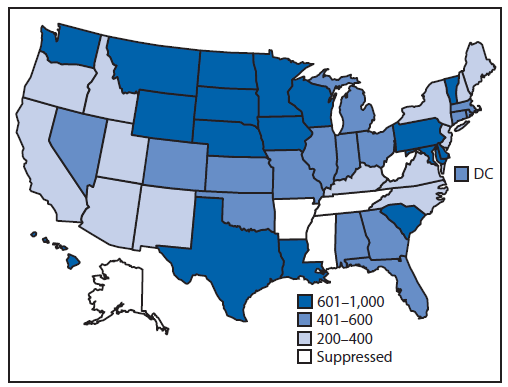
на кортинко:

Annual rate* of self-reported alcohol-impaired driving episodes per 1,000 population, among adults — Behavioral Risk Factor Surveillance System, United States, 2012


Abbreviation: DC = District of Columbia.

* Rates were suppressed if sample size was <50 or relative standard error was >30%.
[белые штаты штоль мало населены, про Аляску-то верно, или там норот не склонен распинацо??? тёмно-синие —— танцют фсе :)]


Thursday, June 25, 2015

National HIV Testing Day

What is already known on this topic?

Among the estimated 1.2 million persons living with human immunodeficiency virus (HIV) infection in the United States in 2011, 14% were living with undiagnosed infection. The majority of persons who received a diagnosis of HIV infection in 2011 were men who have sex with men (62%).

What is added by this report?

In 42 jurisdictions with numerically stable estimates, HIV prevalence in 2012 ranged from 110 per 100,000 persons (Iowa) to 3,936 per 100,000 (District of Columbia). The percentage of HIV-infected persons with diagnosed HIV ranged from 77% in Louisiana to ≥90% in Colorado, Connecticut, Delaware, Hawaii, and New York. Among men who have sex with men, the percentage of HIV cases that were diagnosed ranged from 75% in Louisiana to ≥90% in Hawaii and New York in 39 jurisdictions with numerically stable estimates.

What are the implications for public health practice?

To achieve the National HIV/AIDS Strategy's objective to increase the percentage of persons living with HIV who know their serostatus to ≥90%, sustained efforts are needed to fully implement routine HIV testing. The percentage of persons with undiagnosed HIV varies by geographic area, and efforts tailored to each area's unique needs and situations might be needed to increase the percentage of persons aware of their infection.

Estimated* number of persons aged ≥13 years with HIV infection (diagnosed and undiagnosed), and percentage of those with diagnosed HIV infection, by jurisdiction† — United States, 2012
Jurisdiction
Persons living with diagnosed or undiagnosed HIV infection
Persons living with undiagnosed HIV infection
Persons living with diagnosed HIV infection
No.
(95% CI)
Rate§
(95% CI)
No.
(95% CI)
%
(95% CI)
Alabama
14,400
(13,600–15,300)
358
(338–381)
2,300
(1,500–3,200)
84.0
(78.6–89.2)
Alaska
790
(710–900)
133
(120–152)
70
(0–190)
91.1
(78.0–99.9)
Arizona
16,200
(15,700–16,700)
301
(292–310)
1,900
(1,400–2,500)
88.3
(85.0–91.4)
Arkansas
5,800
(5,500–6,200)
238
(226–254)
1,000
(620–1,400)
82.8
(77.2–89.3)
California
183,300
(180,100–186,900)
583
(573–595)
20,700
(17,100–24,300)
88.7
(86.7–90.3)
Colorado
12,600
(12,100–13,100)
294
(282–305)
1,300
(740–1,800)
89.7
(86.1–93.3)
Connecticut
13,500
(12,900–14,100)
444
(424–464)
1,300
(850–1,800)
90.4
(86.8–93.9)
Delaware
4,300
(4,000–4,500)
559
(520–585)
430
(120–720)
90.0
(83.5–96.9)
District of Columbia
21,700
(20,900–22,400)
3,936
(3,791–4,063)
2,300
(1,400–3,100)
89.4
(86.2–93.2)
Florida
127,900
(125,400–130,000)
777
(761–789)
15,900
(13,500–17,900)
87.6
(86.1–89.3)
Georgia
57,300
(55,700–58,700)
706
(686–723)
10,700
(9,000–12,300)
81.3
(79.1–83.8)
Hawaii
3,500
(3,300–3,700)
300
(283–318)
250
(0–500)
92.9
(86.3–100.0)
Idaho
1,100
(1,000–1,200)
86
(78–93)
100
(0–220)
90.9
(81.5–100.0)
Illinois
45,700
(44,100–47,000)
427
(413–440)
7,500
(5,800–8,700)
83.6
(81.3–86.9)
Indiana
11,400
(10,700–11,900)
211
(198–220)
1,700
(970–2,200)
85.1
(80.7–90.0)
Iowa
2,800
(2,600–3,000)
110
(102–117)
520
(280–750)
81.4
(74.8–89.2)
Kansas
3,700
(3,400–3,900)
157
(144–165)
560
(310–780)
84.9
(78.8–91.0)
Kentucky
8,300
(7,900–8,700)
228
(217–239)
1,200
(780–1,700)
85.5
(80.7–90.6)
Louisiana
22,600
(21,700–23,500)
596
(572–619)
5,100
(4,200–6,000)
77.4
(74.3–80.5)
Maine
1,800
(1,600–1,900)
157
(140–166)
90
(0–230)
95.0
(86.8–100.0)
Maryland
43,300
(41,500–45,000)
880
(843–914)
8,100
(6,200–9,900)
81.3
(77.8–85.0)
Massachusetts
27,000
(26,200–27,900)
477
(463–493)
4,100
(3,300–5,000)
84.8
(81.6–87.5)
Michigan
17,500
(16,800–18,200)
211
(203–219)
2,700
(1,900–3,500)
84.6
(80.5–88.1)
Minnesota
8,400
(8,000–8,800)
188
(180–197)
1,200
(760–1,600)
85.7
(81.2–90.0)
Mississippi
10,300
(9,600–10,900)
420
(392–445)
1,700
(1,100–2,200)
83.5
(79.3–88.1)
Missouri
13,200
(12,600–13,900)
263
(251–277)
1,800
(1,300–2,600)
86.4
(81.6–90.1)
Montana
650
(550–730)
77
(65–86)
30
(0–130)
95.4
(80.7–99.7)
Nebraska
2,200
(2,000–2,400)
145
(132–158)
290
(110–490)
86.8
(79.4–94.4)
Nevada
9,600
(9,100–10,100)
421
(399–443)
1,400
(740–1,900)
85.4
(81.0–91.4)
New Hampshire
1,600
(1,500–1,800)
141
(132–159)
120
(0–310)
92.5
(82.4–100.0)
New Jersey
43,100
(41,800–44,500)
580
(563–599)
6,800
(5,500–8,200)
84.2
(81.3–87.0)
New Mexico
3,600
(3,400–3,800)
210
(199–222)
400
(160–630)
88.9
(82.7–95.0)
New York
177,000
(174,800–179,600)
1,070
(1,057–1,086)
12,600
(10,000–15,400)
92.9
(91.4–94.3)
North Carolina
32,000
(31,100–32,900)
395
(384–406)
4,200
(3,100–5,200)
86.9
(84.1–89.9)
North Dakota
330
(270–390)
56
(46–67)
20
(0–100)
93.9
(73.9–100.0)
Ohio
22,900
(22,100–23,700)
237
(229–245)
4,200
(3,400–5,000)
81.7
(78.7–84.7)
Oklahoma
6,700
(6,300–7,100)
214
(201–227)
1,100
(680–1,600)
83.6
(78.4–89.5)
Oregon
8,400
(7,900–8,700)
256
(241–265)
1,100
(540–1,500)
86.9
(82.1–92.3)
Pennsylvania
40,900
(39,700–42,100)
378
(367–389)
5,700
(4,500–6,700)
86.1
(83.8–88.8)
Rhode Island
2,500
(2,300–2,700)
278
(256–300)
280
(10–490)
88.8
(81.1–98.9)
South Carolina
19,300
(18,200–20,100)
489
(461–510)
3,200
(2,000–4,000)
83.4
(79.2–88.3)
South Dakota
520
(450–590)
76
(66–86)
90
(10–180)
82.7
(68.7–98.3)
Tennessee
19,200
(18,300–19,800)
357
(340–368)
2,700
(1,700–3,400)
85.9
(82.4–89.9)
Texas
104,300
(101,800–106,200)
497
(485–506)
18,000
(15,300–19,800)
82.7
(81.2–84.7)
Utah
2,900
(2,700–3,200)
132
(123–146)
430
(160–700)
85.2
(76.6–94.1)
Vermont
810
(730–890)
150
(135–165)
0
(0–50)
100.0
(93.7–100.0)
Virginia
25,100
(24,200–25,900)
367
(354–379)
3,200
(2,300–4,100)
87.3
(83.9–90.4)
Washington
15,400
(14,700–16,200)
268
(256–282)
1,900
(1,200–2,600)
87.7
(83.7–91.5)
West Virginia
2,200
(2,000–2,400)
139
(126–152)
330
(150–520)
85.0
(76.6–92.6)
Wisconsin
6,400
(6,000–6,900)
134
(125–144)
980
(450–1,530)
84.7
(77.7–92.4)
Wyoming
320
(260–390)
67
(55–82)
40
(0–110)
87.5
(68.6–100.0)
Total**
1,218,400
(1,207,100–1,228,200)
467
(462.5–470.5)
156,300
(144,100–165,900)
87.2
(86.4–88.0)
Abbreviations: HIV = human immunodeficiency virus; CI = confidence interval.
* Estimates were derived by using back-calculation. Estimates were rounded to the nearest 100 for numbers >1,000 and to the nearest 10 for numbers <1,000 to reflect the uncertainty inherent in statistical estimates.
† Persons whose most recent known address or residence at death is in the jurisdiction by December 31, 2012.
§ Per 100,000 population.
Estimates for jurisdictions with <60 diagnoses per year (average) over the most recent 5 years (2008–2012) are considered numerically unstable.
** Because column totals were calculated independently and to correspond to methods for national estimates with 24-month reporting delay, the values in each column might not sum to the column total.

Source=CDC

Sunday, December 21, 2014

Principles of Epidemiology

мб, кому-то любопытно? онлайн курс на сайте CDC


Course Number: SS1978
Print-based self-study course covering basic epidemiology principles, concepts, and procedures generally used in the surveillance and investigation of health-related events. It includes key features and applications of descriptive and analytic epidemiology, an in depth study of public health surveillance, and a step by step description of outbreak investigations are presented in this course. The course also addresses how to calculate and interpret frequency measures (ratios, proportions and rates) and measures of central tendency, and how to use tables, graphs, and charts to organize, summarize, and display data.
TARGET AUDIENCE: Public health professionals who have, or expect to have, responsibility for disease surveillance or investigation.
MATERIALS: Download the Principles of Epidemiology, 3rd Edition (PDF version:515 pages / accessible HTML version). Or, a hard-copy of the text can be obtained from the Public Health Foundation at: http://bookstore.phf.org.
PREREQUISITES: A basic understanding of the practices of public health and biostatistics is recommended.

CE Expiration Date: 11/4/2015
What would John Snow make of epidemiology today?

Wednesday, September 24, 2014

ebola in two nations

вышел доклад CDC с оценками и прогнозами эболы для Сьерра-Леоне и Либерии, сама эпидемия этими странами не ограничивается, но ответы на вызовы всегда национальны, даже на такие
по прогнозам эпидемия выйдет за миллион с летальностью около 70%, то-есть, из трёх заразившихся двое умрут, даже немного больше
на картинке оценки задержки вмешательства в новых случаях инфекции (Либерия)

The figure above shows the estimated impact of delaying interventions on the daily number of patients with Ebola over time, with and without correction for underreporting in Liberia during 2014, according to the EbolaResponse modeling tool. Starting on September 23, 2014 (day 181 in the model), the percentage of patients hospitalized in Ebola treatment units was assumed to increase from 10% of all patients to 17%. This percentage was increased on October 23, 2014 (day 211 in the model) to 25%, on November 22, 2014 (day 241 in the model) to 40% and on December 22, 2014 (day 271 in the model) to 70%.

Friday, July 4, 2014

Drowsy Driving and Risk Behaviors

погуглите сабж -- он активно изучается
Когда впервые сел за руль и поехал самостоятельно -- так пропотел и прострессился, что не мог даже представить себе, что за рулём можно заснуть.
Потом с опытом стал себе теоретически представлять, что в принципе может быть. А месячишко назад по дороге в минский аэропорт наблюдал ситуёвину засыпания за рулём своими глазами: едущий впереди стал вилять, голову наклонил на сторону -- думал: по телефону говорит, -- а потом съехал с дороги на разделительную полосу. Тут, видимо, проснулся, вывравнял, выехал на дорогу и стал на обочине (в Белоруссии они есть:). На другой дороге -- это выезд на встречную, не обязательно под КАМаз.
Такшта: не спите за рулём, даже, если вы не спите. Не спите вдвойне.
Остановился поговорить: грит, давно едет, устал.

Вот отчёт CDC, не думаю, что есть аналогичный минздрава или гаи :(

Drowsy Driving and Risk Behaviors — 10 States and Puerto Rico, 2011–2012