Showing posts with label половое соотношение. Show all posts

Thursday, May 30, 2024

sex ratio

Соотношение мужчин и женщин в разных странах мира


В целом по миру, мужчин на нашей планете живет больше, чем женщин, но соотношение это очень зависит от страны.

В России (и в целом в пост-советских странах) женщин, напротив, гораздо больше: на 100 женщин в России приходится всего 87 мужчин, в Армении и того меньше - 82! Примерно такие же соотношения в Украина, Беларуси и странах Балтии. За пределами СНГ меньше 90 мужчин на 100 женщин приходится только в двух странах: Португалии и Зимбабве...

Самый экстремальный перекос мужчин наблюдается в нефтяных монархиях Залива: 266 мужчин на 100 женщин в Катаре, 228 - в ОАЭ. Правда, большая часть этих мужчин - мигранты, обеспечивающие прекрасную жизнь местного населения.

В странах Азии (почти всюду, включая Индию и Китай) есть небольшой, но заметный перекос в сторону мужчин, и обусловлен скорее культурными особенностями. В странах Запада и Латинской Америке женщин, напротив, обычно чуть больше, чем мужчин

Mechanisms behind the Skewed Sex Ratio at Birth in Azerbaijan

Despite the fact that the women’s human rights discourse has been repeatedly articulated by the international human rights community within the last several decades, the women remain among the most disadvantaged and vulnerable groups in many parts of our male dominated world facing series of challenges regarding protection, promotion and exercise of their civil, political, social, economic and cultural rights. 

The instances of gender-based discrimination are widespread and may take many different forms ranging from harassment at schools and workplaces to the use of physical force and even killing. However, it is especially appalling when the patriarchal notions of humanity are reinforced within the family settings with serious repercussions for those few victories that the gender equality advocates have been able to achieve to date. 

It is also with regret that nowadays gender based discrimination evolves into more complex forms that are targeting even the women that are yet to be born. The evidence based data reveals that no matter what is the socio-economic standing of the family unit, the patriarchal practices of patrilocality, patrilineality and other related patriarchal traditions force the parents to ensure the birth of a son child given the general trend of declining fertility rates and the availability of modern technologies enabling determination of the sex of a fetus. 

Sadly, this traditional practice leads to the highly skewed sex ratios at birth favoring male population of any subject country where it is taking place. The findings of the most recent research on the phenomenon reveal that the consequences could be detrimental including the devastating results for future population dynamics. The experiences of India and China where this problem has been persistent for years show that the excess male surplus is closely linked to the “marriage squeeze” and the related increased violent behavior in the countries concerned with the doubled crime rates, as well as accounts of bride abduction, trafficking, rape and prostitution. 

Given that the Republic of Azerbaijan is among the countries with the skewed SRBs in the population and taking into account that the problem of the skewed sex ratio at birth lies on the crossroads of the reproductive health and population issues as well as gender equality UNFPA Azerbaijan CO initiated the qualitative and quantitative assessment of the phenomenon. It is noteworthy, that the State Committee for Family, Women and Children’s Affairs has joined efforts with UNFPA for this important project to once again pledge its allegiance to “eliminate all forms of discrimination against the girl child and the root causes of son preference, which result in harmful and unethical practices regarding female infanticide and prenatal sex selection”, as it was first expressed while signing 1994 Programme of Action of the International Conference on Population and Development. 

We are truly confident that the findings of this crucial research will enable the policy-makers, academicians and civil society representatives to develop successful interventions for addressing the phenomenon of sex selection in Azerbaijan.

Saturday, November 18, 2023

loneliness

Порядка четверти молодых людей в мире чувствуют себя одинокими


Одиночество - настоящая эпидемия по всему мира: 27% опрошенных в возрасте от 19 до 29 лет сказали, что чувствуют себя одинокими. Среди соседних по возрасту когорт одиноких по 25%, а вот в более старших возрастных группах ситуация лучше, особенно в самой старшей: среди людей 65+ по всему миру (опрос проводился в 142 странах!) только 17% чувствуют себя одинокими

Tuesday, October 3, 2023

How migration affects sex ratios at subnational level

October 2, 2023 Michał Gulczyński

Sex-selective migration leads to imbalances in local proportions of young women and men. In almost all European and American countries, substantially more women than men migrate from rural to urban areas, while in Africa, the opposite is true. Overall, observes Michał Gulczyński, this implies that many women and men may never find a suitable partner.


Declining marriage rates, and unpartnered living more generally, have been a growing concern in recent years. Causes are varied. Education, for instance, may have played a role, because there do not seem to be enough well-educated men for the increasing number of women with college degrees (Lichter et al. 2020). However, there may be an even more basic obstacle in the search for an opposite-sex partner: young women and men live in different places.

Obviously, this does not mean that they do not cross paths, but in local areas, sex ratios (young women divided by young men, where young means between 25 and 34 years of age) are unbalanced, which implies that there are not enough potential partners around. In a recent article (Gulczyński 2023), I show that the problem is more pervasive than commonly believed: in most countries of the world, both rural and urban sex ratios are frequently skewed.

Sex-selective migration leads to skewed subnational sex ratios all over the world


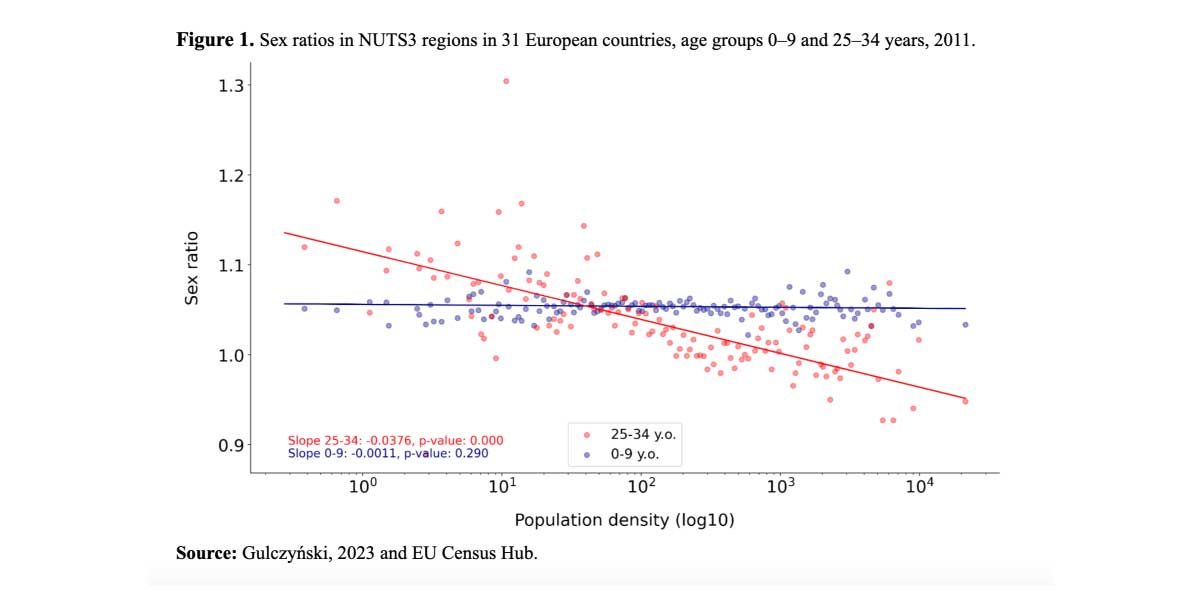
Figure 1 shows the strong correlation between (log) population density and sex ratios among young adults in subnational (NUTS 3) regions of the European Union. The higher the population density, i.e., the more urban a region, the higher the proportion of young women who live there. For instance, in the Polish capital city, Warsaw, there are around 10% more young women than men. In contrast, there are five young men for every four young women in rural Greece.
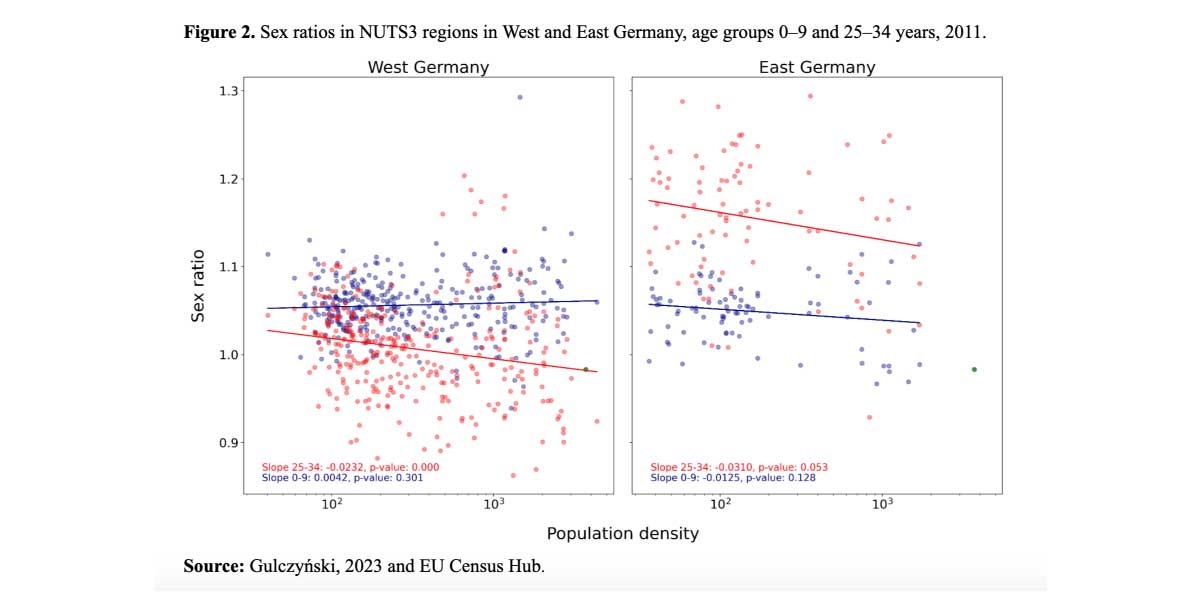
The problem also affects Germany, for instance, where, after re-unification, many women migrated from East to West, distorting the sex ratio (Figure 2): in some East German regions there are almost 13 young men per 10 young women. Some observers believe this to be one of the reasons behind the support for the right-wing party Alternative für Deutschland among the men left behind (Bennhold 2018).
So far, the phenomenon of skewed sex ratios has been observed mainly in extreme contexts, for instance, when a war eliminates a large share of young men or when many more boys than girls are born (Chao et al. 2019) due to sex-selective abortion. The most striking example of prenatal sex selection on a massive scale is China, where it developed in response to the one-child policy combined with strong son-preference and access to ultrasound scans to learn a child’s sex before birth. In normal circumstances, only up to around 5–7% more boys than girls are born.

Since both differential male and female mortality and abnormal sex ratios at birth are rather rare, the only other possible explanation of skewed sex ratios among young adults is sex-selective migration. In developed countries, women migrate to cities to study, work in services and take advantage of public services. Men are more likely to stay in rural areas. They are not necessarily farmers, but they commute more often and over longer distances. They also drop out of education earlier than women. However, there are also exceptions: in Africa, for instance, it is generally men who have a stronger tendency to migrate to urban areas.

Rural urban migration is gender selective


The phenomenon of skewed sex ratios is not new. It was noticed in the 19th century by Ernst Ravenstein (1885) who formulated one of his laws of migration as “woman is a greater migrant than man”. This was also recognized by the famous sociologist Pierre Bourdieu (1962) in his “Célibat et condition paysanne”. Already back then, both prominent scholars noticed that men were more likely to stay in rural areas.

Even if the phenomenon is not new, it may lead to more serious consequences nowadays. Political competition is shaped, among other things, by the rural-urban divide. The topic of gender and gender identities has become much more salient with the increasing representation of women in politics, expanding gender equality policies, and new social movements, such as #MeToo. Also, women’s migration to cities is now linked to the increasing gender gap (in favour of women) in education, which is still a source of prestige.

Recent migration flows may have a different gender balance than in the recent past. While migrants coming to Europe in the last decade were mostly male, most current Ukrainian refugees are women and children. And recent research shows that people react negatively to migration if their sex is over-represented, both in their home region and among migrants (Dancygier et al. 2021, Krakowski and Sambanis 2023).

It is reasonable to argue that gender equality should include living in the same places, having access to similar public services, and getting similar education. Otherwise, the gender gaps in values, lifestyles and political preferences are likely to continue, and possibly even increase, potentially posing serious policy issues in the near future.

References

Monday, February 20, 2023

should all men sit down to urinate?

The splashback scandal: should all men sit down to urinate?

Sitting down to pee allows the bladder to empty faster and more completely.

The Germans call them Sitzpinklers, and more and more men are now taking the weight off their feet in the bathroom. It could be good for their health – and help protect the family toothbrushes


In German, there’s a word for one. Of course there is. In German, there’s a word for everything. But this is an especially excellent word: Sitzpinkler. You can probably guess what it means even if you don’t speak German: a Sitzpinkler is a man who sits to pee.


We have German friends: Flora, Till, their two boys. Flora confirms that the males in the house are encouraged to sit at home, as is common throughout the country. Some German bathrooms have amusing signs reminding men to sit. There’s even a device called a WC-Geist – toilet ghost – that lives under the seat and, when the seat is lifted, orders you to sit down. You can get a WC-Geist with the voice of Angela Merkel. Germany is a brilliant country.

Wait, though. Because, Flora says, Sitzpinkler is used in a negative way to imply unmasculine behaviour. Something like “wuss” in English. In 2015, a court in Düsseldorf ruled in favour of a man’s right to urinate while standing when his landlord sought financial compensation for urine damage to the marble bathroom floor. Stand up for your rights, literally. Not all German men are happy to sit.

Not all British ones, either. There is no reliable data (come on, YouGov, get on it). A straw poll of my male friends, mostly in their 50s, reveals the majority – about 70% – to be standers. Their reasons: they’ve always stood; men stand, women sit; why would they; no, of course they don’t pee on the floor (we’ll come back to that – in short, they’re lying).
For men with lower urinary tract symptoms ‘the sitting voiding position is preferable’

I may need to change my friends. My editor Chris is half my age; this article stems from a conversation he had with his friends in the pub. Then he asked Twitter and got about 400 responses, with just over half saying they are sitters. Chris has better followers than I have friends, though he is a stander. I may need to change my editor.

There is a poll from 2020 showing that 70% of men in Japan sit. Five years previously the figure was 51%. It seems the world – Japan at least – is changing. To clarify, we are talking about inside the home. Out and about, where there are urinals and queues, it’s a whole different world and a whole different article. I should probably also say that though I’ve been talking about men, it applies to anyone with a penis.

Time to get personal: I am, I confess, a Sitzpinkler. No, not confess, I am proud to sitzpinkle. It wasn’t a sudden epiphany – a urethra moment, if you like – but things change as you age. Maybe your aim isn’t what it once was, flow rates decrease, bladders take longer to empty, you need more time, sitting is more comfortable and you can check Twitter while you’re at it (remember what happened once when you did that standing).

For some men it can also be healthier. In 2014, researchers from the department of urology at Leiden University Medical Center investigated how body position during urination affects “voiding time”, maximum flow rate and “post-void residual volume”. They concluded that sitting has a “more favourable urodynamic profile”, allowing the bladder to empty faster and more completely. For men with lower urinary tract symptoms (Luts), for example, caused by an enlarged prostate – “the sitting voiding position is preferable to the standing”.

We don’t have Luts, say my unreconstructed friends, our prostates are perfect. I think mine is OK, too. (Are we sure, though? We should get them checked.) There are other reasons to sit. Going back to that poor Düsseldorf landlord … Actually, no need, it’s hard to feel sorry for a Düsseldorf landlord with a marble floor and I can just look at my own bathroom floor. I have two sons who have been reluctant to adopt the Sitzpinkler approach. And the floor – not marble, admittedly, but fake wood laminate – is often disgusting. Awash. They piss all over it.

Boys will be boys; we’re grown men, say my friends. We may be getting on a bit but our aim is still true – we’re Robin Hood, snipers of the bathroom, the Jackal … Well, first of all, I don’t believe you. And second of all, even if you hit the bullseye every time, that’s not good enough. Once again we turn to science, this time to an American professor of mechanical engineering, Tadd Truscott. A while back, using a urination simulator and high-speed cameras, he and a colleague did an investigation into “splashback” caused by urination, which he presented at the 66th annual meeting of the American Physical Society’s Division of Fluid Dynamics in 2013.

If your toothbrush is 3 or 4 metres away you’re probably fine; if it’s just 1 or 2 metres, that’s not goodProf Tadd Truscott

Truscott now lives in Saudi Arabia and works at the King Abdullah University of Science and Technology, but I catch up with him by phone in a Japanese ski resort where – he admits – he has been investigating the fluid dynamics of a few sakes after a tough day on the slopes. Still, he manages to explain what happens when urine leaves the penile urethra. “A stream comes out but after between 3 and 6 inches it starts to break up into droplets, and that’s where most of the problem comes from. The droplets start to impinge on each other, then you get what we call satellite droplets and they splash off at very large angles and this is what causes it to splash on to your toothbrush …”

Yep, he said toothbrush, and maybe not just your toothbrush. It will depend on how big your bathroom is. “If your toothbrush is 3 or 4 metres away you’re probably fine; if it’s just 1 or 2 metres, that’s not good.”

That’s just from the falling stream. There’s also splashback from the wee hitting the surface of the water. “Water tends to have a large splash when droplets hit it from that height. That means a lot of splash can come out of the toilet. I was actually telling a friend tonight that when you pee into a toilet like that, you tend to pee on your toothbrush.”

Interesting topic for apres-ski chitchat. But this splash is ickier still, and possibly dangerous. “Pee in general is very sterile. It’s not really a big deal if it lands on your toothbrush and you brush your teeth then. But droplets are quite capable of harbouring bacteria, and in the toilet this is a problem if you’ve just used the restroom for something else. There can be faeces in there – urea is a wonderful harbinger of E coli growth – so later in the day it might not be safe to use your toothbrush.”

Stop saying toothbrush! Anyway, surely that’s enough to convert any remaining sceptics. For any splashback deniers or cavemen, I’ve got great role models too. Larry David, for starters. “It’s more comfortable when you get up in the middle of the night; you don’t have to turn the light on and wake up, and you get to read,” he says, in episode four of season four of Curb Your Enthusiasm. Lionel Messi, probably the greatest footballer of all time, admitted to sitting to pee on a Uruguayan TV show called Por La Camiseta (For the T-shirt). Messi by name, not so in the bathroom. Still not macho enough for you? Well, guess who he was talking to, also a confirmed Sitzpinkler (there is no Spanish word, we’ll have to stick to German). Only Luis Suárez – not only a brilliant football player but also a cannibal.

Speaking of cannibals and cavemen, I’m wondering what our ancestors and nearest relatives did and do. Ben Garrod, a professor of evolutionary biology at the University of East Anglia and a primate expert, tells me: “Gorillas and chimps just pee where they are. They might be walking through the forest and have a bit of a pee, they might be sitting in a tree eating figs and they’ll just pee beneath them and woe betide anyone beneath – I’ve been on the receiving end of that. We’re the only primate that is bipedal so we’re in a bit of a brave new world when it comes to peeing.”

Great apes don’t seem to mark territory. We are not olfactory-based like dogs or cats, which scent-mark. “That’s a sort of urban myth, that men pee standing up so they can pee higher and it’s all a bit of an evolutionary pissing contest,” says Garrod. “Sounds nice, sounds plausible, but there’s no evidence for it whatsoever.”

It’s thought that one of the reasons for humans becoming upright was to see further across the savannah. I wonder if standing to pee could be useful in spotting predators, and if squatting might make us more vulnerable. “I guess if I stand up while I pee I’ve got more of a chance of spotting a sabre-toothed cat running towards me, or someone from a different community who might wish me harm,” Garrod concedes. Again, sounds nice but no evidence. “It might be a nice addendum to my evolutionary journey but it hasn’t driven my evolution as a species.”

From an evolutionary point of view, then, it doesn’t really matter how we pee. Garrod has worked with many tribes and communities around the world. “And most of us … I don’t usually make a conscious effort to watch other people pee, but working in forests with other blokes you often see people having a quick wee … usually it’s standing up. As far as I know there aren’t any massive cultural differences.”

He’s talking about in the forest, away from rules and etiquette and porcelain, that’s the baseline. Of course I stand up in the forest, too. And if there’s a cliff, I’ll piss over that, while pummelling my chest. What does Prof Garrod do at home in Norwich, though? “I am a stander,” he says, almost apologetically. “Though I am also a runner. Occasionally, with very tired legs, I will indulge in a sit …” Too bad. I was going to ask him to be my friend, to replace some of the recently dumped.

Back to Tadd Truscott (no toothbrush talk, promise) – surely he sits? “I do, unless it’s a particularly gross bathroom, then I’m not going to sit on the toilet.” He has two boys and two girls: “The whole house sits down to pee.” He even has advice on how men should do it. “You can sort of aim for the side. If you don’t hear much it’s probably a stream, if it’s a little noisier it’s probably droplets and that’s when things get worse. But remember, by sitting you’re protecting the whole space with your bottom.”

Happy days, though doesn’t that mean droplets on your bum? “It’s good to bathe every day,” he adds, helpfully. Thanks, Tadd, we can be friends.

He is also currently skiing in Japan, remember. “They have these wonderful toilets with all the sprays and things for your rear end. I think men probably sit here because it’s comfortable. Right now it’s cold, you come in and the seat’s heated! OK! I’m going to sit down.”

Sounds lovely, and I’m thinking it may be the way to solve my own bathroom horror show: carrot, not stick. A lovely heated seat on a cold day – that’s got to be a better way than being shouted at by the ghost of Angela Merkel.

Sunday, January 8, 2023

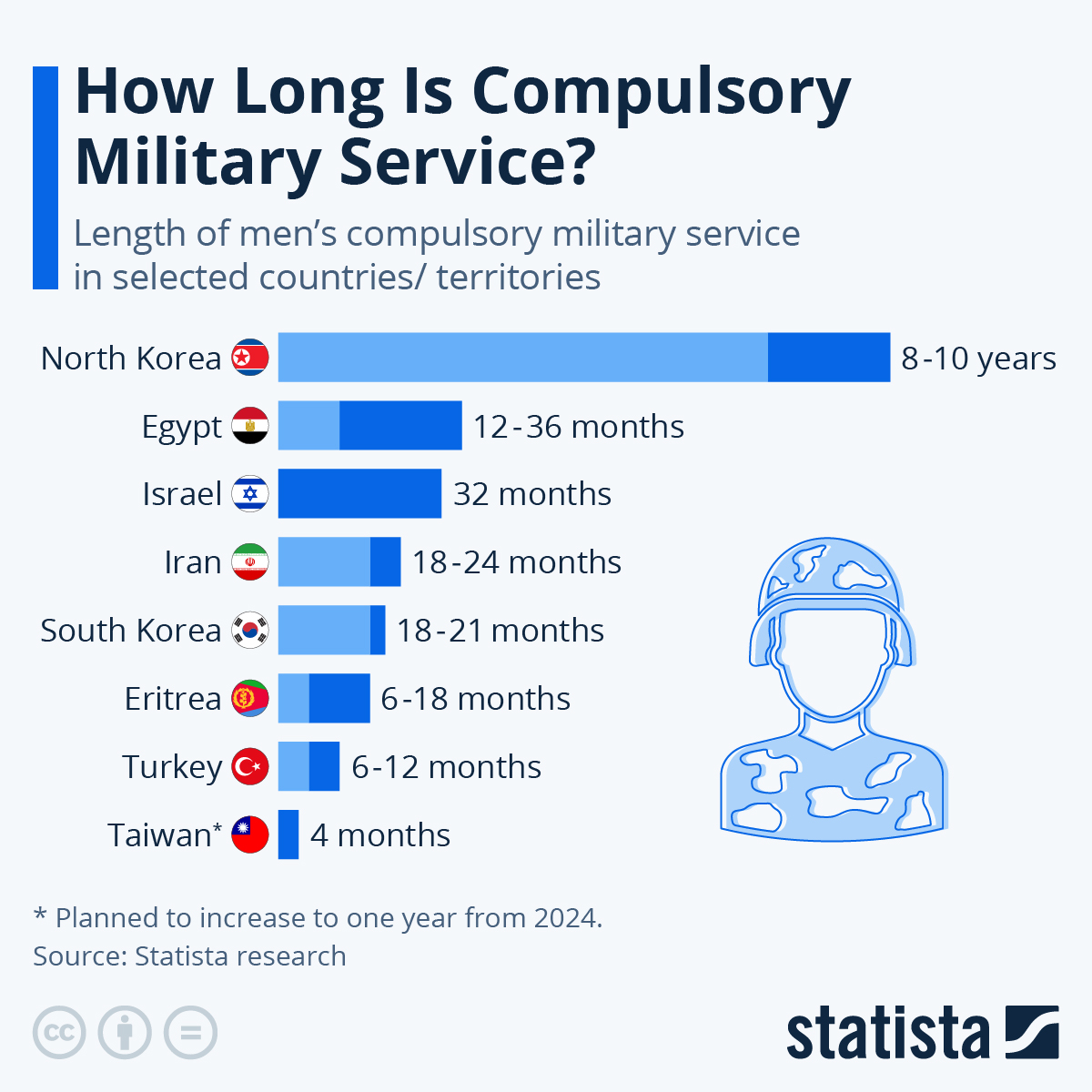
How Long Is Compulsory Military Service?

Taiwan is extending its mandatory military service in 2024 from four months to one year, as tensions continue to rise with China. Taiwanese President Tsai Ing-wen announced early last week that conscription will include more intense training so that the country is better equipped should China invade. Conscripts will also receive a higher monthly stipend, increasing from NT$6,500 (US$211) to NT$26,307 (US$856), which is roughly akin to minimum wage. In a poll conducted by the Taiwanese Public Opinion Foundation in December, 73 percent of respondents supported the move.

Fewer than 30 countries worldwide still require whole age cohorts to complete military service. But among those that do, four months is a relatively short period of time. Taiwan had originally stipulated two years of service, however this was gradually cut down to four months as of 2013, with the intention of relying more heavily on volunteer forces instead. As our chart shows, North Korea stands at the other end of the spectrum in terms of duration, although media reports vary. The Guardian reported 10 years for men and 7 for women as of 2015, while the Indian Express puts the figures closer to 8 years for men and 5 for women. According to media reports, those in the elite class are usually able to avoid conscription.

Israel too has a fairly long and rigorous conscription, albeit far shorter than North Korea. Most Israeli men over the age of 18 who are Jewish, Druze or Circassian must serve in the Israel Defense Forces for 32 months and women for 24 months, according to the IDF. Meanwhile, in Egypt, conscription is compulsory for men aged between 18 and 30 for up to 36 months. As with several countries on the chart, service can be pushed back until students finish their studies and there are a number of clauses that exempt men from joining the forces, for example, if they are the only son/sole breadwinner of the family.

South Korea, which is technically still at war with North Korea, also has mandatory conscription for all able-bodied men for a period of 18 months to 21 months, depending on the posting. Some athletes and classical artists are allowed to postpone or forgo the draft entirely. The K-Pop group BTS brought the issue to light recently, with debate over whether they could be excused from service. The decision was made that men can delay their military draft until the age of 28 and those working in the entertainment industry are now allowed to postpone their service until they turn 30. The oldest member of BTS, Jin, has now started his mandatory draft.

There’s huge variation in the rules for how long citizens must join the military in the countries that still have mandatory conscription as well as possible reasons for exemptions. For instance, in Turkey, new laws introduced in 2019 decreed that instead of the mandatory six months of military training, conscripts could do one month and buy-out the remaining five months for a fee of 31,000 Turkish Lira ($1,651), according to the Australian Government’s Department of Foreign Affairs and Trade. Conscripts' levels of higher education can also impact the type and length of their post.

Punishments for not enlisting vary too. In Eritrea, anyone evading or attempting to evade compulsory military service could face imprisonment of one to three years. According to DFAT, this could increase to 7-10 years imprisonment in a time of emergency or war.

While most countries with conscription only draft men, a handful of countries including North Korea, Israel, Norway, Sweden, Eritrea and Mozambique conscript women too.How Long Is Compulsory Military Service?
Интересно: как в КНДР половая жизнь устроена?

Tuesday, January 3, 2023

Quantifying the contribution of smoking to regional mortality disparities in Germany

a cross-sectional study


Pavel Grigoriev, Sebastian Klüsener, Alyson van Raalte
Correspondence to Dr Pavel Grigoriev; Pavel.Grigoriev@bib.bund.de

Objectives Substantial regional variation in smoking behaviour in Germany has been well documented. However, little is known about how these regional differences in smoking affect regional mortality disparities. We aim to assess the contribution of smoking to regional mortality differentials in Germany over the last four decades.

Design A cross-sectional study using official cause-specific mortality data by German Federal State aggregated into five macro-regions: East, North, South, West-I and West-II.

Participants The entire population of Germany stratified by sex, age and region during 1980–2019.

Main outcome measures Smoking-attributable fraction estimated using the Preston-Glei-Wilmoth method; life expectancy at birth before and after the elimination of smoking-attributable deaths.

Results In all macro-regions, the burden of past smoking has been declining among men but growing rapidly among women. The hypothetical removal of smoking-attributable deaths would eliminate roughly half of the contemporary advantage in life expectancy of the vanguard region South over the other macro-regions, apart from the East. In the latter, smoking only explains around a quarter (0.5 years) of the 2-year difference in male life expectancy compared with the South observed in 2019. Among women, eliminating smoking-attributable deaths would put the East in a more disadvantageous position compared with the South as well as the other macro-regions.


Conclusion While regional differences in smoking histories explain large parts of the regional disparities in male mortality, they are playing an increasingly important role for female mortality trends and differentials. Health policies aiming at reducing regional inequalities should account for regional differences in past smoking behaviour.

Data are available upon reasonable request.

This is an open access article distributed in accordance with the Creative Commons Attribution Non Commercial (CC BY-NC 4.0) license, which permits others to distribute, remix, adapt, build upon this work non-commercially, and license their derivative works on different terms, provided the original work is properly cited, appropriate credit is given, any changes made indicated, and the use is non-commercial. See: http://creativecommons.org/licenses/by-nc/4.0/.

http://dx.doi.org/10.1136/bmjopen-2022-064249 [приложение к предыдущему, вопросы остаются]

lung cancer mortality


я вижу половые различия, до своего рака ещё нужно дожить

а вы?
ап чом спич

Friday, October 28, 2022

gender aspirations of mistakes

Combotrans

У женщин и мужчин разные представления о том, к чьим ошибкам руководство относится более снисходительно


Мужчины уверены, что руководители чаще прощают ошибки женщинам. Представительницы слабого пола придерживаются противоположного мнения. В опросе сервиса по поиску высокооплачиваемой работы SuperJob приняли участие 1600 представителей экономически активного населения, работающего в смешанных коллективах, и 500 руководителей из всех округов страны.

Кому руководители чаще прощают ошибки: женщинам или мужчинам? И зависит ли это от пола самого руководителя? К счастью, и большинство сотрудников, и большинство руководителей уверяет, что отношение к недоработкам представителей обоих полов одинаково строгое. Однако все же есть те, кто подтверждает гендерную дискриминацию в отношениях начальства и подчиненных.

Так, почти каждый пятый мужчина (18%) считает, что его руководитель более снисходителен к ошибкам женщин, причем этой точки зрения чаще придерживаются как те, кто работает под начальством мужчины, так и те, кем руководят женщины.

10% женщин уверены, что их руководитель чаще прощает ошибки мужчинам, 8% — женщинам. Те сотрудницы, что работают под руководством женщин, чаще говорят о лояльности начальства к мужчинам, а среди работниц, трудящихся под руководством мужчин, примерно поровну как тех, кто говорит о большей терпимости к мужчинам, так и тех, кто видит снисхождение к женщинам.

Что касается самих руководителей смешанных коллективов, то в большей снисходительности к недоработкам женщин мужчины признаются гораздо чаще. Начальницы же чуть чаще прощают подчиненных мужчин.

Место проведения опроса: Россия, все округа
Населенных пунктов: 391
Время проведения: 21—27 октября 2022 года
Исследуемая совокупность: экономически активное население России старше 18 лет, работающее в смешанных коллективах
Размер выборки: 1600 респондентов

Подробнее


Wednesday, August 31, 2022

Sex-selective abortion in India: an ongoing problem


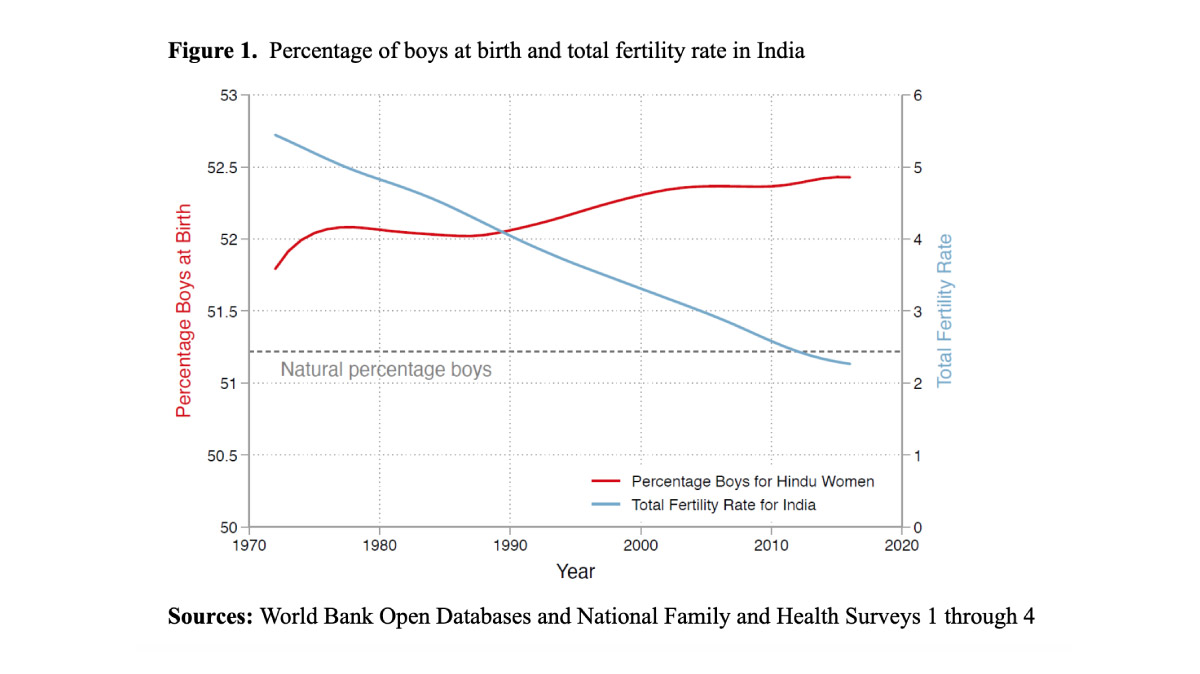
In India, the percentage of male births has increased since the mid-1980s. Claus Pörtner ties the continuously growing use of prenatal sex selection to India’s falling fertility among highly-educated women. He shows how sex selection substantially lengthens birth intervals, which, in turn, is responsible for a significant downward bias in the total fertility rate compared to predicted cohort fertility. Less-educated women still have relatively high fertility and short birth intervals when they have no sons, negatively affecting girls’ survival chances.


With the introduction of ultrasound in the mid-1980s, use of sex-selective abortion spread rapidly in India, as shown by the steadily increasing percentage of boys in Figure 1. However, access to pre-natal sex determination does not necessarily lead to sex selection. Rather, in India, the practice is driven by the combination of declining fertility (also shown in Figure 1) and the particular Hindu preference for a son. However, once that son is secured, there is no clear son preference for subsequent births (Jayachandran, 2017; Pörtner, 2015). If a family is willing to have up to six children, there is a 99% probability of achieving the goal of one son. But if the desire is for one son and a maximum of two children, about 25 percent of families must use sex selection to achieve both targets.

Three critical aspects


As striking as these overall numbers are, they obscure three critical aspects of the changes in India:
• first, the massive differences in use of sex-selective abortion across education levels that followed the availability of pre-natal sex determination;
• second, significant differences in use of sex selection by parity;
• third, the increase in birth intervals brought about by sex selection, which, in turn, has led to substantial overestimation of the rate of fertility decline in India.

In a recent paper, I use data from India from 1972 to 2016 to examine how fertility, sex ratio, and birth spacing changed by education level with the spread of sex selection (Pörtner, 2022). The data comes from the first four National Family and Health Surveys. I focus on Hindu women because Hindus constitute about 80% of India’s population and have shown stronger son preference and higher use of sex selection than Muslims.

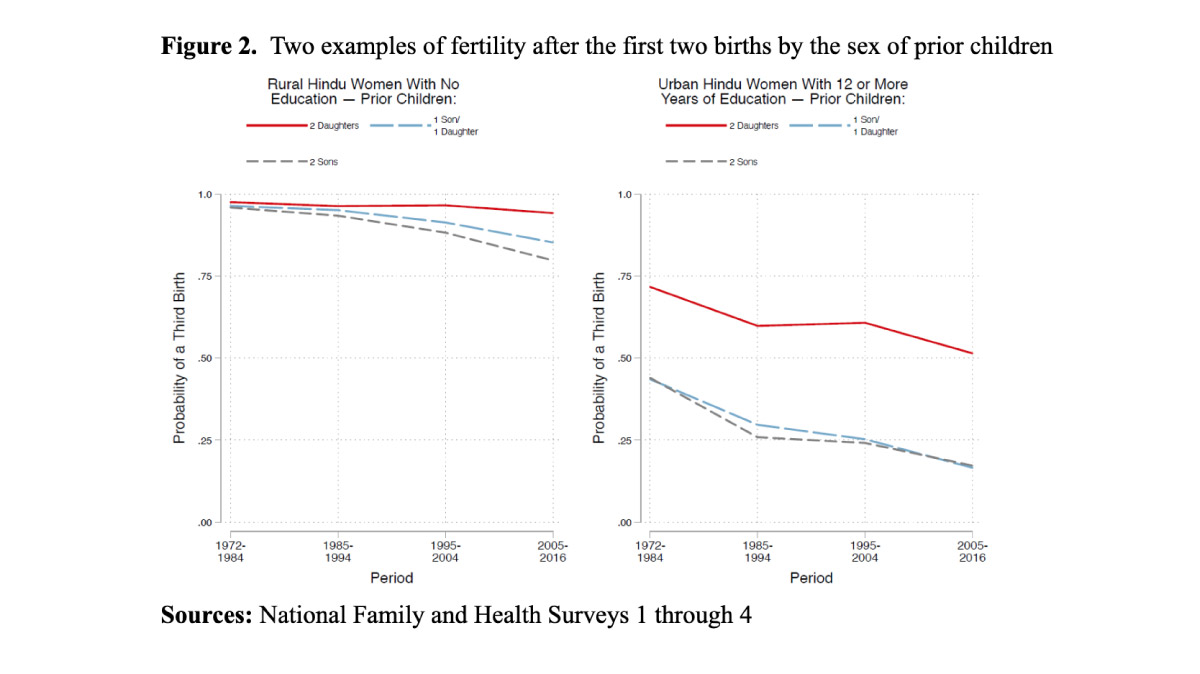
To illustrate some of the results, Figures 2 to 4 show the probability of a third birth, the percentage of boys among third births, and the 75th percentile birth intervals after the second child for rural women with no education and urban women with 12 or more years of education. These two groups represent the extremes in India and exemplify the divergent behaviors in response to son preference. Currently, the two groups constitute approximately 15% and 20% of the female Hindu population, respectively. The graphs for the other groups are available in Pörtner (2022). The analyses cover four periods: 1972–1984, 1985–1994, 1995–2004, and 2005–2016.

Fertility is falling, but son preference still affects the likelihood of a subsequent birth


First, consistent with declining overall fertility, the likelihood of a subsequent birth has decreased over time for all parities. However, the probability of having another child remained higher for women without sons than for women with one or more sons, showing that son preference remains strong in India.

Consistent with these general trends, both groups of women shown in Figure 2 are less likely to have a third child, but are more likely to do so if they already have two daughters than if they have one or two sons. However, more than 75% of rural women with no education still have a third birth whatever the sex of their prior children. This contrasts with highly educated urban women, among whom less than 20% have a third child if they already have a boy, while more than 50% have a third child if they have only daughters.

The use of sex selection is not declining


Second, despite predictions that sex selection will eventually decline in India, there is no clear evidence to support this idea. The most likely users of sex selection—more highly educated women with no sons—continue to show substantial male-biased births. More worryingly, increasingly male-biased births among less-educated mothers suggest that sex selection is spreading as the fertility of this group declines.

The highly educated urban women in Figure 3 illustrate how the percentage of boys at birth increased for mothers with no sons as access to sex selection spread. For this group, we are fast approaching a situation where 80% of third births are boys, reflecting the fact that, as desired fertility declines, more and more women use sex selection to secure a boy before they stop childbearing.
The situation is very different for rural women with no education. Their fertility is still high, and the chance of having a son without sex selection is correspondingly high. Hence, there is still no evidence of sex selection for this group, although this might change in the future as fertility declines further.

Modest increases in birth intervals, except with sex selection


Based on the percentage of boys at birth, we can split Hindu births into two broad groups. The first group, without evidence of sex selection, includes births to highly educated mothers with at least one son and all less-educated mothers whether or not they have a son. The second, with evidence of sex selection, includes births to more highly educated mothers with no sons.
For births where sex selection is not used, median birth intervals have increased relatively little—by only three to six months over the four decades—compared to around 3.5 months per decadein other countries with declining fertility (Casterline & Odden, 2016). Despite the absence of sex selection, there is still strong evidence of son preference, as illustrated by the shorter birth intervals when rural women with no education have only daughters than when they have at least one son.

What is more, a remarkably high proportion of birth intervals are still very short. Except among the most educated women, 25% or more have their second child within 24 months of their first, and a similar proportion have their third child within 24 months of their second. These intervals are substantially below the WHO recommended 24 months between pregnancies, resulting in significantly higher child mortality risk, especially for less-educated mothers (Bocquier et al., 2021; Pörtner, 2022).

The story is very different when sex selection is used. Highly educated mothers with no sons have substantial lengthening of birth intervals, further evidence of very significant use of sex-selective abortion. For example, among highly educated urban mothers with only daughters, the 75th percentile birth interval length is now nearly 70 months, a 21-month increase over four decades. Strikingly, more than 70% of this increase occurred in the first decade after the introduction of sex selection. Therefore, some mothers with no sons now have longer birth intervals than those with sons, reversing India’s traditional spacing pattern.

Spread of sex selection led to overestimation of fertility decline


One of the unappreciated effects of the rapid expansion of sex selection and the associated increases in birth intervals is that it makes the TFR a downward-biased estimate of cohort fertility (Bongaarts, 1999; Hotz et al., 1997; Nı́ Bhrolcháin, 2011). That is precisely what appears to have happened in India. The period fertility rate substantially overestimated the speed of cohort fertility decline in the 1990s and early 2000s, as spacing increased with the spread of sex selection. For example, the TFR for urban women with 12 or more years of education went from 2.1 to around 1.6 with the introduction of ultrasound sex determination, but predicted cohort fertility declined only from 2.3 to 2.1. Although the two fertility measures have recently partly converged, predicted cohort fertility is still 10-20% higher than the period fertility rate.

These results paint a less rosy picture of India’s prospects for a continued reduction in population growth than generally accepted. With predicted cohort fertility still substantially higher than the period fertility rate, India’s TFR will likely stabilize or even increase as birth intervals lengthen more slowly. Perversely, the more successful our attempts at combatting sex selection, the greater the likelihood of an increase in the TFR. This increase stems partly from the shortening of birth intervals if sex-selective abortions are unavailable and partly from families needing more births to have at least one son.

References

Saturday, August 27, 2022

A tendency towards attenuation of regional sex ratio imbalances in China

August 22, 2022 Wanru Xiong

Through a detailed analysis of the dynamics of regional sex ratios at birth and, separately, at prime marriageable ages in China, Wanru Xiong finds that regional sex ratios tend to self-correct, and to revert to their “natural” values by inducing responsive behaviours in internal migration and sex selection at birth.


Sex imbalance is a big problem in China. At birth, the “natural” sex ratio is about 103–107 males per 100 females, but it is higher in China: above 110 in the mid-1980s and up to 120 in the late 2000s (Figure 1). Consequently, in 2020 men outnumbered women by 17.5 million among people aged 20–39 (National Bureau of Statistics of China, 2021).
The imbalance results from the combination of son preference entrenched in the traditional patriarchal culture and the family planning (one-child) policy introduced in the early 1980s, which restricted the number of births per couple. This imbalance leads to intense competition among men for brides, as reflected by soaring “bride prices” (betrothal gifts, from the groom’s to the bride’s family) and, possibly, greater bargaining power of women within couples. It may also be a factor in certain social problems such as violence (Cameron, Meng, and Zhang, 2019) and high-risk sexual activities (Tucker et al. 2019). One feature of the sex ratio imbalance is the time gap of around twenty years between its causes (when the cohort is born) and its major consequences (when the cohort enters marriageable ages). It is therefore opportune to differentiate between the sex ratio at birth (SRB) and the sex ratio at prime marriageable ages (SRM). As Figure 1 shows, the national SRB and the SRM have moved in the opposite directions since 2000.

Two sex ratios


At national level, the SRB and SRM of a given cohort are similar, with slight differences due to differential mortality and net international migration. However, at the regional level, they can be significantly different because young men and women move between regions. Of course, the two sex ratios can also differ at any given time due to cohort differences.

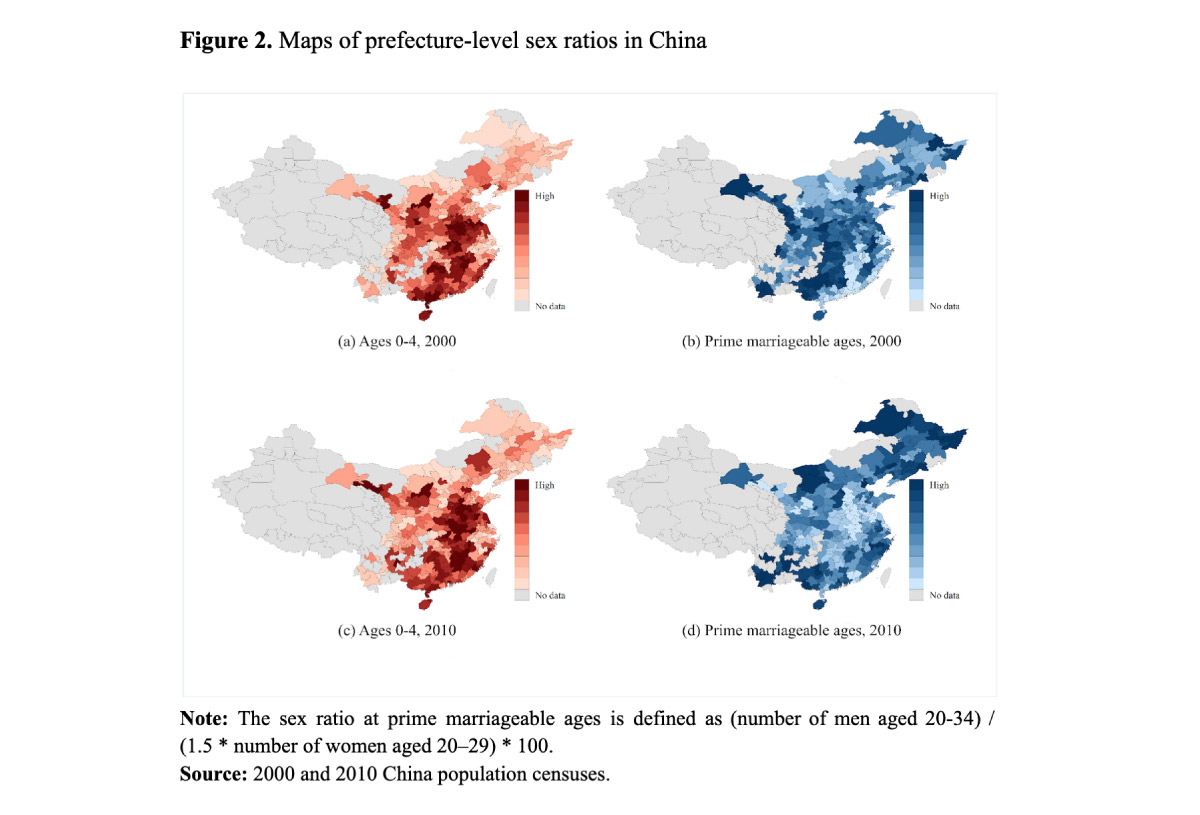
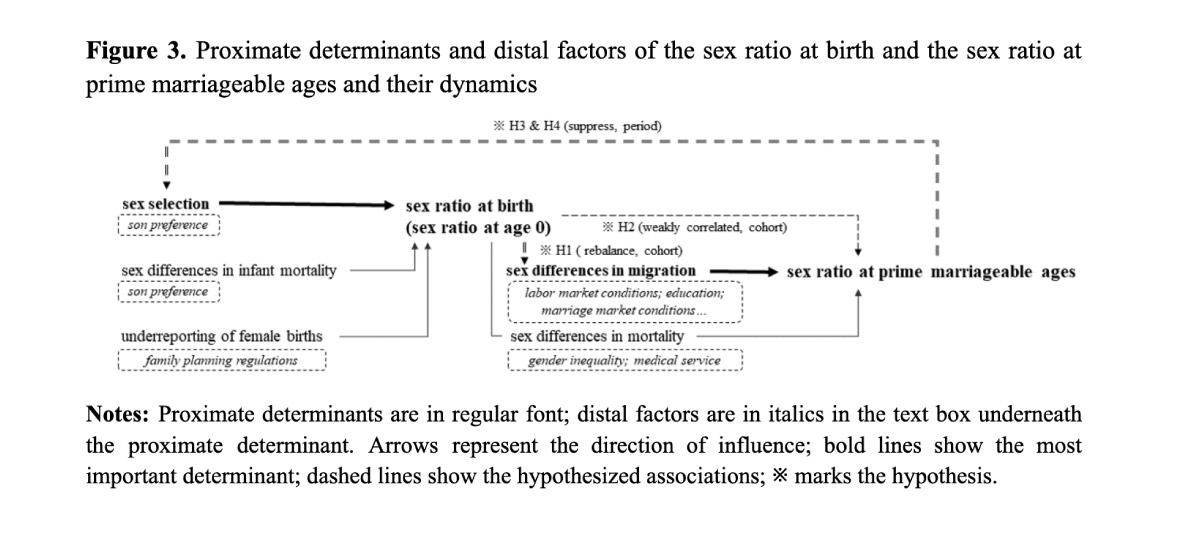
Figure 2 shows the maps of prefecture-level sex ratios at ages 0–4 (SR 0–4, a proxy for SRB) and SRMs according to the 2000 and 2010 Chinese censuses in prefectures with a majority of Han Chinese residents. Higher SRs 0–4 are consistently observed in the southern coastal areas and the inner central areas, whereas the regional distribution of SRMs is different, with higher values appearing in the southwest, northwest, northern, and part of the eastern coastal areas.Figure 3 shows the diagram of the mechanism. As the bold lines indicate, the most important direct determinant of SRB and SRM are prenatal sex selection and internal migration, respectively. The key to the mechanism is the connection between each sex ratio and the main determinant of its counterpart (dashed lines): high SRBs induce internal migration while high SRMs remove incentives for parental sex selection. The two links constitute a negative feedback loop that corrects the regional sex ratios. In other words, the consequences of one high regional sex ratio become the causes of changes in the other sex ratio.

Self-corrective mechanism


In a recent study, I proposed a self-corrective mechanism to model the dynamics between regional SRBs and SRMs in China (Xiong, 2022). The mechanism consists of two pathways:
• First, internal migration redistributes men and women across regions in a way that reduces highly skewed regional SRMs; 
• Second, a competitive marriage market for men reduces parental incentives for son-biased sex selection, thus lowering regional SRBs.  
Figure 3 shows the diagram of the mechanism. As the bold lines indicate, the most important direct determinant of SRB and SRM are prenatal sex selection and internal migration, respectively. The key to the mechanism is the connection between each sex ratio and the main determinant of its counterpart (dashed lines): high SRBs induce internal migration while high SRMs remove incentives for parental sex selection. The two links constitute a negative feedback loop that corrects the regional sex ratios. In other words, the consequences of one high regional sex ratio become the causes of changes in the other sex ratio. 

If the proposed self-corrective mechanism is working, the following consequences should be observed:
• H1. Regions with higher SRBs experience greater declines in sex ratios of residents from birth to prime marriageable ages as the cohort ages and migrates.
• H2. Regional SRMs and SRBs 20 years before are weakly correlated.
• H3. Regional SRBs are negatively correlated with contemporary regional SRMs.
• H4. Changes in regional SRBs are negatively correlated with changes in regional SRMs over the same period.

Empirical evidence


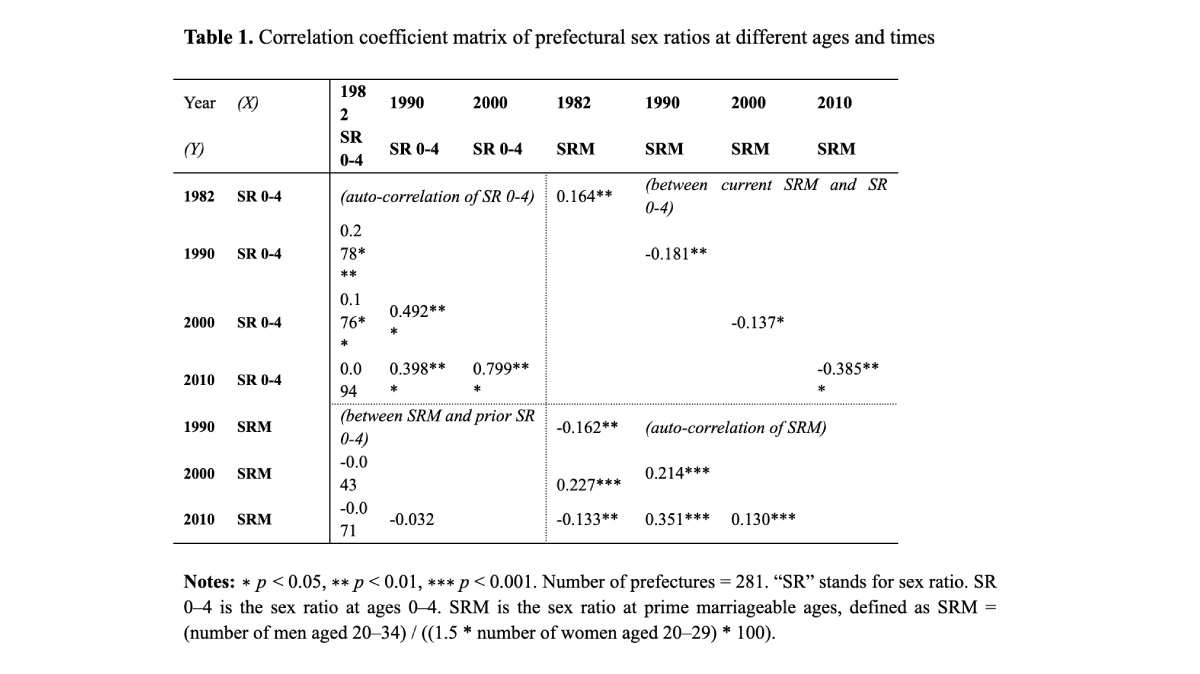
There is some evidence for the self-corrective mechanism outlined above. Table 1 shows the association coefficients between the SR 0–4 and the SRM of a cohort or in a given year. The lower left panel supports H2, in that there is no significant linear relationship between SRs 0–4 and SRMs in the same prefecture after about 20 years. The upper right panel shows a significant negative correlation between contemporary SRs 0–4 and SRMs in the same prefecture except in 1982, which supports H3.
More advanced analysis shows that prefectures with higher SRBs in 1982 and 1990 experienced a greater decline in sex ratios of residents when the birth cohort reached marriageable ages in 2000 and 2010 respectively, resulting in a weak correlation between SRBs and subsequent SRMs in the same prefecture. Prefectural SRBs in 2000 and 2010 were negatively correlated with contemporary SRMs: a one-unit higher prefectural SRM was associated with an approximately 0.3-unit lower SRB in 2000 and 0.2-unit lower SRB in 2010. Changes in prefectural SRBs between 1990 and 2010 are negatively correlated with changes in SRMs during the same period.

Conclusion


We find some evidence for the two conjectured self-corrective forces of regional sex ratios. First, internal migration from birth to marriageable ages helps to redress the prefectural sex ratios and achieve a more balanced distribution of SRMs than SRBs. Second, the shortage of women in the local marriage market removes incentives for parental son-biased sex selection and thus lowers SRBs. Prefectures with higher SRBs continue to have relatively higher SRBs than other places; this happens in part because son preference persists over time and in part because these prefectures do not necessarily experience the negative consequences of skewed SRMs. The two forces work together to generate a slow but smooth transition of SRBs toward the natural level in the total population.

The self-corrective mechanism connects the macro demographic context with the micro intentions of migration and sex selection, generating a feedback that helps to correct sex-ratio imbalances. The suggested mechanism emphasizes the presence of endogenous correcting forces within the population system which function independently of the exogenous changes in cultural and socioeconomic contexts that also influence the SRB, such as increasing educational and employment opportunities for women (Guilmoto, 2009). In other words, a population is a complex system, capable of self-regulation. Both endogenous and exogenous forces lead to the prediction that the trajectory of the SRB will continue to converge towards normal levels in China, as it has done since 2010 (Figure 1).

References

  • Cameron, Lisa, Xin Meng, and Dandan Zhang. 2019. “China’s sex ratio and crime: Behavioural change or financial necessity?.” The Economic Journal 129(618): 790-820.National Bureau of Statistics of China. 2021. “National data.” Beijing: National Bureau of Statistics of China. http://data.stats.gov.cn/index.htm.
  • Guilmoto, Christophe Z. 2009. “The sex ratio transition in Asia,” Population and Development Review 35(3): 519–549.
  • Tucker, Joseph, Dudley L. Poston Jr, Qiang Ren, Baochang Gu, Xiaoying Zheng, Stephanie Wang, and Chris Russell, eds. 2009. Gender policy and HIV in China: catalyzing policy change. Vol. 22. Springer Science & Business Media.
  • Xiong, Wanru. “Dynamics between Regional Sex Ratios at Birth and Sex Ratios at Prime Marriageable Ages in China.” Population and Development Review.

Friday, August 5, 2022

Social Exclusion/Inclusion of Elderly People in Modern Russia

sex ratio на кортинко любопытное, 9м—3-4ж
The problem of population ageing is the subject of a wide discussion. The relations between generations in Russia are sophisticated with unrealistic social expectations, state policy failure in the last 20 years [сам сборник 2014 года, статьи о странах, РФ — последняя]. The idea of “social exclusion of elderly” is new in the Russian sociology. The inner orientation for employment as an area for work satisfaction is characteristic for people with high education levels. The outer orientation related to the economical reason for employment is characteristic for less-skilled people with low education level, who more usually become a social services client. The Russian labour market offers quite a few jobs with a flexible work schedule suited to people of around 70. To be employed for elderly people means to be socially included.

Saturday, June 25, 2022

quest of Polska


прям про меня: думаю, таккую картинку нарисовать :)

Thursday, March 24, 2022

auto parts and cosmetics

Мужчины скупают автозапчасти, женщины — косметику: россияне поделились списками антикризисных закупок


В последние дни каждый четвертый россиянин, ожидая повышения цен и исчезновения из магазинов некоторых товаров, делал покупки впрок. Чаще всего запасаются бакалеей. В опросах сервиса по поиску высокооплачиваемой работы SuperJob приняли участие 3000 представителей экономически активного населения из всех округов страны.

Опасаясь роста цен и проблем с поставками в условиях санкций, закупки «на будущее» в последние дни делал каждый четвертый россиянин (25%). Напротив, 75% не покупали ничего впрок. Чаще всего респонденты объясняют это нежеланием поддаваться панике: «Еще коронавирусную гречку не доели».

Закупать товары в кризисной ситуации больше всего свойственно респондентам старше 45 лет (27%). Реже всего так поступают россияне с доходом свыше 80 тыс. руб. (21%).

Что именно чаще всего приобретали россияне в последние дни? Крупы, макароны, масло, сахар, соль, чай, кофе, муку и другую бакалею купили 44% опрошенных. Бытовой химией запаслись 16%, предметами личной гигиены — 14%, всеми привычными продуктами — 12%. Каждый десятый (10%) купил лекарства. В том, что покупали впрок все подряд, признались 8% респондентов. По 5% закупили консервы и товары для животных, 4% обновили одежду и обувь, по 3% сходили в магазин за электроникой и бытовой техникой, автозапчастями и косметикой.

Скупать в панике все подряд и заготавливать впрок все привычные семье продукты больше свойственно мужчинам: они сообщали об этом вдвое чаще женщин. Женщины чаще покупают бакалею, бытовую химию, предметы гигиены, лекарства и товары для животных. Тех, кто запасает автозапчасти и расходные материалы для авто, больше среди представителей сильного пола, а тех, кто сделал «заначку» косметики, — среди женщин.


Место проведения опроса: Россия, все округа
Населенных пунктов: 588
Время проведения: 15—22 марта 2021 года
Исследуемая совокупность: экономически активное население России старше 18 лет
Размер выборки: 3000 респондентов

Friday, February 18, 2022

it is a result

Каждая восьмая женщина хоть раз в жизни жалела, что она не мужчина


О том, что родились женщинами, приходилось жалеть 12% представительниц женского населения России. Среди мужчин число тех, кто переживал моменты разочарования в своей гендерной принадлежности, втрое меньше. В опросе сервиса по поиску высокооплачиваемой работы SuperJob приняли участие по 1600 экономически активных мужчин и женщин из всех округов страны.

Подавляющее большинство мужского населения страны (92%) никогда не жалели о том, что родились мужчинами. Лишь 4% представителей сильного пола бывали в ситуациях, когда проскакивала мысль: уж лучше было бы быть женщиной! Судя по комментариям, чаще всего таким моментом оказывалась служба в армии. Мужчины также вспоминали о том, как непросто делать первые шаги при знакомстве с девушками, и о завышенных, по их мнению, требованиях работодателей.

В моментах разочарования в своей гендерной принадлежности молодые люди до 34 лет признаются намного чаще, чем мужчины старше 45 (9% против 2%), а респонденты с доходом менее 50 тыс. руб. — чаще тех, кто зарабатывает свыше 80 тыс. руб. (6% против 1%). За 11 лет, минувших с аналогичного исследования SuperJob, число мужчин, никогда не жалевших о том, что родились мужчинами, практически не изменилось.

Среди женщин тех, кому доводилось жалеть о своей гендерной принадлежности, втрое больше, чем среди мужчин, — 12%. Контекстный анализ комментариев показал, что чаще всего подобные мысли возникают у женщин в быту (например, когда нужно сменить колесо, передвинуть холодильник, сделать ремонт), а также на работе, когда становится очевидна разница в зарплатах мужчин и женщин. Свою особую уязвимость представительницы слабого пола также чувствуют в ситуациях харрасмента. Не доводилось жалеть о своей принадлежности 78% россиянок.

Об эпизодах разочарования в своей гендерной принадлежности чаще рассказывали женщины до 34 лет (21%) и россиянки с доходом менее 50 тыс. руб. (15%). По сравнению с 2011 годом более чем в 2 раза увеличилось число представительниц прекрасного пола, которые никогда не жалели о том, что родились женщинами.


Место проведения опроса: Россия, все округа
Населенных пунктов: 385
Время проведения: 10—14 февраля 2022 года
Исследуемая совокупность: мужчины старше 18 лет
Размер выборки: 1600 респондентов

Friday, February 5, 2021

abortion news

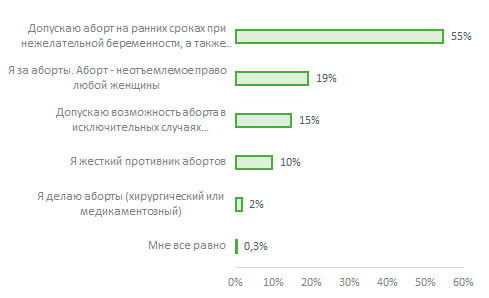
Большинство врачей (55%) высказали умеренную позицию - они допускают возможность аборта на ранних сроках при нежелательной беременности, а также на поздних сроках по медицинским показаниям. Второе место (19%) заняли защитники абортов как неотъемлемого права любой женщины. На третьем месте - 15% - врачи, допускающие возможность абортов в исключительных случаях (изнасилование, врожденные уродства плода). Жёстких противников абортов набралось лишь 10% от опрошенных врачей. Среди ответивших 2% оказались гинекологами, выполняющими медикаментозный и хирургический аборты. Равнодушно относятся к вопросу абортов всего 6 человек - это менее 1% респондентов.

Monday, January 18, 2021

demography is destiny

тогла таки хотели, кое-что поправлю, но в целом, по-моему, статейко любопытный.
Иногда общество верно понимает демографию.


Каких женщин хотят российские мужчины. Тогда и сейчас

Меняются времена – меняются и представления об идеальной женщине

Послевоенное время

- Мужчин откровенно мало, демографический перекос идет на миллионы или даже десятки миллионов человек. В областях, бывших под оккупацией, на 1000 женщин приходится только 500-600 мужчин, да и с имеющимися не все гладко. Одни из них травмированы физически и психологически, другие при этом еще и увлечены алкоголем – употребление спиртного примерно до 58 года, когда была организована масштабная антиалкогольная компания, стремительно растет. Примерно в это же время меняется и статус матери-одиночки. Теперь женщина, родившая ребенка вне брака, получает пособие от государства, но не может требовать алименты с отца ребенка. Это, с одной стороны, реверанс защитникам отечества, свободным теперь от лишних обязательств. С другой – прикрытие «грехов», случившихся в тылу. Но в любом случае у этого решения есть последствия. Подозреваю, что знаменитое «Наше дело не рожать» родилось именно тогда.На этом фоне, естественно, происходит пересмотр требований к женщинам. Появляется довольно много мезальянсов, где жена намного моложе и красивее мужа. Мужская половая неразборчивость проходит теперь не по категории «недостаток», а по категории «доблесть». А между самими женщинами вспыхивает дополнительное соперничество и ненависть. Жены против любовниц и ППЖ, тыловые против фронтовых, порядочные против гулящих.

Новые краски приобретает образ порядочной женщины. Ей предъявляется несколько важных требований. Это безоговорочная верность, способность ждать мужчину, несмотря на тяжелейшие испытания. Чистота и сексуальная неопытность, при отсутствии таких требования к мужчине, разумеется. Готовность полностью взять на себя быт и закрывать глаза на измены. Такое, конечно, происходит далеко не в каждой семье, многие мужчины не могут себе позволить негативного отношения к женщине из-за воспитания и личных качеств. Но в целом тенденция идет не очень хорошая – какой-то комплекс Мадонны и Блудницы в масштабах страны. Закладывается психология отношения к женщине как к функции: хозяйственной или сексуальной. Причем речь идет не о сексуальности раскрепощенной, зрелой. А о юной, обманутой, не расцветшей еще чувственности, сорванном и смятом цветке.

Наверное, нежный неиспорченный юный цветок, взбивающий пуховую перину и подающий наваристый суп, закрывающий глаза на что угодно – и есть женский идеал того времени.
интересно что после войны наступили 70-е, то-есть лет через 25 после окончания, потом (ближе к теперь шаг становится мельче)

70-80-е

Демографическая ситуация постепенно выравнивается, особенно в младших возрастных группах. Женщины начинают выбирать, оценивать, присматриваться. Характеристика «не ходит под себя» больше не (имхо: по смыслу так) является достаточной для того, чтобы стать королем женских сердец. Появляется несколько новых требований.Женщины начинают ценить решительность, смелость, практические навыки и готовность брать на себя лидерскую роль в семье (тот самый Гоша). Мне кажется, что популярность этих качеств напрямую связана с тем, что многим женщинам приходилось буквально «вывозить» на себе семью. И решительный «рукастый» мужчина имел хотя бы то преимущество, что выполнял бы мужские обязанности в семье, а более пассивный часто служил лишь досадным обременением. «В одной руке сетка, в другой руке Светка, впереди план, а позади - пьяный Иван» - как раз об этом.

Приобретают популярность и «новые романтики». Это уже не герои войны, увешанные наградами ветераны, рассказывающие о своих победах (хотя и они, как мне рассказывали, продолжали волновать женские сердца). А скорее барды, геологи и т.д. Образы, покрытые легким налетом творчества, и, главное, свободы.

Мужчины, соответственно, тоже корректируют немного требования к женщинам и к браку. Браки чаще всего заключаются во временном промежутке 18-25 лет, между ровесниками, в женщинах ценятся товарищеские качества, умение организовать быт и веселый нрав. Как мне кажется, это время, когда женщина (особенно молодая) рассматривается именно в качестве равного партнера. Часто браки так и складываются. Учились вместе, работали вместе на производстве, познакомились в молодежной компании. Выход из брака затруднен для обеих сторон, но в целом это не сильно смущает. Большинство людей живут примерно одинаково, везде стоит одинаковый хрусталь и одинаковые стенки, и одинаковые жены в одинаковых типовых халатах моют висюльки от люстры «Каскад». Но еще чуть-чуть, и ситуация резко изменится.

90-е

С точки зрения межполовых отношений в это время начинается самая настоящая революция. С одной стороны, уставшие от ханжества граждане позволяют себе все, чего были лишены при советах. С другой, появляется простор для экономической деятельности, хоть и не всегда законной. Это приводит к тому, что меняется романтический идеал женщины. Мужчины мечтают о веселых, красивых, но при этом безбашенных и раскрепощенных девицах. В моду входят модели и всяческие «Мисс». Я тут прошу понять меня правильно, миллионы женщин по-прежнему пытаются выжить, вытащить на себе семьи и поднять детей. Но мы же про некий образ-картинку, идеальную женщину, правда? На эту роль как раз больше всего подходят модели.

Мужчины начинают с досадой поглядывать на полные ноги и округлые бока обычных земных женщин, домашний халат попадает в опалу, бигуди на голове и кружки огурца на лице высмеиваются, как и советские панталоны. В мечтах появляется спрос на менее порядочных и практичных, но более раскрепощенных и изящных женщин, желательно с налетом заграничного шика. А в реале складывается так, как складывается.

2000-е

В основном, смена формации уже произошла, бандиты перестреляли друг друга, а выжившие «последние герои» расползлись метастазами по жизненно важным органам страны. Появилось классовое расслоение, и если раньше оно не так бросалось в глаза, то сейчас выкристаллизовалось, обрело формы. Чтобы отмежеваться от «быдла» новые буржуа выстроили красивые замки с огромными заборами, отдали детей в элитные школы, оделись в бренды. Ну а в качестве подруг стали выбирать воздушных «гламурных» девиц – райских птичек городских джунглей. Девицы поражали взгляд обывателя невероятной яркостью оперения, умопомрачительной длиной волос и ногтей. Обычные мужчины втайне желали этих дорогих кошечек, и ненавидели их за недоступность.

Отдельные смельчаки пытались «хакнуть» реальность, и записывались на различные курсы, которые обещали вереницы таких красоток в постели среднего васи с акне. Но чуда не произошло.

2020-е

опять 25?
После череды довольно ощутимых кризисов мужчины потеряны, дезориентированы. Настоящее пугает, будущее туманно, чувства в смятении. Чего-то хочется, а чего – не понятно. Развлекательных мероприятий стало меньше, сидения дома – больше. Жизнь стала труднее и как-то грустнее. Денег почти нет. На этом фоне очень агрессивным становится тренд на беспроблемность женщины. Отсутствие детей, долгов, кредитов, ипотеки, болезней, и так далее.

- С женщиной мне должно быть хорошо, а плохо жить я и сам умею! – говорит мужчина словами Мерлин Монро. В принципе, вот он – идеал нового времени.

Замечали, как меняется образ идеальной женщины с течением времени?
ну, этого никто не знает — поэтому что угодно писать можно

Friday, June 12, 2020

a remedy for one-child policy

слава послушным
Couples at a mass wedding ceremony in Sanya, on China’s southern Hainan Island, on June 6.
The one-child policy has left China with a severe gender imbalance. (AFP/Getty Images)
By Anna Fifield June 10, 2020 at 1:21 p.m. GMT+3

Chinese authorities have been trying for three years to reverse the devastating imbalances of their one-child policy and coax couples to have more children.

They’ve told couples that it’s their patriotic duty to have two babies. They’ve dangled tax breaks and housing subsidies. They’ve offered to make education cheaper and parental leave longer. They’ve tried to make it more difficult to get an abortion or a divorce.

None of this has worked. China’s birthrate remains stubbornly low and men greatly outnumber women, creating a demographic crisis that could hinder economic growth for decades to come.

But now, an economics professor at Fudan University in Shanghai has come up with another — and, unsurprisingly, controversial — solution: Allow women to have multiple husbands, and they will have multiple babies.

“I wouldn’t suggest polyandry if the gender ratio was not so severely imbalanced,” Yew-Kwang Ng, who is Malaysian, wrote in his regular column on a Chinese business website this month. The headline asked: “Is polyandry really a ridiculous idea?”

“I’m not advocating for polyandry, I’m just suggesting that we should consider the option in the face of an imbalanced gender ratio,” he continued.

For 36 years, China’s ruling Communist Party stipulated that couples could have only one child except in special circumstances, such as if they lived in a rural area and their first child was a girl or a boy with disabilities. It was part of a strategy to boost China’s growth rate and its living standards at the same time.

The policy worked too well. In China today, home to 1.4 billion people, there are 100 million people under the age of 40 who are an only child. But the traditional preference for sons — and the associated practice of aborting daughters — means that there are about 34 million more men than women.

That in itself is a big problem. But add into the mix a tendency among millennial women to delay marriage and having even one baby — or none at all — and it’s a demographic time bomb.

China’s population is forecast to peak at 1.45 billion as soon as 2027, then start a long decline. About one-third of the population will be over the age of 65 by 2050.

In 2015, the Communist Party started unwinding the one-child policy, but it has had almost no impact. Women increasingly want careers of their own, and many would rather channel their energy into giving one child a good start in life than split their resources between two.

Shaofeng’s problem — one faced by millions of his countrymen — is a product of cultural preferences, government decree and modern medical technology. (Lu Liu/for The Washington Post)

His suggestion to solve the oversupply of men is to allow involuntary bachelors — known as “bare branches” in Chinese because they cannot bear fruit for their family tree — to share the relatively scarce supply of women.

“If two men are willing to marry the same wife and the woman is willing, too, what reason does society have to stop them sharing a wife?” Ng asked, citing polygamy as a common custom in ancient times and a continuing practice in some strains of Islam.

“I’m not denying the advantages of monogamy here, such as how exclusive long-term relationships can benefit kids’ growth and education,” Ng wrote in his column, according to the website SupChina, which first reported in English about the controversial remarks. “But given China’s skewed sex ratio, it’s necessary to consider allowing polyandry legally.”

Plus, it would just be more efficient, he continued, suggesting that women would have no trouble meeting the physical needs of multiple husbands.

“It’s common for prostitutes to serve more than 10 clients in a day,” Ng wrote, before taking off on another offensive tangent. “Making meals for three husbands won’t take much more time than for two husbands,” he added.

Ng’s column went viral on the Chinese Internet. And many women on Weibo, China’s version of Twitter, were unimpressed.

“It made me throw up,” wrote a woman calling herself Keely, asking why Ng didn’t put himself in the woman’s shoes.

“I’m shocked by what he says. Is it 2020 now?” asked Fuduoduo.

“Let me translate what he means: he wants to legalize sex slaves,” said another.

Ng is steeling for a fight. He wrote that his next column aimed at redressing gender imbalances would be about legalizing brothels.

Because China’s gender mismatch has caused a fierce competition among men looking for wives, he said, “a man’s right to achieving sexual satisfaction is being severely violated if legal sex work is not allowed.”

Legalizing sex work and building more brothels would allow men to attend to their “urgent needs,” he wrote.

Stand by for more outrage on Weibo, and beyond.

Wang Yuan in Beijing contributed to this report.