Showing posts with label лженаука. Show all posts

Saturday, February 1, 2025

dear colleagues

Уважаемые коллеги,

в октябре 2025 г. мы проводим очередные Валентеевские чтения.
Приглашаем всех к участию.

С уважением,
секретариат Лаборатории экономики народонаселения и демографии экономического факультета МГУ имени М.В. Ломоносова
119991 г. Москва, Ленинские Горы д. 1, МГУ, 3-й новый учебный корпус, комн. 454-460
тел. +7 (495) 939-29-93
https://www.econ.msu.ru/departments/cps/


Международная конференция XII Валентеевские чтения

«Демографические процессы в условиях глобальных вызовов»

22-23 октября 2025 года


Информационное письмо No1

Уважаемые коллеги, Лаборатория экономики народонаселения и демографии и кафедра народонаселения экономического факультета МГУ имени М.В.Ломоносова сообщают, что 22-23 октября 2025 года состоится международная конференция XII Валентеевские чтения «Демографические процессы в условиях глобальных вызовов».

Приглашаем специалистов, занимающихся изучением проблем народонаселения – в
самом широком контексте – принять участие в конференции. Работа будет организована в смешанном (очном и онлайн) формате по следующим направлениям:  

1. Факторы и динамика рождаемости, смертности, международной и внутренней миграции
2. Демографическая и миграционная политика
3. Данные о народонаселении и миграции – состояние и потребности исследователей
4. Новые подходы и методы сбора, анализа и обработки данных
5. Историческая демография
6. Междисциплинарные иссл едования – экономика народонаселения (и миграции), население и здоровье, образование, социальное обеспечение, география населения и пр.

До 30 июня 2025 г. производится регистрация на портале конференции и подача тезисов (или докладов) по ссылке: https://conf.msu.ru/rus/event/9443/ 

Заявки, отправленные по электронной почте, не рассматриваются.


До 1 сентября Программный комитет производит отбор тезисов, секретариат конференци делает рассылку приглашений к участию в конференции с выступлением или постером.

Доклады, признанные Программным комитетом лучшими, будут приглашены к публикации в двуязычном реферируемом научном журнале Population and Economics(«Население и экономика») в 2026 году (журнал РИНЦ, Скопус:
https://populationandeconomics.pensoft.net/).

До 10 октября возможна регистрация на портале конференции в качестве участника конференции без доклада и постера.

• Вопросы направляются на адрес электронной почты Оргкомитета конференции
Valentey.econ@conf.msu.ru
• Допускается не более одной заявки на участие в конференции в качестве единственного или основного докладчика.
• Регистрационный сбор для участия в конференции не предусмотрен.

Требования к оформлению текстов тезисов и докладов


Объём тезисов должен быть не менее 5 000 знаков, включая пробелы и сноски (без учета списка литературы); полные доклады – без ограничения объема.

Формат текста      
• Шрифт: Times New Roman, размер шрифта – 12 pt, положение на странице – по ширине текста.
• Межстрочный интервал – 1,15 pt.
• Рисунки вставляются в процессе подачи заявки в формате JPEG.

Обязательные элементы (располагаются перед текстом)
• Заглавие: (размер шрифта 14, полужирный, положение по центру страницы. НЕ ИСПОЛЬЗОВАТЬ ПРОПИСНЫЕ БУКВЫ!);
• Ключевые слова (от 1 до 5, шрифт Times New Roman, размер шрифта 12, положение по
левому краю через строку после «Информации об авторе»)
• Коды JEL (от 1 до 5, шрифт Times New Roman, размер шрифта 12, положение по левомукраю).

Образец
Стратегические задачи демографического развития: приоритеты и региональные особенности
Ключевые слова: демографическая ситуация, демографическое развитие, региональная демография
Коды JEL : J10, J11

Информация об авторах загружается в процессе заявки: Ф.И.О. автора полностью, сведения об авторе – ученая степень, ученое звание, должность, место работы учебы (название учреждения), город, страна, адрес электронной почты. Например, Иванов Иван Петрович, к.э.н., доцент, экономический факультет МГУ имени М.В.Ломоносова, кафедра экономической теории, Москва, Россия. E-mail : ivanov@mail.ru

Основной текст (оформлен по правилам, указанным выше)

Обязательные элементы (располагаются после основного текста)

Список литературы. Список оформляется в соответствии с ГОСТ

Оформление ссылок


При ссылках на литературу в тексте указываются фамилии авторов и год издания (в круглых скобках); например, (Кузнецов, 1999), или (Smith, 2003), или (Petrov, Johnson, 1997). При цитировании источник указывается в круглых скобках после кавычек, с указанием страниц, например, «Институты — это «правила игры» в обществе» (Норт, 1997, с.17).

Sunday, September 8, 2024

british

Мужчины из поколения Z не могут отыскать у женщин клитор.


Они по-всякому пробуют, но не получается. Таковы шокирующие результаты исследования, проведенного по заказу Ассоциации урологов Великобритании

🔵 Bloomberg

Sunday, August 18, 2024

aging victory

aging like a boss

Учёные близки к победе над старением. 


Исследователи из США разработали препарат, который регенерирует клетки и замедляет старение в несколько раз за счёт удлинения теломерных участков стволовых клеток.


Благодаря препарату уже удалось вылечить 12-летнюю овчарку от рака, а другой пожилой собаке вернули возможность ходить. Испытания на людях начнутся в 2025 году.

Thursday, April 11, 2024

condom

Россияне стали экономить на презервативах.


Их продажи достигли пятилетнего минимума. За январь – февраль было продано 3,1 млн упаковок, выяснили в DSM Group.

При этом продажи противозачаточных таблеток наоборот увеличились, отмечают эксперты.

BloomEconomy

Saturday, December 23, 2023

white

Earlier this month, climate scientist Daniel Swain described how he put his research on hold to answer journalists’ questions when wildfires engulfed California in 2020. He suggests that many others with relevant expertise would be prepared to do the same, but that a lack of support from institutions is holding them back.

Three-quarters of readers, both researchers and non-researchers, agreed that public engagement should be part of scientists’ responsibilities. Many cautioned that researchers shouldn’t be put under pressure: those who want to share their expertise should receive support and training, but it shouldn’t be mandatory.

Public engagement “should be compensated and incentivized in recruitment and career progression, rather than frowned upon or seen as yet another unpaid set of tasks over and above an already heavy workload”, adds environmental scientist Helen Avery.

“I would love it if my role didn’t need to exist,” says climate-science communicator Brian Barnes. “The countless scientists and researchers I have worked with have demonstrated that we desperately need dedicated science communication courses within any science based degree. The principles aren’t difficult but they are counter to what so many researchers are taught.”

Tuesday, October 10, 2023

leaders in science

Страны-лидеры по числу научных статей на 100 тысяч жителей


Швейцария не только занимает первое место в Европе (и в мире) по числу научных статей на 100 тысяч жителей, но и делает это стабильно на протяжении уже 20 лет! Впечатляет!

Из интересного: за последние 20 лет заметно укрепили свои позиции Дания и Норвегия, несколько потеряли позиции - Сингапур, Швеция и Финляндия, а Великобритания скатилась с 5-ой строчки сразу на 15-ую!

Но при этом в целом топ-15 на диво стабилен!

исчадие ада в лидеры не входит, можно вздохнуть свободно :) 

science

Количество научных статей на 100 тысяч населения


По данным за 2020 год, российские учёные публиковали 63 научные статьи (учитываются только точные и естественные науки, не учитываются общественные, но с ними у нас всё ещё хуже, скорее всего) в пересчёте на 100 тысяч жителей страны. Это не худший результат в Европе: гораздо выше, чем в Албании (6!), Молдове (10) и ряде других бедных стран Восточной Европы.

Но и далеко не лучший! Сравните с 267 статьями на 100 жителей Швейцарии, 263 - в Дании, даже Сербия нас немного обгоняет!

Из интересного - во Франции, большой, богатой и развитой стране, публикуется меньше научных статей, чем в крошечной Мальте или небогатой Хорватии! Правда, с учётом общественных и гуманитарных областей результат её, скорее всего, стал бы заметно лучше

нет исчадия ада

Friday, April 28, 2023

evidence based ???-

любопытно: опровержение будет?
любопытно: в статье про Гелену Великанову этой песни нет, а она (песня, да, и Гелена, тоже) есть — получается: они

Tuesday, April 25, 2023

Is Anti-Immigrant Sentiment Owned by the Political Right

European Studies, Postsocialism, Migration Studies,Politics of Knowledge, Anti-Immigrant Attitudes
https://doi.org/10.1177/00380385231161206
Publication Date: 2023 | Publication Name: Sociology

In political and social scientific discourses, the link between right-wing political orientation and anti-immigrant sentiment is often presented as a universal social fact. Based on a systematic examination of the association between left-right political orientation and attitudes towards migrants, the article demonstrates a clear inconsistency in the strength and direction of this presumed association in postsocialist European countries. We provide two analytical explanations for this inconsistency. The first challenges the western-centric idea that people leaning towards the political right tend to hold conservative views that shape their tendency to express antiimmigrant sentiment. The second explanation pertains to the limited relevance of the left-right political orientation scale for postsocialist subjects, making it difficult to attribute anti-immigrant sentiment to specific political orientations. In conclusion, we discuss specific social identities of the holders of hostile attitudes towards outsiders in postsocialist Central and Eastern Europe, which western-centric analytical models do not capture.

Thursday, December 22, 2022

transdisciplinarity

trans — это модно, не то, что интер — почуйствуй разницу


This discussion paper aims at presenting the theoretical roots of the transdisciplinary research mode, which is widely used today to address societally relevant research questions. We offer an overview of the literature, the facets that need to be observed and taken into account when research is designed in a transdisciplinary way, and the problems and limitations of this holistic approach. We illustrate how results are generated in transdisciplinary research projects, mainly using the concept of co-creation, which means expanding the expert network to engage practitioners, citizens, or other stakeholders in the research process. We provide an overview of the most popular tools and methods. In the remaining part, we present best practice examples for transdisciplinary research to assess common features of success. We collect a number of approaches for stakeholder engagement and policy advice, not neglecting the challenges such an approach entails. Throughout the manuscript, contributions from eminent scholars in the field of transdisciplinary research offer valuable insights on key topics.

Kluge, Fanny A. (2022). Transdisciplinarity. A Research Mode for Real-World Problems. Discussion Paper No. 16, Berlin: Max Planck Society/Population Europe.
Editor:
Fanny A. Kluge
Author(s): Kluge

Thursday, September 15, 2022

academy

RAN 01
Почетный президент НИЦ «Курчатовский институт», академик Евгений Велихов накануне выборов отметил: «РАН продолжает стареть: несмотря на то, что в результате весенних выборов в члены РАН их средний возраст снизился на 1 год (составляет около 75 лет), количество академиков старше 80 лет составляет более 40%. Для сравнения: средний возраст академиков в 1930-е гг. составлял 62 года, в 1980-е – 70 лет».

«Можно часто слышать о том, что в РАН сосредоточены лучшие умы страны, – отмечает собеседник «НГН» в Академии наук. – Но как проведенные выборы членов РАН (в июне 2022 года), так и предыдущие выборы президента РАН показывают, что данное утверждение давно неправильное. Слишком многие ученые – лидеры в своих областях в РАН так и не попадают.

Неслучайно авторитет академии в обществе и у руководства страны упал и продолжает падать. Всё новые и новые ведомства отказываются от ее экспертной функции – одной из немногих задач, оставшейся за РАН. Так, с 2023 года РАН не будет экспертировать и Федеральное медико-биологическое агентство».

Ранее из-под экспертизы РАН были выведены МГУ им. М.В. Ломоносова, НИЦ «Курчатовский институт», НИУ «Высшая школа экономики».

Thursday, August 11, 2022

divorce

Россияне стали чаще разводиться. Психологи объяснили это удалёнкой и политикой


Число разводов в России в первом полугодии 2022 года выросло на 3,3% по сравнению январём–июнем 2021-го. Об этом говорится в материалах Росстата, которые изучил «Секрет фирмы». При этом количество браков увеличилось незначительно — всего на 0,2%. Специалисты по социальной психологии рассказали «Секрету», что среди причин расставаний — продолжение удалёнки, политические разногласия и сильно выросшая информационная нагрузка.


С января по июнь 2021 года в России оформили 307 500 разводов. Тогда количество расторгнутых браков называли самым большим за все предыдущие семь лет. В 2022 году тенденция продолжилась: в первом полугодии российские загсы зарегистрировали 317 830 разводов.

В январе 2022 года россияне разводились на 6,4% чаще, чем в том же месяце прошлого года. Самый сильный рост произошёл в мае, когда в стране зарегистрировали 58 772 развода (+20%). В июне показатель вырос на 5,4% год к году.

Лидером по росту числа разводов стал Северный Кавказ — плюс 61%. В Дагестане и Ингушетии количество расторгнутых браков увеличилось вдвое — до 6664 и 1297 соответственно. В Чечне разводов стало в три с половиной раза больше — 4221.

Тем не менее, в регионах Северного Кавказа статистика расторжений брака остаётся одной из самых низких в стране. В январе–июне 2022 года там зарегистрировали всего 22 378 разводов. Это чуть меньше, чем в одной только Москве (23 203).

Почему так происходит


На отношениях внутри семей продолжает сказываться одно из последствий пандемии — удалённая работа, отметил социальный психолог Алексей Рощин.

«Ещё на этапе пандемии многие браки надломились. Люди слишком много провели времени вместе и уже не выдерживают. У супругов наступает пресыщение зачастую, усталость друг от друга. Многие черты, которые им казались вполне терпимыми при прежнем образе жизни, при постоянном общении стали невыносимыми», — пояснил специалист.

Рожин [это уже другой или всётот же?] предположил, что на браки также повлияло нагнетание паники и страха, в том числе в информационном пространстве. Замужние женщины хотят чувствовать себя со своими супругами, «как за каменной стеной», подчеркнул психолог. По его словам, они привыкли считать мужей надёжными партнёрами, которые способны поддерживать и защищать их, однако кризисные условия заставляют женщин смотреть на своих мужчин иначе.

«Политическая и медийная турбулентность не сплотила супругов, а наоборот, подорвала метафизическую основу брака. Женщины начали видеть в своих супругах не защитников, а таких же слабых людей, которых можно выбить из колеи. В итоге наступило разочарование и понимание, что брак не оправдан. И эта тенденция, видимо, будет продолжаться ещё длительное время, отражаясь на статистике по разводам», — считает психолог.

Социолог, доцент НИУ ВШЭ Ольга Савинская отметила, что последние события в России и в мире стали для многих людей потрясением. Расхождения в политических взглядах для некоторых могли послужить толчком к разводу. Однако эксперт призвала учитывать, что зачастую люди идут к расставанию долго.

«Может быть, политическая ситуация и возникшие на её почве разногласия стали просто триггером, поводом к расставанию. Но сами причины развода нередко закладываются годами», — отметила Савинская.

В свою очередь, демограф Алексей Ракша считает [вместа посыла нах всех с месячной статистикой, ... но впочем песня не о нём, а о любви...], что текущий рост числа разводов находится в рамках погрешности. Он напомнил, что в России (ранее РСФСР) высокая разводимость наблюдается с 1970-х годов, а в 1990-х она подросла ещё сильнее.

«При этом в развитых странах наблюдается такая тенденция: чем выше число браков, тем выше "разводимость". В этом отношении мы похожи на США, где тоже регистрируют много браков», — объяснил эксперт.

Увеличение количества разводов на Северном Кавказе он связал с попытками семей с помощью расторжения брака добиться выплат, которые положены «одиноким» матерям. «Ведь главные браки в мусульманских республиках — религиозные, а не гражданские», — добавил Ракша.

Tuesday, April 12, 2022

Time to rethink the scientific CV

Fresh formats showcase researchers’ work more effectively.

Chris Woolston

New CVs formats allow researchers to highlight contributions beyond their publication list.
In December 2021, UK Research and Innovation (UKRI), the largest public funder of UK science, announced that it was abandoning the use of the conventional CV — curriculum vitae — in funding applications. The funding body said it would adopt a new type of CV to “enable people to better demonstrate their contributions to research, teams, and wider society”.

As institutions and funders around the world reassess their approach to researcher evaluations, there’s a growing call to revamp the academic CVs used to support applications for jobs, funding, promotions and awards. Researchers need to find fresh ways to document their accomplishments and value beyond a mere listing of publications, and committees overseeing promotions and grants need to change their protocols and expectations, says Needhi Bhalla, a cell biologist at the University of California, Santa Cruz. “CVs should reflect the authentic experience of being a scientist,” she says, including mentorship, work on committees, outreach and many other contributions that don’t result in publications. “I’m excited that we’re in the process of rethinking them.”

CVs have long been part of the currency of scientific promotion. Scientists seeking a position or a grant often feel obliged to list every publication, presentation and award in a single document intended to sway committees through its sheer length and volume. The typical CV follows a time-worn template, says Robert Morrell, an education researcher and former director of the New Generation of Academics Programme at the University of Cape Town in South Africa. “ ‘I was born, I went to school here, I had these publications, these are the students I graduated.’ People who write CVs like that are missing the boat.”

The UKRI is not alone in seeking to rethink the CV in response to a renewed focus on team science and equity, diversity and inclusion (EDI). It modelled its new CV format on ‘Résumé for Researchers’, introduced in 2019 by the Royal Society in London. Similar initiatives have been unveiled by research councils in the Netherlands and Luxembourg.

In response, researchers are learning how to rework CVs to emphasize quality over quantity, and to include narratives about their broader impact. Meanwhile, hiring panels and grant evaluators need to rethink how best to assess these documents.

The core problem with standard CVs is that they tend to reduce scientists to numbers, says Rebecca Pillai Riddell, a behavioural scientist and associate vice-president of research at York University in Toronto, Canada. Evaluating researchers on the basis of sheer number of publications or using related measures, such as the impact factors of the journals in which they publish, ignores many things that go into a scientific career, Pillai Riddell says. Conventional CVs “are supposed to be quick-and-dirty summaries”, she says. As someone who has seen many over the years, she knows that those summaries can contain valuable information, even if the emphasis is often misplaced. “They focus on counting, not on what’s important.”

The ‘quantity above quality’ approach is especially short-sighted and unfair in the wake of the COVID-19 pandemic, Pillai Riddell says. Many researchers simply didn’t have the time or opportunity to conduct experiments or crank out papers at their normal pace during shutdowns. And as schools closed their doors, many scientists who were also parents had to shift their priorities from work to home, especially women. “If we continue to emphasize quantity, caregivers are not going to be eligible for grants or awards,” she adds.

Scientists and institutions alike need to reconsider the entire purpose of a CV, says Wolfgang Kaltenbrunner, a sociologist of science at Leiden University in the Netherlands. “To make science work, you need to accomplish a lot of tasks that are not easily represented in a CV,” he says, such as communicating science to the general public and collaborating behind the scenes on big projects. “Are we selecting for the right things in grant funding or tenure? There’s widespread discontent with it in science.”

Contributions that count


Kaltenbrunner co-authored a 2021 commentary in Humanities & Social Science Communications that offered ten suggestions for revamping academic CVs to make them a fairer gauge of scientific talent. They include a new focus on “activities and outputs that are relevant”. That means moving away from exhaustive lists of publications and presentations, and cutting down on ‘noise’ that doesn’t reflect qualifications for a job or grant. Instead of including everything that has ever carried their name, researchers should list a few meaningful publications that hiring managers and evaluators could realistically take the time to read and appreciate, Kaltenbrunner and his colleagues say. “Focusing on only a few outputs saves researcher and evaluator resources, discourages salami slicing of results, improves comparison between early- and late-career researchers and renders publication hiatuses as a result of career breaks less apparent,” they write. Importantly, such an approach would help to level the playing field when early-career and senior scholars are directly competing.

Pillai Riddell would welcome a résumé revolution that cuts down on reading for those who assess applicants. “I’m thinking about reviewer burdens,” she says. “In my dream scenario, you’d pick two papers and provide a 200-word summary of the importance of the paper. It allows for contextualization.”

Kaltenbrunner notes that many academic jobs require a covering letter, which gives applicants another opportunity to tell the story of their careers and highlight their most important papers. “They can use the narrative to fill gaps that are left by the publication record,” he says.

Publication lists aren’t as meaningful today as they might have been for previous generations of scientists, Kaltenbrunner says. “Science has become increasingly competitive in the past 40 years, so the publication lists have become much longer,” he says. “It’s not necessarily true that people have more ideas, but publication conventions have changed. Competition actually reduced the informational value of CVs.”

Appraising someone according to their number of publications and how many times these have been cited also greatly favours researchers in particular fields, Pillai Riddell says. “If you’re studying bird mating calls instead of cancer, you aren’t going to have the same number of hits,” she says. She adds that medical researchers can show up on 20–30 papers a year, an impossible standard for someone in a field such as behavioural science. Such comparisons can become important in the context of international awards that attract applicants from across the scientific spectrum. Grant-awarding bodies should embrace diversity of scientific fields as well as other forms of diversity, she says.

CVs could be more effective if they allowed room for narratives — brief statements that tell a story about a scientist, their accomplishments or their impact. “A narrative section would give them room to explain their achievements and contributions to science that do not fit traditional CV categories,” Kaltenbrunner says. With a narrative section, “they could tell stories of successful engagement with a stakeholder, contributions in terms of community service, or excellence in teaching or supervision”. (See ‘CV snapshots’ for examples.)

CV SNAPSHOTS


These excerpts are from the narrative CVs of successful applicants to the Luxembourg National Research Fund in 2021.
• “Alongside scientific goals, I also follow leadership ones. A four-day professional leadership course and three months of personal coaching in 2020 taught me to reflect on myself, develop my scientific vision and learn about key attributes of successful teams. I also sent my postdocs on similar courses. As a result, my team is extremely productive, with two manuscripts at the submission stage only 2.5 years after the launch of my own group.”
• “I give regular talks at foundations, charity clubs and student associations, telling young people about scientific research and new therapeutic avenues in cancer. I also regularly write for national newspapers, again to transfer my passion for research to younger people.”
• “I invest in the development of individuals and build up a strong team spirit by regularly taking leadership and conflict-management courses. During the COVID-19 pandemic, I put into practice various ideas on remote leadership and team communication.”
• “I made a 52-minute documentary about contemporary psychiatry in my country, together with a visual anthropologist and a local production company. We worked as care assistants on a ward for three months before introducing a camera. The film proved to be a stimulating exercise in public engagement.”

The term ‘narrative CV’ is gaining traction, but Kaltenbrunner says he’s not actually a fan of that label. “It’s binary,” he says. “It suggests that a CV is either narrative or not narrative.” He prefers ‘contextual CV’: “It’s more about supplementing traditional CVs with other elements.” He notes that the use of alternative CV formats by research councils in the Netherlands and Luxembourg has dismayed some, more senior, researchers. “Some see these experimental CV formats as an undue intervention by funders,” Kaltenbrunner says. “They have made a career based on existing criteria.”

The Luxembourg National Research Fund says the narrative CV model, introduced last year, will “allow an applicant to be more fairly evaluated on their scientific vision, appropriate experience, and contributions to science and society”. Similarly, the Royal Society’s Résumé for Researchers is a narrative-based document that is focused on four key questions: how have you contributed to the generation of knowledge? How have you contributed to the development of individuals? How have you contributed to the wider research community? And how have you contributed to broader society?

Documenting diverse work


A new era of CVs could help to promote diversity in science, Bhalla says. “Traditional metrics of what you’ve published, where you’ve published and who you’ve published with, are definite barriers to diversity, equity and inclusion,” she says. Scientists who might not have wowed evaluators in the past with their publications and impact factors would have a chance to explain their mentorship, outreach and committee duties — areas where women and people from minority ethnic groups and other under-represented demographics often excel (see ‘Building a standout CV’).

BUILDING A STANDOUT CV

When he was director of the New Generation of Academics Programme, a South African initiative to recruit a diverse cohort of promising scholars to academia, Robert Morrell worked to give young researchers an edge. In many cases, that meant helping them to build a CV that truly captured their skills and potential, says Morrell, who retired from the position in 2021. “My job was to help people get promoted.”
He encourages researchers to “harvest evidence” of their work and its impact. It’s especially important to keep track of things that can’t be measured easily, including positive feedback from students or collaborators.
“I urge people to keep [complimentary] e-mails and file them in a separate folder,” he says, such as messages of praise for participating in a big team project. “Those types of examples are really helpful, and people don’t think of [including] them. They think it’s immodest.”
Likewise, Rebecca Pillai Riddell, associate vice-president of research at York University in Toronto, Canada, always keeps meticulous track of time and effort spent on mentoring, teaching and serving on committees. “Nobody is going to track it for me,” she says. “To survive in academia, to get leadership roles, you have to advocate for yourself.”
Pillai Riddell says it’s easier to build a case for yourself if you organize your work systematically. “You need to create structures,” she says. For example, as an advocate for under-represented students, she has set aside 2 hours of office time every week specifically for them. She doesn’t keep track of everything that’s discussed, but she can report how many students have dropped in. “It’s about getting credit for what you’re already doing.”
Equity statements have become an increasingly common requirement for CVs, and universities that require such statements have experienced greater diversity in subsequent recruitment2. Riddell recommends including such a statement even if it’s not required. “You can say, ‘My commitment to equity requires that I tell you about this.’”

In a 2019 article in Molecular Biology of the Cell, Bhalla laid out a series of strategies to improve equity in faculty hiring. Among other things, she suggested augmenting conventional CVs with short statements that summarize an applicant’s research contributions during their graduate studies and as postdocs.

Bhalla says that there’s been some pushback in the science community against any sort of narrative sections on CVs. Some say that asking scientists to explain the impact or importance of their work provides an unfair advantage for people with strong communication skills while hindering people who might not be as persuasive, including scientists who speak English as a second or third language. But Bhalla says being able to explain one’s research is a fundamental part of being a scientist. “Those are skill sets that you’re going to need anyway if you’re writing a grant,” she says. “So that’s one of the skills that we should be assessing.”

Such messages, no matter how well crafted, will only work if evaluators are ready to accept them, Riddell says. She’s encouraged by the growing number of institutions that have signed the San Francisco Declaration on Research Assessment, a framework that, among other things, discourages the use of impact factors in hiring and funding decisions.

In March, Pillai Riddell and her team at York University launched POLARIS, an online training course to help members of the university’s hiring and funding committees to update how they evaluate researchers. One of the course’s main goals is to encourage participants to look beyond CVs to consider EDI issues in their decisions. It includes modules in which participants rank hypothetical candidates and discuss their choices with the EDI programme manager. The training also includes videos of experienced evaluators discussing best practice. Pillai Riddell says that some of the videos captured real-life arguments, signifying the tension and passion that goes into researcher evaluation. After completing the course, participants receive a certificate that, naturally, can be included on their CV. (A version of the course is available to external researchers as well.)

The current use of CVs also hinders the career progression of scientists in developing countries who must get by with limited resources and infrastructure, says Olumuyiwa Asaolu, an engineer at the University of Lagos in Nigeria. In a 2020 opinion piece for the academic news site The Conversation, Asaolu called for a fresh approach to evaluating African researchers, including rethinking the CV. The emphasis on publications and impact factors is especially problematic, he says, partly because of costly publication fees. “It’s not easy for Africans to publish in the big journals.”

Asaolu, who completed a postdoctoral position at the University of Tennessee at Knoxville in the early 2000s, says that publishing while working in different countries has given him insight into disparities. “The response you get if your address is in Africa is not the same as the response or treatment you get if you’re sending your manuscript from a Western institution.”

In 2018, a web-based survey of 267 African researchers conducted by Asaolu and his colleagues underscored doubts about standard metrics3. Although the majority (59%) of respondents agreed that impact factor is a true measure of a journal’s quality, only 40% agreed that publishing in journals with high impact factors should remain a major component of winning grants and promotions.

An approach to CVs that focuses more on real-world contributions — including projects that help local communities — and less on impact factors could help to level the playing field for African researchers who are applying for positions or grants overseas, Asaolu says. But he adds that young researchers can’t take it on themselves to reinvent the system. As a mentor, he often assists others with their applications, and encourages them to follow existing instructions and templates as closely as possible. “Change has to be incremental,” he says.

Incremental or not, changes to the format of CVs are inevitable, Pillai Riddell says. Early-career researchers can do their part by expanding their own definitions of what’s worth listing and, more fundamentally, what it means to be a successful scientist. They can certainly mention a paper of theirs with thousands of downloads, but shouldn’t ignore the impact they’ve had on their communities: “Both have a place.”

Nature 604, 203-205 (2022) там и ссылки есть

Friday, December 31, 2021

lie-2021: reptiloid and enema with coffee

Почетный Академик ВРАЛ-2021: битва за рептилоида и кофейную клизму


2021 год объявлен в России годом науки и технологий. Весь год внимание широкой общественности было приковано к новейшим открытиям в самых разных областях научного знания. И это по-настоящему здорово. Вот только как определить, действительно ли перед нами настоящий ученый а не обыкновенный мошенник?

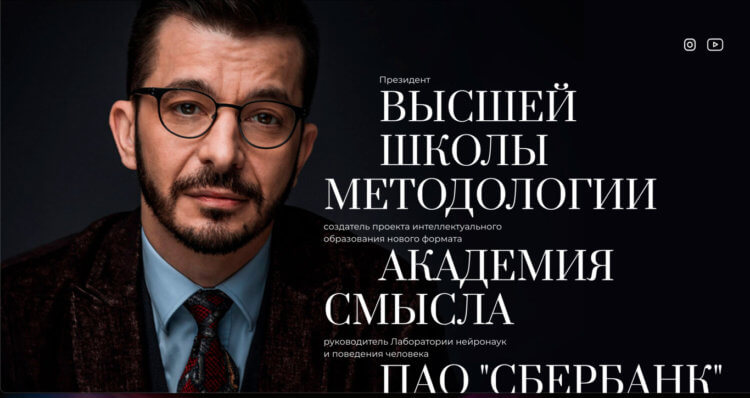
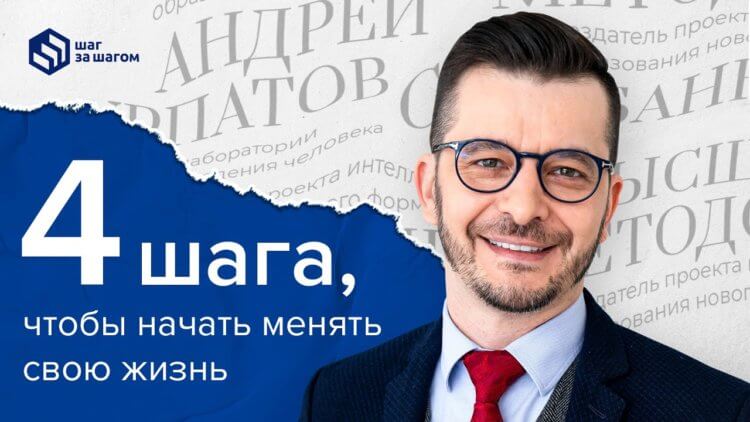
Доктор Курпатов – гордый обладатель грустного рептилоида 2021

Приятный мужчина в очках и белом халате на первом канале – ну чем не уважаемый врач? А если перед нами психотерапевт, да еще известный (и тоже с первого канала), мы, вероятно, запишемся на прием. Смущает во всей этой истории лишь одно – термин «цифровой аутизм» и утверждения о том, что вакцинация убивает.

Терзаемые сомнениями открываем YouTube, но там все еще хуже – видео о том, что COVID-19 не существует, а Земля плоская набирают миллионы просмотров. А если поискать еще немного, окажется, что нас и вовсе ждет «цифровой концлагерь», а власть на Земле принадлежит тайному правительству. Так как же отличить правду от лжи?
Ну что, готовы к новой порции мракобесия? Мы точно да, так что поехали!

Легковерие, которым пользуются астрологи, евангелисты и другие шарлатаны, может быть нормальным и здоровым у ребенка, но оно вредно для здоровья и достойно порицания у взрослого, — английский биолог, популяризатор науки Ричард Докинз. 

Наука – как свеча во тьме


Информация – одна из главных ценностей нашей цивилизации. Чем больше мы знаем о мире, который нас окружает, тем выше наши шансы прожить долгую и счастливую жизнь. Да, умение отличать правду от вымысла в прямом смысле этого слова спасает жизни. Увы, но с появлением интернета понять, что нас обманывают, стало намного сложнее – социальные сети, как известно, способствуют распространению дезинформации.

Нередко вредные знания сами настигают нас, стоит лишь включить телевизор – говорящие головы на федеральных каналах готовы на все, лишь бы убедить нас в своей правоте.

А мы, зрители и слушатели, крайне восприимчивы к информации. Если, например, врач-кардиолог, телеведущий Александр Мясников говорит, что COVID-19 – не страшнее сезонного ОРВИ, мы склонны ему поверить. Когда же еще один врач, хирург и общественный деятель Александр Редько ведет широчайшую антипрививочную пропаганду на федеральных телеканалах, мы с большей вероятностью откажемся от прививки. А ведь на дворе пандемия и больше всего рискуют жизнью те, кто отказался от вакцинации.
Ну очень грустный рептилоид. Кто же заберет его домой?

Лженаука невероятно эффективна, так как предлагает простые ответы на сложные вопросы. К тому же она все больше и больше мимикрирует под настоящую науку, паразитируя на ней.

Начиная с газетных гороскопов и заканчивая экстрасенсами, псевдонауки буквально «привились» от научных атак: целый ряд псевдонаучных терминов и идей был развенчан серьезными исследователями, а им хоть бы что. К счастью, мы тоже знаем как получить «прививку от лженауки». И помогут нам в этом сильнейшие игроки научного знания и здравого смысла.

Интересный факт
Псевдонаука (или лженаука) – это универсальный термин, охватывающий все, от НЛО до кельтских мифов и легенд, экстрасенсорного чтения, звездных знаков, астрологии и многого другого.

ВРАЛ – почетная антипремия


Начиная с 2016 года в России проходит вручение особой антипремии. Чтобы стать ее лауреатам, необходимо добиться внушительных успехов в области лженауки. Каждый год в рамках форума «Ученые против мифов» жюри и зрители выбирают достойных статуэтки грустного рептилоида.

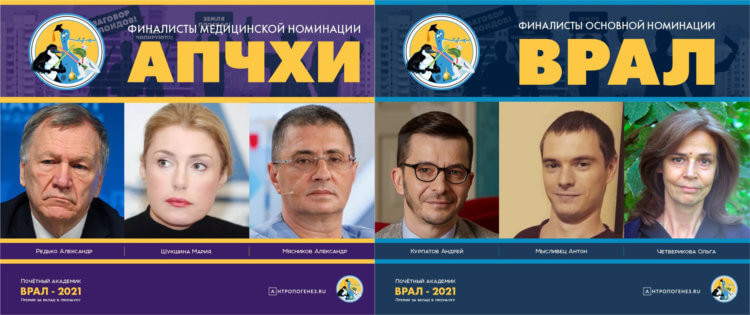
На этот раз нас ожидает приятный сюрприз – премия впервые проводится в двух номинациях: основной «ВРАЛ» и медицинской «АПЧХИ» (Академия Превентивной ЧакроХирургии).
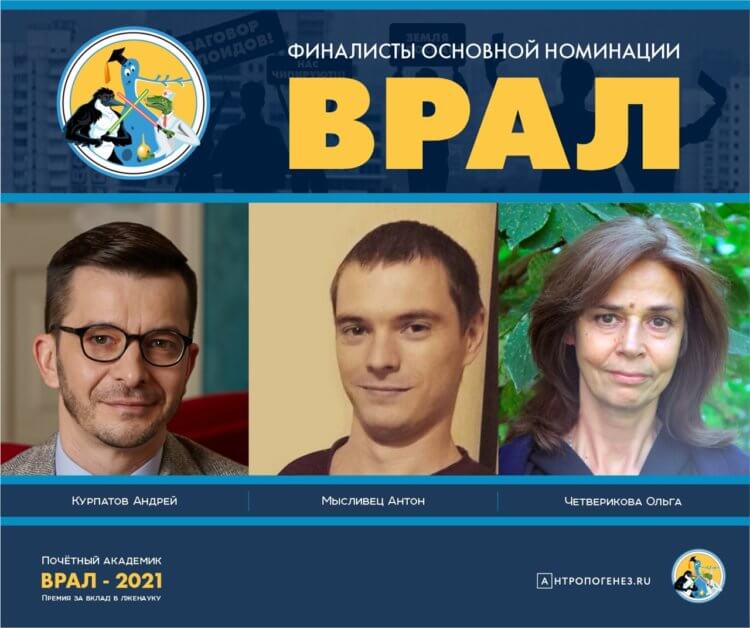
А вот и они – номинанты премии 2021 года

Премия «Почетный Академик ВРАЛ» создана при поддержке фонда ЭволюцияДмитрия Зимина и научно-просветительского портала Антропогенез.ру, главным редактором которого является Александр Соколов. Среди членов жюри этой шуточной премии нешуточные ученые – биоинформатик Александр Панчин, врач-токсиколог Алексей Водовозов, доктор психологических наук Владимир Спиридонов, молекулярный биолог Константин Лесков, доктор филологических наук Светлана Бурлак и другие. С полным списком экспертного жюри можно ознакомиться здесь.

Почетный академик ВРАЛ-2021


Борьба за звание главного лжеученого страны развернулась нешуточная и 18 ноября в тройку лидеров вырвались Андрей Курпатов, Антон Мысливец и Ольга Четверикова. Конкуренция серьезная и я бы с удовольствием вручила по статуэтке каждому. Но правила есть правила, так что нам предстоит нелегкий выбор.

Первыми действительными членами ВРАЛ стали Трофим Денисович Лысенко (посмертно), Джуна (посмертно) и Амвросий Амбруазович Выбегалло (виртуально)

Доктор Курпатов и «цифровой аутизм»


Доктора Курпатова, сегодня, кажется знают все. В детстве я смотрела передачи с его участием, и, видимо, прониклась симпатией, так что Курпатов однозначно мой фаворит. Более того, как человек столкнувшийся с депрессией, я отчаянно искала информацию о хороших врачах и, конечно, наткнулась на клинику доктора Курпатова.
Доктор Курпатов и его методология

Прочитанное заставило задуматься – на сайте клиники утверждалось, что всего за несколько недель моя депрессия/тревога/панические атаки (нужное подчеркнуть) пройдут навсегда. Согласитесь, смелое утверждение. Особенно учитывая лечение депрессии – так просто эта болезнь не проходит, а иногда люди вынуждены принимать лекарства всю жизнь.

Но доктор Курпатов считает иначе и для обоснования своей позиции умело смешивает факты, гипотезы, спорные исследования и спекуляции. В книге «Красная таблетка» он популяризирует термины «информационная псевдодебильность» и «цифровой аутизм». Оба эти явления по мнению Курпатова лишают человека привычки думать в результате чего у него появляются все признаки отсталости как при клиническом диагнозе «дебильность». Как говорится, хороший доктор и лечение интересное.

Ну а теперь держитесь, ибо доктор Курпатов ученой степени не имеет, зато смело именует себя психиатром. Его книги переведены на девять языков и изданы тиражом более 5 млн экземпляров. Он регулярно дает интервью и активно продвигает собственную методологию (и цифровой аутизм) как бы постоянно присутствуя в информационном поле.
Надеемся, доктор Курпатов придет за своим рептлоидом

Интересный факт – В 2016 году в Санкт-Петербурге доктор Курпатов открыл интеллектуальный кластер "Зануда". Несколько лет лекторий «Зануды» был площадкой для коммуникации людей, которым важно постигать суть вещей, для тех, кто думает о науке и готов о ней рассказывать.

Так почему же он оказался в тройке финалистов? Потому что нашему обществу отчаянно не хватает знаний в области душевных болезней. Мы по-прежнему стигматизируем тех, кто наблюдается у психотерапевтов и психиатров (последних вообще боятся как огня) и многие на самом деле убеждены (как и наш «доктор»), что депрессия и прочие расстройства – это несерьезно. Стоит ли говорить, что подобное отношение к болезни может стоит кому-то жизни.

Исследователи полагают, что популяризация термина «цифровой аутизм» на деле приводит к искаженному мнению о настоящем аутизме – нельзя вылечить аутизм, забрав у человека гаджет. Аутизм появляется по случайным неисследованным причинам, а не от воспитания.

«Крамола» и «электронный концлагерь»


Бороться за звание главного лжеученого страны Курпатов будет с по-настоящему выдающимися личностями, среди которых блогер Мысливец Антон Александрович, автор популярного youtube-канала «Крамола», продвигающего лженауку и конспирологию. Его видео одни из самых популярных псевдонаучных каналов в русском Youtube. Пожалуй, он даже может составить конкуренцию главному по тарелочкам в России.
Сильная конкуренция в этом году

Тройку лидеров замыкает Четверикова Ольга Николаевна, доцент, писатель и преподаватель вуза. Это она рассказывает истории о грядущей цифровизации и «электронным концлагере», куда всех ее несчастных поклонников отправит тайное мировое правительство. Если грустный рептилоид отправится к ней, то может заберет ее на свою планету?

Среди тем, фигурирующих в выступлениях Четвериковой в последнее время – опасность 5G и вакцин, «ковидафера», чипирование. Полный арсенал мракобеса, не поспоришь.

За прошедшие годы лауреатами стали: доктор Наталья Зубарева (2019), гомеопат Олег Эпштейн (2018), заместитель генерального директора РЕН-ТВ Игорь Прокопенко (2017) и главная активистка российского анти-ГМО движения Ирина Ермакова (2016).

АПЧХИ (Академия Превентивной ЧакроХирургии)


Вот мы и подобрались к самому интересному – новой медицинской номинации АПЧХИ. По итогам голосования финалистами стали Редько Александр Алексеевич, Шукшина Мария Васильевна и Мясников Александр Леонидович. Если говорить о фаворитах, то я отдала голос господину Редько и искренне надеюсь, что именно ему достанется золотая кофейная клизма.

Будучи врачом, хирургом и общественным деятелем, Редько утверждает, что пандемии не существует, а вакцины приведут к генетическим мутациям, за исключением, конечно, вакцин против COVID-19 – тут сразу смерть. Вероятно, я удивлю Александра Алексеевича, но вакцины и правда работают, а до конца пандемии еще очень далеко.
Вот он – наш герой (болеем за него))

А как вам такое заявление: «Вакцина оставляет цифровой след, делит на покорных и непокорных, а для непокорных они уже готовят концлагеря».

На фоне распространения по планете нового варианта коронавируса, заявления Редько выглядят абсолютно дикими и не заслуживающими доверия. Все-таки борьба с COVID-19 находится в приоритете, а вакцинация – наилучший способ борьбы с пандемией. Так что отдайте ему клизму, заслужил.

Конкуренцию Редько составляет его коллега, врач-кардиолог и телеведущий Александр Мясников. И если вы удивлены, то поясним – в апреле 2020 номинант утверждал, что COVID-19 не опаснее любого ОРВИ. Нужно просто «закаляться» и «позитивно мыслить». И все. Вот это лайфхак, доктор Мясников, золотую клизму да в ваши руки!
Вакцинация спасает жизни, в отличие от номинантов ВРАЛ в этом году

Недавно наш герой поменял мнение и заявил буквально следующее: «Просто живите. Инфекция возьмет свое. Мы все равно все переболеем. Кому положено умереть — помрут»

Замыкает тройку финалистов умница, красавица и настоящий мракобес Мария Шукшина. В прошлом году Мария выступила с речью о прививках и пандемии, утверждая, что вакцинация – путь в цифровой концлагерь, а нас всех очень скоро ждет Апокалипсис.

Что же до псевдонаучной деятельности, то наша героиня инициировала ряд круглых столов о вакцинации против COVID-19, участниками которой были антипрививочники, ковид-диссиденты и прочие шарлатаны.

Вручение премий ВРАЛ и АПЧХИ состоялось 25 декабря. Победителем в основной номинации и обладателем статуэтки Грустного рептилоида стал доктор Курпатов. Почетным Академиком АПЧХИ был объявлен Александр Редько, обладатель золотой кофейной клизмы.


Wednesday, July 14, 2021

Don’t focus on English at the expense of your science

A language barrier can be a challenge, but there are better ways to spend your resources, says Zhanna Anikina.


Zhanna Anikina

A Russian interpreter at the United Nations. Gaining English-language skills is useful, but if it gets in the way of your research, it’s better to turn to professionals.

Most of my 19 years in Russian academia has been spent teaching English to students. But in 2014, my employer at the time, Tomsk Polytechnic University, gave me a new task: delivering full English courses to academics. I’ve been giving similar courses ever since.

My experience of teaching English to Russian academics has shown me how deeply many believe that a language barrier is the main reason their papers do not get published. Most think that improving their English will help to make their academic texts into publishable papers, and so spend time and effort on that. In reality, linguistic competence takes second place to the ability to produce quality scientific content. For editors and reviewers, good science is almost always more important than language ability.

Still, language does matter — papers must at least be understandable — and I regularly find myself frustrated at the status quo. Science too often demands that non-native English-speaking (NNES) academics focus on learning to speak and write in English, which drastically disadvantages them. Even if NNES academics eventually learn perfect English, they will have spent so much of their professional time and effort on this endeavour that they might find themselves lacking in ability to actually work on science.

With that in mind, I have some advice on how academics keen to learn English might spend their time reasonably. Hopefully, this will help NNES academics to communicate their work without sinking too much of their valuable time into language.

Choose your course carefully


In NNES academic institutions, English courses are often delivered as a part of professional-development programmes. Often, they are free and delivered on a short-term or long-term basis. Most are aimed at developing skills in academic writing and speaking, to help academics to communicate their research in a variety of formats. Similar courses are also offered by organizations beyond the university sector.

I am convinced that a course in academic reading is a must-have, regardless of your language level. Such courses help to develop appropriate reading strategies, vocabulary, comprehension and critical-reading skills. They’re often offered by local or overseas organizations, frequently online. Free resources — some designed for NNES researchers — can be found from online-learning platforms FutureLearn, OpenLearn and Coursera.

Similarly, online platforms including OpenLearn offer courses aimed specifically at developing critical-reading skills. In addition to reading journal articles, I always recommend that my learners read complicated texts — especially PhD theses produced at UK universities. This is because many are available for free through the British Library’s E-Theses Online Service (EThOS), and they are likely to be written in good academic English. This resource can provide a wide range of high-quality academic texts to enrich your understanding of how research is done and communicated.

If you are somewhere between an independent and proficient user of English (it’s worth looking at the guidelines from the Common European Framework of Reference for Languages to determine your own level of proficiency), taking a course in academic writing can have a positive effect. Depending on the course objectives, you might be able to develop your academic linguistic competence in general, develop your academic writing specifically in relation to your own discipline, or identify and correct mistakes in your written English. Remember that no course will immediately make you able to prepare your manuscript in English on your own. But it might improve how you work on the text with editors and translators.

Seek help


If you can produce a draft of your manuscript in English, get it proofread before submitting to a journal. If you’re not confident in your language abilities, producing a manuscript in your native language and then seeking a professional translator might be more sensible.

In either case, keep in mind that the quality of the source material affects the quality of the final version. It is important that the original text is written in clear and concise language. Make no attempt to change content after the translator has started working, because that could impact their ability to translate the text as a whole.

No matter what form of assistance you choose, it is a good idea to assist back. For example, provide the editor or translator with a glossary — a list of specific terms, abbreviations and acronyms — or any reference mat-erials from your subject area. Also, book time to discuss the work with them when questions emerge.

You don’t need to hire a native speaker


Often, native speakers are considered the best choice for text proofreading and editing. However, they might not have the necessary scientific knowledge and experiences, and might struggle to use academic English and describe science effectively. Native speakers might also be inaccessible, or simply too expensive. Instead, it could be worth approaching local professionals who aren’t native speakers, but are proficient users of English. They will have the important advantage of the ability to communicate well in your native language. In editing situations, this can reduce uncertainties and make the process of text revision less stressful.

Writing for English-language publication will remain a topic of interest for NNES academics. Although I hope my advice is helpful, I nevertheless think that most researchers should focus on doing research and generating knowledge instead of boosting their English skills.

Rather than investing seemingly endless time in learning English so that researchers can share their findings with a global audience, it makes sense to re-evaluate researchers’ needs, reconsider training and seek support from language professionals. This would be a better investment of resources for all involved.

doi: https://doi.org/10.1038/d41586-021-01905-z

More:

Saturday, June 12, 2021

search under the lantern

ВПО ИскЕ

В России на фоне эпидемии коронавируса выросла смертность от алкоголя


В России на фоне эпидемии коронавируса выросла смертность от алкоголя. Это следует из данных Росстата, которые приводит газета РБК.


Более 50 тысяч человек за прошлый год умерли от причин, связанных с алкоголем. Это на три тысячи больше, чем годом ранее. О том, что россияне стале чаще пить спиртное прошлой весной сообщал Минздрав, связывая это с эпидемией коронавируса и изоляцией. По данным министерства, к маю потребления алкоголя выросло на несколько процентов, хотя в ведомстве подчеркивали, что это категорически неприемлемо из-за сопутствующего ослабления иммунитета. РБК напоминает, что ряд регионов тогда даже вводили «сухой закон». Ограничивали продажу спиртного, например, в Якутии, Карелии, Башкирии. СМИ со ссылкой на исследования писали, что потребление водки в прошлом году выросло на 2% — почти до 5 литров на человека. Меду тем, как следует из данных Росстата, в рост уровня смертности внесли вклад не только коронавирус и алкоголь, но также и психические расстройства. Причем умерших по этой причине по итогам 2020-го оказалось сразу на 20% больше, чем годом ранее – всего 24 тысячи человек.

Россия в прошлом году оказалась в числе наиболее пострадавших от эпидемии стран. Избыточная смертность составила почти 360 тысяч человек. Большинство смертей связаны с коронавирусом.

Wednesday, April 28, 2021

Sell yourself and your science in a compelling personal statement

Don’t get bogged down in technical details, and balance the professional and the personal.


Andy Tay

Personal statements — essays highlighting personal circumstances, qualities and achievements — are used extensively in science to evaluate candidates for jobs, awards and promotions. Five researchers offer tips for making yours stand out in a crowded and competitive market.

STEVE OH: Convey personal qualities beyond academic interests


Steve Oh is director of the Stem Cell Processing Group at the A*STAR Bioprocessing Technology Institute in Singapore.


As a principal investigator, I have read a good number of personal statements from students applying for science scholarships and jobs. The ones that stand out recount the applicant’s biography, bringing out their character as well as their professional qualities.Personal statements are often centred on academic and research achievements. But, in my opinion, a good scientist should also demonstrate social skills, be interested in making an impact on society through, for example, entrepreneurship, and have awareness of the world outside the country they live in. Memorable personal statements tend to bring out ‘soft’ skills, such as having macro-level thinking abilities and awareness of the impact that science can have on society.

To achieve this balance of professional and personal, consider two elements. First, explain your motivations to pursue a scientific career. These might include a family illness, an inspiring talk by a scientist, or great mentorship from a colleague. Second, describe how you have gone out of your way to get experience in science, such as proactively seeking opportunities for a laboratory internship, or what you have learnt from overcoming difficulties with your experiments. This information brings out qualities, such as curiosity and perseverance, that are crucial to being a good scientist.

I vividly remember the personal statement of one of my PhD students. He described his struggle with having only one healthy kidney — and how, despite this, he continued to do sports like rock climbing. He also wrote about how he did badly in his undergraduate studies: he had to take a year off to recharge before returning to school and excelling. His story shows resilience and honesty — traits that I love in a researcher.

SILVIA KARIUKI: Do not be afraid to defend your decisions


Silvia Kariuki is a postdoctoral fellow at the Kenya Medical Research Institute (KEMRI) Wellcome Trust Research Programme in Kilifi.


When I was planning to return to Kenya, where I grew up, to start a postdoctoral project, fellow researchers, friends and family members all asked why I was choosing to go back. They felt my career would suffer because Kenya’s scientific infrastructure is not as advanced as that in the United States, where I spent 13 years working and completing my undergraduate and PhD degrees.

Two years into my return to Kenya, when writing my personal statement for the Wellcome International Training Fellowship to follow up on my postdoctoral project, I explained that the Kenya Medical Research Institute–Wellcome Trust Research Programme in Kilifi could provide a good research environment for me. I would be able to study human genetic variants that confer protective effects against severe malaria infection, and my research would have a real-world impact by informing the production of malaria therapies. In my personal statement, I wrote that I wanted to pursue my scientific career in Kenya despite the scepticism I had faced — and it convinced the fellowship committee that I had thought deeply about my career move.

I also seek advice from mentors when writing a personal statement. I usually send mine to two to three senior scientists who have had more experience writing them and who have been on review committees for fellowship applications. One suggestion I usually get is to be ‘more human’. The judges would like to hear your personal voice and read about your motivation, even if these might be unconventional.

KELLY CLANCY: Use stories to show who you are


Kelly Clancy is a postdoctoral fellow in neuroscience at University College London.


Stories can make a personal statement stand out. It’s hard, of course — I’ve heard colleagues say it’s a trope for neuroscience-related personal statements to open with something like “I got interested in neuroscience after seeing my grandmother suffer from Alzheimer’s.” But I think that cynicism is unfair: it’s a beautiful impulse to get into science for a personal reason, and having a personal connection to science can drive important new insights.

I included the story that inspired the project I’d proposed in my application to the Branco Weiss postdoctoral fellowship. My best friend from high school had lost three limbs to an improvised explosive device while serving as a medic in Afghanistan. I described how this incident led to my interest in the field of neuroprosthetic devices that can restore motor capabilities, and the shortcomings I wanted to address with my work.

My advice for writing a personal statement is to not get bogged down in technical details. Don’t just focus on what you want to study — explain why. Demonstrate how you think. What led you to do the work or research you’ve undertaken so far? What are the questions that drive you and your science, and why are they important? Perhaps most importantly (and this is for all of us, not just those writing personal statements): ask, “What drives my science? Is it a reflection of my ego, wanting to be right or smart and to get high-profile publications? Or is it an extension of my will to do good in the world, my curiosity and my love of understanding?” The world is full of questions and problems to solve. Using stories in personal statements can help applicants to explain what scientific questions they care about, and why they matter.

With the support from the Branco Weiss Fellowship, my colleagues and I have since developed neuroprosthetic techniques that were just published1 and used these methods to explore interesting basic neuroscience questions and less-invasive neurosprosthetic interfaces.

WEI GAO: Demonstrate ambition and don’t exaggerate


Wei Gao is an assistant professor of mechanical engineering at the California Institute of Technology in Pasadena.


Wei Gao, an assistant professor of mechanical engineering.Credit: Wei Gao

A personal statement should highlight your aspirations and dreams. A CV can list all your publications, but they won’t all be read thoroughly, and members of the selection committee might miss the significance of your work.

Think of a personal statement as a document that complements your CV. I use it to explain the big problems my research is tackling and its impact. In my application to be a World Economic Forum Young Scientist, I described my concerns about worsening mental health in our society and discussed how my research on wearable sensors can improve early diagnosis of mental illness by sensing metabolites such as cortisol, a stress-related hormone, in sweat. It would be difficult to explain my aspirations clearly in a short, typically list-based, CV. In a personal statement, I can demonstrate my ambition in greater detail.

A good personal statement should avoid exaggerating your contribution. This is especially true for a multi-author paper on which you didn’t have a leading role. Focus on the work that you led and to not overstate your contributions to your field. Even if your contribution was significant, being humble in a personal statement is a good quality. Research is a culmination of the efforts of many researchers, and is never attributable to just one person.

ABHIMANYU VEERAKUMARASIVAM: Break the essay down and tailor it to your audience


Abhimanyu Veerakumarasivam is dean of the School of Medical and Life Sciences at Sunway University Subang Jaya in Malaysia.


One way to simplify the writing process is to break your personal statement down into several key elements, including who you are, what you have accomplished, why you are applying for a role or award and how you will contribute to the organization.

When I was organizing the Association of Southeast Asian Nations (ASEAN) Science Leadership Programme from 2017 to 2019, my committee and I divided the application statement into a few questions focused on the ‘who, what, why and how’, which would help applicants to better structure their essays. I found this format particularly useful because, in Asia, our default culture is to not stand out, and many qualified candidates might be too shy to share their personal stories or too humble to share their achievements.

I found that creating a more defined structure around the personal statement allowed applicants to reflect on the experience they have gained from working in the region, which has many low-income countries and little investment in science. I would not always get these details in an open-ended personal essay.

One candidate discussed the huge disparities in science in the ASEAN region and his desire to bridge the gaps. By doing so, the candidate demonstrated that he had a good awareness of his environment and the unique challenges of working in that setting while highlighting his willingness to take action to bridge the gaps.

Applicants should also tailor their personal statements to their audience. For instance, students applying to graduate schools and scholarships will often send generic personal statements with their applications. If applicants want an academic institution to invest in them, then their personal statements need to reflect a genuine interest in the organization they’re applying to. The candidates with better statements usually include details of labs they are interested in working in and specifics about research topics they find fascinating.

Thursday, January 14, 2021

Preventing Stalking

What is Stalking?
Preventing Stalking

Stalking is a public health problem that affects millions of women and men in the United States. Stalking occurs when someone repeatedly harasses or threatens someone else, causing fear or safety concerns.

Stalking tactics can include:

  • making unwanted phone calls
  • sending unwanted emails, instant messages, text messages, voice messages, or social media messages
  • approaching a victim or showing up unwanted, such as at the victim’s home, workplace, or school
  • leaving strange or potentially threatening items for the victim to find
  • watching, following, or tracking a victim
  • sneaking into the victim’s home or car and doing things to scare the victim or let them know the perpetrator had been there

Technology has made communicating with others easier than ever, but those advances have also created more options and choices to threaten and harass victims. Most victims are commonly stalked by someone they know, such as an intimate partner or acquaintance.

How big is the problem?

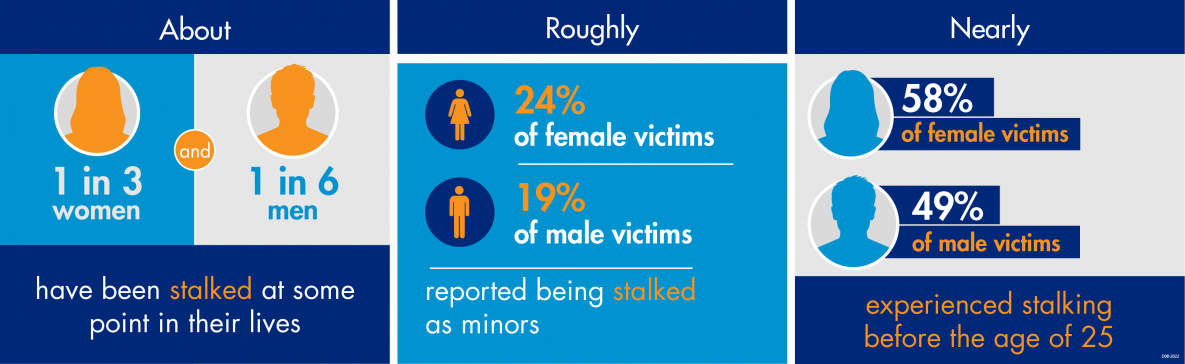
The National Intimate Partner and Sexual Violence Survey (NISVS) reports that about 1 in 6 women and 1 in 17 men have been stalked at some point in their lives.

While most women and men first experience being stalked as adults, approximately 21% of female victims and 13% of male victims reported being stalked as minors. Nearly 54% of female victims and 41% of male victims experienced stalking before the age of 25.

stalking How Big Is The Problem

What are the consequences?

Women and men who were stalked felt very fearful or believed that they or someone close to them would be harmed or killed as a result. About 68% of female and 70% of male victims experienced threats of physical harm during their lifetime.  Approximately half of victims, 52% of female victims and 51% of male victims, experienced damage to personal property or belongings.

Studies have shown that stalking can lead to psychological distress, such as depression and post-traumatic stress disorder  (PTSD).

How can we stop stalking before it starts?

It is important for everyone to work together to end stalking. NISVS findings highlight the importance of early prevention and support efforts, which can include:

  • Empowering everyone to understand, recognize, and address stalking
  • Mobilizing men and boys as allies in prevention efforts
  • Creating and supporting safe environments within relationships, schools, and communities through programs and policies that reduce risk and promote healthy relationships
Need Help? Know Someone Who Does?

Contact your local service provider or a national hotline:

  • Victim Connect: 1-855-4VICTIM (1-855-484-2846)
  • National Domestic Violence Hotline: 1−800−799−7233 or TTY 1−800−787−3224 En Español
  • The National Sexual Assault Hotline: 1-800-656-HOPE (4673)

Additional resources for victims of stalking are available at the Stalking Prevention, Awareness, and Resource Centerexternal icon

See Preventing Stalking Resources for publications and prevention resources for stalking.