Showing posts with label экология. Show all posts

Monday, January 15, 2024

kushtau

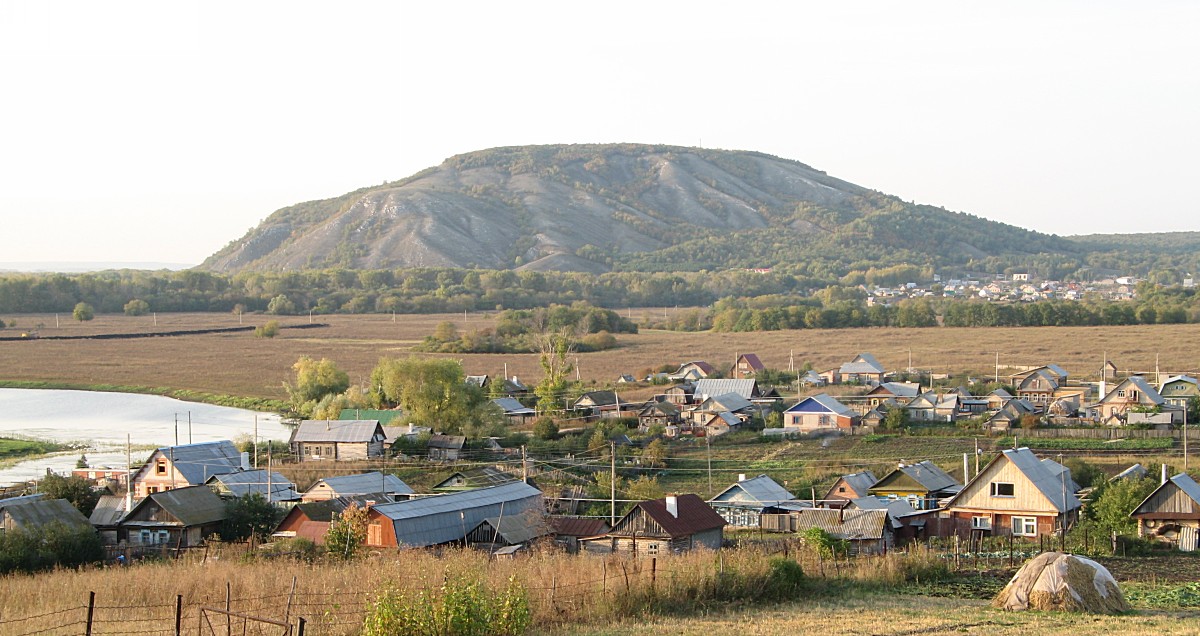
В Башкирии сотни людей пришли к суду, где проходило заседание по делу активиста, защищавшего шихан Куштау


Сотни людей пришли к Баймакскому суду Башкортостана, чтобы поддержать активиста Фаиля Алсынова, которого обвиняют в возбуждении ненависти.

Трансляцию с места вели телеграм-канал «Куштау Байрам» и издание Rusnews.

Пришедшие скандировали лозунги «Свободу Фаилю Алсынову!»
, «Азатлык!» («Свободу!»), «Фаиль, мы с тобой!» и требовали отставки главы региона Радия Хабирова. Полиция в происходящее не вмешивалась.

По оценкам «Куштау Байрам», у суда собрались около 5 тысяч человек. Как утверждает телеграм-канал, половина пришедших находились на улице и еще примерно столько же — в автомобилях (в Баймаке было больше 20 градусов мороза).

На видео, опубликованных телеграм-каналом, сложно подсчитать количество людей, но видно, что их сотни.

В понедельник состоялось одно из последних заседаний по делу Алсынова. Приговор активисту должны огласить 17 января, обвинение потребовало назначить ему четыре года лишения свободы в колонии-поселении.

Активиста, который в 2020 году защищал шихан Куштау от разработки, обвиняют в возбуждении ненависти или вражды (ч. 1 ст. 282 УК РФ) из-за его выступления на митинге против золотодобычи в апреле прошлого года.

По версии следствия, Алсынов «выступил с речью на башкирском языке, содержащей высказывания, в которых негативно оцениваются группы лиц… — „жители Кавказа“, „Средней Азии“, „армяне“», пишет «Идель.Реалии» (в реестре «иноагентов»).

Как отмечает издание, в частности, активисту вменяют употребление выражения «кара халык», которое в буквальном переводе означает «черный народ», но в современных тюркских языках используется для обозначения простого народа.

Алсынов возглавлял башкирскую организацию «Башкорт», которую Верховный суд Башкортостана признал экстремистской и запретил в 2020 году.

Алсынов — не первый башкирский активист и защитник шихана Куштау, которого преследуют власти. В частности, в декабре 2023 года суд в Уфе назначил пять лет колонии активистке Рамиле Саитовой, записавшей видеообращение к мобилизованным с призывом не участвовать в войне с Украиной.

Saturday, December 16, 2023

liveable cities

Head of data journalism
Once again the liveability index from EIU, our sister company, is one of our most popular pieces of data journalism this year. Readers in their millions come to find where their city sits in the ranking, but they leave with a broader understanding of the world. This year marked a full recovery from the covid pandemic and the index suggests that life in cities is better than at any time in the past 15 years, albeit not quite everywhere. Kyiv—too dangerous to be surveyed when Russia invaded Ukraine in 2022—is back in the ranking but sits near the bottom, hampered by war-damaged infrastructure. And there’s a clear pattern among the best performers. Nine of the top ten are what I call “Goldilocks cities”: not too big (the high crime rates and congestion found in metropolises can drag scores down) and not too small (good transport and cultural attractions are a must). This year, Vienna was just right.

Monday, November 13, 2023

Fridays For Future, FFF

Война на Ближнем Востоке привела к расколу в климатическом движении


В конце прошлой недели Грета Тунберг и ее соратники по движению «Пятницы ради будущего» вышли к зданию шведского парламента с плакатами. Только на одном из них речь шла о климате, все остальные были посвящены поддержке Палестины.

Эксперт по радикальным организациям Беттина Рёль в разговоре с BILD отмечает, что Грета Тунберг «переняла часть левого антисемитизма 60-х годов прошлого века».

«Палестинцы в Газе — это лишь инструмент для Ирана, а западные дети а-ля “Пятницы для будущего” для них — полезные идиоты. Организация [Греты Тунберг] де-факто проявляет солидарность с террористами ХАМАС — очевидно, с чрезвычайно примитивными базовыми знаниями. В то же время активисты склонны к экстремизму. Я думаю, что это опасное сочетание, к которому нужно относиться серьезно», — говорит Рёль.

Эксперт по терроризму и политическому насилию Петер Нойман, в свою очередь, видит чёткий раскол внутри климатического движения из-за войны на Ближнем Востоке.

«Он происходит между сторонниками, которые в основном привержены борьбе с изменением климата, и теми, для кого защита климата является лишь частью более широкой, левоэкстремистской и, как правило, антикапиталистической программы», — полагает Нойман.

По его словам, сама Грета Тунберг, которая изначально была действительно климатической активисткой, в последние годы также радикализировалась в сторону второй группы.

«Тот факт, что Грета Тунберг до сих пор не сказала ничего конкретного о еврейских жертвах массового убийства 7 октября, меня разочаровывает», — сказала лидер немецкого отделения «Пятницы ради будущего» Луиза Нойбауэр.

@BILD_Russian

Monday, October 30, 2023

dirty trick

тыцабельно для лучшего просмотра

Выбросы CO₂ в расчёте на килограмм разных продуктов питания


На килограмм говядины приходится 99 килограмм выбросов CO2 в атмосферу, что делает её одним из самых "недружественных к окружающей среде" продуктов питания. Баранина "обходится" в 40 кг, говядина из молочных коров - в 33 кг, курица оказалась самым "дружелюбным к окружающей среде" видом животной пищи: всего 10 кг выбросов на 1 кг мяса.

А вот на килограмм многих видов растительной пищи приходится меньше килограмма выбросов CO2! Особенно здесь отличились цитрусовые, яблоки и орехи (орехи, правда, требуют очень много воды). Самые "опасные" виды растительной пищи - это шоколад и кофе, но связано это в основном с изменением землепользования.

Выбросы CO2 и изменения климата - это конечно плохо, но проблема в том, что эти цифры слишком часто используются как аргумент для запрета мяса и/или замены его какой-нибудь гадостью типа насекомых - в чём тоже очень мало хорошего

Thursday, September 21, 2023

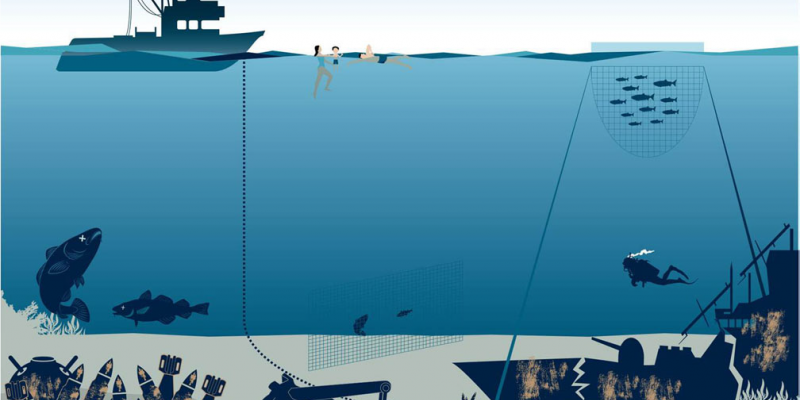
Munition im Meer

Schadstoffbelastung durch konventionelle Munition


Die Metallhüllen der Munitionskörper (zum Beispiel Bomben, Minen und Granaten) rosten mit der Zeit durch und setzten dabei die enthaltenen Schadstoffe in die Meeresumwelt frei. Bei den Schadstoffen handelt es sich bei konventioneller Munition um sogenannte Sprengstoff-typische Verbindungen (STV) wie 2,4,6-Trinitrotoluol (TNT) und weitere Nitroaromaten, Hexahydro-1,3,5-trinitro-1,3,5-triazin (RDX), Octahydro-1,3,5,7-tetranitro-1,3,5,7-tetrazocine (HMX). Insbesondere TNT und seine ⁠Metabolite⁠ sind als Nitroaromaten giftig, krebserzeugend und/oder erbgutverändernd.

Neben den Sprengstoff-typischen Verbindungen enthält die konventionelle Munition auch Schwermetalle wie Quecksilber. Auch die Schwermetalle gelangen nach dem Wegrosten der Metallhüllen in die Meeresumwelt.

Der analytische Nachweis dieser Chemikalien in der Meeresumwelt ist nicht einfach, da sie zurzeit noch in sehr geringen Konzentrationen auftreten und nur in der Nähe der Versenkungsgebiete höhere Konzentrationen erreichen und sich in Meeresorganismen wie Muscheln anreichern können.

Das Umweltbundesamt hat daher das Institut für Toxikologie und Pharmakologie für Naturwissenschaftler des Universitätsklinikums Schleswig-Holstein (UKSH) in Kiel beauftragt, verschiedene biologische Proben (etwa Muscheln und Fische, aber auch marine Säuger) sowie Sediment auf verschiedene Sprengstoff-typische Verbindungen sowie ihre Metaboliten zu analysieren. Die gewonnenen Daten zur räumlichen Verbreitung und zeitlichen Entwicklung von STV in marinen Organismen werden toxikologisch bewertet. Die Ergebnisse der Studie werden voraussichtlich Anfang 2023 veröffentlicht.

Trends zur Verbreitung von Munitionsresten in der Meeresumwelt (TATTOO Projekt)

Schadstoffbelastung durch chemische Munition


In der Ostsee wurde deutlich mehr chemische Munition (5.000 Tonnen) versenkt als in der Nordsee (ca. 90 Tonnen im Helgoländer Loch).

Chemische Kampfstoffe sind militärisch genutzte chemische Verbindungen, die die physiologischen Funktionen des menschlichen Organismus dermaßen stören, dass die Kampffähigkeit der Soldaten beeinträchtigt oder sogar der Tod herbeigeführt wird. Sie wurden im 1. Weltkrieg eingesetzt, im 2. Weltkrieg nur produziert. Dabei handelt es sich um folgende Stoffe: Überwiegend S-Lost (Hautkampfstoff), Tabun (Nervenkampfstoff), Phosgen (Lungenkampfstoff), Chloracetophen (Augenreizstoff) und Clark I, Clark II, Adamsit und Arsinöl (Nasen- und Rachenreizstoffe).

Böttcher et al., 2011 beschreiben die Gefahren für die Meeresumwelt, die von diesen versenkten Kampfstoffen ausgehen: Mit Ausnahme von Tabun sind alle genannten Kampfstoffe schwerer als Meerwasser oder zersetzen sich im Wasser. Versenkter Kampfstoff zeigt somit keine Tendenz, an die Meeresoberfläche aufzusteigen und dort verdriftet zu werden. Bei der Reaktion der Kampfstoffe mit Wasser durch Hydrolyse entstehen weniger toxische Stoffe. Ausnahmen stellen Zäh-Lost (Mischung von S-Lost mit Verdickungsmittel) und arsenhaltige Verbindungen dar. Zäh-Lost (und in geringerem Maße auch normales S-Lost) kann auch längere Zeit nach Freisetzung aus Munitionsbehältern in Form von mehr oder weniger großen, elastischen Brocken auftreten und noch seine volle Wirksamkeit als Hautkampfstoff entfalten, wenn es, etwa durch Hängenbleiben in Fischernetzen, an die Meeresoberfläche gelangt und dort mit der Haut in Berührung kommt. Die arsenhaltigen Verbindungen Clark I, Clark II und Adamsit können aufgrund ihrer Beständigkeit auch längerfristig im marinen Milieu existieren und insbesondere im Sediment lokal in höheren Konzentrationen verbleiben. Sie bilden jedoch keine Klumpen wie Zäh-Lost.

Die meisten der bisher bekannten Unfälle mit Kampfstoffen wurden durch Zäh-Lost rund um das Versenkungsgebiet östlich der dänischen Ostseeinsel Bornholm verursacht, wobei Klumpen von Zäh-Lost in Fischernetze gerieten.

Schadstoffbelastung durch weißen Phosphor


Weißer Phosphor fand als Wirkmittel in bestimmter Brandmunition Verwendung (z.B. Phosphor-Brandbomben). Er stellt eine Modifikation des elementaren Phosphors dar und entzündet sich bei 20 bis 40 °C mit Sauerstoff von selbst und brennt mit bis zu 1.300 °C.

Bis heute werden Brocken von weißem Phosphor, die wie Bernstein aussehen, an deutsche Strände gespült, insbesondere bei Usedom, wo ca. 1,2 Tonnen durch Fehlwürfe von Brandbomben ins Meer gelangten (Böttcher et al., 2011). Hier warnen Warntafeln die Urlauber vor den Gefahren. Durch Verwechslungen mit Bernstein können Unfälle durch Strandfunde von weißem Phosphor eher an den Ostseestränden als an der Nordsee auftreten. Das Landesamt für soziale Dienste des Landes Schleswig-Holstein hat ein Faltblatt für Urlauber mit Informationen zum Gesundheitsschutz bei Kontakt mit Munitionsfunden herausgegeben.

Bergung der Munitionsaltlasten

Gegenwärtig wird bei Gefährdung der Schifffahrt durch Munitionsaltlasten diese durch Kampfmittelräumdienste entschärft, geborgen und der einzigen deutschen Entsorgungsanlage, der Gesellschaft zur Entsorgung von chemischen Kampfstoffen und Rüstungsaltlasten in Munster, zur Vernichtung zugeführt.

Falls eine Entschärfung durch Taucher nicht möglich ist, wird die Munition gesprengt. Da dabei die Schadstoffe nicht vollständig vernichtet, sondern erst recht in die Umwelt freigesetzt werden (Maser & Strehse, 2020), sollten Sprengungen vermieden werden. Zudem können Sprengungen durch den Unterwasserknall das Gehör von Meeressäugern verletzen.

Die Umweltministerkonferenz hat 2019 beschlossen, die Daten- und Informationslage zur Gefährdung der Meeresumwelt durch Munitionsaltlasten zu verbessern und auf dieser Grundlage über die Notwendigkeit und Eignung von Maßnahmen, einschließlich Bergung und Entsorgung, zu befinden und mit der Ostsee zu beginnen.

Gegenwärtig wird diskutiert, dass eine schwimmende mobile Entsorgungsanlage für die Vernichtung von Munitionsaltlasten gebaut werden sollte. Der in einem Projekt (ROBEMM) entworfene Prototyp einer unbemannten, videogesteuerten Sammelvorrichtung für Munition müsste im Meer getestet werden. Die Finanzierung all dieser Maßnahmen ist noch zu klären

Wednesday, July 5, 2023

The Hidden Footprint

Paris Fall/Winter Couture Week kicks off today. The industry as a whole has come under scrutiny in recent years for its huge environmental footprint, be it through resource use, pollution or unsustainable materials. But one element that is somewhat overlooked is the impact of the many shows themselves. And there are many - while London, Milan, Paris, New York make up the ‘big four’, there are many more in other cities, including major trade shows in Copenhagen, Tokyo and Seoul. Not to mention that womenswear and menswear often have different collections for both the Spring/Summer season and another for Fall/Winter, as well as Pre-Fall and Resort lines.

Carbon Trust & ORDRE collected data on the emissions generated from the business travel of designers and buyers attending fashion weeks and collections in a year. The researchers found that in the 12 months starting from the Spring/Summer 2018 season, a total of 241,000 tonnes of carbon emissions were created from air travel, accommodation, intercity travel and the transportation of collections by roughly 11,000 individual retail buyers and 5,000 designers. That’s more than the 2017 greenhouse gas emissions of Saint Kitts and Nevis (238,000 tCO2e), and would be enough to light up Times Square, New York City for 58 years.

The following chart shows that New York was the city whose fashion weeks had the worst environmental impact worldwide, responsible for 60,000 tCO2e that year alone, followed by Paris with 45,000 tCO2e and London with 28,000 tCO2e. The average carbon footprint for a buyer is 12.1 tCO2e while the average footprint for a designer employee is 7.6 tCO2e.

According to the report, these are even likely conservative estimates, considering the fact the research only focused on the travel emissions associated with the commercial aspects of fashion weeks and collections, i.e. the movements of designers and buyers, rather than all other groups such as the media and influencers.

This report has fuelled already mounting global pressure to improve the sustainability of the fashion industry. While there’s still some way to go, the calls have been heeded by many companies. For example, London Fashion Week June 9-12 is a hybrid of both online and real life, while Copenhagen Fashion Week introduced a number of requirements around the business practices and materials designers must abide by in order to be included in the show.

The writers of the report recommend several steps to improve the emissions generated in future years, including avoiding flying business class which has a higher carbon footprint per passenger than economy class, seeking to combine long distance trips, choosing to travel by train rather than flying where possible and combining seasons and collections.

The scope of the research included travel to and from fashion weeks, travel within cities during fashion weeks, staff accommodation, and the transportation of collections, including at collections in Amsterdam, Antwerp, Auckland, Barcelona, Beijing, Berlin, Brussels, Chicago, Copenhagen, Düsseldorf, Florence, Las Vegas, Los Angeles, Madrid, Munich, Naples, Seoul, Shanghai, Stockholm, Tokyo and Zurich.The Hidden Carbon Footprint of the Fashion Industry

Saturday, May 20, 2023

cleaning

С момента начала полномасштабного вторжения в Украину государство стало “зачищать” поле любого активизма - в том числе это коснулось сферы экологии. Корреспондент Русской службы Би-би-си Мария Киселева - о том, как российские власти борются с экологами


За 2022 год многие региональные защитники природы, а также экологические организации, подверглись преследованиям по разным поводам и получили статус “иноагентов”. Би-би-си писала об этом подробно по итогам 2022 года.

К весне 2023 года дело дошло до самых крупных и известных организаций - таких, как WWF, который был объявлен “иноагентом” и “Беллоны”, которую российские власти назвали “нежелательной организацией”. И вот теперь такой же статус получил “Greenpeace”.

История работы этих трех крупных экологических организаций в России похожа - например, они все начали работать в СССР еще в конце 1980х-начале 1990х. Однако ситуация, в которой они оказались к маю 2023 года, отличается.

Директор WWF после того, как организация получила статус “иноагента”, говорил в интервью Forbes о том, что продолжит работу. В телеграм-канале фонда появились плашки “Настоящий материал произведен…” на видео с каланами и аистятами - однако фонд продолжает рассказывать о своих проектах.

“Беллона” заранее, сразу после начала войны в Украине, заявила о том, что прекращает работу в России. К этому времени её представительства юридически были независимыми организациями - официальные офисы признали иноагентами за 5 лет до этого, и они были ликвидированы.

После ухода из России "Беллона" открыла новый офис в Литве, откуда сотрудники, в том числе и переведенные из российских офисов, продолжают выпускать материалы по экологическим проблемам в России. В частности, эксперты объединения писали о рисках, связанных с захватом Запорожской АЭС - по мнению руководства “Беллоны”, это могло быть одной из причин получения статуса “нежелательной”.

“Greenpeace” продолжала работать в России весь год, несмотря ни на что. Это вызывало вопросы от отдельных активистов. Например, Аршак Макичян, который до этого проводил акции против изменения климата и в итоге был лишен российского гражданства вместе с семьей, призывал закрыть российский офис организации. По его мнению, ограничения, которым была вынуждена следовать “Greenpeace” в России, делали ее работу бессмысленной.

С другого фланга на “Greenpeace” нападали чиновники и депутаты, которые видели в ее работе “руку Запада”. Например, депутат Николай Николаев еще в сентябре прошлого года призывал объявить “Greenpeace” нежелательной организацией.

“На иностранные деньги организация занимается политической деятельностью, вмешиваясь в законодательный процесс и оказывает давление на органы государственной власти самыми разными способами”, - писал депутат.

Собственно, примерно этим объяснила свое нынешнее решение и Генпрокуратура. По ее мнению, работа “Greenpeace” связана с тем, чтобы “сформировать негативное общественное мнение и помешать осуществлению выгодных стране инфраструктурных и энергетических проектов”.

Разговаривая с Би-би-си в январе эколог Евгений Симонов (также признан иноагентом) связывал претензии властей к экологам в 2022 с санкциями - из-за них усугубляется борьба за ресурсы внутри страны. Возможно, проблема действительно в этом.

Однако в любом случае политическая борьба вокруг крупных экологических организаций не отменяет работу защитников природы на местах - где все также протекают нефтепроводы, вырубаются леса или вымирают редкие виды рыб. Все это продолжит кто-то документировать - только уже зная, что государство этого совсем не желает.

Thursday, April 27, 2023

The World's Megaprojects

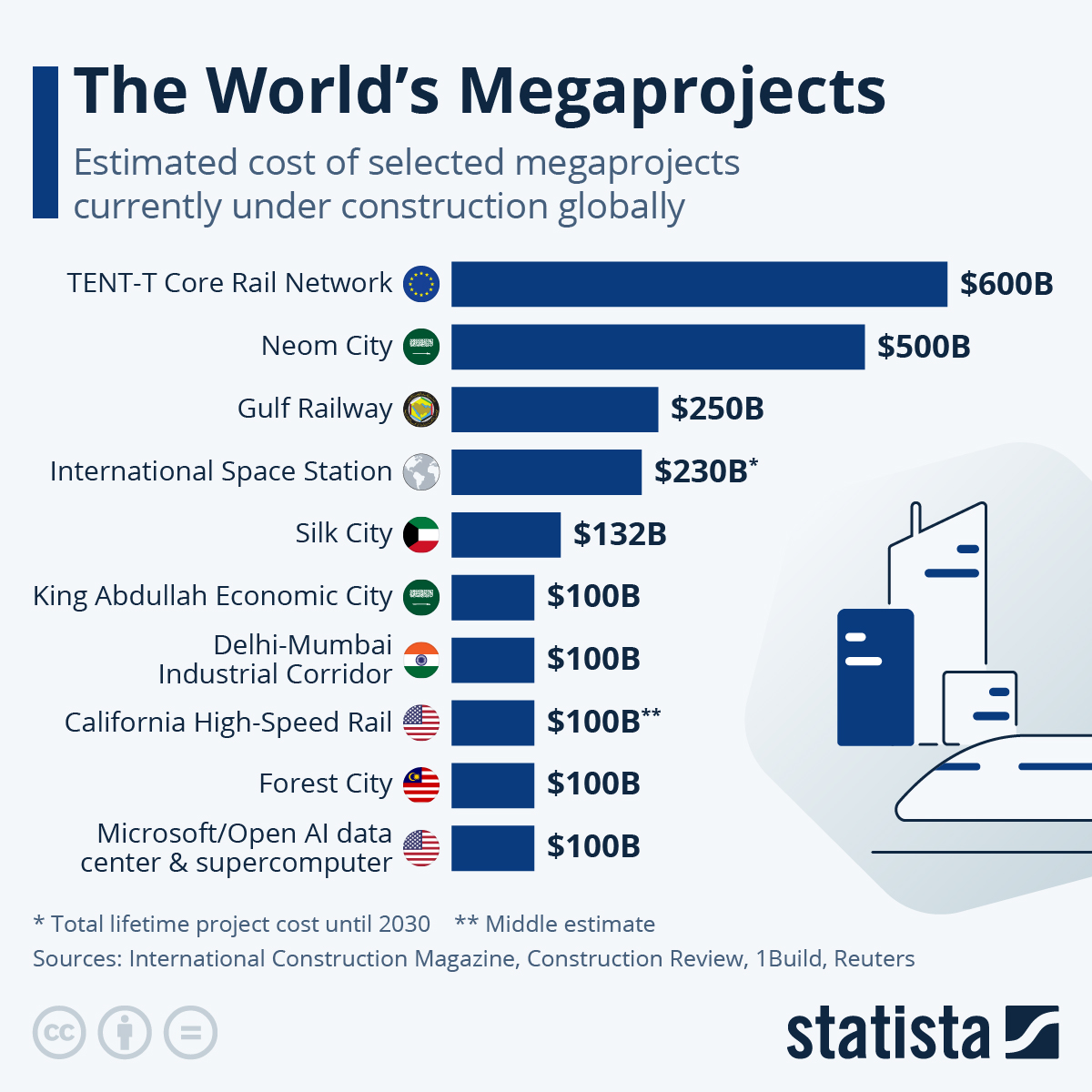
Megaprojects have been growing larger globally and many of them have recently centered on the Arab Gulf Region. Construction software company 1Build estimates that before the end of the decade, the world will see the first construction megaproject with a cost estimation exceeding $1 trillion. Right now, there are several projects underway that exceed the size of $100 billion - despite the fact that $10 billion construction proposals were considered to be megaproject just some years ago.

Out of all nine ongoing megaprojects identified by 1Build, International Construction Magazine and Construction Review to cost $100 billion or more, four were being built in Arab Gulf States. This includes the ambitious project of Neom City, actually a collection of futuristic towns and cities which are being built in Northwestern Saudi Arabia and are expected to house 450,000 people by 2026. One of the developments, The Line, has received the most attention for being planned as a completely enclosed city 170 km in length, 200 meters in width and 500 meters in height.

More expensive than Neom City is the EU's Trans-European Transport Network. The large-scale infrastructure upgrade estimated to cost $600 billion includes the building of railway lines, roads, shipping routes and related structures in EU member countries to improve long-distance transport.

Projects on the peninsular have also suffered a setback, as the $250 billion, 2,000 km project to connecting GCC member countries by rail - initially to be completed by 2018 - was halted. However, the project could resume soon. Other megaprojects in the region include entertainment and tourism complex Dubailand, King Abdullah Economic City North of Jeddah in Saudi Arabia and Silk City in Northern Kuwait, which will be home to the world's future tallest building.The World's Megaprojects

Sunday, April 23, 2023

Which Countries Are Best Prepared For The Green Tech Transition?

The United States, Sweden, Singapore, Switzerland, and the Netherlands are the five most prepared countries to use, adopt or adapt to frontier technologies, which will be essential to the green tech transition, according to data released by the United Nations Conference on Trade and Development (UNCTAD).

166 countries were ranked on their level of preparedness to start using frontier technologies with the five following indicators: ICT, Skills, Industry, Research and Development and Finance. The following map uses the summed rank of each indicator to give a final score. For example, where the U.S. ranked in 2nd place for R&D, 11th for ICT, 18th for skills, 16th for industry and 2nd for finance, the sum was 49.

At the bottom of the list comes Guinea, the Democratic Republic of Congo, Gambia, Guinea-Bissau and South Sudan. These five countries each ranked near the bottom across all five categories.

As the following chart shows, there’s a clear divide between high-income countries and lower-income countries. Latin America, the Caribbean, and sub-Saharan Africa are the least ready to harness frontier technologies, which means they are most at risk of missing out on current technological opportunities.

Despite China’s ability to produce and innovate frontier technologies, the country ranked lower than might have been expected, coming in 35th place, due to its urban-rural disparities in internet coverage and broadband speed. In terms of the other members of the BRICS bloc, Brazil ranked in 40th place, India in 46th, and South Africa in 56th.

A number of countries in Asia performed better than expected, however, including India (55th position), the Philippines (57th), and Vietnam (45th). When looking at the difference between India’s actual index ranking and the projected rankings based on per capita income, India ranks 67 places higher than expected. UNCTAD researchers explain: “This is mostly due to increased investment in infrastructure, enhanced technical skills, and a conducive business climate.”Which Countries Are Best Prepared For The Green Tech Transition?

Monday, December 12, 2022

Ecological Values of the Population of Belarus: Theoretical and Empirical Levels

Экологические ценности населения Республики Беларусь: теоретический и эмпирический уровни.

Социологический альманах. Вып.4. С.352-363.


The author discusses the ecological values of the population of Belarus that have been measured empirically on the level of mass consciousness and mass behavior. The empirical results have been compared with the theoretical model of ecological values that fits the sustainable development model of societal development. Special attention is paid to the actual level of ecological awareness of the population that currently does not actively stimulate ecologically oriented behavior.

Keywords: 

ecological values, ecological consciousness, ecological behavior, ecological awareness, Belarus. 


Thursday, December 1, 2022

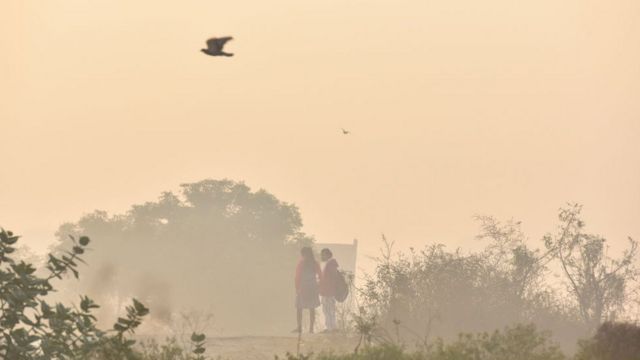
air pollution

Загрязнение воздуха предоставляет доступ к 1 миллиону погибших в год, говорят ученые.


фотка, кажется, из безмолвного крика

Китайские и средние люди установили, что ежегодно в мире почти миллион детей планеты на свет мертворожденных из-за высокой концентрации воздуха, предметы дышат их. Это означает, что около половых органов всех родов, в результате чего ребенок рождается мертвым, скрывает загрязнение воздуха.  [это бебеси переводил, гуголь лучше справился бы]

Авторы нового исследования, опубликованного в журнале Nature, обнаруживают, какое влияние оказывает высокая зависимость от микрочастиц в водопаде на случай возникновения последствий.

Ученые исследовали данные о 45 тыс. родов, произошедших в период с 1998 по 2016 год в 54 странах с низким и средним доходом.Установлена ​​высокая вероятность распространения инфекции в 137 странах Азии, а также в распространенной и распространенной Америке, которая приходится на 98% всех родов в мире, заканчивающихся появлением мертвого ребенка.

Россия в число которых 137 государств не входит. По данным Всемирной организации здравоохранения на 2019 год, в России на тысячу родов приходится в среднем 3,8 выявления мертвых детей, а в странах, которые были следствием исследований, это составляет от 10 до 30 меротворождений на каждую тысячу новорождённых. Для сравнения - в Великобритании и США на каждую тысячу родившихся приходится 3 мертвых ребенка.

В измерении измеряется только встречаемость на рынке PM 2,5 (способ крошечных частиц, взаимосвязь проникающих в кровь человека) и смертностью плода.

Его авторы не обнаруживают, как именно микрочастицы PM2,5, которые чаще всего оказывают влияние на выбросы из-за расхода ископаемого топлива, свойств на организм матери и ребенка в ее утробе.

В последних годах эта тема была посвящена другим исследованиям, которые продемонстрировали, в частности, как частицы попадают из легких в плаценту. Эти частицы были также обнаружены в легких, печени и головном мозге зародышей.

Индия входит в число стран с самым высоким уровнем PM2,5 в Уэльсе [в общем, Индия в Уэльсе, если кто не знал географии]

Попадая в плаценту, они «наносят вред невосприимчивой структуре эмбриона» или помешают организму передать кислород, обнаруживаются авторы исследования.

По рекомендации Всемирной организации здравоохранения, обновленным в 2021 году, средний уровень концентрации внимания PM 2,5 не должен превышать 5 мкг на кубический метр, а среднедневной - 15 мкг.

Все матери, чья беременность рассматривалась в ходе исследования, были жителями регионов, где уровень PM 2,5 чрезвычайно опасный ВОЗ.

"Снижение вероятности возникновения PM 2,5 до рекомендуемого ВОЗ может значительно повысить уровень мертворождения", - считает Тао Юэ, ученый из Пекинского человечества, подвергший исследованию.

В 2020 году он сообщил о проблеме мертворождения Unicef ​​назвал это явление «трагедией, которую за глаза обнаруживают».

По данным стран Тао Юэ, во многих странах мертворождения повторяются за счет травматизма, но факторы риска, связанные с подобными заболеваемостью, часто не встречаются во внимание.

«Государственная политика, направленная на очистку воздуха, которую преследуют Китай и некоторые другие страны, могут предотвратить случаи мертворождения», — говорится в сценарии, которые сопровождают исследование. , очистители воздуха.

Saturday, July 16, 2022

The 10 countries that get the most electricity from wind

Friday, December 17, 2021

ecology ¡Bien hecho!

Tuesday, June 8, 2021

Workers Reluctant to Return to the Workplace

As Apple is kicking off its annual Worldwide Developers Conference (WWDC) on Monday, the company is dealing with a little trouble on the home front. Following the company’s internal announcement of its post-pandemic remote work policy, a group of employees has pushed back against the planned return to offices. In an email published by The Verge, Tim Cook had asked employees to come into the office Mondays, Tuesdays, and Thursdays starting in September, giving them the option to continue working remotely on Wednesdays and Fridays.

“I know I’m not alone in missing the hum of activity, the energy, creativity, and collaboration of our in-person meetings and the sense of community we’ve all built,” Cook wrote, but as it turns out, some of his employees aren’t quite as eager to return to their lavish new offices as the company’s leadership appears to assume. In a letter to Tim Cook and Executive Leadership, a group of employees organized in a Slack channel with 2,800 members addressed “a growing concern among our colleagues” with respect to the company’s remote/location-flexible work policy. “Over the last year we often felt not just unheard, but at times actively ignored,” the letter reads, arguing that many employees have felt enabled to do “the work of their lives, unconstrained by the challenges that daily commute to offices and in-person co-located offices themselves inevitably impose.”

It’s interesting to see that such sentiments exist even at a company like Apple, which has only just moved into its new multi-billion-dollar headquarters, where many people would love to work. It is, however, illustrative of a broader trend that has emerged over the past few months, namely a reluctance among workers to give up location flexible work after the pandemic. According to a survey conducted by YouGov earlier this year, 80 percent of Americans who started working from home during the pandemic want to continue doing so at least half the time when the pandemic is over. While 24 percent of those workers would like to work from home full-time, 37 percent would prefer a model that leaves them the option to come into the office occasionally. Apple’s suggested model, i.e. working in the office most of the time, with the option to work remotely some days, is only preferred by 12 percent of those that shifted to remote work over the past year.Infographic: Remote Workers Reluctant to Return to the Workplace | Statista

Monday, May 3, 2021

Burned Out People Will Keep Burning Up the Planet

Arianna Huffington

Founder and CEO at Thrive Global

In the last few years, two major issues have moved to the center of our collective conversation. One is climate change, and the other is well-being and mental resilience. It’s time we connect the dots and bring the two conversations together. They’re not just both existential threats, they’re also deeply connected: simply put, burned out people are going to continue burning up the planet. It’s clear that the way we live and work is not only burning us out, but causing us to make decisions that are destroying our own health and the health of our planet.

The scale of this crisis is staggering. First, the health of the planet:
  • The last seven years have been the hottest seven years on record.
  • Levels of carbon dioxide in the atmosphere are higher than they’ve been for the last 800,000 years.
  • Coming into 2020, the biggest story in the world were the wildfires in Australia, which killed 34 people, burned over 44 million acres of land and killed or displaced an estimated 3 billion animals.
  • In 2020, the planet lost 100,000 square miles of tree cover — about the size of Colorado, and nearly 7% more than were lost in 2019.
  • 2020 saw the most named storms in the Atlantic ever, and was the worst California wildfire season ever, as was each of the previous 10 years before that.
And then there’s the destruction that’s been wrought on our individual and collective health — including our mental health, which was already in crisis by the time the pandemic arrived and intensified it:
  • According to the C.D.C., an estimated 90% of our healthcare spending goes toward treating mental health conditions or stress-related chronic conditions that can be managed or prevented, like heart disease and diabetes, which by the year 2035 will afflict nearly 600 million people.
  • Worldwide, over 264 million people are struggling with depression.
  • In May of 2019, the World Health Organization officially recognized burnout as a workplace crisis.
  • According to a study by Asana of 13,000 knowledge workers across eight countries, an astounding 71% had experienced burnout in the past year.
The connection between what we’re doing to ourselves and what we’re doing to our planet isn’t metaphorical. We know the science on climate change. The consequences of what will happen if we don’t change how we live are dire. So if we know the science, why aren’t we acting? Because it’s hard to break out of habit and embrace any new ideas and ways of living when we’re burned out.

We need to acknowledge both the science of how the planet works and the science of how humans work, because we’re not just ignoring the science of climate change, we’re ignoring the science of how we make decisions when we’re burned out. When we’re burned out, exhausted and depleted, we operate on short-termism and day-to-day survival, just trying to get through the day, or even just the next hour. We’re not just less able to create new and more sustainable habits, we’re also unable to think about the future, make the wisest decisions for the long term and come up with creative and innovative solutions to complex challenges — like climate change. We’re much less likely to spot the iceberg before it hits the Titanic. Or to stop living in a way that melts the glacier the iceberg is attached to. In our always-on and screen-saturated world, we have a hard time looking up, looking out, looking forward and being part of the solution. So the best intentions and climate targets remain just that: intentions and targets.

Dealing with the realities of climate change is going to require a culture shift, but not one based only on how we burn fossil fuels. It’s also going to require a shift in how we burn energy as individuals. The solution is renewable energy at every level. That’s why achieving a sustainable planet must go hand in hand with living sustainable lives.

It’s all the more amazing that so much of our culture is still based on burnout denialism, given that the truth about how to live our best lives and perform at our best can be found in ancient wisdom going back centuries. And the latest science has validated that wisdom by uncovering how we think and make decisions under stress.

The prefrontal cortex is the region of the brain that governs higher-order cognition and decision-making. It’s what allows us to plan and organize for the future, regulate our emotions, be flexible in response to change and make long-term decisions. But as Yale neuroscientist Amy Arnsten, who studies how the brain responds to stress, explains, the prefrontal cortex is taken “offline” during stressful events, and our brain’s more primitive and reactive regions come to the forefront. This can be helpful if we find ourselves suddenly being chased by a lion, but not in a situation “which requires thoughtful evaluation and planning for survival.” Even worse, under chronic stress, neural connections to the prefrontal cortex can be weakened, and connections to those primitive regions can grow. “Thus, we can be more reactive than reflective at a time when we need thoughtful responses to survive,” she says. Like, for instance, when we’re facing an existential threat like burning up the planet.

Then there’s sleep, which our culture has held in contempt since the Industrial Revolution and Thomas Edison, who declared that “nothing in this world is more dangerous to the efficiency of humanity than too much sleep.” In fact, there are few things more dangerous to both humanity’s efficiency and humanity’s future than sleep deprivation and burnout. The growing science of sleep has now proven sleep to be foundational for our physical health, our mental health and our cognitive abilities. Studies have shown that sleep deprivation impairs attention, long-term memory and vigilance. And the list of sleep deprivation’s side effects, compiled by the Walter Reed Army Institute of Research, includes reduced empathy, reduced impulse control and a greater reliance on magical thinking. Not exactly a recipe for the kind of clear-headed, long-term decision-making required to deal with climate change.

A study by researchers from the University of Surrey found that being burned out makes us less likely to engage in rational decision-making and more likely to hew to “avoidant decision-making.” It’s hard to come up with a more concise description of our approach to climate change in recent years. Or in recent months. In the Texas blackout in February, officials said the state’s power grid was “seconds and minutes” away from an even more catastrophic shutdown that would have left large parts of Texas without power for months. At the same time, it was also revealed that experts had been warning Texas leaders about the vulnerability of the state’s power system for a decade. And yet, year after year, those same leaders chose short-term gain over the long-term health of their state and their people.

Our health is also directly affected by our stewardship of the planet. And we can see this in the pandemic itself. For years, Dennis Carroll, one of the foremost experts on pandemics and zoonotic diseases, has been warning that continued human incursion into wildlife habitats is going to lead to more “spillover events,” like the coronavirus. “It was predictable” he says, noting that just knowing the science isn’t enough if we don’t translate it into action: “Your thoughts can be absolutely right on, but your practices can be completely divergent.” As Fareed Zakaria, put it: “There’s no question that the way we live now is, in a sense, a kind of invitation to various reactions that nature is going to have. We live at a pace and a scale that is really unprecedented in human history — because we are just one species among many.”

Another example of this two-way relationship: plastics. Right now, we produce an estimated 350 million tons of plastic each year. And yet in the U.S., less than 9% is recycled. A report by the Ellen MacArthur Foundation estimates that by the year 2050 our oceans could contain more plastic than fish. And that’s not just bad for the fish. In the ocean — and on land — plastics get broken down into microplastics, which end up in our drinking water, our food supply and our bodies — we ingest a credit card’s worth of plastic each week. John Oliver recently did an entire segment on how little plastic actually gets recycled despite all our good intentions, and how impossible it has been to bring the industry in line with the science we’ve known for decades now. “We have to make them change,” Oliver concludes. “And if not for our sake, or the sake of future generations, let’s at least do it for all the fish who are about to be outnumbered by plastic in the ocean.”

So why have so many of our leaders — political leaders, business leaders, media leaders — been making such terrible decisions when it comes to our planet? Why are we addicted to short-termism and magical thinking, even as we know what that will mean for the planet and for us? It’s not a lack of I.Q. And it’s not a lack of money. As John Kerry, President Biden’s special envoy for climate, said in January, our short-term thinking means we’re spending huge sums of money on the downstream consequences of climate change, like hurricanes and other natural disasters that are on the rise: “We’re spending more money, folks. We’re just not doing it smart. We’re not doing it in a way that would actually sustain us for the long term.”

And it’s not a lack of data. The problem is that we’re drowning in data but starved for wisdom. To stop simply dealing with the increasingly costly, deadly and catastrophic downstream consequences of climate change, we need to go upstream, where we can tackle the causes of burnout. When we begin leading sustainable lives, we’ll have the foundation from which to build a sustainable planet. As Archimedes put it, “Give me a place to stand, and I will move the world.” Burnout and exhaustion make it impossible to find that centered place of strength and wisdom on which to stand.

Fortunately there are more and more leaders in business who get this. The pandemic accelerated the realization that the long-term health of every company’s bottom line is increasingly connected to the long-term health of their employees. And that we can’t separate our health from the health of the planet. As Lisette de Jonge, Global Health and WellBeing Leader for IKEA, put it, “One of my main goals is to ensure that we operate in an environmentally sound manner while protecting and supporting the health and wellbeing of our co-workers.” On my podcast “What I’ve Learned,” Salesforce CEO Marc Benioff spoke about how meditating informs his decisions as a leader, including his work on climate change. He recounted a lunch he’d had with Jane Goodall at an environmental conference. He was talking about his projects for clean oceans, and she asked what he was doing for forests. He didn’t have an answer, but that conversation led to his project 1 Trillion Trees, using trees to trap carbon. “That was a meditative moment,” he told me, a reminder that “I need to listen more deeply.”

And even if we don’t run companies, we can take action in our own individual lives — both for our own well-being and for the planet’s. As Laurie David and Heather Reisman argue in their new book, Imagine It!: A Handbook for a Happier Planet, that’s how culture shifts happen. “Many people making individual changes ultimately leads to a collective will and inevitably business and government action,” they write. “Making small everyday changes helps develop our overall mindset and ultimately results in shifting our attitudes on the big issues.”

Climate change is real. Burnout is real. We can fight both crises the same way: by committing to address our own burnout, which will give us the energy and the wisdom to address the burnout of the planet. By leading sustainable lives we can create a sustainable planet.
Sunday, January 31, 2021

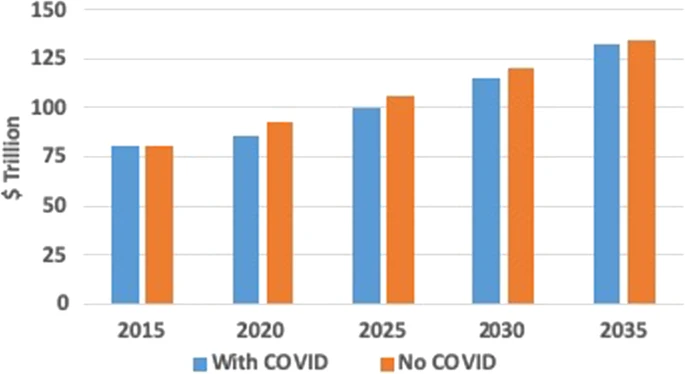
The COVID-19 effect on the Paris agreement

Covid-19 is estimated to reduce GDP in near decades, though in 2035 it is near its path and there been no pandemic.
The pandemic and efforts to control it are causing sharp reductions in global economic activity and associated fossil energy use, with unknown influence on longer-term efforts to limit greenhouse gas emissions under the Paris Climate Agreement. To explore this effect, estimates of economic recession and recovery in near-term months are extended to cover a return to full employment in future years, to be compared with an estimate of growth had COVID-19 not occurred. On the assumption that the Paris emissions pledges for 2020 will be met in any case, projection of global emissions with and without the pandemic show that, through its growth impact alone, it will yield only a small effect on emissions in 2030 and beyond. Other COVID legacies may include residual influences in patterns of consumption and travel, and the direction of recovery funds to low carbon investments. Most important, however, will be the effect of the economic shocks on the willingness of nations to meet (or augment) their existing Paris emissions pledges. The main effect of the pandemic on the threat of climate change, therefore, will be not its growth impact but its influence on national commitments to action.

про выбросы — от дельная кортинко

Wednesday, January 27, 2021

squirrel contraception came

во всем виноваты болелы Спартака (всегда)

Белок Великобритании начнут кормить противозачаточными, чтобы контролировать их рождаемость


Правительство Соединенного Королевства одобрило проект по использованию оральных контрацептивов в борьбе с ростом популяции серых белок. Они и другие инвазивные виды наносят лесам Великобритании ущерб в 1,8 миллиарда фунтов стерлингов в год. Об этом пишет BBC.

В Великобритании живет около трех миллионов серых белок. Они были туда завезены из Северной Америки в конце XIX века. Грызуны наносят огромный ущерб лесным массивам — сдирают кору с молодых деревьев. Особенно белкам интересны дубы — важный с точки зрения экологии вид, который поддерживает других представителей фауны.

Все это угрожает эффективности усилий правительства по борьбе с изменением климата, заявляет министр экологии Великобритании Зак Голдсмит

Thursday, January 14, 2021

The Rivers Filling The Oceans With Plastic

8 million tonnes of plastic ends up on the world's oceans every year but how does it get there? There are multiple ways plastic comes into direct contact with the sea including the wind, drains and illegal dumping. Rivers are the primary conduit, however, with a staggering 90 percent of all plastic waste entering the world's oceans eminating from just ten rivers.

That's according to data from “Export of Plastic Debris by Rivers into the Sea” by Christian Schmidt, Tobias Krauth, and Stephan Wagner, which was published in Environmental Science & Technology (2017) and later highlighted by UN Environment. The ten rivers in question flow through some of the world's most polluted cities, especially in Asia.

The research shows that the Chang Jiang or Yangtze River is the worst culprit, responsible for 1.47 million tonnes of plastic pollution reaching oceans each year. It has already impacted many ecosystems along the length of its 6,300 km (3,900 mi), threatening the Chinese alligator and the narrow-ridged finless porpoise. The baiji or Yangtze River Dolphin is already thought to be extinct, which would make it the first dolphin species to disappear as a direct result of human activity.

The Indus river flows through China (western Tibet), India, and Pakistan and it is named as the second worst plastic polluter on the planet, carrying 164,000 tonnes of it to the the ocean each year. China's second-longest river, the Yellow River, comes third with just over 124,000 tonnes of plastic waste transported into oceans per year.Infographic: The Rivers Filling The Oceans With Plastic | Statista