Showing posts with label пятна Цо. Show all posts

Wednesday, August 14, 2024

sex

Зумеры готовы отказаться от секса ради первого взноса по ипотеке на свой дом, 

пишет The Guardian.

Молодёжь готова пойти на крайние меры из-за зависти к старшему поколению, которое успело обзавестись недвижимостью ещё в 80-х годах и теперь может заниматься сексом в любое время и в любом месте своего дома, а не пытаться делать это на скамейках в парках, пишет газета.

Средняя стоимость недвижимости в Лондоне достигла $370 000. Эксперты отмечают, что среднему классу потребуется около 37 лет, чтобы накопить на первый взнос. Высокая стоимость жилья и большие расходы на секс заставили зумеров всерьёз задуматься об отказе от интима.

Sunday, April 30, 2023

Love

Недавнее исследование, проведенное с подачи марки презервативов Trojan в Совете Канады по сексуальному просвещению, ужаснуло всех!


Хорошо, мы утрируем.

Но цифры действительно поражают.

Оказалось, что 53% опрошенных мужчин (в опросе принимали участие тысячи человек) непосредственно после секса не обнимают партнершу и вообще никак не выражают ей признательность за, так сказать, сладостные секунды.

В то же время почти все опрошенные женщины объявили, что для них важно, чтобы партнер обнял их после близости.

Дальнейшие вопросы выявили, что такое внимание со стороны партнера сделает женщину на 30% довольнее сексуальной жизнью.

Целых 30%!

И все, что нужно, — это обнять свою (или чужую) девушку после секса. Согласись, это несложно. Конечно, это сложнее, чем отвернуться на бок и заснуть, но пару минут можно и потерпеть.

Playboy

Saturday, April 22, 2023

Just How Popular Is Male Chastity & Orgasm Denial

July 6, 2019 Emma

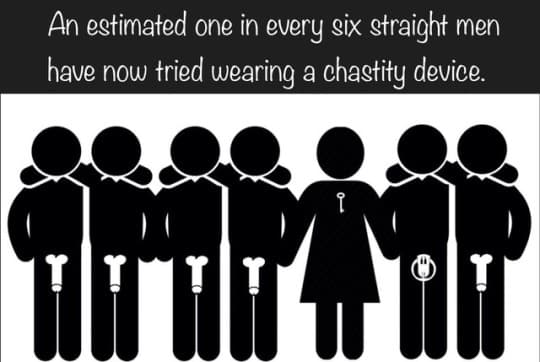
While I don’t have any way to disprove or authenticate the statistic in the header image for this blog which states “An estimated one in every 6 straight men have tried a male chastity device”, I will say that the trend is growing. One in six straight men sounds high to me but I don’t know. In the absence of clear data, all I can draw from is a personal experience. While it does seem like most have heard of chastity, few have tried it until talking to me. Hah!

Sexual teasing and denial have been part of relationships and our human sexual behavior forever. Since the middle ages, chastity belts have been used to manage the sexuality of others. Some reports say that these devices were fake and others say that they were commonplace, especially among royalty.

Regardless of whether medieval chastity was real or fake, male chastity has been making a resurgence due to new devices that allow effective management. The ever-growing popularity due to mainstream appearances, and the ability to purchase devices anonymously and inexpensively online has made male chastity devices much more accessible.

While we don’t have any way to know actual sales numbers, we can see that these devices rank above more mainstream sex toys in popularity rankings on major sites such as Amazon. How are chastity devices outselling many traditional dildos and vibrators you ask? The appeal of chastity is strong of both men and women. Many women want to lock their men because of the many psychological benefits. Within a matter of weeks, her man will become more devoted and focused than after years of counseling and therapy.

Why would a man want this? Many men feel enslaved to their penis and their sex drive. Some men are frustrated that at the level of focus and energy that goes into thinking about the opposite sex. Many men, especially men with important and demanding jobs like to hand over control at the end of their day.

Google Trends shows that searches for male chastity devices and information have consistently grown year over year. As the mainstream appeal increases, these devices will shed their taboo and hopefully begin to mold more and more relationships.

Do you have any metrics that might put some real numbers behind the popularity of these devices? Leave a comment below.

Thursday, January 12, 2023

Impact on society of a hardcore pornography

Venus Lux 2015
Berl Kutchinsky's Studies on Pornography and Sex Crimes in Denmark (1970), a scientific report commissioned by the Presidential Commission on Obscenity and Pornography, found that the legalizing of pornography in Denmark had not (as had been expected) resulted in an increase of sex crimes.

A study conducted in Denmark in 2003 and later published in Archives of Sexual Behavior found that Danish men and women generally believe that hardcore pornography has a positive influence on their lives.


Friday, December 30, 2022

Monday, December 12, 2022

The Body: Social and Cultural Dissections

This college-level handbook offers a comprehensive and accessible overview of sociological and cultural perspectives on the human body. Organized along the lines of a standard anatomical textbook delineated by body parts and processes, this volume subverts the expected content in favor of providing tools for social and cultural analysis.

Students will learn about the human body in its social, cultural, and political contexts, with emphasis on multiple, contested meanings of the body, body parts, and systems. Case studies, examples, and discussion questions are both US-based and international. Advancing critical body studies, the book explicitly discusses bodies in relation to race, class, gender, sexuality, ability, age, health, geography, and citizenship status. The framing is sociological rather than biomedical, attentive to cultural meanings, institutional practices, politics, and social problems. The authors use commonly understood anatomical frames to discuss social, cultural, political, and ethical issues concerning the embodiment.

By Lisa Jean Moore, Monica J. Casper

Friday, September 28, 2018

According To History, We Can Thank Women For Beer

[перевод/резюме: см каменты в низ у]

Beer consumption has been so disproportionately linked with men that it’s easy to forget women were the original brewers. Now, they’re staking their claim again.

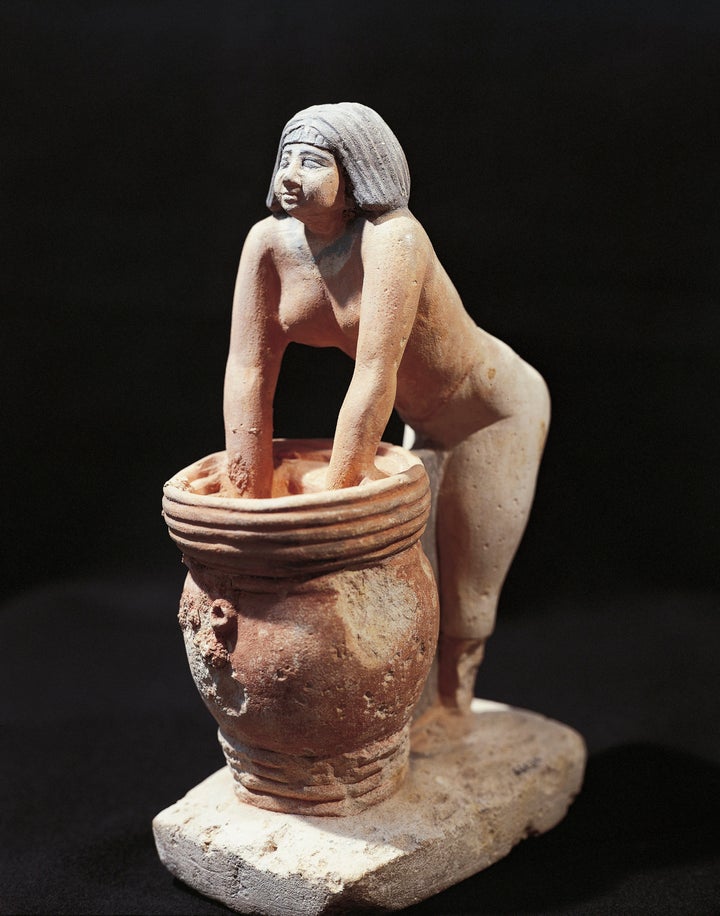
a woman making beer in Egyp
Beer has come a long way in its 5,000-year history. Today, women as brewery owners, brewers, beertenders, beer writers and beer consumers are rapidly chipping away at the perception of beer as a man’s drink. For centuries from beer’s inception, though, beer was intrinsically linked to women.

The first written beer recipe is considered to be the Hymn to Ninkasi, circa 1800 B.C. Ninkasi was the Sumerian goddess of beer, and the Sumerians were one of the first peoples who left us hard evidence of beer-drinking. Beer predates that recipe, though: Archaeologists have placed the first fermented beverage consumption at roughly 9,000 years ago and the first signs of beer, specifically, about 4,000 years later. Many believe beer propelled the shift from Paleolithic to Neolithic civilization when hunter-gatherers realized they’d have to settle in one place to reliably harvest grain.

Right from the start, brewing, a kitchen task, was women’s work. Both the Sumerians and Egyptians praised beer goddesses and associated brewing with women. In addition to Ninkasi as a woman to look up to, the Sumerians also had Kubaba. She is the only woman on the Sumerians’ list of kings, and she earned her ruling role not through birth, but through her work as a brewer. The Egyptians worshipped goddess of beer Menqet, and celebrated sun god Ra’s daughter, Sekhmet, whose bloodthirsty ways were calmed by beer.
Menqet was the goddess of beer, and she ruled over the Place of Reeds
Even as beer became a product to sell, women remained in charge. Patty Hamrick, a writer with a master’s in archaeological anthropology, teaches a class called The Archaeology of Beer at the Brooklyn Brainery. She points to the Babylonian Code of Hammurabi from Mesopotamia, one of civilization’s first set of written laws, as evidence of women’s authority in beer.

“[The Babylonian language] Akadian is a gendered language, and every time a law is listed for anything having to do with a tavern — like not overcharging for beer — every mention of a tavern owner uses ‘she,’” Hamrick said.

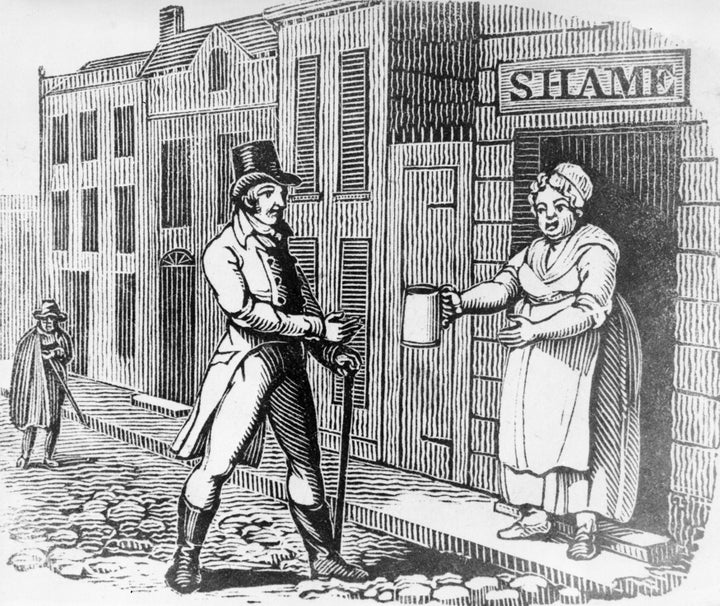
The concept of an alewife emerged around the fifth century A.D. Women were making large volumes of beer for their families and often had a surplus, so they’d signal that they had extra beer for sale by placing greenery over their doors, or in some cases, a broom. (Alewives sometimes also stood on corners to advertise, wearing tall hats, and had cats to chase the pests that ate their grain; it’s theorized that the alewife image gave way to the witch image.) Some alewives — or “brewsters,” a term for female brewers — even set up rough versions of bars in their homes.
A woman proffers a jug of ale to a man in the street
Hamrick places the shift of brewing from women to men around the development of brewing guilds. The earliest guild was founded in London around 1200, and they existed more widely by the 1500s.

“This is when we begin to see people making rules for how a beer is brewed, and the use of hops is becoming prevalent, so beer would last longer and you could make larger quantities at a time and ship it to different cities and even countries,” Hamrick told HuffPost. “Beer was becoming larger-scale than before.”

While hops and their preservative powers were the beginning of the end for women’s dominance in brewing, it’s believed to be a woman who first wrote about their scientific properties, says Jeffrey Pilcher, an author and professor of food studies at the University of Toronto Scarborough. Benedictine abbess Hildegard of Bingen was a brewer and herbalist who described using hops in beer in the 12th century.

When beer grew from a cottage industry to a big business with an import/export trade, it was no longer in the household domain. In addition to guilds, government officials set rules to take advantage of beer’s selling power. In Bruges, the first association of brewery workers met in 1447 to protect themselves from “innkeeper, woman, and provost.”

The Industrial Revolution further improved the efficiency of brewing and shipping beer worldwide. By the dawn of the 20th century, beer production — and subsequently, beer consumption — was firmly in the hands of men.

“Beer became known as a man’s beverage because it was made by men,” says Teri Fahrendorf, a brewmaster for three decades and founder of the Pink Boots Society, an organization for women in the beer industry. “The teamwork that had existed earlier in beer [production] went away, and women had a new image: demure, virginal, married. Suddenly it was maybe not so ladylike to have a beer.”

When Western women began entering the workforce en masse during the 1960s and 1970s, breweries became an option for employment. It’s been a struggle to overcome consumer attitudes and tone-deaf marketing campaigns — from objectifying women to suggesting they need their own special beer — but real change is happening, especially in more recent years.

“There are many women in the beer industry today, exponentially more than when I began my career,” says Tonya Cornett, R&D brewmaster at 10 Barrel Brewing in Bend, Oregon. “Women are plugging along and making a significant impact. … Most female brewers I know want to be known for the quality of the beer they make, rather than constantly focusing on the fact that they are female.”

Statistics are hard to come by, but a study by a Stanford University research team found that 20 percent of American breweries open in 2014 had a female co-founder; only 2 percent were exclusively female-owned. Furthermore, only 4 percent of the breweries they coded had a female head brewer or brewmaster.
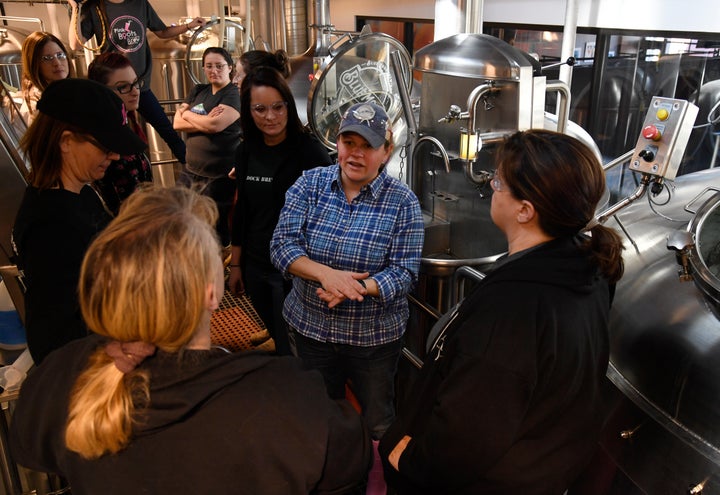
Emilie Stewart, center, talks with women brewers
It’s slow but steady going, and good news isn’t difficult to find. In 2014, Belgium got its first female Trappist brewmaster. More women are opening breweries in America’s booming craft industry, and the range of jobs women are exploring in beer is expanding, from becoming Cicerones who consult on bar and restaurant beer programs to those with science backgrounds running quality control for breweries or starting yeast labs. On a consumer level, a recent Brewers Association study found 31 percent of craft beer drinkers are women, up from 29 percent in 2015, points out Grace Weitz, who has a master’s in food studies and is the marketing manager at beer magazine Hop Culture.

Women’s growth in today’s industry is evident in the ever-increasing membership of the Pink Boots Society. The organization started as a list of all the female brewers Fahrendorf met or heard about on a cross-country brewing trip in 2007. There were 60 people on her first list, and 16 brewers and six beer writers at the first PBS meeting in 2008. According to current PBS President Laura Ulrich and board member Jen Jordan, there are now 2,090 members, 72 state chapters and 13 international chapters, and they are growing at a rate of 157 new members per month.

Hop Culture celebrated the role of women in beer today with a weeklong Beer With(out) Beards festival in August. Spearheaded by Weitz, events included panels on women’s beer history and on women in beer media and a festival featuring breweries that have female owners and/or employees.

“[It] came together because of an experiment that I did,” Weitz says. “I asked people to close their eyes and think about the last beer they had ... think about the aromas, the flavors, then think about the person that made that beer. Are they short or tall, blonde or blue-eyed, are they a big, bearded man or a woman? Nine times out of 10, they pictured this stereotypical big, burly man.”

Weitz and Hop Culture sought to create spaces for conversations to take place, for both men and women to take what they learned to their own communities and keep pushing boundaries. The events made a noticeable impact, according to Ann V. Reilly, events and promotions coordinator at Five Boroughs Brewing Co.
The Pink Boots Society
“[The festival crowd] was hands down the most diverse group of people I’ve ever seen at a New York City beer event. Every single gender, background, race, and way people choose to identify was covered,” she says.

The well-rounded attendance of Beer With(out) Beards is a mark of the progress women are making in an industry they helped establish centuries ago as well as the progress that still needs to be made — and the motivation women have to get there.

“Minds are changing, like in any industry,” Reilly says. “We had a taproom employee who is a woman, 5 feet tall and very slight but can easily lift a bag of grain like anyone else. Beer is for everyone, it doesn’t matter your background. We need to let go of stereotypes.”

Some women in the industry think it’s less important to understand the history of women’s role in beer as long as we’re focused on evolving attitudes today, while others, like Weitz, think understanding the history will help us avoid repeating our past (of edging women out of beer). She’s hopeful that with events like Beer With(out) Beards and organizations like the Pink Boots Society spreading awareness now, gender won’t need to be a topic of discussion in the future.

Friday, September 14, 2018

once a week, but not to day

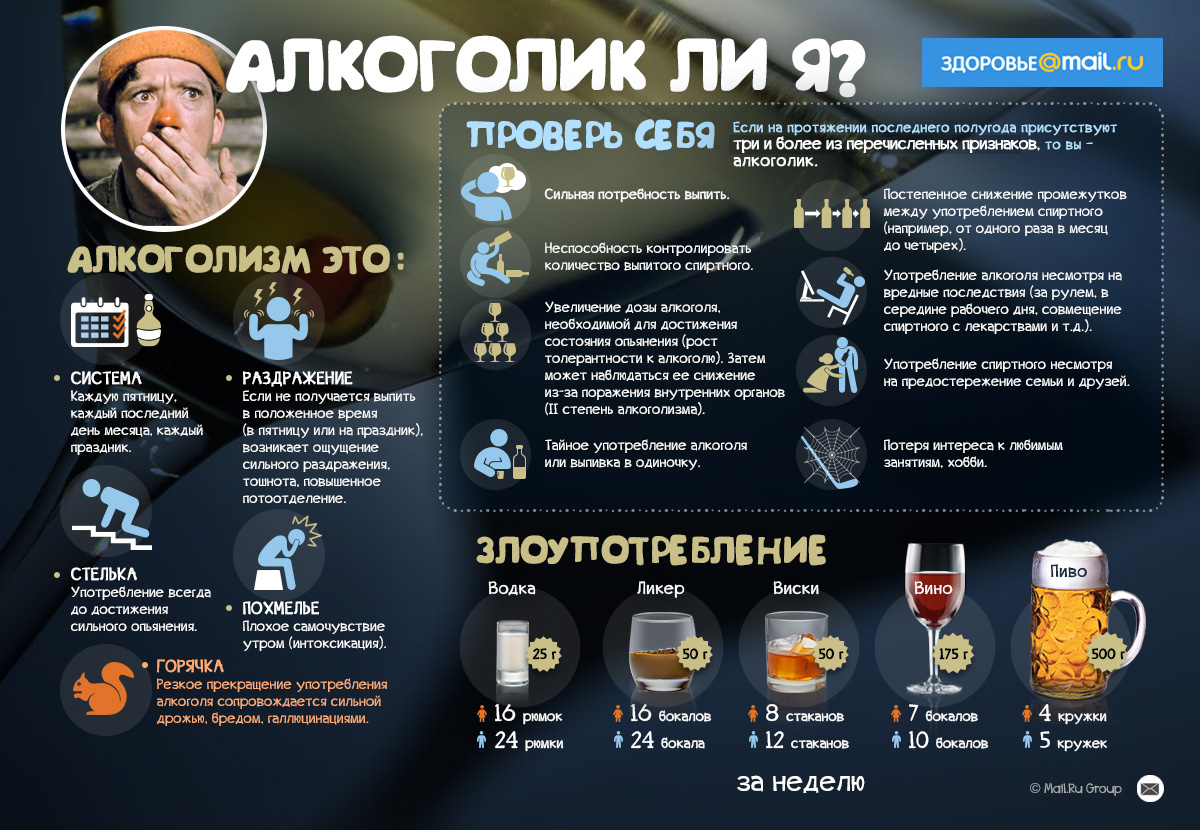
На основании опроса 9000 респондентов в возрасте 18—85 лет, проведенного в рамках кампании Drink Free Days, выяснилось, что один из пяти опрошенных в возрастной группе 45—65 лет пьют больше рекомендованных 14 порций в неделю.

Людям в возрастной группе от 45 до 65 лет следует хотя бы раз в неделю регулярно воздерживаться от алкоголя, советуют инициаторы кампании Drink Free Days («Дни без алкоголя»). Кампания проводится в партнерстве британской Национальной службой здравоохранения и благотворительной организацией Drinkaware, распространяющей информацию о вреде пьянства.

В 2016 году британские органы здравоохранения рекомендовали норму в 14 стандартных доз алкоголя в неделю для мужчин и женщин, что равно шести пинтам пива средней крепости или семи бокалам вина. Кроме того, говорят активисты Drink Free Days, людям за 40 легче изменить диету, начать упражняться или меньше курить, чем сократить дозы алкоголя.

По словам медиков, «дни без алкоголя» помогут решить проблемы со сном, похудеть и снизят риски высокого давления и развития рака.

«Даже один безалкогольный день в неделю даст шанс организму очиститься, а печени отдохнуть. Сразу снизится количество потребляемых калорий и станет лучше сон», — говорит доктор Джулия Верне, специалист по заболеваниям печени в Public Health England.

Привычка пить


В ходе опроса также выяснилось, что людям проще ввести полностью безалкогольные дни, чем заставить себя уменьшить привычные порции алкоголя — например, с большого бокала вина перейти на маленький.

«Большинство людей среднего возраста пьют не для того, чтобы напиться. Для одних это часть общения, другие таким образом компенсируют усталость на работе или же вознаграждают себя за успехи. Это становится частью жизни, привычкой», — продолжает доктор Верне.

Но с возрастом такая привычка неизбежно начинает способствовать развитию ряда заболеваний. Кроме того, говорит она, в Британии многие страдают избыточным весом, но даже не задумываются, сколько калорий содержится в алкогольных напитках.
Активисты по всему миру все настойчивее пытаются привлечь общественное внимание к проблемам, связанным с употреблением алкоголя, причем речь идет даже не об алкоголизме, а просто о привычке выпить по поводу и без повода.

Недавнее масштабное исследование международной группы ученых показало, что не существует безопасных доз алкоголя. Риски от одного бокала в день минимальны, но они есть.

Ранее специалисты рассказали о том, что алкоголь не приносит никакой пользы.


Ну,  это адепты буржуазной лженауки about углах трезвости — можно не обращать внимания

Friday, July 29, 2016

our Kama Sutra is more Kama and more Sutra

कामसूत्रकामसूत्र
The Kama Sutra (Sanskrit: कामसूत्र ) is an ancient Indian Hindu text written by Vātsyāyana. It is widely considered to be the standard work on human sexual behavior in Sanskrit literature.

С утра: город на Каме, где не знаем сами
по ссылке много другой чертофщынки, показывающей наше превосходство над всеми во всём — хадить обязан

Friday, April 22, 2016

Friday's reading till an orgasm

all 12 videos

These videos are—twelve women reading till an orgasm (caused by someone applying a vibrator under the table) renders them incapable. They are a joy to watch.

Hysterical Literature is a video art series by NYC-based photographer and filmmaker Clayton Cubitt. It explores feminism, mind/body dualism, distraction portraiture, and the contrast between culture and sexuality. (It's also just really fun to watch.)

Launched in August of 2012, the video series has been watched over 45 million times in 200 countries.

On the right:
Session Four: Stormy reads "American Psycho" by Bret Easton Ellis.

Friday, March 18, 2016

Friday по пятницам

не пей попа тницам — и тебе белочка на плечо сядеткамисары
посмотрите на нашего мальчега в полный рост

Friday, September 18, 2015

a diet creates a system of government

Интроспекция рождает знание, а диета рождает власть, точнее, способ управления.
Почему интроспекция?
Вспоминал презиков, что и как: обратил внимание на привычки и диету, вывод вполне естественный

Пьянство — это демократия
Трезвость — тоталитаризм

подозреваю, что ничего нового в этом нет: с одное стороны гедонизм и сибаритство, с другой унылое морализаторство

Friday, August 7, 2015

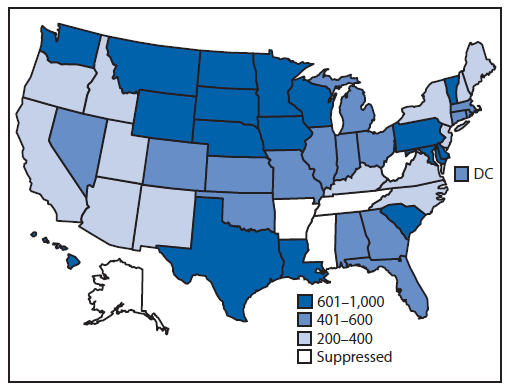
Alcohol-Impaired Driving Among Adults — United States, 2012

см: полный текст CDC про алкоголь за рулём

на кортинко:

Annual rate* of self-reported alcohol-impaired driving episodes per 1,000 population, among adults — Behavioral Risk Factor Surveillance System, United States, 2012


Abbreviation: DC = District of Columbia.

* Rates were suppressed if sample size was <50 or relative standard error was >30%.
[белые штаты штоль мало населены, про Аляску-то верно, или там норот не склонен распинацо??? тёмно-синие —— танцют фсе :)]


Friday, July 31, 2015

Ładna Kobieta

Українська етнічна еротика


Фотограф Анна Сеник, відома під псевдонімом Ładna Kobieta, працює у напрямі етнофотографії. Її роботи – це не просто фото, це історії із своїм сюжетом, героями та ідеєю. Вони цікаві та самобутні. Та, мабуть, найбільшого ажіотажу свого часу набула серія робіт фотографа під назвою “Купання”.

имхо: скрепно, эротично и про натализьм —— годно поп ять ницам, см ещё
Ładna Kobieta “Купання”, модельку могла бы и палутшэ найти
Більше її робіт можна перглянути на сайті Ładna Kobieta.

Friday, July 10, 2015

good friday

минздра предупреждает: тем не менее

Thursday, June 11, 2015

filthy cell

Зинаида Серебрякова. Спящая натурщица. 1941. Киевский национальный музей русского искусства
рецензия на роман:
...несчастный гей, оставленный любовником по ту (социалистическую) сторону Берлинской стены, и венгерский юноша-подросток в пубертатный период своего «лунного» созревания накануне прихода к нему в гости советских танков. 
для пробы кусочек:
«Покрытая испариной кожа, жирные выделения в порах, пот, осевший на волосах, взопрелость подмышек и сгибов суставов, запах автомобилей, контор, ресторанов, целого города в спутанных прядях влажных его волос, морская солоноватость не имеющей запаха спермы, табачная горечь в сладкой слюне с примесью разлагающихся в теплой пещере рта остатков еды, кожура, ошметки в потраченных кариесом зубах, зубная паста, запах перегоревшего алкоголя из глубины желудка, остывающий жар забывшегося одиноким сном тела и внезапный холодный пот беспорядочных сновидений, прохладное пробуждение, освежающая вода, мыло, ментоловый крем для бритья и минувший день, застывший в висящей на спинке стула вчерашней рубашке»
Зная это, он переходит к психологии тела, физиологии морали и стыдной красоте революционного мужеложства.