Showing posts with label гомофобия. Show all posts

Sunday, November 24, 2024

Sexual Orientation

Generational Differences in U.S. Sexual Orientation
A total of 9 percent of U.S. adults aged 18-64 identify as homosexual or bisexual, while another 1 percent prefer pansexual as their self-identification. This is according to data from Statista Consumer Insights and, as our chart shows, the proportion of people who do not identify as heterosexual is significantly lower among the older generations.

In the Baby Boomer group of participants, 96 percent see themselves as heterosexual. In Generation X, the figure is 94 percent. The first major generational shift can be observed among Millennials. For those born between 1980 and 1994, the figure is 88 percent. Another jump is then made when looking at the Generation Z results - here just 79 percent identify as heterosexual. The most common non-heterosexual response among Generation Z participants was bisexual, at 11 percent. The differences between the generations for those identifying as homosexual was minimal - three percent for all except Generation Z, with four percent.

Tuesday, April 30, 2024

Decriminalization of homosexuality

since the 18th century


April 29, 2024 Jean-François Mignot

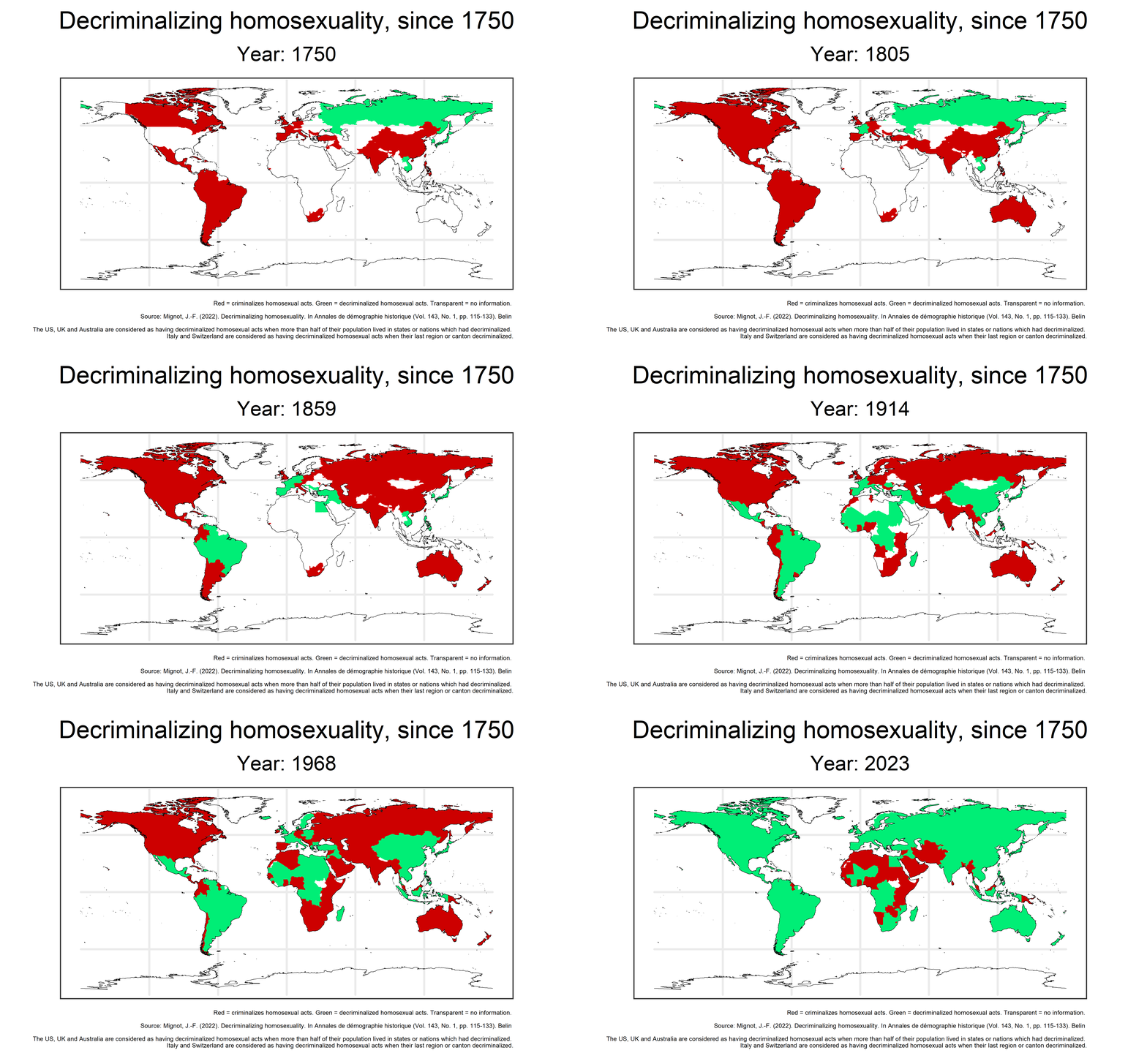
More and more people live in countries that have decriminalized homosexual relations, from 11% of the global population in the late 18th century to 79% in the early 21st century. However, as Jean-François Mignot observes, due to faster population growth in criminalizing countries, this trend may soon reverse.


Today, around 21% of the world’s population live in countries where homosexual acts (between consenting adults in private) are a criminal offence punished with fines, corporal punishment, imprisonment or even the death penalty. This implies that around 79% of humans reside in nations where homosexual acts have been decriminalized.

How did we get there? Where, when and how have homosexual relations been decriminalized in the world since the Age of Enlightenment? And is the proportion of humans living in a country which has decriminalized homosexuality more likely to increase, or decrease, in the foreseeable future?

Historical data on the legality of homosexual acts – and historical population numbers as well as UN population projections until 2100 – were gathered on 203 present-day countries, allowing us to answer these questions.

The first wave of decriminalization, from the French Revolution


In the late 18th century, when just 11% of the world’s population lived in countries where homosexual acts were not a criminal offense, France became the first country to decriminalize these practices. The French Penal Code of 1791, drafted in the liberal spirit of the Enlightenment, abolished a “crowd of imaginary crimes”, including sodomy, and the French Penal Code of 1810, which was applied in Napoleonic Europe, inspired the first wave of decriminalization in Western Europe (and, indirectly, in the French, Spanish, Dutch and Belgian colonies), Latin America and the Ottoman Empire. However, in the 19th century fewer than 25% of humans lived in a country where homosexual relations were not illegal. Most notably, Great Britain criminalized “buggery” at home and disseminated this criminalization across its immense empire in Africa, the Middle East, Asia and Oceania.
 

The second wave of decriminalization, since the 1960s


From 1950 to 2020, the proportion of countries where homosexual acts were not a criminal offense almost doubled, from 35 % to 66 %. This second wave, beginning in the 1960s in Western and Northern Europe and Canada, then spread to Oceania, Eastern Europe and finally Asia. It was driven by liberalization of public opinion and social movements. In India, homosexual acts were decriminalized by the Supreme Court decision Navtej Singh Johar v. Union of India (2018). Africa is the only continent where, since 1950, the decriminalization movement has had relatively little success.

Recriminalization in the Muslim world?


In contrast to these trends, in countries with a Muslim majority, fewer people now live in a country where homosexual acts are not illegal; the proportion fell from 47% in 1950 to 41% in 2020. In addition, since the 1990s, several sub-state entities not included in the animated map have begun to criminalize homosexual acts or impose stricter penalties in the name of Islamic law (sharia). This is the case in provinces of southern Somalia; in the Chechen Republic of the Russian Federation (1996); in Indonesia in the province of Aceh (2002) and in the capital of South Sumatra (2006); and in the northern states of Nigeria (1999). Punishments for homosexual acts are also especially harsh in a few Islamic-law states and sub-state entitiesю

The future of decriminalization


Relatively more humans are now legally free to engage in homosexual acts, but will this long-term trend continue? There are reasons to doubt it. First, the diffusion of religious fundamentalism, especially but not only in the Muslim world, may lead some countries to recriminalize homosexual acts. Second, countries where homosexual acts are currently illegal have higher fertility and will have faster population growth in the future than those where they are not criminalized today. This is why the share of humans who are legally free to engage in homosexual acts will likely decrease, unless, of course, attitudes and laws change in a large enough number of sufficiently populated countries where homosexuality is currently outlawed.

References

Thursday, April 20, 2023

LGBT propaganda criteria

Роскомнадзор опубликовал критерии определения "ЛГБТ-пропаганды"


Роскомнадзор разработал критерии, по которым в России будут определять запрещённую "ЛГБТ-пропаганду".

Документ, в котором они перечисляются, опубликован на официальном портале правовой информации.

Согласно приказу Роскомнадзора, в России будут блокировать ресурсы, если на них будет информация, которая:
🔻направлена "на убеждение в привлекательности нетрадиционных сексуальных отношений, предпочтений и установок, в том числе на формирование положительного образа людей, состоящих в нетрадиционных сексуальных отношениях";
🔻 направлена "на формирование искаженного представления о социальной равноценности традиционных и нетрадиционных сексуальных отношений, предпочтений и установок";
🔻 "оправдывает отказ от традиционных сексуальных отношений в пользу нетрадиционных";
🔻 "вызывает интерес к нетрадиционным сексуальным отношениям и направлена на изменение негативного отношения к ним путем навязывания сведений о нетрадиционных отношениях, в том числе систематического распространения материалов с изображением или описанием нетрадиционных сексуальных отношений";
🔻 "обосновывает преимущество нетрадиционных сексуальных отношений над традиционными";
🔻 направлена "на формирование положительного отношения к смене пола".

Критерии вступят в силу 1 сентября 2023 года и будут действовать шесть лет. Закон, полностью запрещающий "пропаганду нетрадиционных сексуальных отношений" среди людей всех возрастов, был принят в России осенью прошлого года.

Tuesday, February 21, 2023

Anglican church and same sex marriages

Англиканство и однополые браки:
консервативные церкви отреклись от архиепископа Кентерберийского


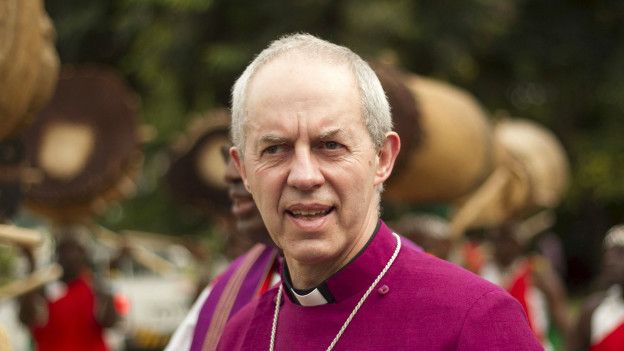
Архиепископы нескольких англиканских церквей из разных регионов мира в знак протеста против решения Церкви Англии благословлять однополые пары заявили, что больше не считают архиепископа Кентерберийского лидером всемирного Англиканского сообщества.

В начале февраля Генеральный синод Церкви Англии после двух дней дебатов сделал важный символический шаг навстречу однополым парам: разрешил им приходить в церковь и получать благословение.

"Генеральный Синод Церкви Англии приветствует предложения, согласно которым однополые пары, заключившие гражданский брак или находящиеся в гражданском партнерстве, смогут приходить в церковь для благодарения, посвящения их отношений Богу и получения Божьего благословения", - говорилось в официальном сообщении Синода.

Это еще не признание однополых браков со стороны церкви, а лишь разрешение однополым парам приходить в церковь и получать благословение именно в качестве пары, но и такой шаг возмутил консервативных архиепископов Всемирного южного содружества англиканских церквей.

Заявление об утере архиепископом Кентерберийским Джастином Уэлби статуса морального лидера подписали главы англиканских церквей Южного Судана, Судана, Чили, региона Индийского океана, Конго, Мьянмара, Бангладеш, Уганды, Александрии и Меланезии.

"Церковь Англии выбрала путь разрыва с теми провинциями, которые хранят верность исторической библейской вере [...] мы больше не может признавать архиепископа Кентерберийского первым среди равных лидеров глобального содружества", - говорится в заявлении.

Англиканские церкви мира объединены в Англиканское содружество, но все они автокефальны, самостоятельны и равны, и предстоятель Церкви Англии, архиепископ Кентерберийский, считается лишь символическим лидером содружества.

Tuesday, August 16, 2022

The Social Situation

Homophobia and Discrimination on Grounds of Sexual Orientation and Gender Identity in the EU Member States


On December 18 2008 the UN General Assembly heard a strong declaration drafted by France and The Netherlands on behalf of the European Union and co-sponsored by sixty-six countries from all regions. It called for the global decriminalization of homosexuality and condemned human rights violations based on sexual orientation or gender identity. 

In the European Union Article 13 of the EC Treaty prohibits any discrimination based on sexual orientation and the EU’s Charter of Fundamental Rights is the first international human rights charter to explicitly include the term “sexual orientation”. The legal study we published in June 2008 shows that 18 EU Member States already provide quite comprehensive protection against discrimination on grounds of sexual orientation. In July 2008, a further step has been made when the European Commission proposed stronger EU wide protection against discrimination on all grounds. 

The social situation, however, is worrying. In recent years a series of events in EU Member States, such as the banning of Pride marches, hate speech from politicians and intolerant statements by religious leaders, have sent alarming signals and sparked a new debate about the extent of homophobia and discrimination against lesbian, gay, bisexual, transsexual and transgendered (LGBT) persons in the European Union. Such events led the European Parliament to adopt in 2005 a resolution condemning homophobia and sexual orientation discrimination.

Two years later in the summer of 2007 the European Parliament asked the newly established Fundamental Rights Agency to develop a comprehensive comparative report covering all EU Member States on the situation regarding homophobia and sexual orientation discrimination. In response the Agency carried out a large scale legal and social research project during 2007 and 2008.

This comprehensive report composed of two parts, a legal and a social analysis, is presented to the European Parliament and its Committee on Civil Liberties, Justice and Home Affairs as evidence for actions needed in order to respect, protect and promote the fundamental rights of LGBT persons across the EU.

The social analysis contained in this publication is based on data and contextual information contained in country reports for all EU Member States. Unique material was gathered through fieldwork interviews with LGBT NGOs, Equality Bodies and public authorities in all Member States and a questionnaire survey of stakeholders. This new data has been combined with a thorough examination of existing academic studies and Eurobarometer surveys to develop the second part of our report, a comprehensive social analysis that complements the FRA’s legal analysis released in June 2008.

The work shows that the current human rights situation for lesbians, gay men, bisexuals, transsexuals and transgender persons is not satisfactory. Many LGBT persons experience discrimination, bullying and harassment, while, more worryingly, occurrences of physical attacks were also detected: Derogative words are used for gays and lesbians at schools. Harassment can be an everyday occurrence at the workplace. Relationships often lack the ability to secure one another as full legal partners. At retirement homes, awareness of LGBT persons’ needs is rare. Under these circumstances ‘invisibility’ becomes a survival strategy. In a European Union that bases itself on principles of equal treatment and non-discrimination legislation this is unacceptable. 

What needs to be done? 


Combating fundamental rights violations effectively requires first of all a firm political commitment to the principles of equal treatment and non-discrimination. Political leaders at EU and national level need to take a firm stance against homophobia and discrimination against LGBT and transgendered persons contributing in this way to a positive change in public attitudes and behaviour. 

Secondly, it requires good knowledge of the situation based on robust data guiding the development of evidence based policies and actions. This research represents an important positive step in this direction. But equality authorities and other specialised bodies in many Member States still need to develop data collection mechanisms, promote scientific research, and actively encourage LGBT people to come forward and lodge complaints on incidents of discrimination. 

In the light of the findings of this social analysis, the Agency welcomes the European Commission’s Proposal for a Council Directive on implementing the principle of equal treatment between persons irrespective of religion or belief, disability, age or sexual orientation. This new Directive would extend the protection against discrimination on grounds of sexual orientation beyond the area of employment and thus address some of the key issues emerging from this report. The opinions contained in this report provide EU institutions and the Member States, as our Regulation requires, with the necessary assistance and expertise in order to support them when taking measures or action within their respective spheres of competence to fully respect fundamental rights.

In closing I would like to thank for their work the staff of the Agency, Caroline Osander, project manager from the Danish Institute for Human Rights , and project manager, Mikael Keller, consultant Mads Ted Drud-Jensen from COWI .

Morten Kjaerum Director, European Union Agency for Fundamental Rights

Thursday, January 27, 2022

parents to children ?

same sex family

Передаётся ли гомосексуальность родителей их детям?


В общественном сознании, как в России, так и на Западе, довольно глубоко укоренилось мнение, что ребёнок, воспитываемый гомосексуальными родителями, непременно станет гомосексуалом, даже если он приёмный и биологически к этому не предрасположен. Насколько это интуитивное мнение соответствует реальности? Нет сомнений, что есть геи и лесбиянки, чьи родители также гомосексуалы. Но единичные примеры это не доказательство, к тому же подавляющее большинство гомосексуалов имеет гетеросексуальных родителей. Чтобы подтвердить или опровергнуть данное мнение нужно сравнить частоты геев и лесбиянок среди взрослых детей, выросших в гетеросексуальных и гомосексуальных семьях. Такие исследования проводились и, вопреки ожиданиям, оказалось, что частоты гомосексуальности были сходны в сравниваемых группах. Причём данный результат проявился уже в ранних работах, когда отношение к гомосексуальности было более чем неодобрительным и заранее предполагалось негативное влияние гомосексуальности родителей на их детей. 

Так что мнение о неизбежности гомосексуальной ориентации детей геев и лесбиянок явно не соответствует действительности.

Sunday, January 2, 2022

Do they do better in school?

Дети из гомосексуальных семей лучше успевают в школе?


Продолжаю тему двух предыдущих постов о влияния гомосексуальности родителей на их детей. Напомню, что результаты многочисленных исследований данного вопроса крайне противоречивы. Это во многом связано со сложностью формирования репрезентативной (то есть отобранной случайным образом) и достаточно большой выборки детей из гомосексуальных семей. Действительно, в большинстве исследований изучаемые выборки были небольших размеров и представляли собой “convenience sample”. А это означает, что отбор не был случайным, а из-за малочисленности выборки статистический анализ зачастую оказывался малоинформативным. Однако этих проблем нет в исследованиях, использующих данные всеобщей переписи населения или масштабных опросов, таких как American Community Survey (ACS). Однако здесь на первый план выходит другая проблема - правдивость ответов. Дело в том, что количество гомосексуальных семей в целом невелико и поэтому даже незначительное число «ложных» ответов может существенно исказить картину. К примеру, американское статистическое агентство было вынуждено дезавуировать свою оценку количества гомосексуальных семей, основанную на опросе ACS 2010 года, так как при верификации оказалось, что около половины семей, обозначивших себя гомосексуальными, в действительности таковыми не были. Но, даже оставляя в сторону вероятность ложных ответов, такие исследования имеют принципиальное ограничение – они фиксируют положение дел только на данный момент времени (поэтому их часто сравнивают с фотоснимком). Из-за этого невозможно проследить за изменениями структуры семей, определить, как долго ребёнок жил с данными родителями и были ли за это время в семье разводы, новые браки и другие события, способные повлиять на ребёнка.

Благодаря внедрению «цифровизации» у исследователей стали появляться возможности сопоставления и анализа различных документов, относящихся к конкретному человеку, (свидетельство о рождении/ браке/ разводе, налоговая декларация, результат ЕГЭ и др.). При этом анонимность сохраняется. Информация в документах, несомненно, более достоверна, чем получаемая при опросах. Исследование, о котором пойдёт речь в данном посте, интересно именно тем, что оно основано только на использовании документов. В нём сравнивалась школьная успеваемость детей из гомосексуальных и традиционных семей. Результаты представлены в статье “School Outcomes of Children Raised by Same-Sex Parents: Evidence from Administrate Panel Data”, которая была опубликована в 2020 году в журнале American Sociological Review. Статья доступна и содержит все «прелести», характерные для социологических работ (26 страниц плюс приложение). Но методически это исследование, на мой взгляд, значительно совершеннее, чем другие работы по этой теме. Так что стоит рассмотреть его результаты (несмотря на мою неприязнь к социологическим статьям).

Данное исследование стало возможным благодаря существованию в Голландии уникальной (так её характеризуют авторы) «административной панели» (базы данных), которая охватывает всё население страны. Авторы воспользовались данными, относящимися к периоду с 1995 по 2019 год. В Голландии гомосексуальное партнёрство регистрируется с 1998 года, а гомосексуальные браки с 2001 года. У каждого жителя страны есть свой идентификационный номер, ведётся регистрация места проживания (также имеющее численное обозначение) и его смены, то есть для каждого домохозяйства можно прояснить, какие номера и в какое время в нём проживали. Для каждого номера есть информация о поле, дате рождения, обучении, ежегодных доходах и др., с ним также связаны номера родителей, партнёров, детей (как собственных, так и приёмных). Анализируя этот огромный массив данных, авторы идентифицировали номера всех детей, рождённых в период с 1998 по 2007 год (ограничение 2007 годом связано с тем, что дети, рождённые позднее, на момент исследования ещё не закончили начального обучения). Из них были отобраны только дети, которые жили в семьях с двумя родителями. Общее число таких детей составило 1 204 692, из них 2971 жили в семьях с родителями одного пола (в большинстве случаев это были дети лесбиянок и только в 185 семьях оба родителя были геи). На основании данных о проживании были также выделены подгруппы детей, которые жили с родителями с самого рождения (среди гомосексуальных семей таких было 1300).

Коротко о данных, оценивающих учёбу. Начальное обучение в Голландии начинается с 5-летнего возраста и продолжается 7 лет. В последний год, то есть в 12-летнем возрасте, проводится тест, одинаковый для большинства школ (CITO-test), но с ним сопоставимы и иные проводимые тесты. На основании результатов теста принимается решение по какому из трёх возможных путей пойдёт дальнейшее (вторичное) образование - (пред)профессиональное, общее, или (пред)университетское. Завершившим вторичное обучение выдаётся диплом. В исследовании дети из традиционных и гомосексуальных семей сравнивались как по результатам теста начальной школы, так и по доле тех, кто смог завершить вторичное обучение и получить соответствующий диплом.

Начнём с результатов теста в конце начальной школы. Поскольку в разные годы сложность теста могла слегка отличаться, они были стандартизованы, благодаря чему результаты разных лет можно рассматривать совместно. Для каждой группы рассчитывалось среднее значение стандартизованных результатов теста. Сравнение проводилось по отношению к детям из традиционных семей, что определялось как разница в средних значениях теста. Однако величина этой разницы измерялась несколько необычно – в единицах стандартного отклонения. Для тех, кто далёк от статистики, поясню, что чем больше эта величина, тем значительнее различие; если она отрицательна, то успеваемость хуже чем в группе, с которой проводится сравнение, а если она положительна, то, соответственно, успеваемость лучше. Результаты этого сравнения приведены в таблице 1.

Табл.1 Сравнительные результаты теста в конце начального обучения

Напомню, что в таблице 1 приводятся отличия, выявляемые при сравнении с детьми из традиционных семей. В первой строке даны результаты, касающиеся всех детей из гомосексуальных семей, а во второй только тех из них, кто жил в семье с рождения. Первый столбец относится к детям из гомосексуальных семей, второй к детям из традиционных семей. В третьем столбце показаны результаты прямого сравнения, а в последнем столбце они даны после контроля по социоэкономическим параметрам, способным влиять на результат. Среди последних пол ребёнка, поскольку мальчики и девочки могут отличаться как по успеваемости, так и по их отношение к гомосексуальности родителей. Другие параметры касаются родителей - степень образованности, средний возраст, этническое происхождение, доход, состав и размер семьи. Контролирование этих параметров осуществлялось с помощью статистического метода, называемого линейной регрессией. Во всех четырёх сравнениях, приведённых в таблице 1, у детей их гомосексуальных семей результат теста в среднем был лучше, чем у их сверстников из традиционных семей. При этом статистическая значимость выявленных отличий намного превосходила традиционное значение приемлемого порога р ≤ 0.05. Лучший показатель (0.194) был у детей, живших с гомосексуальными родителями с рождения. Однако различие заметно уменьшалось после контроля по социоэкономическим факторам – почти двукратно для группы «Все» (0.106 против 0.054) и чуть меньше для группы «В семье с рождения» (0.194 против 0.139). Заканчивая с начальным обучением, отмечу, что для меня различия, выраженные в единицах стандартного отклонения, слишком абстракты и не позволяют судить о том, насколько они существенны. Возможно для таких как я, авторы и привели в своей статье имеющиеся в научной литературе данные, согласно которым обучение у хорошего педагога улучшает результаты тестов на 0.32 стандартных отклонений. То есть приведённые в таблице 1 отличия (включая максимальное 0.194) меньше тех, что связаны с уровнем преподавания.

Теперь рассмотрим результаты, касающиеся вторичного обучения. В этом случае сравнивались доли тех, кто смог его завершить (получил диплом). Сравнение опять-таки шло с детьми из традиционных семей. Его результаты показаны в таблице 2 (различия оценены в процентах).

Табл.2 Сравнительные результаты теста по окончанию вторичного обучения

На первый взгляд, результаты сравнения неоднозначны. Так при прямом сравнении у детей из гомосексуальных семей (группа «Все») результат на 7% хуже, чем у их сверстников из традиционных семей, а в группе «В семье с рождения» результат обратный – на 1% лучше. Однако оба эти отличия оказались статистически незначимы (поэтому значение р для них в таблице отсутствует). Это означает, что достоверной разницы при прямом сравнении не выявлено. А вот после контролирования по социоэкономическим факторам результат оказался лучшим у детей из гомосексуальных семей, причём с высокой статистической значимостью (p<0.001). В сравнении с детьми из традиционных семей результат был лучше на 4% в группе «Все» и на 4.8% в группе «В семье с рождения».

Таким образом, данное исследование показывает, что успеваемость детей из гомосексуальных семей не только не хуже, но возможно даже лучше, чем у их сверстников из традиционных семей. Предвижу возмущённые комментарии, но предлагаю не торопиться. Авторы исследования, хотя и, несомненно, предвзяты, тем не менее, интерпретируют полученные результаты достаточно объективно. Они обращают внимание на то, что оценки заметно меняются при контроле социоэкономических параметров. Это означает, что по этим параметрам гомосексуальные родители в среднем отличаются от традиционных. И действительно в данном исследовании гомосексуальные родители в среднем были более образованными и материально обеспеченными. Это вполне объяснимо, так как гомосексуальные пары должны иметь достаточно средств, требуемых для оплаты искусственного оплодотворения у лесбиянок или суррогатного материнства геев. Финансовый вопрос важен и в случае приёмных детей, так как при принятии решения органами опеки семейный доход является одним из важнейших факторов. Ну а финансовое благополучие коррелирует с уровнем образования. Ещё один фактор, на который указывают авторы, это более высокая мотивация иметь ребёнка. В отличие от детей, родившихся потому что «залетела», у гомосексуальных пар всё тщательно взвешено и спланировано (поэтому их средний возраст в исследовании несколько выше, чем в традиционных семьях). Чтобы стать родителями гомосексуальные пары должны преодолеть довольно много сложностей (бюрократических, медицинских, финансовых и иных), к тому же в обществе они нередко встречаются с довольно неприязненным отношением к себе. Поэтому далеко не все гомосексуальные пары решаются завести ребёнка. Те же, кто осуществил своё желание стать родителями, должны были быть сильно на это мотивированны. Говоря о школе, невозможно не отметить, что дети гомосексуальных родителей там часто подвергаются буллингу (об этом говорят исследования, проводимые в разных странах, в том числе и в «продвинутых» в отношении толерантности США и Австралии). С данной проблемой не так-то просто справится и, планируя ребёнка, гомосексуальная пара должна это тоже учитывать.

Thursday, December 2, 2021

children in homosexual families

Нешуточные страсти вокруг статьи о негативных последствиях для детей из гомосексуальных семей


Мнение, что гомосексуальность родителей негативно сказывается на детях, живущих в таких семьях, глубоко укорено в сознании очень многих людей по всему миру. Однако в чём проявляется такое негативное воздействие? Хотя поискам ответа на этот вопрос посвящены многочисленные исследования, их результаты довольно противоречивы. Согласно одним, у таких детей в сравнении с их сверстниками из обычных семей понижена успеваемость и хуже показатели психического и физического здоровья. Другие же исследования подобных отличий не выявили, а в некоторых показатели у детей гомосексуальных родителей были даже несколько лучше. Важно отметить, что почти во всех случаях изучали не случайную выборку детей из гомосексуальных семей, а так называемый “convenience sample” («удобная выборка»), то есть тех, кто был доступен, кого удалось рекрутировать для участия в исследовании. Однако результаты, получаемые при изучении “convenience sample”, нужно рассматривать лишь как предварительные. В большинстве исследований имелся ещё один недостаток - маленький размер выборки. Из-за этого некоторые выявленные риски не достигали уровня статистической значимости. С другой стороны нельзя было исключить и обратного - риски, размер эффекта которых невелик, могли быть не выявлены в маленькой выборке. Именно поэтому в 2005 году американская ассоциация психологов, на основании анализа данных 49 исследований, констатировала, что убедительные доказательства негативного воздействия отсутствуют, но изучение данного вопроса следует продолжить, в том числе с применением иных методическимх подходов.

К тому времени, когда делалось данное заключение, вектор отношения к самой проблеме сильно изменился. Если исследователи 80-90х годов прошлого века исходили из того, что негативное воздействие, несомненно, имеется и его надо лишь чётко охарактеризовать, то в нынешнем веке доминирующей стала обратная установка, направленная на доказательство отсутствия такого воздействия. Во многом это было следствием политизации любых тем, касающихся ЛГБТ. На этом фоне «громом среди ясного неба» стало исследование американского социолога Mark Regnerus “How different arethe adult children of parents who have same-sex relationships? Findings from the NewFamily Structures Study” (Насколько отличны взрослые дети родителей, имевших однополые отношения? Результаты Исследования Новых Семейных Структур”). Эта статья была опубликована в 2012 году в авторитетном научном журнале Social Science Research. Доступ к ней через редакцию журнала платный, но на сайте она в открытом допуске, правда там есть пометки (некоторые фрагменты текста выделены жёлтым цветом).

Данное исследование вызвало необычайно большой общественный интерес. О нём писали ведущие СМИ мира, на его результаты ссылались политические деятели, в том числе и российские, их приводили в качестве аргументов в Верховном Суде США. В самом же научном сообществе по этому поводу разразился грандиозный скандал. Так что же такого было в этой статье, что вызвало такую реакцию? Попробуем разобраться, но предупреждаю, что это потребует некоторых усилий.

Особенностью рассматриваемого исследования было то, что оно касалось не детей, а взрослых людей в возрасте от 18 до 39 лет, некоторые из которых имели гомосексуальных родителей. Для формирования выборки была привлечена коммерческая компания Knowledge Networks, предоставляющая услуги опроса населения в академических целях. Данная компания имеет сформированную панель жителей США, которая, как заявлено, довольно близко соответствует популяции этой страны. При проведении анкетирования по какой-то конкретной теме, компания использует часть людей из этой панели. Анкетирование проводится в электронном формате или по телефону. Вопросы анкеты предоставляются теми, кто заказывает опрос, в данном случае это был Mark Regnerus. Он охарактеризовал полученную таким образом выборку, как «популяционную» и считал её лишённой недостатков, свойственных “convenience sample”.

Выборка, вошедшая в исследование и получившая название NFSS (New Family Structures Study), включала 2988 человек. В зависимости от типа семьи, в которой росли опрошенные, автор распределил их на 8 групп. Ниже даны названия этих групп и количество человек в каждой из них:
1) IBF - Intact Biological Family (мать и отец, неразведённые), N= 919
2) LM - Lesbian Mother (мать лесбиянка), N= 163
3) GF - Gay Father (отец гей), N=73
4) Adopted (приёмные родители), N= 101
5) Divorced (родители развелись), N= 116
6) Stepfamily (один из родителей неродной), N = 394
7) Single parent (только один родитель), N = 816
8) All others (иные варианты), N = 406

В каждой группе определялись средние значения для 40 изучаемых параметров, которые были представлены в трёх таблицах (показаны ниже). В таблицу 1 входили параметры только с двумя возможными вариантами ответа. К примеру «Являешься ли в настоящее время безработным?» Ответ либо «да», либо «нет». Таблица 2 касалась параметров, определяемых непрерывными величинами, то есть, задана определённая шкала, внутри которой опрашиваемый решал какое значение ему соответствует. К примеру, по вопросам об уровне образованности, здоровью, осознанию себя счастливым использовалась непрерывная шкала от 1 до 5. В таблице 3 были представлены параметры, оцениваемые количеством событий, например, число арестов.

Таблица 1

Таблица 2

Таблица 3

Сравнение групп по каждому из параметров проводилось в трёх вариантах. В первом случае сравнение шло с группой IBF (семья с отцом и матерью) и отличия, оказавшиеся статистически значимыми (р≤0.05), обозначены в таблицах жирным шрифтом. Во втором случае сравнение было опять-таки с той же IBF, но здесь с помощью логической регрессии осуществляли поправки по полу, возрасту, расе и другим параметрам. Статистически значимый результат обозначен в этом случае как ​* (звёздочка). В третьем случае сравнение шло с группой LM (матери лесбиянки) и статистически значимый результат обозначен как ^ (каретка).

Из данных таблиц следует, что дети гомосексуальных родителей (группы LMи GF) в сравнении со сверстниками из обычных семей (группа IBF) хуже успевали в учёбе; они чаще курили и использовали марихуану, чаще становились жертвами сексуального насилия со стороны взрослых, их чаще арестовывали и др. Войдя во взрослую жизнь, они оказались менее приспособленными (более высокая частота безработных, зависимость от социальных пособий, более частые депрессии и др.). Именно на основании этих данных Mark Regnerus и сделал вывод, что гомосексуальность родителей приводит к негативным последствиям для их детей.

Публикация данной статьи вызвала шквал возмущения, особенно со стороны ЛГБТ. Оставим пока в стороне чрезмерно эмоциональную реакцию последних и посмотрим на критические замечания, высказанные профессионалами. И вот здесь выяснилось, что методическая часть работы, мягко говоря, дефектна. Социологи вдребезги разнесли утверждение, что выборка соответствует популяции. По их мнению, то, как коммерческая компания Knowledge Networks отбирает людей для опроса, никак не позволяет назвать выборку случайной, то есть она фактически тот же самый “convenience sample”. Но самая большая критика касалась того, как формировались группы, имевшие гомосексуальных родителей (LM и GF). Вопрос анкеты не спрашивал прямо, была ли мать лесбиянкой или отец геем. Он был сформулирован по-другому: Did either of your parents ever have a romantic relationship with someone of the same sex? (Были ли у кого-либо из ваших родителей когда-либоромантические отношения с кем-то того же пола?). Но данные опросов в США свидетельствуют, что многие люди в какие-то моменты своей жизни имели однополые сексуальные контакты, но отнюдь не считают себя гомосексуалами (об этом в посте). Другие претензии касались гомогенности группы LM (мать лесбиянка). Так, многих, включённых в эту группу, можно было также отнести к группе Singleparent или к группе Divorced. Фактически, только двое из группы LM были из стабильных гомосексуальных семей. В эту же группу были отнесены и 12 опрошенных, которые отметили гомосексуальность обоих родителей. Автор объяснил, что это было сделано с целью увеличения размера группы LM (иначе статистический анализ вряд ли был информативен). Но тогда вполне можно предположить, что причиной худших показателей в группе LM в сравнении со стабильными гетеросексуальными семьями, является не гомосексуальность родителей, а какой-то иной фактор, например стресс от развода родителей. Не буду касаться других «изъянов» исследования, но отмечу тот факт, что Mark Regnerus пошёл навстречу своим критикам и предоставил им первичные данные NFSS. Несколько учёных независимо друг от друга провели собственный анализ этих данных и никаких негативных последствий для детей гомосексуальных родителей не выявили. Эти результаты были также опубликованы в научных журналах, в том числе и Social Science Research. Для меня остаётся загадкой, почему социологи игнорируют поправку Бонферрони, которая требуется при проведении множественных сравнений. Никто из критиков о ней даже не упоминал, а ведь с данной поправкой исчезла бы статистическая значимость большинства результатов. Как бы там ни было, для меня очевидно, что результаты работы Mark Regnerus нельзя считать достоверными.

Это то, что касается чисто научной стороны вопроса. Но была ещё одна, которая этически, по крайней мере, для меня кажется не совсем приглядной. Так в редакцию журнала Social Science Research в связи с публикацией в нём статьи Mark Regnerus было направлено письмо за подписью большого числа (цифры варьируют от 150 до 200) социологов и психологов. Его «зачинщиком» был профессор права из Университета в Лос-Анжелесе, занимающийся вопросами демографии ЛГБТ сообщества и сам открытый гей. Редакцию обвиняли в том, что статья Mark Regnerus была опубликована слишком быстро (хотя понятно, что скорость публикации определяется тем, как быстро рецензенты дают своё заключение). Указывалось на то, что деньги на исследование (действительно очень большие) были получены автором от довольно консервативных институтов (но тогда надо осуждать и гранты «либерального происхождения»). Один социолог даже потребовал от редактора журнала Social Science подать в отставку за сам факт публикации статьи Mark Regnerus. Активность проявили и многие обычные ЛГБТ активисты, выразившие своё возмущение в многочисленных публикациях в СМИ. Один блогер-гей даже потребовал от университета уволить Mark Regnerus за нарушение этики и научную фальсификацию, так что комитет по этике университета был вынужден провести расследование. В итоге обвинения не подтвердились и Mark Regnerus по сей день остаётся профессором этого университета.

Вообще такой ажиотаж вокруг научной статьи выглядит довольно странно. Можно привести массу примеров, когда опубликованные результаты оказались недостоверными и последующие исследования их опровергли. Но всё дело в том, что в данном случае речь шла вовсе не о науке. Шумиха вокруг статьи была вызвана тем, что именно в это время в США шла борьба за то, чтобы гомосексуальные браки были признаны на всей территории страны и чтобы они были уравнены с браком между мужчиной и женщиной (marriage equality – равенство браков). В научном сообществе по этому поводу произошёл раскол, оно разделилось на тех, кто за равенство браков (среди них подписанты письма в редакцию) и тех, кто против (Mark Regnerus и поддержавшие его исследователи).

В заключение поста приходится констатировать, что вопрос о влиянии гомосексуальности родителей на их детей так и остался без ответа. Поэтому в следующем посте я продолжу эту тему и приведу результаты других исследований. На мой взгляд, методически они выполнены более корректно, хотя изначальная предвзятость их авторов налицо.

EIS-gen

Wednesday, October 13, 2021

monarchy and same sex marriage

Премьер-министр Нидерландов: 

наследная принцесса сможет вступить в однополый брак и стать королевой


В настоящее время наследницей титула короля Виллема-Александра является его старшая дочь Амалия, которой скоро исполняется 18

Наследница трона Нидерландов сможет вступить в однополый брак и унаследовать при этом королевский титул, заявил премьер-министр страны Марк Рютте.

Однополые браки в Нидерландах законны с 2001 года, однако до недавнего времени не обсуждалось, применимы ли они к королевской семье.

Премьер-министр заявил, что члены королевской семьи смогут вступать в однополые браки так же, как и другие жители страны. Эта позиция изложена в письменном ответе премьера на вопрос от одного из депутатов парламента от его собственной партии.

Рютте оговорился, что на данный момент речь идет о сугубо теоретической ситуации.

"Кабинет министров не считает, что наследник престола или король должен отречься, если он или она вступит в брак с лицом своего пола", - написал премьер-министр.

В Нидерландах наследника престола назначает правительство. В конституции страны говорится, что наследником может быть "законный потомок" царствующего монарха.

В настоящее время наследницей престола является старшая дочь короля Виллема-Александра, принцесса Амалия, которой в декабре исполняется 18 лет.

Летом в стране большой резонанс вызвала книга, в которой ставился вопрос о том, сможет ли она унаследовать трон, если пожелает вступить в однополый брак.

При этом в книге ничего не говорилось о личной жизни принцессы Амалии. Никаких признаков грядущей свадьбы на данный момент нет.

Известно, что в будущем году принцесса собирается поступать в университет и отказалась от королевских доходов, которые ей положены на период учебы.

В любом случае парламент должен будет одобрить любой брак королевы или наследной принцессы, подчеркнул премьер-министр Рютте.

Если брак окажется однополым, пока не ясно, каков будет статус детей такой супружеской пары (приемных или от донора спермы), признал глава нидерландского правительства.

Tuesday, August 31, 2021

male state

презик

Что такое Мужское Государство и как с ним бороться

(повтор)
Пару слов о самой концепции «Мужского государства». Что это вообще за «движение»? Я о них как-то уже писал, но не грех повторить. В общем, это по сути что-то типа «движения задротов», причем – в самом прямом смысле. Это как бы мужчины, которые принадлежностью к «задротам» пытаются гордиться и даже на этом основании немного качать права. Дескать – да, вот мы такие – нищие, непривлекательные, убогие, бабы нам «не дают» - а нам тоже хочется! И дальше километры обвинений и жалоб в адрес «красивых телок» - вплоть до «требований» (!!) – пусть, мол, каждая красивая тёлка будет обязана (!) «давать» представителям «сообщества», а то, дескать, «несправедливо», «мы тоже хотим». Такая вот «политическая программа», если можно так выразиться.

Отсюда понятно, почему эти фрики так взбесились от фотографий «чернильниц». Это типа «удара по больному»: мол, нам и так никаких баб не достается, поскольку все они вьются вокруг отечественных толстосумов и «хозяев жизни» - так мало того, тут еще и какие-то негры невесть откуда, и тоже к нашим бабам руки тянут, а они, дуры, тому и рады! Это сколько ж нам тогда еще в очереди стоять?? УБЕРИТЕ ХОТЯ БЫ НЕГРОВ!!

Всё настолько бредово, что кажется каким-то абсурдом. Но нет – эти люди среди нас, мало того, они уже угрожают кому-то УБИЙСТВОМ; по сути, это в чистом виде отечественный «вокеизм», а участники «Мужского государства» - это как бы и есть «белые негры» отечественного извода, которых научили, как им качать права.

Вызывают ли эти люди сочувствие? Да ничуть. Ничего кроме гадливости они вызывать не могут. Но я тут задумался – а откуда вообще весь этот «вокеизм» берется? В чем, так сказать, его идеологическая основа? Какое еще, к черту, «мужское государство»?? Работать иди! Не идут.

И вдруг понял. Корень всего этого – в утверждении, которое мы учили еще в школе: «Человек создан для счастья, как птица для полета».

Вот он, корень зла! Эти люди тоже считают, что они «созданы для счастья». И понимают буквально: вот же, идет мимо красивая телка – отчего, собственно, я не могу ее трахнуть? Разве я не создан для счастья??

Сопливые интеллигенты, я знаю, в этом месте начнут гамлетовски сомневаться, задаваться излюбленным вопросом «а не в этом ли состоит сермяжная правда», призывать «подумать, а так ли уж эти несчастные не правы» - понятно, почему: платить-то – то есть отдаваться прыщавому уроду – придется, как поначалу думает совестливец, не ему, а той самой «телке», чужими-то интересами всегда можно пожертвовать… В ответ я могу лишь предложить страдальцу за народ представить, что в «мужском государстве» есть и геи (как оно и должно быть по статистике). Гей – он ведь тоже человек? Он, стало быть, тоже имеет право на счастье? А коли так – может самому интеллигенту, как той красотке, тоже обслужить временно несчастного гея по полной, так сказать, программе, анально и орально? Нет? А ПОЧЕМУ?!

Гниль – именно в этом «праве на счастье». Нет никакого права. Право есть одно – зарабатывать деньги, общаться и помогать другим по мере сил. А счастье – это только КАК ПОВЕЗЕТ. И стоит лишь только по дурости признать это «право на счастье» за ВСЕМИ – ооо, сразу такая хтонь полезет, что только держись…

В этом - урок всей человеческой истории. Нет права на счастье – и слава богу.

Monday, June 28, 2021

The U.S. Can't Move Forward on LGBTQ Rights Without Reparations


Demonstrators carry signs calling for protection of the LGBTQ community from discrimination as they march in a picket line in front of Independence Hall in Philadelphia on July 4, 1967 .

BY OMAR G. ENCARNACIÓN JUNE 26, 2021 7:00 AM EDT

Encarnación is Professor of Political Studies at Bard College, where he teaches comparative politics and Latin American and Iberian studies. His new book is The Case for Gay Reparations

It is generally hard to know when a social revolution has achieved its goals. In the case of the American gay rights revolution, however, it appears that this is an easy one to call. At least as far as the national media is concerned, the view that gay rights have been decisively won has become conventional wisdom. Victory: The Triumphant Gay Revolution is one of the best-known journalistic accounts of the struggle for gay rights in the U.S. That book’s premise is pointedly echoed by a 2019 article in The Atlantic titled “The Struggle for Gay Rights is Over.” But America’s gay rights revolution seems unfinished or incomplete in the absence of a national reckoning with the country’s shameful history of systemic discrimination and violence towards the LGBTQ community. The absence of this reckoning makes the U.S. an outlier among Western democracies with a history of repression of homosexuality.

In recent years, the idea of “gay reparations,” broadly understood as policies intended to make amends for the legacies of systemic gay discrimination and violence, has become something of a global phenomenon. In 2017, the British Parliament enacted Turing Law, a legislation that conveyed an apology and a posthumous pardon to those convicted of “gross indecency,” a criminal charge intimately associated in British history with the persecution of gay men since the Victorian era. It honors Alan Turing, the famed computer scientist credited with breaking German military codes during World War II. In 1952, Turing was convicted of gross indecency, after confessing to a homosexual relationship with another man, and forced to undergo chemical castration. Britain’s example has been emulated by Ireland, Canada, and New Zealand. Germany has offered financial compensation to those who faced prosecution under Paragraph 175, the infamous portion of the German Penal Code that criminalized same-sex attraction dating to 1871; it also built a national monument to the victims of the so-called “Gay Holocaust,” the unknown number of gay males who perished in Nazi concentration camps. As part of a policy of “moral rehabilitation,” Spain has pledged to wipe clean the criminal records of some 5,000 gays and lesbians imprisoned under the homophobic laws of the Franco regime.

Given the variety of gay reparations available, which one should the U.S. embrace? For the Mattachine Society of Washington, D.C., the most prominent American organization demanding gay reparations, the United States should emulate the British example. In particular, the “Mattachines,” whose name references a pre-Stonewall gay rights organization that fought for acceptance of homosexuality within the legal and medical establishments, want an acknowledgement and an apology from the US Congress for the Lavender Scare, the witch-hunt of homosexuals triggered by President Dwight Eisenhower’s 1953 executive order banning “perverts” from working in the federal government. That order occasioned the firing of thousands of federal employees on the suspicion of being homosexuals and forced many to undergo obotomies, insulin-induced comas, and gay conversion therapy with the aim of changing their sexual orientation at federal institutions such as Washington, D.C’s St. Elizabeths Hospital. An acknowledgment and apology, the Mattachines contend, will be a giant step toward realizing “full citizenship” for gay people, a type of ethical citizenship that is not only concerned with rights and responsibilities but also with repairing indignity and degradation.

It’s hard to disagree with the Mattachines’ demand for an apology not only for the Lavender Scare, but also for the many other indignities and degradations that the American gay community has endured at the hands of the government, such as “don’t ask, don’t tell.” That notorious 1993 policy forced gays and lesbians to keep their homosexuality a secret if they wished to remain in the military. By the time it was lifted in 2011, some 13,000 service men and women had been dismissed from their jobs for their unwillingness to comply with the policy. As suggested by the Western European experience, an apology to the LGBTQ community is often a gateway for other reparations, including rehabilitation and compensation. Moreover, an apology would be grounded in historical precedent, an important point since it would lend legitimacy to the apology. Past apologies in American history include the Acknowledgement and Apology for Mistreatment of Native Hawaiians (1993); the Acknowledgement and Regret for the Chinese Exclusion Laws (2012); the apology given to Japanese Americans sent to internment camps during World War II (1988); and the apologies for the institution of slavery and Jim Crow laws issued by the House of Representatives (2008) and the Senate (2009).

Finally, as the most popular and least controversial form of gay reparation, an apology is unlikely to trigger a backlash from the traditional foes of the LGBTQ community. The Christian Right has met every gay rights breakthrough in American history with a vigorous pushback. After the 1969 Stonewall Riots, the touchstone of the contemporary gay rights movement, moral crusaders like Phyllis Schlafly, Anita Bryant, and Jerry Falwell declared war on homosexuality. Lawrence v. Texas, the 2003 Supreme Court decision that struck down all remaining sodomy laws across the US, launched a wave of state constitutional amendments banning gay marriage and an unsuccessful attempt to ban gay marriage in the US Constitution. Obergefell v. Hodges, the Supreme Court decision that legalized gay marriage, triggered the claim that marriage equality would undermine the civil rights of Christians. This claim, in turn, gave rise to “religious freedom restoration laws” intended to address “Christian victimization.” These laws allow for discrimination against LGBTQ people as long as this discrimination is rooted in sincerely held religious beliefs.

All of this said, gay reparations in the U.S. should not begin and end with an apology. Any apology or act of remorse should be supplemented with a truth commission tasked with chronicling the systemic discrimination that the LGBTQ community has endured over the course of American history. Truth commissions are nonjudicial bodies entrusted with the task of investigating a particular event or history, usually one involving human rights abuses, premised on the view that shedding light on the truth is critical to overcoming trauma, to say nothing of avoiding history repeating itself. In some cases, a truth commission is a means to an end, as was the case of the truth commission that investigated Argentina’s infamous Dirty War. The commission’s final report, Nunca Más (Never Again), opened the way for the successful prosecution of the top brass of the Argentine military on human rights charges. But in other cases, as in South Africa’s Truth and Reconciliation providing an unvarnished chronicle of the truth (usually from the victims’ perspective) is an end in itself.

Brazil and Canada provide contrasting examples of how a truth commission can be employed to make amends to the gay community. In 2011, the Brazilian Congress created a truth commission to examine the human rights abuses committed by the military regime in place between 1964 and 1985. Due to the insistence of activists, the Commission became the first one in the world to incorporate LGBTQ repression. Presented in 2014 to President Dilma Rousseff (herself a victim of the military regime), the final report found that: “Although there was no formalized and coherent state policy to exterminate homosexuals, the state’s ideology of national security clearly contained a homophobic perspective that represented homosexuality as harmful, dangerous, and contrary to the family. This view legitimized direct violence against gay people, violations of their rights and of their way of living and socializing.”

Canada’s gay reparation policies were set into motion by “Grossly Indecent: The Just Society Report,” an accounting of the repression of sexual minorities in Canadian history released in 2017 by the Egale Human Rights Trust, Canada’s leading LGBTQ organization. At the heart of the report was the so-called “gay purge,” a policy of government-sanctioned discrimination that lasted until the 1990s, and that caused thousands to lose their government jobs and face prosecution because of their sexual orientation and gender identity. The report demanded that Prime Minister Justin Trudeau apologize to the LGBTQ community and make reparations to the victims of anti-gay discrimination. In November 2017, Trudeau expressed “shame and sorrow and deep regret for the things we have done that I stand here today and say we were wrong. We apologize. I am sorry. We are sorry.” The apology came with a payout of $85 million to the victims of those purged from the government because of their homosexuality. According to Canadian media reports, the payout represents “the largest financial commitment by any national government for past wrongs committed against sexual minorities.”

Despite the seemingly uncontroversial nature of an apology to the American LGBTQ community and a truth commission to document systemic anti-gay discrimination and violence, no one should expect smooth sailing for either proposal. Reparations are inherently difficult, stemming from their perception as exclusionary and divisive. Those making the case for reparations invariably uphold themselves as a historically repressed minority deserving of reparations. Inevitably, this victimization invites others to wonder whether they, too, are deserving of reparations. In the case of the United States, discussions about gay reparations are made more difficult by the unaddressed legacy of slavery and Jim Crow laws.

None of this, however, should deter American gay activists from demanding some form of reparation. Indeed, it behooves American LGBTQ rights organizations like Human Rights Campaign and others to capitalize upon this moment of national reckoning with racial injustice to remind the public of the painful legacy of anti-gay laws, policies and practices and how this legacy intersects with other forms of oppression in American history. LGBTQ people of color are more likely to be victims of discrimination and police violence than the wider LGBTQ population. The impressive gay rights advances of recent decades–especially the legalization of same-sex marriage in 2015 and the extension of anti-LGBTQ discrimination protection under the 1964 Civil Rights Act in 2020 (all victories won at the Supreme Court) are something to celebrate and take pride in. But these victories cannot remove the stain that the history of anti-gay discrimination and violence has left on American democracy. The removal of this stain can only come from a formal reckoning with this history.

Sunday, April 25, 2021

Enfants de familles homoparentales : les résultats scolaires, une preuve de réussite

Published on N-IUSSP.ORG April 19, 2021

Children of same-sex parents: an educational success story


Jan Kabátek, Francisco Perales

Challenging claims of disadvantage in same-sex parented families, Jan Kabátek and Francisco Perales find that same-sex-parented children actually outperform their peers in many areas of academic achievement.

Over the last 50 years, there have been dramatic changes in social attitudes and legislation toward same-sex relationships (Roseneil et al 2013). Within this short time frame, many countries have moved from criminalization to robust institutional support – enabling same-sex couples to be formally recognized, marry, and adopt children. Despite these developments, same-sex parenting remains a highly controversial and politicized issue, and one that is tightly intertwined with discussions around same-sex marriage.

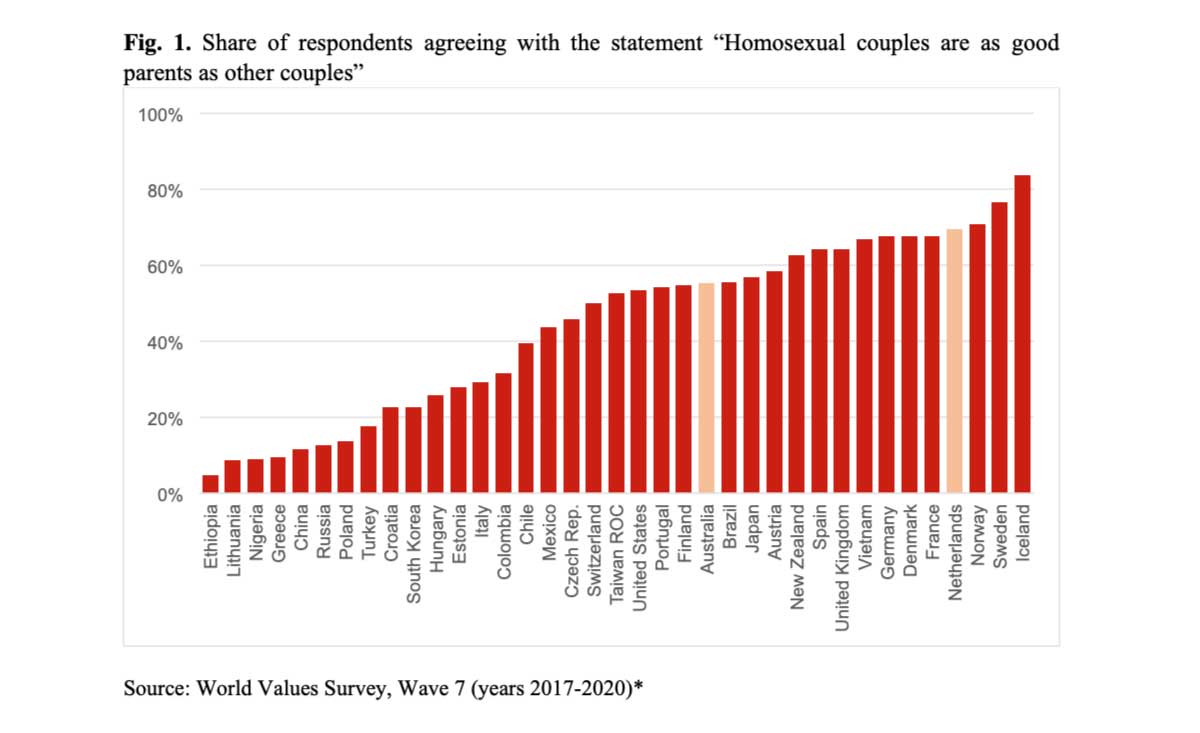
Data from the most recent wave of the World Values Survey, a large cross-national survey of public opinion, confirms that support for same-sex parenting is far from unanimous. A sizable share of the population across multiple countries still believes that same-sex parents cannot raise children as well as different-sex parents (Figure 1).

These beliefs are often bolstered by “common wisdom” arguments that are rarely backed up by robust empirical evidence. For example, some commentators maintain that children need both male and female parental role models to thrive, that non-biological parents invest less effort in parenting their children, and that children in same-sex-parented families may be subjected to shame and bullying.

However, these beliefs have also been fueled by questionable academic studies examining the comparative outcomes of these children.

Prior research


Mark Regnerus’s, a sociologist and professor at the University of Texas at Austin conducted a controversial study in 2012 that serves as a cautionary tale about the negative and far-reaching consequences that poor data and unsuitable analytical methods can exert on research findings in this field.

The  (2012) study claimed that people raised by same-sex parents experienced worse health and socioeconomic outcomes in adulthood than people raised by different-sex parents. Yet subsequent re-analyses of the same data by several leading researchers demonstrated that such associations emerged almost entirely due to an array of misclassification, mismeasurement and other analytic problems (Cheng and Powell 2015, Rosenfeld 2015).

The damage of the Regnerus study was however done, with its spurious findings receiving intense international media coverage and becoming a ‘go-to’ resource for activist groups lobbying against same-sex marriage. Such findings not only permeated the public debate on same-sex parenting, but were also presented in court in attempts to prevent the introduction of same-sex marriage legislation across US states.

Nevertheless, the Regnerus study constitutes an outlier in the broader literature on same-sex parenting. A large majority of studies on the topic have found that same-sex parents are able to provide their children with as healthy and nurturing home environments as different-sex parents. Yet these studies have also been often called into question, with critics pointing out that they are typically based on suboptimal data and methods (Allen 2015).

The most common criticism is that the studies tend to rely on ‘convenience’ samples. These are small and selective samples of same-sex-parented families, who may be approached at LGBT events or recruited through mailing campaigns. Critics (rightfully) argue that the outcomes of such families may differ from those of the broader population of same-sex families, and that this can distort the reliability of the studies and their conclusions.

Our new study


In our study, we were able to move beyond the vast majority of research conducted in this space. We did this by analyzing data covering the full population of children living in the Netherlands (more than 1.4 million children in total), comparing the academic outcomes of all children raised by same-sex couples with all children raised by different-sex couples. We conducted the study in the Netherlands because it is one of only a few countries in the world that allows researchers to link together life-long anonymized data from multiple population registers, containing high-quality administrative information on children and their families (Kabátek and Ribar 2020).

Thanks to these data, we were able to statistically account for various pre-existing characteristics that may differ between same-sex- and different-sex-parented families—for example, the higher average education attainment of individuals in same-sex couples, or their lower average incomes. This means that our analyses compared children in same-sex- and different-sex-parented families that are similar in all observable characteristics except for their parents’ sex.

Our key findings go counter to those reported by Regnerus (2012). Children in same-sex-parented families attain higher scores on national standardized tests than children in different-sex-parented families. Their advantage amounts to 13 per cent of a standard deviation, which is comparable to the advantage associated with both parents being employed as opposed to being out of work. We also find that children in same-sex-parented families are slightly more likely (1.5 per cent) to graduate from high school, and much more likely (11.2 per cent) to enroll in college than children in different-sex-parented families.

Our results thus challenge “common wisdom” arguments against same-sex parenting, and lend preliminary support to other scholarly perspectives that emphasize the possible benefits of same-sex parenthood. For example, same-sex parents are likely to face substantive barriers to parenthood (including social scrutiny, greater costs of conceiving a child, and legislative hurdles) and overcoming these barriers may strengthen their commitment to parental roles. Combined with the fact that same-sex couples face minimal odds of becoming parents through ‘accidental’ pregnancies, this can result in more positive parenting practices in same-sex-parented families.

Implications for other countries


The Netherlands features high levels of public approval of same-sex relations and provides robust legislative protection to sexual minorities. Therefore, we argue that the Dutch institutional context represents a ‘best-case scenario’ concerning the achievement of children in same-sex-parented families.

Same-sex-parented families in other countries may be subject to environmental hurdles that remain beyond the control of parents and that may negatively affect their children. These may include a lack of access to the social institution of marriage and more profound experiences of stigma and discrimination (Perales and Todd 2018).

By undertaking our analyses in the Netherlands, we were able to retrieve findings that are more likely to reflect the influence of same-sex parenting itself, and less likely to reflect external influences stemming from non-inclusive institutional environments. Therefore, our findings portray a viable scenario of what could happen in countries with more restrictive institutional environments, should they direct comparable efforts towards the inclusion of sexual minorities.

Altogether, the message stemming from our findings is clear: being raised by same-sex parents bears no independent detrimental effect on children’s outcomes. In socio-political environments that provide high levels of legislative and public support, children in same-sex-parented families thrive.

*Source figure 1 – worldvaluessurvey.org


References

  • Allen Doug (2015) More Heat Than Light: A Critical Assessment of the Same-Sex Parenting Literature, 1995–2013, Marriage & Family Review, 51(2): 154-182. doi.org/10.1080/01494929.2015.1033317
  • Cheng Simon, Powell Brian (2015) Measurement, methods, and divergent patterns: Reassessing the effects of same-sex parents. Social Science Research, 52, July, 615-626. DOI: 10.1016/j.ssresearch.2015.04.005.
  • Kabátek Jan, Perales Francisco (2021) Academic Achievement of Children in Same- and Different-Sex-Parented Families: A Population-Level Analysis of Linked Administrative Data From the Netherlands. Demography. doi.org/10.1215/00703370-8994569
  • Kabátek Jan, Ribar David C (2020) Daughters and Divorce. The Economic Journal, December. doi.org/10.1093/ej/ueaa140
  • Perales Francisco, Todd Abram (2018) Structural stigma and the health and wellbeing of Australian LGB populations: Exploiting geographic variation in the results of the 2017 same-sex marriage plebiscite. Social Science & Medicine, 208: 190-199. doi.org/10.1016/j.socscimed.2018.05.015
  • Regnerus Mark (2012) How different are the adult children of parents who have same-sex relationships? Findings from the New Family Structures Study. Social Science Research, 41(4): 752-770.
  • Roseneil Sasha, Crowhurst Isabel, Hellesund Tone, Santos Ana Cristina, Stoilova Mariya (2013) Changing Landscapes of Heteronormativity: The Regulation and Normalization of Same-Sex Sexualities in Europe. Social Politics: International Studies in Gender, State & Society, 20(2): 165–199. doi.org/10.1093/sp/jxt006
  • Rosenfeld Michael J. (2015) Revisiting the Data from the New Family Structure Study: Taking Family Instability into Account. Sociological Science, September, DOI 10.15195/v2.a23.

Friday, February 5, 2021

tg sexual orientation

Похоже, что у трансгендеров нет доминирующего варианта сексуальной ориентации. Об этом свидетельствуют данные исследования, организованного и проведённого самим трансгендерным сообществом. Его результаты опубликованы в виде отчёта. В этом исследовании было опрошено несколько тысяч трангендеров по самым различным вопросам. Сексуальная ориентация была лишь одним из них. На рисунке (см. ниже) представлены данные, касающиеся частот различных вариантов сексуальной ориентации у трансгендеров М>Ж и Ж>М.  

ист: (c)EIS-gen

Wednesday, December 16, 2020

How the 18th-Century Gay Bar Survived and Thrived in a Deadly Environment

Welcome to the molly house.


BY NATASHA FROST DECEMBER 8, 2017
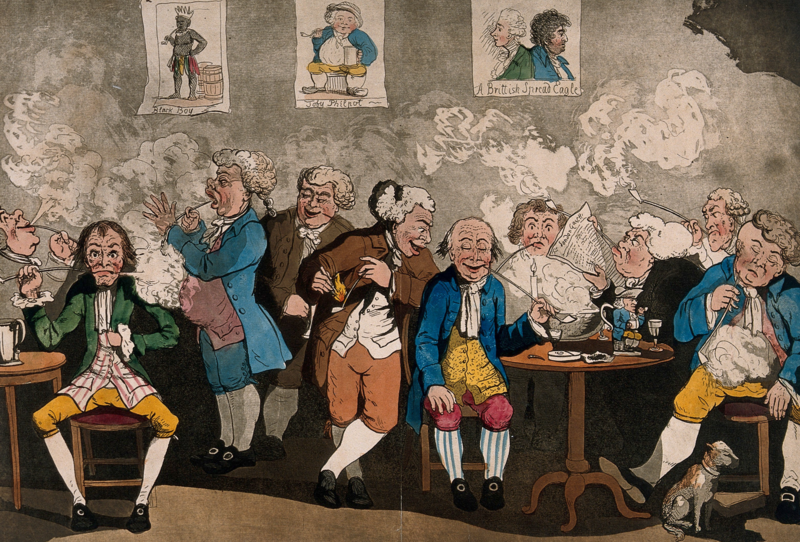
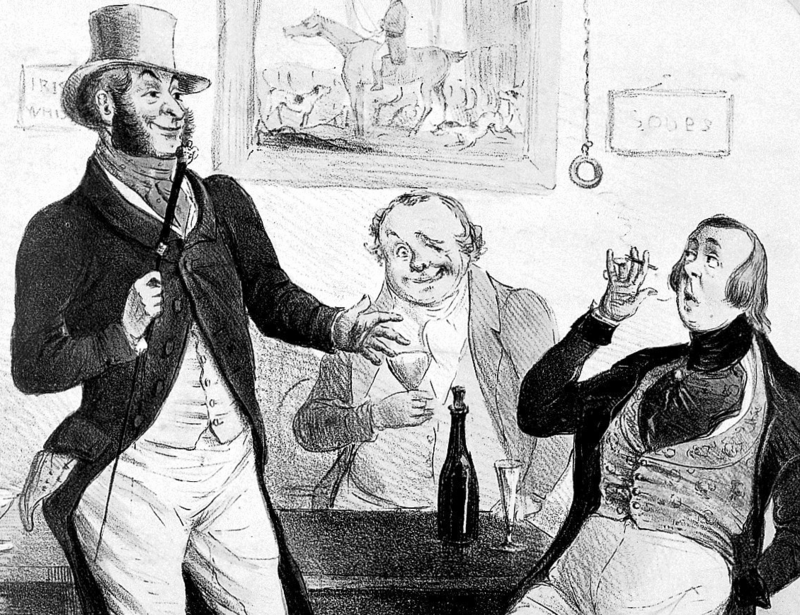
Like men’s club houses, molly houses were also places people went simply to socialize, gossip, drink and smoke. 
WELLCOME COLLECTION/CC BY 4.0

IN 1709, THE LONDON JOURNALIST Ned Ward published an account of a group he called “the Mollies Club.” Visible through the homophobic bile (he describes the members as a “Gang of Sodomitical Wretches”) is the clear image of a social club that sounds, most of all, like a really good time. Every evening of the week, Ward wrote, at a pub he would not mention by name, a group of men came together to gossip and tell stories, probably laughing like drains as they did so, and occasionally succumbing to “the Delights of the Bottle.”

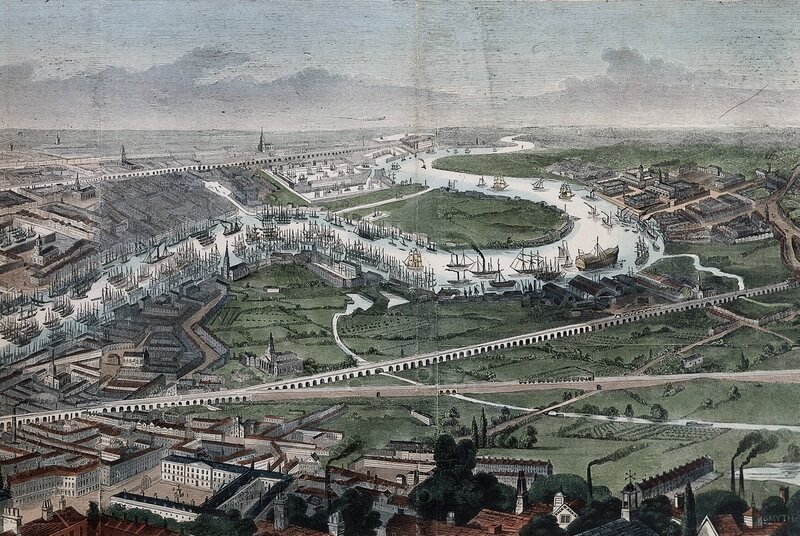
In 18th and early-19th-century Britain, a “molly” was a commonly used term for men who today might identify as gay, bisexual or queer. Sometimes, this was a slur; sometimes, a more generally used noun, likely coming from mollis, the Latin for soft or effeminate. A whole molly underworld found its home in London, with molly houses, the clubs and bars where these men congregated, scattered across the city like stars in the night sky. Their locale gives some clue to the kind of raucousness and debauchery that went on within them—one was in the shadow of Newgate prison; another in the private rooms of a tavern called the Red Lion. They might be in a brandy shop, or among the theaters of Drury Lane. But wherever they were, in these places, dozens of men would congregate to meet one another for sex or for love, and even stage performances incorporating drag, “marriage” ceremonies, and other kinds of pageantry.
A 19th-century engraving of London as it was in the later days of the molly house. 
WELLCOME COLLECTION/PUBLIC DOMAIN

It’s hard to unpick exactly where molly houses came from, or when they became a phenomenon in their own right. In documents from the prior century, there is an abundance of references to, and accounts of, gay men in London’s theaters or at court. Less overtly referenced were gay brothels, which seem harder to place than their heterosexual equivalents. (The historian Rictor Norton suggests that streets once called Cock’s Lane and Lad Lane may lend a few clues.) Before the 18th century, historians Jeffrey Merrick and Bryant Ragan argue, sodomy was like any other sin, and its proponents like any other sinners, “engaged in a particular vice, like gamblers, drunks, adulterers, and the like.”
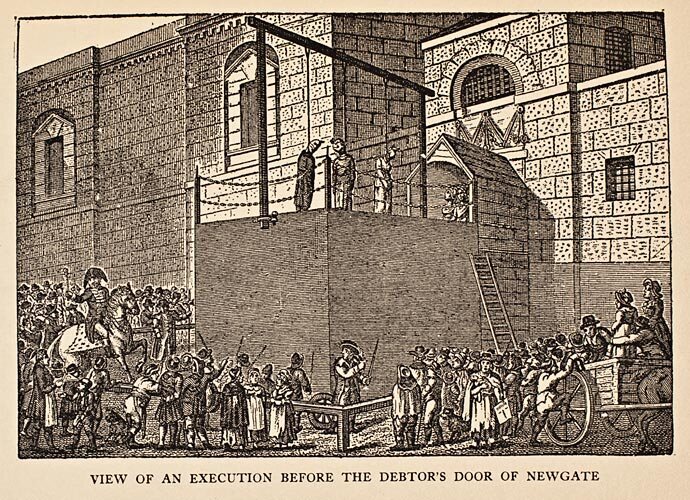
Men found guilty of buggery would be sentenced to death by hanging, with members of the public congregating to watch their execution. 
PUBLIC DOMAIN

But in the late 17th century, a certain moral sea change left men who had sex with men under more scrutiny than ever before. Part of this stemmed from a fear of what historian Alan Bray calls the “disorder of sexual relations that, in principle, at least, could break out anywhere.” Being a gay man became more and more dangerous. In 1533, Henry VIII had passed the Buggery Act, sentencing those found guilty of “unnatural sexual act against the will of God and man” to death. In theory, this meant anal sex or bestiality. In practice, this came to mean any kind of sexual activity between two men. At first, the law was barely applied, with only a handful of documented cases in the 150 years after it was first passed—but as attitudes changed, it began to be more vigorously applied.

The moral shift ushered in a belief that sodomy was more serious than all other crimes. Indeed, writes Ian McCormick, “in its sinfulness, it also included all of them: from blasphemy, sedition, and witchcraft, to the demonic.” While Oscar Wilde might call homosexuality “the love that dare not speak its name,” others saw it as a crime too shocking to name, with “language … incapable of sufficiently expressing the horror of it.” Other commenters of the time, trying to wrangle with the idea, seem incapable of getting beyond the impossible question of why women would not be sufficient for these men:

“’Tis strange that in a Country where
Our Ladies are so Kind and Fair,
So Gay, and Lovely, to the Sight,
So full of Beauty and Delight;
That Men should on each other doat,
And quit the charming Petticoat.”

In this climate, molly houses were an all-too-necessary place of refuge. Sometimes, these were houses, with a mixture of permanent lodgers and occasional visitors. Others were hosted in taverns. All had two things in common—they were sufficiently accessible that a stranger in the know could enter without too much hassle; and there was always plenty to drink.

Samuel Stevens was an undercover agent for the Reformation of Manners, a religious organization that vowed to put a stop to everything from sodomy to sex work to breaking the Sabbath. In 1724, he led a police constable to one such house on Beech Lane, where the brutalist Barbican Estate is today. “There I found a company of men fiddling and dancing and singing bawdy songs, kissing and using their hands in a very unseemly manner,” the policeman, Joseph Sellers, is recorded as having said in court. Elsewhere, the men sprawled across one another’s laps, “talked bawdy,” and took part in country dances. Others peeled off to other rooms to have sex in what they believed to be relative safety.

“There I found a company of men fiddling and dancing and singing bawdy songs, kissing and using their hands in a very unseemly manner”


Sex may have been at the root of the matter, but everything around it—the drinking, the flirting, the camaraderie—was every bit as important. In the minds of the general public, molly houses were dens of sin. But, for their regular customers, writes Bray, “they must have seemed like any ghetto, at times claustrophobic and oppressive, at others warm and reassuring. It was a place to take off the mask.” Here, men pushed to the fringes of society could find their community.
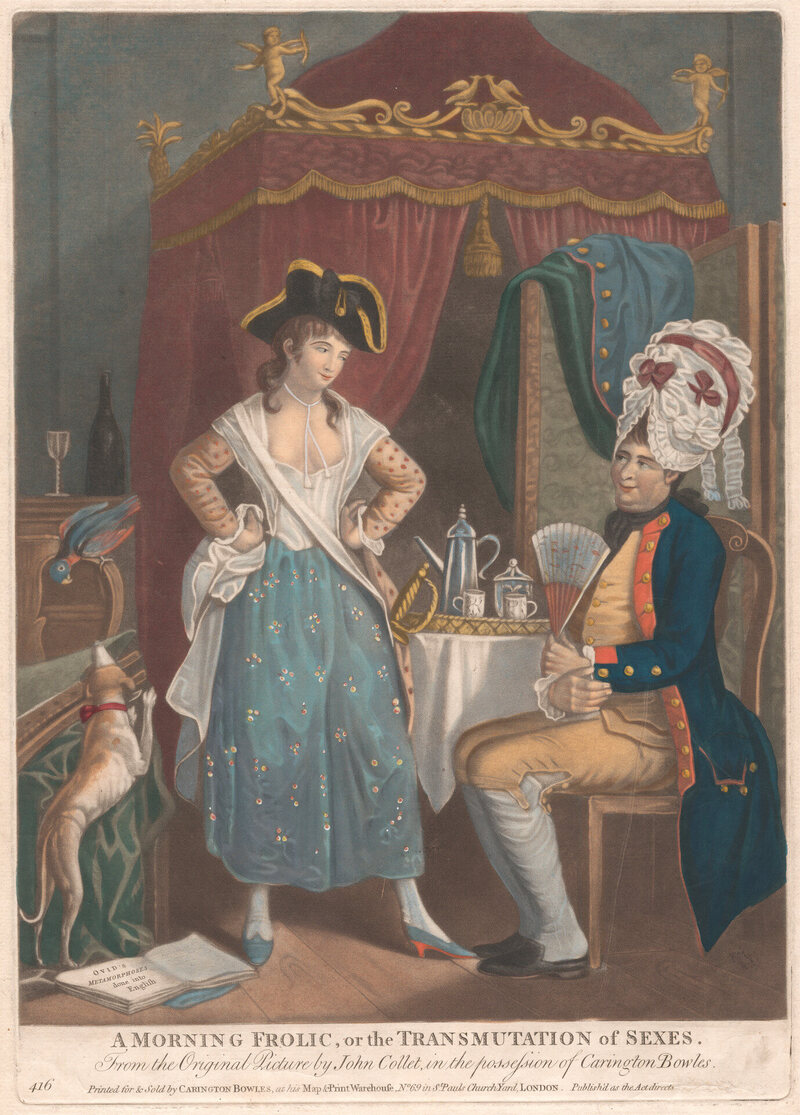
An 18th-century engraving, A Morning Frolic, or the Transmutation of the Sexes, shows two people in various stages of drag. 
PUBLIC DOMAIN

It’s probable that a certain amount of sex work took place, though how much money really changed hands is hard to tease out. “Homosexual prostitution was of only marginal significance,” writes Norton. Instead, “men bought their potential partners beer.” More moralizing commentators mistook consensual sexual activity for more mercenary sex work, using “terms such as ‘He-Strumpets’ and ‘He-Whores’ even for quite ordinary gay men who would never think of soliciting payment for their pleasures.”

Because so many accounts of these molly houses came from people like the agent, Stevens, or the journalist, Ward, who wanted the houses closed and their customers sanctioned, they tend towards the salacious. Many focus on sexual activity or on particular aspects of this nascent gay culture that seemed shocking or foreign to these unwanted observers. One account delivered in the court known as the Old Bailey creates a vivid picture of an early drag ball. “Some were completely rigged in gowns, petticoats, headcloths, fine laced shoes, befurbelowed scarves, and masks; some had riding hoods, some were dressed like milkmaids, others like shepherdesses with green hats, waistcoats, and petticoats; and others had their faces patched and painted and wore very extensive hoop petticoats, which had been very lately introduced.” In a slew of costumes and colors, they danced, drank, and made merry.
Men of all social classes mingled in the molly house. 
WELLCOME COLLECTION/CC BY 4.0

Drag seems to have been common in molly houses, sometimes veering into kinds of pantomime that don’t quite have a modern equivalent. In Ward’s article about the Mollies Club, he describes how the men, who called one another “sister,” would dress up one of their party in a woman’s night-gown. Once they were in costume, this person then pretended to be giving birth, he wrote, and “to mimic the wry Faces of a groaning Woman.” A wooden baby was brought forth, everyone celebrated and a pageant baptism took place. Others dressed up as nurses and midwives—they would crowd around the baby, “being as intent upon the Business in hand, as if they had been Women, the Occasion real, and their Attendance necessary.” A celebratory meal of cold tongue and chicken was served, and everyone feasted to commemorate their bouncing new arrival, with “the eyes, Nose, and Mouth of its own credulous Daddy.”

At one of the most famous molly houses, owned by Margaret Clap, couples slipped into another room, two-by-two, to be “married.” In “The Marrying Room,” or “The Chapel,” a marriage attendant stood by, guarding the door to give the happy couple some privacy as they made use of the double bed. (“Often,” Norton writes, “the couple did not bother to close the door behind them.”) At the White Swan, on Vere Street, John Church, an ordained minister, performed marriage ceremonies for those who wanted them—though it’s unknown whether these nuptials were expected to last more than a single evening.

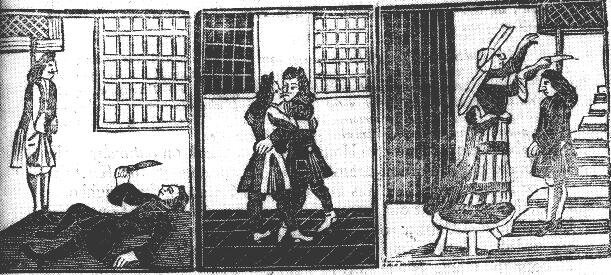
A 1707 broadsheet illustration shows two men embracing. On the left, one cuts his throat when his friend is hanged. On the right, a man is cut down from the gallows. 
PUBLIC DOMAIN

The openness that allowed men seeking sex with men to find molly houses exposed them to the risk of raids, and subsequent convictions. Police constables would occasionally swarm into the festivities, rounding up the men they found there and hauling them off to prison, where they would await trial. In the mid-1720s, there was a rash of these raids, leading many men to the gallows. Embittered informants who were intimately familiar with the molly houses would allow police to pose as their “husbands” in order to infiltrate the club. These constables would be welcomed into the fold—then return later to close it up for good and use what they had seen against the members.

In 1810, one of the most famous raids took place on the White Swan. It had barely been open six months when police stormed the place, arresting about 30 of the people they found inside. A violent mob, of which the women were apparently “most ferocious,” surged around the prisoners’ coaches as they made their way to the watch house. Two were sentenced for buggery, and put to death. A larger number, convicted of “running a disorderly house,” were mostly sentenced to many humiliating hours in the pillory, where members of the public could throw things at them. Three months after the original raid, these men were led through the streets and out onto the pillory. As they went, thousands of people formed a seething crowd, hurling whatever they could at them—dead cats, mud pellets, putrid fish and eggs, dung, potatoes, slurs. The men began to bleed profusely from their wounds. After an hour in the pillory, about 50 women formed a ring around them, pelting them with object after object. One man was beaten until he was unconscious.

These raids forced molly houses, and men who had sex with men, deeper underground. The subculture didn’t die out, but the establishments often did, or became harder to find. And then, in 1861, a sliver of light—the death penalty for sodomy or buggery was repealed and replaced with nebulous legislation around “gross indecency.” (It was for this charge that Oscar Wilde was imprisoned for two years, four decades later.) It would be another 106 years after the repeal that sex between men was decriminalized altogether in the United Kingdom, by which time the molly house was all but forgotten, and its patrons nearly scrubbed from the history books.

Friday, November 20, 2020

Transgender Day of Remembrance

память

отмечается ежегодно (с момента его создания) 20 ноября как день памяти убитых в результате трансфобии.


Это день, чтобы привлечь внимание к продолжающемуся насилию, которому подвергаются трансгендерные люди.

В этот день различные правозащитные, феминистские и ЛГБТ-организации мира проводят демонстрации, лекции, семинары и траурные шествия со свечами. Цель мероприятий — привлечь внимание общества к тому, что трансгендерные люди страдают от насильственных преступлений гораздо чаще, чем многие другие персоны из уязвимых социальных групп.

28 ноября 1998 года у себя в квартире была убита бостонская чернокожая транс-женщинарок-музыкантка Рита Хестер (Rita Hester), неизвестный преступник нанёс ей серию ножевых ударов. Известная в ЛГБТ-сообществе певица уже десять лет жила в гендерной роли женщины.

Через год друзья и знакомые Риты Хестер организовали «вахту памяти»: в первый день памяти в 1999 году на улицы Сан-Франциско вышли сотни людей с зажжёнными свечами в руках. С тех пор событие разрасталось в масштабах и стало проходить в десятках городов не только в США, но и по всему миру. В 2008 году впервые эту дату отметили на Украине (Киев) и в России (Санкт-Петербург). В 2010 году в Киеве и Минске на мероприятия памяти были совершены нападения.

В Интернете ведутся списки трансгендерных людей, убитых в разных странах мира на почве трансфобии. Список насчитывает более 350 имён. Составление его сталкивается с рядом проблем: информация об этих преступлениях часто замалчивается, по разным причинам имена многих жертв неизвестны.