Showing posts with label гражданская война. Show all posts

Tuesday, January 28, 2025

140

По меньшей мере 140 жителей Алтайского края вернулись из зоны боевых действий в Украине без конечностей или частей тела. Об этом говорится в грантовой заявке регионального клуба инвалидов, внимание на которую обратили внимание Сибирь.Реалии.

Клуб инвалидов "Инваспорт" в рамках проекта "Инклюзивная программа "СВОи в спорте" планировал провести мероприятия по развитию волейбола сидя и керлинга на инвалидных колясках, в том числе, среди участников вторжения в Украину.

  • В заявке отмечается, что в регионе наблюдается низкая доступность адаптивного спорта. Стоимость проекта оценивалась 2,8 млн рублей, 2,3 млн из которых должен был составить президентский грант, около 500 тысяч - софинасирование клуба. Фонд президентских грантов отклонил заявку. Сколько военных в России получили тяжелые травмы и инвалидность после войны — неизвестно. По данным Минтруда на 2023 год, больше половины участников войны против Украины, которых признали инвалидами, имеют ампутации.
  • Ранее Сибирь.Реалии рассказали, как участники войны в Украине вынуждены обращаться в надзорные органы, чтобы добиться получения протеза.
ссылка

Thursday, December 14, 2023

ban

В Госдуму внесли законопроект о запрете абортов в частных клиниках. К чему может привести принятие такого закона, объясняет корреспондент Русской службы Би-би-си Нина Назарова:


В ноябре этого года власти аннексированного Крыма объявили, что частные клиники региона якобы добровольно отказались от проведения абортов. Вслед за Крымом последовали Курск и Липецкая область. Сегодня заксобрание Нижегородской области внесло в Госдуму проект об исключении частных клиник из числа медорганизаций, имеющих право делать аборты.

Все это — самые серьезные меры по ограничению права женщин на прерывание беременности за всю историю современной России.

Аборты в России сейчас можно делать легально и бесплатно на сроке до 12 недель по желанию женщины (на более поздних сроках это допускается только по медицинским показаниям). Однако за последнее десятилетие государство последовательно вводит все новые и новые меры, цель которых — убедить женщин отказаться от прерывания беременности.

Например, в 2012 году были закреплены «неделя тишины» (обязательная пауза между обращением женщины за направлением на аборт и самой операцией) и обязательная «предабортная» консультация у психолога или соцработника (а в Белгородской области — и у священника). Власти и фонды давно поощряют врачей в госбольницах отговаривать пациенток от абортов разнообразными подарками и денежными премиями.

Можно с уверенностью утверждать, что если закон о запрете абортов в частных клиниках будет принят, женщин ждут и дальнейшие ограничения и давление в госбольницах — а деваться им к этому моменту будет совершенно некуда. Кроме того, ограничение доступа к медикаментозному аборту в частных клиниках может нанести реальный вред репродуктивному здоровью женщин (в государственных больницах аборты чаще делают хирургически).

Спикер Совета Федерации Валентина Матвиенко неделю назад уже заявила, что считает необходимым добиться того, чтобы в России аборты можно было проводить только по двум причинам — в случае насилия над женщиной либо по медицинским показаниям. По сути, речь идет о запрете — если такие ограничения будут приняты, прервать беременность по желанию женщины будет уже нельзя.

Пояснительная записка сегодняшнего законопроекта про частные клиники объясняет инициативу заботой о рождаемости. При этом совершенно очевидно, что на повышение рождаемости в реальности гораздо лучше влияют не ограничения абортов, а совсем другие вещи — финансовая стабильность, личная безопасность, социальные гарантии, уверенность в будущем — а также отсутствие риска, что с наступлением совершеннолетия дети могут быть призваны убивать и умирать на очередной войне.

По факту развязанная государством война — это самая лучшая реклама абортов. В августе этого года российское издание «Коммерсант» выпустило новость о том, что в 2022 году «рекордно» выросли продажи для медикаментозного аборта и экстренной контрацепции.

Русской службе Би-би-си совместно с изданием «Медиазона» (издание признано в России «иноагентом») и командой волонтеров удалось установить имена более 37 тысяч российских военных, погибших в ходе вторжения в Украину — все они были мужчинами репродуктивного возраста, многие из которых в мирной жизни вполне могли бы еще завести и воспитывать детей.

На одной из акций российских феминисток был лозунг «Сам воюешь — сам рожай». Однако очевидно, что в ближайшие годы рожать в России будут буквально принуждать всеми правдами и неправдами женщин.

Thursday, April 13, 2023

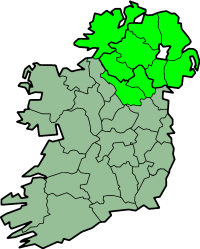
Ulster

25 лет назад Великобритания и Республика Ирландия смогли найти решение по выходу из кровавой этнополитической смуты в Северной Ирландии, которая длилась почти 30 лет и унесла три с половиной тысячи человеческих жизней.

Договор, подписанный в Белфасте на Страстной неделе 1998 года и скрепивший мир между сторонами конфликта в Ольстере, получил название «Соглашение Страстной пятницы» (Good Friday Agreement).

Сегодня Северная Ирландия стала вновь серьезным раздражителем, поскольку не укладывается в логику Брексита. А Ольстер в эти дни превратился в инвестиционную площадку, куда прибыли премьер-министр Сунак и президент [США, которые, кстати, активно собирали бабло на справедливую борьбу ирландского народа] Байден.

Monday, April 10, 2023

the Wars of the Roses


The Wars of the Roses was a bloody contest for the throne of England, a civil war fought out between the rival houses of York – whose symbol was the white rose – and Lancaster – whose symbol was the red rose – throughout the second half of the 15th century.


After 30 years of political manipulation, horrific carnage and brief periods of peace, the wars ended and a new royal dynasty emerged: the Tudors.

Here are 16 key figures from the wars:


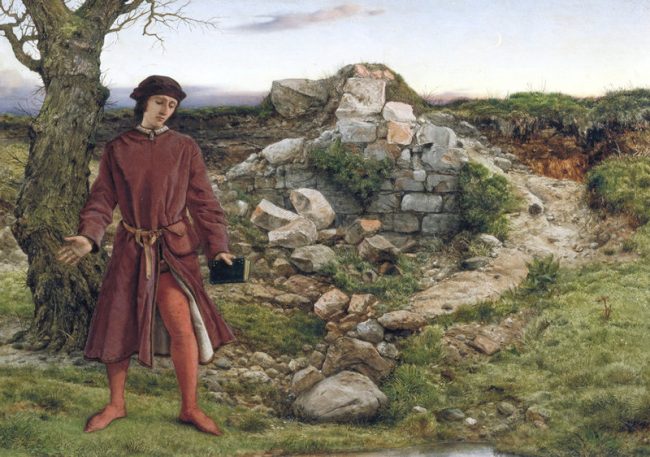
1. Henry VI


All was not well in King Henry’s court. He had little interest in politics and was a weak ruler, and also suffered from mental instability that plunged the kingship into turmoil.

This incited rampant lawlessness throughout his realm and opened the door for power-hungry nobles and kingmakers to plot behind his back.

King Henry VI

2. Margaret of Anjou


Henry VI’s wife Margaret was a noble and strong-willed Frenchwoman whose ambition and political savvy overshadowed her husband’s. She was determined to secure a Lancastrian throne for her son, Edward.

3. Richard, Duke of York


Richard of York—as great-grandson of King Edward III—had a strong competing claim on the English throne.

His conflicts with Margaret of Anjou and other members of Henry’s court, as well as his competing claim on the throne, were a leading factor in the political upheaval.

Richard eventually attempted to take the throne, but was dissuaded, although it was agreed that he would become king on Henry’s death. But within a few weeks of securing this agreement, he died in battle at Wakefield.

4. Edmund Beaufort


Edmund Beaufort was an English nobleman and Lancastrian leader whose quarrel with Richard, Duke of York was infamous. In the he 1430s obtained control—with William de la Pole, Duke of Suffolk— of the government of the weak king Henry VI.

But he was later imprisoned when Richard, Duke of York became ‘Lord Protector’, before dying at the Battle of St Albans.

5. Edmund, Earl of Rutland


He was the fifth child and second surviving son of Richard Plantagenet, 3rd Duke of York, and Cecily Neville. #

By the laws of primogeniture, Edmund’s father, Richard of York had a good claim to the English throne, being descended from the second surviving son of Edward III, giving him a slightly better claim to the throne than the reigning king, Henry VI, who descended from Edward’s third son.

He was killed aged just 17 at the Battle of Wakefield, possibly murdered by the Lancastrian Lord Clifford who sought revenge for the death of his own father at St Albans five years earlier..

6. Edward IV


He was the first Yorkist King of England. The first half of his rule was marred by the violence associated with the Wars of the Roses, but he overcame the Lancastrian challenge to the throne at Tewkesbury in 1471 to reign in peace until his sudden death.

7. Richard III


The alleged remains of Richard III.

Richard III was the last king of the House of York and the last of the Plantagenet dynasty. His defeat at Bosworth Field, the last decisive battle of the Wars of the Roses, marked the end of the Middle Ages in England.

He is the Machiavellian, hunchbacked protagonist of Richard III, one of William Shakespeare’s history plays – famous for supposedly murdering the two Princes in the Tower.

8. George, Duke of Clarence


He was the third surviving son of Richard Plantagenet, 3rd Duke of York, and Cecily Neville, and the brother of Kings Edward IV and Richard III.

Though a member of the House of York, he switched sides to support the Lancastrians, before reverting to the Yorkists. He was later convicted of treason against his brother, Edward IV, and was executed (allegedly by being drowned in a butt of Malmsey wine).

In this first episode of our four-part audio drama an imprisoned Perkin Warbeck, played by Iain Glen, is interrogated in the Tower of London over his true identity, following the collapse of his rebellion. WATCH NOW

9. Edward, Earl of Lancaster


Edward of Lancaster was the only son of King Henry VI of England and Margaret of Anjou. He was killed at the Battle of Tewkesbury, making him the only heir apparent to the English throne to die in battle.

10. Richard Neville


Known as Warwick the Kingmaker, Neville was an English nobleman, administrator, and military commander. The eldest son of Richard Neville, 5th Earl of Salisbury, Warwick was the wealthiest and most powerful English peer of his age, with political connections that went beyond the country’s borders.

Originally on the Yorkist side but later switching to the Lancastrian side, he was instrumental in the deposition of two kings, which led to his epithet of “Kingmaker”.

Thomas Penn answers the key questions about Edward IV, England's forgotten warrior king: from his turbulent rise to the throne to how he dealt with his mischievous brothers. WATCH NOW

11. Elizabeth Woodville


Elizabeth was Queen consort of England as the spouse of King Edward IV from 1464 until his death in 1483. Her second marriage, to Edward IV, was a cause célèbre of the day, thanks to Elizabeth’s great beauty and lack of great estates.

Edward was the first king of England since the Norman Conquest to marry one of his subjects, and Elizabeth was the first such consort to be crowned queen.

Her marriage greatly enriched her siblings and children, but their advancement incurred the hostility of Richard Neville, Earl of Warwick, ‘The Kingmaker’, and his various alliances with the most senior figures in the increasingly divided royal family.

Edward IV and Elizabeth Grey

12. Isabel Neville


In 1469 Isabel’s power-hungry father, Richard Neville, the Earl of Warwick, defected from King Edward IV after his marriage to Elizabeth Woodville. Instead of ruling England through Edward, he planned a marriage for Isabel to Edward’s brother George Duke of Clarence.

George also saw benefit in the union, as the Neville family was extremely wealthy. The marriage took place in secret in Calais, as part of the rebellion of George and Warwick against Edward IV.

13. Anne Neville


Anne Neville was an English queen, the daughter of Richard Neville, 16th Earl of Warwick. She became Princess of Wales as the wife of Edward of Westminster and then Queen of England as the wife of King Richard III.

A watercolour recreation of the Wars of the Roses.

14. Elizabeth of York


Elizabeth of York was the eldest daughter of the Yorkist king Edward IV, sister of the princes in the Tower, and niece of Richard III.

Her marriage to Henry VII was hugely popular – the union of the white rose of York and the red rose of Lancaster was seen as bringing peace after years of dynastic war.

15. Margaret Beaufort


Margaret Beaufort was the mother of King Henry VII and paternal grandmother of King Henry VIII of England. She was the influential matriarch of the House of Tudor.
Lauren Johnson talks to Dan Snow about the fascinating reign of Henry VI. LISTEN NOW

16. Henry VII


Henry VII was the King of England and Lord of Ireland from his seizure of the crown on 22 August 1485 to his death on 21 April 1509. He was the first monarch of the House of Tudor.

17. Jasper Tudor


Jasper Tudor, Duke of Bedford, Earl of Pembroke, was the uncle of King Henry VII of England and a leading architect of his nephew’s successful accession to the throne in 1485. He was from the noble Tudor family of Penmynydd in North Wales.
Emma Irving
2 April 2023

Wednesday, March 1, 2023

THE NAPOLEONIC LIFE

Reign of Napoleon

Initiation


Napoleon Bonaparte is finally in power as First Consul, and France is his to rule. But for how long? In recent times, luck has not favored the rulers of France, be it Louis XVI and the Robespierres, who got beheaded, or the Directory, which was the victim of Napoleon’s coup d’état. So clearly, this is not the time for him to rest easy.

Immediately after coming to power, Napoleon’s government issued a series of decrees in favor of the populace which were widely well received. Some of them were - Giving up Versailles for the recovery of wounded soldiers, repealing of a vicious anti-emigre law and releasing the prisoners, declaring public holidays on the anniversary of the storming of the Bastille and the new year of the republican calendar. Napoleon knew that he had to make his new government’s presence strongly felt. “A newly born government must dazzle and astonish. When it ceases to do that, it fails.”
The Consulate and its evolution

The French Consulate was a period in French history that lasted from 1799 to 1804 under the leadership of Napoleon Bonaparte. During this time, Napoleon established himself as the First Consul of the French Republic and implemented a series of political, economic, and social reforms. The main objective of the consulate was to bring stability and order to the country after the chaos of the French Revolution. Napoleon implemented a new constitution, reformed the legal system, and strengthened the central government. Additionally, he modernized the economy and improved the infrastructure, which helped to revive the French economy. Napoleon also introduced a number of measures to promote education and culture, which helped to raise the general level of literacy and education in France. Overall, the French Consulate was a key period in French history that laid the foundation for the country's future development.

The Conseil d’états and distribution of powers


As the main advisory body to the consulate, the Conseil d’états was established. It consisted of mostly apolitical intellectuals selected by the First Consul himself. The conseil would have debates on the most pressing matters of the country, and as long as they were respectful, were encouraged to be as outspoken as they needed to be. These debates would go on for hours, and occasionally were joined by Napoleon himself. It was here that Napoleon’s intellect shined the best, for many issues were complex discussed about which he knew nothing about at the beginning, but through incessant questioning was able to formulate his own thoughts on the matter, and bring together various expert opinions to a conclusion in the interest of the nation over the interest of a section.

The Conseil helped Napoleon draft laws, which would then be sent to the Tribunate, which would discuss the laws and send their opinions to the Legislative body, which could vote on the laws but not discuss them. The consuls, the tribunate, and the legislative body were chosen by the Senate, which had the sole power to amend the constitution. Thus, with such a separation of powers, Napoleon kept the lion’s share for himself while distributing fairly feeble powers among the institutions.

Domestic Policy


Napoleon’s primary objective in the early days of his reign was, in his own words, to put an end to the revolution. To that effect, he sought to reverse the huge amount of migration of aristocrats out of the nation which had drained the country of talent. He appealed to the emigres to return to their homeland, though on the understanding that their property and wealth which had been confiscated during the revolution would not be returned.

His was the only government which had not purged its predecessors, as every government before him had done. Instead, he invited people from the entire political spectrum to work with him and undertake the great challenge that awaits them – unifying and rebuilding the nation.

Attempt to unify the French political class


“The simple title of French citizen is worth far more than that of Royalist, Chouan, Jacobin, Feulliant, or any of those thousand-and-one denominations which have sprung, during these past ten years, from the spirit of Faction, and which are hurling the nation into an abyss from which the time has at last come to rescue it, once and for all.” Napoleon was bent on unifying the French political class, because he understood that “a house divided against itself cannot stand.” This allowed Napoleon to rally all of the French political spectrum to his cause, which further solidified his hold on power and safeguarded him from internal attacks.
Restrictions on free media

Napoleon was well aware of the power of information and control over its distribution, and he was greatly opposed to sharing this power with any potentially bad actors who, in serving their own interest may act against the interest of the nation. He closed a large number (60) of newspapers, saying that he wouldn’t “allow the papers to say or do anything contrary to my interests.” He believed that any newspapers fomenting discontent among the general public and disturbing the peace and tranquility that his government is working to achieve cannot be allowed to exist, especially when the state is going through such an unstable and vulnerable time. While at a glance this sounds almost tyrannical in nature, it has to be understood that at this point France had many enemies both inside and out of its territory. On the outside, the republican nature of the government understandably threatened the very concept of the divine right of monarchs, the concept which had justified for so many years the reign of monarchs across all of Europe.
 

Come back to your home


The French revolution, which was hard on the second state, saw tens of thousands of aristocrats fleeing the country for the sake of their lives and taking refuge abroad. While they may have been an oppressive class, they were the most educated, and the nation absolutely relied on them. Such mass emigration had drained the country of its talents and strength, and if France was to get its old glory back, this had to be reversed. Napoleon attempted to persuade the emigres - aristocrats, property-owners, royalists and priests to return to France, on the understanding that they must not expect to get their properties back. He was largely successful, as many of the emigres returned, and were even given high positions in the government, though some remained indifferent to politics. But one thing was clear, the intolerance, savagery and brutality were now a thing of the past, and a new era had begun, which took from the best parts of the revolution and of the monarchy, to give a new form of government, largely meritocratic in nature.

Foreign Policy. Peace letters to Austria and Britain. Condolences to the Bourbon ruler.


In only his first week as First Consul, Napoleon wrote letters to both Emperor Francis of Austria, and King George III of England, proposing peace. This, in itself, paints quite a clear picture of Napoleon’s intentions regarding war. He understood the huge toll wars take on nations, and did not want any more of them, though, as his battle record undeniably proves, he was quite ready for them at any moment. “I venture to declare that the fate of all civilized nations is concerned in the termination of a war which kindles a conflagration over the whole world,” he wrote in the letter to the English king. The Russians had dropped out of the second coalition after their crushing defeat at the hands of General André Masséna, which led the Austrians to enter into the peace negotiations, which went on for months but ended ultimately without success.

The Church


To further consolidate his hold on power, Napoleon decided to reinstate in the nation the old foundations of religion. The Church, as the second estate, was one of the worst hit by the revolution. During the revolution, the Church saw its power, wealth and assets snatched away, and given to the government, or auctioned off. The Jacobin government saw Christianity as an instrument of oppression of the third estate, and wholly rejected the religion, and instead found a new national religion, called “I don’t remember the name”. But although the Clergy was an oppressive system, the common people of France had not abandoned the religion of their fathers and forefathers. Afterall, it was the Church, and not God who had been oppressing them. Essentially in an effort to appease the common populace, Napoleon reached out to the Pope regarding the matter of reinstating the Church as the official religion of France.

It is important to understand that Napoleon himself was not the least bit religious. The Egyptian campaign was evidence of Napoleon’s pragmatic view of religion, where he spoke in a Quoranian way, and presented himself as the messenger of Allah sent to rid the people of their mamluk oppressors. On another occasion, he had remarked that if he ruled over Jews, he would rebuild the Temple of Solomon. Thus, while Napoleon was not big on religion himself, he perfectly understood how powerful a force it is, and its utility in binding people to a common cause, or even in a smooth running of society. “Society is impossible without inequality, inequality intolerable without a moral code, and a moral code unacceptable without religion”, he observed.

Negotiations were carried out with the Vatican in secret and went on for a whole year, with a total of 1279 documents sent back and forth in the process. Thus, Christianity was once again the formal religion of France. The reinstating of Christianity as the national religion of France was one of the most popular moves by Napoleon - though it was not without heavy opposition, especially from the army - and significantly deepened his support in the country.
 

Make France Safe Again - Crushing the rural brigandage


The rural areas of France had long struggled with lawlessness, but in recent years, the problem had worsened following the revolution. Robberies, murders, and chaos were rampant. Past regimes had attempted to address the issue, but Napoleon took a more decisive approach. He increased the number of local police and raised their salaries. The government was ruthless in their efforts to deal with rural banditry, which included common thieves, royalist rebels, and hardened criminals. Napoleon's approach was to punish criminals severely and infrequently, but in this case, the government punished criminals both severely and frequently. Suspects were deported, and those found guilty were often given the death sentence. The government's crackdown on criminals brought about a significant improvement in the situation, and the nation saw a drastic decrease in countryside crime. When Napoleon came to power, 40% of France was under martial law, but within three years, it was safe to travel through the country again. This greatly added to the government's popularity and stability.

The Civil Code


“My glory is not that I won forty battles and dictated the law to kings… Waterloo wipes out the memory of all my victories… But what will be wiped out by nothing and will live forever is my Civil Code.”

Napoleon’s greatest achievement as emperor was undoubtedly The Civil Code, which is considered a landmark achievement in legal history and is studied to this day. The Civil Code, largely developed by the second consul, Cambaceres, was a comprehensive legal code enacted in 1904 during his rule as Emperor of france. The code was based on the principles of equality and individual rights, and it abolished feudalism and privileges based on birth.

The Napoleonic Code covered a wide range of legal topics, including property rights, contracts, marriage and divorce, and inheritance. It also established the principle of civil equality, which stated that all citizens were equal before the law and had the same rights and duties. The code was influential in the development of legal systems in many other countries, particularly in Europe and Latin America. Many countries such as Spain, Italy, Portugal, Belgium, the Netherlands, and many Latin American countries adopted the Napoleonic Code as the basis of their legal systems, leading to its widespread influence.

The Napoleonic Code was widely admired for its clarity and simplicity, as it provided a clear and concise framework for legal matters. It also abolished the use of feudal privileges, which had been a major source of inequality in the previous legal system. Additionally, the code brought a sense of uniformity and consistency in the legal system, making it easier for citizens to understand and navigate the legal system.

One major criticism about the code is for its strict rules on marriage and divorce which did not adequately protect women’s rights. Women were not considered equal to men and were not allowed to own property, inherit or seek divorce without the consent of their husbands. Napoleon saw a family as the basic unit of a functioning society and wanted to strengthen familial ties. To that end, he gave paterfamilias significant power. For example - they could have their children arrested for disobedience and could even kill their cheating wives without legal repercussions. These laws, however sexist by modern western standards, were Napoleon’s answer for empowering families, and have to be understood in context of the time.

School Reforms


Napoleon made considerable reforms in the education system. Being a scholar himself, he showed serious consideration in designing the education system. He took a conservative approach to primary education, putting it back in the hands of the clergy, presumably to instill uniform moral values in children at a young age. In secondary education however, which started from age eleven, he took a rather revolutionary approach. He passed a law setting up 45 lycees (state secondary schools) which operated quite differently from the incumbent system. These lycees were created with the primary objective of producing future soldiers, diplomats, and scholars who would have the requisite skills to effectively serve the nation. These schools took a more pragmatic approach towards educating their students, and taught Greek, logic, ethics, mathematics and physics among other subjects. The Lyceeswere free from the influence of the Church, in favor of a more free thinking and logical education. Students did not have the freedom to choose their subjects, and followed a mandatory curriculum. Within one decade, the lycees were the best schools in Europe, and some of them are still considered among the best schools in France now.

Napoleon had grand ambitions for the educational reforms, and planned to institute lycees throughout France, though unfortunately his plans were cut short, long before the world could witness the full extent of their effectiveness.

Therefore, Napoleon effectively ended the chaos of the revolution and guided France towards a better future. He united the diverse political and ideological factions that arose during the revolution and encouraged them to collaborate in reconstructing France as a stronger state, based on merit rather than social hierarchy based on birth rights.

Wednesday, December 28, 2022

Was it inevitable? A short history of Russia’s war on Ukraine

To understand the tragedy of this war, it is worth going back beyond the last few weeks and months, and even beyond Vladimir Putin

by Keith Gessen Fri 11 Mar 2022

For three months everyone argued about whether there would be a war, whether Vladimir Putin was bluffing or serious. Some of the Russia experts who had long told people to take it easy were now telling people to get worried. Others, who had long criticised Putin, said that he was just trying to draw attention to himself, that it was all for show. Among the analysts, there was a debate between the troop watchers and the TV watchers. The troop watchers saw the massive concentration of Russian forces at the border and in Crimea and warned of invasion. The TV watchers said that Russian TV was not ramping up war hysteria, as it usually does before a Russian invasion, and that this meant there would be no war.

The question was settled, for ever, on the night of 24 February, when Russian missiles hit military installations and civilian targets inside Ukraine, and Russian armoured convoys crossed the border. Then everyone began arguing about why. Was Putin crazy? Was he genuinely concerned about Nato expansion? Was he thinking in amoral categories – as longtime Putin scholar Fiona Hill suggested – that were fundamentally historical, along timescales that made no sense to ordinary mortals? Was he trying, bit by bit, to reconstruct the Russian Empire? Was Estonia next?

I had travelled to Moscow in January to see what I could learn. The city looked beautiful. Snow lay on the ground and everyone was very calm. Yes, repressions were ramping up, the space for political expression was narrowing, and many more people had died of Covid-19 than was officially acknowledged. And yes, speaking of Covid, Putin was paranoid about it, forcing anyone who wanted to see him in person to quarantine for one week in advance in a hotel the Kremlin had for that purpose. No one thought things were going in anything like the right direction, but none of the people I spoke to, some of them fairly well connected, thought an invasion was actually going to happen.

They thought Putin was engaged in coercive diplomacy. They thought the American intelligence community had lost its mind. I visited friends, listened to their reflections, gamed out the various scenarios. Even if an invasion did happen – a big if – it would be over quickly, we all agreed. It would be like Crimea: a precision operation, the use of overwhelming technological superiority. Putin had always been so cautious – the sort of person who never started a fight he wasn’t sure to win. It would be terrible, but relatively painless. That was wrong. We were all wrong.

That everyone was wrong did not prevent everyone from immediately claiming that, in fact, they’d been right. Russia experts who had been arguing for years that Putin was a bloody tyrant rushed forth to claim vindication, for he had undoubtedly become what they had claimed he was all along. Russia experts who had been arguing for years that we needed to heed Putin’s warnings could also claim vindication (though more quietly) because Putin had finally acted on those warnings. As usual, officials from US presidential administrations of yore were trotted out on TV as talking heads, dispensing their wisdom and accepting no responsibility, as if they had not allcontributed, in one way or another, to the catastrophe.

This war was not inevitable, but we have been moving toward it for years: the west, and Russia, and Ukraine. The war itself is not new – it began, as Ukrainians have frequently reminded us in the past two weeks, with the Russian incursion in 2014. But the roots go back even further. We are still experiencing the death throes of the Soviet empire. We are reaping, too, in the west, the fruits of our failed policies in the region after the Soviet collapse.

This war was the decision of one person and one person only – Vladimir Putin. He made the call in his Covid isolation, failed to mount any sort of campaign to garner public support, and barely spoke to anyone outside the tiniest inner circle about it, which is why just a few weeks before the invasion no one in Moscow thought it was going to happen. Furthermore, he clearly misunderstood the nature of the political situation in Ukraine, and the vehemence of the resistance he would encounter. Nonetheless, to understand the tragedy of the war, and what it means for Ukraine and Russia and the rest of us, it is worth going back beyond the last few weeks and months, and even beyond Vladimir Putin. Things did not have to turn out this way, though where exactly we went wrong is much harder to determine.

1. The breakup: Russia and Ukraine after the fall of the USSR


Thirty years ago, as the countries of the former Soviet Union declared their independence, everyone breathed a sigh of relief that the empire disappeared so gently. Aside from a nasty irredentist conflict between Armenia and Azerbaijan over the ethnic Armenian exclave of Nagorno-Karabakh, there was very little violence. But gradually, almost imperceptibly, conflict began appearing at the edges of the former USSR.

In Moldova, Russian troops supported a small separatist movement of Russian-speakers that eventually formed the tiny breakaway republic of Transnistria. In Georgia, the autonomous region of Abkhazia, also supported by Russian arms, fought a short war with the central government in Tbilisi, as did South Ossetia. Chechnya, a Russian republic that had fiercely resisted the encroachment of the empire throughout the 19th century, and which suffered terribly under Soviet rule, declared its own wish for independence, and was ground down in not one but two brutal wars. Tajikistan endured a civil war, in part a fallout from the civil war raging in Afghanistan, with which it shared a border. And on and on. In 2007, Russia launched a cyber-attack against Estonia, and in 2008, it responded to an attempt by Georgia to retake South Ossetia with a massive counter-offensive. Despite all this, it was still common for people to say that the dissolution of the Soviet Union had been miraculously peaceful. And then came Ukraine.

In the laboratory of nation-building that was the former empire, Ukraine stood out. Some of the Soviet former republics had longstanding political traditions and distinct linguistic, religious and cultural practices; others less so. The Baltic states had each been independent for two decades between the world wars. Most of the other republics had had, at best, a brief experiment with independence in the immediate wake of the collapse of tsarism in 1917. To complicate matters, many of the newfound nations had significant Russian-speaking populations who were either uninterested in or actively hostile toward their new national projects.

Ukraine was unique on all these fronts. Though it, too, had only existed as an independent state in modern times for a few short years, it had a powerful nationalist movement, a vibrant literary canon, and a strong memory of its independent place in the history of Europe before Peter the Great. It was very large – the second-largest country in Europe after Russia. It was industrialised, being a major producer of coal, steel and helicopter engines, as well as grain and sunflower seeds. It had a highly educated populace. And that populace at the time it became independent in 1991 numbered 52 million – second only to Russia among post-Soviet states. It was strategically located on the Black Sea and on the border with numerous eastern European states and future Nato members. It possessed what had once been the most beautiful beaches in the USSR, on the Crimean peninsula, where the Russian tsars had spent their summers, as well as the USSR’s largest warm water naval port, in Sevastopol. It had suffered greatly during the German advance into the Soviet Union in 1941 – of the 13 “hero cities” of the USSR, so called because they saw the heaviest fighting and raised the stoutest resistance, four were in Ukraine (Kyiv, Odesa, Kerch and Sevastopol). The economies of Russia and Ukraine were deeply intertwined. Ukrainian factories in Dnipropetrovsk were a vital part of the military-industrial capacity of the USSR, and Russia’s largest export gas pipelines ran through Ukraine. Strategically, in the words of historian Dominic Lieven, describing the situation circa the first world war, Ukraine could not have been more vital. “Without Ukraine’s population, industry and agriculture, early-20th-century Russia would have ceased to be a great power.” The same was true, or seemed to be true, in 1991.
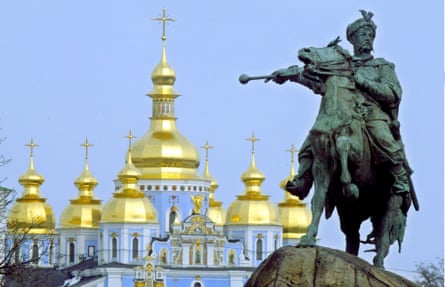
A statue in Kyiv of Bohdan Khmelnytskyi, a 17th-century leader of Ukrainian Cossacks.

Ukraine was not just geopolitically significant to Russia. It was culturally and historically, too. The Russian and Ukrainian languages had diverged sometime in the 13th century, and Ukraine had a distinct and notable literature, but the two remained close – about as close as Spanish and Portuguese. While most of the country was ethnically Ukrainian, there was, particularly in the east, a large ethnic Russian minority. Perhaps more important, while the official language was Ukrainian, the lingua franca in most of the large cities was Russian. And perhaps even more important than that, most people knew both languages. It was common on television to see a journalist, for example, ask a question in Russian and receive an answer in Ukrainian, or to have a panel of experts for a talent show with two Russian-language judges and two Ukrainian-language judges. It was a genuinely bilingual nation – a rare thing.

From a Russian nationalist perspective, that was a problem. Why speak two languages when you could just speak one? Crimea was a particularly sore spot: the vast majority of the population identified as Russian. And once you started thinking about Crimea, you then started thinking about eastern Ukraine. There were many Russians there. To be sure, there were also Russians in other places – in northern Kazakhstan, for example, and eastern Estonia. There were irredentist claims on these areas as well, and occasionally they flared up. The writer turned political provocateur Eduard Limonov, for example, was arrested in Moscow in 2001 for allegedly plotting to invade northern Kazakhstan and declare it an independent ethnic Russian republic. But no place held such a central part in the Russian historical imagination as Ukraine.

For the first 20 years of independence, Russia kept a very close eye on developments in Ukraine, and interfered in various ways, but that was as far as it went. That was as far as it needed to go. Ukraine’s large Russian-language population guaranteed, or seemed to guarantee, that the country would not stray too far from the Russian sphere of influence.

2. ‘Where does the motherland begin?’ The view from Ukraine


In Ukraine itself, even aside from the Russian presence, there were the birth agonies of a nation. Many of the new post-Soviet countries had their share of problems – corrupt elites, restive ethnic minorities, a border with Russia. Ukraine had all this, and more. Because it was large and industrialised, there was plenty of it to steal. Because it had a major Black Sea port in the city of Odesa, there was an easily accessible seaway through which to steal it. As became clear in 2014, when it became time to use it, much of the equipment of the old Ukrainian army was smuggled out of the country through that port.

On top of this, Ukraine was, if not divided, then certainly not immediately recognisable as a unified whole. Because it had so many times been conquered and partitioned, the country’s historical memory itself was fractured. In the words of one historian, “Its different parts had different pasts.” To make things worse, one of the most treasured aspects of the political culture of Ukraine, historically – the legacy of the Cossack hetmanate of the 17th century – was anarchism. The original Cossacks were warriors who had escaped serfdom. Their political system was a radical democracy. There was something beautiful about this. But in terms of the construction of a modern state, it had its drawbacks. In a now-infamous CIA analysis written shortly after the creation of independent Ukraine, it was predicted that there was a good chance the country would fall apart.

And yet, for two decades, it didn’t. For better and worse, democracy was rooted deep in Ukrainian political culture, and so while in Russia power was never transferred to an opposition, in Ukraine it happened again and again. In 1994, the first president of Ukraine, Leonid Kravchuk, was voted out of office in favour of Leonid Kuchma, who promised better relations with Russia and to give the Russian language equal status in Ukraine. In 2004, his hand-picked successor, Viktor Yanukovych, was, after massive protests against a falsified election, voted out in favour of a more nationalist and pro-European candidate, Viktor Yushchenko. In 2010, Yushchenko proceeded to lose to a resurgent Yanukovych. But Yanukovych was thrown out of office by the Maidan revolution in 2014. A nationalist candidate and chocolate billionaire, Petro Poroshenko, became the next president, but he was replaced by Volodymyr Zelenskiy, a Russian-speaking pro-peace candidate, in 2019.
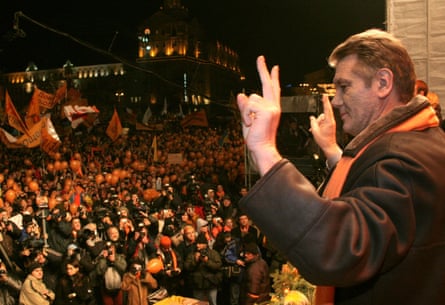
Viktor Yushchenko after winning the re-run of the 2004 presidential election in Ukraine.

Ukrainian politics were full of conflict. Fist-fights in the Rada were common and protests were a fact of ordinary life. There were massive protests against Kuchma, for example, in 2000, when a recording surfaced of him apparently ordering the murder of the journalist Georgiy Gongadze, whose headless body had been found in the woods outside Kyiv. (Kuchma insisted the tapes were doctored. He was charged in 2011, but the prosecution was dropped after a court ruled the tapes inadmissible.) Yushchenko, the opposition candidate in 2004, barely survived a dioxin poisoning, which had all the markings of a Russian special operation. The initial round of voting in 2004 was marked by severe irregularities and clear voter fraud such as had not yet appeared in Russia. It took mass protests, known as the Orange Revolution, to win another round of voting, in which Yushchenko won. Yushchenko himself subsequently presided over a fair election in 2010, which he lost. And on and on.

These changes of power were alternately tumultuous and pedestrian, but they reflected genuine differences of opinion among the populace about what Ukraine should be. Some thought Ukraine should integrate further with Europe, others that it should remain friendly and closely connected with Russia. The cultural and historical differences between the different parts of Ukraine would surface in times of crisis.

For Russian speakers and Ukraine’s remaining Jewish population, the memory of the second world war, of resistance to Nazi invasion and occupation, remained an important touchstone. Ukrainian nationalists had a different perspective on these events. For some, the occupation of their country began in 1921 (when the Bolsheviks consolidated control of Ukraine) or 1939 (when Stalin took the last part of western Ukraine as part of the Molotov-Ribbentrop pact between Germany and the USSR to carve up Poland), if not 1654, when the Cossack Hetmanate sought the protection of the Russian tsar. The famous wartime resistance fighters known as the Ukrainian Insurgent Army, who had opposed both Soviet and German occupation in western Ukraine, and who were seen as fascist villains by the Soviets, were, in the nationalist narrative, the George Washingtons of Ukrainian history. For nationalists, the signal tragedy of the 20th century was not the Nazi invasion, but instead the great famine of 1932-33, in which millions of Ukrainians died. It was known as the Holodomor – “murder by hunger” – and was consistently referred to as a deliberate act by Stalin (and by extension Russia) to destroy the Ukrainian nation.
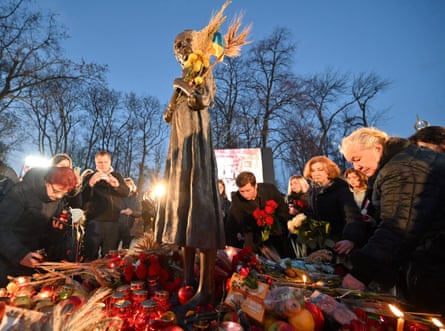
People lighting candles last year at a monument in Kyiv for victims of the Holodomor famine of 1932-33.

All these arguments took place against a backdrop of economic stagnation. Ukraine’s economy was consistently one of the weakest in the former Soviet bloc. Corruption was endemic and living standards were low. Ukraine was dependent on cheap gas from Russia as well as the “transit fees” it charged for Russian gas going to Europe.

To Ukrainians living under these see-sawing politics, going from hope to disappointment and back again, with what seemed like a permanent elite merely trading the presidency back and forth between themselves, it felt like their lives were passing them by. A journalist I met in Kyiv in 2010, who had taken part in the protests that were part of the Orange Revolution and was then let down by Yuschenko’s presidency, lamented the missed opportunities. “All this while time is passing,” he said. He couldn’t believe how little had been done since 2005, and since 1991.

But there was another aspect to time passing. The more time passed, the more Ukraine’s fragile nationhood could coalesce. Because what did it mean to belong to a nation? Where, in the words of the famous Soviet song, does the motherland begin? It begins with the pictures in the first book your mother reads you, according to the song. And to your good and true friends from the courtyard next door. The more people who were born in Ukraine, rather than the USSR, the more people grew up thinking of Kyiv as their capital instead of Moscow, and the more they learned the Ukrainian language and Ukrainian history, the stronger Ukraine would become. Volodymyr Zelenskiy, in the TV show that made him famous in Ukraine and eventually catapulted him to the presidency, played a Russian-speaking high school history teacher who suddenly becomes president. In the brief scenes in which we see Zelenskiy’s character actually teaching, he is quizzing his students about the great Ukrainian national historian and politician Mykhailo Hrushevsky.

3. For Russia, Nato is a four-letter word


It was violent Russian opposition to EU membership for Ukraine that in late 2013 precipitated the Maidan revolution, which in turn precipitated the Russian annexation of Crimea and incursion into eastern Ukraine. But after the end of the cold war, it was Nato expansion that had been the greatest irritant to the relationship between Russia and the west, a relationship that found Ukraine trapped in between.

Nato expansion proceeded very slowly, then seemingly all at once. In the immediate wake of the Soviet collapse, it was not a foregone conclusion that Nato would get bigger. In fact, most US policymakers, and the US military, opposed expanding the alliance. There was even talk, for a while, of disbanding Nato. It had served its purpose – to contain the Soviet Union – and now everyone could go their separate ways.

This changed in the early years of the Clinton administration. The motor for the change came from two directions. One was a group of idealistic foreign policy hands inside the Clinton national security council, and the other was the eastern European states.

After 1991, the post-communist countries of eastern Europe, particularly Poland, Hungary and Czechoslovakia, found themselves in an uncertain security environment. Nearby Yugoslavia was falling apart, and they had their own potential border disputes. Most of all, though, they had a vivid memory of Russian imperialism. They did not believe Russia would remain weak for ever, and they wanted to align with Nato while they still could. “If you don’t let us into Nato, we’re getting nuclear weapons,” Polish officials told a team of thinktank researchers in 1993. “We don’t trust the Russians.”

In presenting their case, it did not hurt that the leaders of the eastern European countries had a great deal of moral credibility. It was after a meeting with, among others, Václav Havel and Lech Wałęsa in Prague in January 1994 that Bill Clinton announced that “the question is no longer whether Nato will take on new members but when.” This formulation – not whether, but when – became official US policy. Five years later, the Czech Republic (having peacefully divorced Slovakia), Hungary and Poland were inducted into Nato. In the years to come, 11 more countries would join, bringing the total number of countries in the alliance to 30.

During the recent crisis, some American pundits and policymakers have claimed that Russia did not object to Nato until quite recently, when it was searching for a pretext to invade Ukraine. The claim is genuinely ludicrous. Russia has been protesting Nato expansion since the very beginning. The Russian deputy foreign minister told Clinton’s top Russia hand Strobe Talbott in 1993 that “Nato is a four-letter word”. At a joint press conference with Clinton in 1994, Boris Yeltsin, to whom Clinton had been such a loyal ally, reacted with fury when he realised that Nato was actually moving ahead with its plans to include the eastern European states. He predicted that a “cold peace” in Europe would be the result.
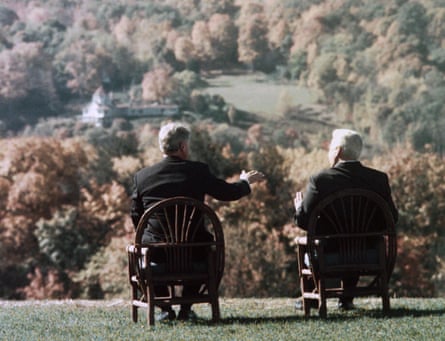
Bill Clinton (left) and Boris Yeltsin in the US in 1995.

Russia was too weak, and still too dependent on western loans, to do anything except complain and watch warily as Nato increased in power. The alliance’s intervention in Kosovo in 1999 was particularly disturbing to the Russian leadership. It was, first of all, an intervention in a situation that Russia viewed as an internal conflict. Kosovo was, at the time, part of Serbia. After the Nato intervention, it was, in effect, no longer part of Serbia. Meanwhile the Russians had their own Kosovo-like situation in Chechnya, and it suddenly seemed to them that it was not impossible that Nato could intervene in that situation as well. As one American analyst who studied the Russian military told me: “They got scared because they knew what the state of Russian conventional forces was. They saw what the actual state of US conventional forces was. And they saw that while they had a lot of problems in Chechnya with their own Muslim minority, the United States just intervened to basically break Kosovo off of Serbia.”

The next year, Russia officially changed its military doctrine to say that it could, if threatened, resort to the use of tactical nuclear weapons. One of the authors of the doctrine told the Russian military paper Krasnaya Zvezda that Nato’s eastward expansion was a threat to Russia and that this was the reason for the lowered threshold for the use of nuclear weapons. That was 22 years ago.

The second post-Soviet round of Nato expansion was the largest. Agreed to in 2002 and made official in 2004, it brought Bulgaria, Estonia, Latvia, Lithuania, Romania, Slovakia and Slovenia into the alliance. Almost all these states were part of the Soviet bloc, and Estonia, Latvia and Lithuania – the “Baltics” – were once part of the Soviet Union. Now they had joined the west.

As this was happening, a series of events shook up the Russian periphery. The “colour revolutions” – coming in quick succession in Georgia in 2003 (Rose), Ukraine in 2004 (Orange) and Kyrgyzstan in 2005 (Tulip) – all used mass protests to eject corrupt pro-Russian incumbents. These events were greeted with great enthusiasm in the west as a reawakening of democracy, and with scepticism and trepidation in the Kremlin as an encroachment on Russian space. In the US, policymakers celebrated that freedom was on the march. In Moscow, there was a slightly paranoid concern that the colour revolutions were the work of the western secret services, and that Russia was next.

The Kremlin might not have been right about a long-range western plot, but they weren’t wrong to think that the west never saw it as an equal, as a peer. The fact is that at every turn, at every sticking point, in every situation, the west, and the US in particular, did what it wanted to do. It was, at times, exquisitely sensitive to Russian perceptions; at other times, cavalier. But in all cases the US just pressed ahead. Eventually this just became the way things were. Relations between the two sides soured, and positions hardened. In 2006, Dick Cheney gave an aggressive speech in the Lithuanian capital, Vilnius, in which he celebrated the achievements of the Baltic nations. “The system that has brought such great hope to the shores of the Baltic can bring the same hope to the far shores of the Black Sea, and beyond,” he said. “What is true in Vilnius is also true in Tbilisi and Kyiv, and true in Minsk, and true in Moscow.” As Samuel Charap and Timothy Colton note in their excellent short history of the 2014 Ukraine conflict, Everyone Loses, “One can only conjecture the reaction to such statements in the Kremlin.”

A year later, at the 2007 Munich Security Conference, in what is widely considered a key turning point in relations between Russia and the west, Putin delivered his response, assailing the US and its unipolar system for its arrogance, its flouting of international law, and its hypocrisy. “We are constantly being taught about democracy,” he said of Russia. “But for some reason those who teach us do not want to learn themselves.”

The warning was heard, but not heeded. In April 2008, in Bucharest, Nato countries met and delivered a promise that Georgia and Ukraine “will become members of Nato”. It was, as many have since noted, the worst of both worlds: a promise of membership without any of the actual benefits, in the form of security guarantees, that membership would bring. A few months later, in what, up to that point, was by far the most significant military action outside its borders, Russia defeated Georgia in a decisive five-day war.
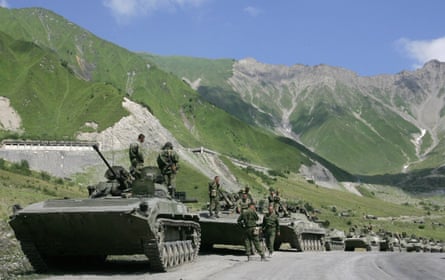
Russian tanks in South Ossetia in Georgia in 2008.

In retrospect, one could argue that if Nato had moved faster and accepted Ukraine and Georgia much earlier, none of what followed would have happened. This argument has the virtue of examples to bolster it: the Baltics entered Nato, and despite being former Soviet republics, have experienced relatively little Russian harassment since. But one could also argue that, in the face of mounting Russian alarm and repeated warnings about “red lines” over Nato, the US States and its allies should have been extra careful. They should have taken into account the specificity of the places they were dealing with, in particular Ukraine. Ukraine was not Russia, in Leonid Kuchma’s famous phrase, but it was also not Poland. One of the problems with Ukraine’s Nato bid in 2008, for example, pushed forth by the western-friendly Yushchenko administration, was that it was unpopular inside Ukraine – in large part because Ukrainians knew how Russia felt about it, and were rightly worried.

But as Nato and the EU both expanded further east, their representatives considered it a matter of principle not to make compromises with a regime they viewed as trying to bully them and Ukraine. Again, they may have been right in principle. In practice, Putin has been warning of this invasion, in one form or another, for 15 years. A great many voices are now saying that we should have been much tougher on Putin much earlier – that the sanctions we are now seeing should have been deployed after the war in Georgia in 2008, or after the polonium poisoning in London of Alexander Litvinenko in 2006. But there is also a case to be made that we should have thought more deeply about how to create a security arrangement, and an economic one, in which Ukraine would never have been faced with such a fateful choice.

4. What Putin thinks


Still, at the centre of this tragedy lies one man: Vladimir Putin. He has embarked on a murderous and criminal war that also appears almost certain to be judged a colossal strategic blunder – uniting Europe, galvanising Nato, destroying his economy and isolating his country. What happened?

There have always been multiple competing views of Putin, falling along different axes as to his competence, his intelligence, his morality. That is, some people who thought he was evil also thought he was smart, and some people who thought he was merely defending Russian interests also thought he was incompetent.

Five years ago in this paper, during the boom in Putinology that followed Donald Trump’s election, I made the case that Putin was basically a “normal” politician in the Russian context. That didn’t mean he was in any way admirable – the way he prosecuted the war in Chechnya, which launched his presidential candidacy, was evidence enough of his bad intentions. Nor did I think he should be hacking Hillary Clinton’s emails. Nonetheless I thought that, given Russia’s history, its traumatic experience of the post-Soviet transition, the internal dynamics of the Yeltsin regime, and the wider geopolitical context, the person who took over from Yeltsin was almost certain to have been a nationalist authoritarian, whether or not he was named Vladimir Putin. The question seemed to be: would this other nationalist authoritarian, not named Putin, have behaved very differently? Here there was some limited historical evidence, in the persons of Boris Yeltsin (author of the first war in Chechnya) and Dmitry Medvedev (author of the war in Georgia), that he would not.
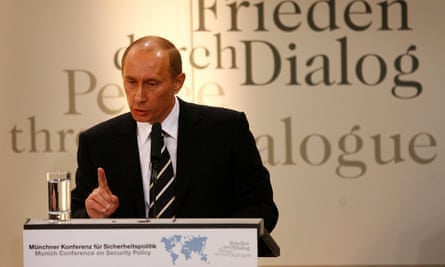
Vladimir Putin at the 2007 Munich Security Conference.

The moment, at least in my mind, where Putin rendered these questions irrelevant, was the attempted poisoning with a nerve agent of the oppositionist Alexei Navalny, an attempted murder that would almost certainly have had to have Putin’s approval. Other political murders in Russia had seemed to me less clearcut. There was good reason to believe that the journalist Anna Politkovskaya and the politician Boris Nemtsov, for example, had been killed on the order of the Chechen warlord Ramzan Kadyrov. And while Kadyrov was Putin’s loyal ally, they were not one and the same. Possibly this was a distinction without a difference, and yet it seemed that talk of a dictatorship in Russia obscured the fact that the country still had some room, albeit narrowing by the year, for political life and freedom of thought. We are now seeing what an actual Russian dictatorship looks like: all remnants of an opposition media shuttered, journalists threatened with 15 years of prison, unbridled and unanswerable police aggression. With the invasion of Ukraine, there is no one left who thinks Putin is merely acting like a standard post-Soviet Russian politician.

Is there any explaining Putin’s thought process? Here, there were objective and subjective factors. Objectively, he was not wrong to think that Ukraine was integrating further and further into the west. The EU-Ukraine Association Agreement that he had so fiercely opposed in 2013 had been signed in 2014 and gone into effect in 2017. Nato, too, was on its way. There were now Nato weapons and Nato personnel in Ukraine. Putin’s attempt to exert control over Ukrainian politics by creating the breakaway republics in Donetsk and Luhansk had failed. In fact, it had not only failed, it had backfired. Ukrainians who had been lukewarm toward Nato now supported joining and many who had entertained pro-Russian sentiments had seen what Russian puppets had done in the breakaway republics. Ukraine, an imperfect democracy, scored a 61 on the Freedom House scale in 2021; the Donetsk and Luhansk People’s Republics (competing under the umbrella term “Eastern Donbas”) scored a 4. No one wanted that for themselves. Putin had won Crimea and some territory in the east, but he had lost Ukraine. In the wake of Joe Biden’s election, which signalled a renewed American commitment to Europe and Nato and, inter alia, Ukraine, things were going less and less in Putin’s favour.

But he was not entirely out of options. In 2015 he had extracted, through force of arms, the Minsk-2 agreement – an onerous peace deal, never actually implemented by either side, that had obliged Ukraine to reintegrate the Donetsk and Luhansk republics into a federated Ukraine, where they would essentially have veto power over the country’s foreign policy; perhaps, in 2022, he could get Minsk-3 as well. And if he had previously left the implementation of the Minsk agreement to a democratically elected Ukrainian government, he could decide not to make that mistake again. He could install a leader in Kyiv whom he could trust. A month before the invasion, the British government declared that it possessed intelligence indicating that Putin planned to do exactly that.

And yet here we get into the subjective factors: why, in retrospect, did Putin think he could pull this manoeuvre on a country the size of Ukraine? Partly, to be sure, he was buoyed up by his string of military victories – in Chechnya, in Georgia, in Crimea, in Syria. He had found great success, often at relatively little cost, by being a kind of international spoiler to the west’s designs in various parts of the world.

He must also have been emboldened by what had happened in Ukraine in 2014. Crimea had surrendered to Russia without a shot. A few weeks later, a small group of middle-aged mercenaries had been able to march 100 miles into Ukraine and capture a small city called Slovyansk, igniting the active phase of the war in eastern Ukraine. If a ragtag outfit could do something like that, imagine what an actual army could do.

There was also the important factor that Putin did not believe Ukraine was a real country. This was not specific to Putin – many Russians, unfortunately, don’t see why Ukraine should be independent. But with Putin this has become a real obsession, impermeable to contradictory evidence. One type of leader would see that Ukraine refuses to submit to his will and conclude that it was an independent entity. But for Putin this could only mean that it was controlled by someone else. After all, this was already the case in the parts of Ukraine that Putin had conquered – he had installed puppets to run the self-proclaimed people’s republics in eastern Ukraine. So perhaps it stood to reason that the west had also installed a puppet – Zelenskiy – who would run at the first sign of trouble.

5. Where does this end?


Just about everyone has been surprised by the ferocity of the Ukrainian resistance: Putin, obviously, but also western military analysts who had accurately predicted the invasion but inaccurately thought the war would be over very quickly, and possibly even the Ukrainians themselves. Before the war, sociologists who studied Ukraine pointed to a fairly high willingness on the part of Ukrainians to fight for their country, but it was one thing to tell a sociologist, and it was another thing to go and fight. But, clearly, the Ukrainians have decided to fight.

Putin clearly did not expect Volodymyr Zelenskiy to turn into Winston Churchill. Zelenskiy had been elected as a peace candidate in 2019. A political novice from the country’s industrial south-east, he won an impressive 73% of the vote in a runoff against Petro Poroshenko. The latter’s campaign slogan had been “Army! Language! Faith!” Zelenskiy, by contrast, was elected as a breath of fresh air, someone who was going to do things differently, and also someone who indicated a willingness to try to negotiate with Putin to end the war. Poroshenko’s campaign warned that Zelenskiy was a Kremlin stooge who would sell out the country. People voted for him anyway.

By the time war rolled around, Zelenskiy was no longer popular in Ukraine. His approval rating was in the 20s. He had failed to find a peaceful solution to the festering conflict in the Donbas region, and he had started persecuting his opponents. Viktor Medvedchuk, a close ally of Putin who was considered his point man in Ukraine, was placed under house arrest, and Poroshenko, still Zelenskiy’s main political rival, was charged with treason for some business dealings he had with Medvedchuk and the separatist regions in 2014. And then, when the clouds of war started gathering, Zelenskiy insisted the threat was not real. He criticised the Biden administration for its alarmist rhetoric. The night before the invasion, he told Ukrainians they could sleep soundly that night. But the first Russian missiles hit their targets before dawn.

The day before, in his anguished, last-minute appeal to the Russian people, Zelenskiy had made clear that he did not want war. But it was also the case that he did not have much room for compromise. The only clear path to peace – implementation of the Minsk accords – had become, with the passage of time, even more intolerable to Ukrainians than it had been at their signing. At the end of the day, people don’t like to feel as if they have been bullied into compromise by their larger and angrier neighbour. And most observers noted that, as terrifying as a Russian invasion was, a compromise by Zelenskiy that ceded too much would probably lead to the overthrow of his government.

If the only way to avoid war was through a craven surrender, then it would have to be war. Ukraine would fight. And fight they have.

Now, as the Russian army regroups and starts bombing and shelling Ukrainian cities, Nato governments are faced with an excruciating choice: either they watch in horror as innocent Ukrainians are killed, or they get further involved and risk an even wider conflict. Where this stops it’s impossible to say. As of this writing, with the Russian leadership continuing to put forth maximalist demands, a settlement looks far away. And whether, if the Russian demands moderate, Zelenskiy will be able to accept a Russian Crimea and eastern Ukraine after all the blood his people have spilled – and, indeed, whether the people will accept it – is an open question.

Someday, the war will end, and someday after that, though probably not as soon as one might hope, the regime in Russia will have to change. There will be another opportunity to welcome Russia again into the concert of nations. Our job then will be to do it differently than we did it this time, in the post-Soviet period. But that is work for the future. For now, in agony and sympathy, we watch and wait.

This article was amended on 11 March 2022. Slovenia was not part of the Soviet bloc as stated in an earlier version.

Follow the Long Read on Twitter at @gdnlongread, listen to our podcasts here and sign up to the long read weekly email here.

Saturday, May 14, 2022

generation war

это война

Журналист Максим Трудолюбов посмотрел на войну как на конфликт поколений.


Это не только война двух совершенно разных армий и двух разных обществ, но и война поколений. С российской стороны войну начали и ведут приближающиеся к 70-летию или перевалившие на другую сторону Путин (1952 г.р), Патрушев (1951 г.р.), Шойгу (55), Герасимов (55), Лавров (50), Бортников (51), Нарышкин (54), Золотов (54), Матвиенко (49), юные Колокольцев (61), Медведев (65) и Мишустин (66).

Обороняют Украину Зеленский (1978 г.р.), главнокомандующий ВСУ Залужный (1973 г.р.), министр обороны Резников (66 – редкий человек 60-х годов рождения), глава СБУ Баканов (75), глава МИД Кулеба (81) глава МВД Монастырский (80), прокурор Венедиктова (78), ключевые чиновники президентского офиса Ермак (71), Подоляк (72), Арестович (75). Премьер Шмыгаль – 75 года рождения.

В правительстве Украины люди 80-х годов рождения занимают системные должности – вице-премьеры Юлия Свириденко (85) и Ольга Стефанишина (85), названный выше глава МВД, министр инфраструктуры Кубраков (82), министр здравоохранения Ляшко (80), министр финансов Марченко (81), министр юстиции Малюська (81). Вице-премьер и министр цифровой трансформации Михаил Федоров родился в 1991 г.

Люди, принимающие ключевые решения в Украине, если и помнят СССР, то по детству и школе, а так в общем и не помнят. Но это, пожалуй, не главное. Опыт работы на государство у многих из них недолгий, есть бывшие депутаты, профессионалы, в том числе менеджеры и юристы. Им знакома культура стартапа, они понимают, как устроен современный мир, они знают иностранные языки. Это вообще совсем другие люди, чем те, что захватили власть в РФ.

Я не всех посмотрел, но можно без натяжки сказать, что перед нами – два поколения.

И речь тут не только об украинцах. Обезумевшие от крови пожилые чекисты пытаются уничтожить не только новое поколение украинской элиты, но и то поколение, которое могло и должно было прийти им на смену в России. Если с первой задачей они скорее всего не справятся, то со второй – уже справились.

Те представители российского поколения 70-х и 80-х годов рождения, которые – ровно как их украинские ровесники – могли бы сейчас принимать ключевые решения в стране, находятся нигде. Они либо работают в услужении у начальства, либо ушли во внутреннюю или внешнюю эмиграцию. Многие, вероятно, реализуют себя, но есть и те, кто чувствуют, что могли бы сделать что-то для страны, но видимо так и будут это чувствовать до конца дней.

Это война 70-летних против 40- и 30-летних, война поколений, которой в принципе не должно было быть. Да, процесс перехода мог быть трудным – я представлял, что он будет трудным и писал об этом. Это было неизбежно в стране, в которой все плохо с передачей власти и собственности. Но я не думал, что будет так. Вцепившиеся мертвой хваткой во власть обреченные – не безобидны. На их совести гибель тысяч людей и не имеющие оправданий военные преступления. Это хуже всего. Но они уничтожили – не физически – и тех, кто мог бы вывести Россию из раскопанной ими ямы. Уничтожили их репутации, поставив себе на службу или лишили их возможностей, выдавив из страны.

Даже если война закончится в этом году и волшебным образом «дети» сменят «отцов», то – что это будут за дети? Младшие Патрушев и Кириенко? Если смена будет все-таки не от Патрушева к Патрушеву, то и тут будут проблемы. Те, кто оставался в России будут с недоверием относиться к тем, кто был в эмиграции. И это чувство будет взаимным. Впрочем, и так уже длинно.

Tuesday, May 3, 2022

Mobilization

Адвокат Павел Чиков отвечает на главные правовые вопросы о мобилизации: 

слухи, что её вот-вот объявят в России, становятся всё настойчивее.


❓❔🪖 Правовое регулирование призыва по мобилизации


На горячую линию по защите прав призывников и военнослужащих стали массово поступать вопросы о том, кого и как призывают по мобилизации. Отвечаем на самые популярные вопросы.

Что такое мобилизация?

Это комплекс мероприятий по переводу государства на организацию и состав военного времени.

Мобилизация может быть общей (по всей стране) или частичной (на конкретных территориях).

Когда возможна мобилизация?

Исключительным правом объявить мобилизацию обладает Президент России.

Мобилизация возможна лишь в случаях:
• агрессии против России;
• непосредственной угрозы агрессии;
• возникновении вооруженных конфликтов, направленных против РФ.

Кто подлежит мобилизации?

Призыву на военную службу по мобилизации подлежат граждане, пребывающие в запасе, в том числе женщины, имеющие военно-учетную специальность.

Граждане, которые также пребывают в запасе, но не призваны по мобилизации, могут направляться для работы на должностях гражданского персонала различных воинских формирований.

Однако граждане призывного возраста (до 27 лет), которым еще только предстоит военная служба или альтернативная гражданская служба, не подлежат мобилизации, поскольку не пребывают в запасе.

Кто не подлежит призыву по мобилизации?

Граждане, имеющие неснятую или непогашенную судимость за совершение тяжкого преступления. Кроме того, закон предусматривает различные основания для отсрочки от призыва — в частности, ею могут воспользоваться признанным временно не годными к военной службе по состоянию здоровья. Отсрочка от призыва на военную службу по мобилизации также может быть предоставлена отдельным гражданам или категориям граждан указом Президента РФ.

Некоторые граждане, работающие в органах власти, подлежат бронированию за ними в целях обеспечения их деятельности.

Как происходит призыв по мобилизации?

Решение призывной комиссии по мобилизации о планируемом призыве граждан заблаговременно доводится военным комиссариатом до сведения граждан путем вручения им мобилизационного предписания (пункт 26 Постановления Правительства РФ от 30 декабря 2006 года № 852).

В случае объявления мобилизации граждане, имеющие мобилизационные предписания, обязаны самостоятельно явиться в указанные в них время и место без каких-либо дополнительных извещений (ст. 21 ФЗ «О мобилизационной подготовке и мобилизации в Российской Федерации»).

Кроме того, о необходимости явки в связи с мобилизацией могут вручаться повестки.

Оповещение граждан осуществляется как по месту жительства, так и по месту работы граждан — закон возлагает на организации обязанность оказывать содействие военным комиссариатам в их мобилизационной работе в мирное время и при объявлении мобилизации.

Можно ли не явиться по повестке?

К уважительным причинам для неявки по повестке относятся (п. 2 ст. 7 ФЗ «О воинской обязанности и военной службе»):
• заболевание или увечье гражданина, связанные с утратой трудоспособности;
• тяжелое состояние здоровья отца, матери, жены, мужа, сына, дочери, родного брата, родной сестры, дедушки, бабушки или усыновителя гражданина либо участие в похоронах указанных лиц;
• препятствие, возникшее в результате действия непреодолимой силы, или иное обстоятельство, не зависящее от воли гражданина;
• иные причины, признанные уважительными правоприменительным органом.

Какая предусмотрена ответственность?

Неявка по повестке повлечет административную ответственность в виде предупреждения или наложения административного штрафа в размере от 500 до 3000 рублей (статья 21.5 КоАП РФ).

Какие еще существуют ограничения в случае мобилизации?

Гражданам, состоящим на воинском учете, с момента объявления мобилизации воспрещается выезд с места жительства без специального разрешения.

Tuesday, April 19, 2022

Hundreds of thousands flee Russia and Putin’s ‘two wars’

АльДжазира пишет:

At least 200,000 Russians have abandoned their homes and jobs for fear of being persecuted as ‘scum and national traitors’.

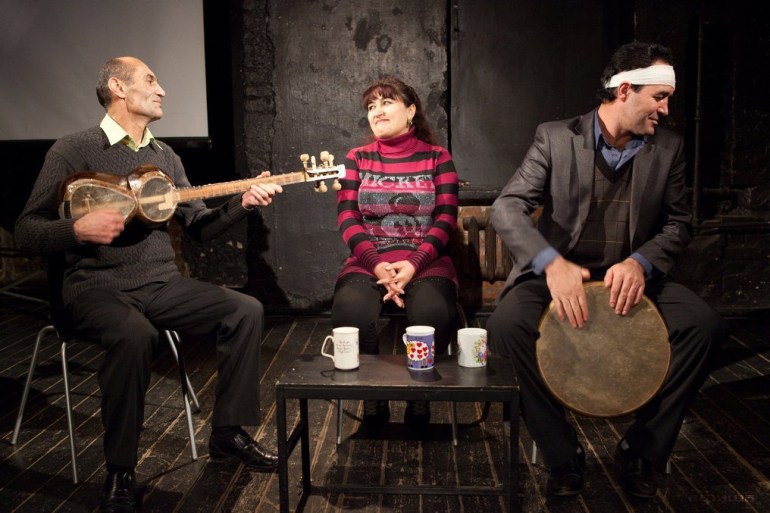
Akyn Opera, a documentary performance Nana Grinstein, based on the ordeal of Central Asian labour migrants in Moscow, on the stage of Teatr.doc, one of Russia's most persecuted theaters 

By Mansur Mirovalev

Vinnytsia, Ukraine – Nana Grinstein fled Russia because the Kremlin’s new laws punishing criticism of its so-called “special operation in Ukraine” may land her in jail.

Grinstein, a playwright, her husband Viktor, a video editor, and their 14-year-old daughter, Tonya, left behind the hysteria in Russia caused by the war in Ukraine, and the persecution of anyone who dares to say that President Vladimir Putin’s “special operation” is, in fact, a war.

“The world that we’ve been building for years, that seemed unshakable, important and relevant, crumbled before my very eyes like it was made of cardboard,” Grinstein told Al Jazeera from a rented apartment in the Armenian capital, Yerevan.

Arriving in Armenia in early March, the family found that tens of thousands of other Russians had made the journey before them, and they have witnessed the arrival of many more since.

Grinstein and her family fled Russia fearing the very real possibility of persecution for being, to use Putin’s own words, “scum” and “national traitors” – slurs that have spurred a witch-hunt reminiscent of the Stalin-era purges.

The Grinsteins are now among at least 200,000 Russians who have abandoned their homes and jobs because they are disgusted by the Kremlin’s attack on Ukraine and the largely enthusiastic response to the war by their compatriots.

“They want nothing to do with Putin’s sham-Imperial project and don’t want to be associated with his war crimes,” columnist Leonid Bershidsky wrote in mid-March.

“Others [leave] because they cannot imagine living under the Soviet-style autarky to which Western sanctions have doomed Russia,” he wrote.

Post-invasion flight


The post-invasion flight from Russia is the latest but hardly the final chapter of the exodus of millions who cannot stand to live under Putin’s rule.

From 2000, when Putin was first elected president, to 2020, four to five million Russians have emigrated, according to research published by the Takie Dela magazine in October.

The figures were based on surveys, official national data from dozens of countries – from Kazakhstan to Canada – as well as Russian statistics on the number of people who had cancelled their residence registration.

In the early 2000s, Russians migrated mostly to Europe and North America, but after 2014 more moved to former Soviet republics, the magazine reported.

The new tide of Russian migrants is huge – and rising.

At least 200,000 people left Russia in the first 10 days of the war in Ukraine, according to calculations by Konstantin Sonin, a Russian-born economist at the University of Chicago.

“The tragic exodus not seen for a century,” Sonin wrote in a tweet, where he compared the ongoing flight with the “White Emigration” that followed the 1917 Bolshevik revolution when some five million people fled the former Russian empire – ending up in Germany, France, the United States, Argentina and China.

Among the emigres were novelist Vladimir Nabokov, composer Igor Stravinsky and Ukrainian-born helicopter designer Igor Sikorsky.

Nowadays, emigration is faster and far easier, especially for digital nomads who can live almost anywhere as long as there is access to broadband internet and online banking.

A survey of more than 2,000 emigrants conducted in mid-March by OK Russians, a nascent nonprofit that helps emigres, found that about a third of those who left were IT experts, managers of all sorts constituted another third, and the remainder were office workers and creative freelancers – designers, bloggers, journalists.

The survey concluded that at least 300,000 Russians had left the country by March 16, mostly to Georgia, Turkey and Armenia.

Others have left for more exotic destinations.

‘Two wars’


When the war started, Leonid Shmelkov was on vacation in Sri Lanka.

The 39-year-old animator, whose “My Own Personal Moose” cartoon won a special prize at Germany’s 2014 Berlin International Film Festival, decided to stay in Sri Lanka – and urged a dozen friends to join him.

Shmelkov and his friends work on long-distance projects despite imperfect web access and power supply in Sri Lanka. They have learned how to get by living on an island where web access and the power supply are far from perfect.

Sri Lanka’s tourism-dependent economy nosedived because of the COVID-19 pandemic, and authorities have allowed thousands of Russian tourists to extend their stay because they are welcome of the business, Shmelkov said.

Reflecting on the conflict, Shmelkov feels that Moscow is not just at war with Kyiv.

Propaganda exaggerating the role Soviet forces played in the victory over Nazi Germany led to a “cult of war” that acted as a precursor to the current war hysteria in Russia, he explained.

“We’ve had some sort of a cult of war, a very wrong cult of war, not in the sense of ‘let’s do everything so that it doesn’t happen again’,” Shmelkov told Al Jazeera.

“The Russian government is waging two wars – one against Ukraine and the other one against normal people in Russia.”

‘Not Orwell, this is King’


Two-thirds of Russians feel “pride, inspiration or joy” about the war in Ukraine, according to a March 4 survey by the Levada Center, Russia’s last independent pollster. Only 18 percent felt “anger, shame or depression” at the war.

A resident of Moscow, who spoke to Al Jazeera on condition of anonymity, compared the current environment in Russia as being more like a plot in a Stephen King horror novel than to the anti-Utopia of George Orwell’s “1984”.

“I am surrounded by zombies. No one forces them, they support the war voluntarily and with joy. This is not Orwell, this is King,” she said.

Propaganda-filled television shows are broadcast “almost around the clock”, and their influence on the hearts and minds is as devastating as “nuclear weapons”, she added.

“It’s killing everyone and everything, turning black into white and vice versa. Year after year, drop after drop, fake after fake.”

Thousands of war critics have been jailed, harassed, their homes raided, subjected to smear campaigns, and physically attacked by unidentified thugs, human rights groups say.

This new witch-hunt surpasses any previous quashing of dissent under Putin, who said in mid-March that “scum” and “national traitors” should be “purged”.

“For two decades, the argument has been that oppression and human rights violations are a necessary evil to ensure economic growth and stability, [but] in the end, Putin’s regime has neither,” said Ivar Dale, a senior policy adviser with the Norwegian Helsinki Committee, a rights monitor.

“The increasing brutality in Russian society has forced the country’s brightest to leave in search for a better future for their families,” he told Al Jazeera.

War hysteria


Newly resident in Yerevan, Grinstein’s professional and personal history is a reflection of the evolution of oppression in Russia.

The 51-year-old Muscovite penned scripts for award-winning movies and television shows, but it was her lesser-known writings that drew the ire of Russian authorities. Since 2011, she has been writing for Teatr.doc, Russia’s most political, persecuted, and outspoken theatre.

Grinstein based her plays on interviews and documents that described the lives of LGBTQ Russians, Muslim labour migrants and the post-WWII co-existence of Germans and Russian settlers in the Soviet-occupied Baltic exclave of Konigsberg.

For years, the Teatr.doc troupe faced threats, arrests and interrogations, but their shoestring-budget performances won accolades and awards.

When the war in Ukraine began in February, Grinstein tried to rally filmmakers she knew in opposition to the conflict. Her appeals were in vain, because too many of their film projects depended on government funding.

Grinstein’s own family history epitomises the new divisions in Russian society – and the not-so-distant Soviet past.

Her husband, Viktor, refrains from discussing the war with his elderly pro-Russian parents who live in the separatist-controlled southeastern region of Luhansk.

Her daughter, Tonya, saw how the Kremlin’s war propaganda affected her peers, who mostly cheered the invasion.

“She was scared more than we were,” Grinstein told Al Jazeera.

For Grinstein, their recent arrival in Armenia echoes another war that uprooted her family a generation ago.

She was born in 1971 in Baku, the capital of then-Soviet Azerbaijan, into an Armenian-Jewish family where she remembers wearing a classy dress to her high school graduation in 1988 – and walking home past soldiers in armoured vehicles.

The troops were deployed by Moscow during the Azeri-Armenian tensions over Nagorno-Karabakh that would spark a war four years later.

Anti-Armenian pogroms in Azerbaijan soon forced the Grinsteins to leave for Armenia, from where she later moved to Moscow to study in a prestigious film school.

She realises now that despite her anti-war stance, her family will still be blamed for allowing Russia’s war against Ukraine to happen.

“My forefathers were persecuted for being Jewish, then – for being Armenian, and we will be persecuted for being Russian,” she said.

What soothes her is working on plans to move to Germany, “the immense hospitality” of Armenians – and the view in Yerevan she has of Armenia’s most sacred mountain.

“I see Mount Ararat from my window, and that’s inspiring,” she said.