Overcoming Crises. Shaping Policy for an Uncertain Future.
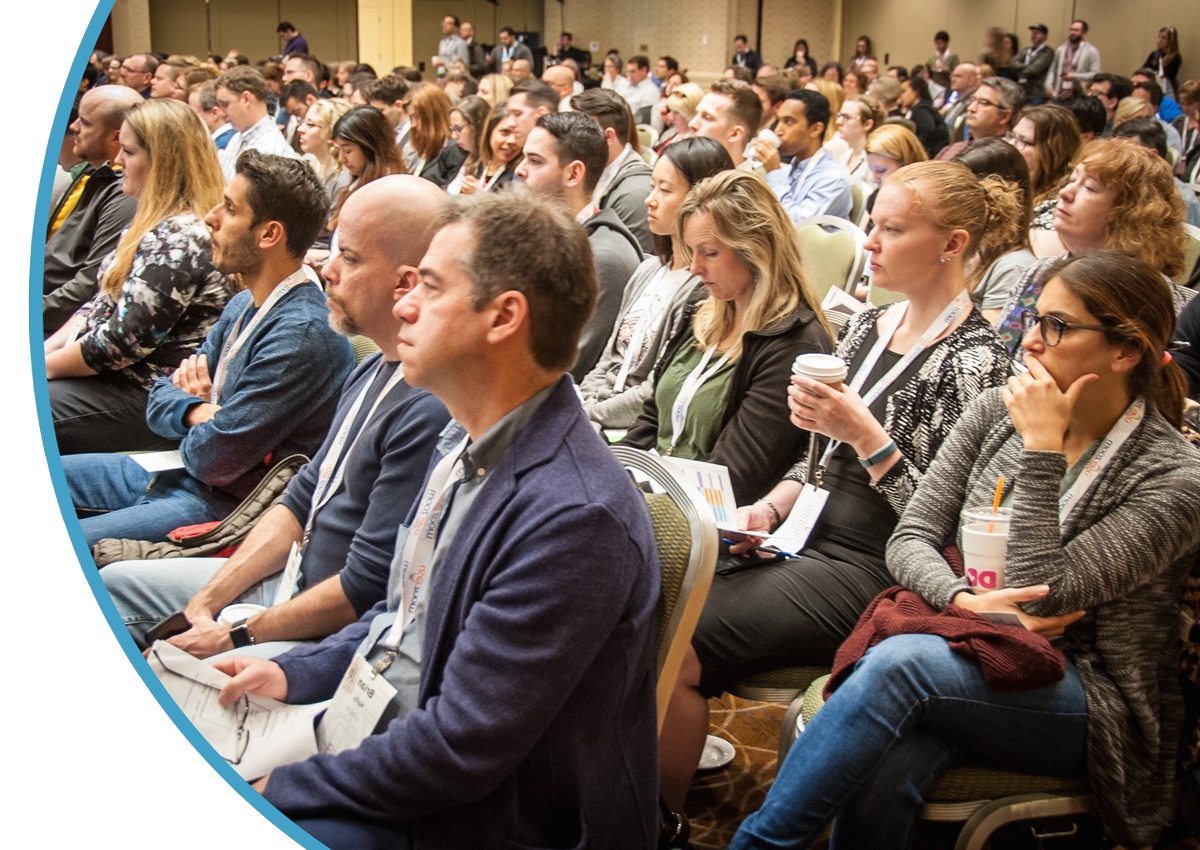
From January 23-25, Berlin Demography Days will host 13 public panel discussions with eminent experts and decision-makers from politics, business, science and civil society.
They will exchange visions for future crisis resilience. Panel discussions will look at best practice responses to shocks caused e.g. by violent conflicts, climate change and pandemics, and to population trends.
Join us! Attendance is free, but registration is required.
Please register here:
https://survey.demogr.mpg.de/index.php/972861?lang=enAll panels will be online, except for the opening event, which you can also attend in-person on January 23 (18-21 CET) at the Futurium Museum in Berlin. The evening will include the presentation of the European Demographer Awards 2023.
View the Berlin Demography Days 2024 programme here:
https://population-europe.eu/events/berlin-demography-days-berliner-demografie-tage/berlin-demography-days-2024-overcomingFollow Berlin Demography Days 2024 on Linkedin and X through #DemographyDays2024 and #OvercomingCrises for updates and more information.
For any questions about the event, please contact:
events@population-europe.euWe look forward to you joining us!
Andreas Edel Executive Secretary, Population Europe / Max Planck Institute for Demographic Research
Ulrich Lilie President of Diakonie Germany 2014-2023
Berlin Demography Days 2024 Speakers List
23 January | Day 1 | Understanding Crisis Management
Bruno Arpino, Professor of Social Statistics at the Department of Statistical Sciences, University of Padua, Italy
Bеrando Benifei, Member of the European Parliament
Eugen Brysch, Chair of the German Foundation for Patient Rights (Deutsche Stiftung Patientenschutz)
Agnieszka Chłoń-Domińczak, Director of the Institue of Statistics and Demography, Warsaw School of Economics
Fernand de Varennes, Former UN Special Rapporteur on minority issues (2017-2023)
Antje Draheim, State Secretary at the German Federal Ministry of Health
Pearl Dykstra, Professor Emerita of Empirical Sociology, Erasmus University Rotterdam, member Chief Scientific Advisors group to the European Commission
Andreas Edel, Executive Secretary, Population Europe
Julia Fitzner, Unit Head, Insights and Analytics, the World Health Organization (WHO)
Hermann Gröhe, Member of Parliament, German Minister of Health 2013-2018
Yasmine Hamdar, AI Specialist, UNDP
Lorence Kabasele Birungi, President of the African Youth and Adolescent Network on Population and Development, Eastern and Southern region (AfriYAN)
Hill Kulu, Professor of Human Geography and Demography, University of St Andrews, UK, President of the European Association for Population Studies
Susan Michie, Professor of Health Psychology and Director of the Centre for Behaviour Change, University College London, UK
Alice M. Reid, Professor of Demography & Co-Director of Campop, University of Cambridge, UK
Jürgen Renn, Founding Director, Max Planck Institute of Geoanthroplogy, Director of the Max Planck Institute for the History of Science
Magdalena Rogl, Head of Diversity and Inclusion at Microsoft Germany
Georg Schütte, General Secretary, Volkswagen Foundation
Juliane Seifert, State Secretary at the German Federal Ministry of the Interior and Community
Dubravka Šuica, the European Commission Vice-President for Democracy and Demography
Rita Süssmuth, former German Minister of Health and President of the German Bundestag (1985-1998)
Manuela Verduci, Managing Director of Kiron Digital Learning Solutions
Ingmar Weber, Alexander von Humboldt Professor for Artificial Intelligence at Saarland University, Germany
Sigrid Weigel, former Director of the Leibniz-Centre for Literature and Cultural Research (ZfL), Germany
24 January | Day 2 | Global Crisis – Local Responses
Mumuni Abu, Demographer and Senior Lecturer at the Regional Institute for Population Studies of the University of Ghana
Andreas Backhaus, Researcher, Ageing, Mortality and Population Dynamics, Federal Institute for Population Research (BiB), Germany
Kai Bergmann, Senior Advisor on German Low-Carbon Policy, Germanwatch
Jane C. Falkingham, Professor of Demography and International Social Policy, University of Southampton, UK, and Director of the ESRC Centre for Population Change
Thiago Herick de Sa, Technical Officer for Age-friendly Environments, World Health Organization
Øyvind Ihlen, Professor, Department of Media and Communication, University of Oslo, Norway
Sebastian Klüsener, Head of Research Department "Ageing, Mortality and Population Dynamics" at the Federal Institute for Population Research (BiB), Germany
Nataliia Levchuk, Chief Researcher at the Ptoukha Institute for Demography and Social Studies in Kyiv
Raya Muttarak, Professor of Demography at the University of Bologna, Italy
Amy Neumann-Volmer, Medical Doctor and Board member of Doctors Without Borders Germany
Adam Rogalewski, Policy Officer Health and Social Services, The European Federation of Public Service Unions
Doris Schaeffer, Professor in the Faculty of Health Sciences and Co-director of the Center for Interdisciplinary Health Literacy Research (IZGK) at Bielefeld University
Daniele Vignoli, Professor of Demography at the University of Florence, Italy
Virginia Wangare Greiner, CEO of the NGO Maisha
Lukas Welz, Executive Director at BAfF Federal Association of Psychosocial Centers for Survivors of Torture, War and Flight, Germany
Caroline Zickgraf, Deputy Director of the Hugo Observatory: Environment, Migration, Politics, the University of Liège