Showing posts with label Иран. Show all posts

Friday, April 14, 2023

Daughters of Persia

Representing Female Characters in Iranian Graphic Novels


Straddling the binary of us/them, literature produced within the Iranian diaspora is faced with representing the, often vilified, Muslim-“other” whilst engaging its audience to witness human rights violations in the Islamic Republic of Iran (IRI). Here, writers negotiate discourses of cultural relativity and condemnation. While a critique of the IRI provides a tangible form of reference for orientalist discourses within “the West”, attempts to ignore human rights violations here flirt with the apologetic discourse of cultural relativism. Undoubtedly, women and girls provide the most striking form of visual reference for “western” perceptions of Middle Eastern “otherness”. Here, notions of a particular form of gendered, Islamic oppression are centred around discourses of the oppressed hejabi v. the liberated, unveiled woman. Certainly, the Iranian graphic novel is, due to its emphasis on the visual, forced to contend with such discourses. Moreover, such texts are confronted with the white-feminist expectation of the veiled, Middle Eastern woman to be devoid of agency, while grappling with the emotional labour associated with persistence in both Iranian and European patriarchal society. This paper considers the renowned graphic novels of Marjane Satrapi alongside Parusa Bashi’s Nylon Road, Persia Blues by Dara Naraghi and Brent Bowman, and Amir and Khalil’s web-novel Zarah’s Paradise. In using these texts, this paper deliberates how women and girls are framed within Iranian graphic novels as mothers, daughters, and wives. Using these exemplary texts, this paper determines the ways in which the Iranian graphic novel is utilised to convey trauma, persistence, and representation inside Iran and within the diaspora. Moreover, in demonstrating the graphic novel’s ability to convey meaning through its aesthetic style, theses texts highlight the importance of this medium in providing a “western” readership with an insight into both a gendered struggle within the IRI and the racialisation of Iranian women and girlhoods within “the West”. Through these means, this paper challenges the elitist, white-feminist view of Iranian women and girls as oppressed and lacking agency. Moreover, this paper acknowledges both the female struggle against Iranian and “western” patriarchal societal models and the writers’ negotiation of character empowerment and the emotional labour of persistence.

Monday, April 3, 2023

Iran through the ages

civilization's eternal crossroads

Persepolis, the capital of Darius the Great

Western civilization began with the Classical Greeks, but ancient Greek civilization is incomprehensible without the context of their endless conflict with the Persians starting in 500 BC, arguably history’s first civilizational world war. The unity of the Hellenes as a nation coalesced through their resistance to Persian aggression, and Athens’ rise was a direct consequence of its leading role in that fight. Greek victory over the early Achaemenids, Darius I and Xerxes I, not only shaped Greek culture, Persia’s later backing of Sparta over Athens helped decide the Peloponnesian War. Alexander the Great solidified this legacy of Greek entanglement with Persia at the end of the 4th century BC by defeating the last Achaemenid, Darius III, and conquering his empire. But Greece’s campaign to swallow Iran failed. In the end, Alexander’s dream of fusing the Greeks and Persians into the ruling race of a world empire died with him. Still, his shattering of the Achaemenid domains had the lasting impact of spreading across the Eastern Mediterranean a Greek culture forged centuries earlier during the Persian Wars, planting resilient seeds of Hellenic civilization as far east as India.

For the Classical Occident, Persia was the first great Other, the standard against which the West measured itself. Persia was there at the beginning of the West, a bête noire, the original Orient. But Herodotus’ and Xenophon’s is but one aspect of the story of Persia; the alternate tale is one of resilience in the face of political and military defeat and an endless cycle of the ancient culture surviving successive batterings to revive and resurge again. After Alexander’s conquests, Persia reemerged under the leadership of the Parthian Arsacid dynasty in the 2nd century BC. For three centuries, the Arascids warred with the Roman Empire, before the Sasanians succeeded them in the early 3rd century AD. The new Sasanian Persian Empire eventually came to match in size the Achaemenids’ domains at their peak, reaching the Aegean Sea and Egypt in the west by the early 7th century AD. And yet much as the Achaemenids were felled by Alexander, the Sasanians collapsed after defeat by the Arabs at Al-Qadisiyyah in 636 AD. By the 8th century, the last Sasanian princes were reduced to providing color as exotic dignitaries in the Xian court of China's Tang Emperor.

The Near East on the eve of the rise of the Persian Empire, 600 BC

Where Alexander’s conquests began a century-and-a-half interregnum of foreign rule destined to quickly be forgotten, leaving little lasting impact, under the Arabs, Iran was enduringly transformed. Zoroastrianism, the ancient religion of the Achaemenids and their successors, declined in the face of Islam, and the Persian language was set aside for the Koran’s Arabic. But the Iranians persisted as a nation, holding fast to their ancient history and unique language, making Islam their own and giving the young Dar-al-Islam (“Abode of Islam”) its greatest philosophers and jurists. Despite absorbing a vast trove of the Arabic lexicon into Persian, the Iranians retained their separate linguistic identity, with the poet Ferdowsi producing their national epic, The Shahnameh (“The Book of Kings”), 350 years after the humbling of the Sasanians by the Islamic conquest. Greek, Egyptian and Aramaic all faded as Arabic became the lingua franca of the western Near East, but in the east Persian evolved and reinvented itself. As late as three hundred years ago, the great Islamic Empires of the Ottomans, Safavids and Mughals were all united both in their patronage and elevation of Persian high culture and their use of Ferdowsi and Rumi’s language.

But the roots of Persia and the Iranian world go much further back than even the historical memory of the Greeks. The cultural bedrock of the Achaemenid Empire was deep, reaching back 2,500 years before the time of Pericles and Leonidas. The history of what would become Iran begins with the dawn of written history and the rivalry between Mesopotamia’s first civilization, Sumeria, and Elam to its east. Just as the later Persians have been seen through the eyes of the Greeks, their western enemies, so Elam is known mostly from the clay-tablet records of their Mesopotamian enemies, the Sumerians, Akkadians and Babylonians. Ancient Elam was situated in the southwest of modern Iran, and overlapped with what became Fars, homeland of the earliest Persians. Darius the Great’s own mother Irdabama was a wealthy Elamite descended from the region’s native aristocracy. In some measure, to be Persian was to have been Elamite.

The Persians, leaders of the Iranian peoples, were geographically liminal to the great civilizations of the Mediterranean and Asia. They represent the east for those to their west, and the west for those to their east. They have held such a position at equipoise for thousands of years, even back into prehistory and from the dawn of agriculture. The language of Iran binds it to the history of the Eurasian steppe, but Persian genes and culture root it in the deserts and mountains between India and Mesopotamia. The Persians are a bridge between the deep past and the present, a people as ancient as the Jews and Greeks, but with a lineage running even further back, to forgotten Elam...

Tuesday, August 17, 2021

Iran hopes to defeat COVID with home-grown crop of vaccines

Nature talks to vaccine developer Kayhan Azadmanesh about efforts in Iran to develop ten or more COVID jabs, two of which have been approved for use.

Iran was among the first countries to be hit with an outbreak of COVID-19 in early 2020. It is currently battling its fifth wave, likely driven by the Delta variant. Official figures suggest that more than 4.3 million people have been infected and 97,000 have died since the pandemic began, but the true toll is potentially much higher.

Scientists say Iran is one of few Middle Eastern nations with the capacity to develop vaccines. It has been doing so in earnest: around ten are under development and one is already bolstering its vaccination drive, but little is known about these vaccines outside Iran.

Nature speaks to Kayhan Azadmanesh, a medical doctor and biotechnologist who is head of the virology research division at the Pasteur Institute of Iran in Tehran, about the nation’s vaccine landscape. Azadmanesh also advises the Iranian government and is developing two viral-vector vaccines through his spin-off company Humimmune Biotech.

How badly has the pandemic affected Iran?


Since January 2020, we’ve had five separates waves. We’re currently experiencing the highest number of new cases reported so far, with around 40,000 a day, and the most common variant we detect is Delta. But many more cases are likely going unreported. The outbreak is putting pressure on hospitals and the situation is not looking good.

Which COVID-19 vaccines are available in Iran?


So far, 18 million or so doses have been administered: some 12 million were China’s Sinopharm vaccine; 4 million were the Oxford–AstraZeneca vaccine; and 1 million were COVIran Barekat, developed by the Iranian state-owned Shifa Pharmed Industrial Group in Tehran. The remainder include doses of Russia’s Sputnik V and India’s Covaxin. More than half a million doses are being administered a day, and some 17% of Iran’s population of 85 million have received their first dose of a COVID-19 vaccine.

Could you tell us about COVIran Barekat?


It is an inactivated vaccine and is still undergoing phase III trials, but it received emergency-use authorization in June. It was approved on the basis of the levels of antibodies it induces, including those that can ‘neutralize’ SARS-CoV-2, or block it from entering cells. In early trials, the researchers found that more than 93% of vaccinated people produced neutralizing antibodies. We don’t know how long this protection will last, but I assume that it will be similar to that provided by other inactivated vaccines — such as CoronaVac, produced by the Chinese firm Sinovac Life Sciences — for which antibody levels have been shown to drop after six months1, suggesting that boosters are likely to be required.
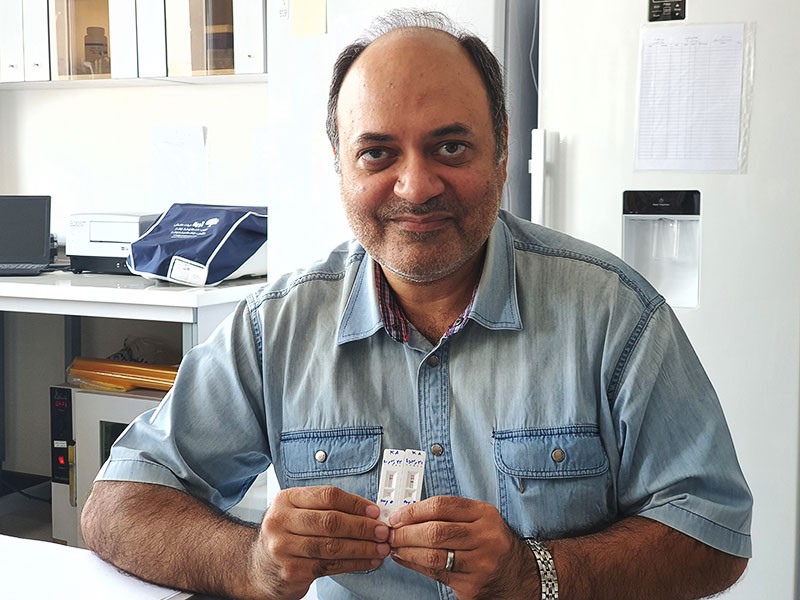
Kayhan Azadmanesh holding rapid-antibody tests that show a negative result before, and a positive result after, he received a COVID-19 vaccination.

What other vaccines are being developed in Iran?


Pasteurcovac is a recombinant-protein vaccine developed in a collaboration between Cuba’s Finlay Institute of Vaccines in Havana and the Pasteur Institute of Iran. The vaccine is known as Soberana 02 in Cuba. It also received emergency-use approval in Iran in June, despite still being in phase III trials. There are several other inactivated vaccines and recombinant-protein vaccines in clinical trials, and there is at least one mRNA vaccine, two adenovirus-vector vaccines and one measles-virus-vector vaccine in earlier stages of development. Vaccines developed outside Iran are also currently in clinical trials and being produced locally.

Tell me about the vaccines you are designing?


My company, Humimmune Biotech, has been working on two vaccine candidates. One uses the measles virus as a backbone to introduce a gene that encodes either the SARS-CoV-2 spike protein, which the virus uses to enter cells, or the nucleocapsid protein that it requires to replicate. That vaccine is being produced by the Iranian firm BioSun Pharmed in Tehran.

The other vaccine, which might be more promising, uses an adenovirus 5 backbone to deliver part of the sequence for the spike protein — a similar backbone to that used in the second dose of Sputnik V. We hope to start clinical trials early next year. Most of the COVID-19 vaccines used in Iran so far have been inactivated vaccines, which I expect will mean people will need booster shots next year. Our vaccine could be used as a booster, and a mix-and-match approach might even offer better protection. The technology can also be easily modified against new variants — we have already begun developing a version for Delta.

Why are Iranian scientists creating so many vaccines?


We have a long history of vaccine production in Iran. The Pasteur Institute of Iran was established in 1920, and has produced vaccines against tuberculosis and rabies. Vaccines have also been developed in Iran against measles, mumps and human papilloma virus.

We can’t rely on help from the international community with the pandemic. We are living under sanctions imposed by the United States; in our opinion, these are unjustified. The United States says that sanctions don’t affect humanitarian activities, but when your ability to transfer money is restricted, it is difficult to buy drugs and medicines. And we have the technology to produce vaccines, so why not use it? To ensure the safety of Iranians, it makes sense to develop a variety of vaccines using different research and development strategies, as China has done.
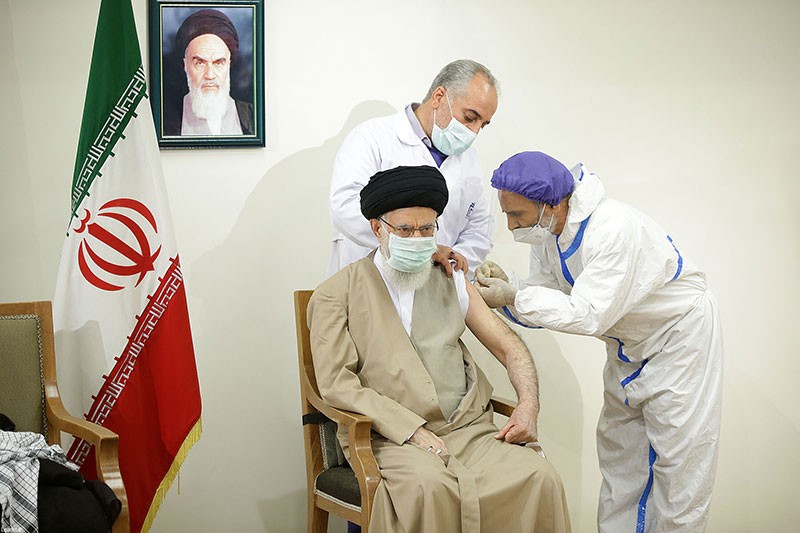
Iran's Supreme Leader Ayatollah Ali Khamenei receives a dose of the locally-made COVIran Barekat vaccine in June.

Why are Iranian researchers reluctant to publicize their work internationally?

This could be another side effect of the sanctions. Researchers in Iran might not want to draw too much attention to their work in case they put potential partnerships in jeopardy before they have achieved a final product, or they run the risk of losing access to raw materials and technologies they need for vaccines.

Researchers are also extremely busy, helping in the effort to fight the pandemic in Iran. They might not have time to publish results in international journals. But some have started to share results. In June, the researchers developing COVIran Barekat published a preprint of their preclinical results2, and they will share clinical results very soon. We also plan to share the results of our adenovirus-vector vaccine soon.

What have been the biggest challenges in developing COVID-19 vaccines?


The sanctions have caused a lot of difficulty, because they make it hard for us to buy materials and equipment. For example, chromatography resins we need to purify vaccines are mostly produced by multinational companies that are major suppliers to the United States, so they might be afraid of selling to us. The United States says that we can apply for exemptions, but, in our experience, that hasn’t worked. But somehow, we find a way. We modify our methods, find other providers, or look for local solutions. We search for the best we can get, but sometimes quality and efficiency are affected.

Also, one of the biggest challenges globally is scale. Prior to the pandemic, Iran primarily had to produce vaccines for children, with a production requirement for each vaccine of around 3 million doses a year. Now we need about 170 million doses to fully vaccinate the whole population.

What does the future hold for vaccine development in Iran?


The initial target for COVIran Barekat was to produce up to 30 million doses a month by September, which would have been enough to vaccinate the adult population. But they have not been able to achieve that, so we have had to import millions of doses of other vaccines. As many people have said, this will not be the last coronavirus pandemic that we face. I expect the vaccine production capacity will be used for years to come to develop new vaccines and drugs, for both coronaviruses and other diseases.

doi: https://doi.org/10.1038/d41586-021-02216-z

Wednesday, June 17, 2020

Iran ends provision by state of contraceptives and vasectomies

A woman with her son in Isfahan province in Iran.
kpzfoto/Alamy

Government move to boost the birth rate does not affect pharmacies or private hospitals


Iran’s state hospitals and clinics are no longer performing vasectomies or giving out contraceptives in an attempt to revive flagging population growth, a senior health official has told state media.

Iranian women were now having 1.7 children on average, well below the 2.2 required to maintain the population, Hamed Barakati, director general of the Ministry of Health’s Office of Population and Family Health, told the Islamic Republic News Agency in an interview on Sunday. On current trends about a third of the country would be over 60 years old by 2050. “Whether we like it or not … we will become an ageing country,” he said.

Family planning procedures and products would continue to be available from pharmacies and private hospitals, however, and in public hospitals to women whose life was at risk, Barakati said.
Conservatives in Iran’s government, including the supreme leader Ayatollah Ali Khamenei, have been pushing citizens to have more children for at least a decade, by limiting access to family planning services, increasing the number of infertility clinics and telling Iranians it is safe to have children every 18 to 24 months – down from earlier advice to wait three to five years. Maternity leave was extended to nine months and fathers have given two weeks off as part of a suite of reforms in 2013.

Yet birth rates have kept falling, which Barakati blamed on poor economic conditions that deterred men from committing to marriage and a family. “The young man will not be willing to marry or have children, even if we give him a loan, as long as he does not feel secure,” he said.

Women delaying marriage to pursue higher education as well as a cultural aversion to having more than two children were also factors the government needed to address, he added. The average Iranian has her first child at 29, compared to around age 26 for an American.

Hardliners have made the birth rate a national security issue and claimed foreign enemies have helped engineer the decline. Demography researchers have been arrested and accused of manipulating fertility statistics to try to hide the scale of the “population crisis”, according to state media.

Khamenei has cast the falling birth rate as the result of imported western thinking and said the country of 80 million should aspire to a population nearly twice that size.

Iran was lauded in the late 1990s for family planning policies that slashed the country’s birth rate from around seven children per woman in 1980 to fewer than two by 2011.


It did so with progressive initiatives including subsidised vasectomies, free condoms and cheap contraceptives, and countrywide education on sexual health and family planning with the slogans “Two children is enough” and “Fewer kids, better life”.

The falling fertility rates were encouraged by the country’s clerical rulers who worried that massive population growth during the 1980s – when families were encouraged to strengthen the wartorn country by producing “soldiers for Islam” – would stretch resources and lead to high unemployment in the future.

Rights groups have been critical of previous attempts to boost Iran’s birth rate, arguing they risk raising new barriers to women’s entry into the workforce and turning them into “baby-making machines”. Women makeup 60% of Iranian university students but have one of the lowest labor force participation rates in the world.

Public-health officials have also warned that attempts to fight Aids and other sexually transmitted diseases would be set back by restricting condoms and other contraceptives.

Monday, October 7, 2019

Rates of Induced Abortion in Iran:

The Roles of Contraceptive Use and Religiosity


Сто лет назад русская религиозная философия пыталась найти срединный путь развития общества, стать синтезом между двумя началами, удерживая общество от соблазнов фундаментализма.

Соблазн выглядит приблизительно так:
Total abortion rate per woman, selected countries and Iran
Relationship between the total abortion rate and
гоню про дробности, они тут

верхняя картинка тыцабельна, после этого видна лутшэ

Monday, September 19, 2016

occupation of Iran

мало известно по сравнению с этим, но тоже начало
Красная Армия в Тегеране
больше о советской оккупации Ирана

Saturday, March 14, 2015

Pronatalism in Iran

бебеси сообчает:
Иран разрабатывает пронаталистскую политику, ибо рождаемость низка (TFR=2, тыцанием мыша в Иран на карте определяется), а скрепа высока

они выбрали два направления:

  1. запрет стерилизации и
  2. ограничения по доступности работы для женщин с детьми
оба (имхо) будут бес результатны

Amnesty warns that banning voluntary sterilisation and blocking access to information about contraception risks (что в проектах не указано, вообще заметочка бестолковая, как и всё в смях, но бебеси) greater numbers of unwanted pregnancies, forcing women into unsafe abortions.
два других проекта:
The other bill cited by the organisation would make it more difficult for women to seek divorce, and instructs employers to prioritise married women with children. 
при этом второй противоречит п 2 из начала, то-есть, видимо, ещё не определились 

Wednesday, March 11, 2015

ejecting veganism

Вот какие огурцы продаются в савецких магазинах статьи пишутся в традиционном теократичном Иране, а *уле? scopus -- он и в Иране scopus:
The main purpose of this research is to help couples that have problems in early ejection in man and veganism’s problem in woman that after 2 months has been cured by using scientific and non-drug method, successfully. This case is related to couples who live in Arak and both of them are 21 years old and their education level is Diploma. They refer to clinic center and are asking help from consulters after one year of their unconsummated marriage. Man is involved with problem of early injection and woman is involved with veganism’s problem. Treatment has been done by teaching relaxation to woman for 2 weeks and little by little along with day dreaming that is related to sexual. In the next stage, the researchers ask her in relaxing time to enter fingers in vagina. Manner therapy has been used for man that usually consists of start-stop and squeeze techniques. At last, after successful performance, first sexual relationship happens. It is noticeable that unconsummated marriage is treatable with a simple and safe method and low cost in a short time. Regarding this matter that veganism’s and early ejection are as sexual disorders and are most prevalent kind of sexual disorders, so present research concludes that unconsummated mar- riage is treatable by psychology and non-drug treatment which prevents marriage from failing.

Thursday, November 13, 2014

goumilevica

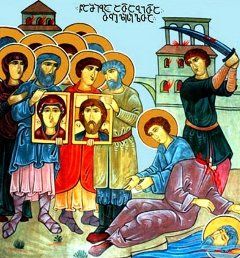
любопытная заметка про 100 тысяч грузинских святых (наверно: мучеников), но суть не в теологии, как можно до гадацо, а в двух цыферках:
  1. собственно 100 тысячах жителей Тбилиси -- по тем временам -- огромное количество; отрубить 100 тысяч индивидуальных голов, нужно целое войско, и в один день не управиться (источник утверждает, что рубили не всем, отступники проходили и становились мусульманами) и
  2. ещё: Мост, на котором были казнены мученики, уже давно разрушен. Да и сама река сегодня поднялась на 9 метров выше уровня тех лет. Но когда временами уровень воды падает, становятся видны опоры старого исторического моста.

любопытно:

  • каким образом эти 9 метров укладываются, если укладываются, в теорию гетерохронности увлажнения Евразии
  • в статье Метехи описанные события не упоминаются, а церковь построена 1278-84 (ударными темпами по тем временам)
  • мб, имеется в виду это событие в 1226 году он захватил и разорил грузинскую столицу Тбилиси, где хорезмшах разрушил все церкви [но тогда не монголы и не персы]
вопчем: нужна помощь зала

Monday, August 11, 2014

islamophobia

как-то стала исламофобия развивацо в организьме, началось с того, что какие-то ихние идеологи постановили, что женщина противоречит шариату и заветам аллаха просто самим своим существованием, а теперь Иран запретил васектомию, но, видимо, женщин пока ещё можно стерилизовать
хотя х.з?

Thursday, July 10, 2014

Sunni-Shiia v Turkey-Iran in Azerbaijan

Many Azerbaijanis since the 1990s refer to their mosques as “Turkish” or “Iranian” rather than “Sunni” or “Shiia,” a reflection of the political nature of this division rather than the religious one.  With time, that has begun to change, but the change is much slower than a simple listing of the categories might suggest.
прикол в том, нсколько понимаю, что азербайджанцы, в основном, турецко-говорящие, а по религии -- персы, поэтому ни те, ни другие

интерфакс/релиния:
Баку. 8 июля. - Госкомитет по работе с религиозными структурами Азербайджана начал расследование инцидента, произошедшего между ваххабитами и шиитами в одной из мечетей пригорода Баку.
"После завершения расследования будут предприняты соответствующие меры. Все шаги, направленные на подрыв религиозной обстановки в стране, будут решительно пресечены", - сообщили "Интерфаксу" в Госкомитете.
Инцидент между группой ваххабитов и шиитов произошел 4 июля после церемонии ифтар (вечерний прием пищи во время месяца рамадан), устроенной администрацией поселка Мушвигабад Гарадагского района Баку.
Согласно информации правоохранительных органов, после ифтара группа ваххабитов напала на шиитов, произошла массовая драка.
По словам очевидцев, инициировавшие драку ваххабиты сначала начали называть шиитов "кафирами" ("неверными"), затем вытеснили их из поселковой мечети, после чего уже на улице стали забрасывать их камнями.
В связи с произошедшим Госкомитет взял под контроль мушвигабадскую мечеть и приступил к расследованию инцидента.

Tuesday, February 11, 2014

Real empowerment

Четыре футболистки сборной Ирана оказались мужчинами, ожидающими операции по смене пола, сообщает Mirror.
- Если эти игроки смогут решить свои вопросы с помощью операции, и смогут пройти соответствующие медицинские тестирования, то они смогут участвовать в соревнованиях в женском футболе, - сказал глава медицинской комиссии иранской федерации футбола Ахмад Хашемиан.

Отметим, что теперь все футболистки будут обязаны пройти медицинские тесты прежде чем подписать контракт с одним из клубов.
Мужская художественная гимнастика замерла в ожидании противоположных переходов

Sunday, February 2, 2014

IVF cycles in Iran are the cheapest in the world

Это не рекламы ради, а информированнозди для, а то часть граждан.ру ещё предполагает:
 попрjбуй зделать это  в мичети
вот, блин, пробуют.
нащёт 20% бесплодных -- худ.свист, как полагаю, а остальное впечатляет:

“Although, to Westerners, Iran's Shiite clerics might appear reactionary, they are downright revolutionary when it comes to bioethics. In recent years, they have handed down fatwas allowing everything from stem-cell research to cloning,”
читать 

Friday, January 24, 2014

Persian model

фотка нагуглилась на СЗН :) (ист.)
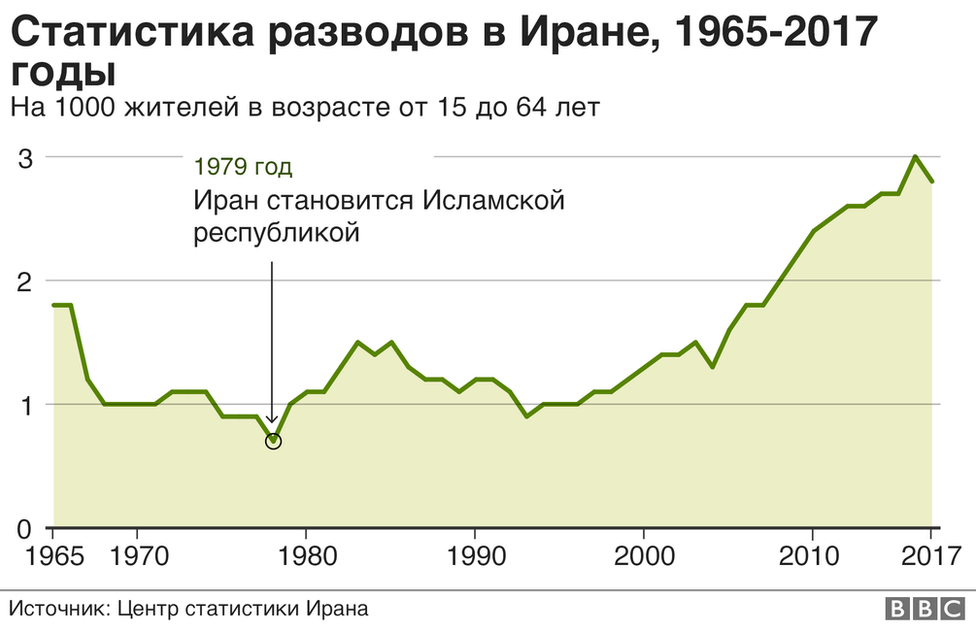
В 1979 году после исламской революции рождаемость в Иране достигла локального максимума 3.6 детёныша на пару (видимо таки на женщину), по тогдшним прогнозам при её сохраненнии к 90 году численность населения досигла бы 140 млн чел, что для местности (и апчественной структурки) -- многоватко, поэтому Хомейни стал раздавать презики бесплатно.  С тех пор по щас ср возраст вступления в брак увеличился лет на 7-8. Теперь рождаемость низка (1.8, а народу 77 млн), презиков не дают, а наоборот за детёныша дают золотую монетку, а стерилизацию больше не делают (8 месяцев уже), но .... поезд ушол, хотя Хаменеи полагает, что в Иране должно быть 150 млн. По его соображениям рождаемость уменьшилась, патамушта персы имитируют евриков, тут надо разобраться (предлагай--1берёмся). Увеличили отпуск с 1/2 года до 9 месяцев + 2 недели отцу.
И ломают голофьку над социалистическим законом народонаселения.

ист=usnews

Wednesday, November 13, 2013

interesting rating

читаю статейко про Иран и его религиозные особенности и обнаруживаю такую вот табличку:

РФ в топ15, мало того, что РФ +
тут ещё и Китай с Вьетнамом

любопытно, наверно, рулить разными рейтингами

Tuesday, July 2, 2013

Turkey Demographic and Health Survey 2008

Кемаль
На сайте Хасетепскага ун-та объявление о доступности материалов TDHS-2008, а в дополнение
список других обследований, проведённых там

Турция в настоящее время, как РФ и др сеэньгоутсы, пытается провести клерикальную контр революцию и вернуться в до ататюркское состояние, то-есть, к османизьму-исламизьму, но нород.тр какта не очень, вяловато
а в городах типа контрастов --- ваще активно не хочет

КСР в Турции либо на уровне, либо уже ниже простого воспроизводства поколений, как, сопсно гря, и в Иране, чьё государственное устройство ваще непонятно евроморфической ментальности 

Saturday, June 29, 2013

Electoral Maps of Iran Elections

Иранские этносы
результаты выбора
больше карт и каменты в геокурентах