Showing posts with label одиночество. Show all posts

Saturday, November 18, 2023

loneliness

Порядка четверти молодых людей в мире чувствуют себя одинокими


Одиночество - настоящая эпидемия по всему мира: 27% опрошенных в возрасте от 19 до 29 лет сказали, что чувствуют себя одинокими. Среди соседних по возрасту когорт одиноких по 25%, а вот в более старших возрастных группах ситуация лучше, особенно в самой старшей: среди людей 65+ по всему миру (опрос проводился в 142 странах!) только 17% чувствуют себя одинокими

Tuesday, June 20, 2023

Loneliness and social exclusion among older Europeans before and during the COVID-19 pandemic

June 19, 2023 Bruno Arpino, Giuseppe Gabrielli and Heidrun Mollenkopf

Launched in 2009, the Joint Programming Initiative “More Years Better Lives” (JPI-MYBL) brought together several EU and non-EU countries to create a common research framework aiming to better coordinate, harmonize, and synchronize the research programmes of the participating countries on the topic of demographic change. In 2022, JPI-MYBL launched a knowledge-sharing process on isolation and loneliness among older people during the COVID-19 pandemic.

This resulted in a few workshops, which later led to a series of short papers and, ultimately, to the production of the e-book Loneliness and social exclusion among older Europeans before and during the COVID-19 pandemic that is now available on the N-IUSSP website. Here is an excerpt from Bruno Arpino, Giuseppe Gabrielli and Heidrun Mollenkopf’s introduction.


The demographic changes of the past and coming years will profoundly modify the population structure in Europe. These transformations are associated with changes in the distribution of resources and opportunities across Europe and beyond – changes that require adjustments in all areas of life, both at individual level and across society as a whole. Among these changes, population ageing is a long-term trend, which began several decades ago in Europe. Increased life expectancy is a triumph for humanity but, coupled with fertility reduction and postponement, it causes population ageing.

Social isolation and feelings of loneliness among older people are among the challenges posed by population ageing and shrinking family networks. Isolation and loneliness have negative consequences on individuals that may result in poor physical health, unhealthy behaviours, poor wellbeing and, ultimately, depression.

Loneliness also has an economic cost for individuals and society; it reduces interpersonal interactions, and thus social capital, and adversely affects physical and mental health. Research has estimated that the annual cost of loneliness is about 1,000 euros per capita. Individuals who feel lonely also tend to use healthcare services more than others, with negative consequences on public health expenditures.

Loneliness and social isolation among older adults were already important research and policy topics before the onset of the COVID-19 pandemic. However, the spread of COVID-19 and the social distancing measures to limit transmission of the virus exacerbated pre-pandemic vulnerabilities linked to isolation and loneliness in ageing societies.

Isolation, loneliness, and the COVID-19 pandemic


In the decades preceding the COVID-19 pandemic, scholars and public health officials became increasingly concerned about the growing risks of loneliness driven by societal shifts such as fertility decline, the increase in one-person households and other factors, especially in the United States and Europe.

After the outbreak of the pandemic, physical distancing was imposed or encouraged at national, regional, and local levels, to mitigate the spread of COVID-19. People were asked to avoid public social spaces and minimize physical contact with others. Measures also included stay-at-home orders, and full physical isolation of high-risk individuals, such as older adults with pre-existing conditions. While these mitigation measures were effective in slowing the spread of COVID-19 and reducing mortality, they may have increased isolation among older adults, possibly exacerbating the “loneliness pandemic” and the risk factors for loneliness.

Studies have suggested that older adults were more resilient to loneliness than younger adults during COVID-19. Thus, increased physical isolation due to the anti-COVID restrictions does not seem, on the whole, to have exacerbated feelings of loneliness among older adults. This finding may reflect a combination of factors, including lowered expectations for social interaction during the pandemic or increased contact at a distance.

Although possibly more resilient than younger adults, it is unclear whether, and to what extent, older adults across Europe experienced increases in loneliness during COVID-19. Existing evidence offers mixed results. In addition, although some studies showed unchanged feelings of loneliness among older adults overall, relevant heterogeneities may exist. Along this line, Arpino et al. (2022) show that individuals who lack certain close family ties (e.g., unpartnered people) have been at higher risk of reporting increased feelings of loneliness since the onset of the pandemic. This suggests that older people who lacked emotional and practical support might have been particularly exposed to its direct and indirect consequences. Van Tilburg (2022) shows that loneliness, and particularly emotional loneliness, increased between 2019 and 2020, although having a partner before the pandemic provided some protection.

Given that informal caregiving is mostly provided by close family members, childless and unpartnered individuals were, in principle, those at highest risk of experiencing unmet care needs during the pandemic. In fact, research has shown that family caregiving continued during the pandemic, in some cases replacing formal care services to avoid possible contagion by care professionals. Studies have also reported higher anxiety and depression among family caregivers during the pandemic.

The increased need of care and the heavier burden placed on family caregivers call for new policy and practice solutions. Older people in residential care are at a particularly high risk of isolation, loneliness and reduced care. COVID‑19 has pointed up an urgent need for higher standards of care in nursing homes in Europe, and for the development of community-based alternatives and services to support persons with care needs and families with care responsibilities.

These alternatives and services could be inspired by the principles outlined in a UN (2020) policy brief launched in the early phases of the pandemic. The development of good quality, affordable, available, and accessible community-based services being paramount for meaningful inclusion in the community, these services should be developed in collaboration with all stakeholders, from users to practitioners, including persons with care needs and their families. In parallel, broader-scope interventions to reduce isolation and loneliness among the general population can, and need to be, implemented, e.g. by improving public transport and through laws and policies to address ageism, inequality and the digital divide (WHO 2021).

References

  • Arpino B., Mair C. Quashie N., and Antczak R. (2022) Loneliness Before and During the COVID-19 Pandemic: Are Unpartnered and Childless Older Adults at Higher Risk? European Journal of Ageing. 19, 1327–1338.
  • United Nations (UN) (2020) The Impact of COVID-19 on older persons.
  • Van Tilburg, T. G. (2022). Emotional, social, and existential loneliness before and during the COVID-19 pandemic: Prevalence and risk factors among Dutch older adults. The Journals of Gerontology: Series B, 77(7), e179-e184.
  • World Health Organization (WHO) (2021). Social isolation and loneliness among older people: advocacy brief. WHO: Geneva.

Saturday, June 3, 2023

a fear of loneliness

Больше всего одиночества боятся воспитатели, бухгалтеры и офис-менеджеры, меньше всего — бармены, дизайнеры и администраторы


Жизни без общения с близкими больше всего боятся воспитатели, бухгалтеры и офис-менеджеры, а о том, что одиночество их не страшит, чаще говорят бармены, дизайнеры и администраторы. В опросе сервиса по поиску высокооплачиваемой работы SuperJob приняли участие 5 тыс. представителей экономически активного населения из всех округов страны.

2 из 3 россиян (68%) не боятся одиночества: 31% возможность остаться наедине с собой абсолютно не пугает, а 37% скорее не пугает. «Наоборот, мечтаю об уединенной жизни»; «Столько интересных книг, занятий, фильмов — я точно не заскучаю», — делятся опрошенные. Напротив, каждый третий (32%) страшится одиночества: каждый девятый (11%) однозначно боится этого состояния, а каждый пятый (21%) — скорее боится.

Тех, кого пугает одиночество, больше всего среди россиян с доходом менее 30 тыс. руб. (в целом 39%), тогда как самодостаточные люди чаще встречаются среди респондентов с доходом свыше 80 тыс. руб. (69%). Страх перед одиночеством более характерен для молодежи до 24 лет, чем для 25—34-летних (35% против 31%).

Одиночество больше пугает воспитателей (70%), бухгалтеров (46%), офис-менеджеров (45%), медсестер и менеджеров по продажам (по 40%). О том, что они не будут страдать без общения, чаще всего говорят бармены (94%), дизайнеры (79%), администраторы (76%), менеджеры по логистике и системные администраторы (по 72%).

Россияне боятся одиночества все реже: по сравнению с 2021 годом число тех, кого страшит отсутствие близких людей, снизилось на 2 п.п., а по сравнению с 2009-м — более чем в 1,5 раза.

Место проведения опроса: Россия, все округа
Населенных пунктов: 728
Время проведения: 1—22 мая 2023 года
Исследуемая совокупность: экономически активное население России старше 18 лет
Размер выборки: 5000 респондентов

Подробнее

Sunday, May 28, 2023

Who felt lonely during the COVID-19 pandemic among European older adults?

May 22, 2023 Omar Paccagnella, Veronica Cassarà, Maria Iannario and Cosmo Strozza

Feelings of loneliness are not very widespread among European older adults (aged 50 years and over) according to SHARE data. And, surprisingly enough, according to the analysis of Omar Paccagnella, Veronica Cassarà, Maria Iannario, and Cosmo Strozza, the COVID-19 pandemic did not affect these feelings very much: those whose self-reported status worsened broadly match those who reported an improvement.


Introduction


The COVID-19 pandemic has caused enormous psychological, social, and economic harm worldwide. Public health measures adopted to fight the spread of the virus, such as limitations of social and physical contacts, may have exacerbated loneliness and social isolation among younger and older adults. Loneliness is a state of emotional distress arising from a discrepancy between desired and actual social interactions. It should not be confused with social isolation, as not all individuals with limited social interactions feel lonely.

Several studies suggest that older adults, despite a higher risk of social isolation, were more resilient to loneliness during the COVID-19 outbreak than younger people (Arpino et al., 2020; Luchetti et al., 2020). However, research is needed to correctly identify who felt lonely during the COVID-19 pandemic and who felt lonely because of the COVID-19 pandemic.

Who feels lonely?


To provide a clearer picture of this issue, we exploited data collected by the Survey of Health, Ageing and Retirement in Europe (SHARE) before and during the COVID-19 outbreak. More specifically, we analysed data collected in the eighth wave of SHARE, carried out in 2019/2020 (Börsch-Supan, 2022a), the first SHARE Corona survey, carried out in 2020 (Börsch-Supan, 2022b), and the second SHARE Corona survey, carried out in 2021 (Börsch-Supan, 2022c).

In these waves, the same question (“How often do you feel lonely?”) was asked with three possible answers:
1) Often
2) Some of the time
3) Hardly ever or never.
Figure 1 displays the distribution of self-reported loneliness before and during the COVID-19 pandemic, selecting only the respondents who participated in all of these waves (n=31,250). It shows that the proportion of individuals never (or hardly ever) reporting loneliness was very large (more than two thirds of respondents) and declined over time. However, while this comparison highlights who feels lonely in different periods of time, it cannot be conclusive about the role of the pandemic in causing loneliness.

To further investigate this issue, we exploited the additional question asked in both SHARE Corona surveys: “Has that been more so, less so or about the same [as before the outbreak of Corona/than during the first wave]?”. Here, the possible answers were:
1) Less so
2) About the same
3) More so.
Unfortunately, this question was asked only to those who reported feeling lonely “often” or “some of the time” in the first SHARE Corona survey and to all respondents (whatever their feeling) in the second Corona survey, so the results cannot be compared. Moreover, they should be interpreted with caution since these are self-assessments of loneliness status and answers may suffer from individual heterogeneity in reporting feelings.

A different view: changes in loneliness


To identify those who felt lonely because of the COVID-19 pandemic, we focused on respondents who reported a change with respect to their pre-pandemic status, although even this strategy may not be flawless, as for some of these respondents the change may be due to other reasons (e.g., the loss of a loved one). However, this approach has the advantage of removing individual heterogeneity and allows us to identify both deterioration and improvement of self-reported loneliness resulting from different reactions to the measures put in place to contain the virus.

Tables 1 and 2 summarise the results obtained with our strategy. More than 70% of the older respondents show no change in loneliness with respect to the 2019 evaluation (the total percentages in the main diagonal). This does not mean that they did not feel lonely, but rather that their reported level of loneliness did not change during the pandemic period. Indeed, it is interesting to note that about 2.7% of the respondents (combining the two surveys) rated themselves as often lonely both before and during the COVID-19 outbreak.


The proportion of individuals who reported any type of deterioration of their status (14.5% and 16.7%, respectively, during the first and the second COVID-19 waves) is somewhat low and comparable with the proportion of those reporting improvement (13.2% during the first wave and 12.4% in the second wave). Moreover, only about 2% of respondents (slightly more in the second wave) reported a strong increase in their feelings of loneliness.

Summing up, this brief discussion can help to identify people whose feelings of loneliness really changed during the COVID-19 outbreak. In future research, we will investigate the characteristics of those who did not report any change. Our conjecture is that they represent a group of individuals whose feelings were barely affected by the pandemic, and this could provide a first step towards studying resilience to the COVID-19 crisis among older people.

References

  • Arpino B, Mair CA, Quashie NT, Antczak R (2022). Loneliness before and during the COVID-19 pandemic – are unpartnered and childless older adults at higher risk? European Journal of Ageing19, 1327-1338
  • Börsch-Supan A (2022a). Survey of Health, Ageing and Retirement in Europe (SHARE) Wave 8. Release version: 8.0.0. SHARE-ERIC. Data set. DOI: 10.6103/SHARE.w8.800
  • Börsch-Supan A (2022b). Survey of Health, Ageing and Retirement in Europe (SHARE) Wave 8. COVID-19 Survey 1. Release version: 8.0.0. SHARE-ERIC. Data set. DOI: 10.6103/SHARE.w8ca.800
  • Börsch-Supan A (2022c). Survey of Health, Ageing and Retirement in Europe (SHARE) Wave 9. COVID-19 Survey 2. Release version: 8.0.0. SHARE-ERIC. Data set. DOI: 10.6103/SHARE.w9ca.800
  • Luchetti M, Lee JH, Aschwanden D, Sesker A, Strickhouser JE, Terracciano A, Sutin AR (2020). The trajectory of loneliness in response to COVID-19. American Psychologist 75, 897-908
за одиночество специальный тэг, см. слева; там и старение есть

Monday, May 8, 2023

lonely despite social contacts

Moroccan and Turkish older migrants in the Netherlands before the COVID-19 pandemic 

May 8, 2023 Tineke Fokkema and Marjolijn Das

Moroccan and Turkish older migrants in the Netherlands frequently feel lonely, not because they lack social relationships, Tineke Fokkema & Marjolijn Das note, but because of poorer health, lower socio-economic status and a sense of limited control over their lives. Migrant-specific and other general risk factors, such as language barriers, discrimination and unmet filial expectations, also likely play a role.


The first Moroccan and Turkish labour migrants1 [see bottom] came to the Netherlands in the 1960s and 1970s (Figure 1). They were mainly young men with little or no education who saw migration as a means to escape poverty in their country of origin. Although official recruitment agreements were concluded with Morocco (1969) and Turkey (1964), they did not play a major role in this migration: most of these first migrants came to the Netherlands on their own initiative. The government and the migrants themselves thought their stay would be temporary. However, contrary to expectations, and despite the economic recession after the 1973 oil embargo and the relocation of industrial production to low-wage countries, there was no mass return. This was partly due to the unfavourable political and economic prospects in the migrants’ countries of birth, combined with increasingly restrictive immigration policies that included a withdrawal of the “return option” enabling migrants to come back to Europe after returning home. Instead, many of the stayers brought their wives and children over through family reunification, as evidenced by the sharp increase in the proportion of Moroccan and Turkish women migrants from the 1970s onwards. Immigration of Moroccans and Turks subsequently decreased and the age of older adults (aged 55 and above) in the Moroccan and Turkish population increased considerably over the following years.
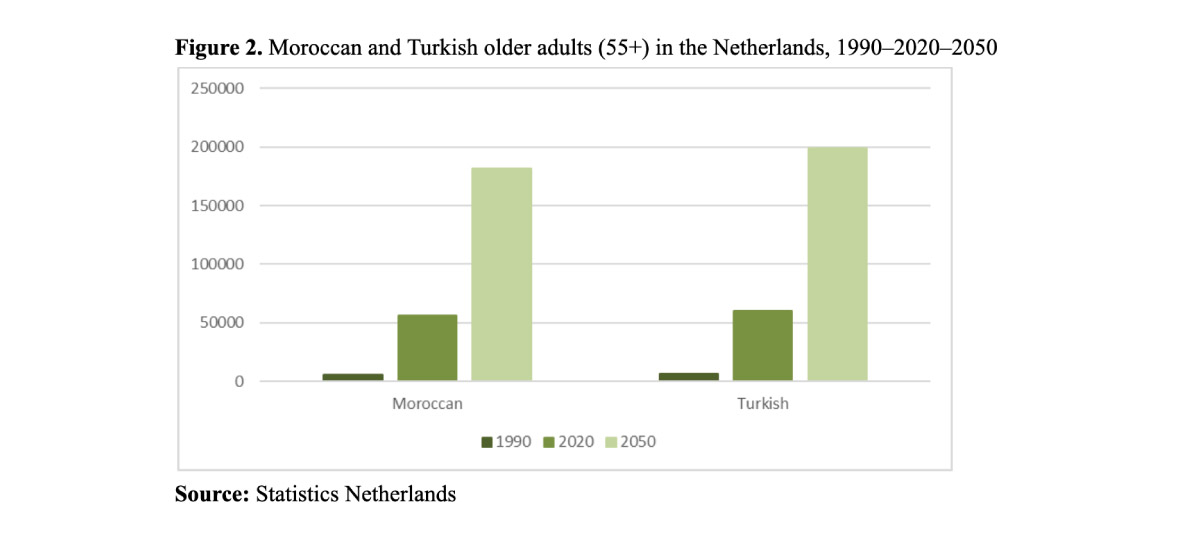
Between 1990 and 2020, the number of Moroccan older adults increased roughly tenfold and the number of Turkish older adults almost eightfold (see Figure 2). On 1 January 2022, there were 62,700 Moroccan and 68,500 Turkish older adults living in the Netherlands. Together they constitute 14% of the overall non-native population aged 55 and older in the Netherlands. As future older adults with a Moroccan and Turkish background are not expected to return en masseto their country of birth (or that of their parents), the size of these two groups of older adults will increase further. According to the most recent forecast by Statistics Netherlands, in 2050, the Dutch population will include approximately 181,600 older adults with a Moroccan background and 199,000 older adults with a Turkish background, representing 18.7% of the overall non-native population aged 55 and older. At the moment, the numbers of second-generation Moroccan and Turkish older adults are still negligible – less than 1% were born in the Netherlands. By 2050 the picture will be different: around four in ten older adults with a Moroccan or Turkish background will belong to the second generation.

Lonely…


Loneliness – the perceived discrepancy between actual and desired social relationships – is much more prevalent among Moroccan and Turkish older migrants than among Dutch older adults. This is concerning, given the negative effects of loneliness on both mental and physical health (Cacioppo & Cacioppo, 2014). Using the 11-item De Jong Gierveld Loneliness Scale (DJGLS; de Jong Gierveld & van Tilburg, 1999), earlier research showed that 58% and 54%, respectively, of Moroccan and Turkish older migrants aged 55–64 are moderately lonely (score 3–8), compared to 21% of their Dutch peers (Fokkema et al., 2016). For severe loneliness (score 9–11), the differences between the groups are even greater. Almost one in four Turkish older migrants feels severely lonely, compared to 12% of Moroccan older migrants and 4% of Dutch older adults. A similar picture emerges from another study among older people aged 65+ in the four largest Dutch cities – Amsterdam, Rotterdam, The Hague and Utrecht – using a shorter 6-item version of DJGLS (de Jong Gierveld & van Tilburg, 1999): 64% of Moroccan and 69% of Turkish older migrants feel moderately or severely lonely (score 2–6), compared to 50% of their Dutch peers of the same age in the same city (El Fakiri & Bouwman-Notenboom, 2015).

…but not alone


Loneliness is often associated with people who live alone and have few contacts. Recent research, however, shows that this is not the case for Moroccan and Turkish older migrants in the Netherlands (Fokkema & Das, 2020). They have a partner slightly more often than Dutch older adults: 72 and 70% of Moroccan and Turkish older migrants, respectively, are married or cohabiting with a partner compared to 68% of older adults with a Dutch background. On average, Moroccan and Turkish older men are eight and four years older, respectively, than their spouse. The likelihood of widowhood is therefore greater for older women than for older men: 60% of the former have a partner versus 80% of the latter.

To add to the puzzle of severe loneliness, Moroccan and Turkish older migrants have more children on average than Dutch older adults and more often co-reside with one or several children (Fokkema & Das, 2020). Only 7% of Moroccan and 5% of Turkish older migrants are childless, versus 16% of Dutch older adults. Excluding childless persons, Moroccan and Turkish older migrants have 3.4 and 4.8 children on average, respectively, compared to 2.3 for their Dutch peers. Moreover, 53% of Moroccan and 44% of Turkish older migrants (not counting those who are institutionalised) live with one or more of their children. Among Dutch older adults, the share is 18%.

Children close-by


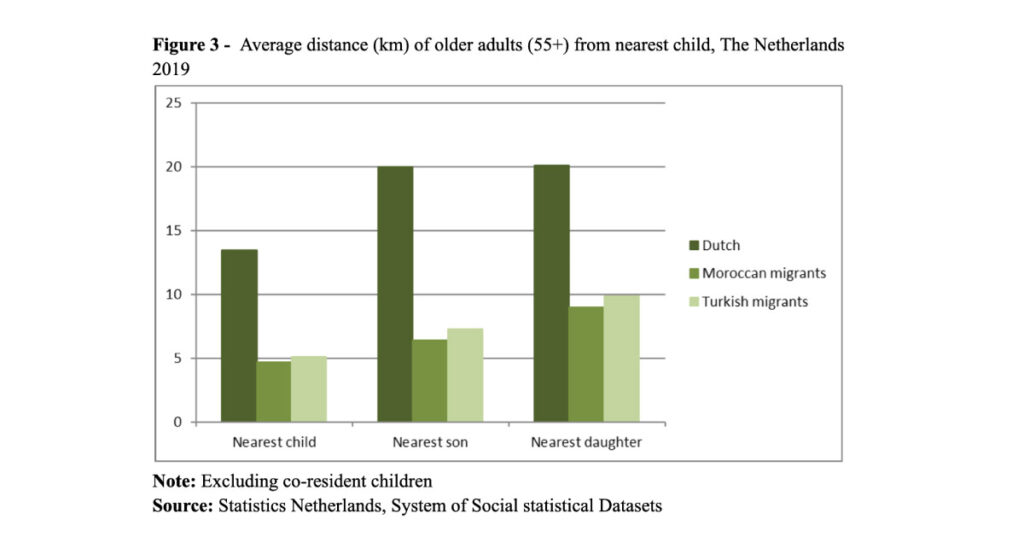
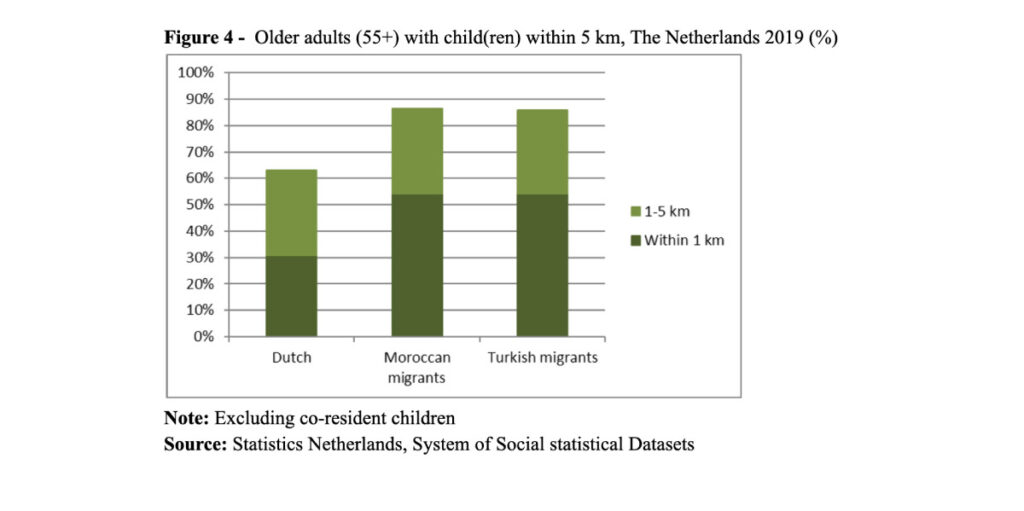
In old age, Moroccan and Turkish older migrants live much closer to one of their adult children (Fokkema & Das, 2020). Figure 3 shows the average distance in km to the nearest child: 4.7 km for Moroccan and 5.1 km for Turkish older migrants, compared to 13.5 km for Dutch older adults. While among the latter there is little difference in distance from sons and daughters, Moroccan and Turkish older migrants live closer to their sons than to their daughters. Figure 4 shows the proportion of older adults with one or several children living within a 5-km radius. Compared to their Dutch counterparts, Moroccan and Turkish older migrants are significantly more likely to have at least one child living close-by: 86% have at least one child living within a 5-km radius, compared to 63% of Dutch older adults. The differences become greater within a narrower radius of 1 km: more than half of Moroccan and Turkish older migrants have children living within 1 km of their home, compared to three in ten Dutch older adults.
These differences between Moroccan and Turkish older migrants and their Dutch counterparts are partly due to their socio-demographic and economic characteristics and those of their children (Fokkema & Das, 2020). Among other things, on average, Moroccan and Turkish older migrants are younger, have more children, live in more densely urbanised areas and have a lower income than their Dutch counterparts. Furthermore, on average, their children are less educated than the children of Dutch older adults. All these characteristics are known to be related to the residential distance between parents and children and the likelihood of parents and children living together (Smits et al., 2010). However, even after correcting for a large number of socio-demographic and socio-economic characteristics in a regression analysis, Moroccan and Turkish older migrants are still more likely to live with children or close to them.

An additional explanation can be sought in the stronger norms and values relating to family solidarity that prevail within Moroccan and Turkish communities, where children have a duty to care for their elderly parents. This is in line with our findings (not presented here) that the likelihood of living either with or near children increases with age – the oldest-old are often more in need of help – and is highest among Moroccan and Turkish older migrants aged 75+, compared to “young-older migrants” aged 55 to 65. However, changing norms about family solidarity and a shift towards individualism in younger cohorts may also play a role here.

Co-ethnic people close-by


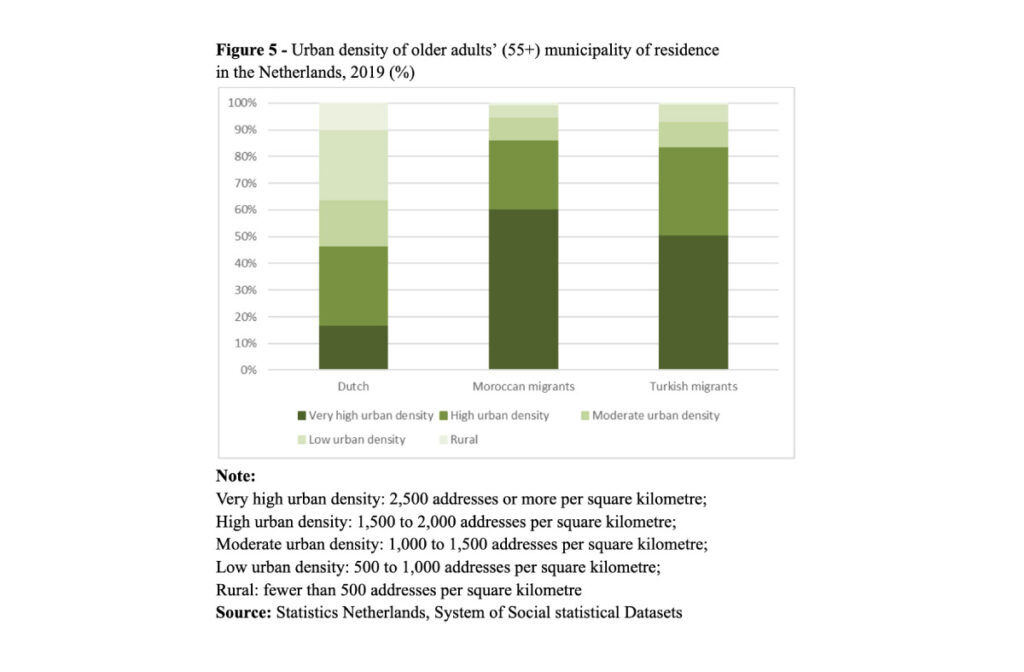
While older adults with a Dutch background live throughout the Netherlands, Moroccan and Turkish older migrants predominantly reside in large municipalities, especially in the four big cities (Fokkema & Das, 2020). This means that co-ethnic peers often live nearby. Of the older adults with a Moroccan background, 61% live in a very densely urbanised municipality, the vast majority (70%) in the four big cities (Figure 5). The respective proportions are around 50% and 80% among older adults with a Turkish background, and 17% and 46% among older adults with a Dutch background. While Moroccan and Turkish older migrants probably have less contact with Dutch people, this does not necessarily entail a negative effect on their social well-being. Previous research shows that a strong sense of belonging to one’s own ethnic group protects just as well against severe loneliness as a strong sense of belonging to larger Dutch society (Klok et al., 2017).
Risk factors for loneliness


If Moroccan and Turkish older migrants compare favourably with Dutch older adults in terms of “availability” of a partner, children and co-ethnic peers, why are they more lonely? Recent research has identified three general risk factors for loneliness: health problems, low socio-economic status and a perceived lack of control over life (van Tilburg & Fokkema, 2021). All these factors make it more difficult to engage in activities and establish new contacts. Moroccan and Turkish older migrants have poorer health, including a greater number of depressive symptoms, are less satisfied with their income, and experience less control over their own lives. The loneliness differential with respect to Dutch older adults drops by more than half when these differences are taken into account, but remains significant.

Further explanations could be sought in migrant-specific or other general risk factors. Several Dutch qualitative studies indicate that a language barrier, experiences of ethnic discrimination, living between two worlds (the Netherlands and Morocco/Turkey), and inadequate access to regular professional care play a role (Nhass & Verloove, 2020; Pot et al., 2020). Large-scale survey research is needed to confirm the effect of these migrant-specific risk factors on loneliness. Poor relationship quality or excessive, unrealistic expectations (for example about frequency of visits and support from children) among Moroccan and Turkish older migrants could also play a role, as loneliness arises when a discrepancy is experienced between actual and desired relationships, either in terms of quantity or quality. There are signs that the duty of care, taken for granted by parents, increasingly clashes with children’s busy work and family lives. When children cannot meet expectations, this might lead to friction in the parent-child relationship, feelings of disappointment and rejection, and ultimately loneliness. However, here too, hard quantitative evidence is lacking.

To conclude


It is gradually becoming clear that Moroccan and Turkish older migrants in the Netherlands are particularly vulnerable in terms of their social well-being. Although surrounded by family members and co-ethnic peers, they report loneliness much more frequently than Dutch older adults. To get a better grip on the causes – besides relatively poor health, low socio-economic status and lack of control over life – further in-depth research is needed. In addition, it would be interesting to see whether this high prevalence of loneliness also occurs among younger cohorts of migrants, to examine whether loneliness is specific to their migrant status, and perhaps also to determine whether the experiences of the current cohort of older migrants are unique.

Footnote


1“Migrants” refers to persons born abroad and with at least one parent born abroad (first generation). “Migration background” or “non-native” refers to both first-generation and second-generation migrants (persons born in the Netherlands and with at least one parent born abroad). “Dutch” refers to persons whose parents were both born in the Netherlands.

References

  • Cacioppo, J. T., & Cacioppo, S. (2014). Social relationships and health: The toxic effects of perceived social isolation. Social and Personality Psychology Compass, 8(2), 58–72. doi: 10.1111/spc3.12087
  • de Jong Gierveld, J., & van Tilburg, T. G. (1999). Manual of the loneliness scale. Vrije Universiteit, Department of Social Research Methodology, Amsterdam.
  • El Fakiri, F., & Bouwman-Notenboom, J. (2015). Gezondheid van oudere migranten in de vier grote steden [Health of older migrants in the four big cities]. Amsterdam: GGD.
  • Fokkema, T., & Das, M. (2020). Familienetwerken van niet-westerse oudere migranten [Family networks of non-Western older migrants]. CBS: Jaarrapport Integratie 2020, pp. 190–214.
  • Fokkema, T., Welschen, S., van Tilburg, T., & Thomése, F. (2016). Eenzaamheid onder oudere migranten: Literatuuronderzoek en interviews [Loneliness among older migrants: Literature research and interviews]. Amsterdam: Ben Sajetcentrum, Vrije Universiteit.
  • Klok, J., van Tilburg, T. G., Suanet, B. A., Fokkema, T., & Huisman, M. (2017). National and transnational belonging among Turkish and Moroccan older migrants in the Netherlands: Protective mechanisms against loneliness? European Journal of Ageing, 14(4), 341–351. doi: 10.1007/s10433-017-0420-9
  • Nhass, H., & Verloove, J. (2020). Tussen verveling en vereenzaming: Een kwalitatief onderzoek naar hoe ouderen met een Marokkaanse achtergrond eenzaamheid en ouder worden in Nederland beleven [Between boredom and loneliness: A qualitative study of how older adults with a Moroccan background experience loneliness and ageing in the Netherlands]. Utrecht: Kennisplatform Integratie & Samenleving.
  • Pot, A., Keijzer, M., & de Bot, K. (2020). The language barrier in migrant aging. International Journal of Bilingual Education and Bilingualism, 23(9), 1139–1157. doi: 10.1080/13670050.2018.1435627
  • Smits, A., van Gaalen, R. I., & Mulder, C. H. (2010). Parent-child coresidence: Who moves in with whom and for whose needs? Journal of Marriage and Family, 72(4), 1022–1033. doi: 10.1111/j.1741-3737.2010.00746.x
  • van Tilburg, T. G., & Fokkema, T. (2021). Stronger feelings of loneliness among Moroccan and Turkish older adults in the Netherlands: In search for an explanation. European Journal of Ageing, 18(3), 311–322. doi: 10.1007/s10433-020-00562-x

Wednesday, April 26, 2023

Kinlessness and loneliness before and during the COVID-19 Pandemic

April 24, 2023 Bruno Arpino, Christine A. Mair, Nekehia T. Quashie and Radoslaw Antczak

The pre-COVID literature established that lacking a partner or children was among the risk factors for loneliness among older people. Bruno Arpino, Christine A. Mair, Nekehia T. Quashie, and Radoslaw Antczak examine the associations of loneliness with partnership and parenthood and whether they changed with the COVID-19 pandemic.


Research prior to the COVID-19 outbreak identified being unpartnered or childless as risk factors for loneliness among older adults (Dahlberg et al. 2022; Fokkema et al. 2012). The COVID-19 pandemic might have affected loneliness among kinless older adults differently from the rest of the older population. With the aim of fighting the spread of the virus, several mitigation policies and recommendations were implemented at national, regional, and local levels. These mitigation strategies, which were especially stringent during the first phases of the pandemic and varied across countries, included avoidance of public social spaces, minimizing physical contact with others, “stay-at-home” orders, and full physical isolation, especially for older adults, and those with health issues in particular.

Kinlessness, loneliness and the COVID-19 pandemic


The “physical distancing” imposed by these strategies also produced “social distancing”, i.e. reduced social contacts, at least face-to-face (Arpino et al. 2021). Thus, anti-COVID policies may have exacerbated risks of loneliness, among older adults especially (Dahlberg 2021; van Tilburg et al. 2021). These consequences may have been more serious for those lacking close kin, such as unpartnered or childless older adults. For example, the types of contacts that are more common in networks of kinless older adults, such as extended family and non-family ties, may have been more vulnerable to disruption during the pandemic compared to partner and child ties.

On the other hand, linkages between parenthood, partnership, and loneliness are complex and may have been particularly nuanced during the pandemic. For example, older parents who are accustomed to frequent in-person contact with their children may have experienced an uptick in loneliness when child contact was disrupted. Childless older adults, on the other hand, might be more accustomed to less contact and may therefore have experienced less disruption.

Loneliness before and during the pandemic in Europe


In a recent study (Arpino et al. 2022), we examined whether unpartnered and childless older adults (aged 50 years and over) were more likely to report loneliness compared to those with these family ties, and whether the gap in loneliness between those with and without these ties increased during the COVID-19 pandemic. Our analyses are based on data from the Survey of Health, Ageing and Retirement in Europe (SHARE). We used pre-COVID data from wave 8, which started in October 2019 but was suspended in all countries in March 2020 due to the COVID-19 outbreak. We also used data from the SHARE Corona Survey 1 (SCS1) implemented between June and August 2020 to collect information on individuals’ behaviours and conditions during the pandemic.

Our analyses show that before the pandemic, when asked “Have you felt lonely recently?”, unpartnered and childless older adults were more likely to report loneliness compared to those with these family ties (Table 1, M1a-M2a). This remained true even when both factors were considered together, although the effect of childlessness on loneliness was smaller (Table 1, M3a). Older adults lacking one tie only (unpartnered parents or partnered childless) were at greater Kinlessness and loneliness before and during the COVID-19 Pandemic of loneliness compared to those who had both ties (Table 1, M4a).

During the pandemic, the associations between family ties and loneliness remained stable, with no notable change in the effects of being childless or unpartnered on loneliness before versus during the pandemic (Table 1, M1b-M3b). However, in contrast to the pre-COVID period, considering the combination of being childless and unpartnered made no difference (Table 1, M4b): In fact, in this case, the average marginal effect (AME) of parenthood is very similar for partnered and unpartnered individuals; similarly, the AME of partnership does not change significantly by parenthood. As a result, the effects of being unpartnered and childless on loneliness became more independent during the pandemic..

Feeling more lonely during the pandemic


Our second outcome examines whether people reported feeling more lonely during the pandemic. We found that unpartnered individuals were more likely to report feeling lonelier during the COVID-19 pandemic compared to those in a partnership. Childless individuals, on the other hand, were not at higher risk of reporting feeling lonelier compared to parents (Table 1, M1c-M3c). The effect of being unpartnered was slightly stronger among childless individuals, but the difference in the impact of being unpartnered on loneliness between childless and parent individuals was not statistically significant (Table 1, M4c).
Changes and stability in feeling lonely compared to before the pandemic

Our third outcome was obtained by combining the answers to the question “Have you felt lonely recently?” asked of respondents who participated in both the regular SHARE wave 8 and the SCS1. This analysis (not presented in Table 1) highlights that unpartnered individuals were more likely to “have become lonely” during the pandemic, while childless and unpartnered individuals were less likely to “exit” loneliness if they felt lonely before the pandemic.

Conclusions


We found that both before and during the pandemic, lacking close kin (especially a partner) was associated with a higher risk of feeling lonely among older Europeans. However, “kinless” older adults (unpartnered and childless) were not lonelier than those who lacked only one of these ties. This may signal that kinless individuals have developed a range of resources and different coping strategies to manage the lack of close kinship ties, such as a rich network of friends (Mair, 2019).

While “physical distancing,” “lockdown,” and “stay-at-home” mitigation measures provided protection from COVID-19, the restrictions on face-to-face interactions and public spaces for socializing also removed key sources of social integration for those who were already more likely to spend time alone (e.g., the unpartnered). As the population of unpartnered and childless older adults grows globally, future public health strategies should seek a balanced mitigation approach that also considers the consequences of isolation, particularly for those who are already at higher risk for loneliness.

References

  • Arpino, B., Pasqualini, M., and Bordone, V. (2021) Physically distant but socially close? Changes in non-physical intergenerational contacts at the onset of the COVID-19 pandemic among older people in France, Italy and Spain. European Journal of Ageing, 18, 185–194.
  • Arpino B., Mair C. Quashie N., and Antczak R. (2022) Loneliness Before and During the COVID-19 Pandemic: Are Unpartnered and Childless Older Adults at Higher Risk? European Journal of Ageing. 19, 1327–1338.
  • Dahlberg L (2021) Loneliness during the COVID-19 pandemic. Aging & Mental Health, 25(7): 1161–1164.
  • Dahlberg L, McKee KJ, Frank A, Naseer M (2022) A systematic review of longitudinal risk factors for loneliness in older adults. Aging & Mental Health, 26(2): 225–249.
  • Fokkema, T., De Jong Gierveld, J., & Dykstra, P.A. (2012). Cross-national differences in older adult loneliness. The Journal of Psychology, 146(1-2), 201-228.
  • Mair, Christine A. (2019). “Alternatives to Aging Alone?: ‘Kinlessness’ and the Importance of Friends across European Contexts.” Journal of Gerontology: Social Sciences 74(8):1416-1428.
  • Van Tilburg, T.G., Steinmetz, S., Stolte, E., van der Roest, H., & de Vries, D.H. (2020). Loneliness and Mental Health During the COVID-19 Pandemic: A Study Among Dutch Older Adults. Journal of Gerontology: Social Sciences, 76(7), e249-e255

Thursday, March 30, 2023

Social Isolation, Health Literacy, and Mortality Risk

Findings From the English Longitudinal Study of Ageing


Objective: To investigate the relationships between social isolation, health literacy, and all-cause mortality, and the modifying effect of social isolation on the latter relationship. 

Methods: Data were from 7731 adults aged 􏰀50 years participating in Wave 2 (2004/2005) of the English Longitudinal Study of Ageing. Social isolation was defined according to marital/cohabiting status and contact with children, relatives, and friends, and participation in social organizations. Scores were split at the median to indicate social isolation (yes vs. no). Health literacy was assessed as comprehension of a medicine label and classified as “high” (􏰀75% correct) or “low” (􏰁75% correct). The outcome was all-cause mortality up to February 2013. Cox proportional hazards models were adjusted for sociodemographic factors, health status, health behaviors, and cognitive function. 

Results: Mortality rates were 30.3% versus 14.3% in the low versus high health literacy groups, and 23.5% versus 13.7% in the socially isolated versus nonisolated groups. Low health literacy (adj. HR 􏰂 1.22, 95% CI 1.02–1.45 vs. high) and social isolation (adj. HR 􏰂 1.28, 95% CI 1.10–1.50) were independently associated with increased mortality risk. The multiplicative interaction term for health literacy and social isolation was not statistically significant (p 􏰂 .81). 

Conclusions: Low health literacy and high social isolation are risk factors for mortality. Social isolation does not modify the relationship between health literacy and mortality. Clinicians should be aware of the health risks faced by socially isolated adults and those with low health literacy.

􏰂 — значит =, >, <, или больше/меньше и равно, по контексту понятно

Supplemental materials: http://dx.doi.org/10.1037/hea0000541.supp

Monday, March 13, 2023

loneliness

Older adult loneliness on the rise around the world

March 13, 2023 Lauren Newmyer, Ashton M. Verdery, Haowei Wang and Rachel Margolis

Population aging is contributing to an increase in loneliness around the world. Lauren Newmyer, Ashton M. Verdery, Haowei Wang, and Rachel Margolis explore loneliness among late-middle-aged and older adults and the reasons behind this rapid rise.


Loneliness is a crucial aspect of mental health and social well-being (Newmyer et al. 2022). It is a major concern for policymakers because of its strong negative effects on mental health (e.g., depression and anxiety), and can also lead to unhealthy behaviors (e.g., smoking and alcohol consumption), chronic conditions (e.g., hypertension and stroke), and even increased mortality risk (Domènech-Abella et al. 2019; Lara et al. 2020; Stickley et al. 2013). Loneliness is a person’s subjective feeling that their social network is deficient, whether in quality or in size (Perlman and Peplau 1981; Weiss 1973).

Older adults are at increased risk for loneliness. There is a U-shaped age pattern of loneliness: levels among adults aged 18-29 are higher than in middle age, and then decrease into middle age, before increasing again in later life starting around age 65 (Nicolaisen and Thorsen 2014). This strong correlation with age suggests that loneliness might become a larger concern in the future due to population aging.

Although much research has examined how population aging around the world will shape everything from economies and health-care systems to caregiving structures and urban planning, our research is the first, we think, to examine how it will affect levels of loneliness.

We exploit survey data from 27 countries to assess loneliness by country, age and sex using a single item. We then pair this information with projections from the UN World Population Prospects to model historical and projected changes in loneliness.

Rising tide of concern


We examined the demography of loneliness among late-middle-aged and older adults using data from surveys representing almost half of the world’s current population of people over age 50. These surveys are the Chinese Health and Retirement Longitudinal Survey (CHARLS), the English Longitudinal Study of Aging (ELSA), the Health, Aging, and Retirement in Thailand (HART) study, the U.S. Health and Retirement Study (HRS), the Indonesia Family Life Survey (IFLS), the Korean Longitudinal Survey of Aging (KLoSA), the Mexican Health and Aging Study (MHAS), the Survey of Health, Aging and Retirement in Europe (SHARE), and the Irish Longitudinal Study on Aging (TILDA). As to be expected, loneliness is common among late-middle-aged and older adults around the world. In the majority of countries in our sample, more than 10% of adults in these age groups report being lonely, and in 17 of 27 countries the share was above 25%.

The prevalence of loneliness and the rate of population aging are two important factors determining the rising tide of loneliness around the world. Changes in the age and sex distribution of populations will lead to increases in loneliness among adults over age 50 in all countries in our sample, but with increasing variability across countries (see Figure 1 below). In some countries, like Greece, Croatia, Italy, and the Republic of Korea, lonely adults over age 50 will soon comprise a fifth to a quarter of the total population, while in others, such as Denmark, England, and Indonesia, the share is set to remain quite low.
Our results show that loneliness in late middle age and older adulthood affects more women than men globally, and this gap is projected to widen in the future (see Figure 2 below).

Ways to confront challenges arising from increased loneliness


Expected demographic changes imply massive increases in loneliness at ages 50 and above. Assuming constant age- and sex-specific rates of loneliness, the number of lonely adults in these age groups in our sample countries is set to triple from 105 million in 1990 to 333 million in 2050. Opportune policy interventions aimed at families and communities should make it possible to lower this total, however. Policymakers and communities should consider investing more in programs to reduce rates of loneliness through increased social support.

References

  • Domènech-Abella, Joan, JordiMundó, JosepMaria Haro, and Maria Rubio-Valera. 2019. “Anxiety, Depression, Loneliness and Social Network in the Elderly: Longitudinal Associations from the Irish Longitudinal Study on Ageing (TILDA).” Journal of Affective Disorders 246: 82–88. https://doi.org/10.1016/j.jad.2018.12.043.
  • Lara, Elvira, Darío Moreno-Agostino, Natalia Martín-María, Marta Miret, Laura Alejandra Rico-Uribe, Beatriz Olaya, María Cabello, Josep Maria Haro, and José Luis Ayuso-Mateos. 2020. “Exploring the Effect of Loneliness on All-Cause Mortality: Are there Differences Between Older Adults and Younger and Middle-Aged Adults?” Social Science & Medicine 258: 113087. https://doi.org/10.1016/j.socscimed.2020.113087.
  • Newmyer Lauren, Ashton M. Verdery, Haowei Wang, and Rachel Margolis. 2022. “Population Aging, Demographic Metabolism, and the Rising Tide of Late Middle Age to Older Adult Loneliness Around the World.” Population and Development Review 48(3): 829-862. https://doi.org/10.1111/padr.12506
  • Nicolaisen, Magnhild, and Kirsten Thorsen. 2014. “Who are Lonely? Loneliness in Different Age Groups (18–81 Years Old), Using Two Measures of Loneliness.” International Journal of Aging and Human Development 78(3): 229–257. https://doi.org/10.2190/AG.78.3.b
  • Perlman, Daniel, and L. Anne Peplau. 1981. “Toward a Social Psychology of Loneliness.” In Personal Relationships in Disorder, edited by M. Duck and R. Gilmour, 31–56. London: Academic Press.
  • Stickley, Andrew, Ai Koyanagi, Bayard Roberts, Erica Richardson, Pamela Abbott, Sergei Tumanov, and Martin Mckee. 2013. “Loneliness: Its Correlates and Association with Health Behaviours and Outcomes in Nine Countries of the Former Soviet Union.” PLoS ONE 8(7): e67978. https://doi.org/10.1371/journal.pone.0067978
  • Weiss, Robert S. 1973. Loneliness: The Experience of Emotional and Social Isolation. Cambridge: MIT Press

Saturday, August 13, 2022

theorizing singlehood

Wednesday, July 20, 2022

Sunday, December 12, 2021

A history of loneliness

March 19, 2018  Amelia Worsley

Amelia Worsley does not work for, consult, own shares in or receive funding from any company or organisation that would benefit from this article, and has disclosed no relevant affiliations beyond their academic appointment.

Is loneliness our modern malaise?

Former U.S. Surgeon General Vivek Murthy says the most common pathology he saw during his years of service “was not heart disease or diabetes; it was loneliness.”

Chronic loneliness, some say, is like “smoking 15 cigarettes a day.” It “kills more people than obesity.”

Because loneliness is now considered a public health issue – and even an epidemic – people are exploring its causes and trying to find solutions.

While writing a book on the history of how poets wrote about loneliness in the Romantic Period, I discovered that loneliness is a relatively new concept and once had an easy cure. However, as the concept’s meaning has transformed, finding solutions has become harder.

Returning to the origins of the word – and understanding how its meaning has changed through time – gives us a new way to think about modern loneliness, and the ways in which we might address it.
 

The dangers of venturing into ‘lonelinesses’


Although loneliness may seem like a timeless, universal experience, it seems to have originated in the late 16th century, when it signaled the danger created by being too far from other people.

In early modern Britain, to stray too far from society was to surrender the protections it provided. Distant forests and mountains inspired fear, and a lonely space was a place in which you might meet someone who could do you harm, with no one else around to help.

In order to frighten their congregations out of sin, sermon writers asked people to imagine themselves in “lonelinesses” – places like hell, the grave or the desert.

Yet well into the 17th century, the words “loneliness” and “lonely” rarely appeared in writing. In 1674, the naturalist John Ray compiled a glossary of infrequently used words. He included “loneliness” in his list, defining it as a term used to describe places and people “far from neighbours.”
A Gustave Doré engraving for an 1866 edition of John Milton’s ‘Paradise Lost.’

John Milton’s 1667 epic poem “Paradise Lost” features one of the first lonely characters in all of British literature: Satan. On his journey to the garden of Eden to tempt Eve, Satan treads “lonely steps” out of hell. But Milton isn’t writing about Satan’s feelings; instead, he’s emphasizing that he’s crossing into the ultimate wilderness, a space between hell and Eden where no angel has previously ventured.

Satan describes his loneliness in terms of vulnerability: “From them I go / This uncouth errand sole, and one for all / Myself expose, with lonely steps to tread / Th’ unfounded deep.”
 

The dilemma of modern loneliness


Even if we now enjoy the wilderness as a place of adventure and pleasure, the fear of loneliness persists. The problem has simply moved into our cities.

Many are trying to solve it by bringing people physically closer to their neighbors. Studies point to a spike in the number of people who live alone and the breakdown of family and community structures.

British Prime Minister Theresa May has set her sights on “combating” loneliness and appointed a minister of loneliness to do just that in January. There is even a philanthropy called the “Campaign to End Loneliness.”

But the drive to cure loneliness oversimplifies its modern meaning.

In the 17th century, when loneliness was usually relegated to the space outside the city, solving it was easy. It merely required a return to society.

However, loneliness has since moved inward – and has become much harder to cure. Because it’s taken up residence inside minds, even the minds of people living in bustling cities, it can’t always be solved by company.

Modern loneliness isn’t just about being physically removed from other people. Instead, it’s an emotional state of feeling apart from others – without necessarily being so.

Someone surrounded by people, or even accompanied by friends or a lover, can complain of feelings of loneliness. The wilderness is now inside of us.
 

Populating the wilderness of the mind


The lack of an obvious cure to loneliness is part of the reason why it is considered to be so dangerous today: The abstraction is frightening.

Counterintuitively, however, the secret to dealing with modern loneliness might lie not in trying to make it disappear but in finding ways to dwell within its abstractions, talk through its contradictions and seek out others who feel the same way.

While it’s certainly important to pay attention to the structures that have led people (especially elderly, disabled and other vulnerable people) to be physically isolated and therefore unwell, finding ways to destigmatize loneliness is also crucial.

Acknowledging that loneliness is a profoundly human and sometimes uncurable experience rather than a mere pathology might allow people – especially lonely people – to find commonality.

In order to look at the “epidemic of loneliness” as more than just an “epidemic of isolation,” it’s important to consider why the spaces of different people’s minds might feel like wildernesses in the first place.

Everyone experiences loneliness differently, and many find it difficult to describe. As the novelist Joseph Conrad wrote, “Who knows what true loneliness is – not the conventional word but the naked terror? To the lonely themselves it wears a mask.” Learning about the range of ways others experience loneliness could help mitigate the kind of disorientation Conrad describes.

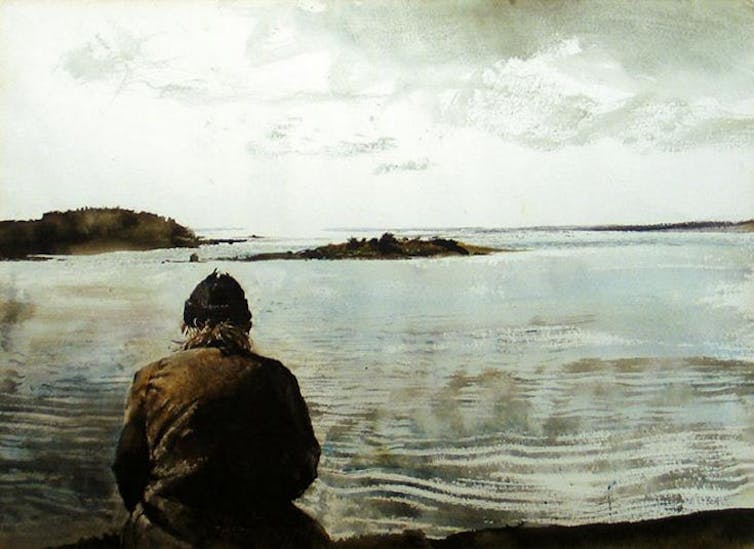
Andrew Wyeth’s ‘Baleen’ (1982). Mia Feigelson, CC BY-NC-SA

Reading literature can also make the mind feel like less of a wilderness. The books we read need not themselves be about loneliness, though there are lots of examples of these, from “Frankenstein” to “Invisible Man.” Reading allows readers to connect with characters who might also be lonely; but more importantly, it offers a way to make the mind feel as though it is populated.

Literature also offers examples of how to be lonely together. British Romantic poets often copied each other’s loneliness and found it productive and fulfilling.

There are opportunities for community in loneliness when we share it, whether in face-to-face interactions or through text. Though loneliness can be debilitating, it has come a long way from its origins as a synonym for isolation.

As the poet Ocean Vuong wrote, “loneliness is still time spent with the world.”

Friday, September 17, 2021

Swiss, elderly, single, and childless. Happy?

September 16, 2021 by Malgorzata Mikucka

Around the world, more and more people age without close kin. Contrary to expectations, however, according to Małgorzata Mikucka, this does not reduce their life satisfaction, or at least not systematically and not in Switzerland.

Contemporary adults are at increasing risk of ageing without close living kin (Verdery et al, 2019). Past studies showed that old-age singlehood and childlessness are typically associated with lower life satisfaction and greater material disadvantage (Dykstra 2009). However, the question remains about what happens as age progresses.

In a recent paper, I tried to understand the nexus between family situation and life satisfaction among a sample of older Swiss, using data from the Swiss Household Panel, SHP (Mikucka, 2020). The panel started in 1999, and when I conducted my analysis, data were available up to 2017. I tested whether unmarried and childless respondents were less satisfied with their lives than married people and parents, and how these differences evolved with age.

The Swiss way to life satisfaction


In the cohort aged 60–64 years at first observation (any year between 1999 and 2007), married people were indeed more satisfied with their lives than those who were never-married, divorced, or widowed (Fig. 1). However, the differences in the older cohort (75–79 years old) were not statistically significant, except for divorced fathers who were less satisfied than married fathers. The result for the younger cohort is consistent with previous literature which documented the greater life satisfaction of married than unmarried people (Bures et al. 2009). Conversely, childlessness did not systematically correlate with life satisfaction. This lack of difference is at odds with some past studies (Albertini and Arpino 2018), but it may be explained by the cross-country variation of the consequences of childlessness.
To understand whether the differences related to family situation intensified or declined with age, I analysed within-individual changes in life satisfaction over the period 1999-2017 (Figure 2). Life satisfaction among married parents (the reference category in the analysis) declined slightly with age. This baseline rate of decline did not differ systematically with gender or education, but it was shaped by life course transitions. This suggests that, at least in Switzerland, life satisfaction trajectories are shaped by the events that people experience, rather than by their underlying characteristics.

Do inequalities cumulate as people get older?


Theoretically, two opposite mechanisms may shape the consequences of kinlessness as people progress into advanced old age. The first is the mechanism of cumulative (dis)advantage. It postulates that, due to longer exposure to (dis)advantageous conditions, the differences among groups intensify with age (Dannefer 2003). In my analysis, the group experiencing the most “advantageous conditions” were married parents, judging from their high initial life satisfaction at the age of 60–64 years. The group with lowest life satisfaction at the same age were never-married mothers.

According to the cumulative (dis)advantage hypothesis, the life satisfaction trajectories of married parents should be more positive than those of the divorced, widowed, or never married. However, my results did not conform to this pattern (Figure 2). On the contrary, the life satisfaction of some subgroups of unmarried respondents (e.g. divorced and never-married mothers) increased at a faster rate than that of the married.

Partly consistent with the hypothesis of cumulative (dis)advantage was the pattern for never-married mothers (figure 2, third panel). This group’s life satisfaction, low at the start, declined more rapidly than in other groups, past age 75. However, the support for the hypothesis was only partial because the initial life satisfaction disadvantage was observed only in the younger cohort, whereas the faster rate of life satisfaction decline occurred only among the older cohort.

Ageing as an equalizing experience?


The alternative theoretical mechanism is called “age-as-leveller” (Dupre 2007): it postulates that as age advances, health becomes the most important, if not the only, predictor of life satisfaction, and as age-related health decline affects everybody, lower life satisfaction should characterize all groups.

Qualitative inspection of the predicted results of Figure 2 suggests that the life satisfaction gap between married and previously married people has been closing for both men and women, in both younger and older cohorts. However, only a few of these changes are statistically significant (Mikucka, 2020). Moreover, the gap closes in the younger cohort only, whereas the hypothesis predicts that the levelling mechanism should play a role primarily at advanced ages.

Conclusions


Neither the cumulative (dis)advantage hypothesis, nor age-as-leveller mechanism accurately describe the effect of family situations on life satisfaction when people become old. Instead, the buffering effect of parenthood seems more relevant.

Childlessness itself makes little systematic difference for life satisfaction and its dynamics in Switzerland in the observed years. However, elderly men who became widowers experienced a greater loss of life satisfaction if they were also childless (Figure 3). Additionally, life satisfaction of childless married and divorced respondents in the older cohort declined more rapidly than that of parents (Mikucka 2020). These results suggest that parenthood may have a protective buffering effect in certain cases, e.g. among men entering widowhood, but not in general.
Never-married mothers appear to be a particularly fragile group. Single parenthood is in itself a difficult experience (e.g., Meier et al. 2016), especially in a conservative social context, like that of Switzerland.

However, the main take-home message from this research is that growing instability of marriages and ageing without close kin do not pose a considerable threat for life satisfaction of elderly people in Switzerland, and probably also in other relatively wealthy countries offering welfare support. The (often implicit) assumption that lack of close family is particularly painful and detrimental for elderly persons did not find consistent support in my data.

References

  • Albertini M., B. Arpino. 2018. Childlessness, parenthood and subjective wellbeing: The relevance of conceptualizing parenthood and childlessness as a continuum. Preprint. DOI: 10.31235/osf.io/xtfq6
  • Bures R.M., T. Koropeckyj-Cox, M. Loree. 2009. Childlessness, parenthood, and depressive symptoms among middle-aged and older adults. Journal of Family Issues 30(5): 670–687.
  • Dannefer D. 2003. Cumulative advantage/disadvantage and the life course: Cross-fertilizing age and social science theory. The Journals of Gerontology Series B: Psychological Sciences and Social Sciences 58(6): S327–S337.
  • Dupre M.E. 2007. Educational differences in age-related patterns of disease: Reconsidering the cumulative disadvantage and age-as-leveler hypotheses. Journal of Health and Social Behavior 48(1): 1–15.
  • Dykstra P.A. 2009. Childless old age. In International Handbook of Population Aging, pages 671–690. Springer.
  • Mikucka M. 2020. Old-Age Trajectories of Life Satisfaction. Do Singlehood and Childlessness Hurt More When People Get Older?. Swiss Journal of Sociology, 46(3), 397-424.
  • Meier A., K. Musick, S. Flood, R. Dunifon. 2016. Mothering experiences: How single parenthood and employment structure the emotional valence of parenting. Demography 53(3): 649–674.
  • Verdery A.M., R. Margolis, Z. Zhou, X. Chai, J. Rittirong, J. (2019). Kinlessness around the world. The Journals of Gerontology: Series B, 74(8), 1394-1405.

Sunday, August 1, 2021

Growing old in a post-communist society

Who gets lonely in Poland and when?

July 19, 2021 Małgorzata Mikucka


Małgorzata Mikucka sheds new light on the loneliness of elderly people in Poland, focusing on the events and transitions that trigger this feeling. Weak social ties and a legacy of communism, may partly explain her results.

Now that increasing numbers of older adults live alone, the feeling of loneliness may become a serious societal issue when people age without close kin. Although strong social relationships, one of the ingredients of successful ageing, can be maintained by older adults, it is easier to have intimate relations with someone who lives under the same roof than to reach out to people living elsewhere.

The age-related dynamics of loneliness have been amply documented in Western Europe, but much less so in Eastern Europe. In the West, the older old (people aged 80 years or over, although the definition varies across societies) are disproportionally more lonely than the middle-aged, although this problem does not seem to affect the younger old (between around 60‒65 and 80 years; Hansen & Slagsvold, 2016).

In countries with strong family ties, such as those in the Mediterranean area, the elderly have frequent contacts with their families, but this helps them little, because they seem to expect more than people in Northern Europe. This explains why about 20% of people aged 65+ report persistent loneliness in Greece and Italy, but only 5% in Switzerland (Vozikaki et al., 2018). Like the Mediterranean region, Eastern Europe has particularly high levels of old-age loneliness, experienced “frequently” by as many as 34% of older adults in Ukraine, and 20% in Poland (Yang & Victor, 2011). More alarmingly, the increase in loneliness in Eastern Europe seems to start early, from age 30 years or so (Yang and Victor, 2011).

New evidence for Poland


In a recent study, I provided new longitudinal evidence on loneliness among older adults in Poland (Mikucka 2021). This phenomenon has rarely been studied in Central and Eastern Europe, especially using longitudinal nationally representative data (see, however, the PolSenior project by Błędowski et al., 2011). Data were drawn from the POLPAN study (http://polpan.org/en/), a panel survey initiated in 1988, which followed respondents every five years until 2018. In my analysis, I used data collected in 2008, 2013, and 2018, with the age intervals 60 to 74 years for the younger old and 75 and over for the older old.

The results show that, in Poland, loneliness increases with age (see Figure 1), starting around age 60 for women, and age 70 for men. Although this is much later than the 30-year starting point found by Yang and Victor (2011), the upward trend begins shortly after retirement, at a much younger age than in Northern and Western Europe.

Triggers of loneliness


An interesting question is what transitions and events (if any) affect loneliness. Triggers could include changes in social networks and co-residence, changes in the economic situation, transition to retirement, and deterioration or improvement of health. The results of my analysis, summarized in Tables 1 and 2 for men and women, respectively, show that during younger old age, divorce and widowhood are the most powerful triggers of loneliness. Among older old women (aged 75 years and over), transition to retirement and, less consistently, the transition to living alone triggers loneliness. Other factors, such as health decline, worsening of economic conditions, or shrinking networks of friends, did not have this effect.

In principle, certain transitions, such as getting married or moving to live with others, health improvement, or an increase in number of friends, might be expected to alleviate old age loneliness. However, these patterns are rather weak. Among younger old men, only health improvement (reduction in pain) and end of economic problems has an effect. The analysis for woman and for the older old identified no such factors. This discrepancy between results for triggers and inhibitors of loneliness suggests that beyond a certain age, once loneliness sets in it tends to become a chronic state.


Socio-economic disadvantage and loneliness


In another part of my analysis, not reported here, I focused on the influence of current or past social, demographic and economic factors on current loneliness. It turns out that some characteristics of the family of origin (several siblings and unknown father’s education) predict old-age loneliness among men. Besides, low education and economic difficulties in adulthood and in old age are significant predictors of loneliness among men and women. This suggests that old-age loneliness reflects socio-economic disadvantage accumulated over the lifetime and that even early life experiences may cast a long shadow on people’s lives by increasing loneliness as they advance in age.

Conclusions


Loneliness increases most markedly in response to marital dissolution, especially during younger old age, and among women. Other measures of social contacts, such as the changing number of friends, prove much less relevant. The considerable importance of partnership and family relationships is consistent with previous findings on the key role of intimate relationships, especially during old age (Luhmann and Hawkley, 2016). This result may also reflect the specificity of Poland, where family rather than social networks play a particularly prominent role (Fokkema et al., 2012). This may be a legacy of the communist regime which considered social ties as undesirable alternatives to the totalitarian state. Civil society institutions, such as associations and clubs, are still rare, and social trust in the region remains low. All this hampers the creation of ties that could act as alternatives for family- and work-based connections.

References

  • Błędowski, P., Mossakowska, M., Chudek, J., Grodzicki, T., Milewicz, A., Szybalska, A., Wieczorowska-Tobis, K., Wiecek, A., Bartoszek, A., Dabrowski, A., et al. (2011). Medical, psychological and socioeconomic aspects of aging in Poland: assumptions and objectives of the PolSenior project. Experimental Gerontology, 46(12):1003-1009.
  • Fokkema, T., De Jong Gierveld, J., and Dykstra, P. A. (2012). Cross-national differences in older adult loneliness. The Journal of Psychology, 146(1-2):201-228.
  • Hansen, T. and Slagsvold, B. (2016). Late-life loneliness in 11 European countries: Results from the generations and gender survey. Social Indicators Research, 129(1):445-464.
  • Luhmann, M. and Hawkley, L. C. (2016). Age differences in loneliness from late adolescence to oldest old age. Developmental Psychology, 52(6):943.
  • Mikucka, M. (2021). Loneliness of elderly people in Poland. What triggers it and what are the social differences? In: Slomczynski K. M., I. Tomescu-Dubrow, J. K. Dubrow (Eds), Poland: Thirty Years of Radical Social Change. Brill (forthcoming).
  • Vozikaki, M., Papadaki, A., Linardakis, M., and Philalithis, A. (2018). Loneliness among older European adults: Results from the Survey of Health, Aging and Retirement in Europe. Journal of Public Health, 26(6):613-624.
  • Yang, K. and Victor, C. (2011). Age and loneliness in 25 European nations. Ageing and Society, 31(8):1368.

Friday, December 13, 2019

Demographic change and aging without family: a global perspective

Published on N-IUSSP.ORG December 9, 2019

Vieillir sans famille dans un contexte d'évolution démographique : perspectives mondiales


Rachel Margolis, Ashton M. Verdery

Some older adults do not have spouses or biological children, i.e. the types of family members who are most likely to provide help in case of need. Rachel Margolis and Ashton M. Verdery discuss the demographic causes, the prevalence and the likely future evolution of “kinlessness” around the world.

In a recent article (Verdery et al. 2019) we examined the prevalence of kinlessness among adults over age 50 around the world, the demographic processes that may explain this prevalence, and the associations between kinlessness and health and well-being. We document extensive cross-national variation.

Demographic processes strongly correlate with national prevalence of kinlessness. In fact, current levels are predicted by fertility and marriage rates from decades ago. Given that low fertility and lower rates of marriage have spread throughout all regions of the world, we expect to witness increasing rates of older adult kinlessness in the future. This potential growth has important but heterogeneous implications for the global health and well-being of older adults.

Background


Many studies have found that as older adults age, their social networks shrink due to less contact with co-workers and friends (e.g. Cornwell, Laumann and Schumm 2008). This means that they often rely heavily on family members for help with health problems, economic insecurity, and social interaction. Recent research on the characteristics of older adults in the United States with no living kin has found that they tend to be disadvantaged in terms of health and economic security (Margolis and Verdery 2017).

The demographic changes that have led to an increasing population of kinless older adults in the United States – low fertility, childlessness and increases in non-marriage and divorce – are also occurring elsewhere in the world (Glaser et al. 2006; Raymo et al. 2015). However, the parallel trends of mortality decline and of increases in remarriage, non-marital partnerships and step-families may blunt the effects of this increase.

How common is it for older adults to lack a spouse and children?


We examined how common it is for contemporary older (50 years and over) adults around the world to lack living kin, the demographic correlates of this prevalence, and whether such individuals are uniformly disadvantaged across contexts. To do this, we analyzed survey data from 34 countries that together make up 70% of the world’s population over age 50 and come from all areas of the world. We did the best that we could to include sources from understudied regions like Africa, Southeast Asia and Latin America. From each data source, we used the most recent survey year that was nationally representative of the older adult population to get the most current estimates of kinlessness (1988-2015). Because we were examining data from so many contexts, we focused on measures that were available and reasonably comparable across surveys: whether the respondents had legally recognized marriages, for example. In our previous research on the United States and China, we found that rates of kinlessness vary little when our estimates include non-marital partnerships, because most older adults in non-marital partnerships already have children (Margolis and Verdery 2017; Zhou et al. 2019). As we could not capture the geographic proximity of family members in most surveys, this analysis is a conservative estimate of older adult family isolation, since having a kin tie is necessary but not sufficient for having a relationship with that family member.

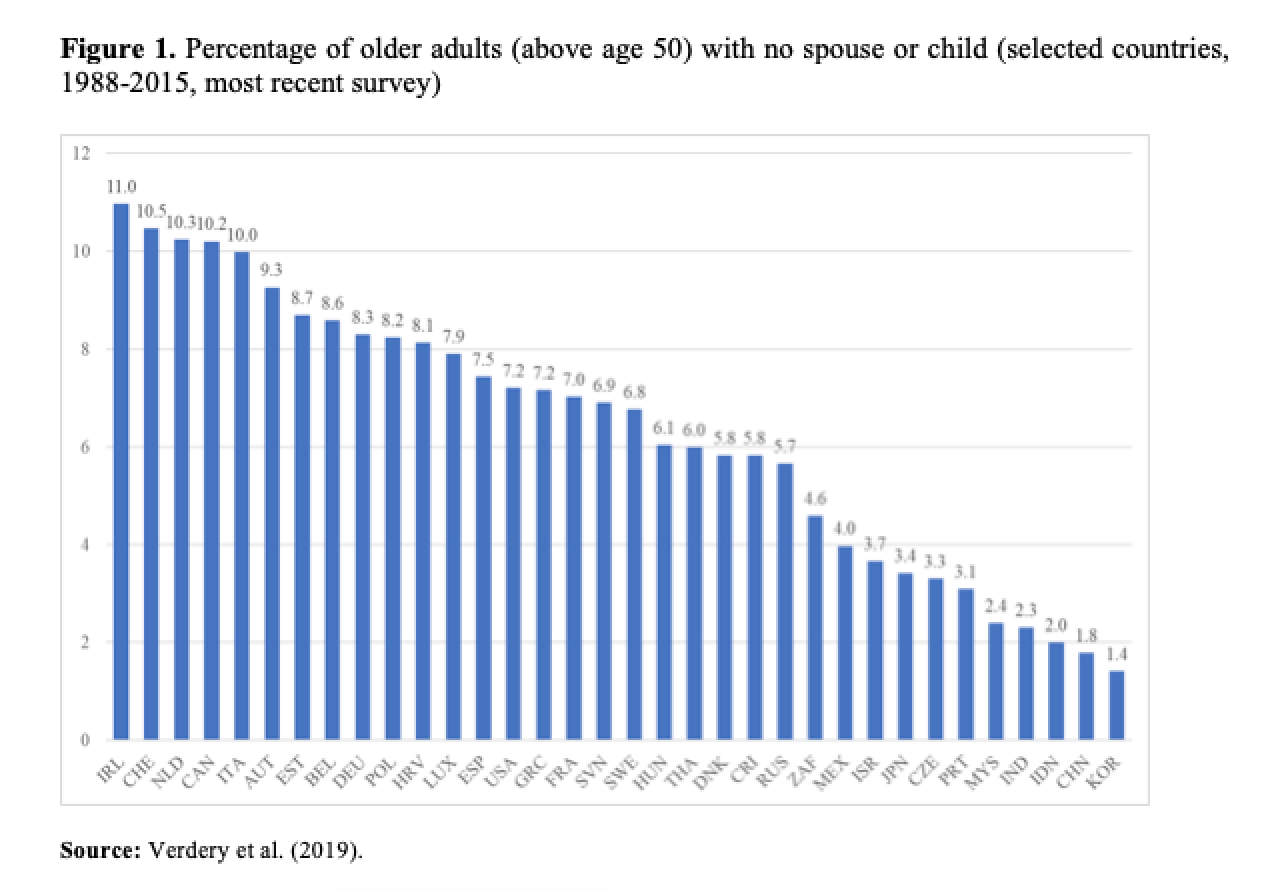
There is great variation in the prevalence of older adults lacking close kin, i.e. a spouse or a living child (Figure 1). The percentage is highest (10-11%) in Canada, Ireland, the Netherlands and Switzerland. In Austria, Belgium, Croatia, Estonia, France, Germany, Greece, Hungary, Italy, Luxembourg, Poland, Slovenia, Spain, Sweden, Thailand, and the United States levels range between 6% and 10%, and in Costa Rica, Czech Republic, Denmark, Israel, Japan, Mexico, Portugal, Russia, and South Africa they are between 3% and 6%. A last group of countries has very low levels of kinlessness, about 2% or lower, and these countries are all in Asia: China, India, Indonesia, Malaysia, and the Republic of Korea.

Are older kinless adults disadvantaged?


We also examined micro-level associations between lacking a spouse and children and sociodemographic and health indicators and found that characteristics of the kinless population of older adults vary considerably across countries. Table 1 highlights the countries where older adults without family are more – or less – likely to be male vs. female, in fair or poor self-rated health vs. good health, have low education given their context, and live alone vs. live with others; all results are adjusted for age. There is no causal direction assigned to these associations. For example, one could be kinless due to extreme poor health, or in poor health due to a lack of close kin, or the association could be linked to other social factors.

We find that in most countries, older adults without close kin have equivalent or worse self-rated health and lower education than their counterparts with family, although there are some notable exceptions in the middle column. We also find substantial variation in the gender composition of the kinless population. For example, in China, it is predominantly male. Many other countries, including Ireland, Denmark, Slovenia, Germany, and Poland, also have more men than women among kinless older adults, controlling for age. Yet others, such as Indonesia, Portugal, Thailand, Greece, Canada, and Russia have more kinless women than men, controlling for age. Still others are in the middle, with no age-adjusted tendency for the kinless to be men or women. Although we find that kinless older adults in all countries are more likely to live alone than older adults with kin, we also find substantial variation in the odds of this across different contexts. For instance in Mexico, kinless older adults are 3.1 times more likely to live alone than those with kin, but in Greece, they are 45 times more likely to be living alone.


Implications for the future


Our rough estimate is that 3.8% of the adults 50+ (43.6 million) in the countries we examined do not have a spouse or biological children. As global fertility decline continues, and childlessness and non-marriage continue to spread throughout many global regions, we will likely see more older adults lacking spouses and children. In addition to a likely increase in the percentage of older adults lacking close kin, their number is also likely to grow because of both population aging and population growth. The rise of older adults with no close family members presents challenges for policy-makers, and innovative social policies will be needed to ensure their future well-being.


Acknowledgments


The authors acknowledge funding from the multi-country project, “Care, Retirement and Well-being of Older People across Different Welfare Regimes” (CREW).

References