Showing posts with label публикации. Show all posts

Tuesday, August 27, 2024

scopus

Белый список: изучаем последствия отказа от Scopus для российской науки

12:59 / 26 августа, 2024


Россия отказывается от западных баз данных.Россия отказывается от западных баз данных.

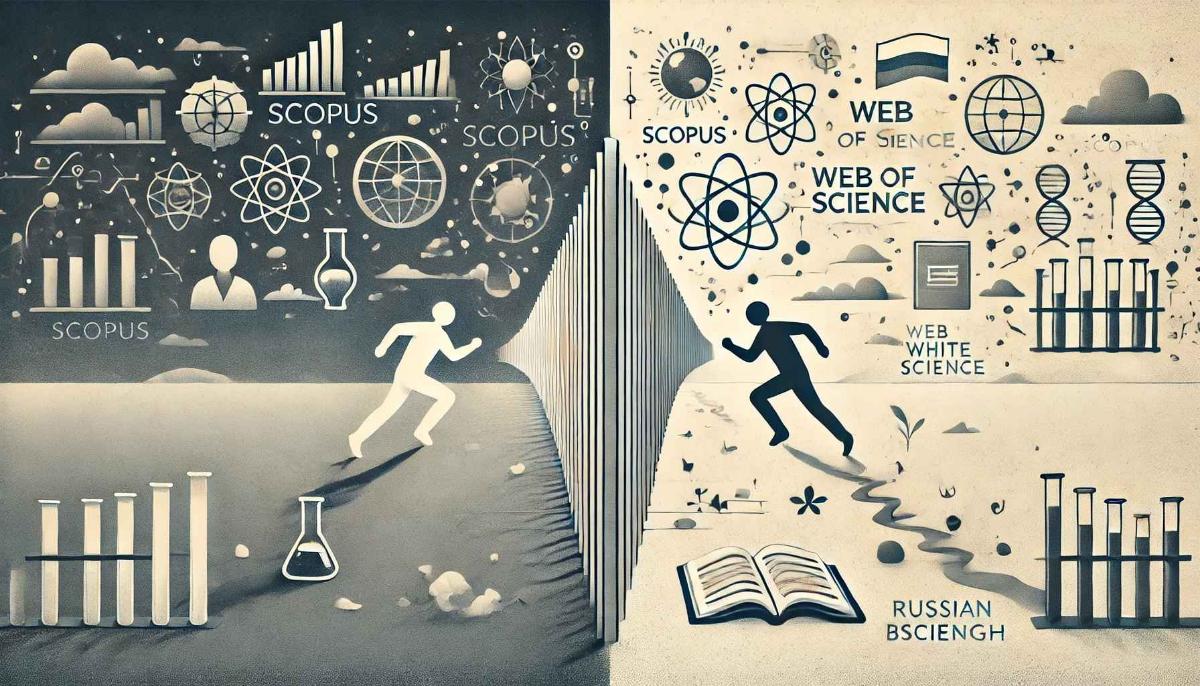
Министерство науки и высшего образования России разработало постановления правительства, определяющий, в каких случаях для оценки и мониторинга публикационной активности российских ученых будут использоваться не «дискредитировавшие» себя, в формулировке ведомства, международные базы Scopus и Web of science — а российский «Белый список» научных журналов.

«Белый список» был создан в 2022 году как ответная мера на запрет доступа российским исследователям к западным наукометрическим базам. Согласно документу, этот перечень будет применяться при отборе претендентов на гранты для обучения, выборе объектов Национальной электронной библиотеки и для доступа к центрам коллективного пользования научным оборудованием и уникальным научным установкам.

Министерство продолжает работу над национальной системой оценки результативности научных исследований и разработок. В связи с событиями на Украине российские организации лишились доступа к ведущим наукометрическим базам данных: сначала к Web of Science Core Collection, а затем и к Scopus. В ответ правительство ввело мораторий на учет публикаций ученых в изданиях из этих баз (до конца 2024 года).

В ноябре 2022 года межведомственная рабочая группа составила «Белый список», включающий как зарубежные научные издания, индексируемые в Scopus и Web of Science, так и российские журналы из Russian Science Citation Index (RSCI). Документ Минобрнауки предусматривает замену в ряде правительственных актов фразы «статьи в журналах из баз данных Web of Science и Scopus» на «статьи из Белого списка журналов».

Академик Алексей Хохлов ранее пояснял в своем телеграм-канале, что в «Белый список» были включены издания, которые по состоянию на середину 2022 года индексировались в Web of Science Core Collection, Scopus и Russian Science Citation Index (RSCI). По словам эксперта, речь идет о замене формулы «журналы из Web of Science и Scopus» на формулу «журналы из "белого списка"». Только публикации в этих журналах будут считаться «зачетными».

Хохлов отметил, что на первом этапе основу «белого списка» составят журналы, реферируемые в Web of Science и Scopus, а также ведущие российские журналы из списка RSCI. Однако в дальнейшем возможно как исключение журналов из списка (если они превратятся в «хищные» журналы, публикующие статьи за деньги без должного рецензирования), так и включение новых изданий, например, лучших журналов из списка ВАК.

В настоящее время перечень включает 29,1 тыс. изданий, из которых около 1 тыс. — русскоязычные. В мае 2023 года были утверждены правила ранжирования журналов из «Белого списка» на основе уровня цитируемости, разделяющие их на четыре категории. По предварительным оценкам Минобрнауки, более 350 отечественных изданий смогут получить первый и второй уровни.

Министерство поясняет, что разрабатывает нормативно-правовые акты для обеспечения оценки результативности научных исследований и разработок без использования «дискредитировавших себя западных наукометрических баз данных».

Академик РАН Алексей Хохлов отмечает необходимость развития базы RSCI путем включения новых качественных журналов и исключения низкокачественных. Он также обращает внимание на сопутствующие проблемы, такие как задержки в выпуске журналов РАН издательством «Наука» и неясность с переводом статей на английский язык.

Директор Института народнохозяйственного прогнозирования РАН Александр Широв подчеркивает, что современная наукометрика далека от совершенства, и включение в систему оценки иностранных или отечественных журналов существенно не меняет общую картину. Он отмечает, что публикация — лишь один из показателей эффективности научной деятельности, и существуют различия между дисциплинами в отношении публикаций в зарубежных журналах.

Эксперты также обсуждают возможные последствия этих изменений для мировой науки. Александр Широв считает, что целью суверенизации науки не должна быть изоляция от мирового научного сообщества. По его мнению, равноправный обмен результатами исследований для России возможен только при наличии собственных научных результатов мирового уровня.

Дмитрий Белоусов, руководитель направления анализа и прогнозирования макроэкономических процессов ЦМАКП, прогнозирует, что ситуация с глобальной наукой и суверенной технологической сферой может продлиться еще 10-12 лет. Он отмечает риск суверенизации части фундаментальной науки и подчеркивает важность поиска альтернативных путей интеграции России в мировую науку.

В целом, эксперты сходятся во мнении, что мы вступаем в период глубокого раскола научного сообщества, особенно между Россией и Западом, а также Китаем и Западом. Этот процесс может оказаться более серьезным, чем в 1930-е годы, хотя возможности для научного сотрудничества и публикаций в международных журналах все еще сохраняются.

Подробнее: https://www.securitylab.ru/news/551453.php

Friday, June 9, 2023

Researchers and scientific articles

Исследователи в каких странах публикуют больше всего научных статей


По данным Our World in Data, если посчитать общее количество научных статей на душу населения, то активнее всего окажутся исследователи Швейцарии: на каждый миллион жителей страны здесь приходится 2.5 тысячи научных публикаций! 2.2 тысячи статей на миллион жителей публикуют за год исследователи в Норвегии, 2.15 - в Австралии, 2 тысячи - в Швеции.

В целом же, в США и по большинству стран Европы нормальный уровень публикацией от тысячи до полутора тысяч статей на миллион жителей. Наши 560 статей на миллион человек на этом фоне смотрятся достаточно грустно, к сожалению. В каком-нибудь Китае, конечно, цифра ещё ниже (373 статьи на миллион человек), но с учётом размера его населения это всё равно огромное число. У нас же - весьма скромное, увы

Monday, May 15, 2023

BBC intro to demography

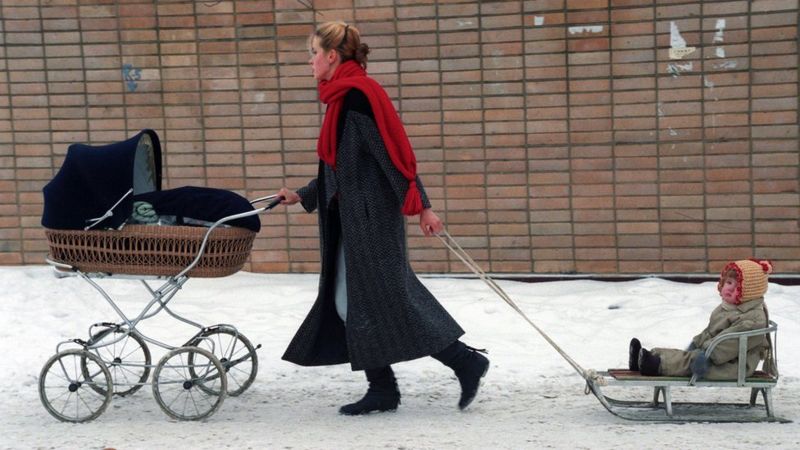
Почему в России падает рождаемость и что с ней будет дальше?


На прошлой неделе Росстат опубликовал официальную демографическую статистику за март. По ней рождаемость в стране - это количество рожденных детей в пересчете на одну тысячу человек - снизилась более [речь об общем коэффициенте, с критики которого курс демографии начинается], чем на 3,2%.

Это второе снижение подряд с февраля.

Би-би-си рассказывает о том, почему в России рождается меньше детей и как естественный прирост превратился в убыль.

Вот несколько факторов, которые влияют на это:

🔻Со времен Великой отечественной войны график численности населения и рождаемости имеет форму волны. Эти колебания давно должны были “затухнуть” - но каждый раз в “нижней точке” происходит какое-либо событие, которое усиливает падение. В итоге маятник продолжает раскачиваться.
🔻Кроме общей численности населения, роль играет то, сколько детей готовы рожать в каждой конкретной семье. И вот этот показатель также снижается в последние годы. На это влияют изменения в культуре - но также сложная ситуация в экономике и уверенность в будущем. А низкий коэффициент рождаемости - ниже двух - не позволяет поколениям воспроизводиться.
🔻Год полномасштабной войны с Украиной не прошел бесследно для демографической ситуации в России - однако эффект пока не такой сильный. Россияне почти не отреагировали на начало войны, лишь на несколько месяцев отложили беременность [это откуда известно?]. А вот мобилизация, скорее всего, имела уже куда более существенное влияние - но это будет заметно лишь в летней статистике (еще не прошло девяти месяцев).
🔻Влияние санкций и экономических проблем со временем накапливаются и тоже могут начать сказываться на рождаемости. Кроме того, эксперты говорят, что россияне постепенно начинают осознавать масштабы войны. Рожать детей в такой ситуации может быть страшно [а может и по другому], а программы государственной поддержки не сработают [можно подумать: они срабатывают в другой ситуации].

Есть-таки глобальные предрассудки во мнениях.  

Wednesday, April 12, 2023

RETRACTION

тыцабельно
RETRACTION
ARTICLES IN PRESS, 110012
PDF [1 MB]
Save
Share
Reprints
Request

WITHDRAWN: Resolute in the face of adversity: Research at the National Abortion Federation’s 46th Annual Meeting 

Show all authors
Published:March 14, 2023DOI: https://doi.org/10.1016/j.contraception.2023.110012

Previous ArticlePatient’s experience and satisfaction with …
Next ArticleMen’s willingness to use novel male contraception is linked …
Article info
Related Articles
Related Articles


This article has been withdrawn at the request of the author(s) and/or editor. The Publisher apologizes for any inconvenience this may cause.
The full Elsevier Policy on Article Withdrawal can be found at https://www.elsevier.com/about/policies/article-withdrawal

Article info
Publication history

Publication stageIn Press Accepted Manuscript
Identification

DOI: https://doi.org/10.1016/j.contraception.2023.110012
Copyright
© 2023 Published by Elsevier Inc.
ScienceDirect Access this article on ScienceDirect

хоть одним глазком посмотреть: что убирают

Saturday, January 14, 2023

What to read to understand intelligence and espionage

Our [the economist] defence editor picks seven good books on spying


Dec 21st 2022

Spies have played an outsize role in the war on Ukraine. American and British intelligence agencies found out, and then exposed, Russia’s war plans for Ukraine months ahead of time in what was the biggest intelligence coup since the Cuban missile crisis. Russia’s “special services” had a torrid time. First they bungled their part in the invasion of Ukraine. Then more than 400 of their officers were expelled from embassies across America and Europe. Finally, they watched as a string of precious “illegals”—spies who operate without diplomatic cover—were rolled up in the Netherlands, Norway, Poland and Sweden. In December even Belgian spies hit the headlines when they exposed a Moroccan intelligence network in the European Union. We chose seven books that encapsulate the past, present and future of covert work. They span the range of espionage and intelligence, from traditional agent running, with snatched meetings in shadowy street corners, to psychological warfare waged over computer networks.

The Billion Dollar Spy. By David Hoffman. Knopf; 432 pages; $15.99. Icon Books; £9.99


During the cold war, the CIA deemed cities like Moscow, Havana and Beijing to be “denied areas”—the most hostile imaginable places for an intelligence officer to work. So how did the CIA recruit and run agents there? David Hoffman tells the story of Adolf Tolkachev, a Soviet electronics engineer who provided vital documents on Soviet weaponry to the CIA between 1979 and 1985. Mr Hoffman, drawing on 900 pages of CIA files and cables, explains how the agency outwitted the KGB, which routinely set 20 surveillance teams on a lone CIA officer. One tool was a sex toy repurposed to operate like a jack-in-the-box. Two Americans would set off by car and turn a corner, moving briefly out of sight of the KGB. One would hop out of the passenger seat and meet Tolkachev. The driver (often the spouse of a CIA officer) would activate the blow-up doll, “Jack”, hidden inside a fake birthday cake. When the KGB caught up they would see two bodies in the car and assume nothing was amiss. The tradecraft was good. Alas, Tolkachev was ultimately betrayed by a mole in the CIA and executed in 1986.

The Spy and the Traitor. By Ben Macintyre. Crown; 368 pages; $28. Viking; £25


The story of Oleg Gordievsky’s exfiltration from Moscow in July 1985 would be written off as fantastical if it were put down in a novel. Mr Gordievsky was a senior KGB officer who had been working for MI6, Britain’s foreign-intelligence service, for more than a decade. When he was recalled to Moscow it became quickly apparent that he had been rumbled. On a pre-arranged weekday at 7.30pm he waited on a street corner carrying a Safeway shopping bag. An MI6 officer walked past clutching a Harrods bag and eating a Mars bar—a signal that the operation was on. Mr Gordievsky made his way to St Petersburg, where he hid in the boot of a car as MI6 officers smuggled him over the border into Finland. As the car crossed the border the officers played Sibelius’s Finlandia—a stirring composition associated with Finland’s struggle against Russia—on the car’s cassette player to signal to Mr Gordievsky that he was safe. Yet Ben Macintyre’s gripping book is more than just a thriller. Mr Gordievsky’s disillusionment with his employers began in 1968, when the Soviet Union invaded Czechoslovakia to suppress an uprising—a cautionary tale for Russian spy agencies today. The intelligence that he provided also had a material impact on the cold war. Mr Gordievsky was able to tell MI6 that Soviet leaders were paranoid about nuclear attack and had ordered the KGB to watch for signs that one was imminent. The intelligence had a profound and sobering effect on Margaret Thatcher and Ronald Regean, helping them to see the world through the Kremlin’s eyes.

Code Warriors. By Stephen Budiansky. Knopf; 432 pages; $19


The books by David Hoffman and Ben Macintyre deal with human intelligence, or HUMINT. But the CIA and MI6 are dwarfed in size and resources by their sister agencies for signals intelligence (SIGINT), which involves intercepting and often deciphering messages. Stephen Budiansky’s book is an excellent history of America’s National Security Agency (NSA) through the cold war. The aim of SIGINT, wrote a top admiral at the end of the second world war, was to read “as closely as is humanly possible…every enemy and clandestine communication”. That is what the NSA set out to do.

Much of the story is about cryptanalysis, or reading encrypted messages, a process that can take decades. The VENONA programme, which cracked 3,000 Soviet messages sent between 1943 and 1945, went on until 1980. The messages were not declassified until 1995. By the 1960s 80% of America’s intelligence was coming not from human spies but SIGINT—and this could be dangerous work. More than 90 men died during the cold war in flights around Soviet borders to gather electronic intelligence. In 1979 a combination of “theoretical-mathematical advances” and modern supercomputers yielded a breakthrough against Soviet ciphers, writes Mr Budiansky. The details of that remain classified. But what is clear is that in the 1980s and 1990s human communications began a “mass migration” to computers, digital networks and, eventually, the internet. That led to a new and controversial epoch of SIGINT.

Dark Mirror. By Barton Gellman. Penguin; 448 pages; $18. Vintage; £20


In 2013 Edward Snowden, an NSA contractor, fled to Russia via Hong Kong and revealed to the world that the NSA and its British counterpart, GCHQ, had been spying on the internet on a grand scale by tapping undersea cables, exploiting legal backdoors in the servers of American tech companies and introducing weaknesses into global encryption standards. Barton Gellman’s book on the affair is not the first. Glenn Greenwald and Luke Harding, journalists who, like Mr Gellman, worked with Mr Snowden, have published their own accounts; so too has Mr Snowden himself in his memoirs. But “Dark Mirror” stands out—there is no better account of espionage in the cyber age.

He is harshly critical of American spies and their inability to understand why the revelation of their indiscriminate information gathering might be newsworthy. The book is a reminder of why metadata—information about a message, such as the sender and receiver, rather than its content—can be far more powerful, revealing and sensitive than people assume. But Mr Gellman, who writes for the Atlantic, also takes a critical approach to Mr Snowden himself, who eventually fell out with the author. “The reader is entitled to know up front that I think Snowden did substantially more good than harm,” Gellman writes in his preface, “though I am prepared to accept (as he is not) that his disclosures must have exacted a price in lost intelligence.”

Spies and Lies. By Alex Joske. Hardie Grant; 304 pages; $22.99 and £16.99


The greatest novels of John le Carré hinged on the battle of wits between George Smiley of British intelligence and Karla of Moscow Centre, a fictionalised version of the KGB. That reflected the definitive intelligence contest of the 20th century, pitting Russian spies against their Western counterparts. But in November 2021 Richard Moore, the chief of MI6, said that Karla’s successors had been supplanted: China was now MI6’s “single greatest priority”. Russia’s invasion of Ukraine has not changed his opinion.

Alex Joske, a young Australian analyst, uses Chinese-language sources to trace the history and reveal the modus operandi of the Ministry of State Security (MSS), China’s main spy agency. He focuses less on espionage than on operations designed to sway public and elite opinion in favour of the Chinese Communist Party. “We see the Chinese authorities playing the long game in cultivating contacts to manipulate opinion in China’s favour,” warned Ken McCallum, the head of MI5, Britain’s security service, in November 2022. They are “seeking to co-opt and influence not just prominent parliamentarians…but people much earlier in their careers in public life, gradually building a debt of obligation.” Mr Joske argues that the MSS used such people to promulgate the idea, which appears increasingly implausible, that China’s aim was to achieve a “peaceful rise” that posed no threat to the West or to its neighbours.

Active Measures: The Secret History of Disinformation and Political Warfare. By Thomas Rid. Picador; 528 pages; $20. Profile Books; £12.99


Mr Joske’s book on the MSS shows why intelligence is not just about stealing secrets. It can also be about changing the way people think. The most significant intelligence operation of the past decade was probably Russia’s intervention in America’s election in 2016, which hacked and leaked the emails of a Democratic Party leader and used a network of trolls to influence American social media. Thomas Rid, a professor at Johns Hopkins University in Washington, DC, shows how active measures—as the KGB called them—have been used for over a century. His book tells the story of how the CIA sent personalised horoscopes to unnerve officials of the Stasi, communist East Germany’s intelligence service, and floated thousands of propaganda-packed balloons into the country. All of that was dwarfed by the KGB’s creative efforts. By the middle of the 1960s it was co-ordinating 300-400 active measures annually—from encouraging the European peace movement to spreading allegations that America had created AIDS as a weapon. In 1985 the annual budget for active measures was conservatively put at $3bn-4bn (more than $8bn today). Perhaps the most important lesson is that democracies are uniquely vulnerable to this sort of information warfare. “If they did not have press freedom,” quipped the KGB’s disinformation chief in 1964, “we would have to invent it for them.”

Spies, Lies, and Algorithms. By Amy Zegart. Princeton University Press; 424 pages; $29.95 and £25


As The Economist explained in a cover story in August 2021, the practice of open-source intelligence (OSINT) has transformed how we see the world. Russia’s build-up of military forces on Ukraine’s border in the autumn and winter of 2021 was captured in unprecedented detail by commercial satellite imagery and videos posted on TikTok. In “Spies, Lies, and Algorithms”, Amy Zegart of Stanford University looks at how technology is transforming cloak-and-dagger work. In 2007 the word “cyber” did not appear in America’s annual intelligence-threat assessment, she notes. Now cyber-espionage has industrialised intelligence gathering—consider China’s theft of more than 20m American security-clearance records at a stroke in 2015. Technologies like AI, facial recognition and biometrics are making it nearly impossible for intelligence officers to cross borders under multiple aliases as they did during Mr Gordievsky’s era. Deepfake technology will boost the sort of disinformation that Mr Rid documents. Spy agencies have to keep up with the times, says Ms Zegart. Governments should, for example, establish an agency dedicated to OSINT. She cites two former officials, both familiar with the intelligence world, who had remarked that anything which was unclassified was not really intelligence. “That dinosaur mentality,” Ms Zegart noted recently on Twitter, “is a huge liability in the emerging tech era.”

Also try
We recently explored why Russian spies were failing to live up to their storied reputation. Corruption has eaten away at once professional services, and their tradecraft has not caught up with modern technology. We also explained why Chinese spies need to brush up on their skills. In 2021 we examined how spy agencies around the world had high hopes for artificial intelligence. And in 2020 your correspondent looked at the long history of co-operation between intelligence services and businesses, and the curious case of a hitherto unknown European spy pact. ■

Friday, January 13, 2023

But It's Not the Only One

Spare Might Be the Biggest Bombshell Royal Memoir Ever.

BY OLIVIA B. WAXMAN JANUARY 7, 2023 7:00 AM EST

Prince Harry’s much anticipated memoir Spare doesn’t technically hit shelves until Jan. 10, but some of its more explosive parts have already leaked.

According to the Guardian, which obtained a copy ahead of the official release, Harry details a violent 2019 confrontation at his London home in which Harry claims William “grabbed me by the collar, ripping my necklace, and … knocked me to the floor,” resulting in scrapes and bruises on his back. The duo had been fighting over Harry’s wife Meghan Markle, and Harry claims William called her “rude” and “abrasive.” The Sun, which obtained a copy of Spare in Spanish, also reports that Harry begged Charles not to marry Camilla, while Page Six says that Harry claims Prince William and Kate Middleton encouraged him to wear the infamous Nazi outfit to a costume party in 2005, rather than a pilot getup.

The memoir comes out exactly two years after the Duke of Sussex and his wife, the Duchess of Sussex Meghan Markle, announced that they were planning to give up their royal duties. Now based outside Los Angeles, the couple has been making a name for themselves as media moguls, from their explosive 2021 interview with Oprah Winfrey dishing about racism in the royal family to releasing a docu-series on Netflix.

“I’m writing this not as the prince I was born but as the man I have become,” the Duke of Sussex said in a 2021 press release announcing his autobiography. “I’ve worn many hats over the years, both literally and figuratively, and my hope is that in telling my story—the highs and lows, the mistakes, the lessons learned—I can help show that no matter where we come from, we have more in common than we think.”

Harry will be the first in his immediate family to put out a tell-all. But, that doesn’t mean they haven’t made sure their side of events were reflected in print. Harry’s father, the current sovereign King Charles III, and his mother Princess Diana provided letters and materials to royal biographers, and Queen Elizabeth II cooperated with documentary filmmakers.

From L-R, Queen Victoria, Prince Harry, Edward VIII

Accounts like Spare are not typical—if not unprecedented.

“It’s quite rare for a royal to do that, particularly one who’s as close to the institution,” says Laura Clancy, author of Running the Family Firm: How the Monarchy Manages Its Image and Our Money. “Harry’s will be the most influential royal memoir in decades. There’s not many to compare it to.”

Here are some other examples of other eyebrow-raising royal memoirs and autobiographies.
Queen Victoria

Until the mid-19th century, royals’ reflections were usually just shared with family, and often consisted of advice for their heirs.

Queen Victoria’s diaries are one early example of royal reflections that were published for a broader audience. In the 1860s, her family and friends received copies of Leaves from the Journal of our Life in the Highlands, a compilation of her diary entries from the time she spent in the Scottish Highlands.

“Some of her ministers were against the publication,” says Carolyn Harris, a historian and expert on the British monarchy at the University of Toronto, School of Continuing Studies. “They thought it would look like the head of state was on holiday a lot of the time rather than attending to her royal duties.”

A second volume in which the widowed sovereign went in-depth about her friendship with her beloved servant John Brown raised eyebrows, fueling rumors about whether they were romantically involved.

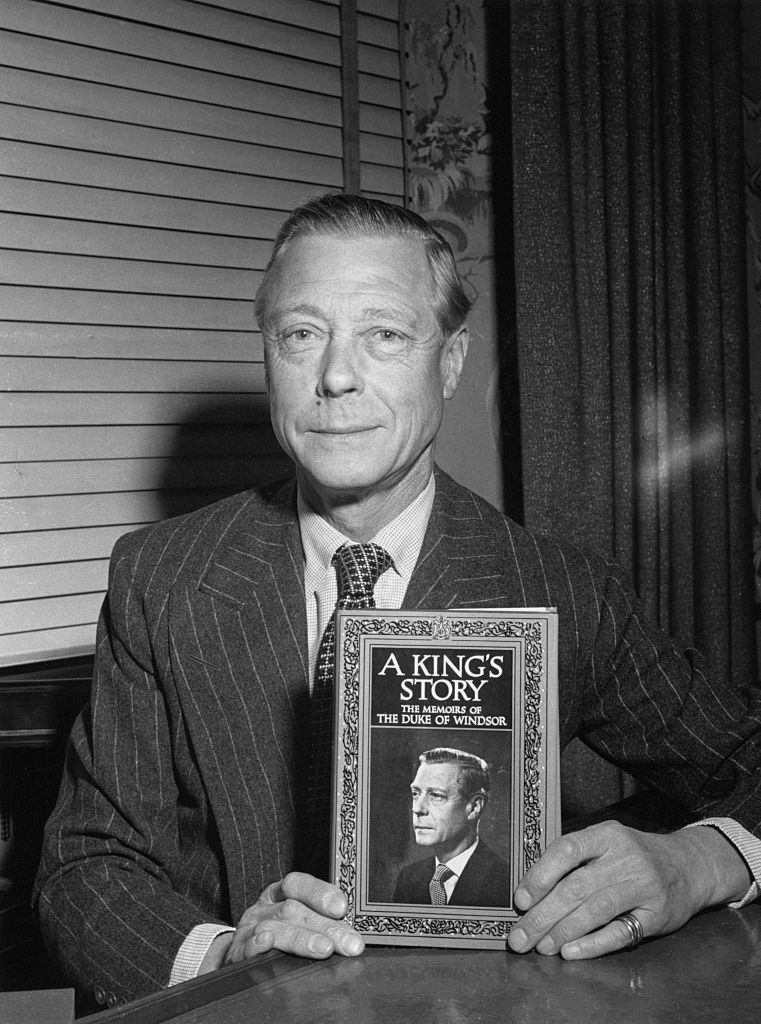
The Duke of Windsor (1894 - 1972), formerly King Edward VIII, with his memoirs, entitled 'A King's Story: The Memoirs of the Duke of Windsor', circa 1951.

Prince Harry’s memoir also comes out 75 years after the one released by the Duke of Windsor, the former King Edward VIII who abdicated in 1936 so he could marry American divorcée Wallis Simpson. Titled, A King’s Story (1947), he addressed what he felt was a misconception that he didn’t want to be king, arguing, “I wanted to be a successful king, but a king in a modern way.” A decade later, Simpson, known as the Duchess of Windsor, came out with her own memoir, The Heart Has Its Reasons (1956), in which she stated that she offered to end the relationship with the Duke of Windsor so he could stay on the throne, but “he insisted that he needed me, and as a woman in love I was prepared to go through rivers of woe, seas of despair and oceans of agony for him.”

Questions about the couple’s motives surfaced following the publication of their memoirs. “There was a sense of the Duke and Duchess of Windsor trying to augment their incomes while in exile,” as Harris puts it.

The most recent royal memoir is Prince Edward, the Duke of Kent’s A Royal Life, published in May 2022 from a series of Zoom conversations with biographer Hugo Vickers during the COVID-19 pandemic.The Duke of Kent is Queen Elizabeth II’s cousin, the son of King George VI’s youngest brother.

“Now the Duke of Kent has become the first member of the Royal Family to have spoken extensively of the modern reign and his part in it,” as Vickers explained the significance of the project in an op-ed. “Like so many of us during the Covid-19 lockdown, the Duke was stuck at home and could do little for his charities and regiments so the idea formed that he might write something.”

The parts about Queen Elizabeth II’s warmth towards him when he lost his father as a child resonate as the memoir came out the same year that the monarch passed away. “I always felt I wanted to support her,” the Duke wrote. “That’s by far the most important thing in life.” Throughout the memoir, his dedication to royal service is clear.

It’s because of this dedication to royal service for most royals that Clancy says she does not expect memoirs to become the norm for the British royal family anytime soon. She argues they’re somewhat antithetical to the institution of the monarchy. The royals, she says, “rely on this balance between visibility and invisibility. We have to have big royal events, but they also need to be invisible—and to not allow people to ask too many questions and know too much about it. A memoir, or a confessional television interview, or a documentary gives too much access and too much visibility. There’s the potential that might risk shedding too much light on the institution.”

Sunday, July 24, 2022

100 Years of Social Forces

кортинко тыцабельно
Social Forces
is the second oldest sociological journal in the United States that has been published continuously under the same name. Founded in 1922, it has been housed since then in the Sociology Department at the University of North Carolina at Chapel Hill (UNC). Social Forces focused on the South early on, was affiliated with a regional sociological organization (Southern Sociological Society [SSS]), and then expanded into an explicitly international journal publishing work from authors across six continents. Social Forces has regularly ranked as one of the top three general journals in Sociology, along with the American Journal of Sociology (AJS—the oldest continuously published sociology journal, founded in 1895) and the American Sociological Review (ASR—established in 1936).

The 100 years of Social Forces reflect patterns associated with the development of sociology as a discipline and profession, such as changes in the norms and practices of scholarly journal publishing (i.e. peer reviewed submissions as opposed to invited articles), the refining of methodological approaches, and the changing boundaries of the discipline in relation to other social sciences, such as anthropology, political science, history, and economics (e.g., see the essays in Calhoun 2007 [по ссылке пройдите, чтобы смотреть всё]). Social Forceshas pushed back against disciplinary silos as a more “general” social science journal, promoting interdisciplinary research.

There has been a close relationship between the UNC Sociology Department and Social Forces through the years. All the editors have been UNC Sociology faculty members. Its founder, Howard W. Odum, had a strong supporting cast within the UNC Sociology department, many of whom were his students—such as Katharine Jocher, Guy Johnson, Richard Simpson, and Rupert Vance—who helped Odum produce a collective product that reinforced a sense of common purpose within the Sociology Department.

This essay provides an historical overview of the 100 years of Social Forces. We trace the journal’s relationship to the evolution of sociology and of journal publishing. Over time, there have been significant changes in the subjects and structure of articles. Our discussion of broader trends in the discipline and journal publishing complements the bibliometric analysis of the content of Social Forces provided by Moody, Edelmann, and Light (2022) in this issue. We also supplement the essays describing central topics that appear in this issue (on the South, globalization, and race) and the three other issues in Volume 101. We highlight significant shifts in the production of the journal that have redefined its scope and purpose, such as: peer and blind reviewing; electronic review processing and other technological advancements; and relationship to various publishers.

We organize our overview in terms of the editors of the journal that define three main eras in the evolution of Social Forces. These eras differed somewhat in their topics and authors of articles, as well as in the norms and practices by which articles were published.

—Early Years: 1922–1961. Howard W. Odum (1922–1954); Katharine Jocher (1927–1961); and Gordon W. Blackwell (1955–1956);

—Professionalization: 1960s–1990s. Rupert B. Vance (1957–1969); Guy B. Johnson (1961–1969); Everett K. Wilson (1972–1982); and Richard L. Simpson (1969–1972; 1983–2004);

—Internationalization: 2000s-present. Judith Blau (2003–2005); Peter Uhlenberg (2005–2007); François Nielsen (2007–2010); and Arne L. Kalleberg (2010–present).

Wednesday, July 13, 2022

Call for Abstracts

Lund
Welcome to the annual Lund Population Day on 20 October 2022. The keynote will be held by Professor Douglas Massey, Princeton University. The topic: “Trends, Causes, and Consequences of Segregation in the United States”. This will be followed by shorter presentations and sessions by Lund University researchers working on population issues.

Quick facts


Date: 20 October 2022. 09:00–17:00.
Venue: Eden (Department of Political Science). Map.
Attendance is free of charge.

Organisers: Center for Economic Demography and Lund University Population Platform

Call for Abstracts


The annual Lund Population Day will feature a keynote address by Professor Douglas Massey, Princeton University, titled “Trends, Causes, and Consequences of Segregation in the United States”, followed by paper presentations (30 minutes including Q&A), and flash-talk sessions (10-minute poster presentations).

They invite all Lund University researchers working on population issues to submit research for oral presentations or flash-talk sessions. They particularly encourage PhD students to submit your work for the flash-talk sessions.

Abstracts should not exceed 250 words. Please indicate whether your presentation would be most suitable for a full-paper presentation or a flash-talk. Submission deadline is 1 September 2022.

The abstracts should be sent to: johan.sandberg@soc.lu.se

Additional Information

Wednesday, August 4, 2021

Explaining Publication Identifiers

Publication Identifiers

Explaining Publication Identifiers: DOIs, ISBNs and ISSNs


The modern world is information rich and becoming more so with each passing day. Staggering numbers of new books, articles, reports and other texts as well as audio and visual creations across a wide range of media are produced, shared and published every year, and those numbers are constantly on the rise. The sheer amount of information available to readers necessitates accurate and efficient ways in which to identify and locate individual resources and sometimes even specific parts or elements within those resources. This is certainly the case with the academic and scientific research documents that are published as contributions to the accumulated knowledge in a discipline or field of study and used to inform and support the work of other investigators.

Fortunately, several systems for identifying publications have been designed and implemented, with the numbers and codes they assign to publications proving incredibly helpful for authors, publishers, editors, reviewers, researchers, readers and other individuals who manufacture, advertise, distribute, sell or make use of those publications. Unfortunately, the numbers and codes assigned to identify publications can also be incredibly confusing, and a basic understanding is necessary to benefit fully from the ease and precision they offer. The following list provides definitions and explanations of the most common publication identifiers used for the kinds of items that academics and scientists are most likely to create and consult. The list is not exhaustive, however, and does not cover all of the systems it mentions in equal detail, but it should provide the information many researchers require and is an excellent starting place for further investigation into the various publication identifiers now in use.

ISBN

ISBN is the initialism for International Standard Book Number. A unique ISBN is normally assigned by the International ISBN Agency and its network of national agencies to each published version or edition of a book, so the hardcover, paperback and electronic versions of a particular book will each be assigned a different ISBN. If there are also different electronic versions of the book, such as an EPUB, a MOBI and a PDF version, each of those will have a different ISBN as well. Even a change in usage rights when all else about a book’s version and format remains the same means the assignment of a new ISBN, but a simple reprint of a previous version or edition of a book does not require a new ISBN. A multi-volume publication may have an ISBN for each volume and another for the set as a whole.

Publishers ordinarily obtain groups of ISBNS to assign to their publications, but independently published books may not have ISBNs at all, although they frequently do. If a printed book has an assigned ISBN, it normally appears in the bottom right corner of the back cover, usually along with the barcode which is itself a form of the ISBN that is scanned in bookstores or other shops when the book is purchased. The ISBN may also or alternatively appear inside the book on the page dedicated to publication and copyright information, and that is a common place to find it in e-books as well. For an audio book provided via a CD-Rom, DVD or other physical medium, the ISBN can appear on the disk label or the packaging, but often does not. ISBNs are frequently included in the metadata and product descriptions of books posted by publishers and booksellers.

Each ISBN now consists of thirteen digits beginning with ‘978’ or ‘979,’ but 10-digit ISBNs were assigned prior to 2007 and are still valid today. A 13-digit ISBN has five parts:
1. The prefix, which is either ‘978’ or ‘979’
2. The registration group indicating the country, language-sharing group of countries or territory where the book was published
3. The registrant, who is usually also the publisher of the book
4. The publication, which is the book or title itself
5. The check digit to enable the detection of common transcription errors
A 10-digit ISBN lacks the initial prefix and uses a different mathematical formula for calculating the check digit, which may appear as an ‘X’ (the Roman numeral for ‘10’).

Both kinds of ISBNs can be separated into their individual parts using hyphens or spaces, but accurate separation is often tricky because most of the parts do not use a fixed number of digits. Even the digits representing a particular publisher or other specific element may not remain consistent in all ISBNs associated with that publisher or element. The initialism ISBN appears before the number for clarity, as in this 13-digit example for a novel – ISBN 9781533573940 – and this applies to electronic books as well, with the use of the term e-ISBN or eISBN proving confusing and best avoided. An ISBN-A, on the other hand, is an actionable ISBN for use in the DOI (or Digital Object Identifier) system.

ISSN

ISSN abbreviates International Standard Serial Number. ISSNs are unique numbers assigned to serial publications such as scholarly journals and periodicals, newspapers and magazines, annual conference proceedings and reports, directories and lists, databases and collections, and even websites and blogs as well as other continuing publications. The ISSN International Centre uses a network of national centres to assign ISSNs, which in some countries may be required for all serial publications subject to legal deposit. The ISSN can appear on the cover of a printed volume or issue of a journal, ideally in the upper right corner, and can also be encoded into a barcode with additional digits to indicate the issue or volume number. Alternatively, the ISSN can be included with the publication and editorial information on an inside page.

For electronic publications, ISSNs should appear on the homepage or main menu of online serial publications or on the DVD, CD-Rom, microfiche or packaging if the electronic version is provided via a physical medium. As with ISBNs, different means of publication require different ISSNs, so if a journal is published in print, on CD-Rom and online, each will bear a different ISSN, but the same ISSN can apply to different electronic file formats such as the HTML and PDF versions of the same serial. Since the ISSN of a periodical is based on its title and contains no information about the publisher or location, a new ISSN must be obtained when a journal’s title is changed. It is possible for an issue or volume of a serial publication to have both an ISBN as a separate book and an ISSN as part of the serial resource as a whole.

Unlike the ISBN system, the ISSN system makes a distinction between ISSNs for print and those for electronic media, so a print ISSN or p-ISSN applies to a printed serial, whereas an electronic ISSN or e-ISSN applies to an electronic one. In addition, a linking ISSN or ISSN-L is assigned to every serial publication registered in the ISSN system and serves to link all the ISSNs associated with a specific serial across all publication media. The ISSN-L for a journal is generally the same as the ISSN for the first published medium, but if print and electronic versions are published simultaneously, the print version’s ISSN will usually be the ISSN-L. An ISSN consists of eight digits, the last of which is the check digit that is used for detecting errors and can appear as an ‘X’ if the result is ‘10.’ The ISSN number is divided by a hyphen into two groups of four digits. For example, the ISSN for the online version of the journal Nature appears on the About the Journal page of the website as ISSN 1476-4687.

DOI

A DOI is a Digital Object Identifier, which does exactly what its name implies – it identifies a digital object. DOIs are particularly common for scientific and academic journal articles, but they are also used for identifying many other kinds of documents and materials such as research reports and presentations, data files and data sets, official or government publications, book chapters, audio and video items, images and performances, software and more. DOIs might even be assigned at several levels of a single publication, so a DOI could be associated with a journal title, another with a specific issue of that journal, yet another with an individual article within the issue and still another with a single section or table within the article.

A DOI for any given object is not only unique, but also resolvable, which means that each DOI will resolve to some form of access to the object it identifies, taking the user to an internet location where the object, part of the object or metadata about the object can be found. Each DOI is also persistent, which means that it will always identify the same object and will never change, even when the object’s metadata changes or the object itself is moved and becomes associated with a different website, webpage or Uniform Resource Locator (URL), making it a more stable identifier than a URL as long as the metadata associated with the DOI is current. DOIs can, however, lead readers to versions of documents behind paywalls even though there are free versions available elsewhere, so some DOI resolvers have been developed to favour open-access venues and free versions of the objects identified by searching for them first.

The International DOI Foundation is responsible for DOIs and manages a number of DOI registration agencies that provide services for those who wish to receive and register DOI names or handles. Although there is no set number of characters for DOIs, each DOI consists of a prefix and a suffix separated by a forward slash. The suffix is assigned and begins with the numeral ‘10,’ which distinguishes the character string as part of the DOI namespace; it continues with a full stop (or period) and then a series of four numbers or more (possibly divided by additional stops) that identify the registrant, who is usually the publisher, author or creator of the digital object. The suffix, on the other hand, can consist of numbers and letters, is chosen by the registrant, often includes the relevant ISSN or ISBN, and functions to identify the specific object associated with the DOI.

According to the International DOI Foundation, DOIs should take the form of this example for a journal article – doi:10.1017/S0362152900011995 – but Crossref, one of the main DOI registration agencies, recommends using an entire URL, which would take this form for the same article: https://doi.org/10.1017/S0362152900011995. As a persistent URL (or PURL), this will reliably and permanently redirect users to the correct web location. The DOI for a journal article can usually be found on the first page of the article or along with other metadata for the paper on the journal’s website, and the appropriate DOIs are frequently included in the complete bibliographical references provided for cited sources in academic and scientific publications.

SICI

SICI is the abbreviated form for Serial Item and Contribution Identifier. Created by the Serials Industry Systems Advisory Committee, SICIs are variable-length codes used as extensions of the ISSNs that apply to entire serial publications. SICIs enable the identification of specific parts of a journal or other periodical, such as particular issues or volumes, tables of contents and individual articles and abstracts. A SICI code contains three parts and kinds of information. The first is about the item, including the ISSN for the journal or other serial, the date of publication such as month and year (this information is enclosed in parentheses), and the volume and issue numbers. The second concerns the contribution, including the location where the specific contribution begins (such as a page number), the title code derived from the title of the article often as an initialism, and the symbols ‘<’ and ‘>’ which enclose the contribution part. The third is the control segment, including identifiers for the type of SICI, the part of the publication referred to by the SICI (such as an abstract), the format of the content (such as text), the version number and finally the check character for detecting errors. SICI codes can be used to identify a specific resource in the suffix of a DOI, but the colons (:) that often appear in SICI codes (between volume and issue numbers, for example) have proven problematic, and Crossref will no longer register DOIs that contain colons. SICIs are also used in Uniform Resource Names (URNs).

BICI

BICI stands for Book Item and Component Identifier, which is a draft standard of the American National Information Standards Organization. The aim is to provide unique codes for specific items within books or similar publications. Just as a SICI code is an extension of the ISSN for a journal or other serial, so the variable-length BICI code would be an extension of the ISBN for a book and would have a three-part structure similar to a SICI with information dedicated to the item, the type of component and the code itself.

PII

PII is the short form for Publisher Item Identifier, which refers to a unique code of seventeen characters that is used by scientific journal publishers to identify individual documents within their publications. PIIs can identify many different kinds of published items, but they are specifically designed to identify items such as articles and chapters within larger types of publications such as journals and books. A PII therefore incorporates the ISSN or ISBN for the larger publication and adds characters to identify the type of source publication as well as the particular item. The 17-character alphanumeric string begins with a character to identify the source publication type – ‘S’ for serials and ‘B’ for books – which is followed by the 8-digit ISSN for serials or the 10-digit ISBN for books. Two characters then specify the year in which the PII was assigned, but only for serials; omitting it from the code for books eliminates the discrepancy between the 8-digit ISSN and the 10-digit ISBN in the final character count of the PII. The next four characters are the item number assigned by the publisher, and the final element is the check digit. When written for human eyes, PIIs can be rendered more legible by adding punctuation such as hyphens, parentheses and slashes at strategic points.

ISTC

According to the International ISTC Agency, an ISTC or International Standard Text Code is a unique identifier for ‘text-based works,’ with ‘text-based works’ defined as ‘any content appearing in conventional printed books, audio-books, static e-books or enhanced digital books,’ as well as newspapers and journals. Useful for publishing, indexing, cataloguing and marketing, ISTCs are helpful for clarifying matters when the same content appears with different titles or different content shares the same title. An ISTC is made up of sixteen hexadecimal digits, which means that it uses the numbers ‘1’ to ‘9’ and the letters ‘A’ to ‘F.’ The first three characters constitute the registration element used by the agency; the next four represent the year of registration for the ISTC; the next eight represent the specific textual work; and the final place is occupied by the check digit used for minimizing errors. When displayed an ISTC should begin with the initialism ISTC and be separated into its four elements with hyphens or spaces, as in the example provided by the ISTC Agency: ISTC 0A9-2002-12B4A105-7.

ETTN

ETTN is the abbreviated form of Electronic Textbook Track Number, which is a unique code for identifying electronic books, conference proceedings and journals. Only electronic text files can use this 13-digit numeric code, which is generated on request by Magnanimitas Assn and consists of five parts: three digits to indicate the focus of the text, two digits for the year in which the ETTN was generated for the text, five digits to identify the text itself, two digits for the month in which the ETTN was generated and one check digit for detecting errors.

SBN

SBN or Standard Book Numbering refers to the book identifier system that preceded ISBNs in the 1960s. An SBN consists of nine digits instead of the ten digits used by the first ISBNs, but a zero can be added to the beginning of an SBN to produce a valid 10-digit ISBN. This zero does not alter the check digit of the SBN, so no recalculation is needed to transform a 9-digit SBN into a 10-digit ISBN.

ASIN

An ASIN is an Amazon Standard Identification Number that uniquely identifies individual products, including books and other documents, within Amazon online marketplaces. ASINs consist of ten characters, including letters as well as numerals (B01DUV1T00, for example), and can be found among the product details on the Amazon pages where books are described. The ASIN and the ISBN are the same for a printed book that has a 10-digit ISBN, but the Kindle (MOBI) editions of books do not use ISBNs, so new ASINs are assigned to them when they are published and offered for sale via Amazon marketplaces.

ISMN

The ISMN or International Standard Music Number is a code for identifying notated music that is published as scores or sheet music in print, online and in all other formats. As with ISBNs for books, a different ISMN is assigned to each version or edition of a musical work or to each part of a musical work that is distributed separately. ISMNs are also similar to ISBNs in taking two different forms. They were originally alphanumeric, beginning with the letter ‘M,’ generally followed by digits to identify the publisher, digits to identify the work and a check digit, with the code as a whole consisting of ten characters. Since 2008, however, ISMNs have had thirteen digits, replacing the ‘M’ with ‘979-0,’ which is followed by blocks of numbers to identify the publisher and the item before the final check digit. The country of publication is not identified in an ISMN as it is in an ISBN, but a single publication can have both an ISBN and an ISMN.

ISRC

The International Standard Recording Code (ISRC) is used to identify specific recordings in a unique and permanent manner that remains fixed regardless of where, when and how those recordings are used across media and borders. Different recordings, remixes, editions and versions of the same musical work should therefore bear different ISRCs. An ISRC consists of twelve characters, including both numerals and letters, and should be preceded by the ISRC initialism for clarity. The first two characters are the country code and are issued by the ISRC agency, as are the next three characters, which represent the registrant code. The last two digits of the year in which the ISRC is assigned are then provided by the registrant, as are the final five digits, which constitute a unique code allocated by the registrant and must not be repeated within a calendar year.


ISWC

The ISWC or International Standard Musical Work Code uniquely identifies musical works. An ISWC identifies a specific work, not an individual publication or edition of the work as the ISMN does and not a particular recording of the work as the ISRC does. Each ISWC consists of a prefix character, which so far has always been the letter ‘T’ for musical works, followed by nine digits identifying the specific work and a check digit for detecting transcription errors. The codes are issued sequentially, so they contain no information about the musicians, publishers or places of publication. When displayed, an ISWC often appears with the initial prefix and final check digit separated by hyphens from the rest of the code and full stops (periods) to break the nine digits in the middle into three groups of three, but the punctuation is not required.

ISAN

An ISAN is an International Standard Audiovisual Number. Administered by the ISAN International Agency and its regional registration agencies, the ISAN system is designed to provide unique and persistent codes to identify audiovisual works such as films, television programmes, advertisements, video games, sports events, newscasts and more. An ISAN is permanently assigned to an audiovisual work, not simply to a particular publication or release, so it enables the identification of any and all versions and manifestations of a specific audiovisual work across a variety of physical and digital media. This is the case even when the title or another aspect of the work changes, so a single ISAN might be linked to an entire film as initially released, versions of the film available in different countries and languages, director and theatre cuts, soundtracks, DVDs and their packaging, clips and trailers, as well as other promotional material. ISAN codes tend to be very long, but they are generally preceded by ‘ISAN’ and divided by hyphens for ease of reading and transcription.

Summary: 

The unique publication identifiers assigned to articles, books & other works can be extremely helpful tools for academics & scientists as they conduct & publish their research. This article aims to help researchers make the most of ISBNs, ISSNs, DOIs & other identifiers by providing clear definitions & explanations.
Thursday, April 8, 2021

research excellence

Учёные МГУ признаны самыми высокоцитируемыми согласно данным Elsevier


Четверо сотрудников Московского университета стали лауреатами престижной международной премии Research Excellence Award Russia 2021. Премия этого года проводится совместно с Российским Союзом ректоров и приурочена к Году науки и технологий в России. Профессор физического факультета Игорь Биленко, ведущий научный сотрудник Научно-исследовательского института ядерной физики МГУ Василий Тарасов и профессор факультета психологии Тамара Гордеева стали самыми продуктивными и высокоцитируемыми исследователями, а ведущий научный сотрудник факультета почвоведения Алексей Качалкин победил в номинации «Молодой учёный». Московский университет также получил отдельную награду за вклад в исследования по приоритетам научно-технологического развития Российской Федерации.

Премия Research Excellence Award Russia 2021 – продолжение десятилетней традиции награждения выдающихся исследователей России и часть глобальной инициативы Elsevier по поддержанию деятельности учёных. Впервые данная премия была вручена в Китае в 2004 году. Сегодня премии самым публикуемым и цитируемым авторам и организациям вручаются в Европе и России, странах Латинской Америки и Азии. Вклад отдельного исследователя или организации в развитие науки на национальном и международном уровне учитывает количество опубликованных научных статей, их цитируемость в журналах международного уровня (по данным БД Scopus) и экспертную оценку.

Говоря о премии, президент Российского Союза ректоров, ректор МГУ имени М.В.Ломоносова В.А. Садовничий отметил, что сегодня российские учёные демонстрируют выдающиеся достижения в самых разных областях науки, а многие исследования проводится отечественными университетами, которые служат площадками, обеспечивающими не только передачу знаний, но и их производство. По этой причине именно университетская наука составляет ядро национальных научных школ и новое поколение их лидеров. Виктор Антонович выразил уверенность, что они станут достойными продолжателями устоявшихся традиций.

Коротко об учёных-победителях


Профессор кафедры физики колебаний физического факультета Игорь Антонович Биленко, победитель в номинации «Физические науки» – выдающийся специалист в области гравитационных волн, член коллаборации LIGО, которая впервые зарегистрировала гравитационные волны. В области его научных интересов находятся предельные измерения, квантовые измерения, стандарты времени и частоты, детекторы гравитационных волн.

Победителем в номинации «Математика» стал ведущий научный сотрудник Научно-исследовательского института ядерной физики имени Д.В. Скобельцына Василий Евгеньевич Тарасов, специалист в области теоретической физики и теории фундаментальных взаимодействий. Количество цитирований его статей в высокорейтинговых журналах по данным международных баз – более 3845. Индекс Хирша – 36.

Победителем в номинации «Психология» названа профессор кафедры психологии образования и педагогики факультета психологии МГУ Тамара Олеговна Гордеева – автор более 140 научных работ в области психологии мотивации, мотивации достижения, мотивации учебной и профессиональной деятельности, психологии оптимизма и конструктивного мышления личности.

Лучшим в категории «Молодой ученый» признан Алексей Владимирович Качалкин, ведущий научный сотрудник факультета почвоведения МГУ. Он изучает экологию и систематику дрожжевых грибов, дрожжевые грибы в экстремальных и малоизученных местообитаниях, географии дрожжевых грибов, описал более 20 новых видов. Учёный является представителем от России в Международной комиссии по дрожжам (ICY, IUMS).

Wednesday, February 3, 2021

Human genealogy reveals a selective advantage to moderate fecundity

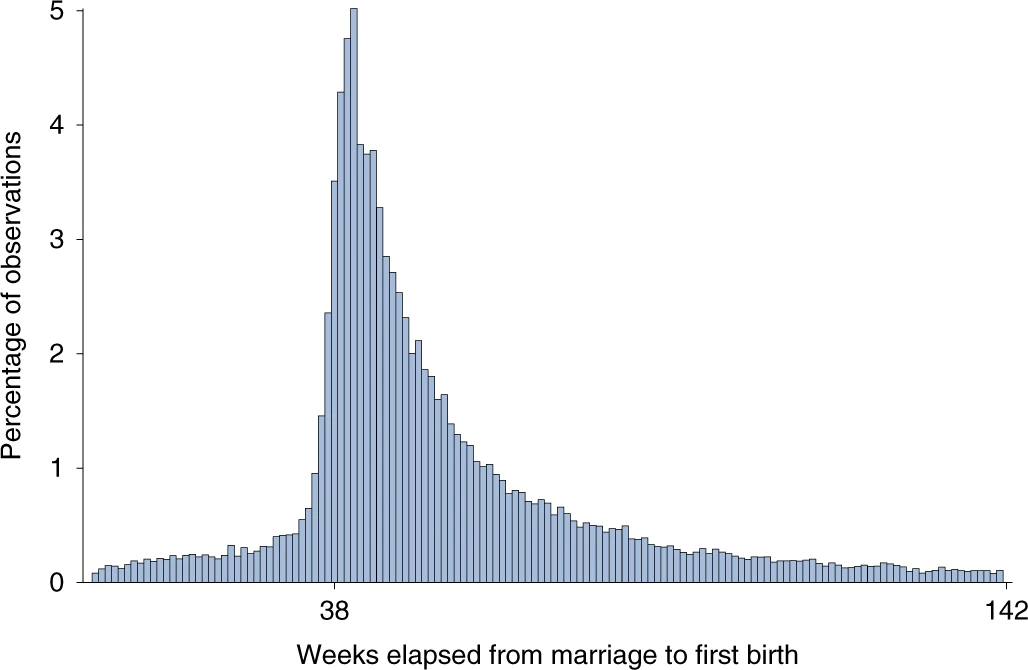
Weeks elapsed from marriage to first birth of 53,154 mothers in Quebec during the 17th to 18th century, truncated at 142 weeks.
Published: 01 April 2019

Oded Galor & Marc Klemp
Nature Ecology & Evolution volume 3, pages853–857(2019) Cite this article
Metrics details
An Author Correction to this article was published on 08 May 2019


Life-history theory suggests that the level of fecundity of each organism reflects the effect of the trade-off between the quantity and quality of offspring on its long-run reproductive success. The present research provides evidence that moderate fecundity was conducive to long-run reproductive success in humans. Using a reconstructed genealogy for nearly half a million individuals in Quebec during the 1608–1800 period, the study establishes that, while high fecundity was associated with a larger number of children, perhaps paradoxically, moderate fecundity maximized the number of descendants after several generations. Moreover, the analysis further suggests that [безымянныеevolutionary forces decreased the level of fecundity in the population over this period, consistent with an additional finding that the level of fecundity that maximized long-run reproductive success was below the population mean. The research identifies several mechanisms that contributed to the importance of moderate fecundity for long-run reproductive success. It suggests that, while individuals with lower fecundity had fewer children, the observed hump-shaped effect of fecundity on long-run reproductive success reflects the beneficial effects of lower fecundity on various measures of child quality, such as marriageability and literacy, and thus on the reproductive success of each child.

на картинке мода попадает на 42 недели, по-моему
оттуда:
Отметим про себя, однако, что сама проблема, если ее перевести на язык популяционной генетики, выглядит осмысленно.

Friday, January 22, 2021

The BIRTH Special Collection

Supporting women on their journey to motherhood
In 2014, the EU funded a COST Action that brought together over 120 scientists, practitioners, activists and policy makers from 34 countries, to advance research and practice in an area of great clinical and social importance, intrapartum care. This Special Collection presents six papers produced from the Action and illustrates the transformative research that was conducted by the Action.
August 5, 2020 Soo Downe, Jean Calleja Agius, Marie-clare Balaam, Lucy Frith

Understanding childbirth as a complex salutogenic phenomenon: the EU COST BIRTH Action Special Collection – PLOS Collections

July 29, 2020 Lucy Frith, Marie-Clare Balaam, Soo Downe

COLLECTION ARTICLES


Birth as a neuro-psycho-social event: an integrative model of maternal experiences and their relation to neurohormonal events during childbirth.

July 28, 2020Ibone Olza, Kerstin Uvnäs-Moberg, Anette Ekström-Bergström, Patricia Leahy-Warren, Sigfridur Inga Karlsdottir, Marianne Nieuwenhuijze, Stella Villarmea, Eleni Hadjigeorgiou, Maria Kazmierczak, Andria Spyridou, Sarah Buckley

Maternal plasma levels of oxytocin during breastfeeding – a systematic review

August 5, 2020Kerstin Uvnäs-Moberg, Anette Ekström-Bergström, Sarah Buckley, Claudia Massarotti, Zada Pajalic, Karolina Luegmair, Alicia Kotlowska, Luise Lengler, Ibone Olza, Susanne Grylka-Baeschlin, Patricia Leahy-Warren, Eleni Hadjigeorgiu, Stella Villarmea, Anna Dencker

A computational fluid dynamics modelling of maternal-fetal heat exchange and blood flow in the umbilical cord

July 28, 2020Dorothea Kasiteropoulou, Anastasia Topalidou, Soo Downe

Thermal imaging of the fetus: An empirical feasibility study

July 28, 2020Anastasia Topalidou, Garik Markarian, Soo Downe

How do midwives facilitate women to give birth during physiological second stage of labour? A systematic review

July 28, 2020Maria Healy, Viola Nyman, Dale Spence, René Otten, Corine Verhoeven

How much synthetic oxytocin is infused during labour? A review and analysis of regimens used in 12 countries

July 28, 2020Deirdre Daly, Karin CS Minnie, Alwiena Blignaut, Ellen Blix, Anne Britt Vika Nilsen, Anna Dencker, Katrien Beeckman, Mechthild Gross, Jessica Pehlke-Milde, Susanne Grylka-Baeschlin, Martina Koenig-Bachmann, Jette Clausen, Eleni Hadjigeorgiou, Sandra Morano, Laura Iannuzzi, Barbara Baranowska, Iwona Kiersnowska, Kerstin Uvnäs Moberg

Economic implications of reducing caesarean section rates – analysis of two health systems

July 28, 2020Patrick Moran, Charles Normand, Patricia Gillen, Francesca Wuytack, Michael Turner, Cecily Begley, Deirdre Daly

Wednesday, September 30, 2020

Developments in Demographic Forecasting is open access

Tuesday, June 30, 2020

Effects of Pornography Use and Demographic Parameters on Sexual Response during Masturbation and Partnered Sex in Women

better sexual outcomes
by Sean M. McNabney, Krisztina Hevesi, and David L. Rowland*

Department of Psychology, Valparaiso University, Valparaiso, IN 46383, USA
Department of Psychology and Education, Eötvös Loránd University, 1075 Budapest, Hungary
* Author to whom correspondence should be addressed.
Int. J. Environ. Res. Public Health 2020, 17(9), 3130; https://doi.org/10.3390/ijerph17093130
Received: 24 March 2020 / Revised: 27 April 2020 / Accepted: 28 April 2020 / Published: 30 April 2020
(This article belongs to the Special Issue Feature Papers: Intersections of Mental and Sexual Health in Youth and Adults)

Download PDF

Abstract


The effect of pornography on sexual response is understudied, particularly among women. A multinational, community-based sample of 2433 women at least 18 years of age completed a 42-item, opt-in questionnaire collecting information on demographic and sexual history characteristics, use of pornography during masturbation, frequency of pornography use, and sexual response parameters. Pornography use and average frequency were compared across demographic variables. We also examined how pornography frequency predicted differences in self-reported arousal difficulty; orgasmic difficulty, latency, and pleasure; and the percent of sexual activities ending in orgasm during both masturbation and partnered sex. On average, women using pornography were younger, and reported more interest in sex. Pornography frequency differed significantly by menopausal status, sexual orientation, anxiety/depression status, number of sexual partners, and origin of data collection. During masturbation, more frequent pornography use predicted lower arousal difficulty and orgasmic difficulty, greater pleasure, and a higher percentage of masturbatory events leading to orgasm. Frequency of pornography use predicted only lower arousal difficulty and longer orgasmic latencies during partnered sex, having no effect on the other outcome variables. Pornography use frequency did not predict overall relationship satisfaction or sexual relationship satisfaction. Overall, more frequent pornography use was generally associated with more favorable sexual response outcomes during masturbation, while not affecting most partnered sex parameters. Several demographic and relationship covariates appear to more consistently and strongly predict orgasmic problems during partnered sexual activity than pornography use.

Keywords: pornography; masturbation; partnered sex; sexual activity; sexual response; arousal; orgasm; orgasmic difficulty; orgasmic pleasure

Thursday, June 11, 2020

Demos cope & Akela missed

толкает речь
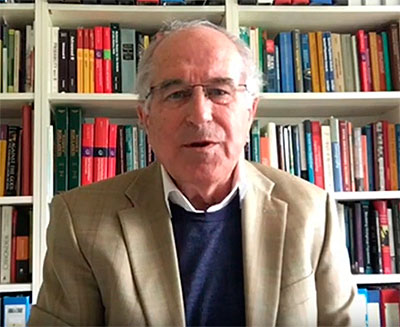
Демоскоп напечатал/повесил статью про награду Виллекенсу (она ниже, но ссылка в надежде на перемены), которая (статья) довольно странно выглядит.
Почему?
Последняя фраза: сегодня-сегодня, говорит о спешке. Кроме спешки, которая норма жизни, ещё количество авторов (не менее 3х), и в товарищах согласья нет. Некоторые субъективности просматриваются по тексту.
Чтобы сравнить с исходником, дам ссылку, там и других больше, которые составляют самостоятельную ценность. Но по непонятной причине демоскоп ссылок не любит.


Поздравляем Франса Виллекенса с престижной премией


Франс Виллекенс, ранее работавший в Институте демографических исследований общества Макса Планка (MPIDR), Нидерландском междисциплинарном демографическом Институте (NIDI) и продолжающий трудиться в Гронингенском университете (центр народонаселения, институт и региональных исследований, факультет изучения пространства) получил от Американской ассоциации изучения народонаселения (Population Association of America, PAA) премию имени Миндель Черняк Шепс (Mindel C. Sheps, 1913-1973) 2020 года.

Эта награда присуждается PAA и Школой общественного здравоохранения Университета Северной Каролины (UNC Gillings School of Global Public Health) раз в два года за выдающийся вклад в математическую демографию или демографическую методологию. Отдельные лица могут быть премированы на основании вклада в знания либо в форме одного произведения, либо в виде постоянного достижения высоких результатов. Номинанты должны служить примером самых высоких стандартов профессионального поведения. Среди прошлых получателей премии - Андрей Роджерс (2018), Вольфганг Лутц (2016) и Анатолий Яшин (2012). Первую премию получил Энсли Коул (1974).

Сама Миндель Шепс известна применением компьютерной имитации для изучения связи биологических детерминант рождаемости, репродуктивного поведения и наблюдаемых демографических величин. Вместе с Джейн Менкен (Jane Menken) она является автором книги Mathematical models of conception and birth, где стохастическими методами изучены различия между плодовитостью и рождаемостью, в частности, показана б?льшая (относительно аборта) эффективность контрацепции при контроле численности населения. Ей, между прочим, принадлежат слова: "Было бы хорошо подходить ко всем человеческим проблемам со смирением, с чувством ограниченности наших знаний и существования областей невежества, с готовностью признать ошибки, которые мы можем совершить ... Единственная надежда на решение проблем нашей планеты заключается в применении научных знаний и навыков в служении человеческому достоинству, свободе и благополучию. Ни наука, ни высокие идеалы не могут выполнять эту работу в одиночку". (Сказано при вручении почётной премии университета, который она закончила).

Виллекенс работал старшим научным сотрудником Института демографических исследований Макса Планка и директором NIDI. Ранее он также преподавал в центре по изучению народонаселения в Университете Гронингена. Его исследовательские интересы включают в себя демографическое моделирование и прогнозирование, в частности мультистатусное моделирование (таблицы смертности с учётом миграции, интерпретация характеристических многочленов и собственных значений матрицы перехода, таблицы брачности, историй жизни и динамика населения в целом), а также международную миграцию.

У Ф. Виллекенса сложились и давние связи с российскими демографами, и давний интерес к российской демографии. С чем связан этот интерес? Трудно сказать. Возможно, с работой в Венском институте системных исследований под руководством Андрея Роджерса, американского демографа, родившегося в Китае сына русских родителей, а возможно от встреч с советскими и российскими сотрудниками того же института. В статье 1998 года, написанной совместно с Е. Андреевым и С. Щербовым, прогнозировались: дальнейшее уменьшение численности населения России, его старение и географическое перераспределение с Дальнего Востока и Сибири на Северный Кавказ и в Поволжье.

Но не только чисто научной была деятельность Ф. Виллекенса, связывавшая его с Россией. В 1993 году им совместно с МГУ и Госкомстатом был проведен учебный семинар по возрастно-когорно-временной декомпозиции (age-period-cohort decomposition) демографических показателей. Проведение этого семинара было связано с целым рядом приключений: поездкой в Ульяновск, где потом открылась лаборатория социальной и медицинской демографии, а также поездкой в одну из соседних областей по приглашению местного облстата, - насколько я помню, это произошло в то день, когда был произведён обстрел Белого Дома, а вечером Е. Гайдар объявил о раздаче оружия, за которым среди ночи ушёл А. Г. Волков (ответственный за проведение семинара со стороны Госкомстата).

Сотрудничество с Россией со стороны Голландии и лично Ф. Виллекенса после распада СССР выразилось в виде совместных проектов Гронингенского университета и NIDI. Проекты финансировались NWO (Nederlandse Organisatie voor Wetenschappelijk), Голландским исследовательский советом финансирующим ведущих исследователей и управляющим голландской наукой через исследовательские программы и строительство инфраструктуры знаний) и INTAS (The International Association for the Promotion of Co-operation with Scientists from the New Independent States of the Former Soviet Union - международной ассоциацией по содействию сотрудничеству с учёными новых независимых государств бывшего Советского Союза).

Проекты изучали воспроизводство населения на территории бывшего СССР и демографическую ситуацию в России, основным источником данных послужили материалы микропереписи 1994. Была проведена конференция в Гааге, курсы по демографии в МГУ. Несколько человек подолгу стажировались в Гронингене, в том числе Е. Кваша. Были статьи, но больше не засчитываемые ныне в качестве публикаций труды (working papers). Сам Франс Виллекенс больше интересовался методикой анализа и прогноза.

В рамках проектов вышла известная брошюра А. Г. Волкова о программе микропереписи 1994. В проектах с голландской стороны участвовал, а порой и руководил ими, С. Я. Щербов. С российской - Волков, Дарский, Сороко, Бондарская, Харькова, Кваша, Ксенофонтова. В сложные 90-е годы была важна и техническая, и даже финансовая поддержка европейских коллег. Как отмечается в предисловии к книге, известной специалистам под сокращенным названием АДХ (Е. М. Андреев, Л. Е. Дарский, Т. Л. Харькова, Демографическая история России: 1927-1959. - М.: Информатика, 1998), "расчеты, лежащие в основе данной книги, выполнены и ее оригинал-макет подготовлен на оборудовании, предоставленном Отделению демографии [НИИ статистики Госкомстата] Центром изучения населения Гронингенского университета в рамках проекта, финансированного Нидерландской организацией научных исследований (NWO) в 1992 г. Авторы благодарны Центру изучения населения Гронингенского Университета (Нидерланды) за финансовую поддержку данного издания".

Примерно с 1998 по 2001 г. был проект по программе TACIS (Technical Assistance for the Commonwealth of Independent States, Техническая помощь Содружеству Независимых Государств - программа Европейского союза по содействию ускорению процесса экономических реформ в СНГ) для нужд Росстата. В нем участвовал Гронингенский центр и Отделение демографии НИИ Росстата. Большая группа статистиков изучала организацию дел в Нидерландах. Главной целью этого сотрудничество была разработка системы анализа и прогноза для Отдела населения Росстата. Система была сделана и работает до сих пор.

Сотрудничество с СНГ не ограничивалось Россией. В 1995 году Ф. Виллекенс посетил Минск, где был тепло встречен ведущим белорусским демографом Л. П. Шахотько, с которой он обсуждал технику учёта ВИЧ-инфекции в Белоруссии, а также другие проблемы, интересовавшие белорусских коллег.

Все эти многообразные формы сотрудничества неизменно были связаны с дружественной позицией Франса Виллекенса. Так что сегодня у нас есть все основания сегодня порадоваться вместе с ним, поздравить его с заслуженной престижной наградой и пожелать ему дальнейших творческих успехов.

COVID-19 внес свои коррективы в церемонию вручения премии, оно произошло в соответствии с правилами карантина, но все могут поприсутствовать на этой церемонии, перейдя по ссылке.

Monday, May 4, 2020

population


Friday, April 3, 2020

Covid-19

Статьи, подобранные Академией — см по ссылке
с возможностью скачивания
Covid-19
As always, we appreciate your help in creating and sharing this work. If you know of a paper that should be featured, please email us at coronavirus@academia.edu.

Tuesday, March 3, 2020

British Society for Population Studies Annual Conference 2020

архаичное лого

Call for Papers: British Society for Population Studies (BSPS) Annual Conference 2020

Deadline: 20/04/2020


The 2020 BSPS Conference will be held at the University of Leicester, Stamford Court, 14‐16 September. All Conference sessions will be on-site, where Conference catering & accommodation will also be available. Booking forms will be available from late May, together with a provisional timetable. It is anticipated there will be one plenary lecture plus a plenary panel.

There will be a full program of simultaneous strand sessions of submitted papers: proposals and abstracts for papers & posters are invited across the entire demographic & population studies spectrum. Whilst any approach is welcome, a submission should have a demographic or population studies focus. Empirical submissions for oral presentations should include some results, these may well be preliminary at the time of submission.

The viability of stand‐alone strands & sessions will depend on sufficient submissions being received.

Information updates on the Conference will be posted to the BSPS website as available. 


Please submit online by midnight on Monday 20 April. A short abstract of up to 250 words is requested. Empirical submissions should cover research question, methods, data, results or preliminary results, & potential applications. Extended abstracts are optional & must be sent separately; these can help in the final selection of papers. Up to 4 double‐spaced A4 sheets in PDF format only may be emailed to pic@lse.ac.uk with ‘BSPS extended abstract’ and the intended strand or session in the title line. Extended abstracts are not a substitute for formal online submissions: this process should still be completed. Organizers may request further details of submission before final decisions are made. Short abstracts will appear on the Conference website. Extended abstracts are for information purposes only.

Choose an appropriate strand or session and submit online 


If you are unable to submit online, please contact pic@lse.ac.uk for alternative arrangements.

Oral & poster submissions are given equal weight. Final decisions on papers & posters accepted for presentation will be emailed to submitting authors by late May.
Link:

Link to Additional Information and Online Submission