Showing posts with label расизм. Show all posts

Friday, March 29, 2024

Racial disparities in disability and in long and happy living in America

February 26, 2024 Anthony R. Bardo and Jason L. Cummings

The racial divide is still profound in the U.S., in terms not only of survival, and survival without disabilities, but also of happiness. Anthony R. Bardo and Jason L. Cummings document some of these disparities.


Now that they are growing old, have US baby boomers fulfilled the aspirations towards more positive and equitable life circumstances that characterized their youth, especially through the Civil Rights movement? One way to address this question is to focus on life expectancy, the number of remaining years that an average person can expect to live, and to analyze racial disparities in length of life.

Trends in American longevity and physical disability


In 1970, life expectancy at birth in the US was approximately eight years longer for Whites than for Blacks: 71.7 vs 64.1 years, respectively. By 2010 this racial gap had narrowed to slightly less than four years: 78.9 vs. 75.1 years, respectively. More recent data are difficult to compare because of the pervasive effects of the COVID-19 pandemic, but national vital statistics suggest that some progress seems to be underway.

Both survival increase and convergence are good news, of course, but it is also important to consider if these additional years are lived in good health, both in general and by subgroup. For instance, let us consider active life expectancy at age 65, or remaining years of life past the 65th birthday expected to be lived without a disability. Between the 1980s and 2010s, it increased by 2.8 years for White Americans (from 12.2 to 15.0 years) and 2.2 years for Black Americans (from 9.8 to 12.0 years). This means that the percentage of remaining years of life expected to be lived without a disability remained approximately constant, but at different levels: 76% for White people but only 67% for Blacks (Freedman & Spillman, 2016). In other words, increases in life expectancy were accompanied by an equivalent number of healthy and unhealthy years, and racial disparities remained unchanged.

Racial disparities in long and happy living


While life expectancy and active life expectancy are key objective indicators of quality of life, at high levels of development, additional indicators of well-being can also be considered. One such indicator links this survival to subjective well-being, a facet of societal progress that has recently garnered wide-spread attention (Layard, 2010). Until now, few researchers have tried to determine happy life expectancy, i.e., how many years an individual can expect to live happily. This is precisely what we did in a recent study, breaking our results down by physical disability status, sex, and race (Bardo and Cummings 2023) based on representative data from the 2010 and 2012 waves of the Health and Retirement Study (n = 16,614) of the U.S. population aged 50 years and older.

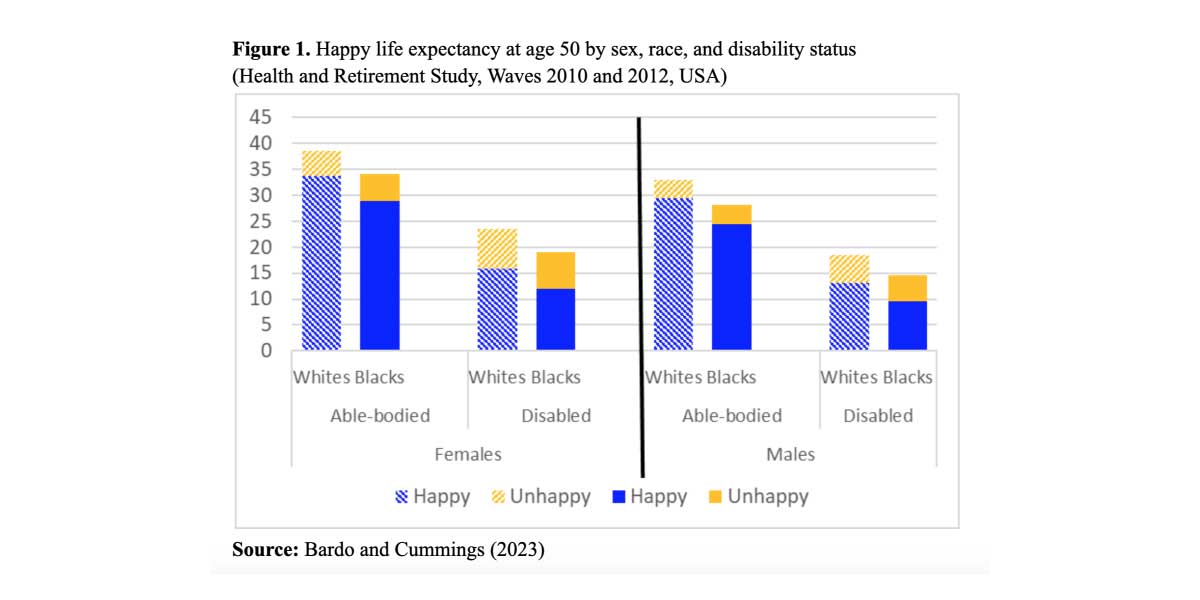
The emergence of health problems is, of course, a normal and anticipated part of the aging process, and, within limits, worsening health is not a strong determinant of happiness in later life, because individuals assess their quality of life based on their expectations and ability to adapt or adjust to changing circumstances. However, the development of a disability reflects a major life change, with clear and negative consequences for both quality of life and longevity. For example, at age 50, White Americans with a disability can expect to live happily for 50% fewer years of their remaining life than their able-bodied peers. The negative influence of disability on happy life expectancy is exacerbated for Black Americans who experience a 60% reduction in remaining happy years of life when faced with a disability. These findings portray the compounding effects of cumulative (dis)advantage and circumstances that people with multiple intersecting identities (e.g., Black, male, disability) uniquely experience (Figure 1).
Unfortunately, in the USA, racial disparities in key resources that promote health, happiness, and longevity remain as wide today as they were in the 1970s, as, for example, in the case of the Black-White gap in median household income. Do socioeconomic differences account for racial disparities in happy life expectancy? As our analyses indicate, they do for healthy Black women but not for healthy Black men. The reasons behind this unexpected result are not self-evident, and merit further analysis.
 

Conclusion


There is no simple solution for achieving equity in opportunities to live a long, healthy and happy life. We focused on later life outcomes, but these are the consequences of cumulative chronic exposure to various race-related forms of stress and discrimination experienced throughout life, including uneven access to high quality primary/secondary education and safe housing in childhood, unequal access to quality jobs and affordable and safe housing during adulthood, and likely the high risk of imprisonment for young Black males (Gilbert et al., 2016).

It is high time that America turned attention towards the disparities in length and quality of life that persist in the land where the pursuit of life, liberty, and happiness is a supposedly unalienable right.

References

Tuesday, November 28, 2023

Abortion and race in Brazil

National Abortion Surveys 2016 to 2021

Debora Diniz Marcelo Medeiros Pedro H. G. Ferreira de Souza Emanuelle Goés ABOUT THE AUTHORS


We examine racial differentials in abortion among women in Brazil using data from three editions of the Brazilian National Abortion Survey (PNA), 2016, 2019 and 2021. We test the difference in means in data from separate surveys, combined surveys without reweighting, and combined and reweighted surveys. We also use logistic models for the chance of having an abortion. The results indicate that there is a consistent racial differential in the three editions of PNA, with the percentage of abortions among Black women being higher than among white women. In the combined and reweighted surveys, among Black women of all ages the probability of having had an abortion is 11.03% while among white women it is 7.55%. This means a difference of 3.5 percentage points, which translates into a 46% higher probability for Black women, statistically significant values for a 5% interval. Logistic regressions produce similar results, with an average predicted probability of 12.61% for Black women and 8.90% for white women, also significant. Racial differences remain statistically significant for various combinations of PNA editions. However, in the separate surveys, the difference in means tests are only statistically significant in 2016. Black refers to the group formed by Black and Brown women (pretas and pardas). Due to the small sample size, it is not possible to say much about the differences with Asian and Indigenous women.

Key words:

Abortion; Color or race; National Abortion Survey; Brazil

Thursday, November 2, 2023

Black–white intermarriage in global perspective

Background: Intermarriage is a leading indicator of racialized relations. Scholarly literature has focused on the United States and shows that black–white intermarriage is especially low within that country. Surprisingly, there are no studies that compare black–white intermarriage across a broad range of countries around the world.

Objective: How does black–white intermarriage compare in Brazil, Cuba, France, South Africa, the United States, and the United Kingdom circa 2010?

Methods: We use odds ratios of endogamy and log-linear analysis of large micro-level datasets for each country.

Results: Interracial marriage varies widely across countries. Despite increases in recent decades, US black–white intermarriage levels are the second lowest among the six countries, although they are markedly higher among cohabitors. Intermarriage rates (opposite of endogamy) are high in the Latin American countries, moderate in the European countries, low-moderate in the United States and extremely low in South Africa. Controls for structural factors have minor effects, suggesting that national differences are mostly related to cultural factors.

Conclusions: Our findings suggest that national differences are primarily from differences in racial attitudes and tolerance toward intermarriage, specifically the willingness of blacks and whites to cross racial boundaries in marriage. We also find that although the effects of historical laws prohibiting racial intermarriage have waned, they continue to account for especially strong taboos against intermarriage in the United States and especially South Africa.

Contribution: This is the first systematic comparison of black–white marriage across a broad set of countries around the world. We find that countries differ widely in the extent of black–white intermarriage.

Friday, September 30, 2022

What Reading 220 History Textbooks Taught One Scholar About Racism in America


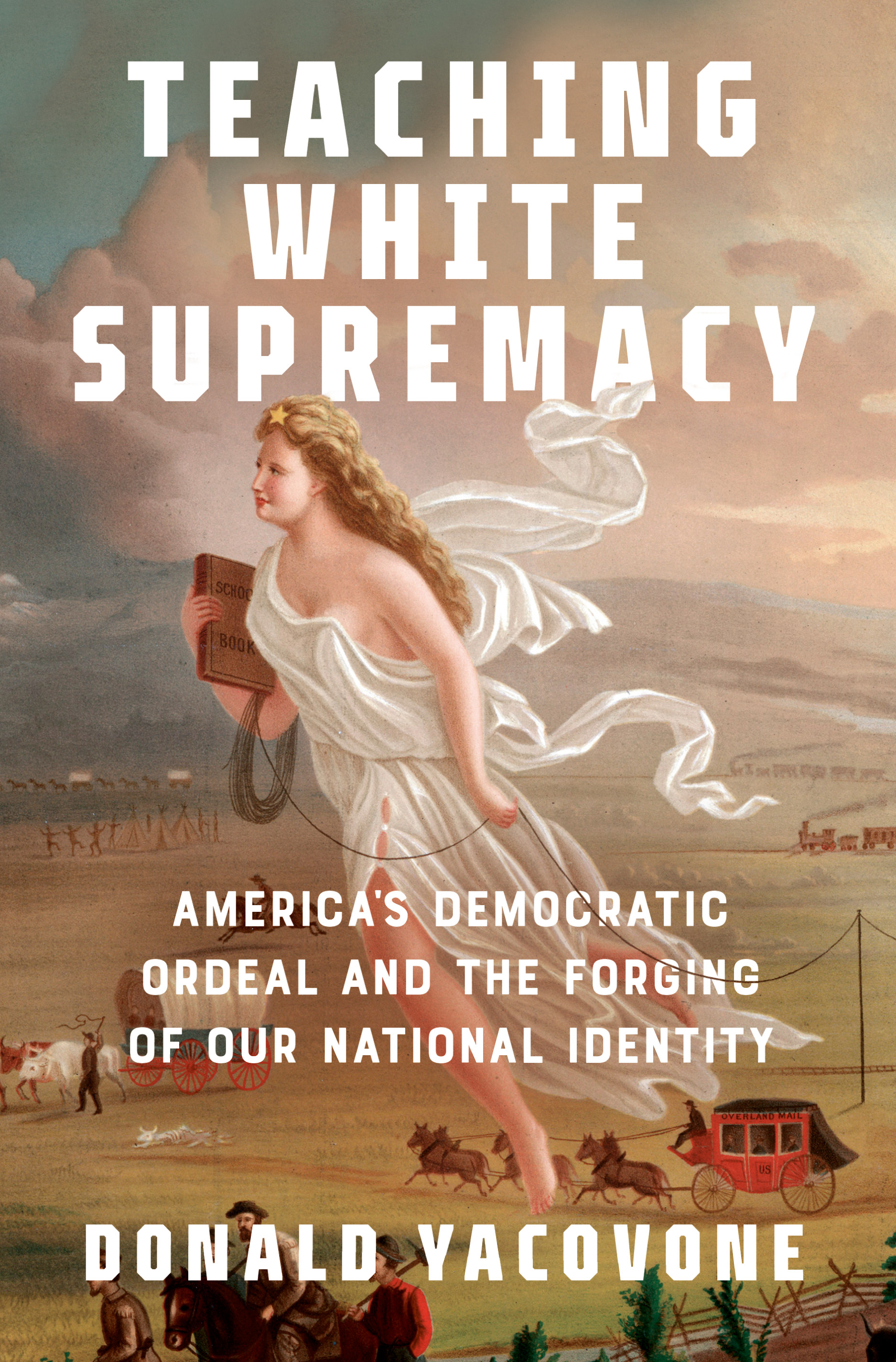
At a time when there’s a national debate over critical race theory and how much of America’s worst moments should be taught in American schools, a new book seeks to provide some context for how history textbooks traditionally came to focus on the experiences of white Americans and downplay the experiences of Black Americans.

In Teaching White Supremacy: America’s Democratic Ordeal and the Forging of Our National Identity, out Sept. 27, Harvard University researcher Donald Yacovone analyzed 220 history textbooks from 1832 to the present day. Among his biggest takeaways, he found that textbooks mostly focused on national politics. Because African Americans were underrepresented in that arena, their stories were often left out. “There’s a very limited understanding of what history is,” Yacovone tells TIME.

Here, Yacovone talks about the most surprising bits of information he found in these textbooks, and how the books are a window into how America presents itself to the next generation of leaders.

TIME: Why did you decide to write a book on history textbooks?

YACOVONE: I don’t want people to think I’m some disaffected, leftover 60s radical who can’t stand America and is out to get it. That’s not me. And that’s not how this book happened. It was completely by mistake. I was writing another book. I needed just a brief respite, so I decided to go over to the Gutman Library at the School of Education at Harvard and examine a couple of history textbooks to see how they dealt with the abolitionists. Well, I had no idea what I was walking into. I went to the now defunct Special Collections Division at the library, and the head of the department, Rebecca Martin, introduced me to their collection of textbooks—over 3,000. And I was just stunned. I had no idea they had this collection.

Overall, did you find a recurring theme throughout these textbooks?

The overwhelming majority of them treated the introduction of African Americans in American society as a “problem.” The further you go into the 20th century, this almost Evangelical theme of “the problem of a Negro” and how much he needed to be controlled because he was so inept and ignorant became the guiding theme of American history textbooks. After going through this whole collection, I thought, “Wow. This really isn’t a study of textbooks. It’s a study of national identity because the purpose of textbooks is to acculturate younger people into American ideals, American destiny, and what is valued and honored by Americans.” And what these books were saying well into the 1960s was that it’s a white man’s world.

How did these textbooks distort facts about historical events?

Textbooks in the early 20th century said Reconstruction was a gross error, that it tried to elevate Black people who did not have the intellectual ability to govern, to participate in society. They needed to be dominated. This becomes the overwhelming theme of almost every single textbook from 1900 until the 1960s.

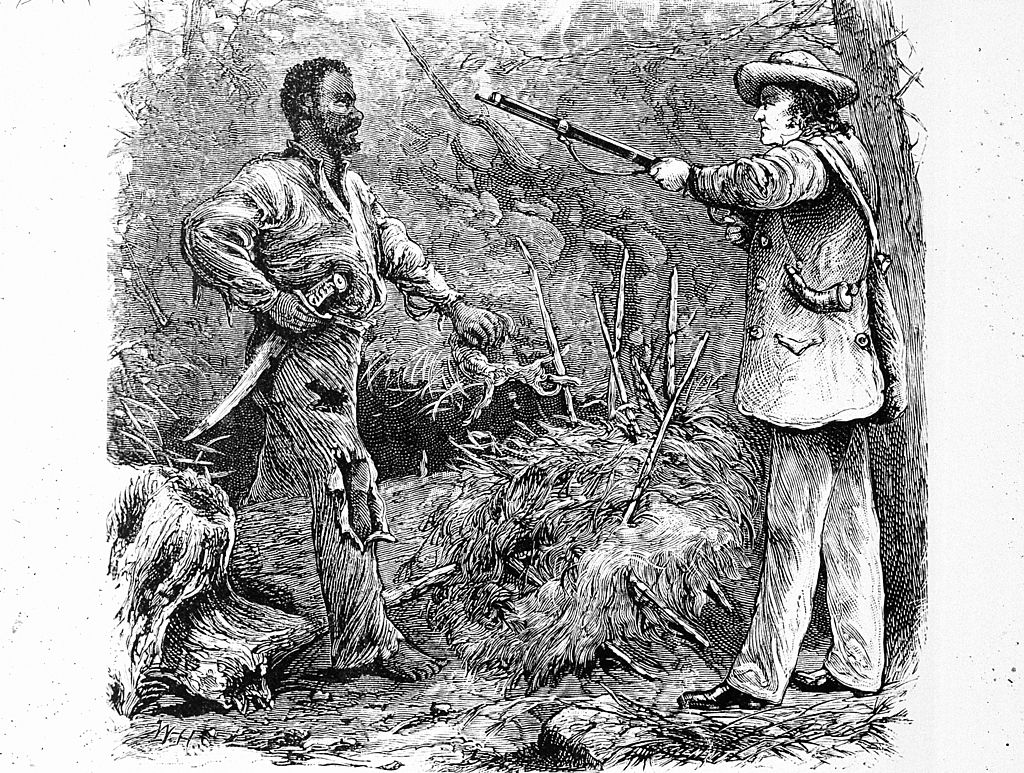
A circa 1831 illustration of the discovery of Nat Turner, who led an uprising of enslaved people in August 1831.

Nat Turner [who led a rebellion of enslaved people in Virginia] is either a legitimate expression of resistance to enslavement, or the obvious threat to white domination. John Brown [who initiated a raid with abolitionists on the U.S. arsenal at Harpers Ferry] is either an incendiary, insane anarchist who caused the Civil War, or he’s a heroic figure who represents the impossibility of slavery continuing. The overwhelming number of textbooks clearly depicted him as crazed, lethal and a threat to the Republic—the single most important cause of the Civil War. So the shift is being made from blaming the South’s defense of slavery for the Civil War to Northern agitation, particularly John Brown, for causing the Civil War.

In the pre-Civil War era, one is struck by how few images of African Americans there are in textbooks. These books didn’t consider people of African descent to be important, so they just weren’t included. Almost all of these textbooks spent maybe two sentences on the introduction of slavery in Virginia in 1619. They spent far more time discussing the introduction of single women to become wives of white settlers than they did on the introduction of slavery.

You feature a 19th-century New York editor named John H. Van Evrie, often called “the nation’s first professional racist.” Why did you focus on him in your book?

After I had gone through white supremacist attitudes in all of these textbooks, I said, where does it come from? I spent a whole summer reading digitized newspapers and found references to Van Evrie all over the country. In one year alone, he ran advertisements in 1,400 different American newspapers. He created a small empire in Manhattan, where he published his own books, innumerable pamphlets, poetry, and two newspapers, which reached thousands of people. His major theme was the necessity of having the African in American society because he was, according to Van Evrie, born to do the white man’s work. He was designed by God and nature to do the white man’s work. The textbooks that I read bore out everything he argued.

What myths did you set out to debunk with this book?

The central one would be northern responsibility for the creation of white supremacy. It’s not a southern creation; it’s a white northern creation. It is an American problem. A majority of Americans live outside the South, not in the South. The publishing industry grew up in Boston, New York, and then a little later, in Chicago. Those cities dominated the distribution system. Over 90% of the authors who wrote these textbooks were northern-born or certainly northern trained at northern universities.

A lot of people believe the Lost Cause narrative—the myth that the Civil War was fought for states’ rights not slavery—came from the South, but your book shows that publishing houses in the North put out a lot of books about the Lost Cause of the Confederacy.

I was actually stunned when I discovered that the first expression of Lost Cause ideology didn’t even come out of the South; it came out of the North. The Daughters of the Confederacy, famed for its promotion of the Lost Cause and segregation—well, guess what? Whom did they reprint? John H. Van Evrie.

How does your book provide context for the controversy over whether critical race theory is taught in schools?

The Trumpers have created this thing, which doesn’t really exist, to be a substitute for discussing race and racism. They don’t want that. This is indicative of the psychic crisis that many white Americans are undergoing because of the transformation of American culture. And one of the major reactions is this resistance to the teaching of the past. This is not stuff that’s made up. Slavery is real. Racial domination is real. But they’re doing their best to deny it, to affirm the innocence of whiteness. And it’s not going to work.

Tuesday, September 13, 2022

Abortion Access as a Racial Justice Issue

List of authors.Katy Backes Kozhimannil, Ph.D., M.P.A., Asha Hassan, M.P.H., and Rachel R. Hardeman, Ph.D., M.P.H.
Article

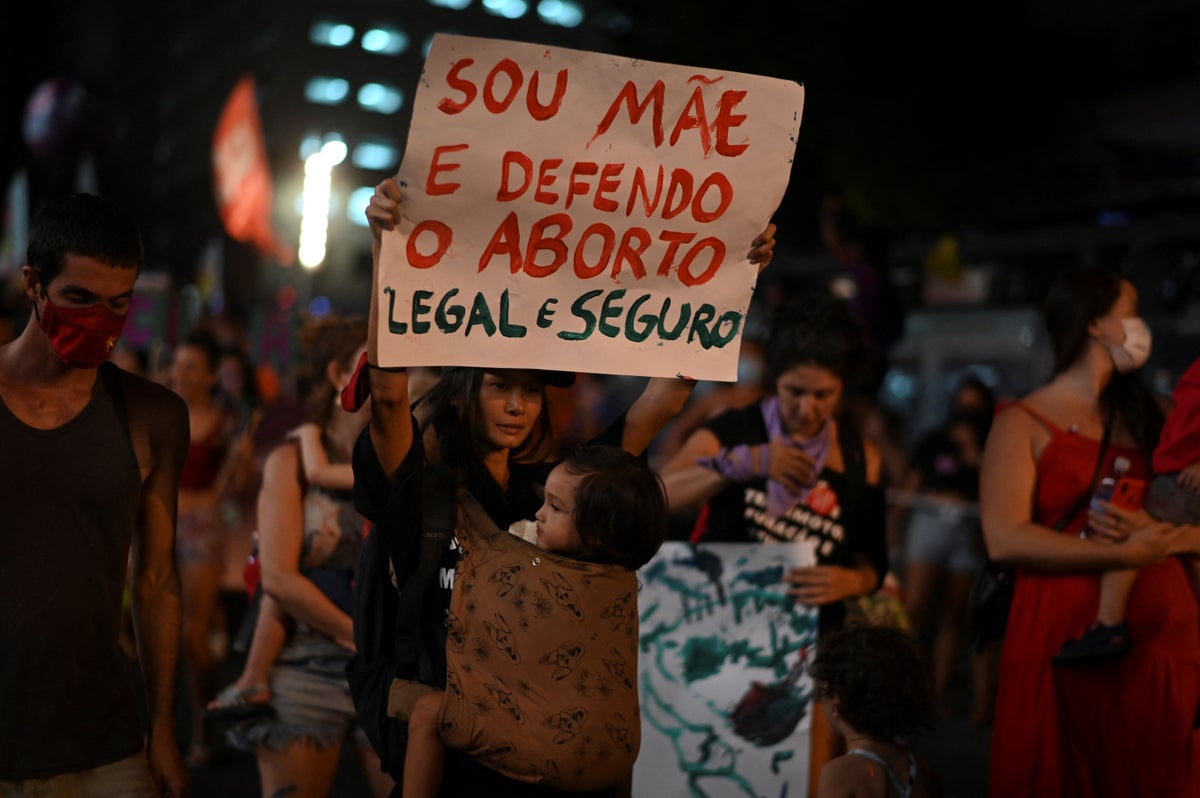
Restrictions on reproductive bodily autonomy — the freedom to decide whether, when, and how to have a child, with whom, and under what circumstances — have long been leveraged to oppress and control persons and communities that are devalued by racist, classist, or ableist societies. On June 24, 2022, in the landmark Dobbs v. Jackson Women’s Health Organization decision, the U.S. Supreme Court revoked the right to abortion. Even though abortion is an essential component of comprehensive reproductive health care that has been protected in the United States for nearly 50 years, future access will be severely limited or denied in the 26 states that have banned or are likely to ban abortion care.

Decisions regarding the legal status of abortion and other reproductive health services reflect the status of civil rights for anyone with the capacity for pregnancy, but they have a particular resonance for Black and Indigenous people living in the United States, who have experienced reproductive oppression for centuries. The Dobbs decision rolls back fundamental rights for many people, and it is a direct assault on efforts to improve racial equity in health care. Indeed, abortion access is fundamentally a racial justice issue. We believe that clinicians, health care delivery systems, and policymakers should approach it as such.

The United States was built, in part, on racially differentiated policies toward reproduction. During the 256 years when slavery was legal, the country had a substantial economic interest in the fertility of Black people; increased fertility meant a larger labor supply and higher property value. Slaveholders therefore condoned rape of enslaved people, withheld from them knowledge about birth control, allowed gynecologic experimentation on them without anesthesia, and provided “incentives” to coerce them into reproducing. Abortion was an important tool leveraged by enslaved pregnant people to control their fertility and prevent future children from experiencing the horrifying and inhumane conditions of chattel slavery.

After emancipation and during the Jim Crow era, U.S. economic interest in Black bodies shifted. Once Black people were no longer a source of free labor, “eugenic” depopulation policies informed by White supremacist ideology began emerging in both government and clinical care. In 1927, the Supreme Court legitimized eugenic sterilization laws in Buck v. Bell, a case that has never been explicitly reversed. Forced sterilization, colloquially known as “Mississippi appendectomy,” was commonplace in the 20th century, with some estimates suggesting that as many as 70,000 people were involuntarily sterilized by government-sponsored family-planning programs.

Other racialized groups in the United States have also experienced reproductive injustice; for instance, between the 1930s and the 1970s, as many as one third of Puerto Rican women underwent forced sterilization, commonly referred to as “la operación.” Atrocities such as this are not confined to the past: in 2020, Immigration and Customs Enforcement forcibly sterilized female migrants in federal detention facilities who were seeking asylum at the southern U.S. border. Also, in the mid-20th century, Puerto Rican women were enrolled in clinical trials of hormonal birth control without their knowledge and used as test subjects for contraceptives that had not yet been approved by the Food and Drug Administration.

U.S. policy toward Indigenous peoples has promoted erasure by means of genocide, rape, family separation, boarding schools, language eradication, cultural assimilation, and reproductive exploitation. In the 1900s, many states passed laws allowing sterilization of the “feeble-minded,” which was practiced extensively on reservations and at government-run boarding schools, where Indigenous children who had been forcibly separated from their families were raised without connection to their tribal communities. In addition, tribal membership rules informed by eugenic concepts and U.S. government policy may infringe on reproductive freedom: to be a member of a tribe with treaty rights negotiated by their ancestors, many Indigenous people must demonstrate a minimum “blood quantum” from a particular tribe. Such requirements force Indigenous people to consider reproductive choices in the context of their potential children’s eligibility for tribal membership; children born as a result of rape or unwanted pregnancy may be denied enrollment in the same tribe as their birth parent, if the rapist or other parent does not have the requisite blood quantum from the same tribe. With every reproductive choice denied, Indigenous peoples and tribes move closer to erasure.

Systemic racism affecting reproductive health shows up today in maternal mortality statistics; Centers for Disease Control and Prevention data show that Black and Indigenous people are two to four times as likely as White people to die during pregnancy or around the time of childbirth. Abortion, which is now criminalized in many U.S. communities, is safer than pregnancy and delivery, especially for Black and Indigenous people. Recent estimates suggest that a nationwide abortion ban would increase maternal mortality by 21% overall and by 33% among Black Americans.

Racial and ethnic disparities in reproductive health outcomes follow from inequities in access to care. Owing to a wide range of factors (e.g., interpersonal racism, distance from health care institutions, health insurance status, employment benefits, state policies), Black and Indigenous people, immigrants, and rural residents have comparatively limited access to abortion care and other reproductive health services. In communities where people can no longer readily obtain contraceptives or terminate an unwanted pregnancy, access to prenatal services and obstetrical care is declining, with the steepest decreases occurring in communities — both rural and urban — that are predominantly Black, Indigenous, or Latinx. When people can’t prevent or terminate an unwanted or medically risky pregnancy, can’t easily access prenatal care, and live hundreds of miles from a hospital with an obstetrical unit, clinicians struggle to prevent tragedies and people’s health suffers.

As restrictions on abortion increase, racial injustice in health will persist and worsen. The adverse health effects of the Dobbs decision will fall hardest on patients, clinicians, clinics, health care systems, and communities in states with the highest maternal mortality and the biggest racial inequities in maternal and reproductive health. For example, Michele Goodwin has noted that in Mississippi, a Black person is 118 times more likely to die from carrying a pregnancy to term than from having a legal abortion. Indeed, Black and Indigenous people face disproportionate health risks when they become pregnant, and the places where these risks are highest are also those where it’s nearly impossible to receive or provide the health care patients may need to protect their life, their safety, or their family.

The Dobbs decision raises the stakes for clinicians, health care administrators, and policymakers who value racial justice in health. Reproductive health care restrictions exacerbate untenable racial inequities in health across the life span, not just during pregnancy. Abortion is health care, and the Guttmacher Institute estimates that one in four people with the capacity for pregnancy have needed or will need an abortion. Some patients who need abortions, racialized by a society that devalues them, may experience tragic consequences if they do not get the abortion they need. Clinicians can help by providing abortion care, supporting others who do so, and advocating for safe, dignified, humane reproductive health care services to be provided in their health care systems, to the extent allowed by state law.

The organization SisterSong defines reproductive justice as “the human right to maintain personal bodily autonomy, have children, not have children, and parent the children we have in safe and sustainable communities.” Access to reproductive health services — including abortion — is essential for protecting the full humanity of anyone with the capacity for pregnancy. In the United States, the full humanity of Black and Indigenous people has long been denied. Indeed, statistics related to health, education, and poverty reveal the racism that underpins U.S. politics and policies. Generations have fought against these unjust tenets to ensure and advance civil rights, and the fight continues. We believe that clinicians have a professional obligation to champion policies that improve the lives of their patients and potential patients, including doing whatever is in their power to expand and protect abortion access. Abortion access is a racial justice issue, and it is today’s civil rights battle worthy of tenacious engagement by professionals in medicine, policy, and public health.

Monday, May 31, 2021

100 Years After the Tulsa Race Massacre

Meet the Forensic Anthropologist Searching for Victims' Remains


BY OLIVIA B. WAXMAN MAY 27, 2021 10:02

A century after the 1921 Tulsa Race Massacre (или см сюда), during which a white mob torched Black homes and businesses in the Oklahoma city’s Greenwood area, which was also known as Black Wall Street, some basic questions about the event remain unanswered. Some estimates that say up to people 300 died, but information on the victims’ identities and exact numbers is missing.

Then, last fall, a clue was discovered: after years of researchers searching for evidence, 11 coffins were found in the city’s Oaklawn Cemetery, and scholars believe they may contain victims’ remains. On Tuesday, the anniversary of the tragedy, in hopes of finding some resolution, a full excavation of the site will begin and is expected to last well into the summer.

“This first excavation is probably not the last, because this site isn’t the only site of interest,” says Phoebe Stubblefield, a University of Florida forensic anthropologist and a leader of the dig. “If my colleagues and I confirm this summer that these remains are our race-massacre dead, it doesn’t shut the door on what happened in that history.”

Stubblefield, 52, was recruited for this investigation about two decades ago, in part because her parents were Tulsa natives and she grew up visiting family there in the summer. But she didn’t realize she had a personal connection to the massacre until she took the job.

She spoke to TIME about about her family’s ties to this history, what the excavation entails, and how the search for the remains of Tulsa Race Massacre victims fits into a long and troubling history of the careless treatment of Black bodies.

TIME: In general, What does a forensic anthropologist do?

STUBBLEFIELD: I help people who investigate deaths. I help them get an idea what the cause of death is, or I help them identify who the person is, if all that’s left are bones.

Are there certain tools of the trade that forensic anthropologists use that are key to doing your work?

We use a lot of measuring devices. We do a lot of photography. We use infrared light to examine wounds, for example, or bruises or tattoos. And we spend a lot of time trying to figure out how better to improve our analyses. My research is focused on trying to find a better way to estimate time since death; trying to better establish a connection to the community for anatomical gifts, skeletons preferably, because our parent field, physical anthropology, has its history; and in grave piracy. We often lack skeletal remains for any purpose—teaching, research. We lack remains that have clear sources, you know, someone donated them or they were purchased, back when you could easily purchase a skeleton.

We’re seeing those issues play out with the controversy over the recently discovered remains of a MOVE bombing victim, right?

I probably have not one colleague, at least not in my generation or older, who can say they trained without being exposed to unprovenanced skeletal remains. The MOVE remains had provenance, they were just being used without any notion of what would the descendants or their families want. And I get how that happens because that’s part of our history with the use of human remains in the United States. [There’s a long history of using] the remains of Black people for anatomy instruction without any kind of consent. Probably by 2000, we’ve shifted away from just using remains willy-nilly and have embraced as a discipline more—not fully—the idea of making sure someone associated with those remains gave consent.

How did you get interested in becoming a forensic anthropologist?

Our house [in Los Angeles] had that collection of encyclopedias that people used to always have. And part of that collection [was] a Time-Life series on natural history; one of the books was on the Neanderthal. So some of the vocabulary of human paleoanthropology I was familiar with before I got to college because of that series. Sometime late my freshman year I sat down with myself and looked at my academic record and considered which courses I was enjoying quite a bit, and anthropology was it.

Your family has a connection to Tulsa and the massacre that happened there 100 years ago. To what extent did that family history factor into your decision to go into this field or pursue certain projects in this field perhaps once you were in it?

The Tulsa race massacre wasn’t talked about, so I didn’t know about it until my colleague Lesley Rankin-Hill said around 1997, “There’s this project to investigate this race riot,” and I said, “What race riot?” The project needed another forensic anthropologist, and I’d visited Tulsa all my life every summer growing up, and she knew my parents were from there, so she thought I’d be interested. The first thing I did was I call home and said, “You know, there was this race riot,” and my mother said, “Yes, your Aunt Anna lost her house.”

How does it feel to gear up for this next stage of the dig in on June 1? What’s going through your head?

I’m hoping and praying we find the right people. I’m just hoping and praying because this, you know—I’m contributing to my parents’ city. I still have cousins there, but they’re not directly involved. Sometimes I’m reminding them that the investigation’s going on.

I just pray that we find the right people because we’ve been looking for them for a long time and we finally got to this point where we could actually test the locations that witnesses said are important. I just hope we get to all of them.

What’s the state of the investigation at the moment?

In October of last year, we found an actual mass grave—a collection of coffins packed in close together, perhaps stacked on top of each other. We have not excavated all of it. We excavated one part and found multiple plain caskets packed in together, and then a few masculine bones that were robust, [which] makes me think we might find a collection of men. We were looking for 18 adult males packed into one area, or nearly one area, to represent that event, where the people we call the Original 18 were buried in Oaklawn. All that information disappeared more than 20 years ago because records for Oaklawn Cemetery conveniently disappeared.

We literally just scratched the surface, so we’re going to go back and test all of them, and see if we can tell who’s in there, you know, if time and preservation allows.

What does testing involve?

We’re bringing in a building so we can have a temperature-controlled area to see what skeletal remains are there and look for signs of gunshot wounds, because most of the individuals [killed in the massacre] died from gunshot wounds. We’ll look for signs of burning that’ll mainly be based on the positioning of the bones in the casket. If they’re still positioned in the pugilistic pose [a defensive posture], then we’ll have an idea that that’s them. Other signs of burning won’t preserve well, and so mainly it’s the gunshot wounds. We’re looking for the circumstances to occur together— mostly males, with gunshot wounds, in one spot at Oaklawn.

Where does this latest stage fit into the history of investigating the history of the Tulsa race massacre?

So 20 years ago, Scott Ellsworth, who did his dissertation research on the Tulsa Race Riot, got together with the state archaeologists and they started interviewing survivors that were still living, and they collected narratives and sorted them for possibilities of being useful or accurate, and came up with three locations that had a high likelihood of having either burials or mass graves. From newspaper documentation, we knew on June 2 that they were burying people they were calling insurrectionists in Oaklawn Cemetery, in the Black potters’ field. We’ve surveyed another site, Newblock Park, multiple times and have not gotten good signals. Rolling Oaks is another area particularly of interest, because we haven’t surveyed it yet; [in there] would be individuals who have not been identified, and who knows the state of remains, because these would be people probably hidden in burned debris.


How are you hoping the excavation beginning on June 1 helps answer unanswered questions about the massacre?

Technically the whole issue of “this event happened” is one of the questions that we’re testing. I have no doubt. There are images, right? But the people of Greenwood have lived for a long time with multiple narratives about this race massacre having occurred, part of that narrative being, “How many black individuals were killed? How many were lost?” And we don’t know, because the National Guard did not allow any funerals to occur. I don’t know why they did that, but it made it difficult to come up with a count of casualties as a result.

Having this investigation will give us some resolution on how many people ended up in that Oaklawn Black potters’ field area. We hope to have DNA analysis to assist us with identification. I want to validate the claims of Greenwood residents who long said we need to find these people. I am looking forward to contributing their story back to the living. This is their time to have their appropriate recognition.

What is it like to be a Black woman doing this research?

It’s humbling and I’m grateful because I didn’t go into forensic anthropology to work on the Tulsa race massacre. I went into forensic anthropology because I wanted to tell people stories from their skeletons. I’m telling people’s stories, speaking for the dead and sometimes their families. And so I’m grateful to live long enough to make it now because 20 years ago, we didn’t get to test a single one of our sites; everything just fizzled out. I did not expect we would get a chance.

могут поворить?

Saturday, February 27, 2021

Community Amid COVID-19

With Free Medical Clinics and Patient Advocacy, the Black Panthers Created a Legacy in Community Health That Still Exists Amid COVID-19


BY OLIVIA B. WAXMAN

In the first minutes of the new film Judas and the Black Messiah, released Feb. 12, it shows archival footage of the free ambulance service started by the Black Panther Party’s Winston-Salem, N.C., chapter in 1972. And the party’s Illinois chairman Fred Hampton, played by Daniel Kaluuya, sums up the risks of going to a hospital for a Black American, “We think it’s normal for us to go to the hospital with a runny nose and come home in a body bag.”

These scenes are a glimpse at a lesser-known aspect of the Black Panther Party’s community health work of the 1960s and 1970s that has become more widely recognized in recent years. The rise of the Black Lives Matter movement has inspired a new appreciation for the Black Panthers and attempts have been made to recast their image in history and highlight the work they did in their communities, such as serving free breakfast to children and setting up more than a dozen medical clinics nationwide. It’s public health work that also demonstrates the long history of problems activists are still trying to solve today.

“Everybody could benefit from taking a look at the Ten-Point platform that [the Black Panthers] had,” says Dr. Mary Bassett, former NYC Health Commissioner in Mayor de Blasio’s administration, whose career in public health started as a volunteer at the Panthers’ free clinic in Boston. “It’s fully in the tradition of documents like the Declaration of Independence or the ANC’s freedom charter. And to understand that [the Black Panthers] were about much more than the berets that they sported and the guns that they carried. They were about building a society that supports human dignity.”

In the last year, the Black Panthers’ health programs have only become more relevant. The COVID-19 pandemic is magnifying centuries of racial disparities in healthcare; Black and Latino Americans are more likely to be hospitalized and die from the coronavirus and more white Americans are getting vaccinated than minorities. At the same time, the pandemic has converged with the epidemic of police brutality magnified by George Floyd’s death.

Huey P. Newton and Bobby Seale formed the Black Panther Party in Oakland, Calif., in 1966 to combat police brutality by patrolling minority communities to prevent police harassment. Out of that evolved free medical clinics were designed to provide preventative care in the late 1960s and early 1970s. As Fred Hampton is often quoted as saying in an undated speech, “First you have free breakfasts, then you have free medical care, then you have free bus rides, and soon you have FREEDOM!”

The Black Panthers’ emphasis on providing community health services grew out of a deep distrust in minority communities towards the traditional health care system, which they saw as potentially dangerous to themselves and their families.

President Lyndon B. Johnson’s administration rolled out its Great Society and War on Poverty programs in the mid-1960s. The Black Panthers didn’t think the programs did enough to help the poor, with some members even doubting if equal access to quality healthcare could exist in a capitalist society. President Nixon signed the National Sickle Cell Anemia Act in May 1972 to provide funding for research and prevention of the disease that’s most common in Black Americans. The Black Panthers saw the move as lip service to Black voters, worried that the funding would not go the communities that needed the resources the most, according to sociologist Alondra Nelson.

The long history of distrust of medical professionals within the Black community would only become clearer to white Americans in July 1972, when the Associated Press broke the news that for four decades, the Tuskegee Syphilis Study allowed hundreds of Black American men to go untreated so scientists could study the effects of the disease.

News of the Tuskegee Syphilis Study underscored the Black Panther Party’s vision for healthcare it shared in the 1972 update to its platform:

“WE WANT COMPLETELY FREE HEALTH CARE FOR ALL BLACK AND OPPRESSED PEOPLE. We believe that the government must provide, free of charge, for the people, health facilities which will not only treat our illnesses, most of which have come about as a result of our oppression, but which will also develop preventive medical programs to guarantee our future survival. We believe that mass health education and research programs must be developed to give all Black and oppressed people access to advanced scientific and medical information, so we may provide ourselves with proper medical attention and care.”

Overall, there were free health clinics in 13 cities nationwide in the late 1960s and early 1970s, Nelson writes in her book on the history of the Black Panther Party’s community health programs, Body and Soul: The Black Panther Party and the Fight Against Medical Discrimination. These clinics, in predominantly Black communities, were staffed by volunteer medical professionals and kept stocked by pharmaceutical companies and medical supply companies. Clinics provided treatments for cold and flu symptoms, especially for kids, and a range of preventative care, such as physicals, immunizations, gynecological exams, dental exams and cancer screenings.

Many clinics went even further. As a college student at Harvard volunteering at the Panthers’ Boston clinic, Bassett set up a sickle cell testing program with a screening test not widely used until the Panthers program. If patients needed to see another doctor for further care, a Panthers member could provide an escort to a specialist’s office to help advocate for them. The Winston-Salem chapter had an ambulance service because ambulances took a long time to get to Black and Brown neighborhoods, according to Nelson’s book. Volunteer medical professionals and activists also went door-to-door in housing projects assessing residents. In the 1970s, Cleo Silvers, a member of the Panthers’ Harlem Chapter, would visit neighbors and test for preventable diseases with a team that included activists from the Panthers and the NYC Latino activist group the Young Lords—an example of the coalition building between likeminded groups.

“We’d go in, and there would be an elderly person in some apartment who needed, really needed, to see a doctor but they were afraid to go to the doctor,” recalls Silvers. “[In] almost every apartment, there was somebody who had some kind of illness that needed to be treated right away. But the only way to find that out was to go and do the door-to-door work and find out what’s really going on in the community.”

But the same FBI surveillance of the Black Panthers that plagued the party—and that backed the assassination of Hampton in 1969—also forced the clinics to shutdown. By the early 1980s, most of the medical clinics closed because of the FBI’s COINTELPRO. This counterintelligence program, meant to create mistrust of the Black Panthers, circulated bad press and negative sentiment towards the clinics’ work, according to Nelson. Police raids of the Chicago and L.A. clinics resulted in broken medical equipment and clinics that received state funding saw those monies vanish during Reagan-era budget cuts.

“[The FBI] did everything you can think of, from infiltrating the organization to pushing lies in the media,” says Mary Phillips, Assistant Professor of Africana Studies at Lehman College who has written articles about women in the Black Panther Party. “This is a major apparatus that worked to really destroy the organization. Many people think of [the Black Panthers] as criminal thugs, and that’s far from the truth. The Panthers were not about violence. They were actually about restorative care. They were actually about healing the community—mind, body and soul.”

The anti-Black Panther Party propaganda campaigns have shaped the way people learned about and perceived the group for years afterwards. In 2017, inspired by Black Lives Matter protests, teachers Adam Sanchez and Jesse Hagopian reviewed textbook portrayals of the Black Panthers, and some claimed the group “embraced militant strategies and the use of violence” and that, “public support for the Civil Rights Movement declined because some whites were frightened by the urban riots and the Black Panthers.”

The Black Panthers were also more aligned with Martin Luther King Jr. than some textbooks say, and their health programs were an effort to continue the Poor People’s Campaign that King championed before he was assassinated,according to Jakobi Williams professor of History at Indiana University-Bloomington and author of From the Bullet to the Ballot: The Illinois Chapter of the Black Panther Party and Racial Coalition Politics in Chicago. “They saw themselves as continuing Martin Luther King’s work, as continuing King’s legacy and King’s intentions of bringing all poor people together to fight against the capitalist structure of exploitation of the poor,” he says.

Today, only one Black Panther clinic remains, in Seattle, but many past volunteers continued to work in public health. Dr. Bassett says her volunteer work with Black Panthers’ Boston health clinic helped shaped her term as NYC Health Commissioner, like pursuing reinvestment in marginalized neighborhoods’ health centers. Additionally, many contemporary physicians share the same concerns addressed by the Black Panthers’ clinics.

In April 2020, pediatric surgeon Dr. Ala Stanford launched The Black Doctors COVID-19 Consortium in Philadelphia. She brought together medical professionals to conduct COVID-19 tests and vaccinations on the grounds of schools, churches and parking lots, so residents don’t have to trek to affluent white neighborhoods where more testing sites were located. As of Feb. 18, they’ve tested more than 26,000 people in southeastern Pennsylvania and vaccinated more than 10,000 people. She has seen firsthand the implicit bias in healthcare settings that the Black Panthers were trying to combat 50 years ago.

“There were staff members in hospitals that could not get tested [for COVID-19] that were African American, where their white supervisors would say, ‘Oh, you’re not really sick enough to meet criteria, you don’t look bad,'” Stanford says. “They would come to us to get tested, only to find out they were positive. Meanwhile, they were at work, spreading it among their colleagues, among patients… And so now, when you talk about vaccines, and only 25-30% of healthcare personnel of color are accepting it in the hospitals, much of that has to do with how they felt they were treated during the pandemic.”

Stanford said she learned about the Black Panthers from her father, who was an activist. Growing up she viewed the Black Panthers as trying “to make things equitable” and protect “women and children in the Black community that were being oppressed.” And she’s equally aware of those who paved the way for her to becoming a leading physician in her community.

“It’s not lost on me that so many sacrificed so I could have this opportunity,” she said. “So when I’m out here and I’m advocating and I feel like I’m climbing up a hill that has grease all over the steps and all over the sides, I keep climbing, because I realize that none of it is as challenging as what my predecessors, my elders, and my ancestors had to go through.”

Stanford plans to continue this community health work long after the pandemic is over.

“The next step for me is taking the COVID-19 out of the [name] and it’s just The Black Doctors Consortium,” she explains. “We promote health equity by seeing patients in the community, [offering] second opinions, doing education, teaching about nutrition [and] how to take care of yourself…We are in the community because we want to be there, and we want you to live your best life and be as healthy as you can.”
Monday, November 16, 2020

Kamala Harris

The Historic Barriers Kamala Harris Overcame to Become the First Female, First Black and First Asian American Vice President-Elect


BY ANNA PURNA KAMBHAMPATY AND CADY LANG
NOVEMBER 7, 2020 2:59 PM EST

When Kamala Harris was elected the next Vice President of the United States, the moment instantly became a historic one, three times over. Harris—whose parents came to the U.S. from Jamaica and India—will be the first Black Vice President, the first Indian American Vice President and the first woman to serve in that office.

There’s already some evidence that her multifaceted identity helped her connect with voters who see themselves in her. One NBC News exit poll found that Black and Asian voters had a more favorable view of Harris than white voters did. Experts believe that Harris’ position on the ballot boosted Asian American turnout in the 2020 election, and Asian Americans flooded Twitter with the hashtag #AAPISheRose in honor of Harris as she took the debate stage in October. Black voters similarly found inspiration in Harris’ prominent position in politics.

“I realized we’re going to have not only a woman VP, but a woman of color VP. She has Indian roots and Jamaican roots, and my family is Jamaican,” Leighann Blackwood, a voter from Georgia, told TIME in the wake of Election Day. “I can’t believe it’s taken this long, but it’s just truly inspiring.”

Katelyn Barbour, dressed as President-Elect Joe Biden, and Justin Procope, dressed as Vice President-Elect Kamala Harris, celebrate on Broad Street in downtown Philadelphia on Nov. 7, 2020. 

Michelle Gustafson for TIME

But Blackwood’s observation is a natural follow-up question to any “first” of the type Harris will achieve: What took so long?

For each of Harris’ firsts, the answer to that question is slightly different, but the history in every case speaks to the breaking down of barriers that silenced the voices of people of color and women.

Long before political power was in question, mere participation had to be won. Though the 15th Amendment granted Black men the right to vote in the aftermath of the Civil War, in practice African Americans did not have full access to the vote.

After the Reconstruction Amendments were passed, scholars have identified more than 1,500 Black officeholders who served during the Reconstruction Era, from 1863 and 1877—including Hiram Revels, who became the first African American senator in 1870. But that period didn’t last.

“People figured out very quickly how to get around the 15th Amendment,” says Andra Gillespie, a political scientist at Emory University. And that meant not just that Black men couldn’t vote, but that they couldn’t elect Black politicians to represent them. That’s especially important, Gillespie explains, since “places that typically produce Black politicians tend to be areas with large African-American populations.”

In the decades that followed, the political reality of Jim Crow—including literacy tests, poll taxes and property-ownership requirements—ensured that Black Americans could not exercise their rights. The voices of Black Americans were also diminished when districts were redrawn to purposefully divide populations of color.

Civil rights leaders including James Meredith, Martin Luther King, Jr., Roy Wilkins, A. Phillip Randolph, and Walther Reuther, hold hands as they lead a crowd at the March on Washington in Washington D.C., Aug. 28, 1963
Express/Hulton Archive/Getty Images


In 1920, women were granted the right to vote with the ratification of the 19th Amendment in 1920, but those voter suppression tactics kept many Black women from participating, despite the active work of Black suffragists. Many Asian Americans did not have citizenship then either, so they also could not vote, and immigration quotas and restrictions kept the Asian American population low.

It was not until the passage of the Voting Rights Act of 1965—which, after years of work by civil rights activists, outlawed discriminatory voting practices and offered equal opportunity for all members of the electorate “to participate in the political process and to elect representatives of their choice”—that Black women could actually count on the right to vote. Meanwhile, that same year, also thanks in part to the civil rights movement, saw the passage of the 1965 Immigration and Nationality Act, a law that eliminated national and ethnic quotas, thus enabling more immigration from countries including India.

“Many Indian Americans would not even be in this country, if it were not for the civil rights movement,” says Karthick Ramakrishnan, a professor of public policy at the University of California, Riverside and founder of AAPI Data.

Harris’ legacy is intertwined closely with that history. Her parents were civil rights activists who emigrated to the United States before immigration laws were liberalized. When her mother came to California from India in 1958, only a hundred Indians were allowed into the country annually. “The racist immigration laws that kept a tight lid on Asian migration to the United States are part of the reason why the Asian American community has been held back,” says Ramakrishnan.

“It has taken 55 years after the Immigration and Nationality Act of 1965 for the first Indian American woman to be chosen on the national ticket as a Presidential running-mate,” says Anjali Sahay, director of Gannon University’s political science program. “[Indian Americans] are understandably excited, energized and encouraged by the historic selection of California Senator Kamala Devi Harris, seen as ‘a daughter of immigrants.’”

Senator Kamala Harris, speaks during a conference with Joe Biden in Wilmington, Del., on Aug. 12
Olivier Douliery—AFP/Getty Images


The end of legalized voter suppression and immigration quotas didn’t mean that the coast was clear for political equality—even today.

That’s true even among political groups—like Harris’ Democratic Party, the party that elected the first Black President, Barack Obama—that tend to attract the voters who most feel the impact of that history. For example, election-season questions about whether Joe Biden took Black votes for granted are part of a larger discussion, says Gillespie, about whether the Democratic Party is supporting a wide range of African American candidates to the same degree that it counts on African American votes.

“If there was somebody of color who did want to run for Senate or did want to run for Governor, was the party actively supporting them and encouraging them, or were they telling them things like ‘your electoral chances are weak’ or ‘you haven’t paid your dues yet?’” says Gillespie.

More broadly, Gillespie adds, America’s many years of only encouraging political aspirations of white men has meant that the electorate as a whole has suffered from a “lack of imagination” in terms of thinking about who looks like a leader.

But, of course, that’s changing. Some of those changes allowed Harris to get to her historic position—and some of them were shifts that she herself helped make happen.

The 56-year-old Harris is at “the leading edge of a whole crop of second-generation Asian Americans that are coming into political power,” says Ramakrishnan, because of the timing of the immigration reforms that allowed their parents to come to the U.S. Similarly, thanks to the first generations of women and African Americans who ran for public office, a next generation of leaders can rise to the top.

So Harris is not the only one breaking barriers. In recent decades, women and particularly women of color have made strides when it comes to harnessing political power, something that can be attributed to both an increase in population size and to increased mobilization. According to a 2019 report by the AAPI Civic Engagement Fund and the Groundswell Fund, the population of women of color in the U.S. as a whole has increased by 18% since 2008, while their voter registration rates have grown by 25%.

Members-elect including Alexandria Ocasio-Cortez, D-N.Y., pose for the freshman class photo of the 116th Congress on the East Front of the Capitol on Nov. 14, 2018
Tom Williams—CQ Roll Call/Getty Images


Perhaps the most obvious example of this phenomenon came in the 2018 midterm elections, when a record number of women were elected to Congress, including 47 women of color. The election, in which 33% more women of color voted than in 2014, helped Democrats flip the house and launched the careers of rising political stars like first-time Congresswomen Alexandria Ocasio-Cortez, Ilhan Omar, Rashida Tlaib and Ayanna Pressley. The trend has continued in 2020; according to the Center for American Women and Politics, 134 women so far will serve in the next Congress, seven more than who served in 2019.

And now Harris has the biggest stage yet when it comes to political ascent for Black women and women of color in the United States—and, if the history is any indication, her success will encourage others to follow.

“We typically haven’t thought about women of color as political leaders, and now we’re seeing women of color as top members of Congress and Vice President of the United States,” says Gillespie. Ramakrishnan says the U.S. should expect to see a “Kamala effect,” as more women and women of color run for office, and overall participation from those groups increases.

Even for those who don’t plan to run for office, especially among many women and Black and Asian Americans, a psychological “Kamala effect” can already be felt. It’s something that Judith Komaki, a 75-year-old voter in New York City, marveled at following the election.

“I never imagined as a child growing up in the ‘50s, that I would see a woman of color as a vice presidential nominee,” she says. “To actually see Kamala, a woman and a person of color, ascend to this position—it opens up a dream that I had never anticipated or aspired to. It just makes my heart sing.”

Wednesday, September 9, 2020

Frontline workers in the U.S.: race, ethnicity, and gender

Lily Casura, Ricardo Lowe, Jr, Cristina Martinez, Sarah Serpas, Victoria Castellanos, Joachim Singelmann

Lily Casura, Ricardo Lowe, Jr., Cristina Martinez, Sarah Serpas, Victoria Castellanos, and Joachim Singelmann examine the sociodemographic characteristics of frontline workers in the United States in terms of race/ethnicity, sex, and income. Frontline occupations are defined as those involving close face-to-face contacts with consumers, clients, and patients, or where social distancing is impossible (e.g., meat-processing plants).

Frontline workers are poorly paid, are disproportionately African American, Hispanic, and female, and are also less likely to have health insurance than workers in other occupations.

Frontline workers in the US


The coronavirus pandemic has shone a bright light on many inequities in U.S. society. These issues include income inequality as well as sex and racial/ethnic differentials in how the virus affects individuals and populations. While everyone is at risk for contracting the virus, and everyone can take some mitigation steps to reduce that risk, frontline workers, in contrast to those being able to work remotely from home, absorb additional risks when, for example, they take public transportation to/from their jobs, in addition to working directly with patients, customers, co-workers, and clients. Frontline workers are employed in a variety of industries, but especially in medical and health services, law enforcement, retailing, and meat processing.

We used data from the 2018 American Community Survey (ACS) for the entire U.S. (sample size=7.7 million) to identify a group of 71 frontline occupations. We divided them into higher- and lower-income frontline occupations using the benchmark of $30,000 income (roughly 120% of the poverty threshold for a family of four in the U.S.). Under this definition, frontline occupations account for about one in every four workers. Slightly over one-half (54%) of frontline workers earn $30,000 or less.

Median income of frontline workers by race/ethnicity and sex


The median income for lower-paid frontline work across race and ethnicity ranges from $22,000 to about $24,600. For higher-paid frontline work, that range is about $42,600 to $72,000. Women in lower-paid frontline occupations are more likely to have lower median incomes than their male counterparts. Across all race/ethnicity groups in lower-paid frontline work, women make between $1,000 and $7,000 less than men do. White workers have the largest median income disparity by sex.

Overall, frontline workers make substantially less than non-frontline workers. This is the case for all race and ethnic groups and, within those, across genders. (Tab.1)
median income
любопытно, что при высоком доходе, женщины получают больше


Race/ethnic differentials of frontline workers


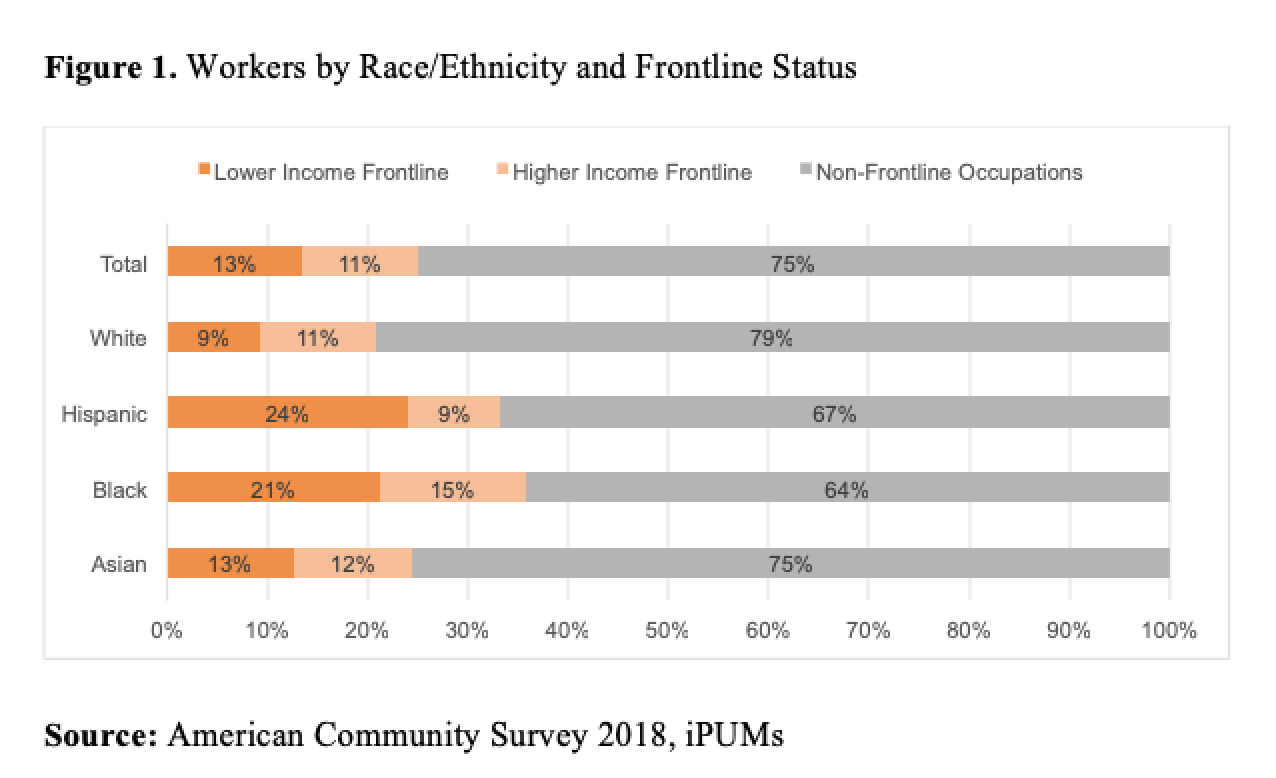
Black (36%) and Hispanic (33%) workers are much more likely to be employed in frontline occupations than Asians (25%) and non-Hispanic Whites (21%), and are more concentrated in low-paid occupations. Nearly three fourths of all Hispanic frontline workers are in low-paid frontline occupations, and almost three out of five Black frontline workers earn $30,000 or less (Figure 1).

fig 1

Sex disparities in frontline work


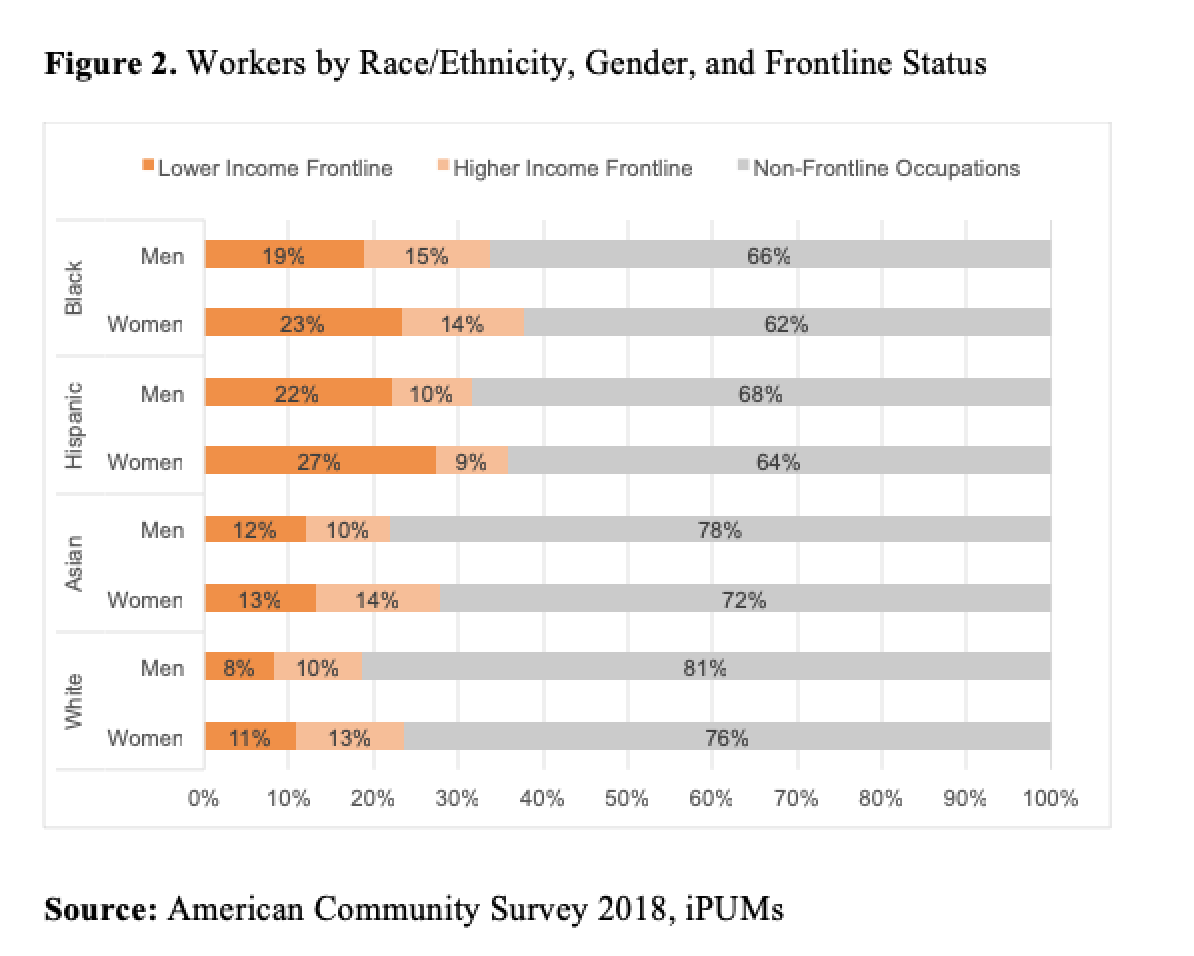
Women are more likely to be frontline workers than are men (28% vs. 23%), and this greater concentration is found for every racial and ethnic group, although the sex differential is negligible for Whites and Asians. Women are also more concentrated in the lower-income frontline occupations than are men, Hispanic (27%) and Black (23%) female workers especially (Figure 2).

fig 2

Insurance status of total employment and frontline workers


There is no universal health insurance in the U.S. Most people are covered through their jobs. However, many lower-paid jobs do not come with health insurance benefits. Given the additional risk of coronavirus infection to which frontline workers are exposed, we examined their insurance status. As expected, lower-income frontline workers are more likely to be uninsured than higher-income frontline workers (23% vs. 7%). This suggests a total of almost 3.8 million lower-income frontline workers without health insurance. Further disparities are evident when broken down by race and ethnicity. Hispanics have the highest percentage of uninsured lower-income frontline workers, at 37%, compared with 19% for Black workers and 16% for both Asian and White workers. Insurance coverage disparity is still present in higher-income frontline workers; 15% of Hispanic higher-income frontline workers are uninsured, versus less than 8% of White, Black, and Asian higher-income frontline workers.

Discussion of findings


The over-representation of Black and Hispanic workers in frontline occupations is another example of long-standing inequities in the U.S. labor market. These groups not only represent a majority of frontline workers, but they are also heavily clustered in low-wage occupations. This disparity is further amplified when examining these occupations by sex. For instance, Black and Hispanic women are even more likely to work in frontline occupations than their male counterparts.

Our findings provide empirical support for sociologist Whitney Pirtle’s (2020) framework of racial capitalism, whereby the Black and Hispanic populations are allocated to occupations that, although important to the functioning of society — as shown by the current pandemic — nonetheless have poverty-level remuneration and low status. This disconnect between essential work and its pay is strongly associated with the race and ethnicity of persons carrying out that work. And as Pirtle notes, this kind of work is being accomplished by people of color, who are more likely than their white counterparts to have underlying health conditions, which in turn makes them even more susceptible to contracting the coronavirus through close contact with patients, customers, co-workers, and clients (Centers for Disease Control and Prevention 2020; The New York Times 2020).

References

Frontline workers — это как бе нечто противоположное back officeу и те, кто не может позволить себе удалёнку.

Friday, February 16, 2018

Racist violence

насилие со стороны расистов
за 2015 год (ещё не устаканено): 11/82/93
источник: Сова
или мелкими букофками

Friday, January 12, 2018

selective migration

Трамп
По данным Госдепартамента США, со дня инаугурации Трампа было одобрено 29,022 тыс. заявок, что стало наименьшим показателем с 2002 года. Предыдущее рекордно низкое число было зафиксировано в 2002 году и составило 29,468 тыс. заявок. Тогда ужесточение миграционной политики было связано с терактами 11 сентября 2001 года.

1 ноября 2017 года президент США Дональд Трамп заявил, что он распорядился еще больше ужесточить программу отбора беженцев, въезжающих на территорию страны, после теракта, произошедшего в Нью-Йорке. Уроженец Узбекистана Сайфулло Саипов осуществил атаку в Нижнем Манхэттене у Всемирного торгового центра от имени террористической группировки «Исламское государство» (ИГ, запрещена в России).

«Я только что распорядился, чтобы министерство внутренней безопасности усилило и без того экстремальную программу отбора», — написал Трамп в своем твиттере. Он также добавил, что «быть политически корректным — это отлично, но не в этом случае».

Monday, June 12, 2017

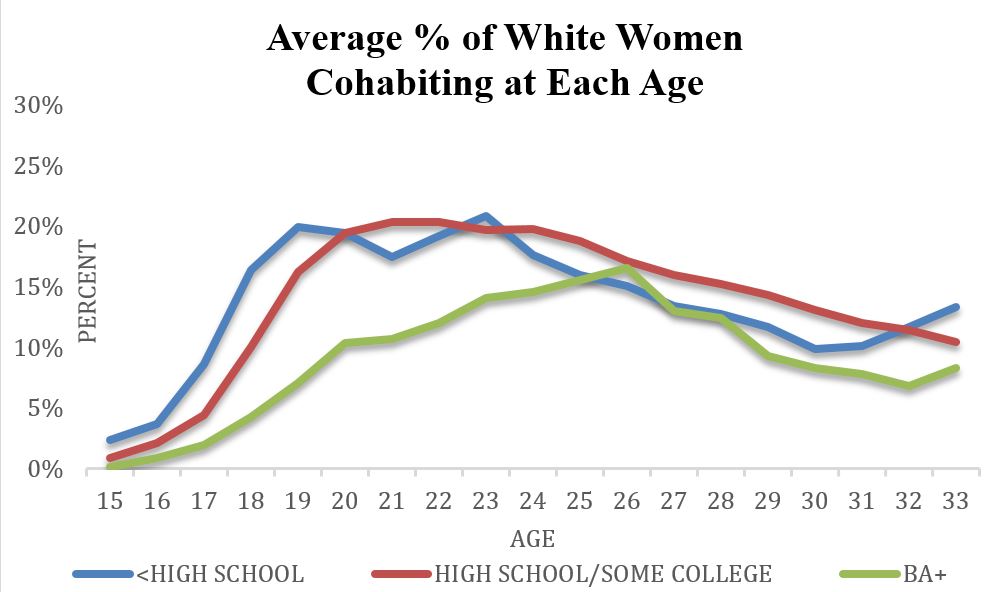
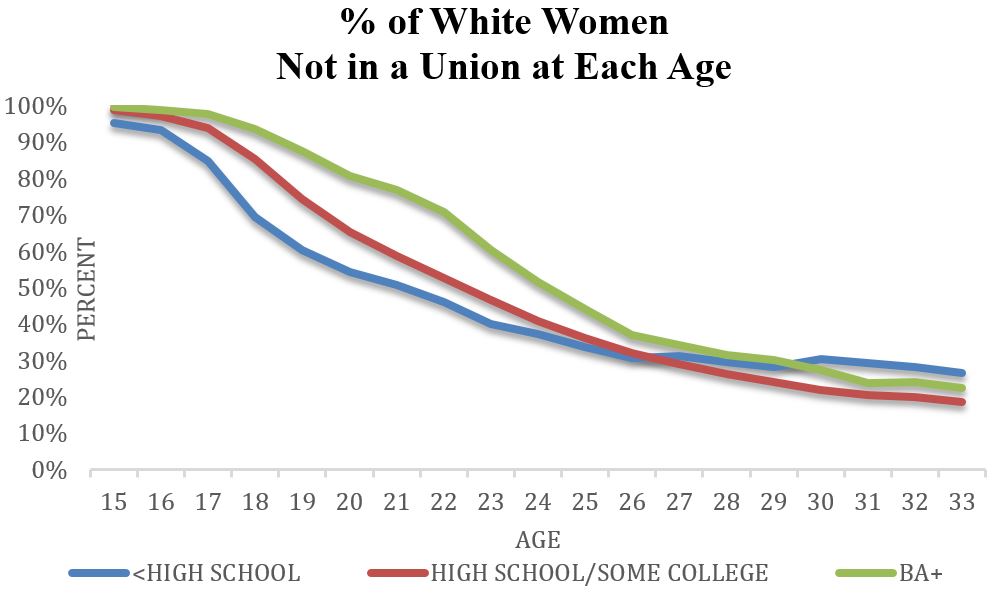
class differences in women’s cohabitation in early adulthood

cohabitation
IN UNION

читать дальше,
авторы: Mónica L. Caudillo, Paula England, and Eliza Brown | June 12, 2017

What Makes Someone Identify As Multiracial?

Multiracial

Это третий демографический переход, или четвёртый?


The multiracial population, now a small subset of the nation, is growing at three times the rate of the general population, according to a report from the Pew Research Center released Thursday. And as the group continues to grow, so does our ability to study the diversity of its members’ experiences.

Tuesday, April 18, 2017

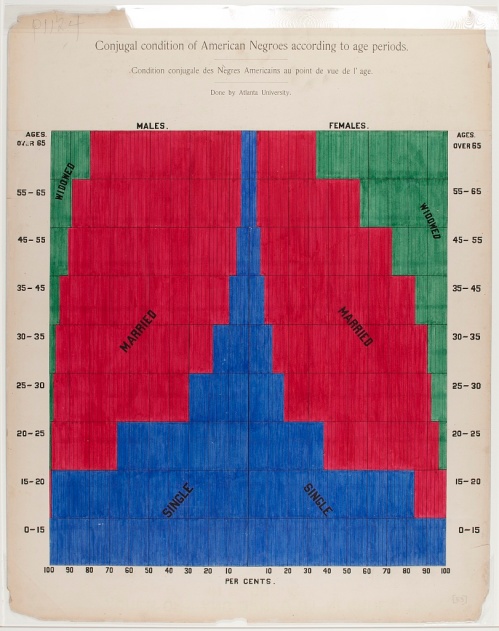
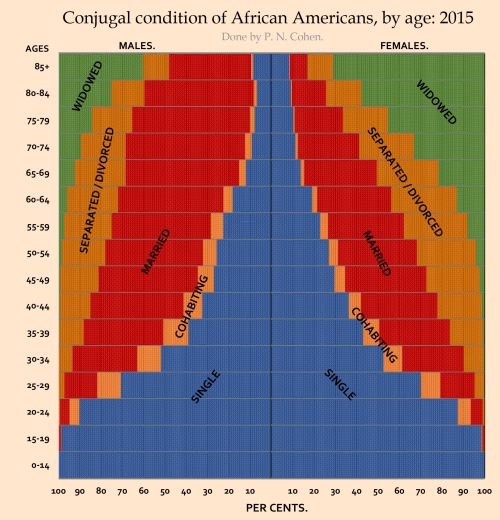
african american marital status by age


брачная структура афроамериканцев, начало ХХ (I presume it’s from tabulations of 1890 decennial census or earlier) и ХХI (data from the 2015 American Community Survey) веков, от сюда

SAS code, ACS data, images, and the spreadsheet used for this post are shared as an Open Science Framework project, here.

Tuesday, February 14, 2017

spatial patterns in the endings of German town and village names

grun
Оч любопытно:

пространственное распределение названий населённых пунктов

но в Германии :)
для знающих толк в немецком будет полезно
к примеру, зелёный

по-моему, на карте Тюрингский лес

A visual exploration of the spatial patterns in the endings of German town and village names. I picked the most interesting suffixes from https://de.wikipedia.org/wiki/Ortsname and cross-referenced them with a list of place names from geonames. Darker colors indicate a higher proportion of place names with the respective suffix in a geographic cell. Hover over a cell for a while to see a tooltip with the place names. Please note: My approach is not 100% scientific, as I only match the letters at the end of the string, not actual syllables. So, Kirchbach matches -ach. #justsaying Yet, it's a dataset I always found interesting to explore; plus, this quick experiment gave me the opportunity to play a bit with a few new tools and libraries I wanted to learn more about. Find the code at: http://github.com/moritzstefaner/ach-ingen-zell And, here's a few screenshots. Feel free to use them when you report on the project, but please link back to this page. Moritz Stefaner, 2016

Wednesday, June 22, 2016

racism memo

В Благовещенске владельцы автомойки оформили заведение неоднозначной вывеской. На ней изображено лицо темнокожего человека и слова: «Автомойка "Абама". Отмоем всю черноту!» Таким образом баннер прозрачно намекает на американского президента. [родина хочет знать своих героев по именам]

Появление такой вывески в Благовещенске стало поводом для обсуждения среди пользователей социальных сетей. «За такое штрафовать должны!» – написал возмущённый горожанин. «Как-то больше идиотично, чем патриотично», – отметил другой. Есть и противоположное мнение: «А по-моему, Барак это заслужил. С его подачи, при его финансировании и его оружием убили тысячи моих земляков».

Соответствием вывесок закону занимается Федеральная антимонопольная служба. В амурском управлении ведомства сообщили, что по поводу этой вывески обращений не было. В случае если кто-то сочтёт нужным пожаловаться на оформление автомойки, представители ведомства проведут проверку и, если найдут нарушение закона «О рекламе», примут решение. Кстати, основанием для проведения проверки может являться и публикация в СМИ.

В областном центре Приамурья подобные случаи не часты. В последний раз УФАС занималось вывеской магазина нижнего белья SisinDom. Тогда было установлено, что вывеска не нарушает закон «О рекламе». Однако названием магазина заинтересовались в Общественном экспертном совете при амурском уполномоченном по правам ребёнка. Написанное латиницей название сочли возможно оскорбительным и «содержит незаконный сексуальный контент». Пока шли споры, магазин сначала прикрыл вывеску тканью, затем открыл. Впоследствии торговая точка закрылась. Магазины с аналогичным названием работают в Хабаровске – общественность города осталась равнодушна к проблеме.

В последнее время в России стали чаще появляться карикатурные изображения президента США с оскорбительными, расистскими подписями. Их размещают не только в Интернете, но и на автомобилях; не брезгуют подобным «юмором» и некоторые производители кондитерских изделий.

Между тем главный закон Российской Федерации прямо говорит о том, что в стране не допускаются «пропаганда или агитация, возбуждающие социальную, расовую, национальную или религиозную ненависть и вражду».

Saturday, May 21, 2016

spirituality of sexual revolution

похоже, только всё на оборот

вспомнил загадку периода наступления пубертатом:
чорное-чорное, посерединке белое, с красной каёмкой
— что это?
зы: на позиции девушка, а с позиции ?

Tuesday, September 1, 2015

Monday, October 14, 2013

Caucasoid faces

посмотрел видео от подъезда -- так и не понял: почему лицо кавказской национальности?
разве что по американскому принципу, все еврики = каквказцы
основатель вроде бы только две расы отличал: монголов и кавказцев, а негров куда?
см. морды кавказской национальности:
об основателе есть и др.мнение

Monday, August 19, 2013

нестрашная правда про страшную ложЪ или 40 тыщ одних курьеров:

по наводке Васьки да Галы прочиталь

Страшную ложь про рождаемость в России

ужаснулся, но приёмчег стандартный: кусочег правды (рождаемость в РФ ниже, чем в США) и кусочег вранья (В год в России, считая незаконные и медикаментозные аборты, абортируется от 5 до 12 миллионов детей) + вопль:
Господа, не 1,2 миллиона, как гласит официальная статистика. От 5 до 12 миллионов! 95% из них могли стать будущими славянскими детьми. Реакции на это чудовищное положение дел от органов власти до сих пор – никакой.
здесь читаем, здесь не читаем, здесь рыбу заворачивали: Мизулина, оно канешна лутше знает, чем официальная статистика, и
резюме:
Мне не хочется верить в теорию заговора (а другого не умею), но кому-то в руководстве этой страны очень не хочется, чтобы Россия действительно вставала с колен.
Иного объяснения просто нет.
Нужны чрезвычайные меры.
и на вопрос: Детей вы потом кормить будете или в приюте?
ответ: Это вопрос второстепенный ...

и это тоже август :(
если кому охота -- см. оригинал
кстати, расовую статистику собирают только США