Showing posts with label преклонение перед западом. Show all posts

Saturday, November 16, 2024

national debt

долг

Госдолг 30 крупнейших экономик мира


Среди 30 крупнейших мировых экономик Россия в этом году занимает 3 место с конца по величине госдолга: наш госдолг размером в 19.7% ВВП конечно больше, чем 2.3% в Брунее и 6.5% в Гонконге (и да, они тоже вошли в топ-30 экономик мира!), но на самом деле смотрится очень пристойно на фоне других стран.

В Японии (лидер рейтинга) госдолг составляет 252% ВВП. В идущем следом Сингапуре - 162% ВВП. В Лаосе - 122.8%, за ним с минимальным (в 0.6 п.п.) отставанием идут США. Госдолг оказался выше ВВП также на Шри-Ланке, в Канаде и Великобритании.

В Китае, если учесть долги местных правительств, госдолг составит 130%, что даст ему третье место в общем зачёте. Но Китай обычно рапортует госдолг без местных правительств и картина становится получше: всего 83.6%

Thursday, October 24, 2024

west

Здание РГГУ - panoramio
В РГГУ запускают курс по изучению «сатанизма Запада». Под руководством консервативного философа Александра Дугина в вузе разработали курс по «вестернологии» для изучения «западной сатанинской цивилизации». Сам Дугин заявил, что России необходимо перестать воспринимать Запад как «субъект», который «изучает нас» и «проникает внутрь нашего сознания», и начать изучать его как «объект»

Bloomberg

Thursday, May 9, 2024

The shifting landscape of family forms around the world

May 6, 2024 David S. Reher

Living arrangements have changed over the past five decades, leading to a decline of the extended family, growth of the nuclear family and, more recently, the appearance of living alone as a significant lifestyle option for many. Diversity continues to prevail around the world. These trends, David Reher argues, suggest patterns for the relatively near future.


Introduction


Knowledge of the family and the way it functions is essential for our understanding of contemporary society. Existing debates point to the uniqueness of the nuclear family in the developed West and the role development played in this process. Yet lack of comparable data for much of the world has limited the scope of research on the family around the world. Addressing this issue is now possible thanks to the revolution in census microdata provided within the IPUMS project (Minnesota Population Center 2020).

In a recent publication (Esteve & Reher, 2024), Albert Esteve and I make use of massive amounts of data (from 90 countries and 279 samples) to address key issues related to family organization –specifically to living arrangements and the way they have changed over the past half century. We classified basic living arrangements into three categories for each individual present in the household: living alone, living only with nuclear kin (parents, offspring and/or spouses), and living with at least one non-primary kin (grandparents, grandchildren, aunts, uncles, cousins, etc.) in addition to other primary kin. We estimated exposure rates for every age group and type of living arrangement. Combining these rates for all ages enabled us to generate estimates of the relative share of the life course spent in each type of living arrangement. The results provide a nuanced view of co-residence patterns for societies around the world over the past half century.
 

Major results


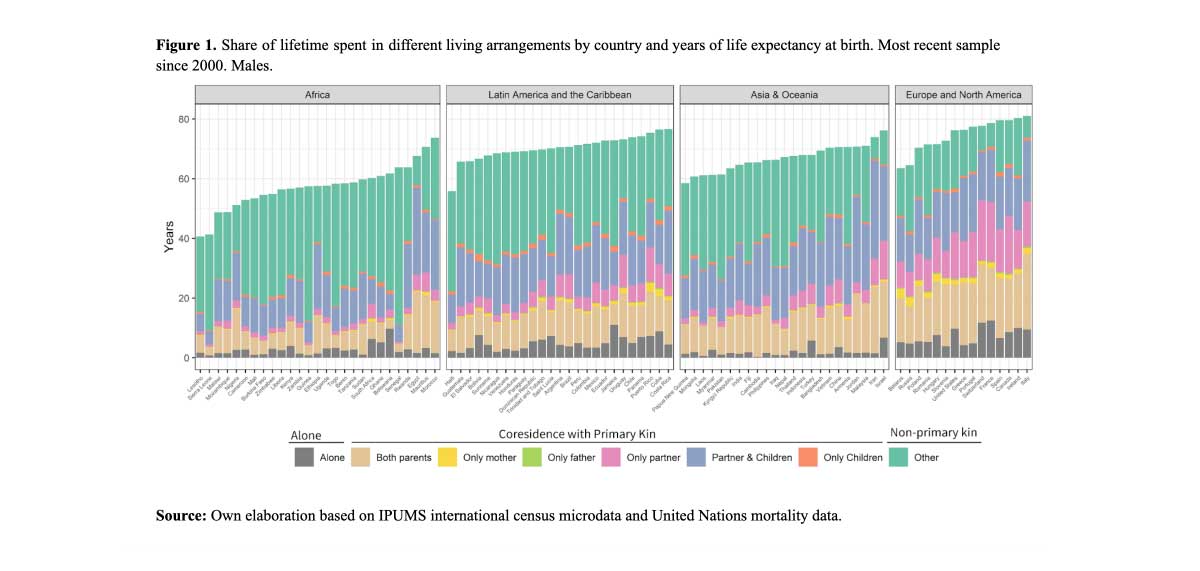
At the start of the twenty-first century there continued to be a wide diversity of family forms around the world. In some regions, people spent a large share of their lifespan living in large families with an abundant presence of non-primary kin and/or non-kin (e.g. many African countries), while in others, people spent most of their lives in households with only nuclear kin (e.g. most developed countries). The results presented in Figure 1 are based on males for the most recent census for each country. Individual country data are arranged by macro region (generally continent) and, within each region, according to the life expectancy in each country. In this way, columns are higher in countries with higher life expectancy. The disparities in the share of the lifespan spent living with non-primary kin (the key to all extended families) are vast, ranging from relatively low in Europe and North America to more than 50 per cent of total life expectancy in most of Africa and in many Latin American and Asian countries. At the outset of the twenty-first century, the world of the family was a diverse one indeed. The predominance of the nuclear family, so important for our understanding of the family around the world, only existed in the developed world, while extended families were predominant elsewhere.
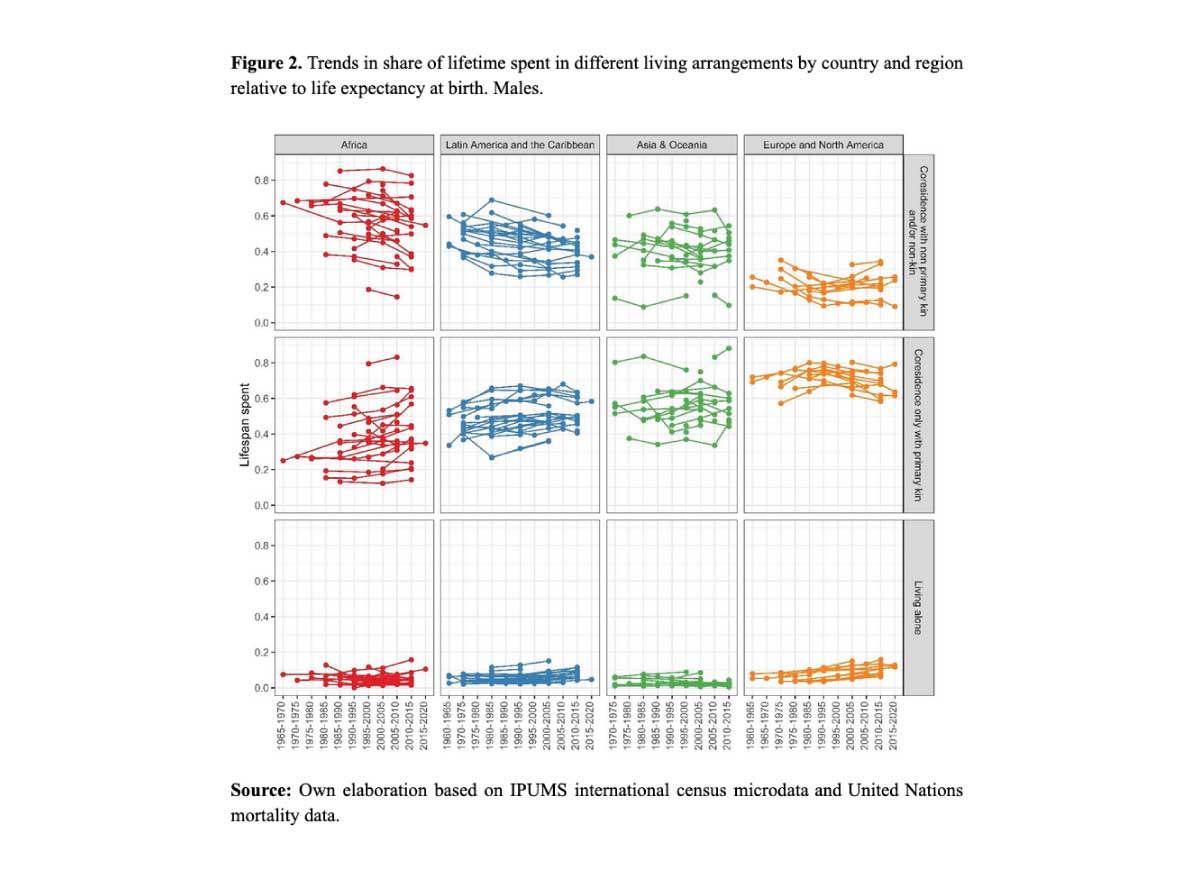
Change over time is shown in Figure 2 (again, only males) where different living arrangements are organized in horizontal panels and world regions are shown vertically. It is important to remember here that everywhere the sum of propensities for the three different living arrangements is, by definition, 1.0 in all countries. This figure shows the changes that have occurred over the past half century, with census dates marked by circles and country trends by lines.
A major result from this figure is that the growth in the prevalence of living arrangements based only on primary kin (nuclear families) around the world over the past half century is especially strong in countries where starting levels were lower. Generally, growth in the prevalence of the nuclear family has been substantial and, by implication, that of the extended family has declined. It is important to underscore the overall diversity of these estimates, both in recent years and in the past. Africa was and is the world region where the presence of non-primary kin was, and continues to be highest, though there have been evident declines. This also fits for Latin America and Asia, yet the prevalence of extended families tends to be lower. The basic pattern of change, however, is very different in the developed world, where from the start the prevalence of nuclear families is much higher than elsewhere. Beginning in the 1990s, however, there is a clear halt to the decrease of extended families, coupled with a modest decline in nuclear families and increases in the shares of people living alone.

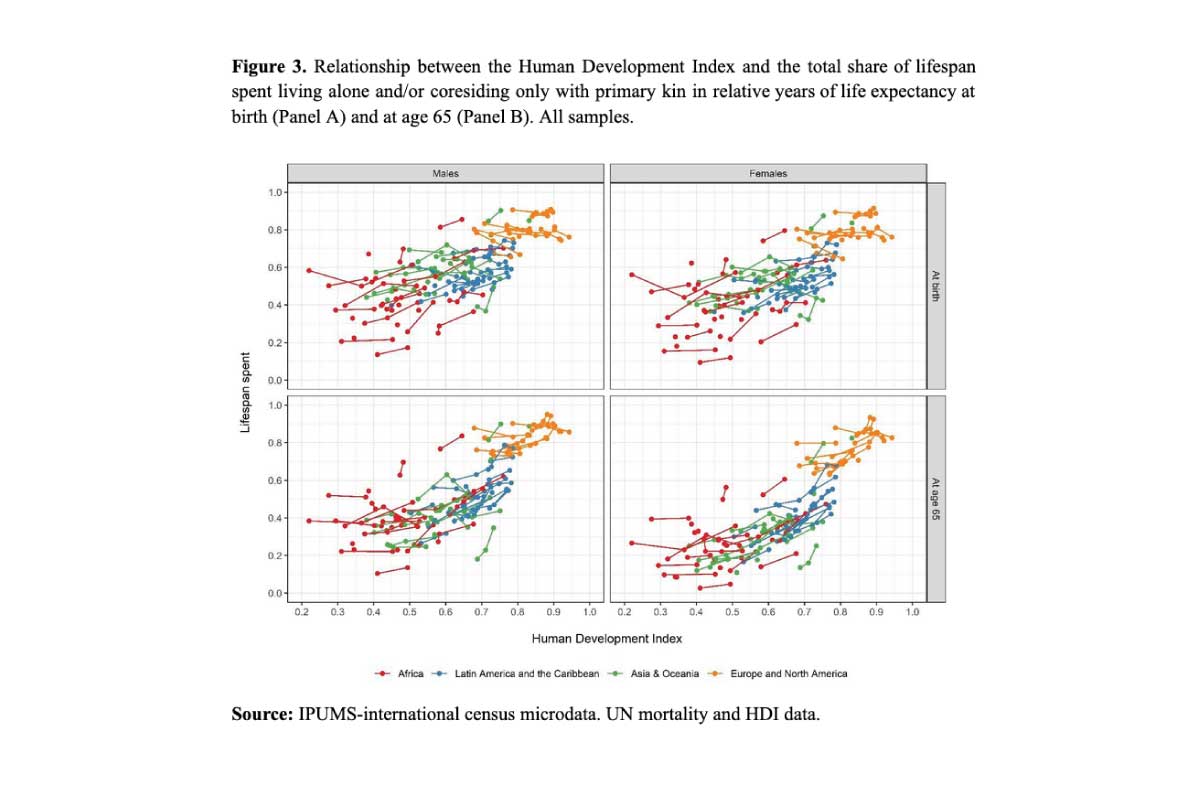
Countries with the highest levels of development are invariably ones where the prevalence of coresidence with non-primary kin and the extended family are lowest, yet time trends for individual countries are not always clear (see Figure 3 with results for males and females). If we only use data for elderly adults (>65) the links between development and the share of the lifespan spent living alone and/or with only nuclear kin are clearer.

A brief discussion


Should current trends continue, in the relatively near future we can expect a continued growth of nuclear living arrangements in much of the world. We can also expect, however, slow or negative growth, coupled with a continuing trend towards an incipient decomposition of the components of kinship in societies where living with nuclear kin is highest, caused largely by on-going reductions in the presence of offspring and of parenting couples in nuclear households. Quite possibly this will take place together with increases in the prevalence of either living alone or living in households including persons unrelated by kinship. These trends have important implications for policy, for society, and for the meaning itself of the family and family life in different parts off the world. Rapidly shrinking household size in much of the world provides a relevant backdrop for these important changes in kin-based co-residence (Esteve et al., 2024). In aging societies, the capacity of families to rely on traditional support networks for the health and well-being of their vulnerable members raises significant concerns.

It is often held that development is a major determinant of the prevalence of the nuclear family because it enables family groups to live in small units and, when the need arises, to avail themselves of institutional supports such as day care that tend to be widespread in societies that can afford them. It also brings improvements in health, longer lives and higher education for large segments of the population. Our study provides some support for this premise. It also points to the major role potentially played by fertility and mortality in shaping kin networks themselves and their needs, and invites further research on the emerging subject of the demography of kinship. Where networks are dense in human and social capital, kin available for co-residence are abundant and will be in demand. As these networks shrink, the prevalence of living arrangements based only around primary kin will increase and the presence of non-primary kin in households around the world will tend to decrease. Mortality also plays a role, especially because of its implications for health and longevity as well as the way it affects the number of available kin.

Once again, the timing and pace of the demographic transition emerges as a key factor in explaining the long-term trends of major social indicators. This does not negate the importance of culturally constrained preferences and values for family development over time, but it does appear to be a key marker for the timing and intensity of change. Development is, of course, important, but is not the sole factor. When kin networks shrink to their bare minimum, the realm of conscious choice tends to emerge as a key element in shaping family life. The influence of the second demographic transition on family structures in North America and Europe and, potentially, in many other societies around the world now and in the future, serves as a pertinent example.

Moving a bit further back in time, these findings also suggest that the prevalence of extended family living arrangements in much of the developing world may have peaked in the 1950s or 1960s, when fertility remained exceptionally high and mortality was already in sharp decline in many parts of the world. By contrast, in the developed world, fertility and mortality were already relatively low and, by implication, kin networks were relatively small, nuclear living was the norm, and ideas of change were pervasive. In this part of the world where closely aligned patterns of fertility and mortality together with relatively modest levels of population growth characterized the entire demographic transition, it is likely that kin networks were consistently modest in size and nuclear living was widespread well before the onset of the twentieth century.

A key, albeit surprising, finding of this paper is the evidence it provides of a recent trend reversal currently taking place in much of the most developed world involving large declines in co-residence only with primary kin, major increases in living alone, and modest increases in co-residence with non-primary kin. This trend is likely related to the spreading effects of the second demographic transition, to increasing longevity, to shrinking kin networks and to the increasing difficulties experienced by families in much of the world (Esteve and Reher 2021). Could it constitute the most recent stage of a fundamental pattern of family development over time outlined, at least in part, in this paper? Possibly. While speculative, this viewpoint warrants further investigation.

References

  • Esteve, Albert, David S. Reher. 2021.”Rising Global Levels of Intergenerational Coresidence Among Young Adults”. Population and Development Review 47 (3): 691-717. https://doi.org/10.1111/padr.12427.
  • Esteve, Albert and David S. Reher. 2024. “Trends in Living Arrangements around the World”. Population and Development Review. https://doi.org/10.1111/padr.12603.
  • Esteve, Albert, Maria Pohl, Federica Becca, Huifen Fang, Juan Galeano, Joan García-Román, David Reher, Rita Trias-Prats, and Anna Turu. 2004. “A global perspective on household size and composition, 1970–2020.” Genus – Journal of Population Sciences, 80 (2), pp 1-22. https://doi.org/10.1186/s41118-024-00211-6

Wednesday, February 14, 2024

St Valentine

Именем святого Валентина! 

Краткая история любовного зелья: афродизиаки и наука - BBC News Русская служба 

Яна Литвинова

День святого Валентина: подарки, амурчики, шоколад, красные розы и не менее красные сердца! Другими словами, День влюбленных, в предвкушении которого радостно потирают руки владельцы магазинов и ресторанов.


По поводу его происхождения есть несколько версий , весьма далеких от приторно-трогательных современных атрибутов. То ли император Клавдий казнил 14 февраля (но в разные годы) двух провинившихся в чем-то Валентинов, то ли таким образом католическая церковь решила инкорпорировать римский праздник очищения и плодородия, Луперкалии, в христианский календарь.

Во время Луперкалий полагалось приносить в жертву козла и пса, после чего молодые жрецы оборачивали чресла только что содранными шкурами и гонялись за молодыми женщинами, стегая их вырезанными из этих же шкур ремнями. Не подумайте плохого, делалось это исключительно для повышения плодовитости. Говорят, что некоторые дамы даже выстраивались в очереди, чтобы получить гарантии репродуктивного здоровья.

Со временем истребление коз и собак вышло из моды, однако необходимость повышения плодовитости, как мужской, так и женской, осталась. Отсюда и пошли разные снадобья, названные афродизиаками в честь греческой богини любви Афродиты.

Если кратко, то под это определение подпадают средства, способные повысить сексуальное влечение и половую активность.

Некоторые популярные в прошлом рецепты дошли и до нас, другие же, благодаря изменившимся представлениям о вкусе и съедобности компонентов, к счастью, вышли из употребления.

Любовное зелье


Начнем с того, что не стоит путать афродизиаки и любовные зелья. Первые имеют вполне конкретное предназначение: повысить сексуальное влечение и ослабить внутренние ограничения.

Вторые же нужны для того, чтобы вызвать в ком-то чувство любви, которое до сих пор определениям не поддается, зачастую является иррациональным, и никто толком не знает, как и почему оно возникает.

Это, впрочем, не значит, что человечество не пробовало подобные зелья создать.

Вот, например, рецепт из текстов , найденных при раскопках трех гробниц комплекса Мавандуй в китайской провинции Хунань, относящихся к III-II векам до н.э. : «Возьми четыре когтя с левой лапки голубя и четыре ногтя с левой руки молодой девушки. Обжарь их и мелко разотри. Дай это человеку, и он будет твой».

Современные же версии предлагают , например, погрузить в стакан с водой белый и розовый кварц, перемешать их палочкой корицы и произнести заклинания при полной Луне (если вы считаете себя немного ведьмой), или смешать гранатовый сок, клубничную водку и клубничный ликер «Шамбор» в пропорции 2:1:1.

Второе имеет смысл, потому что алкоголь как раз и подавляет наложенные социумом и воспитанием ограничения и может привести к желанному результату.

Много рецептов хороших и разных, но больше все-таки... разных
Проблема продолжения рода (и получения удовольствия в процессе) волновала человечество давно и настолько сильно, что в ход шли даже откровенно ядовитые растения и насекомые. К таковым относятся, например, жуки-нарывники, они же шпанские мушки, в панцире которых содержится вещество кантаридин.

Вообще-то оно является ядом , против которого эффективного противоядия на данный момент нет, но может стимулировать сексуальное возбуждение, раздражая мочевыводящие пути.

Афродизиаками также считались: воробьиные языки и мозг, которые якобы стимулировали «произведение семени», семена ясеня, и, согласно английскому врачу и фармацевту XVII века Николасу Калпеперу, морковь, пастернак и спаржа, потому что они по форме напоминают мужские гениталии.

По несокрушимой логике того времени, «подобное стремится к подобному», следовательно, если какое-то растение или животное по форме или текстуре напоминает что-то, относящееся к процессу продолжения рода, то оно должно как-то на этот процесс влиять. К этой же категории, кстати, относятся и женьшень с устрицами.

Еще один британский ученый XVII-XVIII веков Уильям Салмон в своей книге «Ботанология» рассказывал читателям , что крепкий отвар из бобов возбуждает похоть и полезен при «импотенции у тех представителей мужского рода, кои не обладают силой для Акта (это у Салмона с большой буквы) зарождения... по причине того, что бобы по форме похожи на головку пениса».

Японские «женщины для удовольствия» (юдзё) свято верили в пользу настойки из угрей, корня лотоса и обугленного тритона, а уже упомянутые мною китайские манускрипты советовали делать припарки из мяса цыпленка, закусанного насмерть пчелами.

Вряд ли кто-то из нас даже по острой нужде отважится на подобные эксперименты, поэтому давайте посмотрим на то, что считается афродизиаками в наше время, и есть ли от них какая-то польза.

Устрицы


Говорят, что легендарный Казанова съедал по 50 устриц, отправляясь на очередные приключения, которые (если верить его автобиографии) всегда были чрезвычайно успешными. Эти двустворчатые моллюски уже давно считаются незаменимым средством для возбуждения сексуального влечения, но, скорее всего, это тот случай, когда на устриц работает их устоявшаяся репутация, а не реальные факты.

В 2005 году Джордж Фишер, профессор из Университета Барри в Майами, обнаружил , что не устрицы, но их близкие родственницы, мидии, содержат D-аспарагиновую кислоту, которая повышает уровень половых гормонов у лабораторных крыс. 

Ее влияние на человека все еще изучается, хотя известно, что она может повысить уровень тестостерона у мужчин.

Профессор медицины и специалист по сексуальному здоровью из Калифорнии Майкл Крихман в 2015 году отметил, что хотя устрицы и содержат цинк , важный элемент для стимулирования выработки тестостерона, непосредственного влияния на усиление сексуального влечения моллюски не оказывают.

Женьшень


Однозначного вердикта по поводу женьшеня наука пока что не вынесла, несмотря на долгую карьеру этого корня в традиционной китайской и корейской медицине.

Сравнительный анализ целого ряда медицинских исследований, посвященных влиянию женьшеня на мужское сексуальное здоровье, показал отсутствие единого тренда в полученных результатах.

Кто-то сообщал об улучшении показателей спермограмм, кто-то большой разницы не заметил.

Шоколад


Если верить историческим мифам, то император ацтеков Монтесума II выпивал 50 чашечек шоколада (да, опять 50, как устрицы Казановы) перед тем, как отправиться навестить свой гарем.

Хотя афродизиаком шоколад не является, он способствует выработке «гормонов хорошего самочувствия» — допамина, серотонина, окситоцина и эндорфинов, расширяет кровеносные сосуды и снижает стресс. 

Кроме того, темный шоколад содержит небольшое количество аминокислоты под названием триптофан, необходимой для выработки серотонина. Серотонин же часто называют «гормоном счастья»: его уровень повышается во время эйфории и снижается при депрессии.

При этом избыток серотонина может привести к прямо противоположному эффекту и напрочь отбить сексуальное влечение.

Мака перуанская


Она же — клоповник Мейена. Внешне похожа на петрушку. Эта травка вот уже больше двух тысячелетий пользуется репутацией народного средства для того, чтобы добавить телу энергии, а уму — ясности, не говоря уже о повышении либидо, в том числе и у женщин, достигших менопаузы.

Согласно одному из исследований , мака вызывала рост сексуального влечения у мужчин, не влияя при этом на уровень тестостерона, что делает скучный клоповник абсолютным чемпионом в соревновании афродизиаков... если, конечно, это действительно так.

Потому что скептиков тоже хватает. Например, профессор Медицинского центра Джорджтаунского университета Адриан Фью-Берман говорит , что хотя «мака может положительно влиять на сексуальную дисфункцию, однозначный вывод сделать трудно».

А американский ботаник Крис Килэм считает , что «вопрос не в том, работает ли она, а в том, каков механизм ее воздействия».

Мед 


Почему-то мед считается афродизиаком, в том числе и в русской традиции. Кое-кто говорит, что медовый месяц и называется медовым не столько потому, что он сладок, сколько потому, что мед способствует его успешному проведению.

У меда, безусловно, имеется масса полезных свойств, но о его влиянии на сексуальные функции науке не известно.

Впрочем, интимный ужин, который завершит десерт с медом, вполне может создать соответствующее настроение. Точно так же, как и десерт с шоколадом.

Горянка 


Она же эпимедиум, она же пустолист, епископская шляпа, крылья феи, трава сексуально возбужденного козла или инь ян хо.

Название говорит само за себя. Активным веществом «возбужденного козла» является икарин, один из наиболее распространенных компонентов в пищевых добавках, якобы повышающих уровень тестостерона.

Механизм действия у икарина точно такой же, как и у хорошо известной виагры: расслабляет гладкую мускулатуру и способствует свободному течению крови туда, куда требуется. Совершенно точно помогает грызунам. С людьми же вопрос еще недостаточно изучен .

Афродизиаки и еда 


Можно сказать, что в разное время и в разных странах афродизиаками считалось такое количество овощей, фруктов, специй и продуктов животного происхождения, что практически вся возможная еда когда-то употреблялась с надеждой на повышение сексуальной активности.

Сейчас, кроме устриц с шоколадом, к этому списку добавились клубника, авокадо, грецкие орехи, шафран, специи, чеснок, крабы, спаржа и перец чили.

А существует ли какая-то особая еда, которая способна резко повысить сексуальное влечение и обеспечить незабываемый вечер? Вообще-то, нет. И это даже хорошо. Потому что любой продукт, обладающий таким гарантированным действием, будет, по словам старшего преподавателя Лундского университета в Швеции Джессики Эббот, просто опасен.

«Большая часть поглощаемой нами пищи не имеет побочных эффектов. Если бы они были, мы бы не могли есть ее регулярно», — говорит она. 

В России, например, афродизиаками для мужчин считались бобровая струя (секрет из особых желез речных бобров), а также бычья и медвежья кровь, которые совершенно точно нельзя отнести к повседневной пище, не говоря уже о таких «деликатесах», как семенники козлов и быков. 

Вера человечества в еду, способную вызвать сексуальное влечение, является производной нашей психики, а не физиологии.

«Если вы верите, что какая-то еда усиливает сексуальное желание, то на вас влияет эффект плацебо», — говорит психотерапевт и сексолог из Университета Рутгерса в Нью-Джерси Нэн Уайз.

«Наш индивидуальный опыт тоже может быть решающим фактором, определяющим, какие продукты повышают сексуальное желание у каждого из нас», — отмечает Жан-Кристоф Биллетер, доцент кафедры социального и сексуального поведения Гронингенского университета в Нидерландах.

Если когда-то после поедания определенного блюда, будь то устрицы, авокадо, клубника со сливками или селедка с картошкой, все закончилось самым благоприятным образом, то человек будет стремиться повторить весь антураж, надеясь на такой же эффект, говорят ученые.

В конечном итоге, главная цель афродизиаков заключается в том, чтобы предстать перед избранником в самом выгодном свете и оправдать ожидания. Хотя, если вы празднуете День святого Валентина с кем-то, ваша взаимная привлекательность уже гарантирована, причем без всяких афродизиаков.

Tuesday, June 20, 2023

intergenerational mobility

Межпоколенческая мобильность по заработной плате в разных странах мира


Очень интересный, но немного сложный для понимания график: насколько сильно доходы родителей влияют на доходы детей. Рассчитанное число - это эластичность, то есть, на сколько процентов изменятся доходы детей при изменении доходов родителей на 1%. Соответственно, высокий уровень подразумевает, что у богатых родителей будут богатые дети, а у бедных - бедные, низкий - что доходы детей и родителей никак не связаны

У нас, к примеру, эта эластичность оказалась равна 0.29, а по большинству стран Европы и США - около 0.4. То есть, зависимость доходов детей от доходов родителей у нас меньше - в каком-то смысле это может говорить о большей социальной справедливости. И в целом, низкий уровень связи доходов детей и родителей наиболее характерен именно для стран пост-СССР, и, неожиданно, Канады, Австралии и Новой Зеландии

Межпоколенческая мобильность врятли возможна, как и машина времени

Thursday, June 8, 2023

Is morbidity compressing around the globe?

June 5, 2023 Iñaki Permanyer, Francisco Villavicencio and Sergi Trias-Llimós

Does health deterioration manifest at increasingly (dis)similar ages? Iñaki Permanyer, Francisco Villavicencio and Sergi Trias-Llimós explore inequalities in age-at-morbidity onset globally, and find these to be larger than lifespan inequalities. As longevity increases, the locus of health inequality is moving from death-related inequalities to disease- and disability-centered ones.


As longevity increases worldwide, are the ages at which individuals’ health deteriorates becoming increasingly concentrated over time, or more spread out? This is one of the fundamental questions around which the so-called ‘Compression vs Expansion of morbidity’ debate has revolved for a long time (Gruenberg 1977, Fries 1980), but whose answers have been mostly restricted to a small group of low-mortality countries. In a new study, we assess whether morbidity is compressing or expanding in all countries around the world (Permanyer, Villavicencio and Trias-Llimós 2023). We do so by estimating levels and trends of the newly proposed Healthy Lifespan Inequality (HLI) indicators (Permanyer et al. 2022), which measure the variability in the ages at which individuals cease to be in good health.

Longer and healthier lives enjoyed by everyone?


To investigate whether the ages at which individuals’ health deterioration becomes increasingly concentrated or dispersed over time, we use data from the Global Burden of Disease project (https://ghdx.healthdata.org/record/ihme-data/gbd-2019-life-tables-1950-2019) to calculate the so-called ‘age-at-morbidity onset distributions’ – which are used to estimate survival probabilities in good health. Variability is measured with the standard deviation, a popular indicator of the spread of a distribution.

Figure 1, panels A and B, shows that the levels of HLI generally declined between 1990 and 2019 for both women and men, although not in high-income countries, where instead they stagnated. In general, females tend to exhibit higher variability in the ages at which they cease to be in good health. Another noteworthy exception is that of individuals aged 65 or more: in this group, the variability in age-at-morbidity onset has increased over time across all world regions (panels C and D in Figure 1).
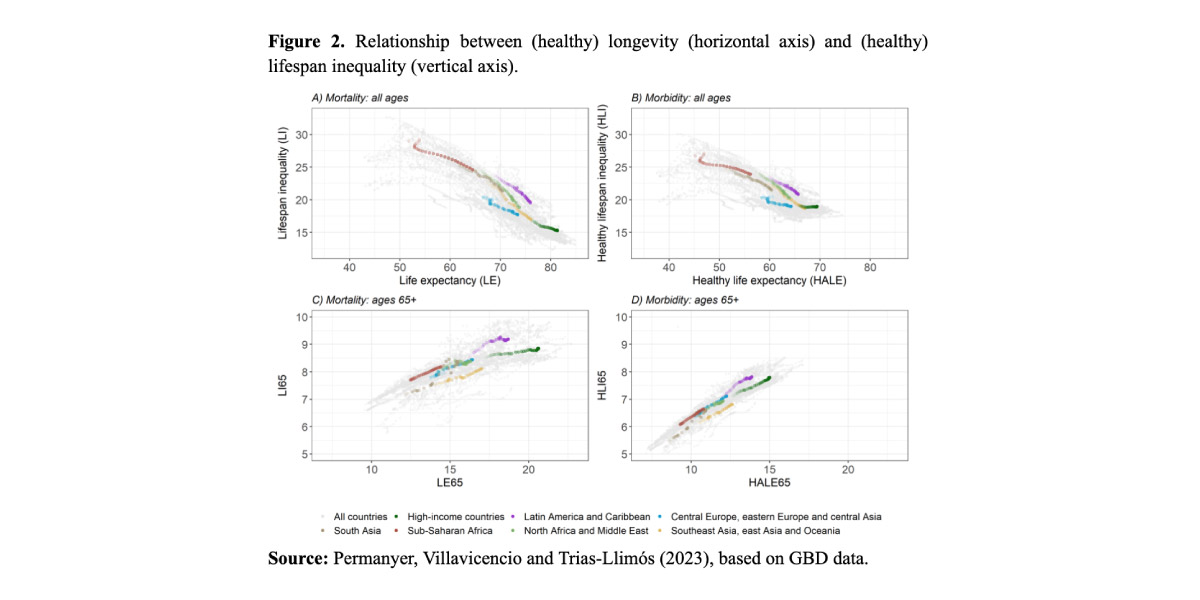
While the relationship between life expectancy and lifespan variability is strong and negative (Figure 2, panel A), the relationship between health-adjusted life expectancy and HLI is weaker and flatter (Figure 2, panel B). Among high-income countries and in Central Europe, Eastern Europe, and Central Asia, increases in health-adjusted life expectancy are not accompanied by reductions in HLI. Restricting the analysis to individuals above age 65, we observe a positive association between (healthy) longevity and (healthy) lifespan variability (Figure 2, panels C and D). This suggests that increases in healthy survivorship in those ages are associated with increases in the variability of the ages at which individuals’ health deteriorates, and similarly, increases in survivorship are associated with increases in the variability in age at death.

Discussion and implications


Previous approaches to assess whether morbidity is compressing or expanding have relied on the comparison of average indicators (i.e., average longevity, or life expectancy, versus average healthy longevity, or health-adjusted life expectancy). However, such average-based approaches do not take into consideration the variability in individuals’ health deterioration processes – a fundamental ingredient that, according to Fries (1980), should be included when studying morbidity dynamics, and which was incorporated in our analyses. Preliminary calculations suggest that the different approaches to assess whether morbidity is compressing or expanding do not yield consistent results, an issue not discussed here and that deserves further investigation.

Overall, high-mortality countries have been successful in increasing (healthy) longevity while simultaneously reducing (healthy) lifespan inequality. This has been the case of sub-Saharan Africa, South Asia, North Africa and the Middle East, or other regions with plenty of room for improvement. Conversely, low-mortality countries have not been very successful in further reducing the variability in healthy lifespans, so it is not clear whether morbidity is compressing or expanding there. Such stagnation might be the result of forces pushing in opposite directions. On the one hand, increases in living standards or the adoption of healthier lifestyles can postpone the deterioration of individuals’ health. On the other hand, screening and prevention programs could lower the age at diagnosis of important diseases (like mental disorders or cancers). Lastly, existing and broadening socioeconomic inequalities can contribute to widening the distribution of ages at which morbidity starts affecting individuals’ health.

The variability in the ages at which morbidity starts can be much larger than the variability in the ages at which individuals die, and this difference increases over time. While age at death is becoming increasingly predictable in longevity vanguard countries, the age at which health starts deteriorating is as uncertain now as it used to be three decades ago – an important finding with consequences for planners aiming to reduce population health inequalities. For instance, retirement or health care policies exclusively based on (increasing) trends in life expectancy might miss the mark and have deleterious social consequences if the corresponding morbidity onset distribution widens over time.

Interestingly, the same living standard improvements, medical innovations and technological breakthroughs that have contributed to reducing mortality-related inequalities across the world (as reflected in the decreasing inequalities in basic survival indicators like life expectancy at birth) have in turn contributed to the emergence of new layers of morbidity-related inequalities among adults at older ages, often to the advantage of privileged countries or socioeconomic groups. Our results point towards a compositional shift in health inequalities within countries: as longevity increases worldwide, the locus of health inequality over the lifespan is gradually moving from death-related inequalities to disease- and disability-centered ones. This compositional shift in health inequality should be taken into consideration in the elaboration of prospective public health policies.

References

    • Fries JF. (1980), “Aging, natural death, and the compression of morbidity”, New England Journal of Medicine 303:130–5.
    • Gruenberg EM. (1977), “The failures of success”. Milbank Mem Fund Q Health Soc: 3–24.
    • Permanyer, I., Spijker, J. and Blanes, A. (2022), “On the measurement of healthy lifespan inequality”, Population Health Metrics 20, 1. https://doi.org/10.1186/s12963-021-00279-8
    • Permanyer, I., Villavicencio, F. and Trias-Llimós, S. (2023), “Healthy lifespan inequality: morbidity compression from a global perspective”, European Journal of Epidemiology, DOI: 10.1007/s10654-023-00989-3.

Friday, February 10, 2023

abortion ban is impossible

В Госдуме заявили о невозможности законодательно запретить аборты без согласия мужей


В России не получится законодательно запретить делать аборт замужним женщинам, у которых нет соответствующего разрешения от супруга. Об этом рассказала председатель Комитета Госдумы по вопросам семьи, женщин и детей Нина Останина, комментируя инициативу РПЦ.

"Далеко не всегда решение о прерывании беременности принимает ветреная девушка, которая случайно забеременела. Зачастую это семья, в которой уже есть дети, и, понимая, что семья не сможет обеспечить достойное воспитание будущему ребёнку, она принимает для себя такое ответственное решение", — заявила депутат в беседе с агентством "Москва".


По мнению Останиной, вести с молодой семьёй диалог о сохранении ребёнка можно только в том случае, если государство гарантированно поможет супругам. То есть обеспечит их социальным жильём, а также работой — хотя бы мужа.

"Вот тогда мы вправе спросить с этой семьи: "Ребята, что вы не рожаете? Государство дало вам всё". А сейчас это делать преждевременно", — отметила политик.

Патриарх Кирилл призвал исключить аборты из перечня услуг частных клиник

Она добавила, что нельзя вторгаться в личную жизнь семей, а аборт — право самой женщины. Останина также считает, что эту процедуру нельзя выводить за рамки ОМС, поскольку прерывание беременности является серьёзной медицинской процедурой и в этом случае не обойтись без профессиональных медиков.

Ранее Лайф писал о том, что первый зампред Комитета Государственной думы по вопросам семьи, женщин и детей Татьяна Буцкая поддержала предложение РПЦ о запрете абортов без согласия мужа. Однако политик заявила о том, что инициативу нужно доработать.

Saturday, January 28, 2023

abortion ban

Приходите с разрешением: РПЦ предлагает разрешить аборты только с распиской от мужа — что не так с этим законом

Депутаты и священник обсудили рождаемость на круглом столе

28 января 2023, 10:00  98 КОММЕНТАРИЕВ

На днях во время круглого стола Комитета Госдумы по вопросам семьи, женщин и детей председатель патриаршей комиссии по вопросам семьи, защиты материнства и детства иерей Федор Лукьянов предложил законодательно закрепить, что аборт может быть проведен только при получении согласия мужа пациентки на эту процедуру. Это не первый раз, когда представители РПЦ предлагают ввести те или иные ограничения для проведения абортов — звучали идеи, например, вывести их из системы ОМС.

Мысль о том, что в принятии решения должен участвовать муж и отец ребенка, тоже не нова, однако вопрос о принятии такого закона церковью прежде не поднимался и на этот раз многими был встречен с негативом. Разбираемся, что на самом деле не так с этим предложением.

Почему заговорили о запрете абортов?


У Русской православной церкви свои причины требовать наложения вето на аборты — с точки зрения православной церкви, душа возникает в момент зачатия, из чего следует, что аборт — это убийство, смертный грех. Однако на круглом столе, где иерей Федор Лукьянов озвучил предложение церкви, обсуждалась не борьба с грехами, а совершенствование мер, направленных на народосбережение и стимулирование рождаемости. Так что посмотрим на проблему с этой точки зрения.

О повышении рождаемости вообще много говорят в последнее время. В декабре прошлого года главный внештатный специалист Минздрава РФ по репродуктивному здоровью женщин Наталья Долгушина заявила, что российским семьям нужно заводить по 3–4 ребенка для преодоления демографических проблем, на прошлой неделе об этом же сказал депутат Дмитрий Гусев. Правда, в его понимании, четверо — это минимум, который должен быть в каждой семье.

— Главная проблема — что в России каждый год уменьшается население. Мы вымираем. Меры в связи с материнским капиталом хорошие, но недостаточные — они были направлены на то, чтобы женщины рожали, а теперь стоит задача, чтобы рожали много, — цитирует слова депутата издание «Ведомости». — Чтобы восстановить численность, в каждой семье должно быть по четверо детей.

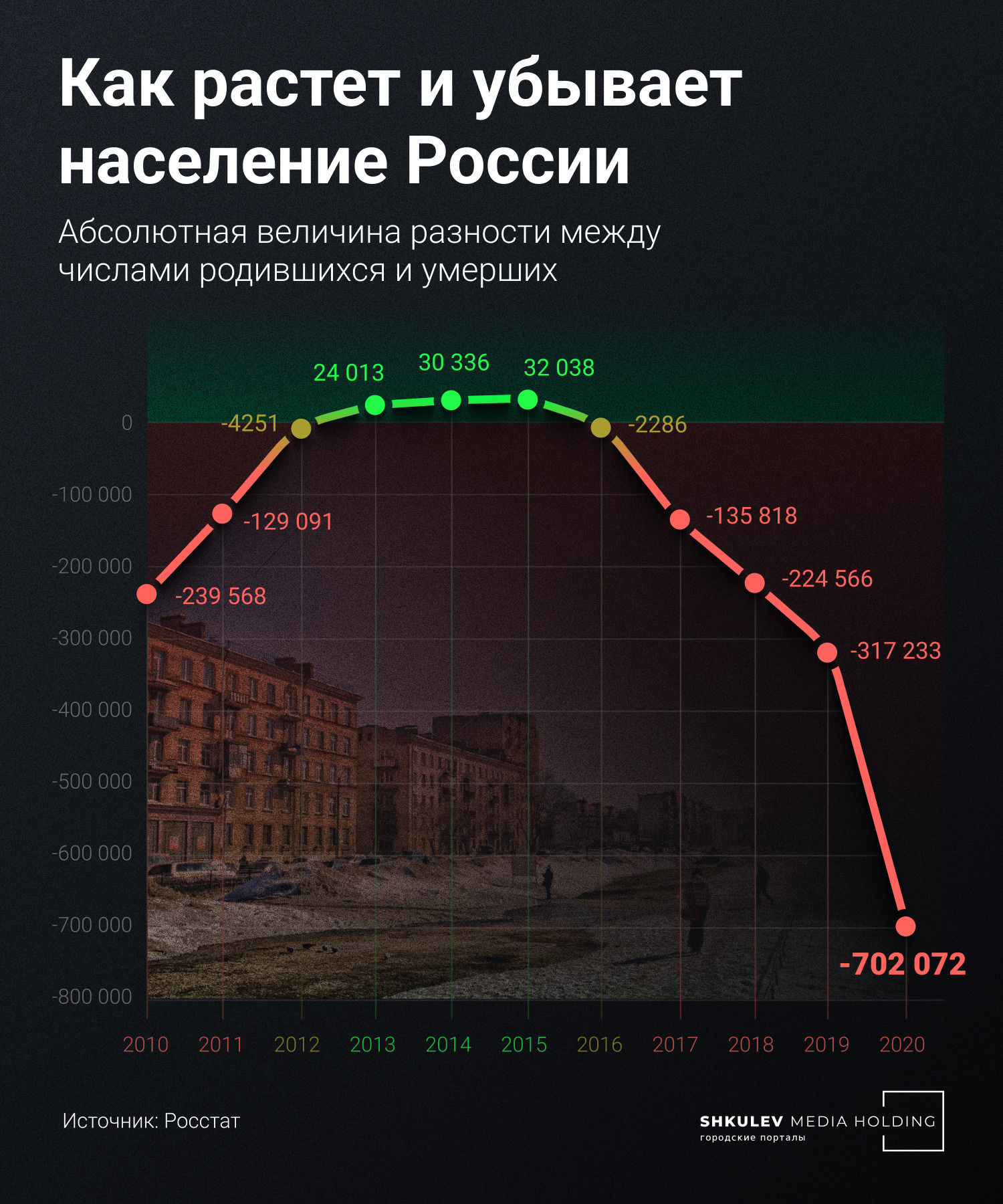
За десять лет рождаемость в России превышала смертность только трижды

Население России и правда не растет — это видно по графику выше. Государство старается мотивировать женщин рожать больше выплатами и социальными статусами — в прошлом году Владимир Путин вернул почетное звание мать-героиня, с 2022 года правительство ввело единое универсальное пособие на детей и подняло ежемесячные выплаты беременным женщинам. Однако в текущих условиях естественного воспроизводства населения ждать не приходится: согласно опубликованному Росстатом прогнозу до 2036 года, число жителей России если и будет прибывать, то только за счет мигрантов. Даже в позитивном варианте прогноза к 2035 году население будет убывать на 21 тысячу человек в год. При плохом раскладе — на 940 тысяч.

Что не так с предложениями РПЦ?


Россия не единственная страна, которую беспокоит уровень рождаемости. И не единственная, где обсуждаются ограничения абортов. В 2022 году аборты были запрещены в ряде штатов США, в 2020 году был ужесточен закон об абортах в Польше — теперь он возможен в случае инцеста и угрозы жизни матери. В России помимо угрозы жизни матери в медицинские показания входят гибель плода в утробе, необходимость в медицинских процедурах, которые могут пагубно повлиять на плод и неправильное внутриутробное развитие плода, тяжелые аномалии развития, несовместимые с жизнью.

В Польше врожденные пороки плода любой тяжести не являются медицинским показанием для прерывания беременности. Аналогичное предложение высказал и представитель РПЦ во время своего выступления на круглом столе профильного комитета Госдумы: исключить из перечня медицинских показаний к аборту угрозу для здоровья ребенка, сохранив в нём лишь угрозу для здоровья матери.

— Большинство прерываний беременности делается сегодня с точки зрения подстраховки, и перинатальный скрининг не всегда дает должные результаты, — заявил иерей. — Это неприемлемо с точки зрения нравственности и морали, это евгеника: по предположительным патологиям плода матери предлагают сделать аборт, хотя очень часто оказывается, что это совершенно не так.

Врачи говорят, что решение о направлении на аборт врачами принимается на основании инвазивного анализа, который верно определяет генетические нарушения, о «предположительных патологиях» речи не идет.

— Если женщину направляют на прерывание — это в первую очередь аномалии, которые несовместимы с жизнью. То есть плод может родиться, но он умрет в первые секунды или в родах, — говорит гинеколог Динара Березина. — Если плод имеет тяжелые аномалии развития, то он может погибнуть внутриутробно, а чем больше срок беременности — тем выше риски для женщины в случае, если плод погибает внутриутробно. То есть мы уже можем говорить об отслойке плаценты, массивном кровотечении, что несет чрезмерно высокие риски для жизни.

Причиной прервать беременность может стать синдром Дауна — его определяют на сроке 12 недель, что поздно для аборта «по желанию», который предусмотрен как раз до 12 недель. Если анализы выявят синдром Дауна, женщина действительно может принять решение после 12 недель. Но основные показания — это тяжелые патологии.

Так разрешат ли мужу запрещать?


Несмотря на то, что в целом против абортов высказываются не только священники, но и некоторые медики, и депутаты, ввести такое ограничение сложно как минимум юридически.

— Направление мысли, что ребенок — это плод любви и ответственности двоих, правильное. И женщина, принимая решение не в одиночестве, скорее примет его в сторону жизни. Но как это облечь в букву закона? — задается вопросом первый заместитель председателя комитета Госдумы по вопросам семьи, женщин и детей Татьяна Буцкая.

Она обращает внимание, что, во-первых, не все семьи полные, во-вторых, есть люди, которые живут в так называемом гражданском браке.

— Как будем проверять, что именно он отец будущего ребенка, ведь его подпись будет стоять под согласием на аборт? — пишет Буцкая в своем Telegram-канале.

С точки Семейного кодекса, «гражданские» супруги друг другу никто — сожители, между которыми нет никаких правоотношений. Это и сейчас часто становится причинами для судебных разбирательств — например, когда речь идет о совместно нажитом имуществе. Ребенок у супругов тоже получается «совместно нажитый», только если они сходили в ЗАГС.

— В браке муж автоматически считается отцом ребенка, если не установлено другого. Тут мы юридически никак не можем установить, от кого женщина беременна, а статус отца возникает, когда в соответствующей графе свидетельства о рождении ребенка появляются конкретные Ф. И. О., — говорит юрист Нижегородского женского кризисного центра Елена Благова.

Теоретически установить отцовство можно даже до рождения ребенка с помощью ДНК-теста. Гинеколог Динара Березина говорит, что такие тесты возможны начиная с десятой недели беременности. А прерывание беременности без показаний возможно до 12 недель, причем чем больше срок беременности — тем негативней сказывается аборт на организме женщины. РПЦ вообще предлагает сократить этот срок до 8 недель.

— Безусловно, у человека есть право на жизнь, у ребенка есть право на жизнь. Но плод, по крайней мере, с точки зрения российского законодательства, не является ребенком. Даже когда ребенок рождается живым, его не всегда регистрируют сразу как ребенка, до определенного веса это «биоматериал», — говорит юрист.

На момент максимального срока прерывания беременности «по желанию» плод весит значительно меньше — всего несколько граммов.

Еще одна проблема, по словам Буцкой, — случаи шантажа.

— [Мужчина может говорить:] Я дам [или] не дам согласие, если... Детьми рожденными шантажируют, а уж нерожденными тем более могут, — пишет депутат.

Однако когда ребенок уже рожден, появляется новая проблема. Шантажист, не давший согласие, может и не объявиться. А мать, в отличие от отца, установить несложно — этот статус женщина получает вместе с биркой в роддоме. В качестве аргумента против абортов часто используют сохранение жизни — «роди и откажись».

— Мало отказаться — нужно еще статуса лишиться, сходить в суд. Когда у женщины рождается ребенок, у нее возникают соответствующие права и обязанности. И даже если лишить человека родительских прав, обязанности, в том числе по уплате алиментов, всё равно остаются, — говорит юрист Елена Благова.

Thursday, January 19, 2023

depopulation

«Угроза не в росте населения, а в наших действиях». 


Перенаселена ли планета? Часть 2.

Биолог и преподаватель Свободного университета Максим Гольдштейн — о человечестве как биологическом и социальном виде, влиянии человека на экосистемы и другие живые организмы.

Планета пережила уже пять катастрофических циклов вымирания биопопуляций, и сейчас человечество уничтожает их достаточно быстро — например, повышая температуру планеты.

🐜 Больше всего от человека страдают беспозвоночные. Насекомым необходимо приспособиться к конкретным показателям температуры и влажности.

Массовое исчезновение видов — результат деятельности человечества, которое быстро размножилось и потребляет слишком много природных ресурсов. Поэтому проблема на самом деле не в количестве человек на Земле, а в том, как государства распределяют ресурсы и регулируют выбросы в окружающую среду.

🫂Даже увеличение населения до 16 миллиардов не составит проблемы при разумном подходе.

Подробнее 👉 https://kedr.media/interview/ugroza-ne-v-roste-naseleniya-a-v-nashih-dejstviyah-3419

Thursday, December 29, 2022

Messi Breaks World Cup Appearance Record

As of yesterday [а пришло сегодня], Lionel Messi has become the new record holder as the professional soccer player with the most appearances in a FIFA World Cup. The Argentine player took to the pitch for his 26th time in a World Cup tournament, which means he has now overtaken the ranks of Lothar Matthäus and Miroslav Klose.

At the same time, Messi is now the second-oldest scorer in a World Cup final at 35 years and 177 days; only Sweden's Nils Liedholm was marginally older at 35 years and 264 days when he scored in a 2-5 decision lost against Brazil in 1958. Messi is now also the player with the most goal assists in World Cup tournaments since data collection began in 1966. He has 13 goals and eight assists.

Meanwhile, France's Hugo Lloris set a World Cup record for goalkeepers. The 35-year-old Tottenham Hotspur goalkeeper played his 20th World Cup game in the final, leaving the previous record holder Manuel Neuer (19) behind. In the semifinal against Morocco (2:0), Lloris had equaled the German national goalkeeper. Messi Breaks World Cup Appearance Record

Friday, November 18, 2022

The far-reaching impact of abortion bans: reproductive care and beyond

On 24 June 2022, the US Supreme Court overturned Roe v. Wade, a 49-year-old precedent that provided federal constitutional protection for abortions up to the point of fetal viability, returning jurisdiction to the individual states. Restrictions that came into effect automatically in several states, and are anticipated in others, will severely limit access to abortions in approximately half of the US. Even though every state allows for exceptions to the abortion bans, in some instances these exceptions can be used to preserve the health of a pregnant patient, while in other instances, only to preserve their life. The vague and confusing nature of the abortion ban exceptions threatens to compromise the standard of care for patients with pregnancy complications that are distinct from abortions, such as nonviable pregnancies, miscarriages, and ectopic pregnancies. Additionally, we envision challenges for the treatment of women with certain autoimmune conditions, pregnant cancer patients, and patients contemplating preimplantation genetic diagnosis as part of assisted reproductive technologies. The abortion ban exceptions will impact and interfere with the medical care of pregnant and non-pregnant patient populations alike and are poised to create a medical and public health crisis unlike any other one from the recent past.

Friday, October 14, 2022

The Most Used Energy Sources in Europe

Much of Europe has set itself the goal of switching away from heavily polluting fossil fuels and towards renewable energy sources.

Our chart shows a snapshot of the energy landscape in Europe right now, using data from BP’s latest annual report. It reveals that while there’s some variation in energy types across the bloc, fossil fuels still make up the lion’s share of the energy sources the continent is most reliant on. Exceptions to the rule include France, which stands out for its nuclear power usage, and Denmark, which relies predominantly on renewables - mostly wind energy.

Iceland, Norway, and Sweden are the only countries in Europe to rely mostly on hydropower. While this is also a type of renewable energy, BP gives it its own subcategory due to the environmental impact of large-scale hydropower projects. In Iceland and Norway, hydropower makes up more than 60 percent of the countries’ energy supply.The Most Used Energy Sources in Europeтолько Дания — а свисту

Friday, September 2, 2022

Gorbachev Made It Happen

The Cold War Didn't Have to End


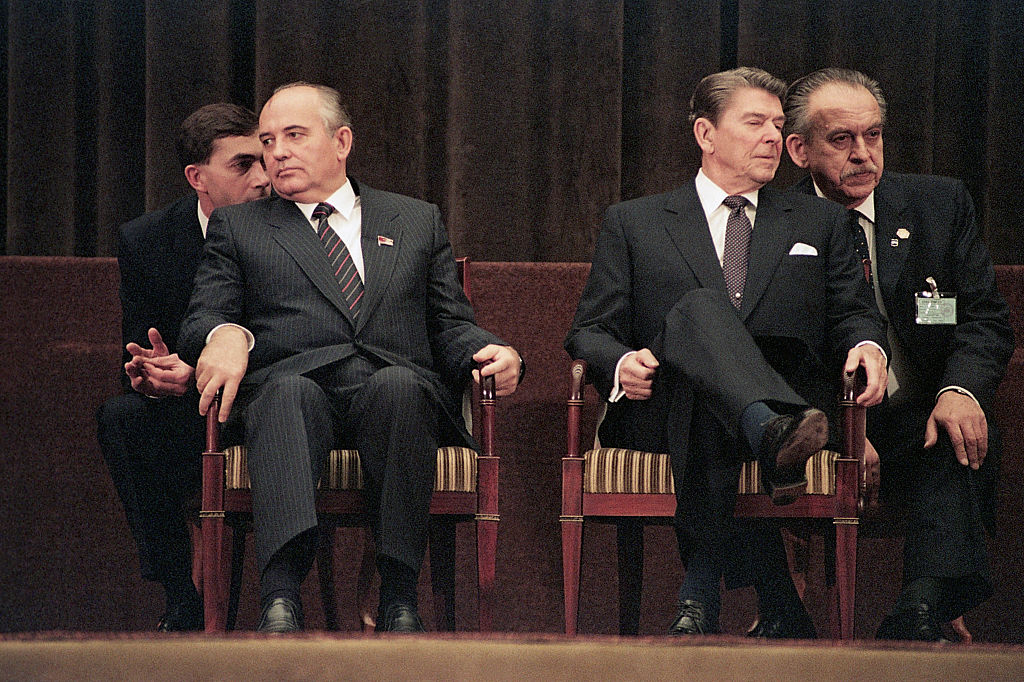
At the closing ceremony for the Geneva Summit, Soviet leader Mikhail Gorbachev and US President Ronald Reagan face away from each other, 21st November 1985.

BY ARCHIE BROWN AUGUST 31, 2022 3:12 PM EDT
Brown is a British political scientist and historian. He is Emeritus Professor of Politics at Oxford University and Emeritus Fellow of St. Antony’s College, Oxford. He is the author, among other books, of The Rise and Fall of Communism.

If there was one belief shared in 1985 by Western politicians, the leaders and peoples of Eastern Europe, and the Soviet political elite, it was that maintenance of Soviet-type Communist systems in the Warsaw Pact countries was for Moscow non-negotiable. However much Washington politicians talked, especially in the 1950s about rollback of Communism, Communist systems carried on. Western leaders condemned the Soviet invasions of Hungary in 1956 and of Czechoslovakia in 1968, but no American president contemplated a military response. As Ronald Reagan and Mikhail Gorbachev, who died on August 30 at 91, later agreed, nuclear war could not be won and must never be fought.

What changed? The decommunization of Eastern Europe and the end of the Cold War was not a consequence of Reagan’s military build-up and his starry-eyed Strategic Defense Initiative. Even Robert Gates joked that “there appeared to be only two people on the planet who actually thought SDI would work—Reagan and Gorbachev”. Gorbachev’s concern was not because he believed this would work in the manner Reagan hoped, but because to nullify a missile defense system meant overwhelming it with the sheer number of incoming missiles, some with nuclear warheads and some without. In other words, an acceleration of the arms race. The Soviet Ministry of Defense were perfectly content with that prospect, but Gorbachev was not.

Reagan’s presidency coincided with the last two years of Leonid Brezhnev’s Soviet leadership, the whole of the short Kremlin tenures of Yuri Andropov and Konstantin Chernenko, and the first four years of Gorbachev as general secretary of the Soviet Communist Party. Nothing changed fundamentally in Eastern Europe, or for the better in East-West relations, until the last of these four leaders came to power.

In the late 1940s, 1950s and 1960s, the U.S. had military superiority over the Soviet Union. Yet, Communism was not only sustained in Eastern Europe, it spread further afield. That makes it all the odder to argue, as some do, that in the mid-1980s when there was a rough military parity between the U.S. and the U.S.S.R., a Soviet leadership had no alternative but to seek to end the Cold War.

So long as it remained cold and not hot, this standoff had big advantages for the Soviet party-state bosses. Political isolation made it easier to avoid ideological contamination and to preserve the status quo. Constant warnings of the imperialist threat helped justify strict party control and the vigilance of the KGB against enemies at home or abroad.

Maintaining the military capacity for Mutually Assured Destruction (MAD) took a larger share of the Soviet economy than a comparable policy did in the larger American economy, but it was a price Soviet leaders were willing to pay, egged on by the most powerful of institutional interests. For Gorbachev to out manoeuvre the military-industrial complex required boldness and political finesse. The way he used the unscheduled and unchallenged flight to the edge of Red Square of a young West German, Matthias Rust, in May 1987 was an example. Gorbachev seized the opportunity to dismiss not only the conservative Minister of Defense but about a hundred other military leaders who were opposed to the concessions he was prepared to make to secure large-scale arms reductions.

Gorbachev made three contributions that were fundamental to ending the Cold War. The first was to remove its ideological foundations. In a break with Soviet Marxism-Leninism, Gorbachev called in 1988 for a “deideologization of interstate relations” and argued for priority to be given to values and interests that united the whole of humanity rather than those of any one class, nation or group. These included “the worldwide ecological threats” which, ahead of most Western leaders, he declared in his 1988 speech at the United Nations to be “simply frightening.”

The second crucial contribution to ending the Cold War was his embrace of fundamental change of the Soviet political system and Soviet society. The new tolerance within the Soviet Union itself—from an end to persecution of religion to a burgeoning freedom of speech and, before long, of publication reduced the sense of Soviet threat. When Gorbachev announced in 1988 that the following year there would be contested elections for a new legislature, this was a decisive step toward making the political system different in kind.

Gorbachev’s third fundamental contribution to ending the Cold War was his recognition that means in politics are as important as ends, and that included his commitment to change by peaceful means. The former head of Soviet Space Research, Roald Sagdeev, who emigrated to the U.S. in 1989, remarked on Gorbachev’s faith in persuasion, and how this, too, differentiated him from previous Soviet political bosses who would just issue an order and expect to have it obeyed.

At the international level, nothing was more important than Gorbachev’s eschewal of the use of force. What had appeared in 1985 too remote for serious consideration—the end of Communist rule in Eastern Europe—was calmly accepted by Gorbachev. Not for a moment did he consider the use of force to prevent this. Indeed, he was in the process of dismantling the Communist system in his own country. Responding to later Russian criticism that he had given up the countries of the Soviet bloc without a fight, his response was, “To whom did we surrender them? To their own people.”

Anyone who thinks that Soviet leaders had no option but to accept the end of their hegemony in East-Central Europe and then the interconnected dissolution of the Soviet Union (East European countries gaining their independence raised the expectations of the most disaffected nations within the Soviet Union itself) need look no further than Ukraine in 2022. The brutal war being waged there is a reminder that the militarily stronger Soviet Union did have the option of preserving their statehood by force. It is confirmation that the values of political leaders—a Gorbachev or a Putin—still matter.

Saturday, August 13, 2022

Catholic Intimacies

Negotiating Contraception in Late Communist Poland


Agnieszka Kościańska, Agata Ignaciuk, Agata Chełstowska
First published: 08 May 2022 https://doi.org/10.1111/1467-9809.12861

The authors would like to thank the reviewers and Joanna Baines. This article is a result of the research project “Catholicising Reproduction, Reproducing Catholicism: Activist Practices and Intimate Negotiations in Poland, 1930–Present” (principal investigator Agnieszka Kościańska), funded by the National Science Center, Poland (Opus 17 scheme, grant number 2019/33/B/HS3/01068). The authors are also grateful to the members of the Scientific Research Network (WOG) “Medicine and Catholicism since the late 19th Century” funded by Research Foundation – Flanders for their comments and support. Finally, the authors would like to thank the University of Granada for covering the Open Access fee.
[Correction added on 11th Jun 2022, after the first online publication: The sentence acknowledging the University of Granada for covering the Open Access fee was added.]

The majority of people in Poland self-identified as Catholic throughout the second half of the twentieth century. Despite the Polish Episcopate's unanimous rejection of contraception as immoral and sinful, a considerable proportion of Polish Catholics utilized family planning techniques and technologies explicitly banned by their institutional Church. This article uses personal narratives to show how Polish Catholics negotiated their use of Church-authorized and Church-banned family planning methods with their lived experiences of faith in a communist state where both abortion and contraception were legal. We explore the strategies of interpretation, relativisation, and (selective) rejection through which Catholics who self-identified as “practising” approached birth control as a social issue and an individual practice and show how communist secular approaches to birth control contributed to extending the scope of Catholics' agency in the realm of reproductive decision making.

Abortion in the United States

A Threatened Essential Procedure


Rachel B. Rapkin
Published Online:8 Aug 2022 https://doi.org/10.1089/gyn.2022.0062.editorial

It is impossible to practice obstetrics and gynecology right now without the incessant thought in the back of one's head: “What happens now that Roe v. Wade has been overturned?” I would like to extend an enormous Thank You to Mitchel S. Hoffman and the Journal of Gynecologic Surgery, for recognizing the importance of discussing abortion as essential, safe medical care by welcoming this Special Issue for publication. With the recent Dobbs decision by the Supreme Court of the United States (SCOTUS) that ultimately overturned Roe v. Wade, many physicians and patients are facing what is to be a new reality—one in which abortion is only accessible to patients living in certain states or to patients with the resources to travel to those states.

Abortion is one of the most commonly performed surgical procedures among reproductive-age women, with more than 250,000 performed in 2019. Despite this, many physicians do not provide abortions routinely, and abortion remains a highly regulated procedure. In this Special Issue dedicated to abortion, I hope readers will come to understand the legal history of abortion and what has led us to the current state of affairs, wherein legislators across the country are limiting access to this essential medical procedure. I also hope to frame abortion as a medical procedure, which, like all procedures, has risks, benefits, anesthesia considerations, and special situations in which the procedure may carry additional surgical considerations.

In her article on the history of abortion, Whittum describes the history of abortion regulations, highlighting the sharp increase in the last decade (pp. 000–000). While antiabortion laws predate the 1800s, history has shown that regulations did not actually stop abortions from occurring, rather, they led to an increase in illegal—and therefore often unsafe or criminalized—procedures. Only 1 decade ago, a woman living in Ireland was denied an abortion while experiencing a 17-week septic miscarriage, and she ultimately died as a result. The response was an international outcry and eventual legalization of abortion through the Health (Regulation of Termination of Pregnancy) Act of 2018.

While Christian countries (such as Ireland) are expanding abortion access, the United States has been restricting access further. During first 3 months of 2022, 519 abortion restrictions were introduced in 41 states. While the final SCOTUS ruling on the 15-week Mississippi abortion ban, Dobbs v. Jackson Women's Health Organization, was released in June 2022, a draft majority opinion leaked in early May showed that the SCOTUS was poised to overturn Roe v. Wade, which made abortions illegal in half of U.S. states.

Despite the passage of unprecedented numbers of abortion restrictions in the past year, the majority of Americans believe abortion should be legal in some or all circumstances. Rich and colleagues ethical discussion on abortion leads to the ultimate conclusion that abortion is a “moral good,” and that physicians providing these services should be lauded (pp. 000–000). By providing abortions, doctors are not only recognizing patients' autonomy, but also providing economic opportunities for such patients and creating improved health outcomes. As obstetricians/gynecologists, we see the toll pregnancy takes on our patients. We see the joy of delivering healthy, desired babies, but we also witness the anguish that abnormal and unintended pregnancies cause. We learned from The Turnaway Study that patients who attempt but were unable to obtain desired abortions faced risks—including eclampsia, postpartum hemorrhage, and death associated with pregnancy—that they would not have been subjected to if these patients were able to obtain abortions. As physicians, we have a moral imperative to help our patients live their healthiest lives, and we can do so by helping our patients avoid these preventable pregnancy-related outcomes.

While most obstetrician/gynecologists are well-versed in the risks associated with pregnancy, many of these clinicians may not be as familiar with the risks associated with abortion. In their article on abortion safety, Ralph, Norkett, and colleagues point out how incredibly safe abortion is, with a mortality rate of 0.3 per 100,000 at under 8 weeks, when the majority of abortions are performed (pp. 000–000). Because most complications are rare, many obstetrician/gynecologists may not be familiar with them. This review details the diagnosis and management of these complications.

Rarely, complications can be attributed to abnormally implanted pregnancies. Harken and Russo discuss some of these uncommon locations for pregnancy implantation, detailing both diagnostic criteria and management options (pp. 000–000). While rare, cesarean, cervical, and interstitial pregnancies are increasing in frequency, and recognition is important to avoid complications in patients presenting for abortion and other early pregnancy services.

The final article in this series, by Cansino and Brown, details anesthesia considerations for abortions (pp. 000–000). Anesthesia options can range from local anesthesia with accompanying verbal support to general anesthesia. Particularly, as states face restrictions and all-out bans on abortions, it will be essential for more physicians to begin to provide abortion services. Understanding anesthesia options will be key to increasing abortion provision.

We appreciate the opportunity to present abortion as an essential component of reproductive health care. This series has, we hope, shown that abortion, like many other gynecologic procedures, is extremely safe, and reviewing the rare complications can prepare us better to manage them when they do occur. Understanding abortion regulations from a historical lens allows us to understand better how we come to find history repeating itself.

In addition to the topics presented in this special issue, new questions will arise now that SCOTUS ultimately overturned Roe v. Wade. First, what happens to patients who are unable to obtain abortions? A 2021 study demonstrated that states enacting more abortion restrictions had higher total maternal mortality rates—a troubling finding that is likely to be replicated as more states create earlier gestational limits and total bans. There is concern that this will have a disproportionate impact on black women, who already have a threefold higher risk of dying in pregnancy than do white women. How can we help traverse the socioeconomic barriers that prevent patients from accessing safe, legal abortions, and therefore decrease their overall risk of mortality? Second, what happens to all of our trainees? Currently, access to abortion training is an Accreditation Council for Graduate Medical Education requirement for residency graduation; however, with half of U.S. states banning abortions, how will our trainees learn to perform them, and will they be less likely to choose to train in states where abortion access is restricted?

It is unclear what the future holds for abortions in the United States. One thing is clear—abortion is a safe, necessary medical service. I hope that this series encourages all clinicians who legally can provide services to begin doing so, as we attempt to continue providing the high-quality gynecologic care our patients deserve.

Страницы не указаны (pp. 000–000), потому что журнал ещё не вышел

Friday, April 15, 2022

Viktor Ilyukhin

Ви́ктор Ива́нович Илю́хин (1 марта 1949 года, Сосновка, Пензенская область, РСФСР, СССР — 19 марта 2011 года, Кратово, Московская область, Российская Федерация)

Получил широкую известность как прокурор, выдвинувший обвинения в государственной измене против трёх президентов подряд — Михаила Горбачёва (в отношении которого возбудил уголовное дело, за что был уволен), Бориса Ельцина и Владимира Путина. Именовался СМИ «охотником за президентами» и «красным прокурором».

Thursday, June 3, 2021

why?

хитрован
перед выборами, штоль?

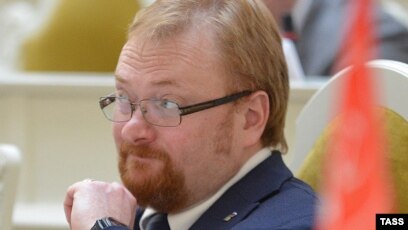
Милонов предложил лишить работающих коллекторами граждан пенсий


МОСКВА, 3 июня 2021, 08:05 — REGNUM Депутат Государственной думы Виталий Милонов («Единая Россия») призвал лишить пенсий граждан, которые занимаются коллекторской деятельностью.

«Если человек работал коллектором, он должен быть лишён пенсии», — сказал депутат в эфире радио «Говорит Москва». [то-есть, когда-либо работал]

Он также призвал лишить коллекторов права «называть себя гражданином», а бывшим коллекторам — запретить занимать любую должность.

Как сообщало ИА REGNUM, в середине апреля на круглом столе в Москве Милонов заявил, что западные спецслужбы пытаются повлиять на российскую молодежь под видом институтов и других образовательных учреждений.

По его мнению, финансист Джордж Сорос действует не сам по себе, пытаясь донести молодежи определенный политический посыл через образовательные программы.

Он также добавил, что структуры, которые пытаются втянуть российскую молодежь в выгодную для них повестку мимикрируют под образовательные учреждения.

Подробности

Sunday, May 16, 2021

Literary cuisine

Клеменца на кухне
Тоже всегда хотел повторить, и вот — нашол в ЖЖ, кортинок там много больше.

"Литературная кухня"."Крестный отец". Спагетти от Питера Клеменца


Дерзкий привкус чеснока, нотки жгучего красного перца, мясо и кроваво-красные томаты — любой мафиози по достоинству оценит ваши кулинарные таланты! BRAHMANDEN делится пошаговым рецептом блюда из культовой кинокартины «Крёстный отец».


Развивая географию литературной кухни я с большим удовольствием хочу рассказать о замечательном блюде за авторством Питера Клеменца, одного из главных героев книги Марио Пьюзо "Крестный отец".В одноименном фильме Клеменца на кухне, почти в семейной обстановке ,вальяжно, посвящает молодого Майкла Корлеоне в тайны приготовления соуса для спагетти.

Нам понадобятся:
- 500г. свиных колбасок, фарша или тефтелей. В оригинале использовались итальянские сальсичча.
- 1 банка томатов в собственном соку. (в сезон использовать вкусные ,сладкие свежие помидоры)
- 1ч.л. томатной пасты.
- 2-4 зубка чеснока.(подробнее ниже)
- 1 средняя луковица
- оливковое масло
- половина острого перца - по желанию
- 1ч.л. орегано
- 150 мл. красного сухого вина
- соль,сахар и черный перец.
- свежие петрушка, базилик- по желанию.
- Вяленые томаты,пармезан- опционально.

Пересмотрев отрывок из фильма я увидел эту пасту яркой ,эмоциональной, пахнущей чесноком ,томатами и вином, пышущей энергией и силой. Если конечно позволительно так высказываться о спагетти с соусом.

Для начала я взял свиную лопатку и немного жирной шеи ,обильно приправил чесноком, черным перцем и паприкой,посолил и оставил на ночь в холодильнике. Затем набил в кишки и сделал колбаски, которые подвесил на полдня на сквозняке.В итоге результатом я остался более чем доволен- колбаски вышли сочные, ароматные приятно пахли чесноком и черным перцем

Рассказывая о своей работе с Марио Пьюзо, автором Крестного отца - режиссер и сценарист Френсис Форд Коппола упоминает такой эпизод: “Помню, я сделал запись в сценарии по поводу приготовления соуса: «Для начала надо подрумянить чеснок”. Он вычеркнул строчку и говорит: „ Для начала надо зажарить чеснок. Гангстеры не подрумянивают ”.

Как готовить:

- Поджарить в оливковом масле нарезанный кубиком лук и порезанный крупно - чеснок.

- Добавить фарш, тефтели или как это сделал я - отрезал кончик колбасок и выдавил мясо из оболочки. Поджаривать 5-7 минут на небольшом огне ,пока мясо не подрумянится до красивого золотистого цвета. Следить, чтобы лук и чеснок не сгорели.Отдельно хочу отметить, что чеснока я брал 2 зубка , так как он у меня присутствовал в колбасках. Учитывайте этот момент.

- Томаты очистить (у меня были домашние, предварительно очищенные) и добавить в сковороду вместе с половиной сока. Слишком густой соус всегда можно разбавить ,добавив томатный сок из банки. Размять помидоры вилкой.
Добавить томатную пасту, острый перец (если используете) и орегано.
Довести до кипения и готовить, изредка помешивая, на среднем огне, так чтобы немного побулькивало - 15-20 минут.
На этом этапе я позволил себе добавить в соус домашние вяленые помидоры- они дают соусу концентрированный помидорный вкус.Вы можете этот пункт оставить без внимания.

- В большой кастрюле довести до кипения воду и варить спагетти (спагеттини,букатини,тальятелле или любой другой вид длинной пасты, который вам попадется).
Варить, согласно времени, указанному на упаковке.

- Добавить вино и готовить еще 5 минут. Попробовать и выровнять по своему вкусу, добавив сахар и соль.Обычно хватает 1-2 ч.л. сахара.
Соус должен получиться в меру густым и красивым, не жидким. В противном случае готовьте еще немного.

- При подаче присыпать крупно смолотым черным перцем и рубленой петрушкой и базиликом. У меня базилика не было и я ограничился петрушкой. На фотографии запечатлено лишь пара листочков - всю остальную петрушку я добавил после съемки уже себе в тарелку. Пармезан добавлять по желанию.

Я тут подумал и решил ввести тестовый блок - рецепт вкратце. Для тех кто прочитал основной рецепт, готовит и не хочет постоянно бегать к компу и читать длинный текст. Прошу прокомментировать, удобно это или нет.

Рецепт вкратце:

- Лук (1шт) и чеснок (2-4 зубка) поджарить до золотистого цвета
- Добавить мясо (500г) и подрумянить, помешивая.
- Добавить помидоры ( 1банка) и сок (почти весь), размять вилкой
- Прибавить томатную пасту (1ч.л.) и орегано (1ч.л.). Размешать.
- Довести до кипения и готовить (чтобы немного кипело) 15-20 минут до загустения соуса.
- поставить вариться спагетти.
- Влить в соус вино (150мл) и готовить еще 5-7 минут.
- Выровнять по вкусу на соль,сахар (1-2ч.л.) и черный перец
- выложить на горячие спагетти соус. Присыпать петрушкой и черным перцем.

Friday, December 18, 2020

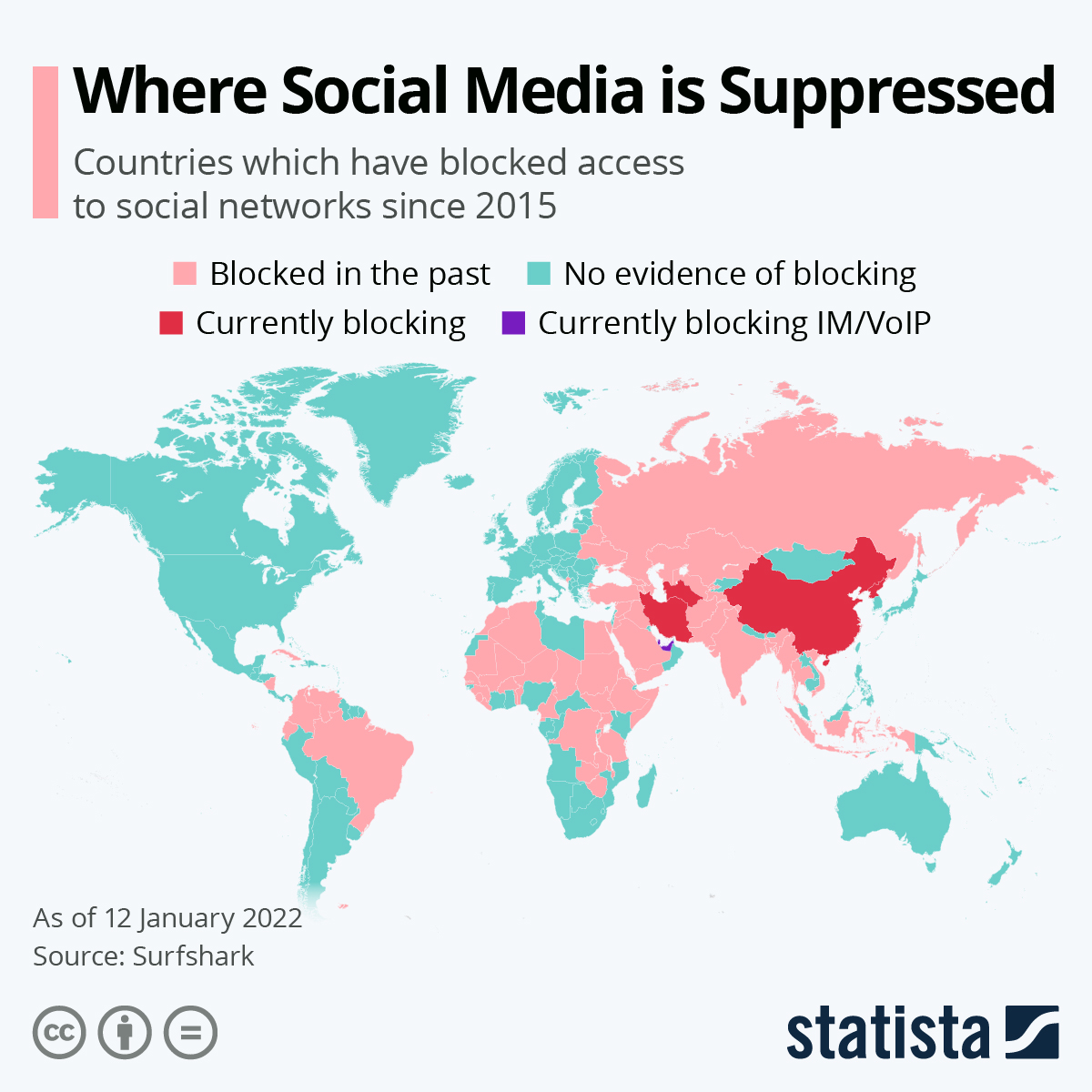
Where Social Media is Suppressed

Since 2015, around 62 countries worldwide have blocked or at least restricted access to social networks. This is the result of the online privacy and security company Surfshark's study of 185 nations. Currently, about three percent of the countries surveyed block access to social media and communication apps - all of them are in Asia. In China, North Korea, Turkmenistan and Iran, it is mainly foreign social networks such as Twitter and Facebook that are blocked. It should be noted that China has its own national ecosystem of social networks and communication apps. Qatar and the United Arab Emirates restrict the use of internet calls through voice-over IPs.

According to the analysts, such restrictions are often linked to undemocratic governments. Consequently, African and Asian countries have restricted access most frequently in the past five years. However, in most cases, the restrictions are temporary. Recent cases of censorship include Cuban social media blockades during protests in Havana on November 30, 2020, or Azerbaijan's access restrictions during the Nagorno-Karabakh conflict in September.Infographic: Where Social Media is Suppressed | Statista