Showing posts with label ВААРТ. Show all posts

Wednesday, September 20, 2023

Latinx women: fertility, IVF and family

DE LOS Column: How these Latinas are navigating fertility, IVF and family


My eyelids felt like they weighed 500 pounds, but I managed to open them as I was coming back to consciousness. Everything was blurry, until I saw the number “2” marked on my hand in black Sharpie, indicating the number of eggs my doctor had been able to retrieve from my body after weeks of expensive hormone injections, mood swings and the emotional toll of time being against you.

Two was not the number I’d hoped for. Two meant more injections, more money and more weeping in public places. My world came into a sharp focus at that moment in the most heartbreaking way, but I also thought the “2” would make a pretty cool tattoo.

Latinx women, and other birthing individuals, who are 35 or older and going through the fertility process deeply understand the price of time and the deeper cultural pressure that comes with it.

Lizy Wildsmith, a research scholar at Child Trends, a nonpartisan research organization focused on improving the lives of children and youths, studies reproductive health and family formation with a particular focus on the Latinx community.

“Fertility rates have increased among women aged 35 and older for several decades now. This is true also among Hispanic women,” Wildsmith said.

Wildsmith says the average age of Latinx people giving birth for the first time is 25.5, but as of 2021, about 20% of all births were among people age 35 and older, with that rate resting at 17% for Latinx women of the same age group.

While most births to Latinx women age 35 and older are second or third births, Wildsmith says, 16.7% are first births, also marking an increase. Just under 1% of births to Latinx women were from a pregnancy resulting from infertility treatment. Compare that with white non-Latinx women, who become pregnant through infertility treatments at a rate of 3%.

“It’s still a pretty small percentage of births overall, even in those age groups,” Wildsmith said. “But it’s been increasing a lot.”

More and more Latinx people are choosing to wait to have children for a variety of reasons, including but not limited to the astronomical cost of raising a child, a desire to accomplish more for themselves first, the disproportionately larger effects parenthood has on women’s lives and careers, cost of living overall, and the frightening realities of bringing a child into this world.

However, waiting means greater issues with fertility. At age 30, fertility rates begin to decline; by 45 the likelihood of getting pregnant naturally is extremely low. As a result, many in their 30s turn to fertility treatments to help them build their families.

“I wasn’t ever anybody who was like, ‘I must have a kid or my life will be incomplete.’I never felt that way,” said Dayna Cobarrubias, a 43-year-old entertainment executive in West Hollywood who began her fertility journey at 35. “But once I felt that there was a possibility that it actually wasn’t an option, I was really sad about that. So I felt more [urgency] about figuring it out.”

So when her struggles with fertility came, it hit Cobarrubias harder than expected, giving her a slight crisis of identity.

“There’s this trope or stereotype of Latinas being super fertile. Then when you’re not or when you come up against challenges with that, you’re like, ‘Am I really Latina?’” she said. “I remember thinking like, ‘Oh, this is ironic.’”

For those wishing to get pregnant, waiting could be a result of wanting to break generational cycles of poverty, societal expectations or trauma. For first-gen individuals, many of these factors are based on building from the sacrifices of their immigrant parents.

Rocio M., who asked that only her first name be used for professional reasons, is a college professor living in Highland Park. At 40, she is pregnant with her first child after going through an often “traumatic” fertility process using intrauterine insemination, or IUI, treatments, otherwise known as artificial insemination.

She recalls going to reproductive health clinics with friends in high school. She had friends who became mothers in high school, and it was her hope to avoid that fate, especially considering the stigmas and stereotypes around Latinx teen girls, who have had the youngest birthing rates in the country.

Rocio went to grad school, and once she built a career and got her student loans in order, she felt ready for parenthood. In her 30s, she met the woman who would become her wife.

“I think finding a person that I feel like I can do this with is what gave me the ánimo to do it,” Rocio said.

Rocio went into the process optimistically. Although she was 39 at the time, she’d had a pregnancy in her late 20s that she chose to terminate.

“In my mind, I’m like, ‘I have conceived. I can do this again,’” she said.

Once the results of various tests came back, however, Rocio realized conceiving may be harder than expected.

“That’s when it started to sink in that I’m not as fertile as I thought,” she said. “I kept thinking my body betrayed me. I’m like, ‘I thought we were good. You were running half-marathons. You’ve conceived before.’”

Rocio weighs her fears as a teenager to the difficulties she has faced in conceiving later in life.

“Here you are on the other side, where you’re just like, ‘Goddamn now I know I’m ready and we can’t have it,’” she said.

Like Cobarrubias, Rocio and the three other women I spoke to, I wanted to wait for my career to be in order, and I wanted to feel as ready as possible. At 36, I was still out most nights, drinking and smoking cigarettes, dating unseriously and working 10-hour days. I wasn’t ready for the full responsibility of having a baby.

Then I got pregnant and had a miscarriage. That put a lot into perspective with regard to my work and whom I chose to build a family with — a family that I really did want to have someday.

I’ve seen plenty of women in my life parent on their own, even when they had husbands, and I looked at every potential life partner with that in mind. I wanted a loving, supportive partner and a family, but not at the cost of everything I built for myself.


That meant lying with my legs in the air a couple of years later while a doctor scooped out some eggs from my huevo warehouse to put them to freeze.

It wasn’t my first go-around with egg freezing. A few years ago, I had started the process in New York, but the experience was so deeply unsettling I backed out after my initial consultation. After retrieving only two eggs earlier this year during my first full cycle of egg freezing, I was angry at myself for not finding another doctor back then when the number could’ve been 10 or 20.

Now, I’ve been trying to buy time, feeling like my eggs are on the clearance rack. I had to find a third, new doctor because my experience with the last one left me feeling hopeless and with zero sense of my options, which is important because fertility treatments are invasive and massively expensive.

On average, a single round of in vitro fertilization treatments, including egg freezing and embryo freezing, cost $15,000 to $30,000. Twenty-one states have passed fertility insurance coverage laws, according to Resolve, the National Infertility Assn., but only 14 include IVF coverage.

In California, the law does not require insurers to cover IVF, and employers can choose whether they want to include infertility coverage as part of their health benefits package. Most people needing fertility treatments have to go through a private clinic and pay out of pocket. It’s become a hugely lucrative business, for better or worse.

So far, the cost of one of my IVF cycles has been $13,577, and my new doctor quoted me a little under $23,000 for a new cycle, this time for embryo freezing. I’m beyond lucky, however, because my union (which provides my insurance) offers full coverage through a fund that caps at $30,000.

Rocio and her wife weighed their financial options when they began to plan for a baby, especially when faced with the possibility of losing more time.

“We’d much rather just take out the loan or charge it or something versus waiting,” Rocio said. “We had to have heart-to-heart conversations about how far we want to go. Like, how much money are we willing to spend?”

For Rocio and her wife, that was $8,700 out of pocket for her IUI treatments and some alternative treatments, with the rest being covered by insurance. She’s now pregnant and due in late November.

Cobarrubias invested $20,000, all out of pocket.

Rocio and Cobarrubias have seen multiple doctors after having bad experiences with previous specialists, leading to more costs. Taking out large loans or racking up credit card debt is the reality for many people going through treatments, but others have chosen another option.

Anel Bravo is a 35-year-old employee of the California Department of Education in Sacramento who is currently in an IVF cycle. School and work, followed by the COVID-19 pandemic, delayed Bravo and her husband’s plans to get married and start a family. But in 2021, they were able to start both journeys.


“We tried for over six months,” Bravo said. “It wasn’t happening for us, and I kind of had a feeling that something was up with me.”

“We went to a clinic here in Sacramento and I didn’t really like it, and then the cost,” said Bravo, who was quoted in the $30,000 range for treatments. “It’s really overwhelming to see that price tag. And so my husband and I, after discussing it, we actually decided to go to Tijuana [for fertility treatments] and so that’s where I’m at now.”

Bravo, often on her own, flies from Sacramento to her parents’ home in the Inland Empire, then drives to Tijuana for fertility treatments, where she says the standard of care has been much better than she’s received in the U.S. Sometimes, she’s down there for as long as a month, but it’s worth it to her. At the clinic where she is being treated now, Bravo is being charged $12,000 for four cycles of IVF, with a money-back guarantee if she doesn’t get pregnant.

“It’s a huge amount of money and thankfully my husband and I were able to afford it, but this is not something that’s accessible to just anybody,” Bravo said. “[The price is] a huge barrier. So we saved a significant amount of money by going to Tijuana. Even with all of the traveling and being away from home for so long, I would still do it.”

When it comes to fertility and family planning, there’s little information provided in a person’s life. Our bodies become odd mysteries, and we’re attempting to work within a healthcare system that often makes it impossible to unravel.

For Valeria Moran, a 42-year-old dental hygienist from Chula Vista, Calif., who, along with her husband, began her fertility journey when she was 35. It was not a matter of her eggs but rather issues with her husband’s sperm morphology. His sperm was discovered to have malformations, like two heads, that made natural conception and several rounds of IUI treatments unsuccessful. This discovery was unpredictable and further proof of how little we know about our bodies and conception. After weighing their choices, Moran and her husband decided to adopt, and now have a son.

Every person I spoke to experienced coldness, avoidance, confusion and trauma while going through the process. Some even felt gaslighted. They tried new doctors or alternative fertility treatments in hopes of getting help and clarity.

In my most recent appointment with a new fertility specialist, she explained everything, including all my options and what the most cost-effective choice would be, in clear, simple language. I finally felt empowered and like I understood my body, so much so that I cried at her desk from relief.

I could finally breathe because I was no longer navigating in darkness. I’m lucky that I have the tools and means to find this doctor, research their credentials, and pay the $822 fee for my first visit. That is not accessible to most people. And in the Latinx community, shame and secrecy around sex, conception and women’s bodies are still pervasive, adding another barrier to seeking care.

“I just feel like it’s not something that’s ever really talked about, especially in the Latino community,” Cobarrubias said. “It’s kind of the opposite, like the traditional narratives are more focused on motherhood as opposed to the challenges of infertility or nontraditional approaches to motherhood.”

This reality often leads people going through fertility treatments to do so in secret because of the responses or questions that will come from their families.

When I told my mom I was struggling with my fertility, the first thing she said was “te dije.” I should’ve had a baby with any one of my exes, including the extra bad one, or with “cualquier fulano.” It was a frustrating, but not surprising, reaction considering her thirst for an 11th grandchild and her dedication to a bit at all costs. It led to several lengthy conversations with her about why it was hurtful and problematic.

Similarly, Bravo has chosen not to tell her extended family, especially when they’ve asked why she and her husband haven’t had kids yet.

“For people who are going through this infertility journey, it’s very painful,” she said. “So having to rehash like, ‘I can’t really have kids the way that everybody else does,’ feels very vulnerable. And that’s not something that you’re trying to have a conversation about at your cousin’s baptism. … I don’t have the energy. You have to field really dumb comments, even well-intentioned ones. ”

Imagine now if someone who may or may not want to conceive a baby someday could know, early on, what their fertility looks like. What if at every routine checkup starting as early as 20 or 25, you could also be offered a wellness check on your egg reserve fertility so that you can consider your future plans? That’s one thing Cobarrubias hopes for in the future.

“Something that’s optional for you to assess what your readiness levels are,” she said. “And if you need to do anything to adapt your routine, if you plan to conceive or freeze eggs in the next several years. I just wish there was something that was offered. Even if I don’t want to do it now, there’s things you need to do in advance.”

One company, Modern Fertility, offers at-home fertility tests that provide information about your hormones and fertility at a fraction of the cost.

It was this test that informed Daisy Osorio-Velazquez, a 26-year-old education coordinator at a nonprofit who lives in Fullerton with her husband, that she had hormone levels that indicated she had a low ovarian reserve and could be premenopausal, meaning her ability to have children was extremely narrow.

Osorio-Velazquez’s world and her future changed in an instant. When she began to seek help from doctors, she says, she was dismissed, and realized the emotional and financial toll that treatment would require.

“When I took the test, I was just intending to be preventative,” she said. “I grew up in a low-income household. My family life at home when I was little was not stable. I knew I always wanted to have kids, but I was hoping we could be in a better financial position. I hoped to be able to provide my kid with certain opportunities that my mom wasn’t able to provide me growing up. … I just felt like time was stolen.”

Osorio-Velazquez and her husband are looking at their options in the U.S. and Tijuana while attempting to save enough money to enable them to undergo treatments. Even through her heartbreak, she’s thankful to have learned early on about her fertility issues as opposed to at 35 or older when ostensibly it would’ve been too late. As a result, she’s become an advocate within her community for spreading awareness of infertility and preventive care.

For a country that so wants women to have children, even by force, there’s little done to ensure those who want to conceive can access proper fertility care at an affordable price in a fully supportive environment.

As I continue my own journey, the hardship and unfairness of the process weigh on me, but it’s my hope that through talking about the experience openly with one another and within our communities, and allowing ourselves to laugh when we can, the process can be easier to navigate.

“You try to find little moments of joy and laughter. But then it just feels crazy because you’re just like ‘What the f— is happening,’” Bravo said. “You just hope, and you do everything you can.”

Alex Zaragoza is a television writer and journalist covering culture and identity. Her work has appeared in Vice, NPR, O Magazine and Rolling Stone. She’s written on the series “Primo” and “Lopez v. Lopez.” She writes weekly for De Los.


Friday, September 1, 2023

ART

В мнении многих чуждых медицины людей медицинская помощь в бесплодии (от осеменения донорской спермой до экстракорпорального оплодотворения) выглядит как абсолютное благо с минимальными (в основном финансовыми) негативными последствиями. Что-то вроде подложить подушку под живот при работе над зачатием.
Между тем, это не так. Негативные последствия вмешательств в этой сфере значительны, и, не будь у бесплодных женщин страстного (по разным причинам - вон, цари убивали бесплодных жен, бывало...) желания родить своего ребенка, не было бы огромных объемов этого бизнеса сегодня. Конечно, предположение начальства о том, что с помощью ЭКО можно нарожать больше солдат, тоже имеет значение.

Вот новое исследование: у родивших после вспомогательных процедур риск инсульта в последующие годы существенно выше.


Отметим, что это когортное исследование по ертроспективно собранным данным. Иными словами, связь есть. НО она не определенна. Возможно, что просто женщины, испытывающие трудности с оплодотворением, имеют некоторые особенности, которые также дают повышенный риск инсульта.

Tuesday, August 29, 2023

Social and mental health outcomes

Social and mental health outcomes of adolescents conceived via medically assisted reproduction

August 28, 2023 Alice Goisis

The number and proportion of children born after medically assisted reproduction (MAR) is increasing fast and many gaps in knowledge remain about their longer-term well-being. Using population register data from Finland, Alice Goisis and colleagues compare a range of social and mental health outcomes amongst MAR and naturally conceived adolescents.


Introduction


Against the backdrop of the postponement of childbearing behaviours and the increased availability of Medically Assisted Reproduction (MAR) treatments over the last decades, the proportion of families formed via MAR has been rising rapidly and the positive trend is expected to continue (Faddy, Gosden, and Gosden 2018). MAR is playing an increasingly important role in the realization of fertility intentions in advanced societies and to date an estimated 10 million children have been born after MAR. Yet, our understanding of MAR-conceived children’s well-being beyond the childhood period is still limited.

In a recently published article in the European Journal of Population (Remes et al. 2022), using Population register data on all children born in Finland 1995-2000, we compared a range of social and mental health outcomes among MAR and naturally conceived adolescents between families in the overall population and, for a subset of families who conceived both via MAR and naturally, within families. The latter approach enabled us to adjust for family characteristics which are shared by siblings but unobserved in the data.

In the analysed data, 4.9% (n = 13,757) of adolescents had been conceived through MAR techniques. On average, in line with existing work (Goisis et. al 2020), MAR-conceived adolescents had more advantaged backgrounds: their parents had higher levels of education and income, were more likely to be married and less likely to smoke during pregnancy than parents of children conceived naturally.

Social outcomes results


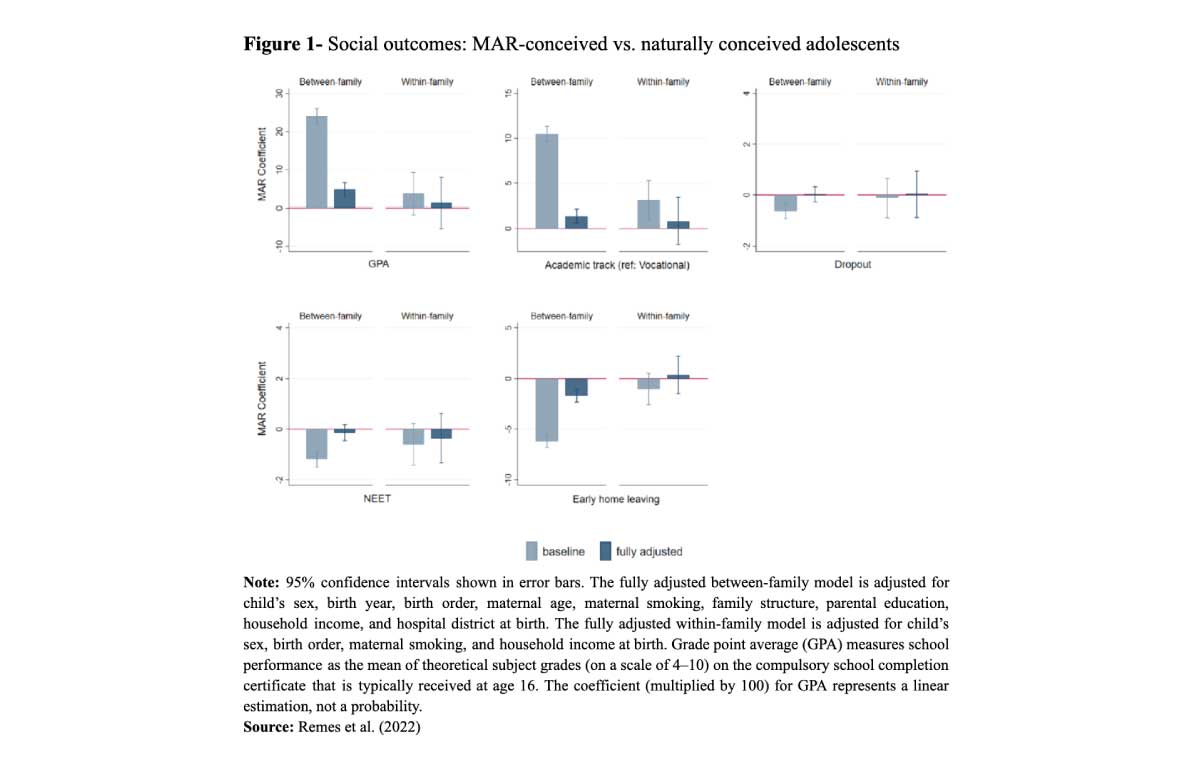
In the analyses that did not adjust for family characteristics, MAR-conceived adolescents had higher school grades and their likelihood of school dropout, not being in education or employment (NEET), and early home-leaving were lower than among naturally conceived adolescents. However, this advantage over naturally conceived children was largely explained when we adjusted for sociodemographic characteristics (Figure 1). This pattern was further supported by the analyses where we compared MAR-conceived adolescents to their naturally conceived siblings, which showed no differences in the social outcomes. These results suggest that MAR-conceived children had better social outcomes because they benefitted from their parents advantaged characteristics.

Mental health outcomes results


In the analyses that did not adjust for family characteristics, the results largely showed no differences between MAR and naturally conceived adolescents. However, when adjusted for child and parental characteristics, MAR-conceived adolescents were found to be more likely to have received care for any mental disorder and for internalizing disorders, in particular (Figure 2). This pattern of associations was also observed in the within-family analyses. Therefore, MAR-conceived adolescents advantaged social background compensates for the otherwise increased risk of poorer mental health outcomes. This increased risk might be related to parental anxiety and depression associated with the experience of subfertility, which could expose the children to a higher risk of mental health problems. Another possible pathway could be higher expectations and overprotectiveness amongst MAR parents that adversely affect their children’s socio-emotional outcomes. More research is needed to understand the possible mechanisms underlying the observed association.

Conclusions


The results paint a generally reassuring picture for adolescents born after MAR who, on average and before taking into account family characteristics, show better social outcomes and similar mental health outcomes to children conceived naturally. Moreover, they show the importance of integrating family characteristics whilst investigating MAR children’s outcomes. Indeed, the positively selected and advantaged characteristics of MAR parents help explain why MAR-conceived children outperform naturally conceived children on social outcomes, and are likely to compensate for their otherwise increased risk of mental health disorders. Finally, the comprehensive perspective on MAR children offered by this study highlights a potential trade-off and variation in the link between MAR and adolescent outcomes across different dimensions of well-being. Although relatively small, the observed mental health differences raise concerns and deserve further investigation.

References

  • Faddy Malcolm J., Gosden Matthew D., Gosden Roger G. 2018. “A Demographic Projection of the Contribution of Assisted Reproductive Technologies to World Population Growth.” Reproductive Biomedicine Online 36(4):455–58.
  • Goisis, A., Håberg, S., Hanevik, H., Magnus, M.C., Kravdal Ø. (2020). The demographics of assisted reproductive technology births in a Nordic country Human Reproduction 35(6): 1441–1450.
  • Remes, H., Palma, M., Peltonen, R., Martikainen, P. and Goisis, A. (2022) The well-being of adolescents conceived through medically assisted reproduction: a population-level and within-family analysis. European Journal of Population 38: 915–949.

Saturday, January 7, 2023

HIV economics

Пациентам с ВИЧ отказали в дополнительных средствах на закупку АРВ-препаратов

София Прохорчук 2 ноября 2022

Минфин России счел нецелесообразным выделять дополнительное финансирование на закупку антиретровирусных (АРВ) препаратов на 2023–2025 годы, так как средств, направленных Минздраву из федбюджета на эти цели, достаточно (в Минздраве с этим тезисом согласны). В «Пациентском контроле», представляющем интересы людей с ВИЧ-инфекцией и другими социально значимыми заболеваниями, считают иначе: в октябре организация просила Правительство РФ предусмотреть на закупку АРВ-препаратов дополнительные 15 млрд рублей. Обращение пациентов было перенаправлено в Минфин.


Департамент бюджетной политики в отраслях социальной сферы и науки Минфина в ответ на обращение пациентской организации сообщил, что на лекобеспечение пациентов с ВИЧ-инфекцией, в том числе в сочетании с гепатитами B и С, на 2023–2025 годы выделено 95,1 млрд рублей, то есть по 31,7 млрд рублей ежегодно. В ведомстве считают, что этих средств достаточно для реализации мероприятий по достижению необходимого охвата профильных пациентов АРВ-терапией.

В Минздраве в ответ на обращение «Пациентского контроля» [НКО, судя по всему] заявили, что, согласно Стратегии противодействия ВИЧ до 2030 года, утвержденной правительством, финансирование закупок препаратов осуществляется не только за счет средств федбюджета, но и за за счет бюджетов регионов и иных источников финансирования.

В октябре 2022 года представители «Пациентского контроля» направили письмо в Правительство России с просьбой увеличить финансирование закупок АРВ-препаратов на 2023–2025 годы на 15 млрд рублей. Необходимость увеличения финансирования в пациентской организации мотивировали тем, что расходы из федерального и региональных бюджетов в 2020–2022 годах на АРВ-препараты оставались «практически на одном уровне, несмотря на рост количества новых случаев и количества пациентов». [это прогноз потребности в ВААРТ, которым у нас не владеет практически никто, даже ВААРТ и потребность в нём минздравом не определены]

Общая сумма затрат на все закупки АРВ‑препаратов в России в 2021 году составила 31,69 млрд рублей. В «Пациентском контроле» отметили, что по сравнению с 2020 годом бюджет централизованных закупок увеличился на 2,88 млрд рублей, однако «формально», так как 1,36 млрд рублей пришлись на закупки для ФСИН, которые в 2020 году не входили в общую сумму закупок Минздрава.

В 2022 году Минздрав производил централизованные закупки после исчерпания бюджета на препараты на текущий год за счет средств, предназначенных на 2023 год. Ведомство потратило 8,6 млрд рублей из бюджета на следующий год, что говорит о возросшей по сравнению с прошлым годом потребности в АРВ-препаратах. Пациенты с ВИЧ-инфекцией опасаются, что бюджет на 2023 год может исчерпаться раньше времени, что приведет к усугублению ситуации с их лекобеспечением.

Wednesday, December 28, 2022

the right to freeze sperm for free

Российским мобилизованным перед отправкой на фронт дадут право бесплатно заморозить сперму


Российским солдатам, отправляемым для участия в боевых действиях в Украине в рамках мобилизации, будет предоставлено право бесплатно заморозить свои половые клетки в криобанках, сообщает утром в среду российское государственное новостное агентство ТАСС.

Агентство цитирует письмо российского минздрава, полученное президентом "Союза адвокатов России" Игорем Труновым в ответ на его обращение к главе правительства с предложением о создании бесплатного криобанка генетического материала для граждан РФ, участвующих в боевых действиях в Украине.

"Министерство здравоохранения РФ определило возможность финансового обеспечения за счет средств федерального бюджета по бесплатной консервации и хранению половых клеток (сперматозоидов) для граждан, мобилизованных для участия в СВО, на 2022-2024 годы", - приводит агентство содержание ответа.

В дальнейшем члены семей мобилизованных смогут также бесплатно воспользоваться замороженным биоматериалом при наличии показаний в рамках обязательного медицинского страхования.

В ходе объявленной Владимиром Путиным в конце сентября так называемой частичной мобилизации было призвано, по заявлениям российских властей порядка 300 тыс. человек, хотя многие эксперты считают, что реальное число было значительно больше. Сотни тысяч российских мужчин призывного возраста бежали из страны.

Хотя российские власти заявляли в конце октября, что все планы по мобилизации были выполнены и в дальнейшем наборе военнослужащих необходимости нет, указ об отмене мобилизации так и не был выпущен. Большинство наблюдателей сходятся в предположениях о том, что в ближайшие месяцы следует ожидать второй волны мобилизации.

Thursday, June 30, 2022

The contribution of assisted reproduction in the Australian context of delayed childbearing

January 20, 2022 Ester Lazzari, Edith Gray and Georgina Chambers

Growing numbers of couples are having children later in life. Australia is no exception and, as Ester Lazzari, Edith Gray and Georgina Chambers show, a key contributor to this rising trend is the use of assisted reproductive technologies (ART), especially by women wishing to have their first child.

In Australia, as in most other high- and middle-income countries, assisted reproductive technologies (ART), such as in-vitro fertilisation (IVF), continue to play an increasing role in helping individuals to have much wanted children. Latest estimates indicate that over the last two decades, the number of ART cycles performed in Australia has increased by almost 200%, with a steadily growing chance of treatment success, particularly for women of advanced reproductive age (Newman et al. 2021).

An important driver of the uptake of ART treatment is the major demographic and social trend towards delayed childbearing (Beaujouan 2020). For instance, in Australia, over the past three decades, the fertility rate of women aged 35 to 39 has more than doubled, and for women aged 40 to 44 it has tripled (ABS 2018). The ability to conceive a child naturally declines with female age, particularly after age 35 (Eijkemans et al. 2014). Thus, an increasing number of women experience age-related infertility and turn to assisted reproduction in the hope of having a baby.

Women having a child with ART are mostly first-time mothers


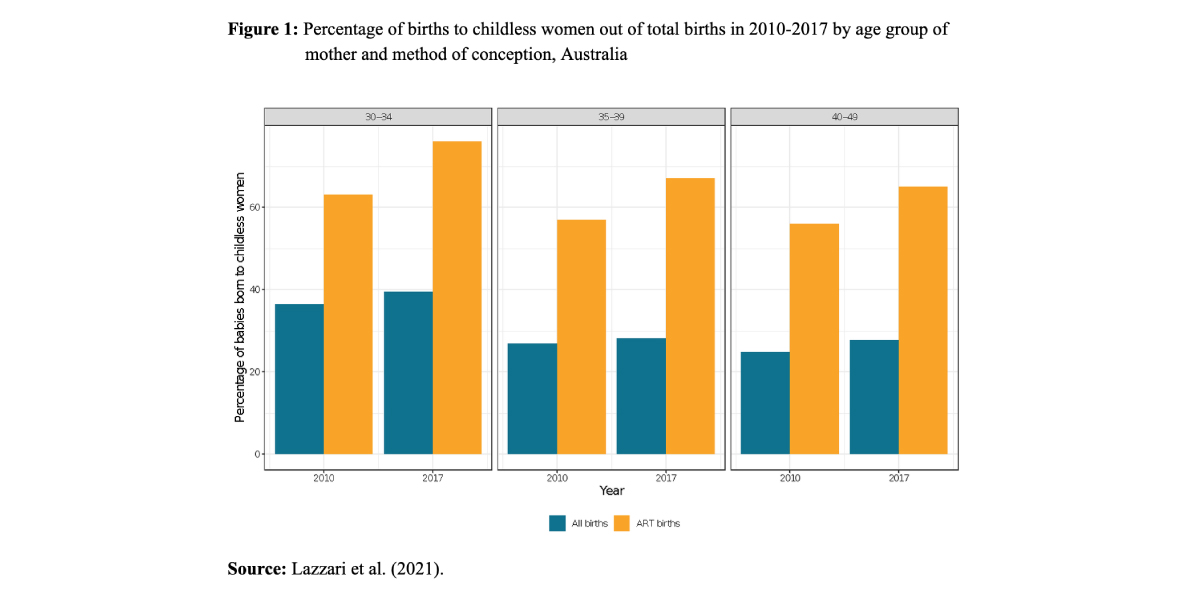
In a new study, we describe the characteristics of women who conceived using ART in Australia and quantify the impact of these births on the total fertility rate in recent years (Lazzari et al. 2021). We find that the proportion of first-borns is markedly higher among those giving birth using ART than among all women giving birth in the population (Figure 1). For example, among women of advanced maternal age (40 and above), two-thirds of those who have an ART-conceived birth are first-time mothers compared to just one in four of all women giving birth. This trend suggests that ART treatment is mostly contributing to a reduction in childlessness by helping women to have their first or only child, rather than increasing family size.

The demographic contribution of ART increases with mother’s age


We also find that that one in 20 births in Australia are a result of ART, corresponding to almost 5% of the total fertility rate. Moreover, the likelihood that a child is conceived using ART treatment increases significantly with mother’s age. For instance, in 2017, only 1 in 100 babies born to women aged below 30 were ART-conceived, compared to one in 5 born to women aged 40 to 44 and one in 3 born to women aged 45 and above.

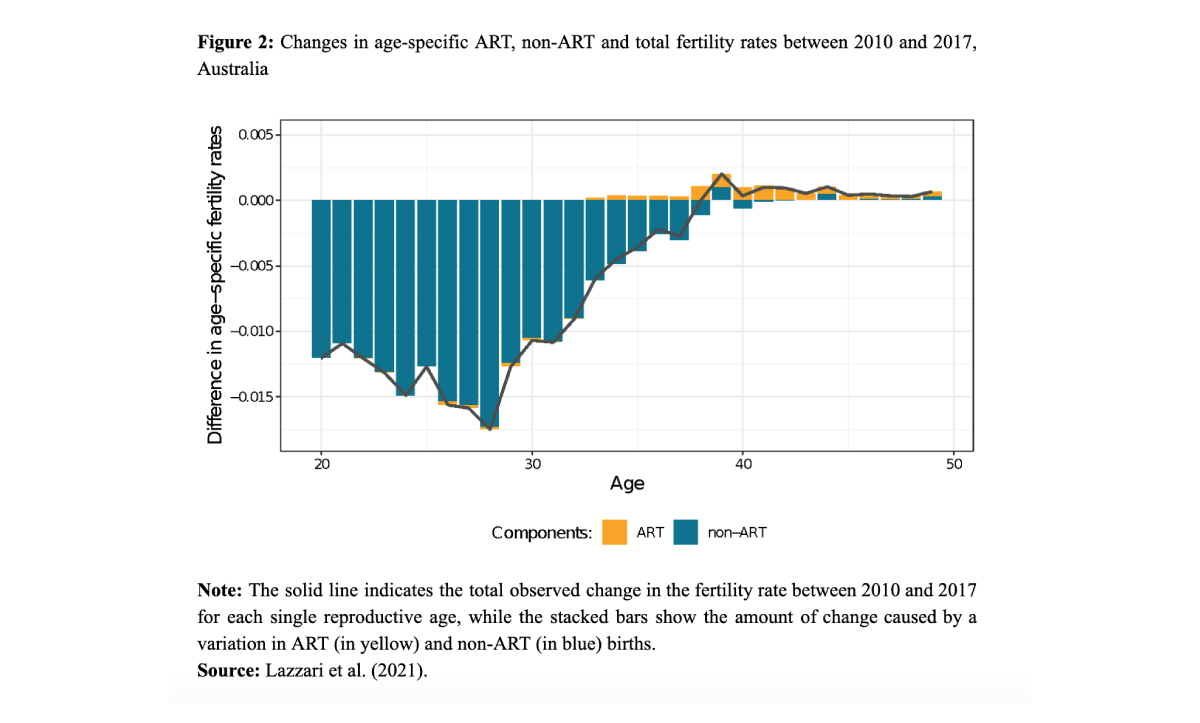
As displayed in Figure 2, the recent decline in the total fertility rate, from 1.95 in 2010 to 1.74 in 2017, is explained by a substantial reduction in fertility rates at younger ages, followed by only a partial recovery later in life. Yet, over this period, the increasing number of ART-conceived births to women in their mid-30s and over has greatly supported fertility rates at older ages, marginally offsetting the ongoing decline in naturally conceived births. For women in their late 30s or older, increases in fertility rates are almost entirely driven by the growing use of ART. These trends suggest that assisted reproduction is playing a meaningful role in contribtuing to Australia’s fertility rate by allowing a proportion of women to achieve parenthood at advanced maternal age.

An opportunity to reduce the gap between fertility intentions and realisation


Both social and biological aspects are important for understanding fertility trends. Against the backdrop of the continuing trend to delayed childbearing, the contribution of assisted reproduction will likely play an even greater role in supporting fertility rates in the future in societies where supportive social policies for the use of ART are in place. Australia is unique in that its national health insurance scheme, Medicare, subsidizes two thirds of the costs for all ART treatments, with no restriction based on age or number of treatments already performed, criteria often used to ration funding in most other countries. Indeed, largely because of its supportive funding environment, Australia has one of the highest ART utilisation rates in the world (Adamson et al. 2018). Thus, our study shows the impact of ART on age-specific fertility rates in a setting of supportive funding for ART and may serve as a case study for other countries considering an increase in ART coverage.

At the same time, it is important that individuals do not delay childbearing in the belief that ART will act as an insurance policy against childlessness. Nor should policy makers rely on ART to fully compensate for fertility decline. Like natural fertility, the success of infertility treatment also declines with age if a woman is using her own eggs. For example, for women aged 30 to 34 years commencing ART treatment, the estimated chance of having a child is 70% compared to only 20% among those aged 40 to 44 (Chambers et al. 2017). Hence, while this study demonstrates the positive impact of ART on fertility rates at advanced maternal age, it should be also noted that ART cannot fully compensate for the births lost due to childbearing delay. Fertility education and policy initiatives should also support individuals so that they can have children when it is biologically desirable for them to do so.

References

  • ABS (Australian Bureau of Statistics) (2018). Births, Australia, 2017. Catalogue no. 3301.0. Canberra: ABS.
  • Adamson, G.D., de Mouzon, J., Chambers, G.M., Zegers-Hochschild, F., Mansour, R., Ishihara, O., Banker, M., and Dyer, S. (2018). International Committee for Monitoring Assisted Reproductive Technology: World report on assisted reproductive technology, 2011. Fertility and Sterility, 110(6): 1067–1080.
  • Beaujouan, E. (2020). Latest-late fertility? Decline and resurgence of late parenthood across the low fertility countries. Population and Development Review 46(2): 219-247.
  • Chambers, G.M., Paul, R.C., Harris, K., Fitzgerald, O., Boothroyd, C.V., Rombauts, L., Chapman, M.G., and Jorm, L. (2017). Assisted reproductive technology in Australia and New Zealand: cumulative live birth rates as measures of success. Medical Journal of Australia, 207(3): 114-118.
  • Eijkemans, M.J.C., van Poppel, F., Habbema, D.F., Smith, K.R., Leridon, H., and te Velde, E.R. (2014). Too old to have children? Lessons from natural fertility populations. Human Reproduction 29(6): 1304-1312.
  • Lazzari, E., Gray, E. and Chambers, G. M. (2021). The Contribution of Assisted Reproductive Technology to Fertility Rates and Parity Transition: An Analysis of Australian Data. Demographic Research, 45 (9): 1081-1096.
  • Newman, J. E., Paul, R.C. and Chambers, G.M. (2021). Assisted reproductive technology in Australia and New Zealand 2019. National Perinatal Epidemiology and Statistics Unit, the University of New South Wales, Sydney.

Thursday, June 16, 2022

Access to antiretroviral therapy for HIV/AIDS and life expectancy in South Africa

June 13, 2022 Tran T. Doan, Woosub Shin and Neil K. Mehta

Despite widespread prevalence of HIV/AIDS, South Africa has succeeded in drastically reducing mortality and increasing life expectancy, from 54 to more than 65 years in little over a decade (2006-17). Granting universal access to antiretroviral therapy for HIV/AIDS proved the winning strategy, according to Tran T. Doan, Woosub Shin, and Neil K. Mehta.


Globally, universal access to antiretroviral therapy (ART) has led to a remarkable reduction in AIDS-related deaths and a substantial rise in population life expectancy. In sub-Saharan Africa, which carries the greatest burden of HIV/AIDS, delivering universal ART has been challenged by sociopolitical and structural barriers compounded by poverty and comorbid infectious diseases, such as tuberculosis (Kadia et al. 2021). Home to 60 million people, South Africa has the highest number of people living with HIV/AIDS (PLWHA) in the world, with 7.8 million PLWHA in 2020 (UNAIDS 2020). To address the rising death rate linked to HIV/AIDS, South Africa implemented a public-sector universal ART program in 2004, expanding HIV/AIDS care and treatment facilities for all 52 districts.

Increasing life expectancy, despite HIV


The HIV epidemic peaked in 2006 in South Africa. By 2017, AIDS-related deaths had fallen by 77% and the national life expectancy had risen to 65 years, up from 54 years in 2006 (Doan et al. 2022). Prior research shows that recent life expectancy gains at age 15 in South Africa are due in large part to universal access to ART (Johnson et al. 2017; Bor et al. 2013). Most studies report results for adults only, however, with few incorporating children in their calculations.

In a recent study (Doan et al. 2022), we evaluated the extent to which life expectancy gains at birth from 2006 to 2017 were attributable to declines in AIDS-related mortality versus other causes while accounting for all age groups, including infants and children. Our findings demonstrate the impressive gains achieved in South Africa after expansion of the public-sector universal ART program.

Measures and results


We measured life expectancy gains in South Africa from 2006 to 2017, and the extent to which these gains were attributable to reduced AIDS-related deaths compared to other causes of death. Our analysis tracked life expectancies across both sexes and at single-year ages, including children, and described their characteristics.

To calculate life expectancies, we constructed period life tables using mortality rates estimated by Thembisa, a South Africa-based HIV/AIDS statistical model that is parameterized using the latest health data sources (Johnson and Dorrington 2019). We also modeled counterfactual scenarios, a “worst-case scenario” and “best-case scenario,” to discern life expectancy gains related to HIV mortality compared to other causes.

We found that most life expectancy gains were attributable to reductions in HIV/AIDS mortality following the 2004 universal ART rollout in South Africa. We also found that:
• Life expectancy at birth increased by approximately 11 years from 2006 to 2017, with HIV/AIDS mortality reductions contributing at least three-fourths of life expectancy gains from 2006 to 2017 (Table 1);
• In people under age 50 years, most life expectancy gains came from reductions in HIV/AIDS mortality. Gains from reductions in HIV and non-HIV mortality became about equivalent at around age 50. In people ages 60 or older, most life expectancy gains were attributable to reductions in non-HIV mortality;
• Women gained more life-years than men (Johnson et al. 2017; Bor et al. 2013);
• Across all ages, most life expectancy gains occurred in the first half of the decade 2006–2017.

The importance of children


Few evaluations have measured HIV/AIDS-related increases in life expectancy from birth or childhood in South Africa, possibly due to limited cohort studies or data collection efforts. Yet improvements in HIV mortality in children have been dramatic, with mortality rates decreasing from 16% in 2006 to 5% in 2017 (Johnson et al. 2020). While the number of children living with HIV is much lower than that for adults, children are less likely to be diagnosed or treated (Johnson et al. 2020; UNAIDS 2020) even though early treatment could potentially save even more lives and life-years as they grow into adulthood. Furthermore, adolescents in South Africa have historically experienced high rates of new HIV infections and the lowest rates of retention in care and viral suppression compared to other age groups. The measurable impact of universal ART on life expectancy may therefore be underestimated if child mortality is not accounted for in formal evaluations.

The South African government has set a life expectancy goal of 70 years by 2030. Although improvements began to plateau in 2014, further life expectancy gains might be achieved, for example, by expanding ART coverage to those still in need and by addressing other contributing factors, such as child and maternal mortality, tuberculosis, and poverty. South Africa’s universal ART program is a noteworthy example of how a government’s investment in public health can lead to dramatic improvements in national life expectancy.

References

  • Bor, J., Herbst, A.J., Newell, M.L., and Bärnighausen, T. (2013). Increases in adult life expectancy in rural South Africa: Valuing the scale-up of HIV treatment. Science 339(6122): 961–965. doi:10.1126/science.1230413.
  • Doan, T., Shin, W., & Mehta, N. (2022). To what extent were life expectancy gains in South Africa attributable to declines in HIV/AIDS mortality from 2006 to 2017? A life table analysis of age-specific mortality. Demographic Research, 46, 547-564.
  • Kadia, B. M., Dimala, C. A., Fongwen, N. T., & Smith, A. D. (2021). Barriers to and enablers of uptake of antiretroviral therapy in integrated HIV and tuberculosis treatment programmes in sub-Saharan Africa: a systematic review and meta-analysis. AIDS research and therapy, 18(1), 1-17.
  • Johnson, L.F. and Dorrington, R.E. (2019). Thembisa version 4.2: A model for evaluating the impact of HIV/AIDS in South Africa. Cape Town, South Africa: University of Cape Town. www.thembisa.org.
  • Johnson, L.F., May, M.T., Dorrington, R.E., Cornell, M., Boulle, A., Egger, M., and Davies, M.A. (2017). Estimating the impact of antiretroviral treatment on adult mortality trends in South Africa: A mathematical modelling study. PLoS Medicine 14(12): e1002468. doi:10.1371/journal.pmed.1002468.
  • Johnson, L.F., Patrick, M., Stephen, C., Patten, G., Dorrington, R.E., Maskew, M., Jamieson, L., and Davies, M.A. (2020). Steep declines in pediatric AIDS mortality in South Africa, despite poor progress toward pediatric diagnosis and treatment targets. The Pediatric Infectious Disease Journal 39(9): 843–848. doi:10.1097/ INF.0000000000002680.
  • Joint United Nations Programme on HIV/AIDS (UNAIDS. (2020). South Africa 2020. Geneva, Switzerland: UNAIDS Secretariat.

Friday, March 5, 2021

HIV survival in Russia

Выжить с ВИЧ в России. Как инфицированные россияне пытаются получить терапию


В феврале исследовательский проект «Если быть точным» фонда «Нужна помощь» опубликовал обновленную статистику по ситуации с ВИЧ в России. В исследовании говорится, что число людей с установленным положительным статусом уже превысило миллион, при этом более половины из них не получают терапию. «Сноб» поговорил с тремя ВИЧ-положительными россиянами о том, на что им приходилось идти ради получения необходимых лекарств, и попросил медицинского директора фонда «СПИД.ЦЕНТР» прокомментировать их опыт
1 декабря 2020 года в Москве открылся Научный центр по профилактике и борьбе со СПИДом ЦНИИ Эпидемиологии Роспотребнадзора [насколько понимаю, после смерти Покровского ФНМЦ ВИЧ/СПИД приказал долго жить]

По данным исследования «Если быть точным»


— 1 106 513 граждан России знают, что живут с ВИЧ
— 63% ВИЧ-инфицированных россиян считают причиной заражения гетеросексуальный секс
— самые неблагополучные регионы по распространению ВИЧ — Ленинградская, Иркутская и Кемеровская области
— лучше всего ситуация с контролем вируса — в Брянской, Белгородской и Воронежской областях
лишь 59% ВИЧ-инфицированных состоят на учете в медицинских учреждениях [любопытный вывод, но висит в воздухе — какие фаши тока сателфа?]
— из них терапию получают 74%
— около 56% от общего числа заболевших вынуждены бороться за стабильное медобеспечение

«Мне говорили, что терапию я не получу»
Александр

О своем статусе я узнал в 2017 году во время подготовки к плановой операции. Результаты анализа на ВИЧ мне сообщили по телефону. Было жутко страшно. Я сразу же поехал в Центр СПИДа на Соколиной горе, куда передали результаты моих анализов. Там врач сказал мне, что, поскольку у меня временная московская прописка, терапию я смогу получить только после письменного обращения в Департамент здравоохранения. Обращение в депздрав я отправил в феврале, а ответ получил только летом — к счастью, положительный. Но эти несколько месяцев в центре СПИДа у меня не брали анализы, и я толком не понимал, что со мной происходит.

Осенью я начал ходить в группу взаимопомощи для парней, живущих с ВИЧ, в фонде «Шаги». Там мы обсуждали все волнующие нас вопросы: например, говорили о принятии диагноза, о личной жизни. В это время я, еще ни разу не получив терапию, узнал о побочных эффектах, которые могут вызвать препараты: сыпь, тошнота, головные боли, проблемы с памятью и даже галлюцинации. У меня был шок, потому что моя работа в то время была связана с большим количеством информации, на мне лежала серьезная ответственность. Два года я не получал лечение, так как врачи говорили, что выпишут препараты, лишь когда клеток станет меньше 400, а у меня их было 900 (количество клеток CD4, которые вирус поражает в первую очередь; в норме их должно быть не меньше 500. — Прим. ред.). Но был и другой показатель, который врачи игнорировали, — это постоянно возрастающая вирусная нагрузка (условный показатель количества вируса в одном миллилитре крови. — Прим. ред.). Мне говорили, что терапию я не получу. Позже я узнал, что в Центре СПИДа на Соколиной горе это не единичный случай, а устоявшееся правило. Можно жаловаться, писать, даже подавать в суд, но результат останется тем же. Бывали ситуации, когда препараты просто исчезали из схем лечения, их заменяли другими — а это новые испытания для организма. Докторов это не волновало.

Целый год после беседы с врачом я принимал различные витамины и добавки — жутко боялся простыть, не был уверен, что иммунитет справится. Тем временем количество клеток CD4 сократилось до 500, но в лечении мне по-прежнему отказывали. Тогда, благодаря центру профилактики ВИЧ LaSky, я узнал об Институте пульмонологии, где для ВИЧ-инфицированных была разработана специальная программа лечения, и поехал туда на прием. Врачи медучреждения рекомендовали срочно начать терапию, предложили экспериментальное лечение, но предупредили о рисках. Я почитал о предложенных мне препаратах, узнал, что это лекарства нового поколения, которые использовались в Европе, и подписал все необходимые бумаги. В результате лекарства помогли: за короткий период вирусная нагрузка снизилась, иммунитет укрепился. Я был в восторге от уровня подготовки докторов, отзывчивости медперсонала и эффективности препаратов.

Я открытый гей. Из-за угроз, которые я получал в России, мне пришлось уехать в Европу. Здесь я продолжаю принимать препараты, которые мне назначали в Институте пульмонологии. В России, все на той же Соколиной горе, мне удалось получить официальную справку, которая подтверждает, что я не получал антиретровирусную терапию (комбинированная терапия, при которой человек принимает одновременно сразу несколько препаратов. — Прим. ред.) в течение двух лет. Это важный документ, с которым можно обращаться в ЕСПЧ, но суд и подготовка к нему требует много времени и сил, поэтому я на этот шаг вряд ли решусь.

Родителям о своем статусе я так и не рассказал. Они — люди другого поколения, в их сознании ВИЧ-статус равен смерти, поэтому разговор о диагнозе может их травмировать.

«Сказала врачу: "Я хочу жить", — и потеряла сознание»
Динара

О своем диагнозе я узнала в 2009 году совершенно случайно. Я тогда лежала в больнице, и однажды меня позвали к заведующей. Не успела переступить порог кабинета, как услышала: «Ой, такая молодая, а какой образ жизни ведешь!» Я спросила: «Вы о чем?» А она: «У вас ВИЧ. Подпишите бумагу по поводу 122 статьи (документ подтверждающий, что человек проинформирован о ВИЧ-положительном статусе и уголовной ответственности за инфицирование других людей. — Прим. ред.) и в больнице никому ничего не говорите». Мой врач, которая в тот момент тоже была в кабинете, добавила: «Если вы озвучите свой статус здесь, я буду вынуждена вас выписать». Мне тогда было 18 лет. Тогда я даже представить себе не могла, что в «правильной» республике Татарстан можно заразиться ВИЧ.

Родителям о своем статусе я рассказала только спустя четыре месяца, когда уже ходила в группу взаимопомощи. Мама начала что-то подозревать, потому что я уходила из дома дважды в неделю в одно и то же время. В один из таких дней я ей просто сказала: «Мам, у меня ВИЧ-положительный статус». Неделю мы не разговаривали. Со временем мама приняла мой диагноз, но от всех остальных я скрывала его до 2012 года.

Терапию я начала принимать только в 2011 году. На тот момент я уже была представителем общественной организации, объединяющей людей с ВИЧ, поэтому хорошо разбиралась в показателях анализов и понимала, что мой иммунный статус снижается. По стандартам ВОЗ, терапия тогда назначалась, если показатель был ниже 350, но мой врач сказал: «Мы живем по стандарту, по которому порог — 200». Мои анализы показывали от 260 до 350 клеток, поэтому доктор считал, что терапия мне не нужна. Но я настаивала, и в результате мне назначили хорошую терапию. Мой организм ее не воспринял, появились побочные эффекты, которые чуть не стоили мне жизни. Из-за побочек я снова пошла в СПИД-Центр. Помню, как сказала врачу: «Я хочу жить», — и потеряла сознание. Оказалось, что у меня непереносимость одного из основных препаратов, а специалист, который назначил мне терапию, забыл сделать соответствующий тест. Обо всем этом мне рассказал другой врач СПИД-Центра после того, как я пришла в себя. Он же объяснил, что теперь меня ждет период восстановления и новая терапия — все это было осенью 2012-го, то есть на поиск подходящей терапии ушел год.

До заболевания я просто жила: ходила на тусовки, развлекалась, знакомилась, а теперь у меня появилась цель — помогать другим ВИЧ-инфицированным. Сейчас я специалист по социальному сопровождению в региональной общественной организации «Центр плюс». Консультирую людей, помогаю им с постановкой на учет и поиском терапии, поддерживаю их. За время работы я выделила для себя две основные проблемы, с которыми сталкиваются ВИЧ-положительные люди: сложность выстраивания взаимоотношений с ВИЧ-отрицательным партнером и боязнь начать принимать терапию. Что касается первого страха — если человек стабильно принимает терапию, он безопасен для окружающих. По поводу второго страха: люди не хотят брать на себя ответственность, потому что терапия предполагает регулярный прием препаратов, о которых нельзя забывать, и побочные эффекты, но ради нормальной жизни надо себя перебороть.

Наше общество не готово принимать ВИЧ-положительных, хотя это заболевание на Западе уже давно считается хроническим и контролируемым. В этом году в Московской области я столкнулась с ситуацией, когда человеку с положительным статусом стало плохо, а врач скорой помощи, узнав о его диагнозе, сказал: «Своего вичевого лечите дома сами». Такое отношение со стороны докторов приводит к тому, что люди, которым срочно нужна помощь, ее не получают.

«Узнав свой статус, я рассказал о нем родителям. Реакция была страшной»
Андрей

Я узнал о своем диагнозе осенью 2016 года накануне 1 декабря — Дня борьбы со СПИДом. В тот день мне было плохо — температура поднялась до 42 градусов и не падала. Я вызвал скорую, врачи подозревали отравление, но после сдачи анализов выяснилось, что у меня ВИЧ. Я знал людей с таким диагнозом, поэтому сразу понял, что это страшно, но не смертельно.

Депрессии не было, мой статус меня не смущал, я даже начал писать о нем на сайтах знакомств. Случалось так, что меня благодарили за информацию, но сразу говорили «до свидания». Хотя я принимаю терапию и живу с нулевой вирусной нагрузкой, а значит, безопасен для окружающих и не могу никого заразить, не все партнеры готовы принять положительный статус. Я полтора года жил с ВИЧ-отрицательным мужчиной, но он боялся даже целоваться.

Узнав свой статус, я рассказал о нем родителям. Реакция была страшной: мне выделили отдельную посуду и отгородили от меня племянников, чтобы они не заразились. Следующим испытанием стало получение терапии. В Москве, где я тогда жил, лекарства мне не полагались, потому что не было прописки, но и в барнаульском Центре СПИДа ситуация оказалась не лучше. Мне сказали: «Вирусная нагрузка у вас высокая, но дать терапию мы вам не можем — препараты остались только для беременных. Ждите». Ждать я не мог. Тогда, по совету НКО «Пациентский контроль», я обратился за помощью к СМИ. На один из приемов к врачу я пришел со скрытой камерой и снял, как мне отказывают в терапии. Телевизионный сюжет об этом заметили в региональном Минздраве и выписали два курса препаратов. В попытках добиться стабильной терапии я дошел до федерального Минздрава и только тогда смог получить третий курс таблеток. «Выбивать» терапию в регионах очень тяжело, ее банально не дают или предлагают купить. Сейчас все в порядке: я прописался в Подмосковье и регулярно получаю препараты. Родители мой статус приняли.

Самая неприятная ситуация, связанная с положительным ВИЧ-статусом, произошла, когда я снимал комнату в Москве. Из-за публикаций в СМИ о моем диагнозе узнали соседи по коммунальной квартире — муж и жена. Женщина билась в истерике и не выходила из комнаты. Меня попросили съехать. Вообще после публичного заявления мой круг общения сократился — «друзья» молча удаляли меня из друзей в соцсетях. Если в Москве людей с положительным статусом принимают, то в регионах презирают и избегают. Люди боятся даже обсуждать заболевание, но это неправильно: надо говорить о нем, организовывать уроки просвещения в школах — уверен, что только так можно изменить ситуацию.
Мобильный пункт для добровольного тестирования на ВИЧФото: Петр Ковалев/ТАСС
Антон Еремин, врач-инфекционист, медицинский директор фонда «СПИД.ЦЕНТР»:

Получить точные данные [что это такое?] о количестве людей с ВИЧ в России практически невозможно. Сложности в подсчетах возникают потому, что в статистику Минздрава попадают лишь те, кто дошел до Центра СПИДа по месту регистрации, а Роспотребнадзор может учитывать одного и того же человека несколько раз, например, если он сдавал тест в разных регионах. При этом существует большая группа людей, которые не тестируются вовсе, а значит, информации об их ВИЧ-положительном статусе нет ни в одной базе. Поэтому «пессимистичная» методика подсчета в исследовании «Если быть точным» оправданна. Можно с уверенностью говорить, что в России эпидемия ВИЧ-инфекции: около 1% взрослого населения живут с ВИЧ; в некоторых регионах нашей страны этот показатель еще выше (например, в Кемеровской области вирус диагностирован у 2% населения. — Прим. ред.). Такая ситуация требует активного внедрения эффективных методов борьбы с эпидемией, которые уже используются во всем мире.

Человеку, который только узнал о своем ВИЧ-положительном статусе, следует обратиться в Центр СПИДа своего региона. Там проведут стандартное обследование, возьмут анализы и назначат терапию. В соответствии с клиническими рекомендациями Минздрава терапия должна быть назначена сразу — ждать снижения иммунитета нельзя. На практике так происходит далеко не всегда: где-то из-за нехватки препаратов, где-то из-за некомпетентности врачей, которые не всегда используют современные подходы. И пациенту, и врачу стоит учитывать, что именно раннее начало терапии снижает риск развития серьезных заболеваний, положительно сказывается на продолжительности и качестве жизни с ВИЧ.

Очень важно, чтобы каждый человек с ВИЧ отстаивал свои права, а общество ему в этом помогало. Для этого существует фонд «СПИД.ЦЕНТР» и другие некоммерческие организации, например, «Пациентский контроль» и Международная коалиция по готовности лечения, где всегда проконсультируют насчет терапии и расскажут о том, как поступать, если в лечении отказывают.

Подготовила Кристина Боровикова

Tuesday, July 21, 2020

assisted reproductive technology

Молодожены во дворце бракосочетания №5 в Москве
В РПЦ предложили пересмотреть регулирование суррогатного материнства


12:31 20.07.2020

МОСКВА, 20 июл – РИА Новости. В Русской православной церкви надеются, что принятие поправок в конституцию РФ, защищающих семью, позволит пересмотреть регулирование суррогатного материнства в России, заявил в понедельник РИА Новости заместитель председателя синодального отдела Московского патриархата по взаимоотношениям Церкви с обществом и СМИ Вахтанг Кипшидзе.

Ранее в июле после голосования о поправках в конституцию, в основном законе появилось понятие брака как союза мужчины и женщины. Теперь, по конституции, "в совместном ведении Российской Федерации и субъектов Российской Федерации находятся: защита семьи, материнства, отцовства и детства, защита института брака как союза мужчины и женщины, создание условий для достойного воспитания детей в семье, а также для осуществления совершеннолетними детьми обязанности заботиться о родителях".

"Мы надеемся, что принятие конституционной поправки, закрепляющей семейные ценности, позволит по-новому рассмотреть регулирование вопроса суррогатного материнства в Российской Федерации", - сказал РИА Новости Кипшидзе.

Он отметил, что еще в "Основах социальной концепции РПЦ", принятых в 2000 году, говорится о нравственной недопустимости суррогатного материнства.
"Считаем, что это (суррогатное материнство – ред.) разрушает представление о традиционной семье и создает риски эксплуатации женщин, которые становятся суррогатными матерями. Статус суррогатной матери уменьшает достоинство женщины, подрывая представление о святости материнства", - подчеркнул представитель Русской церкви. 

Патриарх Кирилл: суррогатное материнство поощряет торговлю детьми


Он также обратил внимание на случаи продажи детей и нашумевшее уголовное дело о смерти ребенка от суррогатной матери.
"Русская церковь выступает за запрет суррогатного материнства, особенно в условиях растущей коммерциализации этой услуги, однако, в России суррогатное материнство является легальным", - подытожил собеседник агентства.
В январе 2020 года в городе Одинцово Московской области Следственным комитетом по Подмосковью были возбуждены дела о причинении смерти по неосторожности и торговле людьми. В одной из квартир поселка ВНИИССОК было обнаружено тело новорожденного от суррогатной матери ребенка. Причиной смерти младенца явился синдром внезапной смерти новорожденного. В квартире следователи обнаружили еще троих детей, рожденных для продажи [???]. По обвинению в торговле людьми в рамках дела было арестовано семь человек, еще одну фигурантку отправили под домашний арест.

Friday, August 16, 2019

In vitro fertilisation

детёныш человека

три мифа, связанные с детьми, рожденными путем ЭКО: 

  • Можно выбрать пол ребенка
    Нет. Ранее это представлялось возможным, сейчас будущие родители могут получить эмбрион определенного пола только если есть генетическое заболевание, передающееся по мужской или женской линии.
  • «Дети из пробирки» рождаются бесплодными
    Нет. Это довольно просто объясняется. Женщины, страдают бесплодием чаще всего из-за непроходимости маточных труб, это не передается генетически и дети, рожденные с помощью ЭКО, успешно становятся родителями естественным путем.
  • У детей высокий риск генетических заболеваний
    Нет. Благодаря современным технологиям, отбраются самые здоровые эмбрионы, которые, так же как и родители, проходят обследование на генетические заболевания и несовместимости.
Скажите, что вы думаете об ЭКО и донорстве:

Действительно ли эти процедуры необходимы или это ненужное вмешательство в естественный ход вещей?

Saturday, December 1, 2018

AIDS day

отцы и дети
отец и сын

Он всё-таки наступил.

Началось со скандала: ЕвроВИЧ опубликовал свой отчёт, где РФ оказалась на первом месте и по преваленсу и по инциденсу. Отчёт сразу же был опровергнут, буквально всеми, самый сильный аргумент:
у вас негров вешают
в России утверждена Государственная стратегия противодействия распространению ВИЧ-инфекции

Мои 20 коп (инфляция, ранее было 5) для понимания. 


Исторически ВИЧ/СПИД был (и является? точно уже трудно сказать) ответственностью федерального центра по борьбе ...., созданного внутри НИИ эпидемиологии МЗ и АМН СССР, который потом перешёл под Онищенко (зам министра), а теперь Рос по треб над зор

Скворцова провела какие-то реформы, суть которых трудно уловить, но на поверхности: это новая БД по ВИЧ

суть новой БД: чтобы быть рекордом, надо показать паспорт

другими словами: старая база (Покровского-сына) собирает данные о положительных результатах тестов, но содержит поля: ФИО, адрес, место работы и чистится от дублей. Про чистку Покровский мне сам говорил, но убедить ни меня, ни, тем паче, мировое коммунистическое движение, а, само главно, МЗРФ ему не удалось. В результате минздрав сделал свою базу, где записью является чел. ВИЧ+, ставший на учот в спец.учреждение, которое, по идее, будет предоставлять ему АРТ бесплатно, а ваще — море всяких ништяков и пряников. Но встают, к сожалению, не все.

Не доверяют.

Практически все свои выступления Покровский начинает с числа зарегистрированных случаев, что вносит доп.нераз бери ху.

Tuesday, November 29, 2016

HAART localization

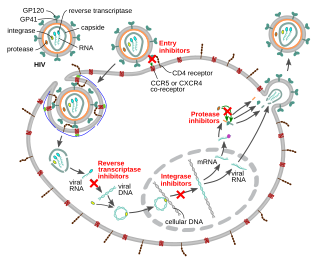
four classes of antiviral drugs
Schematic description of the mechanism of the four classes
of currently available antiviral drugs against HIV: fusion
inhibitors ( interfere with the binding, fusion or entry of an
HIV virion), reverse-transcriptase inhibitors (interfere with
the translation of viral RNA into DNA), integrase inhibitors
(block the viral enzyme integrase, that inserts the viral
genome into the DNA of the host cell), protease inhibitors
(block proteolytic cleavage of protein precursors that are
necessary for the production of infectious viral particles)
В 2017 году все десять препаратов, рекомендованных ВОЗ для базисной терапии ВИЧ-инфицированных, будут производиться в Российской Федерации, заявила в понедельник министр здравоохранения РФ Вероника Скворцова в ходе Форума для специалистов по профилактике и лечению ВИЧ/СПИДа.

"Развитие импортозамещения привело к тому, что уже в 2016 году отечественные воспроизведенные препараты существуют по восьми из десяти международных непатентованных наименований, рекомендованных ВОЗ для базисной терапии ВИЧ-инфицированных, с 2017 года все десять препаратов будут производиться в Российской Федерации", — заявила министр.

Скворцова напомнила, что более 16 площадок по производству антиретровирусных препаратов, которые необходимы для эффективной профилактики ВИЧ-инфекции, созданы в России.

на фотке РИА, правда, градусник: чтобы это значило?

10, рекомендованых ВОЗ не нашол :(
если кто знает — пож, свисните

Friday, November 4, 2016

what does it mean ?

В Екатеринбурге объявили эпидемию ВИЧ, число ВИЧ+ около 2%.
Правда быстро опровергли, но таки чтош это значит?
Фактически ситуацию в Екатеринбурге и других регионах от признания эпидемией отделяет отсутствие соответствующего решения Роспотребнадзора, в чьем ведении находится эпидемиологическая ситуация в государстве.
другими словами: до названия упал намоченым ведом с твом кошки кошкой кошки нет
яп назвал это : народным безумием
Моя логика [первого замначальника управления здравоохранения Екатеринбурга Татьяны Савиновой, на самом деле определения ООН] заключается в том, что когда на территории города свыше 1% населения заражено ВИЧ-инфекцией — это генерализированная стадия распространения эпидемиологического процесса
Если подобные критерии применить к России, то окажется, что в 20 регионах этот эпидемиологический порог будет превышен, заявила на V Международной конференции по ВИЧ/СПИДу в Восточной Европе и Центральной Азии Наталья Ладная, старший научный сотрудник ведомства Вадима Покровского [но никто не заметил и не заорал]. 

Они могли покупать одноразовые шприцы, но набирали из одной плошки (Ройзман) 


при таком подходе одноразовость шприца рояли не играет

и вот, похоже, где собака порылась:
...признание наличия эпидемии ВИЧ поможет повысить доступность лекарств для пациентов — и тем самым решить ключевую для них проблему [не только для них, применение ВААРТ снижает риск передачи вируса]. В этом случае чиновники получат возможность обратиться к предприятиям, владеющим патентами на определенные виды препаратов, за гуманитарной помощью или начать переговоры о снижении цен. По мнению исполнительного директора Ассоциации международных фармпроизводителей Владимира Шипкова, среди мировых компаний принято идти навстречу.
«Все эти годы Россия с одной стороны отрицала факт эпидемии ВИЧ/СПИД, с другой — не признавала себя страной третьего мира. Наоборот, мы были страной-донором — ВОЗ и „Глобального фонда“. Но сейчас ресурсов на то, чтобы быть донором, у нашей страны нет. Надо признать и это, и факт эпидемии. И заставить западные фармкомпании договариваться. Надо сказать: друзья, никто не хочет отбирать у вас лицензии, все ж мы не в Мозамбике, но и вы войдите в наше положение. Подвиньтесь», — резюмирует в интервью «Медузе» один из основателей сайта «СПИД-Центр» Антон Красовский, отметив, что определенные изменения в этом направлении есть.
другими словами: позиция правительства верти кала чисто антинародная, читай: геноцид
вывод: при нонешнем правительстве у РФ шанцоф нет 

Wednesday, June 29, 2016

HIV and Sex Disparities in Life Expectancy

картинка большая, но простая и сетеоперабельная
survival curves
Sex-specific survival curves: 2003, 2011, and HIV-cause-deleted.

Sex-specific continuous-time Kaplan-Meier survival curves for 2003 and 2011 are shown. The HIV-cause-deleted survival curves pool person-time for 2001–2011. These are period (synthetic cohort) survival curves reflecting age-specific mortality rates in a population in a given period of time; life expectancy is calculated as the area under the curve. A risk table showing persons at risk and deaths at each age for each of the six survival curves is available in txt.
txt:

Tuesday, February 11, 2014

Regional HAART prices

ВААРТ теперь закупается субъектами в обход МЗ

Упаковка препарата с международным наименованием зидовудин + ламивудин стоила Челябинской области 567,8 руб., Забайкальскому краю — 3063,9 руб. (торговая марка вирокомб), а Ростовской области — 3776,5 руб. (торговая марка комбивир), продолжает «Сообщество людей, живущих с ВИЧ», упаковка кивексы обошлась Белгородской области в 5755,5 руб., а Карачаево-Черкесской Республике — в 15 042,4 руб.

см: Ведомости