How breastfeeding works pic.twitter.com/Nwi4VLxigN
— Science (@ScienceGuys_) November 2, 2023
Showing posts with label кормление грудью. Show all posts
Showing posts with label кормление грудью. Show all posts
Thursday, November 2, 2023
How breastfeeding works

Thursday, June 29, 2023
real population policy
How much does a dramatic increase in technology improve healthcare quality in an upper middle-income country? Using rich vital statistics on infant health outcomes, this study evaluates the effect of introducing technologically advanced perinatal hospitals in 24 regions of Russia on infant mortality during the period 2009–2013. A 7-year aggregate panel dataset reveals that opening a perinatal centre corresponds to infant mortality reduction by 3.8 percent from the baseline rate, neonatal (0–28 day) mortality by 7 percent and early neonatal (0–6 day) mortality by 7.3 percent. We find that the perinatal centres help to save 263 additional infant lives annually, ranging from 3 to 25 lives in regions with different birth rates. However, we further find that an average cost per life saved is 52 million rb (or 2.6 million 2014 PPP USD), which is much higher than the cost of similar interventions in the United States.
 |
| click on a pic, if 502 Bad Gateway try another browser |
† We thank Dmitry Nikolaevich Degtyarev, Joseph Doyle, John Komlos, Ekaterina Aleksandrovna Kvasha, Daria Pelech, Klara Sabirianova Peter, Frank Sloan, Susan Steiner, Christopher Timmins, Maximo Torero, Tanner Regan, Giuseppe Rossitti, Guzel Ernstovna Ulumbekova and the participants of the LSE Spatial Economics Research Center Conference and two anonymous referees for helpful comments and feedback. All errors of fact and interpretation are our own.
Monday, July 12, 2021
Parenting culture and gender equality: the case of Iceland
Sunna Símonardóttir writes about her research on parenting and gender based on the example of Iceland.
Studies typically point to the Nordic countries as examples of countries that have placed a strong emphasis on gender equality in the construction of their family policies, and that have achieved high fertility rates. This Nordic ideal of gender equality brought with it the vision of shared parenthood, in effect that we should strive for a society characterised by couples where both parents/partners are active in the labour market, and both take care of their children.
Iceland enjoys a reputation as one of the most gender equal countries in the world. The female labour force participation in Iceland is almost comparable to that of males. This contributes to putting Iceland on top of the Global Gender Gap Index, compiled by the World Economic Forum, a position the country has held for a decade. The country has also received much attention for an innovative approach to parental leave where fathers have enjoyed a non-transferable parental leave quota since 2000.
The ideal still not achieved?
Nevertheless, whilst the state has actively attempted to involve fathers, my findings suggest that the general discourse equates motherhood with parenthood and promotes an ideology of intensive mothering, which emphasises women´s innate character as primary nurturers (Símonardóttir, 2016; Gíslason & Símonardóttir, 2018; Símonardóttir & Gíslason, 2018). How parenting culture impacts fertility decisions is an important, but somewhat overlooked area of fertility research.
Sharon Hays´s (1996) analysis of the ideology of intensive mothering has been very influential for research on parenting. Many scholars have picked up on Hay’s concept of intensive mothering to describe the contemporary parenting experience in Western countries (Elvin-Nowak & Thomsson, 2001; Lee et al., 2014). They recognised the paradox that this intensive, expert-led type of mothering coincides with women’s increased participation in the labour force (Kanieski, 2010).
Embedded in the cultural script of intensive mothering is a considerable expansion of mothering but this expansion has also been linked to broader ideological shifts in our perception of children as social capital to be invested in (Vandenbeld Giles, 2014) and neoliberal ideas about mothers as managers of risk through informed decision making (Murphy, 2003).
The theory of attachment was originally developed by British psychologist, psychiatrist, and psychoanalyst John Bowlby. The main tenet of the theory is that an intense and constant emotional and physical attachment between mother and child is needed for the healthy development of the child (Bowlby, 1969, Bowlby, 1973, Bowlby, 1980). My study on attachment theory discourse present in educational materials for Icelandic parents has shown that these materials incorporate classic ideas about the primacy of the mother and the intensification of motherhood. At the same time, little effort has been made to incorporate fathers into the discourse or to include them as meaningful agents when it comes to attachment and bonding or to promote a culture of shared parenthood (Símonardóttir, 2016). Although most of the educational materials simply address mothers directly, some effort has been made to introduce a more inclusive, gender-neutral language of ‘caregivers’ or ‘parents’. However, still, more often than not the language reverts to the ‘mother’ language. Fathers are simply not expected to fully inhabit the role of caregiver in the same way as mothers are.
Breastfeeding and maternal self-identity
The focus on exclusive breastfeeding in Iceland is also an important factor when it comes to parenting ideals and the lived experiences of parenting. The prevalence of breastfeeding is traditionally very high in the Scandinavian countries where we have witnessed an upward trend towards higher breastfeeding rates and duration. Almost all Icelandic mothers initiate breastfeeding. Both policy and practice are in line with the World Health Organisation recommendations.
My study on the experiences of Icelandic mothers who had struggled with breastfeeding or been unable to breastfeed reveals how closely linked their self-identity as mothers is with being able to breastfeed. It also shows how often they have to account for their infant feeding practices to friends, family and even strangers. Mothers who are unable to breastfeed often feel that their mothering capabilities and devotion to their child are being ranked and compared, especially by other mothers who judge them both consciously and unconsciously (Símonardóttir, 2016b). This substantial focus on exclusive breastfeeding and the prevalence of attachment theory discourses – and overall adherence to the ideology of intensive mothering – indicate that there are competing discourses at play. Powerful biomedical discourses proclaim that motherhood should be regarded as natural and outside social formations. At the same time, feminist or other gender egalitarian discourses have been unsuccessful in addressing and providing parents with counter discourses that challenge the highly gendered elements of this discourse and its link to idealised versions of motherhood.
Fertility in Iceland
The fertility rate in Iceland has been among the highest in Europe, even among the other Nordic countries. Now there are clear signs that this is changing. In 2020, the total fertility rate was measured at 1.7 children for every Icelandic woman, a figure that has not been lower since records began (Statistics Iceland, 2021).
The average age of first-time mothers has also been steadily going up in recent decades. The relatively recent drop in fertility in Iceland, therefore, presents an ideal case study for understanding how and why couples and individuals decide to have fewer children than before. As previously stated, structural factors influencing fertility have been deemed positive in the Icelandic context; family policies in Iceland, including paid parental leave for both parents, and affordable quality day-care for children.
Faircloth (2013) has noted how intensive motherhood has been imported from the US and UK to other cultural settings where its interpretation and representation can be very different. In France, as Badinter (2012) and Faircloth (2013) have shown, where there is rich feminist history and historic recognition of women’s identities beyond motherhood, intensive mothering is seen as a threat to the feminist cause and women’s liberty.
A theoretical gap is present in the literature when it comes to the context of Icelandic fertility (Jónsson, 2018). Therefore, I believe that it would be particularly important to examine the parenting culture of the Nordic countries and the coexistence of shared parenting and intensive mothering narratives whilst critically engaging with the pull towards intensive mothering within the context of Nordic feminism. This enhanced focus on parenting culture could help to integrate feminist perspectives into fertility explanations, providing a valuable understanding of how shifting opportunity structures for women and men influence fertility and how gendered parenting ideologies and circumstances affect decisions regarding the timing and number of children.
Sunna Símonardóttir is a postdoctoral researcher at the University of Iceland. She completed her PhD in Sociology at the University of Iceland in 2017 and has published widely on parenting and gender. This blog post is based on her PhD thesis. In her current project she uses qualitative methods to examine fertility intentions and behaviour in Iceland.
Friday, May 29, 2020
pretransitional marriage
 Первой женой Джона Гонта после нескольких лет галантных ухаживаний 19 мая 1359 года стала Бланка Ланкастерская, младшая дочь его дяди и наставника Генри Гросмонта. Жениху на момент свадьбы было 19 лет, а невесте — 14. (из вики про её мужа)
От этого брака родилось семеро детей:
- Филиппа (1360—1415); муж — Жуан I, король Португалии. Сын Жуана и Филиппы получил необычное для Португалии имя Дуарте (Эдуард), в честь отца Джона Гонта Эдуарда III, а затем стал королём Дуарте I; в дальнейшем это имя стало популярным среди португальской аристократии.
- Джон (1362—1365)
- Элизабет (1364—1426); 1-й муж — Джон Гастингс, 3-й граф Пембрук; 2-й муж — Джон Холланд, 1-й герцог Эксетер; 3-й муж — Джон Корнуолл, 1-й барон Фэнхоуп
- Эдуард (1365)
- Джон (1366—1367)
- Генрих Боллингброк (1367—1413), затем — Генрих IV, король Англии
- Изабелла (1368—1368)
Можно посчитать с какой скорость Бланка рожала, практически каждый год, без интервалов, видимо, рожала и отдавала на грудное вскармливание другой жанчынке. Умерла Бланка в возрасте 27 лет.
Чосер посвятил памяти первой жены Джона Гонта, Бланш Ланкастерской, поэму «Книга герцогини» (the Book of the Duchess), где аллегорически представил супругов как «Чёрного рыцаря» и «Белую госпожу» (Blanche по-французски — «белая»).
Бланка была младшей из двух дочерей Генри Гросмонта. Она вышла замуж 19 мая 1359 года, в возрасте четырнадцати лет, за своего троюродного брата — одного из сыновей короля Эдуарда III Джона Гонта.
Бланка Ланкастерская умерла 12 сентября 1368 года в замке Тутбури в Стаффордшире, когда её муж был на континенте
(из вики про неё)
в 24 года 7 детей
Чосер посвятил памяти первой жены Джона Гонта, Бланш Ланкастерской, поэму «Книга герцогини» (the Book of the Duchess), где аллегорически представил супругов как «Чёрного рыцаря» и «Белую госпожу» (Blanche по-французски — «белая»).
Бланка была младшей из двух дочерей Генри Гросмонта. Она вышла замуж 19 мая 1359 года, в возрасте четырнадцати лет, за своего троюродного брата — одного из сыновей короля Эдуарда III Джона Гонта.
Бланка Ланкастерская умерла 12 сентября 1368 года в замке Тутбури в Стаффордшире, когда её муж был на континенте
(из вики про неё)
в 24 года 7 детей
Sunday, December 16, 2018
by by tumblr tumblr
Тум бала, тум бала, тум балала
Tumblr, основанный в 2007 году, оставался одной из последних блог-платформ, где не цензурировался контент пользователей.
В руководстве компании заявляют: Tumblr - это место, где свободно говорят на такие темы, как секс и отношения. Точнее, говорили.
Теперь на сайте запрещены "фотографии, видео или GIF-ки, которые показывают гениталии реального человека или женские соски, а также любой контент с изображением полового акта".
В англоязычной версии сайта фраза про женские соски звучала как female-presenting nipples (дословно - "представленные женские соски"). Выражение породило многочисленные мемы, которые высмеивали новую политику компании и саму фразу.
 Запрет Tumblr вернул тему цензурирования изображений женских сосков в поле общественного внимания.
Вводимые запреты - это не позиция самих соцсетей, а отражение общественных настроений и рынка, уверен управляющий директор проекта "Фишки.net" Михаил Гуревич.
"Большинство социальных сетей - это публичные компании. Любого рода иски или заявления, например, тех же детских ассоциаций о том, какой ужас и какая порнография царит в сетях, безусловно бьет по их капитализации. Причем даже не меньше, чем заявления об утечке [данных] пользователей", - говорит Гуревич.
... обнаженная женская грудь по своей природе отличается от мужской: она гораздо более сексуально притягательна для мужчин, чем мужская - для женщин.
Ее публичное обнажение может привести к нарушению общественных норм и нанесет вред детской психике, говорят они [а ещэ брэстфидинг — вреднаже].
Заявление социальной сети Tumblr о блокировке порноконтента вызвало новую волну споров об изображении женских сосков в интернете и повышенном общественном внимании к этой части женского тела.
Tumblr, основанный в 2007 году, оставался одной из последних блог-платформ, где не цензурировался контент пользователей.
В руководстве компании заявляют: Tumblr - это место, где свободно говорят на такие темы, как секс и отношения. Точнее, говорили.
Теперь на сайте запрещены "фотографии, видео или GIF-ки, которые показывают гениталии реального человека или женские соски, а также любой контент с изображением полового акта".
В англоязычной версии сайта фраза про женские соски звучала как female-presenting nipples (дословно - "представленные женские соски"). Выражение породило многочисленные мемы, которые высмеивали новую политику компании и саму фразу.
Вводимые запреты - это не позиция самих соцсетей, а отражение общественных настроений и рынка, уверен управляющий директор проекта "Фишки.net" Михаил Гуревич.
"Большинство социальных сетей - это публичные компании. Любого рода иски или заявления, например, тех же детских ассоциаций о том, какой ужас и какая порнография царит в сетях, безусловно бьет по их капитализации. Причем даже не меньше, чем заявления об утечке [данных] пользователей", - говорит Гуревич.
... обнаженная женская грудь по своей природе отличается от мужской: она гораздо более сексуально притягательна для мужчин, чем мужская - для женщин.
Ее публичное обнажение может привести к нарушению общественных норм и нанесет вред детской психике, говорят они [а ещэ брэстфидинг — вреднаже].
Monday, August 7, 2017
A culture rather than the image itself

A culture which over-sexualises the female body caused the outrage, rather than the image itself
Aliya Shagieva, the youngest daughter of the president of Kyrgyztan, has spoken out after she criticised for posting a picture on social media of herself breastfeeding, Taken from above her, Ms Shagieva appeared near naked in the image as she fed her one-month-old son Tagir.

Posted on Instagram in April, it ran alongside the caption: "I will feed my child whenever and wherever he needs to be fed."
But after she was attacked on social media and accused of "immoral behaviour", she took the image down.
In an interview with the BBC, Ms Shagieva said a culture which over-sexualises the female body caused the outrage, rather than the image itself.
"This body I've been given is not vulgar, it is functional,” said the 20-year-old artist. "Its purpose is to fulfil the physiological needs of my baby, not to be sexualised."
"When I'm breastfeeding my child, I feel like I'm giving him the best I can give. Taking care of my baby and attending to his needs is more important to me than what people say about me."
Kyrgyzstan, a former Soviet republic, has a socially conservative, majority Muslim society. [это по существу не верно, киргизское общество достаточно раскрепощённное, особенно на фоне Средней Азии]
President Almazbek Atambayev and his wife Raisa disapproved of their daughter’s picture, Ms Shagieva said.
"They really didn't like it. And it is understandable because the younger generation is less conservative than their parents. My mum received messages from her 'friends' about me.”
Ms Shagieva is known for her progressive behaviour. She gave birth to son six-months after her marriage to Russian husband Konstantin.
The young family live as vegetarians in a traditionally meat-eating country. [как и все остальные, разве.нет?]
Ms Shagieva frequently posts images of her and her son on Instagram.
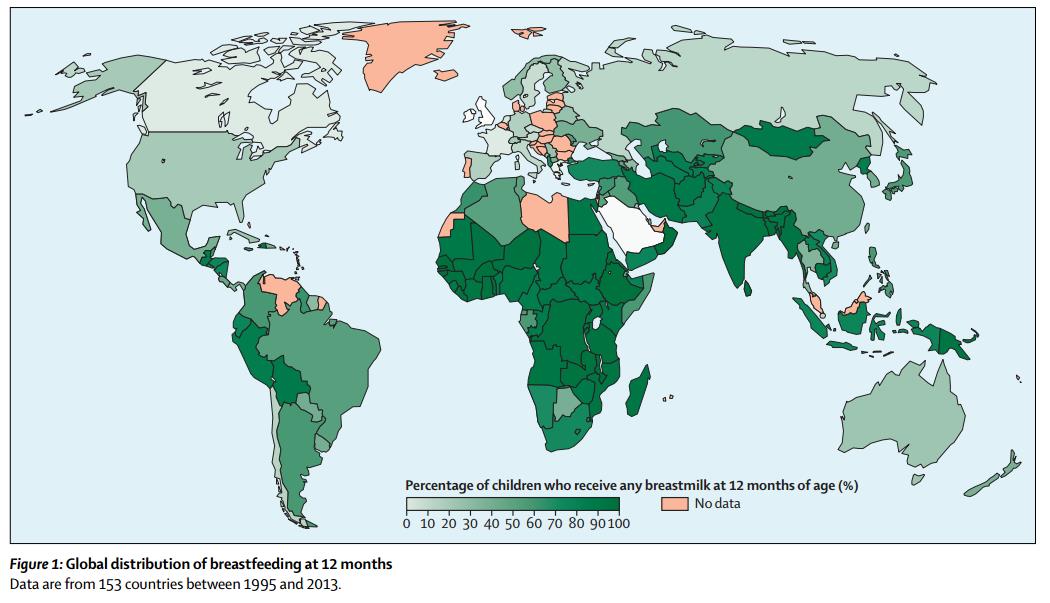
Breastfeeding in public is a matter of debate across the world.
Former Australian senator Larissa Waters was praised when she breastfed her baby in parliament in May.
"It's frankly ridiculous, really, that feeding one's baby is international news”, Ms Waters said at the time. “Women have been breastfeeding for as long as time immemorial.
"I had hoped to not only be able to feed my baby but to send a message to young women that they belong in the parliament."
There have been calls to allow breastfeeding in the House of Commons, after a 2016 independent review recommended it.
It is illegal in the UK to ask a breastfeeding woman to leave a public place, such as a café, park or public transport.
However, breastfeeding rates in the UK are among the lowest in the world, according to a 2016 study in The Lancet.
breastfeeding Russia
Sunday, August 7, 2016

Thursday, November 7, 2013
breastfeeding in Russia
Есть такая табличка на сайте Росстата. Что она значит?
две последние строчки -- мой расчёт при попытке понять
Собственно вопрос: растёт или нет продолжительность грудного вскармливания?
две последние строчки -- мой расчёт при попытке понять
Собственно вопрос: растёт или нет продолжительность грудного вскармливания?
ГРУДНОЕ ВСКАРМЛИВАНИЕ ДЕТЕЙ ПЕРВОГО ГОДА ЖИЗНИ |
|||||||||
| (данные Минздрава России, расчет Росстата) | |||||||||
| 1995 | 2000 | 2005 | 2007 | 2008 | 2009 | 2010 | 2011 | 2012 | |
| Численность детей, находившихся на грудном вскармливании, в возрасте: | |||||||||
| от 3 месяцев до 6 месяцев | |||||||||
| тыс. человек | 569,8 | 464,8 | 544,7 | 558,8 | 612,0 | 635,0 | 647,9 | 668,7 | 682,5 |
| в процентах от числа детей, достигших в отчетном году 1 года | 45,1 | 42,3 | 40,1 | 40,3 | 40,8 | 40,0 | 39,9 | 40,5 | 41,2 |
| от 6 месяцев до 1 года | |||||||||
| тыс. человек | 411,3 | 324,0 | 487,5 | 537,5 | 589,6 | 634,2 | 655,5 | 671,9 | 672,4 |
| в процентах от числа детей, достигших в отчетном году 1 года | 32,5 | 29,5 | 35,9 | 38,7 | 39,3 | 40,0 | 40,4 | 40,7 | 40,6 |
| остаток от 100 | 22,4 | 28,2 | 24,0 | 21,0 | 19,9 | 20,0 | 19,7 | 18,8 | 18,2 |
| короткое/длинное | 1,39 | 1,43 | 1,12 | 1,04 | 1,04 | 1,00 | 0,99 | 1,00 | 1,02 |
Thursday, August 22, 2013

Tuesday, April 16, 2013
A Framework for Analyzing the Proximate Determinants of Fertility
 |
| аффтар! пешы ищо |
В статье John Bongaarts расписал Proximate Determinants или Intermediate Variables (IV какбe девичья фамилия PD) рождаемости.
Работа была спроовоцирована слабостью социально-экономического подхода к анализу рождаемости, то-есть, в реалиях одинаковые соц-эк условия генерили не только разные уровни рождаемости, но и её разнонаправленную динамику, то-есть, подход не давал ничего. Надо было исправлять искривления:) ДжБ предложил смотреть на рождаемость попроще, как на бездуховный биологический процесс. Забегая вперёд замечу, что он получил феерический какбе побочный результат : все животные равны.
ДжБ предложил очень простую квантификацию непосредственных детерминант рождаемости, разбиваемых до него на три большие группы:
- экспозиция, она же брачность (социальная форма), или появление (менархе) и исчезновение (менопауза) риска зачатия;
- поведение, зависящее от числа уже рождённых детей, или регулирование числа рождений, то-есть, контрацепция и искусственный аборт;
- естественная (при отсутствии намеренного ограничения) рождаемость, определяемая послеродовой стерильностью, частотой впиндюривания, стерильностью, внутриматочной смертностью плода (выкидыш и мёртворождение), длительностью периода способности к зачатию.
Сама модель имеет следующий вид:
TFR = Cm × Cc × Ca × Ci × TF, где
TFR - коэффициент суммарной рождаемости, или суммарный коэффициент рождаемости (дело вкуса), число детей, рождаемое женщиной за всю жизнь при наблюдаемых интенсивностях повозрастной рождаемости, очень популярный показатель, наряду с младенческой смертностью и продолжительностью жизни;После того как модель начала собственную жизнь алгебра поверила гармонию, и таварысчы стали писать формулу на фкус и цвет (см. вики для примера). Но мы-та.ру знаем что 9×2=2×9 -- неправославно нихира, и ДжБ нас тут подкрепляет в вере. Двигаясь покомпонентно слева направо мы переходим, с одной стороны, какбе из реальности в мир чистых идей (от рождаемости к естественной рождаемости и плодовитости), а, с другой -- от белой фаты под марш Мендельсона в мир грязнокровавого хлюпанья:
Cm - индекс брачности или доля, состоящих в браке;
Cc - индекс контрацепции, зависящий от доли предохраняющихся, сочетания используемых методов и их практической эффективности;
Ca - индекс искусственных (induced) абортов, нам это ближе всего, только теперь начинаем отходить, но, видимо, недалеко, близэнько
Ci - индекс послеродовой стерильности, определяемый продолжительностью грудного вскармливания.
TF - плодовитость, аналогичная рождаемости, потенциал рождаемости, ещё более потенциальный, чем естественная рождаемость.
Все индексы С меньше 1 и больше 0. Чем меньше индекс, тем сильнее его влияние, тем в большей степени он сжимает плодовитость.
TFR > TMFR > TNFR > TF
TFR = TMFR × Cm, где TMFR -- брачная рождаемость;> - направление движения мысли, а не больше/меньше. По величине как раз наоборот: справа налево происходит уменьшение.
TMFR = TNFR × Cc × Ca, где TNFR -- естестенная рождаемость (изобретённая Анри);
TNFR = TF × Ci.
Все вещи, предложенные ДжБ, либо наблюдаемы практически напрямую, либо расчитываются из относительно несложных и доступных наблюдений. Коме этого у него получилось что TF -- инвариант, независящий от климата, состояния в агрессивных или прогрессивных политических блоках, формы правления и достатка в домохозяйстве семьи. Это дало прочное основание для сравнения одного населения с другим в реальности, а не в мире национальных или социально-экономических мифов.
упг (17 апр, сегодня хоронят Тэтчер):
добавлю про инвариант.
Рез-т ДжБ: TF=15.3. Значение совпадает с полученным Анри и опубликованным в 1961 году в Eugenics Quarterly (Some data on natural fertility). Рез-т Анри: около 17% репродуктивного периода женщины она, или пара являются стерильными. То-есть, на самом деле репродуктивный период не 35 лет (50-15), а 25, или менее. Предполагая (вполне обоснованно), что цикл рождения и восстановления плодовитости составляет 20 месяцев, получаем те же 15, число детей, которое может родить женщина, доживающая до конца плодовитого периода (50), начавшая половую жизнь сразу после появления возможности зачатия, никогда не предохраняющаяся, не делающая абортов и не практикующая т.наз extended breastfeeding.упг (17 апр, сегодня хоронят Тэтчер):
добавлю про инвариант.
От себя замечу, что многие рез-ты фактуры (база) по естественной рождаемости получены в клинике Сэнгер, которая сразу по открытии начала документировать и анализировать чел репродукцию.
О направлениях изменения индексов С в демографическом переходе -- задачка для индивидуальной медитации, enjoy.
- бонус: пруфлинька на какой-то, вроде филипинский (оч. медленный, но рабочий) сервер, зато оригинальный текст
- ну, и, кто ищет тот всегда найдёт (на сайте Population Council)
Tuesday, February 26, 2013
breastfeeding Russia
| ГРУДНОЕ ВСКАРМЛИВАНИЕ ДЕТЕЙ ПЕРВОГО ГОДА ЖИЗНИ | ||||||||
| (данные Минздрава России, расчет Росстата) | ||||||||
| 1995 | 2000 | 2005 | 2007 | 2008 | 2009 | 2010 | 2011 | |
| Численность детей, находившихся на грудном вскармливании, в возрасте: | ||||||||
| от 3 месяцев до 6 месяцев | ||||||||
| тыс. человек | 569,8 | 464,8 | 544,7 | 558,8 | 612,0 | 635,0 | 647,9 | 668,7 |
| в процентах от числа детей, достигших в отчетном году 1 года | 45,1 | 42,3 | 40,1 | 40,3 | 40,8 | 40,0 | 39,9 | … |
| от 6 месяцев до 1 года | ||||||||
| тыс. человек | 411,3 | 324,0 | 487,5 | 537,5 | 589,6 | 634,2 | 655,5 | 671,9 |
| в процентах от числа детей, достигших в отчетном году 1 года | 32,5 | 29,5 | 35,9 | 38,7 | 39,3 | 40,0 | 40,4 | … |
Subscribe to:
Posts (Atom)