Showing posts with label Гитлер. Show all posts

Monday, March 14, 2022

The Weakness of the Despot

An expert on Stalin discusses Putin, Russia, and the West.


By David Remnick March 11, 2022

“The shock is that so much has changed, and yet we’re still seeing this pattern that they can’t escape from,” the Russia expert Stephen Kotkin says.


Stephen Kotkin is one of our most profound and prodigious scholars of Russian history. His masterwork is a biography of Josef Stalin. So far he has published two volumes––“Paradoxes of Power, 1878-1928,” which was a finalist for the Pulitzer Prize, and “Waiting for Hitler, 1929-1941.” A third volume will take the story through the Second World War; Stalin’s death, in 1953; and the totalitarian legacy that shaped the remainder of the Soviet experience. Taking advantage of long-forbidden archives in Moscow and beyond, Kotkin has written a biography of Stalin that surpasses those by Isaac Deutscher, Robert Conquest, Robert C. Tucker, and countless others.

Kotkin has a distinguished reputation in academic circles. He is a professor of history at Princeton University and a senior fellow at the Hoover Institution, at Stanford University. He has myriad sources in various realms of contemporary Russia: government, business, culture. Both principled and pragmatic, he is also more plugged in than any reporter or analyst I know. Ever since we met in Moscow, many years ago––Kotkin was doing research on the Stalinist industrial city of Magnitogorsk––I’ve found his guidance on everything from the structure of the Putin regime to its roots in Russian history to be invaluable.

Earlier this week, I spoke with Kotkin about Putin, the invasion of Ukraine, the American and European response, and what comes next, including the possibility of a palace coup in Moscow. Our conversation, which appears in the video above, has been edited for length and clarity. [обещаное видео по ссылке, которая в дате спрятана, — вставлять видео не умею]

We’ve been hearing voices both past and present saying that the reason for what has happened is, as George Kennan put it, the strategic blunder of the eastward expansion of nato. The great-power realist-school historian John Mearsheimer insists that a great deal of the blame for what we’re witnessing must go to the United States. I thought we’d begin with your analysis of that argument.

I have only the greatest respect for George Kennan. John Mearsheimer is a giant of a scholar. But I respectfully disagree. The problem with their argument is that it assumes that, had nato not expanded, Russia wouldn’t be the same or very likely close to what it is today. What we have today in Russia is not some kind of surprise. It’s not some kind of deviation from a historical pattern. Way before nato existed—in the nineteenth century—Russia looked like this: it had an autocrat. It had repression. It had militarism. It had suspicion of foreigners and the West. This is a Russia that we know, and it’s not a Russia that arrived yesterday or in the nineteen-nineties. It’s not a response to the actions of the West. There are internal processes in Russia that account for where we are today.

I would even go further. I would say that nato expansion has put us in a better place to deal with this historical pattern in Russia that we’re seeing again today. Where would we be now if Poland or the Baltic states were not in nato? They would be in the same limbo, in the same world that Ukraine is in. In fact, Poland’s membership in nato stiffened nato’s spine. Unlike some of the other nato countries, Poland has contested Russia many times over. In fact, you can argue that Russia broke its teeth twice on Poland: first in the nineteenth century, leading up to the twentieth century, and again at the end of the Soviet Union, with Solidarity. So George Kennan was an unbelievably important scholar and practitioner—the greatest Russia expert who ever lived—but I just don’t think blaming the West is the right analysis for where we are.

When you talk about the internal dynamics of Russia, it brings to mind a piece that you wrote for Foreign Affairs, six years ago, which began, “For half a millennium, Russian foreign policy has been characterized by soaring ambitions that have exceeded the country’s capabilities. Beginning with the reign of Ivan the Terrible in the sixteenth century, Russia managed to expand at an average rate of fifty square miles per day for hundreds of years, eventually covering one-sixth of the earth’s landmass.” You go on to describe three “fleeting moments” of Russian ascendancy: first during the reign of Peter the Great, then Alexander I’s victory over Napoleon, and then, of course, Stalin’s victory over Hitler. And then you say that, “these high-water marks aside, however, Russia has almost always been a relatively weak great power.” I wonder if you could expand on that and talk about how the internal dynamics of Russia have led to the present moment under Putin.

We had this debate about Iraq. Was Iraq the way it was because of Saddam, or was Saddam the way he was because of Iraq? In other words, there’s the personality, which can’t be denied, but there are also structural factors that shape the personality. One of the arguments I made in my Stalin book was that being the dictator, being in charge of Russian power in the world in those circumstances and in that time period, made Stalin who he was and not the other way around.

Russia is a remarkable civilization: in the arts, music, literature, dance, film. In every sphere, it’s a profound, remarkable place––a whole civilization, more than just a country. At the same time, Russia feels that it has a “special place” in the world, a special mission. It’s Eastern Orthodox, not Western. And it wants to stand out as a great power. Its problem has always been not this sense of self or identity but the fact that its capabilities have never matched its aspirations. It’s always in a struggle to live up to these aspirations, but it can’t, because the West has always been more powerful.

Russia is a great power, but not the great power, except for those few moments in history that you just enumerated. In trying to match the West or at least manage the differential between Russia and the West, they resort to coercion. They use a very heavy state-centric approach to try to beat the country forward and upwards in order, militarily and economically, to either match or compete with the West. And that works for a time, but very superficially. Russia has a spurt of economic growth, and it builds up its military, and then, of course, it hits a wall. It then has a long period of stagnation where the problem gets worse. The very attempt to solve the problem worsens the problem, and the gulf with the West widens. The West has the technology, the economic growth, and the stronger military.

The worst part of this dynamic in Russian history is the conflation of the Russian state with a personal ruler. Instead of getting the strong state that they want, to manage the gulf with the West and push and force Russia up to the highest level, they instead get a personalist regime. They get a dictatorship, which usually becomes a despotism. They’ve been in this bind for a while because they cannot relinquish that sense of exceptionalism, that aspiration to be the greatest power, but they cannot match that in reality. Eurasia is just much weaker than the Anglo-American model of power. Iran, Russia, and China, with very similar models, are all trying to catch the West, trying to manage the West and this differential in power.

What is Putinism? It’s not the same as Stalinism. It’s certainly not the same as Xi Jinping’s China or the regime in Iran. What are its special characteristics, and why would those special characteristics lead it to want to invade Ukraine, which seems a singularly stupid, let alone brutal, act?

Yes, well, war usually is a miscalculation. It’s based upon assumptions that don’t pan out, things that you believe to be true or want to be true. Of course, this isn’t the same regime as Stalin’s or the tsar’s, either. There’s been tremendous change: urbanization, higher levels of education. The world outside has been transformed. And that’s the shock. The shock is that so much has changed, and yet we’re still seeing this pattern that they can’t escape from.

You have an autocrat in power—or even now a despot—making decisions completely by himself. Does he get input from others? Perhaps. We don’t know what the inside looks like. Does he pay attention? We don’t know. Do they bring him information that he doesn’t want to hear? That seems unlikely. Does he think he knows better than everybody else? That seems highly likely. Does he believe his own propaganda or his own conspiratorial view of the world? That also seems likely. These are surmises. Very few people talk to Putin, either Russians on the inside or foreigners.

And so we think, but we don’t know, that he is not getting the full gamut of information. He’s getting what he wants to hear. In any case, he believes that he’s superior and smarter. This is the problem of despotism. It’s why despotism, or even just authoritarianism, is all-powerful and brittle at the same time. Despotism creates the circumstances of its own undermining. The information gets worse. The sycophants get greater in number. The corrective mechanisms become fewer. And the mistakes become much more consequential.

Putin believed, it seems, that Ukraine is not a real country, and that the Ukrainian people are not a real people, that they are one people with the Russians. He believed that the Ukrainian government was a pushover. He believed what he was told or wanted to believe about his own military, that it had been modernized to the point where it could organize not a military invasion but a lightning coup, to take Kyiv in a few days and either install a puppet government or force the current government and President to sign some paperwork.

But think about the Prague Spring, in August, 1968. Leonid Brezhnev sent in the tanks of the Warsaw Pact to halt “socialism with a human face,” the communist reform movement of Alexander Dubček. Brezhnev kept telling Dubček, Stop it. Don’t do that. You’re ruining communism. And, if you don’t stop, we will come in. Brezhnev comes in, and they take Dubček and the other leaders of Czechoslovakia back to Moscow. They don’t have a puppet regime to install. In the Kremlin, Brezhnev is asking Dubček, after having sent the tanks in and capturing him, what should they do now? It looks ridiculous, and it was ridiculous. But, of course, it was based upon miscalculations and misunderstandings. And so they sent Dubček back to Czechoslovakia, and he stayed in power [until April, 1969], after the tanks had come in to crush the Prague Spring.

One other example is what happened in Afghanistan, in 1979. The Soviet Union did not invade Afghanistan. It did a coup in Afghanistan, sending special forces into the capital of Kabul. It murdered the Afghan leadership and installed a puppet, Babrak Karmal, who had been hiding in exile in Czechoslovakia. It was a total success because Soviet special forces were really good. But, of course, they decided they might need some security in Afghanistan for the new regime. So they sent in all sorts of Army regiments to provide security and ended up with an insurgency and with a ten-year war that they lost.

With Ukraine, we have the assumption that it could be a successful version of Afghanistan, and it wasn’t. It turned out that the Ukrainian people are brave; they are willing to resist and die for their country. Evidently, Putin didn’t believe that. But it turned out that “the television President,” Zelensky, who had a twenty-five-per-cent approval rating before the war—which was fully deserved, because he couldn’t govern—now it turns out that he has a ninety-one-per-cent approval rating. It turned out that he’s got cojones. He’s unbelievably brave. Moreover, having a TV-production company run a country is not a good idea in peacetime, but in wartime, when information war is one of your goals, it’s a fabulous thing to have in place.

The biggest surprise for Putin, of course, was the West. All the nonsense about how the West is decadent, the West is over, the West is in decline, how it’s a multipolar world and the rise of China, et cetera: all of that turned out to be bunk. The courage of the Ukrainian people and the bravery and smarts of the Ukrainian government, and its President, Zelensky, galvanized the West to remember who it was. And that shocked Putin! That’s the miscalculation.

How do you define “the West”?

The West is a series of institutions and values. The West is not a geographical place. Russia is European, but not Western. Japan is Western, but not European. “Western” means rule of law, democracy, private property, open markets, respect for the individual, diversity, pluralism of opinion, and all the other freedoms that we enjoy, which we sometimes take for granted. We sometimes forget where they came from. But that’s what the West is. And that West, which we expanded in the nineties, in my view properly, through the expansion of the European Union and nato, is revived now, and it has stood up to Vladimir Putin in a way that neither he nor Xi Jinping expected.

If you assumed that the West was just going to fold, because it was in decline and ran from Afghanistan; if you assumed that the Ukrainian people were not for real, were not a nation; if you assumed that Zelensky was just a TV actor, a comedian, a Russian-speaking Jew from Eastern Ukraine—if you assumed all of that, then maybe you thought you could take Kyiv in two days or four days. But those assumptions were wrong.

Let’s discuss the nature of the Russian regime. Putin came in twenty-three years ago, and there were figures called the oligarchs from the Yeltsin years, eight or nine of them. Putin read them the riot act, saying, You can keep your riches, but stay out of politics. Those who kept their nose in politics, like Mikhail Khodorkovsky, were punished, sent to prison. Others left the country with as much of their fortune as possible. But we still talk about oligarchs. What is the nature of the regime and the people who are loyal to it? Who is important?

It’s a military-police dictatorship. Those are the people who are in power. In addition, it has a brilliant coterie of people who run macroeconomics. The central bank, the finance ministry, are all run on the highest professional level. That’s why Russia has this macroeconomic fortress, these foreign-currency reserves, the “rainy day” fund. It has reasonable inflation, a very balanced budget, very low state debt—twenty per cent of G.D.P., the lowest of any major economy. It had the best macroeconomic management.

So you have a military-police dictatorship in charge, with a macroeconomic team running your fiscal, military state. Those people are jockeying over who gets the upper hand. For macroeconomic stability, for economic growth, you need decent relations with the West. But, for the military security part of the regime, which is the dominant part, the West is your enemy, the West is trying to undermine you, it’s trying to overthrow your regime in some type of so-called color revolution. What happened is that the balance between those groups shifted more in favor of the military security people––let’s call it the thuggish part of the regime. And, of course, that’s where Putin himself comes from.

The oligarchs were never in power under Putin. He clipped their wings. They worked for him. If they didn’t work for him, they could lose their money. He rearranged the deck chairs. He gave out the money. He allowed expropriation by his own oligarchs, people who grew up with him, who did judo with him, who summered with him. The people who were in the K.G.B. with him in Leningrad back in the day, or in post-Soviet St. Petersburg––those people became oligarchs and expropriated the property to live the high life. Some of the early Yeltsin-era people were either expropriated, fled, or were forced out. Putin built a regime in which private property, once again, was dependent on the ruler. Everybody knew this. If they didn’t know, they learned the lesson the hard way.

Sadly, this encouraged people all up and down the regime to start stealing other people’s businesses and property. It became a kind of free-for-all. If it was good enough for Putin and his cronies, it’s good enough for me as the governor of Podunk province. The regime became more and more corrupt, less and less sophisticated, less and less trustworthy, less and less popular. It hollowed out. That’s what happens with dictatorships.

But such people and such a regime, it seems to me, would care above all about wealth, about the high life, about power. Why would they care about Ukraine?

It’s not clear that they do. We’re talking, at most, about six people, and certainly one person as the decision-maker. This is the thing about authoritarian regimes: they’re terrible at everything. They can’t feed their people. They can’t provide security for their people. They can’t educate their people. But they only have to be good at one thing to survive. If they can deny political alternatives, if they can force all opposition into exile or prison, they can survive, no matter how incompetent or corrupt or terrible they are.

And yet, as corrupt as China is, they’ve lifted tens of millions of people out of extreme poverty. Education levels are rising. The Chinese leaders credit themselves with enormous achievements.

Who did that? Did the Chinese regime do that? Or Chinese society? Let’s be careful not to allow the Chinese Communists to expropriate, as it were, the hard labor, the entrepreneurialism, the dynamism of millions and millions of people in that society. You know, in the Russian case, Navalny was arrested—

This is Alexey Navalny, Putin’s most vivid political rival, who was poisoned by the F.S.B. and is now in prison.

Yes. He was imprisoned in the run-up to the invasion of Ukraine. In retrospect, it could well be that this was a preparation for the invasion, the way that Ahmad Shah Massoud, for example, was blown up in Northern Afghanistan [by Al Qaeda] right before the Twin Towers came down.

You have the denial of alternatives, the suppression of any opposition, arrest, exile, and then you can prosper as an élite, not with economic growth but just with theft. And, in Russia, wealth comes right up out of the ground! The problem for authoritarian regimes is not economic growth. The problem is how to pay the patronage for their élites, how to keep the élites loyal, especially the security services and the upper levels of the officer corps. If money just gushes out of the ground in the form of hydrocarbons or diamonds or other minerals, the oppressors can emancipate themselves from the oppressed. The oppressors can say, we don’t need you. We don’t need your taxes. We don’t need you to vote. We don’t rely on you for anything, because we have oil and gas, palladium and titanium. They can have zero economic growth and still live very high on the hog.

There’s never a social contract in an authoritarian regime, whereby the people say, O.K., we’ll take economic growth and a higher standard of living, and we’ll give up our freedom to you. There is no contract. The regime doesn’t provide the economic growth, and it doesn’t say, Oh, you know, we’re in violation of our promise. We promised economic growth in exchange for freedom, so we’re going to resign now because we didn’t fulfill the contract.

What accounts for the “popularity” of an authoritarian regime like Putin’s?

They have stories to tell. And, as you know, stories are always more powerful than secret police. Yes, they have secret police and regular police, too, and, yes, they’re serious people and they’re terrible in what they’re doing to those who are protesting the war, putting them in solitary confinement. This is a serious regime, not to be taken lightly. But they have stories. Stories about Russian greatness, about the revival of Russian greatness, about enemies at home and enemies abroad who are trying to hold Russia down. And they might be Jews or George Soros or the I.M.F. and nato. They might be all sorts of enemies that you just pull right off the shelf, like a book.

We think of censorship as suppression of information, but censorship is also the active promotion of certain kinds of stories that will resonate with the people. The aspiration to be a great power, the aspiration to carry out a special mission in the world, the fear and suspicion that outsiders are trying to get them or bring them down: those are stories that work in Russia. They’re not for everybody. You know many Russians who don’t buy into that and know better. But the Putin version is powerful, and they promote it every chance they get.

The West has decided, for obvious reasons, not to go to war with Russia, not to have a no-fly zone. Economic sanctions have proved more comprehensive and more powerful than maybe people had anticipated some weeks ago. But it seems that the people who these are aimed at most directly will be able to absorb them.

Sanctions are a weapon that you use when you don’t want to fight a hot war because you’re facing a nuclear power. It’s one thing to bomb countries in the Middle East that don’t have nuclear weapons; it’s another thing to contemplate bombing Russia or China in the nuclear age. It’s understandable that economic sanctions, including really powerful ones, are the tools that we reach for.

We are also, however, arming the Ukrainians to the teeth. And there’s a great deal of stuff happening in the cyber realm that we don’t know anything about because the people who are talking don’t know, and the people who know are not talking. And there is quite a lot of armed conflict, thanks to the courage of the Ukrainians and the response and logistics of nato, with Washington, of course, leading them.

We don’t know yet how the sanctions are going to work. The sanctions often inflict the greatest pain on the civilian population. Regimes can sometimes survive sanctions because they can just steal more internally. If you expropriate somebody’s bank account in London or Frankfurt or New York, well, there’s a source where that came from originally, and they can go back inside Russia and tap that source again, unfortunately. Putin doesn’t have money abroad that we can just sanction or expropriate. Putin’s money is the entire Russian economy. He doesn’t need to have a separate bank account, and he certainly wouldn’t keep it vulnerable in some Western country.

The biggest and most important sanctions are always about technology transfer. It’s a matter of starving them of high tech. If, over time, through the Commerce Department, you deny them American-made software, equipment, and products, which affects just about every important technology in the world, and you have a target and an enforceable mechanism for doing that, you can hurt this regime and create a technology desert.

In the meantime, though, we saw what Russian forces did to Grozny in 1999-2000; we saw what they did to Aleppo. For Russia, if precision doesn’t work, they will decimate cities. That is what we’re seeing now in Kharkiv and in other parts of Ukraine. And it’s only just begun, potentially.

Russia has a lot of weapons that they haven’t used yet, but there are a couple of factors here. First of all, Ukraine is winning this war only on Twitter, not on the battlefield. They’re not winning this war. Russia is advancing very well in the south, which is an extremely valuable place because of the Black Sea littoral and the ports. They are advancing in the east. If the southern and eastern advances meet up, they will encircle and cut off the main forces of the Ukrainian Army. What’s failed so far is the Russian attempt to take Kyiv in a lightning advance. Otherwise, their war is unfolding well. It’s only a couple of weeks in; wars last much longer.

But here are some of the considerations: after three or four weeks of war, you need a strategic pause. You have to refit your armor, resupply your ammo and fuel depots, fix your planes. You have to bring in reserves. There’s always a planned pause after about three to four weeks.

If Kyiv can hold out through that pause, then potentially it could hold out for longer than that, because it can be resupplied while the Russians are being resupplied during their pause. Moreover, the largest and most important consideration is that Russia cannot successfully occupy Ukraine. They do not have the scale of forces. They do not have the number of administrators they’d need or the coöperation of the population. They don’t even have a Quisling yet.

Think about all those Ukrainians who would continue to resist. The Nazis came into Kyiv, in 1940. They grabbed all the luxury hotels, but days later those hotels started to blow up. They were booby-trapped. If you’re an administrator or a military officer in occupied Ukraine and you order a cup of tea, are you going to drink that cup of tea? Do you want to turn the ignition on in your car? Are you going to turn the light switch on in your office? All it takes is a handful of assassinations to unsettle the whole occupation.

Let’s take the story back to Moscow. We know the story of how Tsar Paul I was assassinated by people around him. Khrushchev was overthrown and replaced, eventually, by Brezhnev. Under Putin, is there any possibility of a palace coup?

There is always a possibility of a palace coup. There are a couple of issues here. One is that [the West is] working overtime to entice a defection. We want a high-level security official or a military officer to get on a plane and fly to Helsinki or Brussels or Warsaw and hold a press conference and say, “I’m General So-and-So and I worked in the Putin regime and I oppose this war and I oppose this regime. And here’s what the inside of that regime looks like.”

At the same time, Putin is working overtime to prevent any such defection while our intelligence services are working overtime to entice just such a defection––not of cultural figures, not former politicians but current security and military officials inside the regime. This happened under Stalin, when General Genrikh Lyushkov of the secret police defected to the Japanese, in 1938, with Stalin’s military and security plans and a sense of the regime. He denounced him at a press conference in Tokyo.

So now we’re watching Moscow. What are the dynamics there with the regime? You have to remember that these regimes practice something called “negative selection.” You’re going to promote people to be editors, and you’re going to hire writers, because they’re talented; you’re not afraid if they’re geniuses. But, in an authoritarian regime, that’s not what they do. They hire people who are a little bit, as they say in Russian, tupoi, not very bright. They hire them precisely because they won’t be too competent, too clever, to organize a coup against them. Putin surrounds himself with people who are maybe not the sharpest tools in the drawer on purpose.

That does two things. It enables him to feel more secure, through all his paranoia, that they’re not clever enough to take him down. But it also diminishes the power of the Russian state because you have a construction foreman who’s the defense minister [Sergei Shoigu], and he was feeding Putin all sorts of nonsense about what they were going to do in Ukraine. Negative selection does protect the leader, but it also undermines his regime.

But, again, we have no idea what’s going on inside. We hear chatter. There’s a lot of amazing intelligence that we’re collecting, which is scaring the Chinese, making them worry: Do we have that level of penetration of their élites as well? But the chatter is by people who don’t have a lot of face time with Putin, talking about how he might be crazy. Always, when you miscalculate, when your assumptions are bad, people think you’re crazy. Putin pretends to be crazy in order to scare us and to gain leverage.

Do you think that’s the case with this nuclear threat?

I think there’s no doubt that this is what he’s trying to do. The problem is, we can’t assume it’s a bluff. We can’t assume it’s a pose of being crazy, because he has the capability; he can push the button.

Steve, Sun Tzu, the Chinese theorist of war, wrote that you must always build your opponent a “golden bridge” so that he can find a way to retreat. Can the United States and nato help build a way for Russia to end this horrific and murderous invasion before it grows even worse?

You hit the nail on the head. That’s a brilliant quote. We have some options here. One option is he shatters Ukraine: if I can’t have it, nobody can have it, and he does to Ukraine what he did to Grozny or Syria. That would be an unbelievable, tragic outcome. That’s the pathway we’re on now.

Even if the Ukrainians succeed in their insurgency, in their resistance, there will be countless deaths and destruction. We need a way to avoid that kind of outcome. That would mean catalyzing a process to engage Putin in discussion with, say, the President of Finland, whom he respects and knows well, or the Israeli Prime Minister, who has been in contact with him; less probably, with the Chinese leadership, with Xi Jinping. Someone to engage him in some type of process where he doesn’t have maximalist demands and it stalls for time, for things to happen on the ground, that rearrange the picture of what he can do.

It’s not as if we’re not trying. The Finns know Russia better than any country in the world. Israel is another good option, potentially, depending on how skillful Naftali Bennett proves to be. And then China, the long shot, where they’re paying a heavy price and their élites below Xi Jinping understand that. There’s now quite a lot of worry inside the Chinese élites, but Xi Jinping is in charge and has a personal relationship with Putin. Xi has thrown in his lot with Putin. But how long that goes on depends upon whether the Europeans begin to punish the Chinese. The Europeans are their biggest trading partner.

The Chinese are watching this very closely. They’re watching (a) our intelligence penetration, (b) the mistakes of a despotism, and (c) the costs that you have to pay as the U.S. and European private companies cancel Russia up and down. Xi Jinping, who is heading for an unprecedented third term in the fall, needed this like a hole in the head. But now he owns it.

Finally, there’s another card that we’ve been trying to play: the Ukrainian resistance on the ground and our resupply of the Ukrainians in terms of arms and the sanctions. All of that could help change the calculus. Somehow, we have to keep at it with all the tools that we have––pressure but also diplomacy.

Finally, you’ve given credit to the Biden Administration for reading out its intelligence about the coming invasion, for sanctions, and for a kind of mature response to what’s happening. What have they gotten wrong?

They’ve done much better than we anticipated based upon what we saw in Afghanistan and the botched run-up on the deal to sell nuclear submarines to the Australians. They’ve learned from their mistakes. That’s the thing about the United States. We have corrective mechanisms. We can learn from our mistakes. We have a political system that punishes mistakes. We have strong institutions. We have a powerful society, a powerful and free media. Administrations that perform badly can learn and get better, which is not the case in Russia or in China. It’s an advantage that we can’t forget.

The problem now is not that the Biden Administration made mistakes; it’s that it’s hard to figure out how to de-escalate, how to get out of the spiral of mutual maximalism. We keep raising the stakes with more and more sanctions and cancellations. There is pressure on our side to “do something” because the Ukrainians are dying every day while we are sitting on the sidelines, militarily, in some ways. (Although, as I said, we’re supplying them with arms, and we’re doing a lot in cyber.) The pressure is on to be maximalist on our side, but, the more you corner them, the more there’s nothing to lose for Putin, the more he can raise the stakes, unfortunately. He has many tools that he hasn’t used that can hurt us. We need a de-escalation from the maximalist spiral, and we need a little bit of luck and good fortune, perhaps in Moscow, perhaps in Helsinki or Jerusalem, perhaps in Beijing, but certainly in Kyiv.

More on Russia’s Invasion of Ukraine

Friday, January 29, 2021

Sent to Auschwitz

How One Writer Uncovered the Lost Histories of 999 Women and Girls Who Were Sent to Auschwitz


At the end of February 1942, a rumor began circulating around the town of Humenné, in eastern Slovakia. The town crier would later speak the rumor into truth, announcing that all unmarried Jewish girls had to go to the town’s registration office, for reasons which would become clear “in due course.” Teenage sisters Edith and Lea Friedman were worried, but complied with the order, registering for what they thought was a “work opportunity” and believing that they were doing their duty for their country. Other young women thought they were going on an adventure with their friends. Much about the order remained shrouded in mystery, including where the girls were going, what kind of work they would be doing, and how long they would be gone for.

The reality was more sinister than any of the townsfolk could have imagined. Edith, Lea and more than 200 other teenagers from their town were taken to the train station, where the Hlinka Guard, Slovakia’s paramilitary forces, separated them from their parents without a proper goodbye, and forced them to board a train bound for Poprad, northern Slovakia. Hundreds of young unmarried Jewish women joined the girls from Humenne from other small towns and villages across Slovakia, forced to stay in the inhumane and traumatizing Poprad barracks, where they were fed starvation rations and ordered to clean the barracks on their hands and knees. At 8:20 p.m. on March 25, 1942, the girls that had been rounded up in Poprad—numbering 999 in total—boarded a train that would take them to Auschwitz.
Friedman family photos, courtesy of Edith Grosman
A group of teenage girls from the town of Humenné, Slovakia, c. 1936. From left to right: an unidentified girl, Anna Herskovicova, another unidentified girl, Lea Friedman and Debora Gross (sister of Adela Gross). Adela Gross and Lea Friedman were two of the 999 unmarried Jewish women and girls on the first official transport of Jews to Auschwitz.

Their journey was the first official Jewish transport to the notorious Nazi concentration camp, and until recently, their stories have been largely overlooked by history due to their status as powerless, ordinary individuals, and above all, as women, according to writer Heather Dune Macadam. “Teenage girls were not important, they were not intellectuals,” says Macadam, author of The Nine Hundred (its title in the U.S. is 999: The Extraordinary Young Women of the First Official Jewish Transport to Auschwitz), who spoke to TIME in the lead-up to International Holocaust Remembrance Day on Jan. 27. Researched over the course of the last decade and building on a narrative thread she’d followed since the 1990s, The Nine Hundred draws on interviews and testimonies from survivors of that first transport and their families. “Intellectual men have owned Holocaust literature. I truly believe it is misogyny, and I also think it’s classist.”

When that train pulled into Auschwitz in early 1942, Slovakia had become, over the course of three years, a Nazi satellite state. Antisemitic measures had become part of daily life; Jewish people were forced to wear a yellow star, and routinely faced discrimination in business, education and property ownership. According to Yad Vashem, the World Holocaust Remembrance Center, 58,000 Slovakian Jews were sent to the extermination camps during 1942, and approximately 100,000 Slovakian Jews died during the Holocaust. Between 25,000 to 35,000 survived, including Edith Friedman. She survived typhus and tuberculosis, and had several close calls with S.S. guards, though she escaped selection for the notorious gas chambers during her time in the camp. Her sister Lea, who had become seriously ill with typhus after arriving at the camp, was killed in a mass gassing in December 1942. After three years of enduring the horrors of Auschwitz-Birkenau, Friedman was liberated when Germany surrendered in 1945, and she returned home to Humenné, where she was reunited with her parents. “To tell you the truth, I did not believe that I would survive,” writes Friedman (who became Edith Grosman after she married) in the final part of The Nine Hundred. “But I said to myself, I will do what I can.”

Tracking down survivors decades later


Macadam first became familiar with the story of the transport while researching her first book, Rena’s Promise, published in 1995. The book drew on interviews with Rena Kornreich, who was on that first transport from Slovakia, detailing the experiences she and her sister Danka had at Auschwitz. Macadam researched further, and found that the date of the transport, and the fact that the individuals were all girls, appeared to be a mere footnote in the annals of Holocaust literature. In 2012, around the time of the 70th anniversary of the transport, the author was living in Europe and visited the train station at Poprad, where she found a plaque dedicated to the memory of the girls with candles lit around it. There, she left a list of the names of women that she knew had been on the transport.

One of those names was that of Adela Gross, who was 18 when she boarded the train at Poprad, and was later killed in a gas chamber at Auschwitz. Gross’ family in Slovakia never knew what happened to her, until they found Macadam’s list at the train station in Poprad and contacted her. Other relatives of Gross living in California were reading Rena’s Promise, and also reached out to Macadam. “I get chills just thinking about it, it was such a huge moment to be able to give this beautiful young woman back to her family,” saysMacadam.

As more survivors of the transport, including Edith Grosman, started contacting her, Macadam decided to write a book to weave their narratives together, with supporting family testimonies from the USC Shoah Foundation’s Visual Archive and the Slovak National Archives, as well as Yad Vashem. And even since The Nine Hundred was published a year ago, she’s been contacted by more survivors. Over the last year, Macadam has been working on adapting the book into a documentary, recently interviewing two out of the five living survivors she’s aware of, who are both in their 90s; one via Zoom in Australia, and one in New York in person . Both Macadam and her cinematographer had negative COVID-19 tests before conducting the interview, and wore masks and stayed six feet apart from their subject. “I did have to speak loudly so she could hear me,” says Macadam, who hopes the documentary will be released this year. “The hardest part of the interview was not hugging her.”

Newfound interest in the stories of women in wartime


“I’ve been telling this story publicly since 1994, and it’s never taken off until now. It felt like I was shouting into an empty barrel and getting little response,” Macadam says, adding that she feels the #MeToo movement has sparked greater interest in the stories of women. For her, the story of the 999 girls from Slovakia is a reminder that women and girls are the key targets in war and in genocide, and she felt a deep responsibility to tell their stories faithfully. “The challenge as a Holocaust biographer is to stick to the facts, and I do always try to end with something positive, so that we have a sense of hope, but you can’t sugarcoat this stuff. One of the most important things in my book is that in the end, they don’t all go home and live happily ever after.”

Grosman married and had children after her return home, but her life was not free from hardship as she recovered from the tuberculosis that had a debilitating impact on her health. In 1968, she and her family were forced to flee to Israel when the Soviet Union invaded Czechoslovakia, eventually making their way to Canada. On last year’s International Holocaust Remembrance Day, Macadam was with Grosman at her home in Toronto, watching the commemoration ceremony take place in Poland on the television. Grosman was 95, and it was the last such year she would mark the day before her death in July 2020. Macadam recalls Grossman turning to her in the middle of the ceremonies, saying, “you know, the day we were liberated, I got my period back. I was jumping up and down with the joy of being a woman again. Of being free.”

Friday, January 1, 2021

What the Freemasons Taught the World About the Power of Secrecy

BY JOHN DICKIE

Freemasonry is the world’s most famous secret society. Its secrecy, indeed, made it into one of history’s most contagious ideas—and thus its history offers a striking lesson in the power of mystery.

The Freemasons trace their foundation to London in 1717. The Craft, as members call it, was based on a fraternal bond created by ritual and symbol. Its rules prescribed formal equality between all members, whatever their race, creed, or class. The aim was moral education: building better men, just as the stonemasons of old had built cathedrals and castles. Crucially, however, all of this was to be conducted in seclusion from the outside world, and it involved learning secrets and swearing to keep them.

Whatever secrets the Masons were guarding, they made for a bewitching recruitment tool. Who could resist the promise to join an élite in possession of occult truths? Within a couple of decades, the mystique of Freemasonry made it a worldwide phenomenon: there were Lodges everywhere from Amsterdam to Aleppo, from Charleston to Calcutta. The Craft spread on the currents of an earlier era of globalization: empire and commerce, warfare and intellectual exchange.

Its founders quickly discovered that they could not control their creation. Within the group, Masons disagreed passionately about arcane rites and procedures, splitting into rival branches based on their beliefs. They also fissured on issues of race and gender. Were women worthy to be admitted to the great mysteries? Were Jewish or Black people? Externally, the Masonic brand was borrowed and bastardized. If you had a secret, then organizing yourself like the Freemasons seemed a good way to keep it. Groups as varied as the Ku Klux Klan (to conceal the identity of white supremacist terrorists), the Sicilian mafia (crime), and the Mormon Church (bigamy) all incorporated the furtive strands of the Masonic DNA.

Perhaps unsurprisingly, suspicion has followed the Brothers’ every step. The Pope excommunicated them very early on, seeing them as covert heretics; any Catholic who joins the Masons is still putting his soul in peril, according to the Vatican. In the aftermath of the French Revolution, a refugee priest in London by the name of the Abbé Barruel wrote Memoirs Illustrating the History of Jacobinism, a five-volume analysis of the Revolution’s causes that blamed everything on an evil scheme hatched within the Lodges. Barruel, in short, was the world’s first conspiracy theorist. Since then, the Freemasons have been blamed for the “murder” of Mozart, the outbreak of the Russian Revolution and a cover-up at the inquiry into the sinking of the Titanic—among a host of other nefarious deeds.

Conspiracy thinking drove Mussolini, Hitler and Franco to crush the Craft. Today, Freemasonry is banned in China, and everywhere in the Muslim world except Lebanon and Morocco. The Charter of Hamas describes Freemasonry as a “network of spies” created by the Jews to “destroy societies and promote the Zionist cause.”

Freemasonry’s secrecy, which gives these feverish imaginings free play, is like the water at the bottom of a well. The men who built the well know how deep it is. The rest of us can only peer down and wonder what might lurk below, while the dark surface mirrors back our fears.

Ask the Freemasons today about secrecy, and you will receive a pat response. “We are not a secret society,” they will say, ”we are a society with secrets.” A committee deep in the bowels of some Grand Lodge or other evidently thought that this formula would put the issue to rest. But, of course, even moderately skeptical non-Masons will still wonder. What secrets? What are they hiding? A whole exposé genre claims to provide the answers that the Masons seem reluctant to hand over.

Yet the Masons’ notorious secrets have never actually been all that secret. The first exposé dates back to 1730. Today a couple of minutes on Google is all it takes to find out everything you might want to know.

Strip away all the protocol, and we find that Masonic secrecy is multifaceted: it is both more and less than what the Google results will tell.

During his initiation rites, a Mason learns many secrets: such as the strange handshake that vouches for his Masonic status. (Masons call it the “grip.”) The symbols whose real meanings Masons learn are also secret. Just to make sure, new Masons also have to swear secret, blood-freezing oaths not to betray the secrets they have learned: “Under no less a penalty… than that of having my throat cut across, my tongue torn out by the root, and my body buried in the sand of the sea at low water mark.”

So Masonic rituals consist of secrets, wrapped in secrets, wrapped in secrets. Once the wrapping is removed, what is revealed are moral principles of utterly disarming banality. Be a nice fellow. Learn more about the world. Remember that death puts things in perspective. The great secrets of Freemasonry are all motherhood and apple pie.

Is that really all there is to it? Even many early Craftsmen were underwhelmed, and formed new versions of the brotherhood to protect proper secrets: like a cure for old age, or the formula for turning base metal into gold. Others sought to fill the secrecy void with utopian politics: both the Illuminati of Bavaria and the Charcoal Burners of Italy were variants of Masonry that offered initiation into a revolutionary plan.

They were all missing the point. Masonic secrecy is not a way of hiding anything at all. It is the wrapping, and not what it contains, that is key. Secrecy is a way of enveloping bonds of fellowship in solemnity and sacredness. Born during the Enlightenment, when the grip of religious orthodoxy on private and public life was beginning to be relaxed, Freemasonry offered a passage to a more secular world. It was a half-way house: its secrecy made it like a religion, without containing any dangerous theological ideas.

The first Freemasons could hardly have predicted the global shaggy dog story of success and notoriety that they would generate. The lesson of their fascinating history is simple: make yourself misunderstood.

Monday, October 5, 2020

Lessons from the past or a land of unlearned lessons

Hitler’s Quest for Power Was Nearly Derailed Multiple Times. 

But the System Enabled His Rise

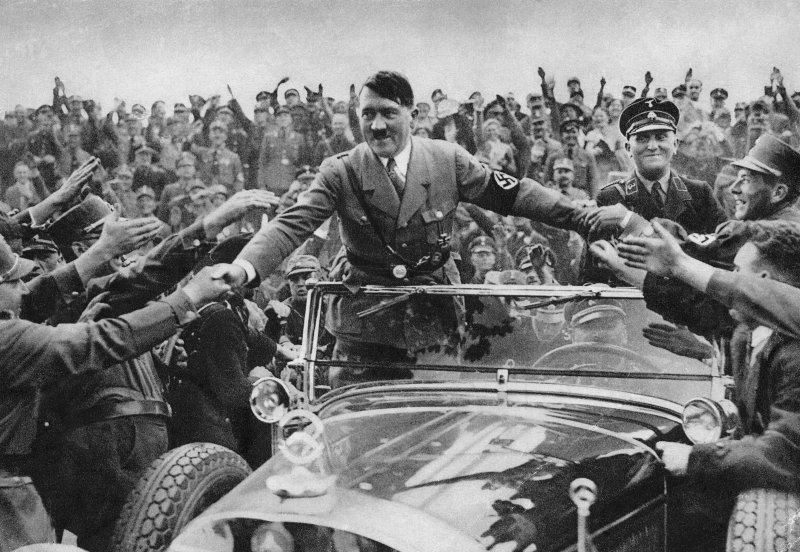
Adolf Hitler is welcomed by supporters at Nuremberg in 1933
Adolf Hitler did not have to come to power. Indeed, during his 13-year quest for leadership of Germany, he almost failed many times.

In the end, however, his astonishing success showed how demagoguery could overcome potentially career-ending challenges—and profoundly change history. A determined strongman, not taken seriously by the elites but enabled by a core of passionate supporters, could bend events his way just as his country went into free-fall. Hitler’s seemingly improbable ascent is an object lesson in the volatility of history.

While researching my new book on the radical Nazi’s rise, I was stunned at the number of times Hitler’s quest for power almost came to an end—and how close the world came, it seems, to avoiding the terror he caused. The first was in 1923, when he staged an ill-fated coup d’état that became known as the Beer Hall Putsch. It failed within 17 hours. Twenty men were killed, and Hitler missed being hit in a barrage of police bullets by only two feet. The man next to him died. Hitler threatened suicide and, in prison, attempted a hunger strike. In the end, he stood trial and was convicted of treason.

That event should have ended Hitler’s political career. But the Nazi chief was a fanatic. Convinced of his messianic mission to save Germany from imminent downfall, he wrote an autobiographical manifesto called Mein Kampf, obtained early parole from prison and refounded the Nazi movement in 1925. Hitler’s party drew true believers and grew. Yet in 1926, he faced an internal insurrection and possible party splintering. At the last minute, he quelled the challenge with a four-hour stemwinder at a closed Nazi meeting.


A year later, the Nazi Party was broke. Hitler again considered suicide, telling his new acolyte, Joseph Goebbels, that he would rather put a bullet into his head than accept bankruptcy. He was saved by a rich industrialist, Emil Kirdorf. Motivated by a four-hour Hitler monologue delivered at a Munich mansion, Kirdorf reportedly gave the Nazi Party 100,000 marks—$350,000 in today’s money.

In 1928, Hitler led his radical band into national elections—and fell flat. Preaching doom and downfall, Hitler swam against the historical tide. Germany’s economy was rebounding. The Nazis won only 2.6% of the vote, hitting rock bottom.

Even after the Great Depression prompted a turnaround for the flailing party—by 1930, the Nazis had won 18.3% in a national election—he faced another mutiny within the party and then, in 1931, a scandal prompted by the suicide of his 23-year-old niece, Geli Raubal, who was assumed by many to be his lover. The political roller-coaster ride continued. In 1932, Hitler’s Nazis reached a peak of 37% of the parliamentary vote, but Hitler’s refusal to be part of a coalition led the party to shed two million votes in the year’s final election.

After Hitler’s top lieutenant, Gregor Strasser, dramatically defected, threatening a party break-up, the Nazi leader’s meteoric political rise seemed at an end. “It is obvious that [Hitler] is now headed downhill,” wrote a leading newspaper. “The republic has been rescued.”

Even Goebbels was devastated. “The year 1932 has been one long streak of bad luck,” he wrote. “We just have to smash it to pieces.”

But to the amazement of many, Hitler was not dead yet.

By January 1933, German politics was in a tailspin—unemployment had hit 24%, with 6 million out of work. A new government was desperately needed. After a series of clandestine meetings of behind-the-scenes political players in a posh Berlin villa, Hitler emerged as the secret choice to be appointed chancellor by President Paul von Hindenburg.

However, the secret arrangement depended on a delicately balanced, multi-party cabinet. Then, just hours before his scheduled swearing in by President Hindenburg, the Nazi leader demanded that his prospective cabinet ministers agree to new elections within six weeks—a move that would affirm the Nazis’ hold on power. It was a stunning last-second condition, yet all agreed except Alfred Hugenberg, who was to be minister of economics and agriculture. The stubborn old politician, 24 years Hitler’s senior, distrusted the noisy Nazi and did not want to give him an even freer hand.

The deal for Hitler to take power now threatened to become unraveled, yet again.

Without Hugenberg, everyone knew, there would be no cabinet, no government, no swearing-in.

As Hitler and the cabinet members entered the chancellery, where the 84-year-old Hindenburg waited for them, the president’s top aide rushed up, his pocket watch in hand. “Gentlemen, you can’t keep the president waiting any longer,” he said.

Suddenly Hugenberg, a man of the old school who revered manners, authority and age, accepted Hitler’s conditions. Hitler’s last brush with political obscurity was averted. Over the prior two decades, he had relied on luck and rhetoric to save his career time and again—but behind those factors lay, always, a larger context of German politics that enabled his rise. His speeches could head off a mutiny, but the success or failure of the German economy held more sway over the fortunes of the Nazi Party. And here, once again, was a moment when Hitler’s mania for power did not succeed alone, but instead with the help of a system that let it happen. Within 15 minutes, he had become chancellor of Germany, setting the stage for the horrors that followed.

The following day, Hugenberg told a friend: “Yesterday, I did the stupidest thing of my life. I joined forces with the greatest demagogue in world history.”

Peter Ross Range, a former TIME correspondent, is the author of The Unfathomable Ascent: How Adolf Hitler Came to Power, available now from Little Brown and Company.

Sunday, July 5, 2020

biopolitics or population policy ?

Peremeny.ru Судьба и жизнь Лени Рифеншталь Одним из первых указов Путина в день его инаугурации в мае 2012 года был указ «О мерах по реализации демографической политики Российской Федерации», в котором правительству поручалось «обеспечить повышение к 2018 году суммарного коэффициента рождаемости до 1,753». А в послании Путина Федеральному собранию в декабре 2012 года демографическая политика занимала ключевое место и было объявлено, что «нормой в России должна стать семья с тремя детьми».

Столь пристальное внимание государства к вопросам гигиены, питания, рождаемости и сексуальности французский философ Мишель Фуко назвал «биополитикой». Государство смотрит на население страны как на сумму тел, биологический капитал, который можно регулировать и приумножать, из которого можно извлекать прибыль. Биополитика является высшей формой суверенитета: государство присваивает себе тела граждан и вмешивается в сферы, которые до этого считались достоянием частной жизни: секс, привычки еды и питья, домашняя жизнь («закон о топоте котов и скрипе кроватей»), курение, разговорная речь и высказывания в сети. Бесцеремонное вторжение власти в приватную сферу под лозунгом борьбы за здоровый образ жизни и есть репрессивная гигиена.

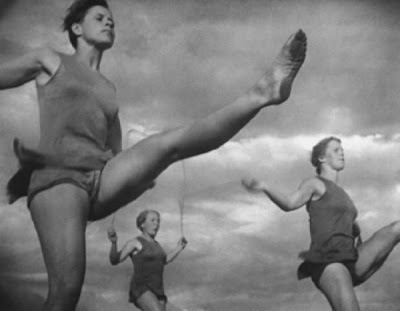
Биополитика расцветает в тоталитарных и фашистских государствах. В Третьем Рейхе идея «расовой гигиены» включала в себя отбраковывание генетического мусора в виде гомосексуалов, психически больных и инвалидов, вытеснение и истребление низших рас, таких как евреи, цыгане и славяне, борьбу с курением, культ детей и молодежи и поддержку здоровой арийской семьи. Все это освящалось античным культом тела в духе Лени Рифеншталь, массовыми шествиями и Олимпийскими играми. Собственную биополитику проводил и сталинский СССР, где аборты и гомосексуальность были криминализованы, многодетность возведена в государственную добродетель и удостоена наград, а безрукие и безногие инвалиды, заполнившие улицы после Великой Отечественной, вывозились в особые приюты, где их следы терялись. Вместо расовой гигиены и арийской семьи были классовая гигиена и комсомольская свадьба.

В сегодняшней России биополитика есть продолжение традиционного ресурсного подхода. Государство присваивает и перераспределяет ресурсы, объявляя их стратегическими (т. е. не подлежащими частному использованию). Подобно нефти и газу, стратегическим ресурсом у нас стало население, и биополитика власти заключается в количественном приращении населения как массы, способной заполнить стремительно пустеющее пространство России и обеспечить ей место на мировой арене. Именно численность населения, а не качество жизни, является стратегическим аргументом для экстенсивно мыслящего ресурсного государства.

В логике биополитики легко понять (но никак не оправдать) «закон Димы Яковлева», шокировавший просвещенную публику в России и на Западе. Речь тут не идет о праве отдельных детей на счастье и семью — речь идет о праве государства распоряжаться человеческим материалом. Сироты, в т. ч. инвалиды и отказники, превращаются в стратегический ресурс («это наши дети!» с ударением на слове «наши»), который можно использовать для «асимметричного ответа» Америке. С точки зрения человечности — беспредел и людоедство, с точки зрения биополитики — рациональный ресурсный подход: точно так же мы иногда прикручиваем газовый кран Украине, чтобы была более сговорчивой, а в семидесятых открывали-прикрывали кран еврейской эмиграции в рамках великодержавного торга с той же Америкой. Евреями сегодня уже так не распорядишься, остаются сироты.

Той же самой биополитикой можно объяснить другую пощечину общественному вкусу — закон о запрете гей-пропаганды. Дело не в пещерной гомофобии части населения России, а в том, что гомосексуальность видится власти как посягательство на ее репродуктивную политику. Любой секс, не ведущий к воспроизводству населения, считается «нечистым» и должен быть законодательно запрещен. В этой логике нечистыми считаются даже презервативы: не случайно Путин пытался высмеять белые ленточки оппозиции, сравнив их с «контрацептивами» (то ли из ханжества, то ли сознательно употребив медицинское название изделия №2, указывающее именно на то, что оно предотвращает зачатие).

Стоит ли нам теперь ожидать ветхозаветных по духу законов о запрете мастурбации?

Новая православно-гигиеническая политика власти конструирует население как послушную, семейную, размножающуюся массу, с негодованием отвергающую полигамию, контрацепцию, гомосексуальность и прочие бесовские соблазны. Качество жизни здесь не принципиально, главное — количество детей. Подобная семья изображена в беспощадном фильме Звягинцева «Елена»: она существует на иждивении у богатого любовника матери семейства, не работает, смотрит ТВ и бездумно рожает детей. Последний кадр фильма — новорожденный ребенок сучит ножками на кровати посреди огромной квартиры, отошедшей этому семейству после убийства спонсора, — физиологическое воплощение биополитики и «социальной справедливости» путинской эпохи.

Парадокс и цинизм ситуации в том, что современная российская биополитика не имеет никакого отношения ни к биологической науке (поскольку основана на целиком лживых утверждениях типа «ненормальности» гомосексуальности, и не случайно один из самых известных протестующих — биолог Илья Колмановский), ни вообще к здоровью нации, ибо разворачивается в условиях радикального сокращения государственного финансирования здравоохранения и окончательного демонтажа бесплатной советской медицины. Биополитика — это прежде всего политика и идеология, приватизация человеческого ресурса, дисциплина коллективного тела нации. Это выстраивание санитарного контура власти, задача которой, как и в прежние эпохи, — надзирать и наказывать.

отсюда

Wednesday, July 24, 2019

drivers of economic growth

Supposedly well-intentioned dictators are often cited as drivers of economic growth. We examine this claim in a panel of 133 countries from 1858 to 2010. Using annual data on economic growth, political regimes, and political leaders, we document a robust asymmetric pattern: growth-positive autocrats (autocrats whose countries experience larger-than-average growth) are found only as frequently as would be predicted by chance. In contrast, growth-negative autocrats are found significantly more frequently. Implementing regression discontinuity designs (RDD), we also examine local trends in the neighborhood of the entry into the power of growth-positive autocrats. We find that growth under supposedly growth-positive autocrats does not significantly differ from previous realizations of growth, suggesting that even the infrequent growth-positive autocrats largely “ride the wave” of previous success. On the other hand, our estimates reject the null hypothesis that growth-negative rulers have no effects. Taken together, our results cast serious doubt on the benevolent autocrat hypothesis.

JEL classification
D72H1P16P48
Keywords
Benevolent autocrats Democracy Autocracy Economic growth Leaders

How often do dictators have positive economic effects? Global evidence, 1858–2010

Thursday, June 6, 2019

D-Day 75 Years On

Tomorrow (June 6) marks the 75th anniversary of the Normandy landings, the largest seaborne invasion in history. Commemorations started in Portsmouth in the UK today, the departure point for much of the invasion fleet. Events will continue in Normandy with world leaders, veterans and thousands of members of the public expected to honor the allied soldiers who risked and lost their lives during the invasion.

Considering the scale of the operation, we have created a special infographic to show some of the key facts behind Operation Overlord 75 years on. More than 150,000 allied troops landed by sea and air in Normandy and while precise casualty figures are controversial, the U.S. National D-Day Memorial Foundation puts the number killed on June 6th at 4,414. Total German casualty numbers are unknown but are thought to be between 4,000 and 9,000 killed, wounded or missing.
Infographic: D-Day 75 Years On: Some Key Numbers  | Statista 

Monday, March 18, 2019

new view


Марк Солонин Российский военный историк 
Все статьи автора

Сделка с Гитлером: хапнули и убили без совести. Ачотакова?
17 марта 2019, 10:5227.2т


Собака — друг человека. Собака защитила человеческую популяцию от хищников, собака сделала возможным переход от собирательства к пастбищному скотоводству, то есть от дикости к цивилизации, собаки спасают альпинистов в горах и раненых на полях, собаки жертвуют жизнью в жестоких, но, увы, необходимых для людей медицинских экспериментах… И не в упрек собакам и собаководам должен я признать, что стыда у собак — нет. Ходят-бродят голыми, гениталии нараспашку, писают и какают в любом месте; вот где стоял, там лужу и налил. "Ачотакова?" — сказала бы собачка в ответ на возмущение непонятливого человека…

К чему это я? А вот к чему.

15 марта 2019 года газета "Известия" (некогда вторая по значимости газета страны, а ныне первая по сервильности) опубликовала статью научного директора РВИО Михаила Мягкова под названием "Малоизученный пакт". Заголовок смешной, но вот должность у г-на Мягкова вполне серьезная. Напомню, что Российское военно-историческое общество — это такая общественная организация энтузиастов-любителей истории, которая была создана Указом президента РФ (№1710 от 29 декабря 2012 г.), инициатором создания и бессменным руководителем РВИО является действующий министр Мединский, председателем Попечительского Совета у них Рогозин (да-да, тот самый Рогозин-Космический), а в составе Совета обнаруживаются Ротенберг, Чемезов и министр промышленности Мантуров. Контора эта размещается в центре Москвы, в особняке 17-го века ("объект культурного значения федерального значения") и официально тратит 40 млн. руб. в год на "административные расходы"; деньги — наши: прямые субсидии из госбюджета исчисляются сотнями млн. в год, плюс "частные спонсоры" в виде государственного концерна "РЖД", "Роснефти" и.т.п.

Так что даже не начинайте рассказывать мне о том, что статья директора РВИО — это "частное мнение одного из 140 млн. граждан России". Это не мнение, а вполне официальная Декларация о намерениях. Хотя речь идет об истории, намерения заявлены самые современные: "Нам пора перестать посыпать голову пеплом. Возможно России (и прежде всего депутатам Госдумы) стоит заняться пересмотром тех обвинительных заключений, которые были приняты еще на Съезде народных депутатов СССР в декабре 1989 года". Если кто не понял: "обвинительные заключения" — это Постановление № 979-1 от 24 декабря 1989 года "О политической и правовой оценке советско-германского Договора о ненападении".

Нет-нет-нет, я не собираюсь даже начинать дискуссию по поводу "малоизученного Пакта". Там изучено не только каждое слово, но и каждая запятая; результаты изучения были многократно доведены до сведения публики. Все, кто способен слышать — услышали, добавить тут мне решительно нечего. Но в рамках темы стыда и бесстыдства интересно отметить — ЧТО было признано (а ныне предложено "пересмотреть") в Постановлении 89-го года.

Ни ума, ни совести у т.н. "большевиков" не было (если бы были, то и попытки договориться о дележе добычи с кровавым бандитом не было бы), но СТЫД еще оставался. И они понимали, что сделка с Гитлером о разделе Восточной Европы — это очень позорное дело; таким не хвастаются, такое прячут за семью замками. Они и прятали. Вплоть до конца 80-х сам факт существования "Секретного дополнительного протокола" яростно, до пены на клыках, отрицался. На каждую новую публикацию в западной прессе следовал яростный крик: "Вывсёврете! Не было протокола, не было, не-бы-ло!!!" И даже Великий Архитектор Перестройки — как следует из опубликованных воспоминаний бывшего помощника Генсека, заведующего Общим отделом ЦК Валерия Болдина — требовал уничтожить оригинал Протокола (правда, по своему обыкновению не решаясь оформить свое требование документом с подписью на бумаге).

Но когда, наконец, процесс пошел, и лучшие люди страны согласились признать очевидное, то сделали они это с явной краской стыда на щеках: "Съезд констатирует, что переговоры с Германией по секретным протоколам велись Сталиным и Молотовым втайне от советского народа… эти протоколы были изъяты из процедур ратификации… решение об их подписании было по существу и по форме актом личной власти и никак не отражало волю советского народа, который не несёт ответственности за этот сговор". Невиноватые мы, это всё ОН устроил… Ну, хоть так, всё лучше, чем упорствовать во зле.

Научный директор РВИО тоже уверен в нашей детской невинности. Только по-другому уверен, по-новому: "К договору был приложен секретный протокол о разделе сфер интересов между странами, по которому к СССР отходили Западная Украина, Западная Белоруссия, Эстония, Латвия, Финляндия и Бессарабия, то есть территории, которые когда-то входили в состав Российской империи". Вот так. Никаких сомнений в существовании секретного протокола (видели бы это старшие товарищи!). Ачотакова? Это всё наше, имперское. Что не наше (Галичина, Буковина), то всё равно наше. Мы для чего на колчаковских фронтах кровя проливали?

По Конституции (ст. 70) у России есть герб, гимн и флаг. Девиз (как у рыцаря на щите) не предусмотрен. В порядке личной инициативы предлагаю выбрать в качестве девиза сакральное "Ачотакова?" Да, договорились с Гитлером, плохо ли — на чужом горбу хапнули половину Польши? Да, убили 20 тысяч пленных поляков. Ачотакова? Все они были (как верно заметил враг народа Берия) "непримиримыми врагами советской власти" и к тому же — безоружными на тот момент, чего ж не расстрелять? Да, "зеленые человечки", которых президент два месяца назад называл "силами самообороны Крыма", были бойцами российского спецназа, ну и чо?

Интересно, когда эта логическая цепочка докатится до сбитого "Боинга"?
Die Krim muss im Gespräch bleiben

Wednesday, October 17, 2018

Hitler's gender

Putzi Hanfstaengl and Diana Mitford
Центральное разведывательное управление (ЦРУ) рассекретило доклад 1943 года антрополога Генри Филда, из которого следует, что лидер нацистской Германии Адольф Гитлер имел садомазохистские наклонности, а также испытывал сексуальное влечение к мужчинам и женщинам. Исследование опубликовано на сайте ЦРУ.

70-страничный доклад основан на исследовании Эрнста Седжвика Ганфштенгля, близкого друга Гитлера в 20-30-е годы прошлого столетия, который эмигрировал в США. [см мемо]

Составители доклада утверждают, что у Гитлера были «садомазохистские наклонности», которые в молодости сочетались с гомосексуальными влечениями. Отмечается, что Гитлер испытывал гомосексуальную тягу к своему будущему заместителю Рудольфу Гессу после их совместного заключения в тюрьме в 20-е годы. В докладе утверждается, что Гесс был гомосексуалом, а также носил прозвище «Фройлен Анна» за его любовь к женским нарядам.

Также в докладе говорится, что Гитлер любил наблюдать за молодыми юношами и испытывал от этого «эстетическое наслаждение». Составители доклада отмечают, что он жил с 1910 по 1913 годы в мужском пансионе в Вене, у которого была репутация места, где «пожилые мужчины искали молодых». Однако подчеркивается, что его также интересовали женщины и он сочетал двойственную сексуальность на протяжении всей своей жизни.

Thursday, January 25, 2018

Political anthropology

NSDAP Ortsgruppe

уровень тестостерона губернаторов связан со строгостью судебных решений


Чем выше уровень тестостерона губернатора, тем более жесткие наказания выносят судьи, работающие на вверенной ему территории. Это выяснили ученые НИУ ВШЭ и Мюнхенского университета.

В ходе исследования использовалась специальная методика определения уровня тестостерона по соотношению ширины и высоты лица (facial width-to-height ratio — FWHR). Более квадратное и широкое по форме лицо свидетельствует о более высоком уровне тестостерона у человека в период полового созревания и во взрослом возрасте. Это в свою очередь связано с агрессивностью, доминирующим социальным поведением, а также риском. Вычислить FWHR можно с помощью специальной формулы при наличии качественных фотографий лица человека крупным планом.

Изучение связи поведения с гормональными особенностями организма за пределами лабораторных условий представляет большие сложности. И здесь помогает тот факт, что тестостерон в подростковом возрасте отвечает за формирование костной системы, особенно развитие черепа. Соответственно о показателях гормона можно судить по форме лица. FWHR — это соотношение ширины скул (максимальное расстояние между левой и правой границами) к высоте верхней части лица (расстояние между верхней губой и самой высокой точкой века). Чем выше FWHR, тем выше уровень тестостерона. Для того, чтобы вычислить соотношение нужны хорошие фотографии и графический редактор, который позволяет считать длину линий в пикселях.
Ганс Фридрих Карл Гюнтер (нем. Hans Friedrich Karl Günther) — германский антрополог и евгенист, оказавший своими работами серьёзное влияние на расовую политику немецких национал-социалистов.

Исследователи исходили из того, что судебная система в России по факту не является независимой, региональные губернаторы имеют большое влияние на правоохранительные органы и суды. В русском языке даже существует специальный термин «телефонное право», означающий звонки служителям Фемиды от высокопоставленных лиц, которые могут повлиять на исход дела. Социологические исследования показывают, что «телефонное право» до сих пор живо, и практикуется среди судей.

Тест FWHR широко используется в науке. Исследования обычно проводятся среди мужчин, поскольку у женщин роль тестостерона в организме несколько другая. Лабораторные эксперименты подтверждают, что мужчины с более высоким уровнем этого гормона ведут себя агрессивнее и склонны к социальному доминированию. Есть исследования с использованием теста FWHR, которые показывают, как подобные черты влияют на принятие решений в деловой и экономической сфере. Например, доказано, что высокий уровень тестостерона генеральных директоров связан с финансовым мошенничеством. Также в ходе научных работ обнаружилась и положительная корреляция высокого FWHR со склонностью обманывать и ведением переговоров в бескомпромиссном стиле.

В 2012 году анализировались FWHR по фотографиям бывших президентов США. Была доказана позитивная связь маскулинных черт лица с амбициями и стремлениями к достижениям, агрессивной политикой и отсутствием склонности к гибкому и миролюбивому поведению.

В современной России главным популяризатором теории нордицизма (под именем «расологии») является публицист Владимир Авдеев. Свой вклад в расовую теорию внёс также политик и политолог Андрей Савельев, автор книги «Образ врага. Расология и политическая антропология» (2007 год). Публикации Авдеева и Савельева подвергнуты жесточайшей научной критике рядом учёных (например, известным антропологом В. А. Шнирельманом [have a look]

Wednesday, October 19, 2016

Reichszentrale zur Bekämpfung der Homosexualität und der Abtreibung

Плакат, предупреждающих об опасностях аборта, но как именно — понять не могу, need help
Риск для государственной политики, опасность для молодёжи и общественного здравоохранения представляют относительно большое количество абортов и гомосексуальная активность значительной части населения. Эти массовые эпидемии требуют внимания и эффективного противодействия, — писал Генрих Гиммлер в секретном указе от 10 октября 1936 года (80 лет тому). Для борьбы с этим злом, рейхсфюрер СС и начальник немецкой полиции приказал немедленно образовать Имперское управления по борьбе с гомосексуализмом и абортами (Reichszentrale zur Bekämpfung der Homosexualität und der Abtreibung), начальник Йозеф Майзингер, 1936-38 (до этого подготовил компромат на Эрнста Рёма + один из организаторов дела Бломберга-Фрича, в ходе следственного процесса был отправлен в Египет для сбора доказательств гомосексуальных контактов Фрича), потом Эрих Якоб, научный руководитель (с 1943 года) Карл-Хайнц Роденберг (певец кастрации)+ещё о нём. Задача, прежде всего, состояла в сборе информации о гомосексуалистах и действиях полиции, направленных на их преследование (без суда, а партийные расследования требовали партийной же санкции). Основная цель = РКЦ.

В 1936-1942 гг было проведено более 100 тыс расследований, и 57 тыс чел осуждены по § 175 УКГ, около 6 тыс заключено в концлагеря (розовый треугольник). Многие покончили с собой, получив повестку гестапо. На геях проводились медицинские эксперименты. В ФРГ в 1950-1965 § 175 УКГ оставался рабочим и 44231 чел были осуждены по этому обвинению. Часть геев, отсидевших в лагере при нацистах, вернулась в тюрьму, но смертная казнь и хим.кастрация больше не применялись. § 175 УКГ частично отменён в 1969 году, после 21 года геям уже стало можно быть геями, с 1973 года с 18 лет. Полностью отменён в 1994 после объединения, мб, ГДР настояла? В 2002 бундестаг приравнял преследование геев к нацизму.

Аборты немкам были запрещены (еврейкам разрешены в 1938 году, но не точно. Если кто располагает ссылками — пож, дайте знать), такшта ничего нового в политике абортов не было кроме некоторого ужесточения.
В отношении абортов репрессивные меры привели к сокращению числа одобренных, терапевтических абортов с 44000 в 1932 году до 4,131 в 1937 г. К 1939 было выявлено 8000 криминальных/подпольных абортов.

Wednesday, June 22, 2016

new Holocaust theory

рецензия на две книжки:

  • Snyder, Timothy. 2010. Bloodlands: Europe between Hitler and Stalin. New York: Basic Books;
  • Snyder, Timothy. 2015. Black Earth: The Holocaust as History and Warning. New York: Tim Dugan Books.

... концепцию о том, что холокост нельзя интерпретировать исключительно как порождение нацистского режима. Вместо этого Снайдер предлагает рассматривать геноцид евреев в нацистской Германии в контексте того, что можно назвать транснациональной историей насилия. Холокост в его интерпретации является продуктом ломки устоявшихся государственных, социальных и политических структур нацистским и советским режимами.

.... концепция является доминирующим элементом, в то время как фактический материал подается в качестве иллюстрации тезисов, вытекающих из его общей абстрактной концепции. Источники и факты сугубо вторичны по отношению к теоретической модели.

коварный план Даллеса
...Снайдер постоянно ссылается на желания, страхи, мнения и даже мысли Сталина для объяснения истории СССР и Восточной Европы (Snyder 2010, xi, 75, 105, 157, 313, 339, 366, 370). При этом если другой американский историк, Стивен Коткин, поставивший своей исследовательской целью «залезть Сталину в голову», чтобы понять его мыслительный процесс, изучил все доступные ему опубликованные и архивные документы за авторством Сталина (Kotkin 2013; Kotkin 2014), то Снайдер – делающий, по сути, аналогичные заявления – не включает в свои работы ни одного аналогичного источника. Утверждения вроде того, что «Сталин хотел, чтобы СССР оставался на имперской стадии истории, сколько бы долго она ни продлилась» (Snyder 2010, 157), что уже к январю 1945 г. «Сталин знал, какого рода Польшу он хочет построить» (Ibid., 313) или что к началу 1950-х гг. Сталин считал советских евреев «скрытыми американскими агентами» (Ibid., 362) приводятся как прописные истины без каких-либо отсылок к источникам.
[это оч интересный пассаж, недавно был в Сахарнице, и там некий политолог на полном сурьёзе грил, что некий фильм перевернул мировоззрение Андропова]

...Как можно объяснить популярность «Кровавых земель» и «Чернозема», которую они получили, несмотря на спекулятивный характер и негативные рецензии в профессиональных изданиях? Мое предположение заключается в том, что эти работы вошли в идеальный резонанс с доминирующими формами исторического воображения, которые сложились в западном обществе применительно к советской истории.

...сталиноцентричность Снайдера достигает уровня советской пропаганды 1930-х – начала 1950-х гг.
«Это гений, философ, это человек, умеющий мыслить абстрактно. У него первоклассный ум. Он сидит неподвижно, словно паук в центре своей паутины, но у этой паутины тысячи нитей, и он улавливает вибрацию каждой из них. Сам он действует редко. Он только составляет план. Но его агенты многочисленны и великолепно организованы».

в общем: сабж — маленький? американский путен