Showing posts with label Англия. Show all posts

Saturday, September 14, 2024

census reliability

Британская перепись 2021 года могла переоценить количество трансперсон в стране


Британское Бюро национальной статистики (ONS) признало, что перепись населения, проведенная в 2021 году, могла переоценить количество трансгендерных персон в стране, поскольку многие респонденты могли неправильно понять соответствующий вопрос.

По итогам переписи сообщалось, что примерно 0,5% населения Англии и Уэльса старше 16 лет относили себя к иному гендеру, чем тот, который был им приписан при рождении.

Однако последующий анализ показал, что среди этой категории респондентов аномально высока доля тех, для кого английский язык не родной.

Отсюда следовал вывод, что кто-то из респондентов мог неправильно понять вопрос. Заместительница директора ONS Мэри Грегори в пятницу признала, что это могло произойти.

Вопрос формулировался так: «Совпадает ли гендер, с которым вы себя отождествляете, с полом, который был зарегистрирован при рождении?» 262 тысячи человек к Англии и Уэльсе ответили «нет».

Вопросы к достоверности этой цифры впервые были подняты публично в апреле в статье профессора социологии Оксфордского университета Майкла Биггса, опубликованной в журнале Британского социологического общества. Он обратил внимание, что если в целом по выборке 10% населения указали, что для них английский или валлийский языки не являются родными, то среди тех, у кого гендер, по их словам, не совпадает с приписанным при рождении полом, таких было целых 29%.

Также аномально высокой оказалась доля трансперсон среди населения лондонского района Ньюхэм: 1,51%. В этом районе для 35% жителей английский язык не родной, это один из самых высоких показателей в стране, тогда как в среднем по Англии – 9%.

Бюро национальной статистики заявило, что остальные данные переписи 2021 года оно по-прежнему считает в полной мере достоверными.


Wednesday, August 14, 2024

sex

Зумеры готовы отказаться от секса ради первого взноса по ипотеке на свой дом, 

пишет The Guardian.

Молодёжь готова пойти на крайние меры из-за зависти к старшему поколению, которое успело обзавестись недвижимостью ещё в 80-х годах и теперь может заниматься сексом в любое время и в любом месте своего дома, а не пытаться делать это на скамейках в парках, пишет газета.

Средняя стоимость недвижимости в Лондоне достигла $370 000. Эксперты отмечают, что среднему классу потребуется около 37 лет, чтобы накопить на первый взнос. Высокая стоимость жилья и большие расходы на секс заставили зумеров всерьёз задуматься об отказе от интима.

Monday, July 1, 2024

natinal identity

Национальная идентичность британцев 

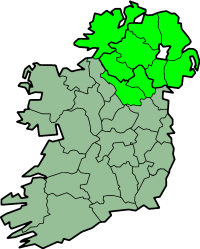
Интересная карта о том, как за несколько веков в одной стране с небольшим числом в целом очень близких друг другу народов не получается достигнуть "национального единства". 

В Англии большая часть жителей считает себя британцами (а не англичанами - напомним, это немного разные вещи). Но вот большинство жителей Шотландии - шотландцы, так же как и большинство жителей Уэльса - валлийцы! И только в Северной Ирландии считающих себя британцами и ирландцами примерно поровну, местами с преобладанием именно британцев. 

Интересная иллюстрация к вопросу "русский" или "россиянин"

ист

Tuesday, February 27, 2024

psycho

Исследование

поколение 20-летних в Британии чаще не работает из-за плохого самочувствия, чем те, кому за 40


В докладе независимой исследовательской организации Resolution Foundation говорится, что нынешняя ситуация радикально отличается от прежних лет, когда вероятность не работать из-за болезни напрямую коррелировала с возрастом.

Авторы исследования отмечают, что согласно официальным данным, среди молодежи растет уровень проблем с психическим здоровьем.

Это может помешать получению образования и привести к тому, что они будут заняты на низкооплачиваемых работах или вовсе не сумеют трудоустроиться.

По данным исследователей, в 2023 году 5% молодых британцев были «экономически неактивными» (иначе говоря, не работали) по причине плохого здоровья.

Из отчета следует, что в настоящее время среди всех возрастных групп наибольшие проблемы с психическим здоровьем — у молодежи.

Для сравнения, 20 лет назад среди молодых людей был самый низкий уровень наиболее распространенных психических расстройств.

Thursday, September 28, 2023

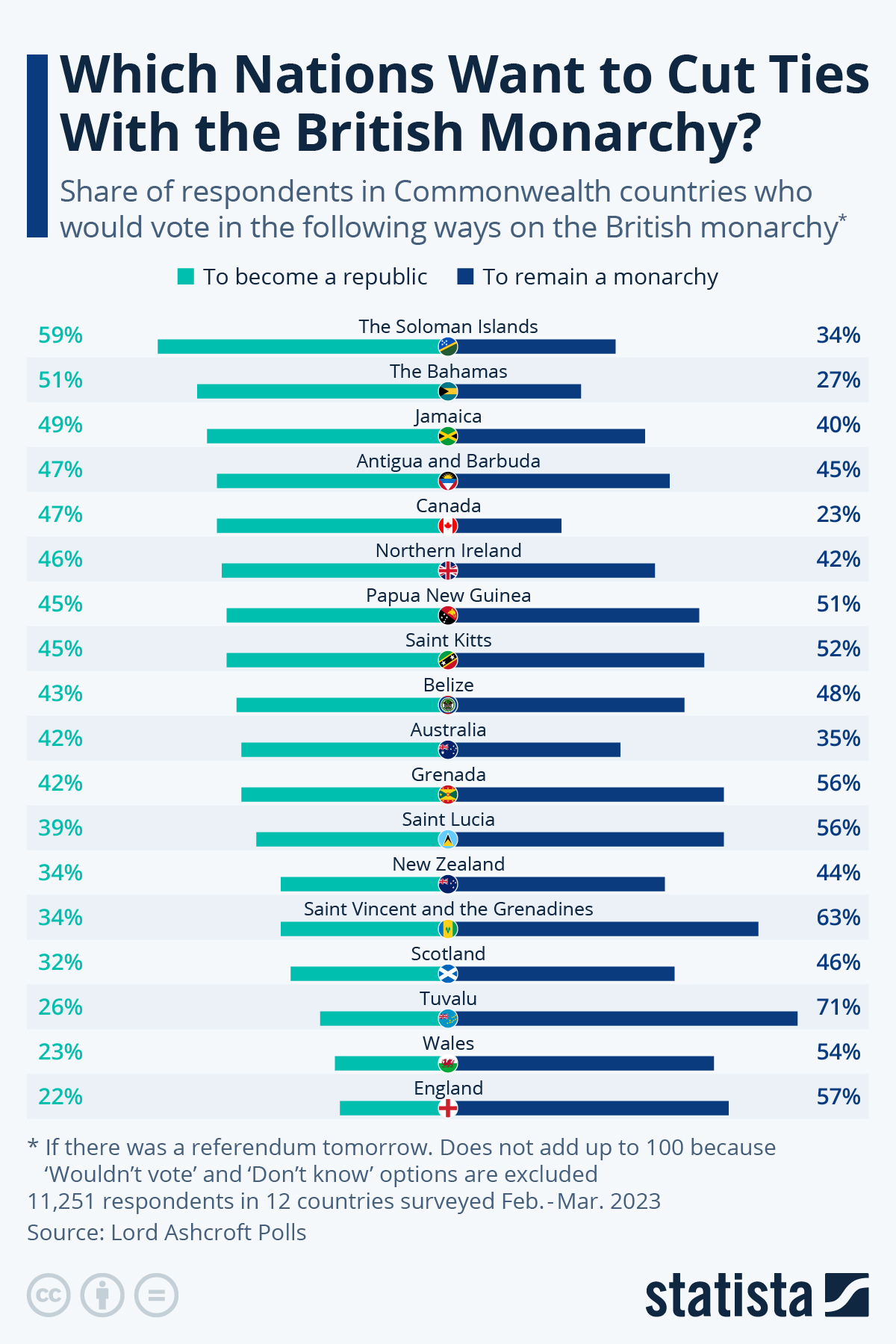
Which Nations Want to Cut Ties With the British Monarchy?

Jamaica may be the next country to sever ties with the British monarchy, with a referendum in the island nation on whether to remove King Charles as their head of state set for 2024.

It’s not the only one considering leaving the monarchy behind. According to media reports, government officials in Belize, the Bahamas, Grenada, Antigua and Barbuda, and St.Kitts and Nevis have all signaled that they want to become republics in the near future too. While on the other side of the world, there have been calls in Australia to become fully independent of Britain.

If these nations do choose to become republics, then they will join the ranks of several others in the Caribbean region - Guyana, Trinidad and Tobago, and Dominica - which all removed the then-monarch Queen Elizabeth II as their head of state in the 1970s. Barbados too followed suit in November 2021, becoming the world’s newest republic and in the words of the country’s first president Dame Sandra Mason, took the steps “to fully leave our colonial past behind."

There are 56 independent countries in the Commonwealth. Only 14 of those are considered a part of the ‘Commonwealth Realm’, where King Charles is the official head of state.

The following chart shows the results of a poll on the topic by Lord Ashcroft, a pollster and former deputy chairman of the UK Conservative Party, which was carried out between February and March of 2023. It found that when asked “If there was a referendum tomorrow, would you vote to remain a monarchy or to become a republic?” a greater share of people in seven out of the 14 surveyed nations of the Commonwealth Realm wanted to remove King Charles as their head of state rather than to keep him. Among these were the people of the Solomon Islands (59 percent would vote to become a republic versus 34 percent to remain a monarchy), the Bahamas (51 percent to 27 percent), Canada (47 percent to 23 percent) and Jamaica (49 percent to 40 percent). The remaining respondents in these countries either said they didn’t know or would not vote.

In several countries the response was more mixed, such as Antigua and Barbuda (47 percent opting for becoming a republic and 45 percent remaining a monarchy) and Belize (43 percent to 48 percent). Meanwhile, respondents in Tuvalu, St. Lucia, Saint Vincent and the Grenadines and Wales were more clear cut in their ambitions to maintain the status quo.

Within the UK, Scottish respondents - despite close referendums and polls on the topic in recent years - said that they would choose to remain part of the monarchy, at least under the circumstances of a ‘next day’ referendum, with 32 percent of respondents saying that they would prefer to become a republic. Northern Ireland, which has also observed close polls on the question of leaving the UK to become a United Ireland once more, had a closer divide of 46 percent leave to 42 percent remain.

It is important to note here that while surveys can be useful for capturing the sentiment of a population, it is better to rely on multiple surveys over a time period.

This chart and text had to be updated based on incorrect figures for Scotland, the Solomon Islands, Tuvalu and Wales. Those countries' figures had previously shown the percent of respondents answering the question: "If there was a referendum tomorrow do you think your country would vote to remain a part of the monarchy or to become a republic."Which Nations Want to Cut Ties With the British Monarchy?ъ

Friday, June 23, 2023

How Blood Type Prevalence Varies Around the World

World Blood Donor Day is organized every June 14 by the World Health Organization with the aim of raising public awareness about the need for safe blood, plasma and platelets as well as to celebrate the many people who save lives through their blood donations.

There are four different types of blood: A, B, O and AB. Each of these can either be positive or negative, depending on whether a protein known as the “Rh factor” is present in the red blood cells. Each blood type has slightly different qualities. For instance, those with type O- are universal donors. This means they can give blood to anyone. AB+ on the other hand is a universal acceptor, so they can receive donations from anyone. Only around seven percent of the world are Rh negative.

As the following map shows, the most common blood group worldwide is O positive. Europe tells a slightly different story, however, with the majority of its countries’ populations having A positive blood. Only two countries in the World Population Review’s records have a greater share of B positive blood types: Pakistan and Bangladesh.

While this chart is useful for getting an overview of regional patterns, it hides some of the finer details, such as how evenly split countries are by blood type. For instance, in China and India a fairly high share of the population has B+ blood. Meanwhile, in Europe many countries are fairly closely tied between O+ and A+. There are of course slight differences and exemptions, with the Nordic countries representing a slightly greater share of people having A+ versus O+, according to World Population Review. The U.S. is also fairly closely split, with 37.4 percent of the population having type O+ and 35.7 percent A+, while only 8.5 percent are B+ in the country.

The countries with the clearest prevalence of a given blood group are Ecuador, Peru and Zimbabwe, with 75 percent, 70 percent and 63 percent of O+ blood respectively.

According to the American Red Cross, the opposite rules apply when it comes to the universality of plasma transfusions. In that case, O- blood types can only donate plasma to other O- patients, while the universal plasma donor type is AB blood.How Blood Type Prevalence Varies Around the World
англофобии кусочек

Sunday, June 11, 2023

new rules

В Англии будет запрещено использование блокаторов пубертата за исключением клинических исследований


June 10, 2023

Клиника, которая сейчас занимается детьми с гендерной дисфорией, должна закрыться в марте следующего года

Национальная служба здравоохранения (NHS) в Англии объявила о том, что блокаторы пубертата теперь запретят прописывать детям и подросткам, посещающим клиники гендерной идентичности, и будут использовать только в рамках клинических испытаний.


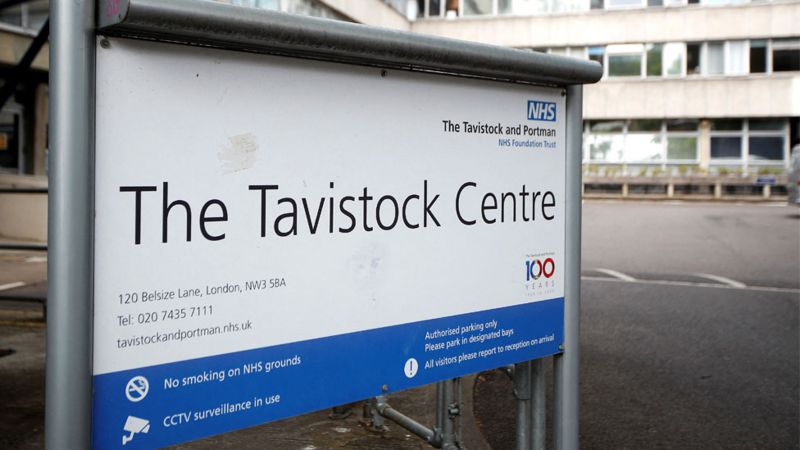
Это решение было принято после того, как детские гендерные службы пришли к выводу, что воздействие этих лекарств на здоровье еще недостаточно изучено. Кроме того, толчком к реформе послужили проблемы, обнаруженные в деятельности клиники Tavistock, занимающейся детьми и подростками, страдающими проблемами гендерной идентичности.

Блокаторы пубертата используются для того, чтобы приостановить половое созревание подростков, они подавляют выброс гормонов и часто являются первым шагом к операции по перемене пола.

В отчете доктора Хилари Касс содержится призыв изменить подход к детям, заявляющим о гендерной дисфории - несоответствии идентичности и пола, записанного при рождении.

В настоящее время, если ребенок обращается по этой причине за медицинской помощью, лекарства являются одним из вариантов отсрочить начало физических изменений, которые не соответствуют заявленной ребенком гендерной идентичности.

Однако врачи уже давно высказывают опасения в связи с применением блокаторов, которые могут нанести непоправимый вред здоровью тинэйджера в период полового созревания, и влияние которых, особенно долгосрочное, мало изучено.

Это изменение вступит в силу, когда в конце года начнут открываться новые клиники, заменяющие клинику Tavistock, в свое время получившую также название Служба гендерной идентичности и развития (Gids).

Детям и их семьям также настоятельно не рекомендуется приобретать препараты для активизации развития половых признаков, такие как гормоны, из неконтролируемых источников или через интернет-магазины.

Клиническое исследование, которое будет проводить новый Совет по исследованиям и надзору за гендерной дисфорией детей и молодежи, досконально изучит влияние лекарств, задерживающих половое созревание.

Дополнительные подробности о том, как будет проходить исследование, будут опубликованы в ближайшие недели.

Блокаторы полового созревания будут назначаться только тем подросткам, которые зарегистрируется для участия в исследовании, или же при исключительных обстоятельствах, рассматриваемых в каждом конкретном случае.

По данным Gids, в изученной ими случайной выборке из 312 пациентов за один год 47 человек получали гормональные блокаторы.

Friday, May 26, 2023

British migration

Иммиграция в Британию побила все рекорды, в том числе из-за войны в Украине. Власти недовольны, но делать ничего не собираются


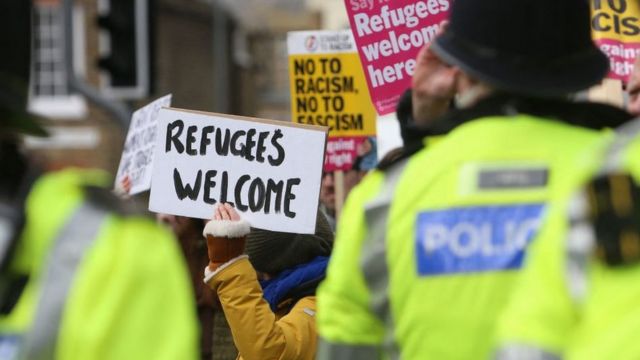
Около 8% иммигрантов в 2022 году попросили убежища. "Беженцам рады" - проиммигранская акция в Дувре в марте 2023 года

Великобритания приняла в прошлом году рекордное число иммигрантов. Растущую потребность стареющей страны в работниках усугубило сразу несколько факторов: последствия брексита, массовое возвращение студентов после ковидной паузы и программы гуманитарных виз для украинцев и гонконгцев.


Правительство консерваторов, неоднократно обещавшее сократить иммиграцию до десятков тысяч в год, оказалось в неудобном положении - обнародованная в четверг статистика показала, что в прошлом году в страну въехали 1,2 млн человек с визами сроком больше года, а выехали лишь 557 тысяч.

Таким образом, чистая иммиграция впервые превысила 600 тысяч человек в 2022 году, что вдвое больше, чем до пандемии.

"Причиной рекордной иммиграции стала череда беспрецедентных событий в мире в 2022 году и снятие ограничений после ковида", - сказала Джей Линдоп, замдиректора британского Центра международной миграции, который помогает властям собирать статистику.

"Главными драйверами были приехавшие из-за пределов ЕС по рабочим, студенческим и гуманитарным визам, включая Украину и Гонконг".

До брексита Британия была частью зоны свободной торговли и перемещения людей в рамках ЕС - крупнейшего союза на планете с населением более полумиллиарда человек.

Большинство мигрантов составляли тогда европейцы, но после брексита их лишили права работать без визы, что привело к массовому оттоку и нехватке рабочих рук.

Власти в ответ смягчили иммиграционные правила, резко увеличили выдачу рабочих виз, ввели временные разрешения для сезонных работников и ослабили ограничения для студентов.

Согласно статистике, из 1,2 млн иммигрантов в прошлом году по гуманитарным визам приехали 114 тысяч украинцев и 52 тысячи жителей Гонконга - бывшей британской колонии, в которой после возвращения Китаю начались репрессии.

Еще один канал иммиграции - люди, попросившие убежища в Британии. Часть из них перебралась на острова нелегально в лодках, другие въехали легально и уже потом попросили убежища. В целом на них пришлось около 8% всей прошлогодней иммиграции из-за пределов ЕС.

Проблема или благо?


Власти давно перестали называть цифры приемлемой для них миграции, и теперь лишь говорят, что их не устраивает нынешнее положение вещей.

"Все очень просто - цифры слишком большие, и я хочу, чтобы было меньше", - сказал в четверг премьер-министр Риши Сунак, комментируя свежую статистику.

Однако ни о какой смене миграционной политики он не объявил, а изменения, озвученные в преддверии неприятной для правительства публикации, оказались предельно косметическими: иностранным аспирантам запретили привозить в Британию членов семьи.

Партия консерваторов у власти уже 13 лет, но перед выборами следующего года она уверенно проигрывает в рейтингах лейбористам. Сокращение иммиграции было обещанием консерваторов на прошлых выборах, и неспособность выполнить его лишь добавит им проблем.

Беженцы, спасенные у берегов Кента после крушения лодки в Ла-Манше в апреле 2023 года

Однако далеко не факт, что цифры приехавших станут заметной темой выборов. Как показывают опросы, отношение британцев к иммигрантам начало смягчаться еще до принятого в 2016 году решения выйти из ЕС.

"Иммиграция растет, а чистая миграция достигла рекордного уровня в 2022 году. Однако обеспокоенность общественности неуклонно снижалась еще до референдума 2016 года. Избиратели теперь чаще говорят, что иммиграция оказала положительное влияние на Великобританию, чем отрицательное", - отмечает исследовательский центр UK in a Changing Europe.

Свою роль играет и меняющаяся демография, и представление о том, что власти вернули себе контроль над границами после выхода из ЕС, и понимание, что стране резко не хватает работников, особенно в жизненно важных сферах вроде здравоохранения.

Масштабы иммиграции постепенно должны уменьшиться, говорит Джей Линдоп из Центра международной миграции.

"Есть признаки того, что причины высокой миграции смягчаются. Когда в 2021 году были сняты карантинные ограничения, резко выросло число прибывающих студентов. Потом был всплеск приездов по гуманитарным визам", - сказала она.

"Но в последние месяцы иммиграция замедлилась, что может свидетельствовать о временном характере этих событий".

Monday, May 15, 2023

BBC intro to demography

Почему в России падает рождаемость и что с ней будет дальше?


На прошлой неделе Росстат опубликовал официальную демографическую статистику за март. По ней рождаемость в стране - это количество рожденных детей в пересчете на одну тысячу человек - снизилась более [речь об общем коэффициенте, с критики которого курс демографии начинается], чем на 3,2%.

Это второе снижение подряд с февраля.

Би-би-си рассказывает о том, почему в России рождается меньше детей и как естественный прирост превратился в убыль.

Вот несколько факторов, которые влияют на это:

🔻Со времен Великой отечественной войны график численности населения и рождаемости имеет форму волны. Эти колебания давно должны были “затухнуть” - но каждый раз в “нижней точке” происходит какое-либо событие, которое усиливает падение. В итоге маятник продолжает раскачиваться.
🔻Кроме общей численности населения, роль играет то, сколько детей готовы рожать в каждой конкретной семье. И вот этот показатель также снижается в последние годы. На это влияют изменения в культуре - но также сложная ситуация в экономике и уверенность в будущем. А низкий коэффициент рождаемости - ниже двух - не позволяет поколениям воспроизводиться.
🔻Год полномасштабной войны с Украиной не прошел бесследно для демографической ситуации в России - однако эффект пока не такой сильный. Россияне почти не отреагировали на начало войны, лишь на несколько месяцев отложили беременность [это откуда известно?]. А вот мобилизация, скорее всего, имела уже куда более существенное влияние - но это будет заметно лишь в летней статистике (еще не прошло девяти месяцев).
🔻Влияние санкций и экономических проблем со временем накапливаются и тоже могут начать сказываться на рождаемости. Кроме того, эксперты говорят, что россияне постепенно начинают осознавать масштабы войны. Рожать детей в такой ситуации может быть страшно [а может и по другому], а программы государственной поддержки не сработают [можно подумать: они срабатывают в другой ситуации].

Есть-таки глобальные предрассудки во мнениях.  

Sunday, April 30, 2023

Accused of Witchcraft

Waldrada, illustration by Pollie Scott

I have enlisted the help of my esteemed colleague Dr Chris Halsted, a lecturer at the University of Maryland College Park, to tell you about a fascinating woman who lived across the sea in the kingdom of Lotharingia. Chris researches gender, ethnicity, and geography in early medieval texts and is particularly interested in women who have been accused of magic and witchcraft - like Waldrada, the subject of this month’s newsletter.


Waldrada: The Woman Accused of Witchcraft during a Medieval Divorce Scandal


Guest Author: Dr Chris Halsted

In the middle of the ninth century, a woman named Waldrada was wrapped up in a royal divorce scandal that could rival that of Henry VIII. Waldrada was the mistress of King Lothar II, who ruled over a Frankish kingdom at the center of the former Carolingian empire. The scandal ensued when Lothar attempted to divorce his wife, Theutberga, and marry Waldrada instead. During Lothar’s campaign for a divorce, these two women both faced wild and scandalous accusations from those with political and religious interests in the fate of the royal marriage. What we know about Waldrada comes almost entirely from this highly charged and high-profile divorce case, making her one of the most consequential yet mysterious figures of the middle ages.

Very little is known about Waldrada’s early life. From what we can tell, her background was aristocratic but not especially distinguished. She was likely already in a relationship with Lothar when he became king in 855 at the age of eighteen. However, Lothar did not marry Waldrada, but a woman named Theutberga, the sister of a powerful magnate. Lothar would later claim that he only married Theutberga because her brother had threatened to obstruct his rise to kingship if he refused.

Though Lothar married another woman, Waldrada was not cast aside. Lothar and Waldrada probably already had children by the time of his marriage, and they would go on to have at least four illegitimate children: a son and three daughters. This was of vital importance to the divorce scandal: Lothar’s marriage to Theutberga was childless, and so he had no legitimate heir.

Obtaining a divorce was no simple matter. Churchmen from the time of Lothar’s grandfather Charlemagne onwards had standardized rules surrounding marriage. Not only had it been decided that the keeping of a ‘concubine’ was unlawful, but remarriage after repudiating one’s wife (which could only be done in the case of adultery) was also forbidden. By the 850s, these strict rules on remarriage had come crashing up against the realities of political life among the imperial elite: Lothar’s attempt to divorce his wife and marry Waldrada is only the most famous among several marriage scandals that engulfed his extended family, including his cousin Judith’s marriages to the Kings of Wessex.

These rules motivated Lothar to levy scandalous accusations against his wife Theutberga in an attempt to secure a divorce. The young king accused her of having an incestuous relationship with her brother Hucbert before their marriage, in which they had coupled ‘as men do with men’. This had apparently resulted in a pregnancy that had then been aborted. The reasons for these extreme accusations were twofold: first, incest and ‘sodomy’ were both crimes that made a marriage unlawful; if Lothar could successfully convince the broader political community that his marriage to Theutberga had been unlawful in the first place, he would be then free to marry Waldrada. The second reason was political: by dragging Hucbert into it, Lothar made Theutberga’s most powerful ally complicit in her supposed crimes.

In response to these accusations, voices from Theutberga’s camp accused Waldrada of witchcraft, saying she had bewitched the king as part of a plot to seize power. This was something of a trope in Carolingian gender discourse: a similar accusation had been levied against the Empress Judith in the 830s, for example, and it is possible that something similar befell Arnulf of Carinthia’s queen Uota.

Lothar’s plan to set Theutberga aside and marry Waldrada failed. Under pressure from his bishops, his uncles who ruled the neighboring kingdoms, and Pope Nicholas II, he took Theutberga back in 858. A second attempt at divorce, in 862, was temporarily successful, and Waldrada was even presented to the court as Lothar’s queen, but in 863 her fortunes turned again. Nicholas annulled the divorce and excommunicated Waldrada.

By this point even Theutberga wished for divorce, wanting to rid herself of her troublesome involvement with Lothar and retire to a convent. Both Waldrada and Theutberga’s fortunes had risen and fallen tumultuously alongside Lothar’s campaign for divorce. The political wrangling with Pope Nicholas ended with his death in 867. Nicholas’ successor, Adrian II, was more generous to the women involved, giving Theutberga permission to live without Lothar, and lifting Waldrada’s ex-communication.

In 869, Lothar made the journey to Italy to try to convince the pope that he should be allowed to once more marry Waldrada, but on the way there he fell ill and died, the issue of his marriage still unresolved. His uncles immediately divided his kingdom between them — Lothar still had no legitimate heirs. Lothar’s failed marriage politics had led to the failure of his kingdom.

For a variety of reasons — the sensational nature of the accusations, the novelty of a royal divorce and remarriage, and the political importance of reproduction by the heirless Lothar — this crisis became possibly the best-documented Carolingian scandal. Kings and popes wrote letter after letter, bishops and churchmen compiled manuscripts on church law, historians marked down their opinions both during and after the crisis. Perhaps our best source for the crisis is De Divortio, a lengthy treatise on the matter by Archbishop Hincmar of Rheims, one of the most eminent churchmen of the day. Hincmar’s work provides a primer through which modern historians can understand the issues at stake — up to and including a discussion of love potions, succubi, and other relevant supernatural issues.

Although Lothar died with the issue still unresolved, it was the anti-Waldrada camp that won out in the history books. Later writers remember Waldrada as a seducer and tyrant, the archetype of the scheming woman trying to supplant the rightful queen Theutberga. The later chronicler Regino of Prüm would blame the entire downfall of the Carolingian dynasty on Waldrada and Lothar’s relationship, arguing that the sexual sin of their relationship prompted God to curse the family with sterility. The Life of St. Deicolus, written in the tenth century, blames Waldrada for the mismanagement of the monastery of Lure, implying that her sins caused it to be attacked by Hungarians some eighty years later. Over the course of the long Carolingian era, Waldrada became a scapegoat, blameable for seemingly anything that went wrong which could be even vaguely connected to her.

But the person of Waldrada gets lost in the scandal that surrounded her. Among the accusations and slanders, the arguments about canon law, politics and magic, we get very little sense of her actual personality. What was her relationship with Lothar like? Was she eager to be a queen, or horrified by the continent-wide drama her relationship had catalyzed? Modern historians have often followed medieval ones in blaming Waldrada for the entire affair, portraying her as a power-hungry and ambitious woman — this is surely nothing more than misogyny, as the polemic sources surrounding the case give us very little reason to trust them.

Against the backdrop of a century of royal marriage controversies, starting with Wallis Simpson and refusing to relent since, it’s worth taking a moment to consider the person in the midst of the chaos. Very shortly, we will witness the coronation of a king and queen with at least a superficially similar story — marriage, affair, divorce, and remarriage, though this one without the accusations of witchcraft. We know the players in the modern case all too well — but who Waldrada was, and the actual facts and events of the relationship at the center of her sensational case, have become swallowed up in history.

sperm donor

Донора спермы из Нидерландов подозревают в отцовстве 600 детей по всему миру. Суд лишил его прав на донорство


Теперь этому 41-летнему мужчине, которого зовут Джонатан, придется заплатить штраф в 100 тысяч евро, если обнаружится, что он нарушил запрет и попытался снова предоставить свою сперму клинике или потенциальным родителям.

Высокая донорская активность Джонатана уже становилась предметом судебного разбирательства в стране. В 2017 голландский году суд запретил ему продолжать сотрудничать с местными клиниками, когда выяснилось, что от его спермы родились более 100 детей.

Но вместо того, чтобы остановиться, Джонатан стал посылать свою сперму датской клинике с клиентурой по всему миру, а также предоставлять ее через интернет.

По правилам, регулирующим голландскую медицину, один донор не должен становиться отцом более 25 детей в 12 семьях. Это связано с беспокойством о том, что из-за большого числа людей с одним отцом, не подозревающих о родстве, в будущем могут появиться случайные близкородственные семейные союзы.

Friday, April 28, 2023

patria or langue

Родители не хотят замены английского языка на китайский в школах


80% родителей школьников выступают против исключения английского языка из школьной программы. К обязательному изучению китайского общественность тоже относится настороженно: 59% против. В опросе сервиса по поиску высокооплачиваемой работы SuperJob приняли участие 1600 родителей школьников из всех округов страны.

Депутат Госдумы РФ Султан Хамзаев предложил исключить английский язык из перечня обязательных предметов в школе. По его мнению, это позволит уйти от прозападного вектора в российской системе образования.Инициативу одобряет лишь 9% родителей школьников, тогда как 8 из 10 выступают против такого решения. В комментариях респонденты напоминают, что английский остается языком международного общения, а методика его преподавания отработана годами.

Следует ли сделать китайский язык обязательным для изучения? Общество относится к этой идее осторожно: 6 из 10 опрошенных (59%) против такого нововведения. В числе их аргументов — сложность китайского языка, неуверенность в состоятельности отечественных методик его преподавания, а также отсутствие массовой потребности: «Все инженерные специальности по-прежнему требуют знания английского». Сторонником изучения китайского языка в системе среднего образования выступают только 19%. С их точки зрения, стратегическое партнерство России с КНР обязательно приведет к востребованности специалистов, владеющих китайским.

Место проведения опроса: Россия, все округа
Населенных пунктов: 349
Время проведения: 20—27 апреля 2022 года
Исследуемая совокупность: родители школьников
Размер выборки: 1600 респондентов


Подробнее

Monday, April 17, 2023

People ageing without children or family out of sight, out of mind

In the Western world, childlessness affects one in four men and one in five women. In the UK the numbers of people ageing without children aged over 65 years is projected to rise to above 2 million by 2030. Although precarity in ageing is increasingly recognised in academia, people ageing without children are not acknowledged as a group and dismissed as a ‘non-category.’ This means they are in danger of being invisible to academia, policymakers and other institutional stakeholders.

бездетность бывает разная (по причинам), картинка от туда.

Шоп перейти — в кортаинко тыц.

Northern Ireland's Violent History

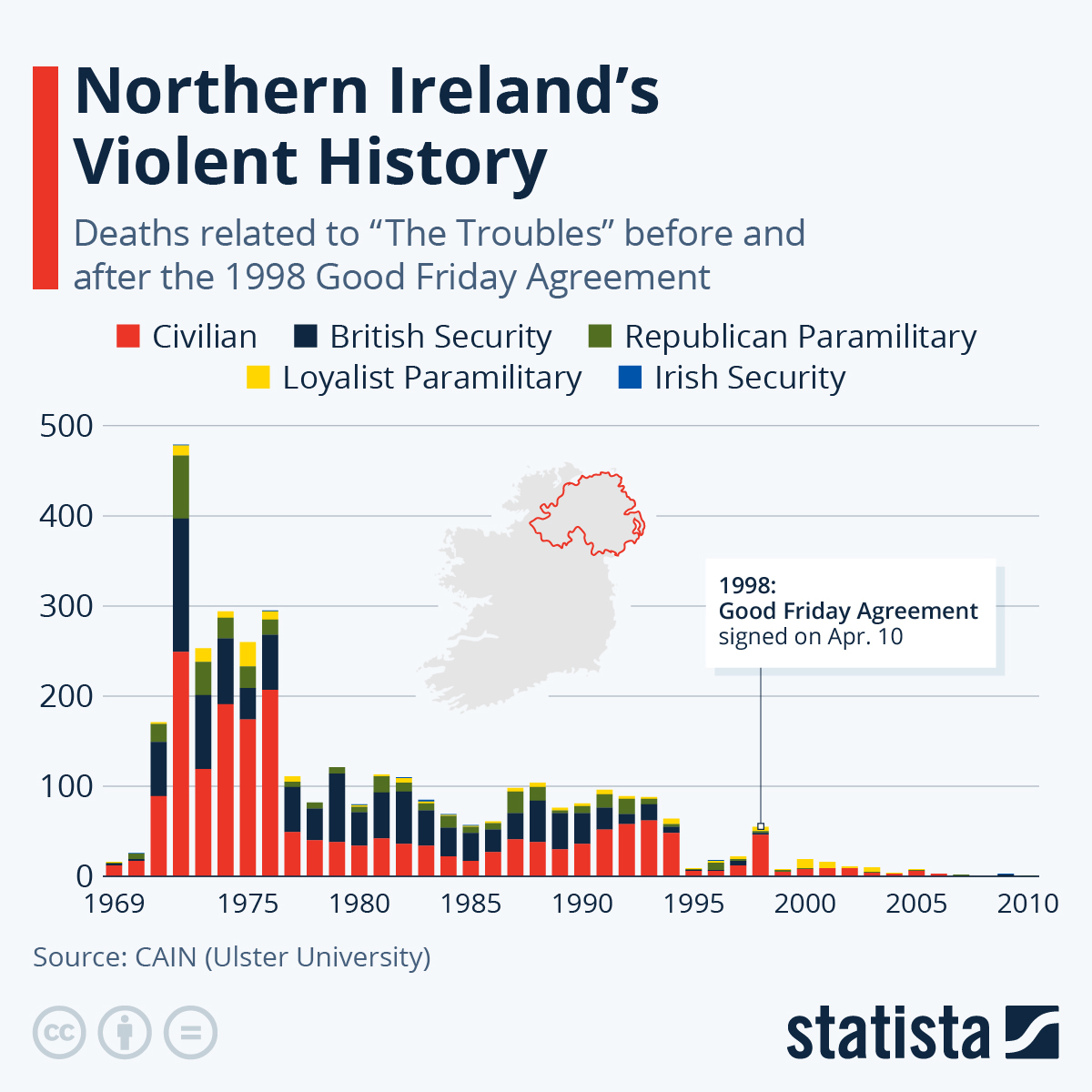
U.S. President Biden is due to visit Northern Ireland and the the Republic of Ireland next week, marking the 25th anniversary of the Good Friday Agreement - generally acknowledged to have ended the conflict known as 'The Troubles', though instances of sporadic violence have occurred since.

The conflict was fought on political and national grounds, encompassing ethnic and sectarian dimensions. According to CAIN at Ulster University, 3,568 people died during The Troubles from 1969 to 2010. 1,879 were civilian and 1,117 were members of the British security forces. A further 300 were republican paramilitaries, 162 were loyalist paramilitaries and 11 were Irish security.Northern Ireland's Violent History

Thursday, April 13, 2023

Ulster

25 лет назад Великобритания и Республика Ирландия смогли найти решение по выходу из кровавой этнополитической смуты в Северной Ирландии, которая длилась почти 30 лет и унесла три с половиной тысячи человеческих жизней.

Договор, подписанный в Белфасте на Страстной неделе 1998 года и скрепивший мир между сторонами конфликта в Ольстере, получил название «Соглашение Страстной пятницы» (Good Friday Agreement).

Сегодня Северная Ирландия стала вновь серьезным раздражителем, поскольку не укладывается в логику Брексита. А Ольстер в эти дни превратился в инвестиционную площадку, куда прибыли премьер-министр Сунак и президент [США, которые, кстати, активно собирали бабло на справедливую борьбу ирландского народа] Байден.

Monday, April 10, 2023

the Wars of the Roses


The Wars of the Roses was a bloody contest for the throne of England, a civil war fought out between the rival houses of York – whose symbol was the white rose – and Lancaster – whose symbol was the red rose – throughout the second half of the 15th century.


After 30 years of political manipulation, horrific carnage and brief periods of peace, the wars ended and a new royal dynasty emerged: the Tudors.

Here are 16 key figures from the wars:


1. Henry VI


All was not well in King Henry’s court. He had little interest in politics and was a weak ruler, and also suffered from mental instability that plunged the kingship into turmoil.

This incited rampant lawlessness throughout his realm and opened the door for power-hungry nobles and kingmakers to plot behind his back.

King Henry VI

2. Margaret of Anjou


Henry VI’s wife Margaret was a noble and strong-willed Frenchwoman whose ambition and political savvy overshadowed her husband’s. She was determined to secure a Lancastrian throne for her son, Edward.

3. Richard, Duke of York


Richard of York—as great-grandson of King Edward III—had a strong competing claim on the English throne.

His conflicts with Margaret of Anjou and other members of Henry’s court, as well as his competing claim on the throne, were a leading factor in the political upheaval.

Richard eventually attempted to take the throne, but was dissuaded, although it was agreed that he would become king on Henry’s death. But within a few weeks of securing this agreement, he died in battle at Wakefield.

4. Edmund Beaufort


Edmund Beaufort was an English nobleman and Lancastrian leader whose quarrel with Richard, Duke of York was infamous. In the he 1430s obtained control—with William de la Pole, Duke of Suffolk— of the government of the weak king Henry VI.

But he was later imprisoned when Richard, Duke of York became ‘Lord Protector’, before dying at the Battle of St Albans.

5. Edmund, Earl of Rutland


He was the fifth child and second surviving son of Richard Plantagenet, 3rd Duke of York, and Cecily Neville. #

By the laws of primogeniture, Edmund’s father, Richard of York had a good claim to the English throne, being descended from the second surviving son of Edward III, giving him a slightly better claim to the throne than the reigning king, Henry VI, who descended from Edward’s third son.

He was killed aged just 17 at the Battle of Wakefield, possibly murdered by the Lancastrian Lord Clifford who sought revenge for the death of his own father at St Albans five years earlier..

6. Edward IV


He was the first Yorkist King of England. The first half of his rule was marred by the violence associated with the Wars of the Roses, but he overcame the Lancastrian challenge to the throne at Tewkesbury in 1471 to reign in peace until his sudden death.

7. Richard III


The alleged remains of Richard III.

Richard III was the last king of the House of York and the last of the Plantagenet dynasty. His defeat at Bosworth Field, the last decisive battle of the Wars of the Roses, marked the end of the Middle Ages in England.

He is the Machiavellian, hunchbacked protagonist of Richard III, one of William Shakespeare’s history plays – famous for supposedly murdering the two Princes in the Tower.

8. George, Duke of Clarence


He was the third surviving son of Richard Plantagenet, 3rd Duke of York, and Cecily Neville, and the brother of Kings Edward IV and Richard III.

Though a member of the House of York, he switched sides to support the Lancastrians, before reverting to the Yorkists. He was later convicted of treason against his brother, Edward IV, and was executed (allegedly by being drowned in a butt of Malmsey wine).

In this first episode of our four-part audio drama an imprisoned Perkin Warbeck, played by Iain Glen, is interrogated in the Tower of London over his true identity, following the collapse of his rebellion. WATCH NOW

9. Edward, Earl of Lancaster


Edward of Lancaster was the only son of King Henry VI of England and Margaret of Anjou. He was killed at the Battle of Tewkesbury, making him the only heir apparent to the English throne to die in battle.

10. Richard Neville


Known as Warwick the Kingmaker, Neville was an English nobleman, administrator, and military commander. The eldest son of Richard Neville, 5th Earl of Salisbury, Warwick was the wealthiest and most powerful English peer of his age, with political connections that went beyond the country’s borders.

Originally on the Yorkist side but later switching to the Lancastrian side, he was instrumental in the deposition of two kings, which led to his epithet of “Kingmaker”.

Thomas Penn answers the key questions about Edward IV, England's forgotten warrior king: from his turbulent rise to the throne to how he dealt with his mischievous brothers. WATCH NOW

11. Elizabeth Woodville


Elizabeth was Queen consort of England as the spouse of King Edward IV from 1464 until his death in 1483. Her second marriage, to Edward IV, was a cause célèbre of the day, thanks to Elizabeth’s great beauty and lack of great estates.

Edward was the first king of England since the Norman Conquest to marry one of his subjects, and Elizabeth was the first such consort to be crowned queen.

Her marriage greatly enriched her siblings and children, but their advancement incurred the hostility of Richard Neville, Earl of Warwick, ‘The Kingmaker’, and his various alliances with the most senior figures in the increasingly divided royal family.

Edward IV and Elizabeth Grey

12. Isabel Neville


In 1469 Isabel’s power-hungry father, Richard Neville, the Earl of Warwick, defected from King Edward IV after his marriage to Elizabeth Woodville. Instead of ruling England through Edward, he planned a marriage for Isabel to Edward’s brother George Duke of Clarence.

George also saw benefit in the union, as the Neville family was extremely wealthy. The marriage took place in secret in Calais, as part of the rebellion of George and Warwick against Edward IV.

13. Anne Neville


Anne Neville was an English queen, the daughter of Richard Neville, 16th Earl of Warwick. She became Princess of Wales as the wife of Edward of Westminster and then Queen of England as the wife of King Richard III.

A watercolour recreation of the Wars of the Roses.

14. Elizabeth of York


Elizabeth of York was the eldest daughter of the Yorkist king Edward IV, sister of the princes in the Tower, and niece of Richard III.

Her marriage to Henry VII was hugely popular – the union of the white rose of York and the red rose of Lancaster was seen as bringing peace after years of dynastic war.

15. Margaret Beaufort


Margaret Beaufort was the mother of King Henry VII and paternal grandmother of King Henry VIII of England. She was the influential matriarch of the House of Tudor.
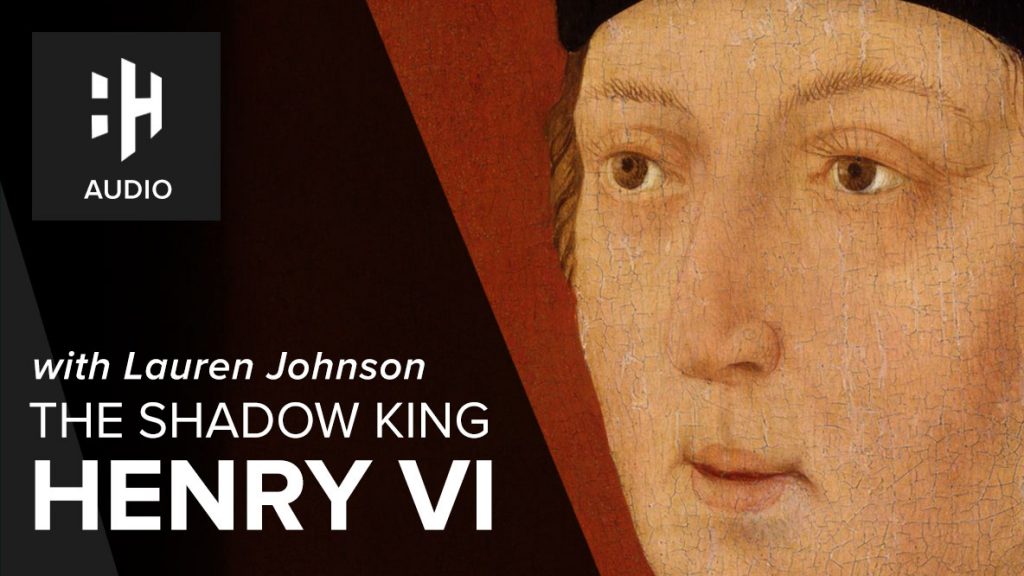
Lauren Johnson talks to Dan Snow about the fascinating reign of Henry VI. LISTEN NOW

16. Henry VII


Henry VII was the King of England and Lord of Ireland from his seizure of the crown on 22 August 1485 to his death on 21 April 1509. He was the first monarch of the House of Tudor.

17. Jasper Tudor


Jasper Tudor, Duke of Bedford, Earl of Pembroke, was the uncle of King Henry VII of England and a leading architect of his nephew’s successful accession to the throne in 1485. He was from the noble Tudor family of Penmynydd in North Wales.
Emma Irving
2 April 2023

What Were the Key Developments in Propaganda During the English Civil War?


The English Civil War was a fertile ground for experimenting with new forms of propaganda. Civil war presented a peculiar new challenge in that armies now had to win people to their side rather than simply summoning them. Propaganda used fear to ensure that the conflict seemed necessary.

The English Civil War was also the time when a popular press emerged to record and report on the dramatic events to an increasingly literate public, one that was hungry for news.

1. The power of print


The proliferation of the printing press during the political crisis of the 1640’s combined to make the English Civil War one of the first propaganda wars in history. Between 1640 and 1660 more than 30,000 publications were printed in London alone.

Many of these were written in plain English for the first time and were sold on the streets for as little as a penny making them available to the common people – it was political and religious propaganda on a grand scale.


The Parliamentarians had the immediate advantage in that they held London, the country’s major printing centre.

The Royalists were initially reluctant to appeal to the commons because they felt they would not gather much support that way. Eventually a Royalist satirical paper, Mercurius Aulicus, was established. It was published weekly in Oxford and enjoyed some success, though never on the scale of the London papers.
1665-1666 was not a good time for the people of London. Not only was most of the city engulfed by what soon became known as The Great Fire of London in September 1666, but months before the most infamous outbreak of disease in British history occurred: the Great Plague. WATCH NOW

2. Attacks on religion


The first surge in propaganda were the multiple publications upon which the good people of England choked over their breakfast, as they reported in graphic detail the atrocities supposedly committed on Protestants by Irish Catholics during the rebellion of 1641.


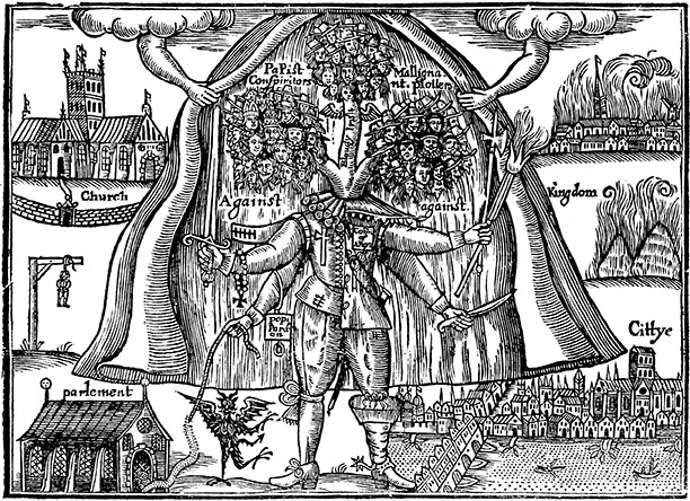
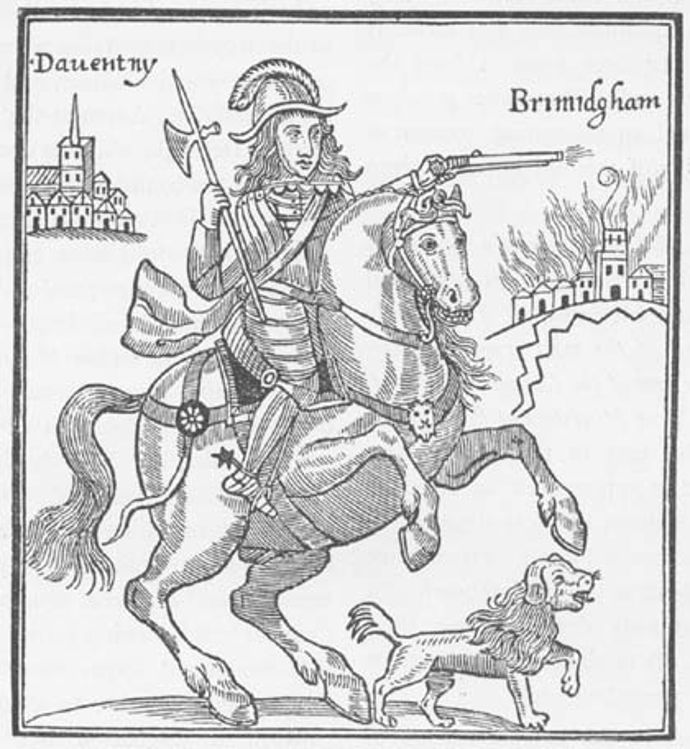
The image below of the ‘puritans’ nightmare’ is a typical example of how religion would come to dominate political propaganda. It depicts a 3-headed beast whose body is half-Royalist, half-armed papist. In the background the cities of the kingdom are burning.

‘The Puritan’s Nightmare’, a woodcut from a broadsheet (circa 1643).

3. Personal attacks


Often slander was more effective than general ideological attacks.

Marchamont Nedham would switch sides between the Royalists and the Parliamentarians multiple times, but he did pave the way for personal attacks being used as propaganda. Following King Charles I’s defeat at the Battle of Naseby in 1645, Nedham published letters that he had retrieved from a captured Royalist baggage train, which included the private correspondence between Charles and his wife, Henrietta Maria.

The letters appeared to show the King was a weak man bewitched by his Catholic queen, and were a powerful propaganda tool.

Charles I and Henrietta of France, his wife.

4. Satirical attacks 


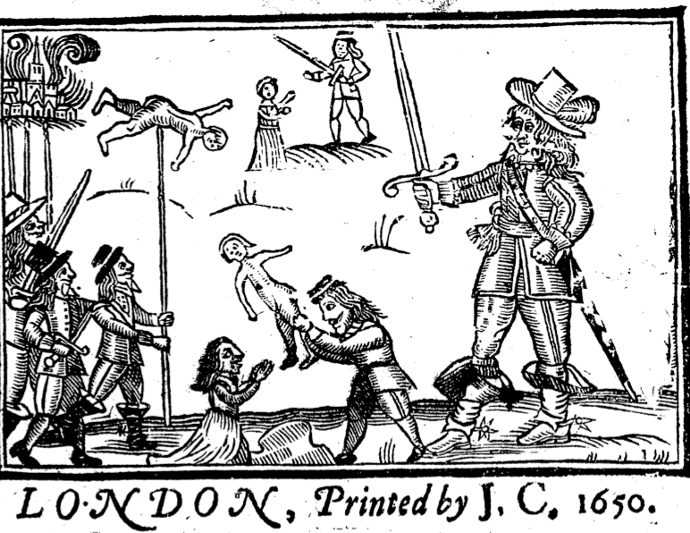
Popular histories of the English Civil War of 1642-46 make frequent reference to a dog named ‘Boy’, which belonged to King Charles’s nephew Prince Rupert. The authors of these histories confidently state that Boy was believed by the Parliamentarians to be a ‘dog-witch’ in league with the devil.


Frontispiece of the Parliamentarian pamphlet ‘A true relation of Prince Rupert’s barbarous cruelty against the towne of Burmingham’ (1643).

However, research by Professor Mark Stoyle has revealed that the idea the Parliamentarians were petrified of Boy was an invention of the Royalists: an early example of wartime propaganda.

‘Boy’ was originally a Parliamentarian attempt to hint that Rupert possessed occult powers, but the plan backfired when Royalists took up their enemies’ claims, exaggerated them and,

‘used them to their own advantage in order to portray the Parliamentarians as gullible fools’,

as Professor Stoyle says.
Emma Irving
2 April 2023
Революция — всегда пропаганда, пропаганда — всегда революция?

Thursday, March 30, 2023

Who Drinks Tea

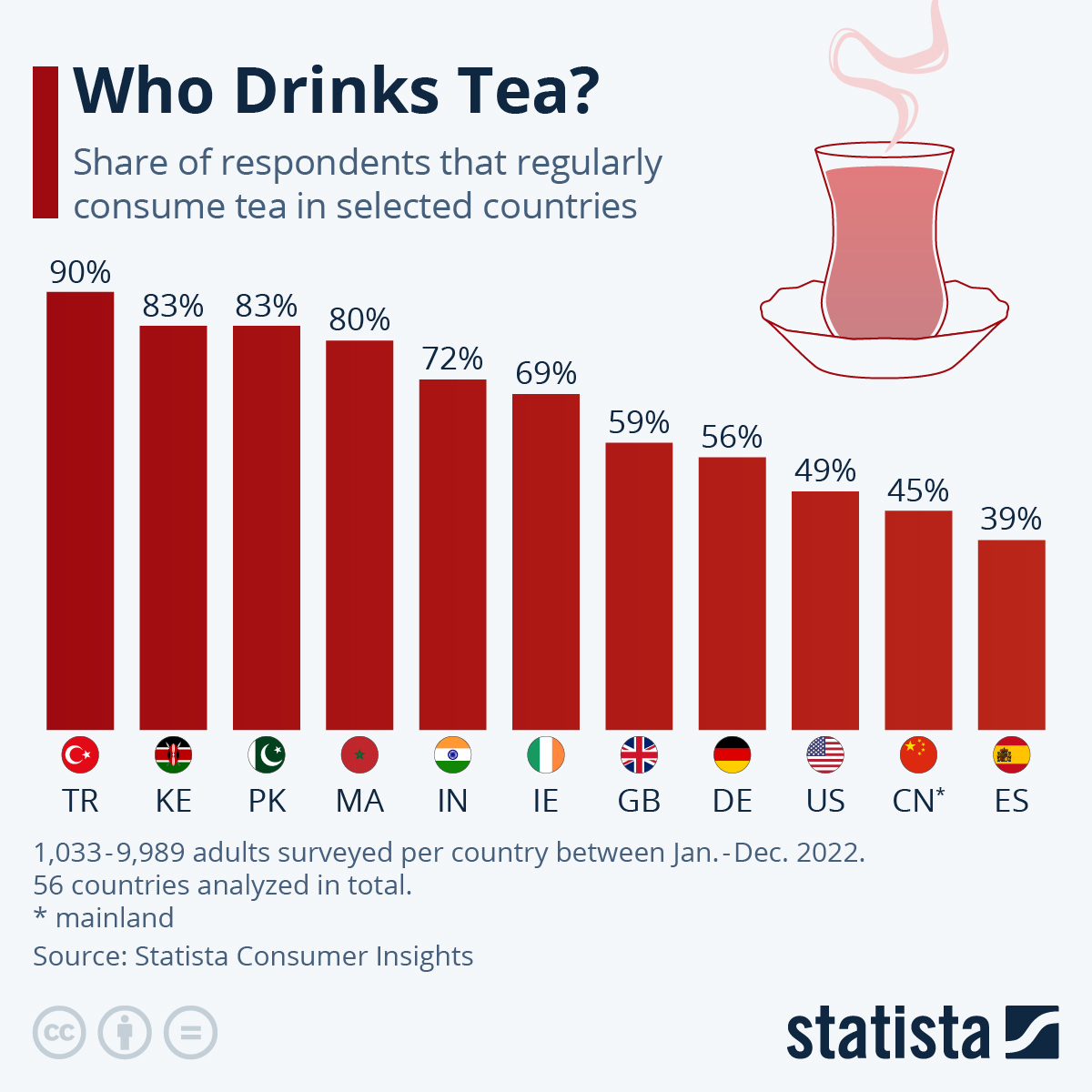
Tea is the second most widely consumed drink around the world, coming in only after water. In 2020, the FAO estimated that some 7 billion metric tons of tea were produced worldwide, with China, India, Kenya, Sri Lanka, and Indonesia among the main tea producers in terms of production volume. According to the Statista Consumer Market Outlook, the global tea market size is expected to hit $266.7 billion by 2025.

The following chart uses data from Statista’s Consumer Insights to show the respective share of tea drinkers in selected countries. Turkey had the highest rate of tea drinkers in 2022, with nine in ten people saying that they regularly drink the hot beverage. Kenya, a major producer and exporter of tea, also ranked highly in the 56 countries analyzed, with 83 percent of its respondents saying they regularly drink tea. Meanwhile, the United Kingdom, famed as a nation that loves a cuppa, ranked slightly lower with 59 percent of people drinking it. While still high, this is some ten percentage points lower than neighboring tea drinking country Ireland. In the global comparison, Spain came closer to the bottom, with just over a third of people regularly drinking tea.

The World Tea Conference and Expo 2023 kicks off today in Las Vegas, running from Mar 27-29.Who Drinks Tea
Кения удивила, как и отсутствие РФ. Дело в регулярности???

Social Isolation, Health Literacy, and Mortality Risk

Findings From the English Longitudinal Study of Ageing


Objective: To investigate the relationships between social isolation, health literacy, and all-cause mortality, and the modifying effect of social isolation on the latter relationship. 

Methods: Data were from 7731 adults aged 􏰀50 years participating in Wave 2 (2004/2005) of the English Longitudinal Study of Ageing. Social isolation was defined according to marital/cohabiting status and contact with children, relatives, and friends, and participation in social organizations. Scores were split at the median to indicate social isolation (yes vs. no). Health literacy was assessed as comprehension of a medicine label and classified as “high” (􏰀75% correct) or “low” (􏰁75% correct). The outcome was all-cause mortality up to February 2013. Cox proportional hazards models were adjusted for sociodemographic factors, health status, health behaviors, and cognitive function. 

Results: Mortality rates were 30.3% versus 14.3% in the low versus high health literacy groups, and 23.5% versus 13.7% in the socially isolated versus nonisolated groups. Low health literacy (adj. HR 􏰂 1.22, 95% CI 1.02–1.45 vs. high) and social isolation (adj. HR 􏰂 1.28, 95% CI 1.10–1.50) were independently associated with increased mortality risk. The multiplicative interaction term for health literacy and social isolation was not statistically significant (p 􏰂 .81). 

Conclusions: Low health literacy and high social isolation are risk factors for mortality. Social isolation does not modify the relationship between health literacy and mortality. Clinicians should be aware of the health risks faced by socially isolated adults and those with low health literacy.

􏰂 — значит =, >, <, или больше/меньше и равно, по контексту понятно

Supplemental materials: http://dx.doi.org/10.1037/hea0000541.supp

Monday, February 20, 2023

the impact of involuntary childlessness on older men

‘No longer invincible’


Dr Robin A Hadley

2021, Physical Therapy Reviews
https://doi.org/10.1080/10833196.2021.1884172
Issue: 5 Volume: 26 Publisher: Informa UK Limited Page Numbers: 328-343 Publication Date: 2021 Publication Name: Physical Therapy Reviews

The global trend of declining fertility rates and an increasingly ageing population has led to increased scrutiny of parenthood. Although there are more childless men than childless women, there is very little research literature on the impact of male childlessness. The childless are absent from much social science literature, which has mainly focussed on family and women. Feminist studies into infertility and ageing have highlighted the absence of the male experience. Involuntary childlessness has been viewed as a complex bereavement formed by multiple losses. Distress levels in both men and women in this population have been found to be as high those with grave medical conditions.  

The aim of this study was to examine older men’s experience of involuntary childlessness. 

This piece draws on my qualitative auto/biographical doctoral study that was framed by biographical, life course, gerontological, and feminist approaches. Data collection involved in-depth semi-structured biographical interviews with 14 self-defined involuntary childless men aged between 49 and 82 years from across the United Kingdom. A latent thematic analysis highlighted the complex intersections between agency, biology, childlessness, economics, mental and physical health, relationships, and socio-cultural structures. 

Findings countered the stereotype that men are not interested in reproduction. I argue that that involuntary childlessness should be considered as a significant factor in older men’s poor health and social capital.

This piece challenges the common narratives that the social, emotional, and relational aspects of involuntary childlessness do not affect men.