Showing posts with label рабство. Show all posts

Sunday, December 8, 2024

inspira

Dear Colleagues,

Please see attached JO 245877 in Inspira

Please found this job and thought you might find it interesting.

INTER-REGIONAL ADVISER, P5


United Nations

NEW YORK

You can view and apply for this job at:

https://inspira.un.org/psc/UNCAREERS/EMPLOYEE/HRMS/c/UN_CUSTOMIZATIONS.UN_JOB_DETAIL.GBL?Page=UN_JOB_DETAIL&Action=A&SiteId=1&JobOpeningId=245877&PostingSeq=1

Thank you.

Friday, June 7, 2024

sex work

Число секс-работников на 100 тысяч жителей в странах Европы


Очень странная статистика (вот тут длинный список источников, рекомендуем ознакомиться интересующимся), но забавная.

Мы оказались единственной страной Европы, где на 100 тысяч жителей приходится... Больше тысячи секс-работников! Звучит по меньшей мере очень странно, но, опять же, ссылка на источники есть. Правда источники местами тоже не очень внушают доверие.

На втором месте Люксембург, следом идут Молдова, Швейцария(!), Украина и Беларусь.

Меньше всего занятых в секс-индустрии в Швеции, Польше и Румынии.

И если что: сюда входят не только представительницы древнейшей профессии, но и "актрисы" соответствующих жанров, вебкам и прочее-прочее

Wednesday, August 16, 2023

income coming

257000 рублей — средний желаемый доход москвичей на семью из трех человек


По итогам 2022 года среднемесячная начисленная заработная плата в столице составила 122,8 тыс. руб. На семью из 3 человек среднестатистический москвич хотел бы иметь доход в 257 тыс. руб. в месяц. Запросы отцов семейств в среднем выше, чем женщин. В опросе сервиса по поиску высокооплачиваемой работы SuperJob приняли участие 1000 представителей экономически активного Москвы, состоящих в браке и имеющих одного несовершеннолетнего ребенка.

Только 2 из 100 москвичей на семью из трех человек было бы достаточно дохода до 100 тыс. руб. в месяц. От 100 до 150 тыс. руб. хотел бы иметь каждый шестой (17%), каждый пятый считает достаточной сумму от 150 до 200 тыс. руб. (19%). На жизнь семьи из 3 человек 15% хотели бы тратить от 200 до 250 тыс. руб., 16% — от 250 до 300 тыс. руб. Более крупные суммы называли реже: от 300 до 350 тыс. руб. удовлетворили бы каждлого десятого, от 350 до 400 тыс. руб. — 7%, от 400 до 450 и от 450 до 500 тыс. руб. — по 2%. Более полумиллиона рублей в месяц хотели бы тратить на семью из трех человек 7%.

По расчетам SuperJob, средний желаемый доход составил 257 [тыс, водка же не 2.12, но в оригинале так – именно руб.] руб. в месяц. У мужчин запросы чуть выше: в среднем они хотели бы иметь 266 тыс. руб. на трех человек, тогда как женщины — 246 тыс. руб. Напомним, что для счастья москвичу нужно 260 тыс. руб. в месяц на одного! Эта сумма сравнима с желаемым бюджетом на семью из трех человек.

Место проведения опроса: Москва
Время проведения: 3 июля — 11 августа 2022 года
Исследуемая совокупность: экономически активное население Москвы старше 18 лет, состоящее в браке и имеющее 1 несовершеннолетнего ребенка
Заказчик: Москва24
Размер выборки: 1000 респондентов

Подробнее

Thursday, January 12, 2023

Labour force participation among older adults in India


India’s economic sector faces a reckoning with its ageing population. Aparajita Chattopadhyay and David E. Bloom‘s analysis, based on the Longitudinal Aging Study in India (LASI), indicates that health is the main determinant of working into old age, making healthy aging a priority for the future of the country.

India’s population is getting older. Adults aged 60 years and above will outnumber children under 10 years of age by 2030, and will likely reach some 340 million (about 20% of the population) by 2050. India must therefore start to face the economic and health issues that accompany population ageing: among these, monitoring and possibly increasing labour market participation at mature ages. Unfortunately, until recently, due to the paucity of nationally representative data for the 60+ population, little was known about the work characteristics and the determinants of work among older adults in India: only that it is mainly in the informal labour market, with low social security coverage and low female participation.

Work characteristics of older adults in India


To learn more about this population subgroup, the Longitudinal Aging Study in India (LASI) was launched in 2017, interviewing over 73,000 respondents aged 45 and above, and their spouses regardless of age. Questions were asked about health, healthcare access and utilization, work status, family and social support, social insurance coverage, retirement pension, and economic situation across 36 states and union territories of India (IIPS 2020). In a recently published paper, we analysed these data (except for the State of Sikkim), and found several interesting results (Chattopadhyay et al., 2022). For instance, only some 36% of older adults (here defined as those aged 60 years and over) are engaged in income-generating activities (50% if they are men), 38% have worked in the past but then stopped, and the remaining 26% have never worked (almost 50% if they are women).

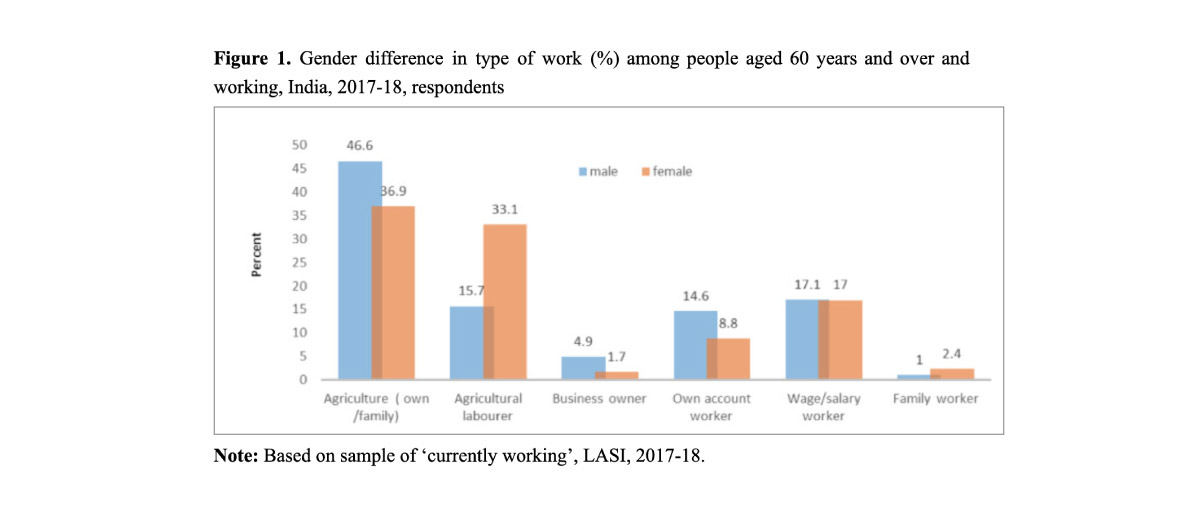
Among older adults who are working, a mere 5% have full-time jobs, and only 25% have documentary evidence of their current work, indicating a predominance of the informal sector in the Indian economy. Approximately 33% of older women are agricultural labourers, as opposed to 16% of older men, while in all the types of work that indicate “ownership of wealth” (i.e., farm owner, own business, own-account worker), men prevail (Figure 1) (Chattopadhyay et al., 2022).
Pension coverage is rare: it benefits only about 12% of older men and 3% of older women, among those who are working or worked previously. Contrary to the popular belief that workforce participation starts to decline beyond age 60, LASI data reveal that this happens much earlier in India, especially for women (Figure 2).

Gender, wealth, education, and work


In India, women are less likely to work than men, in part for health reasons (Chattopadhyay & Roy, 2005) but most importantly because they are traditionally in charge of household chores. Contrary to expectations, female work participation is lower among educated women and in urban areas: this may indicate lack of opportunities (Vyas, 2020), mismatch between workers’ skills and job requirements, and increased family (female) responsibilities in urban areas, where support from kin and neighbours is rarer.
 
However, poor, rural, and divorced/separated/deserted older women are significantly more likely to work than men in similar conditions, evidently because their economic conditions are less favourable (Figure 3).

Labour force participation among Indian older adults is lowest among the richest and the poorest, but for different reasons. The former, mainly engaged in white collar, well-paid jobs in their adult years, benefit from better pension/health insurance coverage and do not need to work. The latter, instead, must frequently stop working because of poor health.

Family, residence, health and work


Older adults who live with their (adult) children are less likely to work beyond age 60. This is largely because they are either in need of care from close kin or, if they are healthy, they provide care themselves, to their grandchildren: about 25% provide childcare, as compared to a mere 10% of older adults who do not live with their children (IIPS, 2020).

In general, rural older adults are more likely to work than their urban counterparts (Figure 3), due in part to the opportunity to engage in farming and allied activities, and in part to the lack of social security benefits, as their past earnings were low and insufficient to generate significant savings or pension contributions.

Health is a stronger predictor of work status in rural than in urban areas. Rural older adults with chronic ailments are 43% less likely to work than their healthy rural counterparts, whereas urban older adults with chronic ailments are “only” 31% less likely to work than their healthy urban counterparts. This may be due to the rural population’s limited access to health facilities, resulting in untreated ailments that prevent older adults from engaging in agricultural and other labour-intensive work. In urban settings, better access to health services and medication may lessen the effect of health on work participation at older ages (Jana & Chattopadhyay, 2022).

Conclusions


A key question when considering older adult employment in India is whether work in old age indicates deprivation. The answer is mixed. The affirmative response corresponds to the engagement of older Indian adults in part-time jobs, in agriculture and in the informal sector with relatively lower income. In addition, with educational attainment, familial support, and better social security coverage, people are generally less likely to work in old age, indicating that financial insecurity may be the reason why Indian older adults continue to work.
However, it should also be noted that healthy older Indians are likely to work beyond the age of 60, possibly indicating a desire to remain active in the labour market.

Elder employment has positive effects on youth employment, on the wellbeing of older workers, and on economies and societies in multiplicative ways (Jasmin & Rahman, 2021). This practice is in tune with the healthy and active aging initiative promoted by the World Health Organization, and it should therefore be encouraged. India’s 1999 National Policy for Older Persons made positive steps in this direction, but the time has probably come to renew and relaunch that programme.

Acknowledgements


We thank Arunika Agarwal, Research Associate, Harvard T.H Chan School of Public health and Priya Maurya, PhD scholar of IIPS for their useful comments, and the funders of the Longitudinal Aging Study in India (LASI), i.e. Ministry of Health and Family Welfare, India and National Institute on Aging, US.

References

  • Chattopadhyay, A., Khan, J., Bloom, D. E., Sinha, D., Nayak, I., Gupta, S., Lee, J., & Perianayagam, A. (2022). Insights into Labor Force Participation among Older Adults: Evidence from the Longitudinal Ageing Study in India. Journal of Population Ageing, 15(1), 39–59. https://doi.org/10.1007/s12062-022-09357-7
  • Chattopadhyay, A., & Roy, T. K. (2005). Does retirement affect healthy ageing? A study of two groups of pensioners in Mumbai, India. Asia-Pacific Population Journal, 20(1), 89–115. https://doi.org/10.18356/0ef4333e-en
  • International Institute for Population Sciences (IIPS), National Programme for, Health Care of Elderly (NPHCE), MoHFW, & Public Health (HSPH) and the University of Southern California (USC). (2020). Longitudinal Aging Study in India (LASI) Wave 1, 2017-18, India Report. International Institute for Population Sciences, Mumbai. https://www.iipsindia.ac.in/lasi/
  • Jana, A., & Chattopadhyay, A. (2022). Prevalence and potential determinants of chronic disease among elderly in India: Rural-urban perspectives. PLOS ONE, 17(3), e0264937. https://doi.org/10.1371/journal.pone.0264937
  • Jasmin, A. F., & Abdur Rahman, A. (2021). Does Elderly Employment Reduce Job Opportunities for Youth? [Brief]. World Bank. https://openknowledge.worldbank.org/handle/10986/36170
  • Vyas, M. (2020). Impact of Lockdown on Labour in India. The Indian Journal of Labour Economics, 63(1), 73–77. https://doi.org/10.1007/s41027-020-00259-w

Friday, December 2, 2022

Paris

In Paris, Thomas Jefferson Revealed His Real Beliefs About Slavery


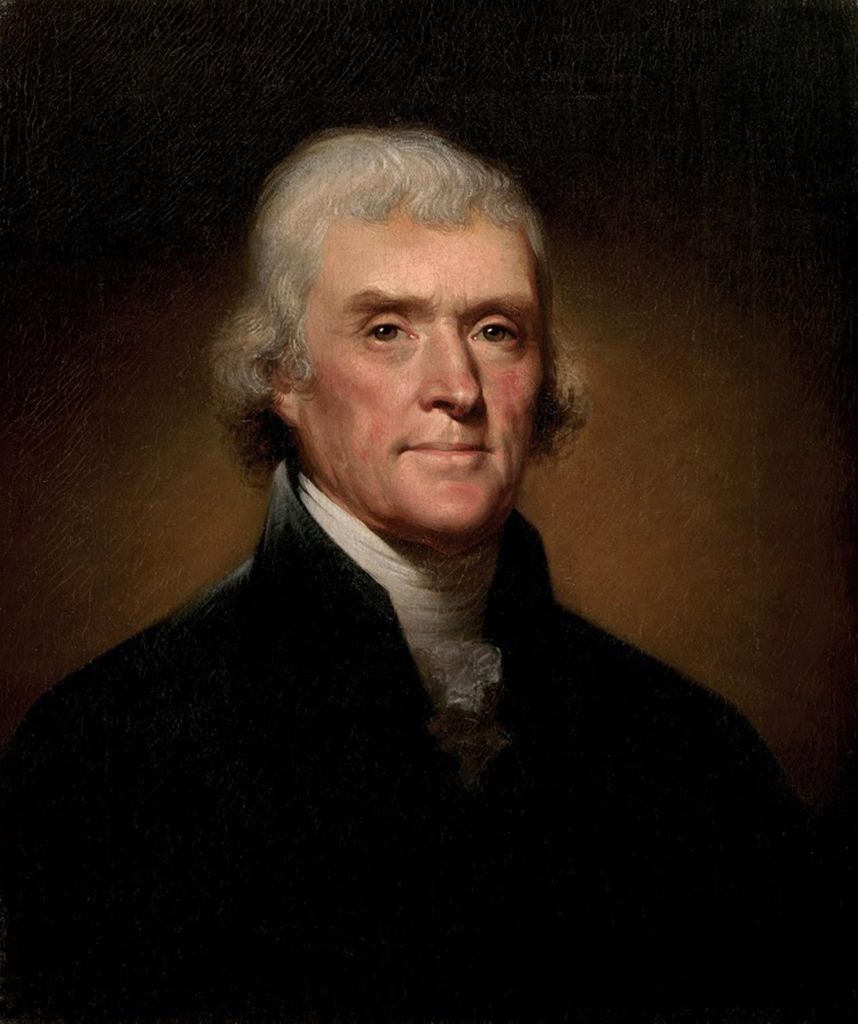
Portrait of Thomas Jefferson by Rembrandt Peale circa 1805.

Jefferson had addressed the topic of slavery in Notes on the State of Virginia, and the published version had extended his views to a wide audience in America, England, and France, where he had had discussions with Enlightenment luminaries and French admirers of the United States, particularly Lafayette, Nicolas de Condorcet, and Jacques Brissot, all three of whom felt that Jefferson stopped at a bridge far too short of where antislavery ought to go. They would not have known that at his residence Hôtel de Langeac Jefferson had had two mulatto servants who in America were legally his slaves. In France, they were not, and by their own simple declaration they would have been considered free, an opportunity which neither Sally nor James Hemings availed themselves of. They may not have known of this right, or they may have preferred a life of certainties with Jefferson to one of uncertainties in France.

If this was their choice, it may have been by agreement with their master, including promises of special treatment and advantages. Aware that he was in violation of French law, Jefferson had quietly evaded the legalities. As always, when it came to his slaves, he did what was practical and in his own interest. As an intellectual, especially among friends and colleagues, he was rarely reluctant to make it known that he believed that slavery was, in theory, a moral iniquity, a stain on a civilized society. Still, his innate self-protective duplicity often came into play.

In France, in 1789, the year of the start of the French Revolution, Jefferson’s good friend, Lafayette, of course knew that Jefferson owned many slaves. Who else among the members of Jefferson’s salon and intellectual-political circle knew? When Jacques Brissot, a leading abolitionist and the founder in 1788 of the Society of the Friends of the Blacks, invited Jefferson to become a member, he declined. It would be incompatible, he said, with his official position. If Lafayette was ever disappointed in Jefferson, it was with Jefferson’s refusal to act on his professed anti-slavery views, as well as his belief that Blacks were innately less intelligent than whites. Sometimes Jefferson leaned a little one way on this point; sometimes, the other.

The idea that emancipated Blacks could become capable, competent, and self-supporting free laborers seemed to him problematic but possible. In fall 1788, he had received a request from Edward Bancroft, an American doctor, scientist, and patriotic pamphleteer living in London, for information about an experiment by an antislavery planter in Virginia who had liberated his slaves and employed them as paid labor. Bancroft had told his London abolitionist circle that Jefferson had mentioned this incident when they were dinner guests of a mutual friend in 1785. Jefferson could not recall the occasion, but the subject was of interest to him. Bancroft had served as Franklin’s assistant during the peace-treaty negotiations in Paris in 1783. A double agent, he had been spying for the American colonies in London and Paris while also serving the British, though apparently of little consequential help to either side.

Jefferson responded early in 1789 that “as far as I can judge from the experiments which have been made, to give liberty to, or rather, to abandon persons whose habits have been formed in slavery is like abandoning children.” To get them to work, they needed to be watched and even whipped. It was not the fault of the slaves, he said, for “a man’s moral sense must be unusually strong, if slavery does not make him a thief. He who is permitted by law to have no property of his own, can with difficulty conceive that property is founded in anything but force. These slaves chose to steal from their neighbors rather than work . . . and in most instances were reduced to slavery again.” Time, education, and proper modeling might, however, make slaves into morally responsible and productive free laborers. Maybe, or maybe not, Jefferson thought. “I am decided on my final return to America to try this one. I shall endeavor to import as many Germans as I have grown slaves. I will settle them and my slaves, on farms of 50 acres each, intermingled, and place all on the footing of the metayers [tenant farmers] of Europe,” which meant they were not to own the property they farmed. “Their children shall be brought up, as others are, in habits of property and foresight, and I have no doubt but that they will be good citizens [as] some of their fathers will be so: others I suppose will need government . . . to oblige them to labor as the laboring poor of Europe do, and to apply to their comfortable subsistence the produce of their labor, retaining such a moderate portion of it as may be a just equivalent for the use of the lands they labor [on].” Despite his intention to try the experiment, he never did, and his plan did not envision ownership, only tenancy. If the plan had been tried and been successful, Jefferson would still have been the legal possessor of the land.

Even if Jefferson felt discomfort when among his Paris associates about the conflict between his opinions and his ownership of slaves, his hypocrisy probably was disregarded. It may never have come up; it may have been tactfully avoided. For them, the reality of Jefferson as slaveholder apparently had much less presence than his moral opposition to the institution. None of his French friends owned slaves, a legal impossibility, which differentiated him from abolitionists like Brissot, Richard Price, Edward Bancroft, and the most distinguished intellectual whom Jefferson conversed with in Paris, the Marquis de Condorcet. Well known for his brilliance as a mathematician and social scientist, Condorcet may have influenced Jefferson’s arithmetic in claiming that the length of a generation was nineteen years in his argument that each new generation should not be responsible for the debts of the previous one.

Jefferson read Condorcet’s denunciation of slavery in Reflections on the Slavery of Negroes, a powerfully eloquent screed, two copies of which Jefferson bought in 1788. He decided to translate it, a contribution to the effort to persuade the next generation of Americans to do what his generation could not. In late 1788, he translated the opening passages. There’s no evidence that he showed them to Condorcet or anyone else, and it probably was not his intention to have his name affixed as translator. He did not explain why he got no further. Perhaps he decided that the project was too risky. He kept the manuscript in his private possession. Two years later, Jefferson wrote to Condorcet about a free African American, a “worthy and respectable member of society,” whose “very elegant solutions of Geometrical problems” he had seen. “I shall be delighted to see these instances of moral eminence so multiplied as to prove that the want of talents observed in them is merely the effect of their degraded condition, and not proceeding from any difference in the structure of the parts on which intellect depends.”

Did Jefferson believe Condorcet’s claim that Nature had endowed Blacks “with the same genius, the same judgment, the same virtues as the Whites?” As he translated from French to English, were Jefferson’s convictions as well as his pen committed to what the words explicitly claimed? The translation could have been exploration or conclusion, or both. Even if he agreed with Condorcet, the gap be- tween principle and practice remained, between the continuation of his life as the benevolent slaveholder he thought himself to be and the moralistic philosopher for whom in the abstract slavery was a moral evil. The translation is another instance, though a slanting one, of Jefferson’s commitment to writing, his reliance on the written word to engage with subjects of importance to him, and also of the oddly ironic situation in which he placed himself: his pen at the service of what his daily life did not embody, of what his intellect was capable of and what his moral principles supported but what his practical life and the world into which he had been born did not.

When Jefferson arrived at Monticello in December 1789, the welcome he received from his slaves must have seemed to him entirely compatible with the necessities of life and his sense of what he deserved. For him, slavery remained an essential reality of his time and place. Life as he had known it and as he expected it to be for some time did not admit of an alteration in its psychological and economic structure. The land that he returned to possessed him, and he possessed it. And his slaves, whatever his relationships with them, were inseparable from the land. Because it was inconceivable that he could work the land himself or pay people to do so, he believed it would be of little use to him without slaves, and the land and what he built on it were inseparable from the fundamental values he also deeply held—family, friends, education, knowledge, patrimony, and patriotism.

Adapted from Kaplan’s new book His Masterly Pen: A Biography of Jefferson the Writer

Friday, October 21, 2022

Job opportunities

Job opportunity : Supporting the engagement of the Private Sector in Disaster Risk Reduction.

JOB ALERT. Exciting 2.5 year Postdoctoral Research Fellow position to work on migration modelling with myself and Aude Bernard.

VPN нада

Friday, October 14, 2022

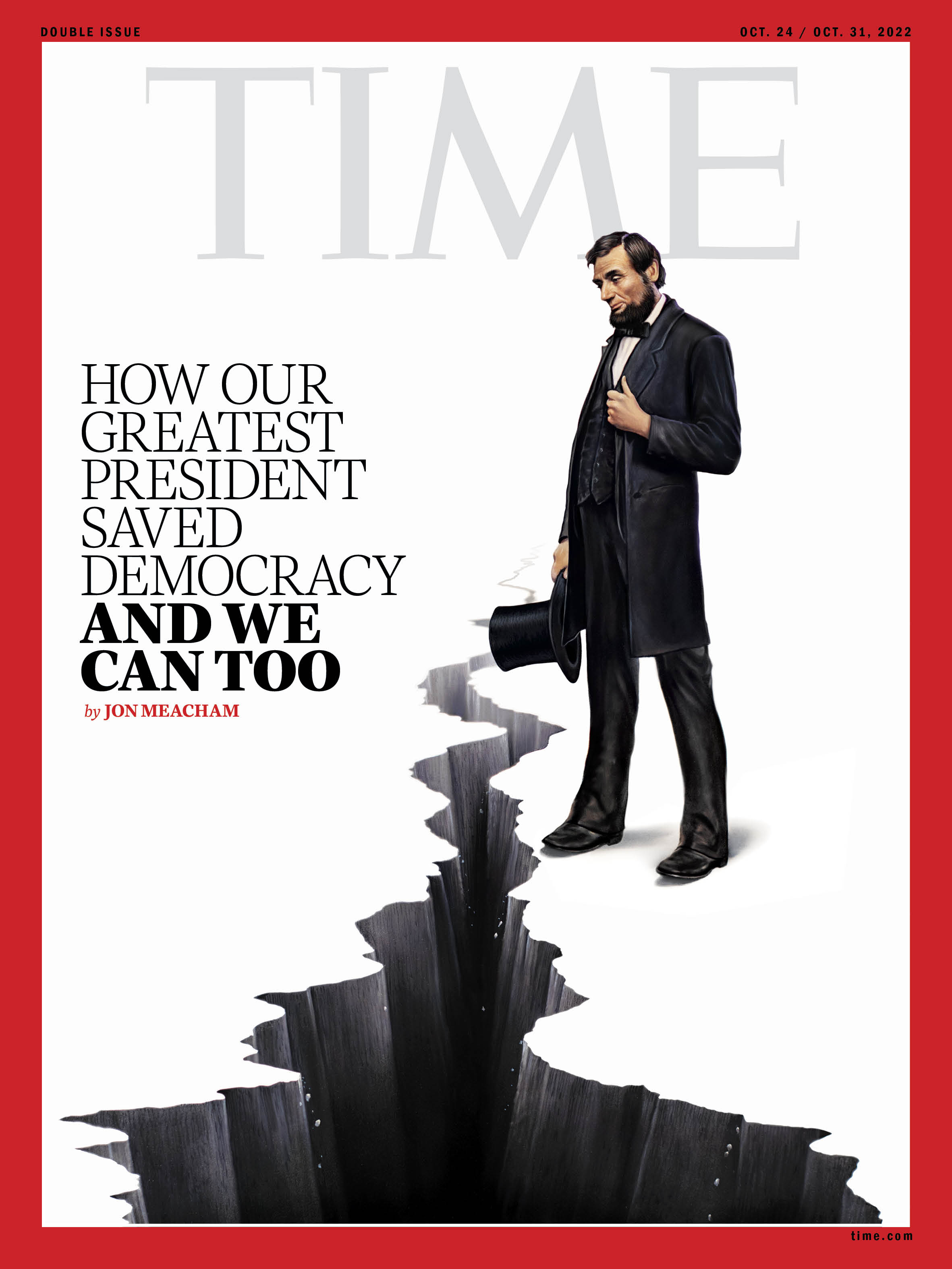
Lincoln Saved American Democracy. We Can Too


BY JON MEACHAM OCTOBER 12, 2022 7:00 AM EDT
Meacham, a Pulitzer Prize-winning biographer and professor at Vanderbilt University, is the author of the new book And There Was Light: Abraham Lincoln and the American Struggle

At noon on Monday, March 4, 1861—a day that observers noted had dawned “cloudy and raw” but turned bright and warm—Abraham Lincoln emerged from the 14th Street NW door of Willard’s Hotel, accompanied by President James Buchanan. The two men rode together in an open carriage up Pennsylvania Avenue, bound for the covered platform that had been erected on the East Front for the presidential Inauguration. Double files of cavalrymen escorted the procession to the Capitol. Cross streets had been closed to secure the route in the event of attack. Sharpshooters were stationed on rooftops along the avenue, “with orders,” an officer recalled, “to watch the windows on the opposite side, and to fire upon them in case any attempt should be made to fire from those windows on the presidential carriage.”

An hour later, hatless and adjusting his eyeglasses, Abraham Lincoln, his Inaugural Address in hand, stood and gazed out across a large audience. Federal artillery was deployed on a nearby hilltop. “Plainly, the central idea of secession, is the essence of anarchy,” the new President said. “Why should there not be a patient confidence in the ultimate justice of the people? Is there any better, or equal hope, in the world? In your hands, my dissatisfied fellow countrymen, and not in mine, is the momentous issue of civil war. The government will not assail you. You can have no conflict, without being yourselves the aggressors. You have no oath registered in Heaven to destroy the government, while I shall have the most solemn one to ‘preserve, protect and defend’ it.”

Hated and hailed, excoriated and revered, Abraham Lincoln served as President of the United States in an existential hour. Other Presidents have been confronted with momentous decisions—of war and peace, of life and death, of freedom and power. Yet it fell to Lincoln to adjudicate whether the nation would, in his phrase, remain “half slave and half free”—and whether the American experiment would survive the treason of a rebellious white South that put its own interests ahead of the Union itself.
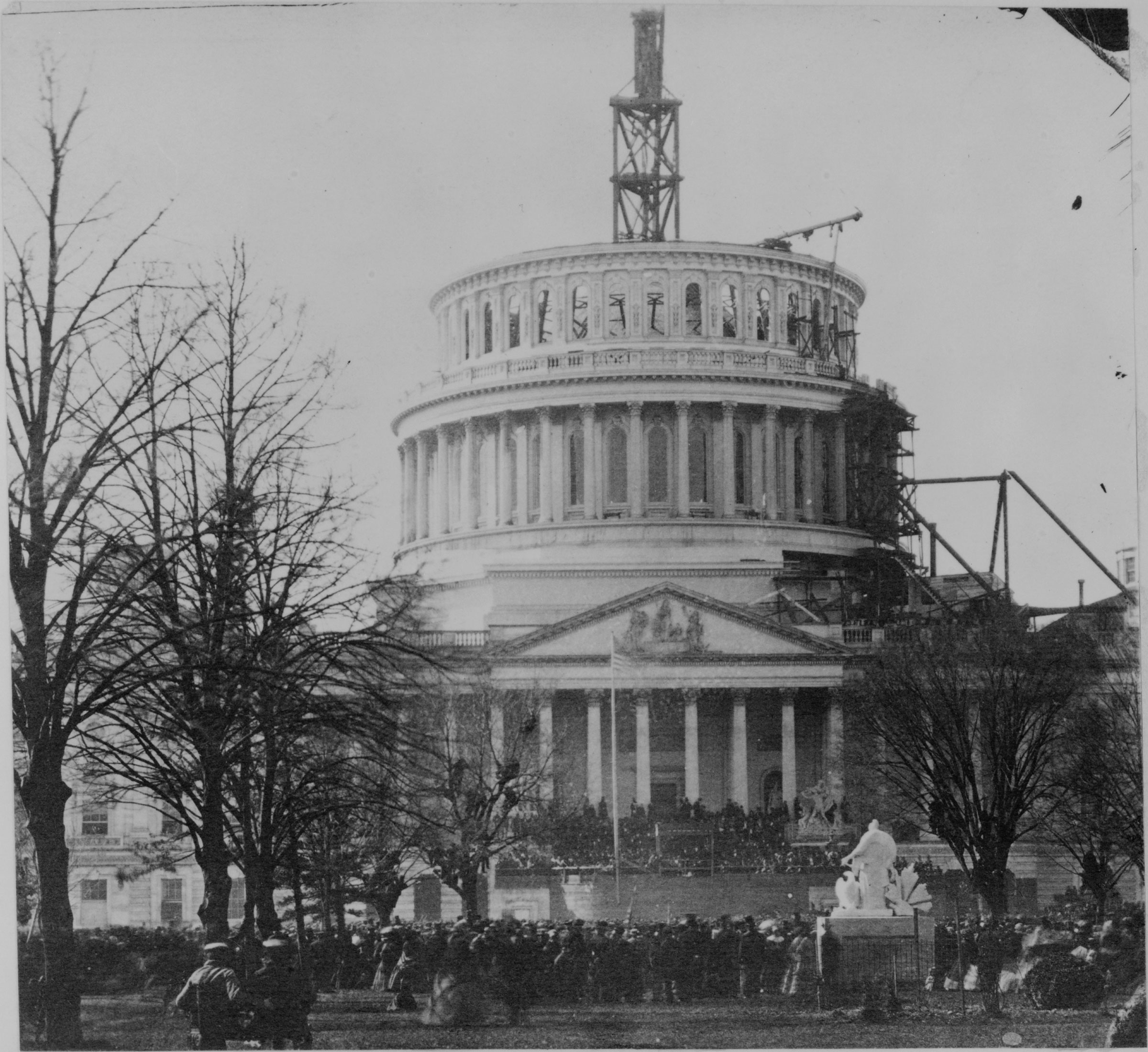
Inauguration of President Lincoln at U.S. Capitol, March 4, 1861.

A President who led a divided country in which an implacable minority gave no quarter in a clash over power, race, identity, money, and faith has much to teach us in our own 21st century moment of profound polarization, passionate disagreement, and differing understandings of reality. Newspaper headlines warn of an impending civil war, and in a recent YouGov­-Economist poll 54% of self-­identified “strong Republicans” thought “a civil war was at least somewhat likely in the next decade.”

Such fears can seem hyperbolic, and the prospect of great armies forming and clashing in the continental U.S. is blessedly remote. Yet honesty compels us to confront this fact: while civil war in the third decade of the 21st century is unlikely—civil chaos, with episodic violence, is already with us—we do ourselves no favors by pretending that somehow everything will just work out. History can inform our struggle over the survival of democratic institutions and, as important, should help us see the imperative of pursuing justice. For while Lincoln cannot be wrenched from the context of his particular times, his story does illuminate the ways and means of politics, the marshaling of power in a democracy, the persistence of racism, and the capacity of conscience to help shape events.

He governed a nation in which a violent and vociferous element was captive to its own visions and controlled by its own interests. “Domestic slavery is the great distinguishing characteristic of the southern states, and is, in fact, the only important institution which they can claim as peculiarly their own,” Abel P. Uphsur, a Virginian who served as Secretary of State under John Tyler, wrote in 1839. White Southerners dreamed of a slave empire headquartered in the American South but stretching to Cuba, to Mexico, to Central and South America. Such a white-­dominated new nation, a Charleston, S.C., newspaper wrote, would ensure slaveholders “a great destiny.”
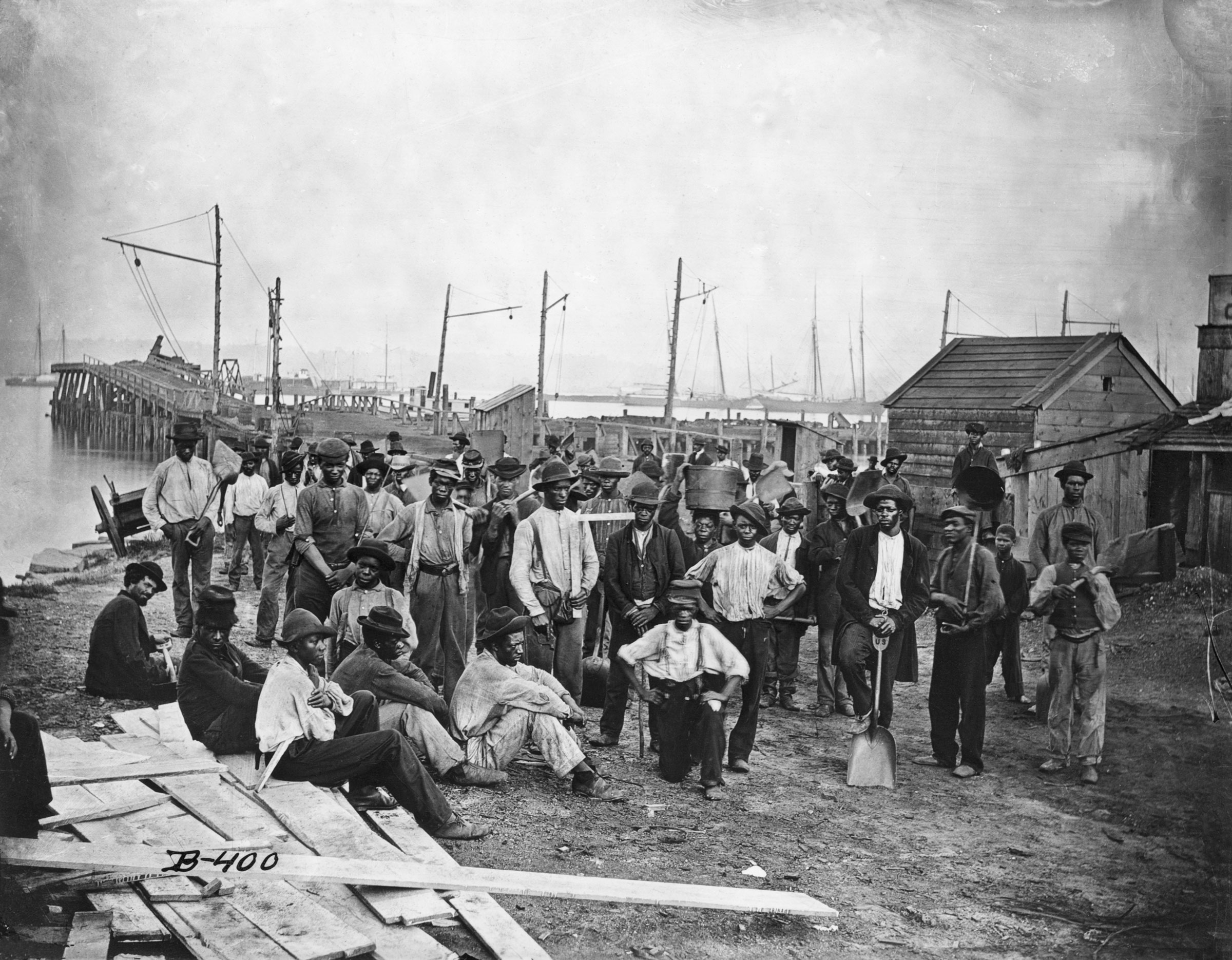
A group of freed African American slaves along a wharf during the United States Civil War.

Lincoln kept the American experiment in self-­government alive when it seemed lost. He did not do so alone. Ordinary people, Black and white, sacrificed to preserve the Union against the designs of the rebel South. But Lincoln was instrumental, and his ultimate vision of the nation—that the country should be free of slavery—was informed by a moral understanding of life. To him, America ought to seek to practice the principles of the Declaration of Independence as fully as possible, for the alternatives were so much worse. What if the constitutional order had failed and the Union permanently divided? A durable oligarchical white Southern slave empire, surely strengthened and possibly expanded, would have emerged from the war; and, as Lincoln saw, the viability of self-government would be in ruins.

Lincoln did not bring about heaven on earth, nor does he stand as a paragon of equality and justice for all. Yet he defended the possibilities of democracy at an hour in which the means of amendment, adjustment, and reform were under prolonged and almost successful assault. Lincoln’s motives were moral as well as political—a reminder that our finest Presidents are those who are committed not only to the pursuit of power but also to bringing a flawed nation closer to justice. Such requires an understanding that politics divorced from conscience is fatal to the American experiment in liberty under law.

This lesson is essential for us in today’s unfolding democratic crisis. The forces of unchecked power are self-­evidently in the ascendant, and they are the controlling element of one of our two major parties. The past is not always prologue, but history suggests that our divisions are as deep as they have been since Lincoln’s time—and thus his experience repays consideration.

When an element within the nation seeks its own power and its own way over and above any other factor, that element must be confronted, or else everything might be lost. In exploring Lincoln’s example we can see how arduous American democracy is, and we can glimpse what must be done to preserve it. An American President must be committed to something larger than his own hold on power. And the American people must be willing to accept the give-and-take of the constitutional order, even when—especially when—events and moral claims call on us to give rather than to take.

Lincoln is often depicted as either a secular saint, the savior of Union, and the Great Emancipator, or as a calculating political creature imprisoned by public opinion and white prejudice. The truth is more complicated. Driven by the convictions that the Union was sacred and that slavery was wrong, Lincoln was instrumental in saving one and in destroying the other.
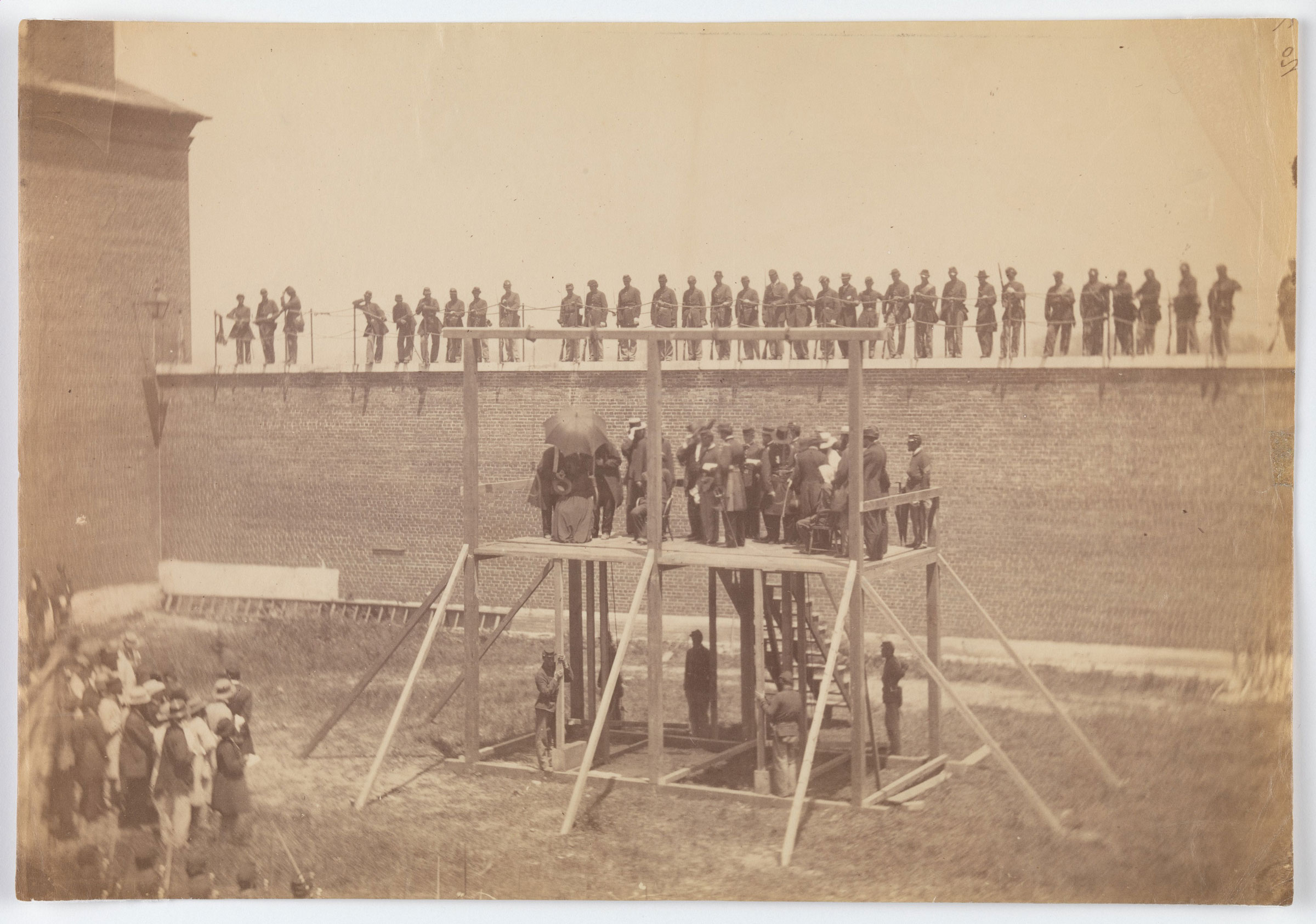
Execution of the conspirators, on July 7, 1865.

A man of power, he ultimately demanded that the nation follow a moral path through the brute physicality of Civil War. His “ancient faith,” Lincoln once said, “teaches me that ‘all men are created equal’ and that there can be no moral right in connection with one man’s making a slave of another.” In common usage, to say something is moral is to say that it is about the degree to which one’s conduct is in harmony with the commandment that one ought to do unto others as we would have them do unto us. From Plato to Kant, the substance of what is known as the Golden Rule—one common to the world’s religious and moral traditions—has occupied philosophers across the ages.

Lincoln’s own sensibility—both moral and political—was founded on this ­injunction. “As I would not be a slave, so I would not be a master,” he once said. “This expresses my idea of democracy.” For Lincoln, a world in which power was all, in which the assertion of a singular will trumped all, in which force dictated all, was not moral but immoral, not democratic but autocratic, not just but unjust.

In the White House, Lincoln defended Black Americans as fellow human beings whose fundamental rights were protected in the Declaration of Independence—hardly the most common of arguments in his time. Yet he sometimes spoke in racist terms, did not immediately press for Black people to be afforded the rights of citizenship enjoyed by white people, and proposed their voluntary removal offshore. And Lincoln portrayed his decision on wartime emancipation as a last resort based on military rather than moral considerations.

This was the pragmatic Lincoln that Frederick Douglass understood. “Viewed from the genuine abolition ground,” he said in 1876, “Mr. Lincoln seemed tardy, cold, dull, and indifferent: but measuring him by the sentiment of his country, a sentiment he was bound as a statesman to consult, he was swift, zealous, radical, and determined.” As Reconstruction gave way to Jim Crow segregation, Douglass’s opinion was less widely shared. “Abraham Lincoln was a Southern poor white … poorly educated and unusually ugly, awkward, ill-dressed … cruel, merciful; peace-­loving, a fighter; despising Negroes and letting them fight and vote; protecting slavery and freeing slaves,” W.E.B. Du Bois wrote in 1922. “He was a man—a big, inconsistent, brave man.”

It is true that Lincoln did not seek immediate abolition; neither was he a radical racial egalitarian. He was, rather, a gradual emancipationist who wanted to compensate slave owners. The antislavery Lincoln was born in, and came to lead, a nation in which anti­-Black prejudice was a fact of life. There was hardly a mighty current of sentiment abroad in the land to emancipate the enslaved and extend citizenship to the newly freed in a Promised Land of racial and civil equality. Yet to depict Lincoln as only a reluctant warrior against slavery fails to do him justice. He did not waver from a morally informed insistence that slavery be put on a path to “ultimate extinction.” He maintained this position to his political detriment throughout the 1850s—he won no major office between a single term in the U.S. House and his election to the presidency in 1860. Vitally, he refused to retreat from his antislavery commitment during the crisis over secession in 1860–61—a time when a purely political man might have done—and he stood by emancipation after 1862, declining to give in to pressure for a negotiated peace with the Confederacy in order to end a devastating war. He campaigned on an abolitionist constitutional amendment in 1864.

Abraham Lincoln, head-and-shoulders portrait, traditionally called "last photograph of Lincoln from life," Feb. 5, 1865.

Anathema to much of the white South and to its allies in the North, Lincoln frustrated abolitionists who were more advanced than he on freedom and ­egalitarianism. He was attacked for defending a Constitution that protected slavery and for fighting to preserve a politics in which ­racial prejudice was a predominant factor. The implication of such criticism was that Lincoln made a fetish of the Union at the expense of pursuing true justice. The problem with such a view, however, is that without Union there could be no freedom for the enslaved. Had Lincoln simply bade the South well and set about creating a separate, free nation, he would have consigned millions of enslaved Black people and their progeny to unrelenting and unrepentant masters. Douglass wrote that he would “prefer the Union even with Slavery than to allow the Slaveholders to go off and set up a Government.” A successful Confederate States of America might well have expanded its reach southward. Thus, after Jan. 1, 1863, Lincoln’s war for Union was simultaneously a war for Union and for emancipation in the seceded states; after congressional passage of the 13th Amendment in early 1865, it became a war for Union and for emancipation for all.

Lincoln understood the magnitude of the issue, and he knew that upon its resolution rested the fate of American democracy, if American democracy was to be the project by which the nation sought to live up to the promise of the Declaration. “Slavery is not a matter of little importance,” Lincoln said in 1858. “It overshadows every other question in which we are interested.” As he confronted the question, he juggled political reality and his own moral convictions—convictions that he hoped the nation would come to share.

The work of a democracy is to lead a sufficient number of individuals to share a moral vision about power, liberty, justice, security, and opportunity in the hope that people—and peoples—might be in closer harmony with the good. As a multitude of individuals, a nation possesses a collective conscience—one that is manifest in how that nation chooses, through the means of politics, to view rights and responsibilities.

In the 1860s, war was required to bend the arc of the moral universe toward justice. That is the great fact of the American story: secessionist white Southerners chose to fight and to die rather than surrender an aristocracy of race. The Civil War, Lincoln told Congress in 1861, “presents to the whole family of man the question whether a constitutional republic, or democracy—a government of the people by the same people—can or cannot maintain its territorial integrity against its own domestic foes.”

The battle of the third decade of the 21st century is, for now, of a different scale. But we have already seen attempted insurrection, and many adherents of one of our two major political parties refuse to accept the legitimacy of the 2020 election, setting the stage for subsequent denials of reality as soon as next month’s midterms. While the Civil War era, therefore, is not a precise analogy, we would be derelict in our duties as citizens if we did not reckon with what Lincoln reckoned with: the often self-sacrificing demands of decency and of democracy.
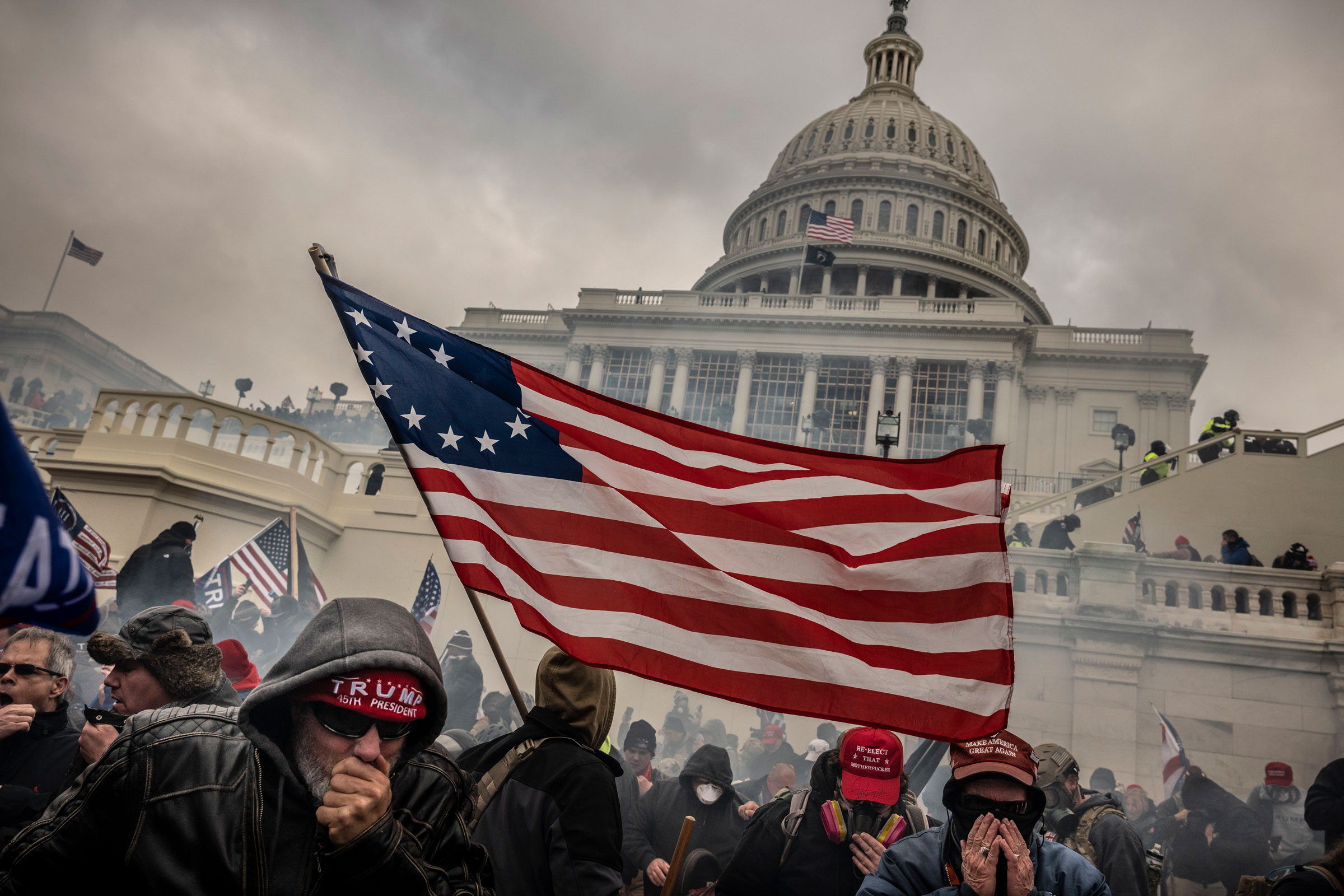
Supporters of President Trump who are trying to overturn the results of the 2020 presidential election clash with police, as the crowd storms up the west side steps of the U.S. Capitol, on Jan. 6, 2021.

On that March Monday in 1861, Lincoln spoke to the ages: “We are not enemies, but friends. We must not be -enemies. Though passion may have strained, it must not break our bonds of affection. The mystic chords of memory, stretching from every battlefield, and patriot grave, to every living heart and hearthstone, all over this broad land, will yet swell the chorus of the Union, when again touched, as surely they will be, by the better angels of our nature.” The words are immortal, as are angels—but Lincoln teaches us even now that those angels will not take up the cause—unless we do too.

Read More: 

Thursday, April 7, 2022

Labor index, April I

Индекс рынка труда — итоги недели


Как изменилась рекрутинговая активность на рынке труда за неделю, рассказывает SuperJob.

HR-активность работодателей на рынке труда составляет 0,93 пункта, что на 7% ниже, чем в среднем за аналогичные периоды 2017—2019 гг. За прошедшую неделю рекрутинговая активность практически не изменилась (минус 1 процентный пункт).

Динамика числа вакансий в различных сегментах рынка труда — самые интересные тренды за неделю
  • Услуги, ремонт, сервисное обслуживание +8%
  • Ритейл +2%
  • Закупки, снабжение +2%
  • Административная работа, секретариат, АХО +2%
  • IT, связь, телекоммуникации 0%
  • Медицина, фармацевтика 0%
  • Маркетинг, реклама, PR 0%
  • Наука, образование, повышение квалификации 0%
  • Строительство, проектирование, недвижимость 0%
  • Банки, инвестиции, лизинг 0%
  • Консалтинг, стратегическое развитие 0%
  • Некоммерческие организации, волонтерство 0%
  • Транспорт, логистика, склад -8%
  • Кадры, управление персоналом -21%
Наибольший прирост количества вакансий за неделю показала сфера услуг: +8% за счет увеличения спроса на работников автосервисов. В ритейле и снабжении вакансий стало больше на 2%. Спрос на сотрудников административно-хозяйственных отделов вырос также на 2% за неделю.

В сфере информационных технологий, связи и телекоммуникаций число вакансий стабильно. Не изменился спрос на медиков и фармацевтов. Количество вакансий для маркетологов, рекламщиков и PR-специалистов примерно то же, что и на прошлой неделе. Стабилен спрос в сфере образования и науки. В строительстве, банковской отрасли и консалтинге количество вакансий не изменилось. Некоммерческим организациям, где спрос на персонал за первый месяц спецоперации упал в 4 раза, за прошедшую неделю удалось сохранить число вакансий.

Из немногочисленных сфер деятельности, показавших отрицательную динамику за неделю, — транспорт, логистика, склад (минус 8% вакансий). В кадровой сфере спрос снизился на 21%.

Подробнее


Sunday, February 27, 2022

A half working remotely before covid has a part-time job

Подработки имеет каждый второй россиянин, который начал работать на удаленке до ковида


Подработки сегодня есть у каждого пятого трудоустроенного россиянина, чаще всего дополнительную занятость имеют те, кто работает на удаленке. В опросе сервиса по поиску высокооплачиваемой работы SuperJob приняли участие 2500 работающих граждан из всех округов страны.

Подработки сегодня имеют 22% россиян. Причем среди опрошенных, работающих на территории работодателя, таковых 21%, среди респондентов, переведенных на удаленку в связи с коронавирусом, — 39%, а среди тех, кто трудится дистанционно на постоянной основе — каждый второй (49%).

Чаще всего подработка занимает у россиян до 10 часов в неделю (65%). 10—20 часов в неделю уделяют дополнительной работе 22%. Доход от подработки у 42% россиян составляет от 10 до 30% от их общего дохода. 3 из 10 россиян дополнительная занятость приносит менее 10% дохода. Те, кто работает на дистанционной основе постоянно, тратят на подработку чуть больше времени и получают от нее большую долю дохода, чем те, кто переведен на удаленку в ковид, и те, кто работает на территории работодателя.

За полгода число россиян, имеющих подработку, практически не изменилось. Однако среднестатистический россиянин стал тратить на нее чуть меньше времени (количество тех, кто уделяет подработке более 20 часов в неделю, сократилось на 6 процентных пунктов), а доля дохода от подработки в личном бюджете, напротив, слегка подросла.


Место проведения опроса: Россия, все округа
Населенных пунктов: 598
Время проведения: 1—25 февраля 2022 года
Исследуемая совокупность: экономически активное население России старше 18 лет, имеющее основную официальную работу
Размер выборки: 2500 респондентов

Tuesday, October 19, 2021

flexibility

ГТО
Работающие мамы ждут от работодателей материальной поддержки, гибкого графика и лояльности к больничным по уходу за ребенком


Владимир Путин на Евразийском женском форуме в Санкт-Петербурге заявил, что женщины не должны выбирать между семьей и профессией, и в России есть все условия, чтобы после рождения ребенка его мама смогла реализовать себя. Сервис по поиску высокооплачиваемой работы SuperJob поинтересовался у работающих матерей, каких мер поддержки им не хватает от работодателя. В открытом опросе приняли участие 500 женщин из всех округов страны, воспитывающих ребенка дошкольного возраста и работающих на постоянной основе.

Материальной поддержки от работодателя не хватает каждой пятой работающей маме (20%). Каждая шестая (16%) хотела бы работать по гибкому графику, чтобы совмещать карьеру и материнство. Дошкольники часто болеют, поэтому 15% опрошенных ждут от организации лояльности в случае необходимости уйти на больничный или отпроситься с работы. Дополнительных дней отпуска или выходных не хватает 13%.

О других мерах поддержки работающие мамы упоминали реже. Так, 5% хотели бы иметь возможность перейти на удаленную работу. Столько же были бы рады, если бы их работодатель периодически проводил детские праздники и мастер-классы, приобретал для детей сотрудников билеты в кино, театры, цирк или зоопарк. 4% респондентов мечтают, чтобы компания организовала детский сад недалеко от офиса. Еще 4% — гарантированного приоритета перед бездетными сотрудниками в предоставлении отпуска. Подарков на Новый год и путевок в детские лагеря и санатории хотели бы по 2%. Другие меры поддержки назвали 6% матерей — в их числе возможность неполной занятости, гарантии сохранения работы при сокращении штата, доплаты к больничному по уходу за ребенком до среднего заработка, возможность переквалификации, оплата обучения и т.д.

Впрочем, по мнению почти каждой пятой работающей мамы (19%), существующих в России мер поддержки достаточно для поддержки материнства и детства. «Мой работодатель меня устраивает, всегда меня идет на встречу в вопросах, касающихся ребенка», — констатируют опрошенные.

Место проведения опроса: Россия, все округа
Населенных пунктов: 161
Время проведения: 23 сентября — 15 октября 2021 года
Исследуемая совокупность: экономически активные женщины, имеющие ребенка/детей дошкольного возраста и постоянную работу
Размер выборки: 500 респондентов

Подробнее

Friday, October 15, 2021

How imperialism, slavery, and war shaped epidemiology

In recent decades, historians have become increasingly attuned to the ways in which empire and imperialism transformed modern conceptions of disease, medicine, and the body. Such scholarship argues that European medical theories were not simply disseminated in imperial territories and that science and medicine should not only be seen as scientific and cultural projects that consolidated imperialism. Instead, the thrust has been to understand how the development of modern ideas of hygiene, sanitation, public health, and disease were themselves produced out of an encounter with empire and subjugated populations. Histories of modern medicine and imperialism therefore, as Pratik Chakrabarti suggests in Medicine and Empire: 1600–1960 (2014), might be best understood as mutually imbricated and constitutive, rather than studied in isolation.

Jim Downs' new book Maladies of Empire: How Colonialism, Slavery, and War Transformed Medicine extends such insights by focusing on the birth of epidemiology as a discipline from the mid-18th century to the mid-19th century. Indeed, Downs' book goes further. Maladies of Empire connects imperialism, enslavement, and warfare to argue that it is at the intersection of these processes that we can trace the beginnings of modern epidemiological thinking. His main thesis is that it was the bodies of people who were enslaved and dispossessed across the globe that were used to study the distribution, spread, and control of diseases. As Downs writes in his introduction: “part of the origin story of epidemiology has been overlooked because it resulted from studying people who suffered from war, enslavement, and imperialism—most of whom were people of color—in Africa, the Caribbean, India, and the Middle East”.

The interior of the Brookes, which shows how enslaved Africans were packed into the hold

Downs' work is first and foremost an effort to decentre our understanding of the origins of epidemiology. Rather than focus on European or American cities or locate the foundations of epidemiology in John Snow's work on mapping cholera transmission in mid-19th-century London, UK, Downs examines how white (predominantly but not exclusively male) physicians, surgeons, and other medical personnel made use of the possibilities opened by empire, war, and slavery to study patterns of disease in the dispossessed. Maladies of Empire shows how expanding imperial frontiers and military engagements across the world enabled the creation of large bureaucracies and the concomitant collection and transmission of data on the spread of diseases in subjugated populations. Downs is at pains to stress that his story is not about the accuracy of early epidemiological theories, but the methods that accompanied them. Doctors became “investigators”, exploring and learning about how the physical and natural world influenced the cause of diseases and their spread. The records they kept show that interviews were used as a form of disease investigation and tracing and early forms of disease “mapping” included a reliance on written narratives to track the spread of disease. All of this information grew out of a study of captive and subjugated populations, in prisons, on slave ships, plantations, and in military hospitals.

To take an example, in his intriguing and yet equally disturbing account of smallpox, Downs examines how enslaved children were used to cultivate smallpox vaccine during the US Civil War in the 1860s. The war created difficulties in producing vaccine and although physicians initially obtained material from vaccinated soldiers, they encountered complications such as the inadvertent transmission of diseases like syphilis and looked for new sources to harvest vaccine matter. Slavery remained in place in Confederate states and the bodies of Black infants and children were exploited for this purpose. As Downs writes: “From an epidemiological perspective, slavery created an unprecedented built environment that confined hundreds of Black children to plantations where they could easily be targeted as objects to be used to produce vaccine material and then to be studied.” Thus, slavery and war provided opportunities to learn about the effects of vaccination and develop theories of disease transmission, all at the expense of enslaved and subjugated populations, including their children.

Downs' account is animated by the question of agency and the challenges posed for historians in reconstructing the voices of the subjugated. For example, he writes of James Ormiston McWilliam, the Scottish naval surgeon who went to Boa Vista, Cape Verde, in 1845 looking for evidence to explain the outbreak of yellow fever that occurred after the arrival of the British ship HMS Eclair. McWilliam interviewed those who survived the disease, including enslaved Africans, Black soldiers, labourers, and washerwomen, for the purpose. Their accounts provided him with knowledge of how and when the fever spread and he went on to argue—based on his understanding that yellow fever was contagious—that the Eclair did bring the disease to the island. Yet, Downs is rightly attentive to unequal power relations that characterised this process. He writes that the voices of those subjugated and marginalised and their contribution to the understanding of disease transmission are only made available to us through McWilliam's questionnaire and the format of his interview. As he explains, there exists “no opportunity to capture a crack in the voice, a momentary silence, tears in the eyes, a disruption in the narrative”. This broader point that the creation of epidemiological knowledge was simultaneously a process of elision of the voices of the subjugated is made persuasively throughout the book and Downs does well to recognise both the possibilities and limitations of the extensive archives he uncovers.

Another issue that warrants attention in Downs' account is the transformation of race and racialised understandings of disease. Downs argues that British epidemiologists during this period began challenging long held assumptions that infectious diseases resulted from tropical climates and foreign environments. The Victorian reformer Florence Nightingale, whose “vast archive of publications makes a powerful case for her role as an epidemiologist” argues Downs, believed that the built environment in places such as India was a source of infectious diseases. If racist stereotypes of India as filthy were ubiquitous in her accounts, Downs contends Nightingale also saw these conditions “less a result of innate inferiority than as a product of circumstances that could be altered”. In other words, the circumstances that Indians found themselves could be changed with proper sanitary management.

Interestingly, Downs suggests that we might see a difference between British epidemiological thinking and ideas that developed in America, where “scientific racism became a metric for studying infectious disease”. For example, Union Army doctors affiliated with the US Sanitary Commission (USSC), which was created during the US Civil War, were of the opinion that the source of disease lay in the patient. Downs discusses the work of doctors such as Ira Russell who used the networks created by the USSC to develop and promote their racialised ideas of disease transmission by observing large groups of Black soldiers and by carrying out autopsies on the bodies of Black people. One argument voiced was that Black soldiers were more susceptible to pulmonary diseases such as tuberculosis because of their supposedly “weak” lungs. “By arguing that weak lungs caused high mortality among Black troops, rather than the inadequate housing, clothing, and other conditions that defined Black soldiers' experience during the war, physicians blamed the Black troops themselves for their pulmonary problems”, Downs writes. Because of the medical authority of the USSC, such racialised theories of disease and Black inferiority gained scientific credibility after the war. Indeed, Downs goes further and suggests that the USSC'S insistence on racialised data collection is one of the reasons why epidemiologists and public health specialists create statistics that classify human beings into racial categories to understand the spread of diseases. While Downs' narrative focuses on the differences between the British and American epidemiological underpinnings, historians may question the divide he presents. Given that race and sanitary environments were intertwined in medical discussions even within British circles at the time, the differences between the two camps are perhaps overstated in his account.

Nevertheless, Maladies of Empire is a powerful and timely reminder that the advancement of medical knowledge about infectious diseases could not have been possible without the suffering of people of colour. Not only does such a narrative shed light on the violent foundations of disease control interventions and public health initiatives, but it also implores us to address their inequities in the present. At a time when low-income and middle-income countries struggle for access to vaccines in the COVID-19 pandemic, such an endeavour could not be more urgent.

Raghav Kishore

Published: October 16, 2021  DOI:https://doi.org/10.1016/S0140-6736(21)02216-9

Monday, June 28, 2021

Juneteenth

Juneteenth Isn't Just a Celebration of the End of Slavery. We Also Honor the Black Americans Who Helped Create Their Own Freedom

A mural in Galveston, Texas, marks the spot where General Order No. 3 was issued Montinique Monroe

BY JANELL ROSS
JUNE 16, 2021 10:10 AM EDT
Janell Ross is the senior correspondent on race and identities for TIME.

If you ask Black people born and raised on the island, Juneteenth marks the day Black soldiers in blue uniforms came with their guns to Galveston. That is the story they have told for generations, about the moment some of their ancestors knew freedom had finally arrived in Texas, the westernmost Confederate breakaway state.

That’s the truth as it’s widely understood by Black people in Galveston, even if the common story of that day often focuses on a single white man: General Gordon Granger, who led Union troops to the harbor there on June 17, 1865. Two days later, records in the National Archives tell us, he issued what’s known as General Order No. 3.

In doing so, Granger laid out the meaning of freedom more explicitly than any U.S. government official had to that date, says Robert C. Conner, author of General Gordon Granger: The Savior of Chickamauga and the Man Behind “Juneteenth.” The order declared “absolute equality of personal rights and rights of property between former masters and slaves.” As word spread, so did jubilation, shock, religious awe and anger.

Declaring freedom and creating it are two different things, as Deborah Evans, secretary and director of communications with the National Juneteenth Observance Foundation, tells me. After all, Granger was there because, though the Emancipation Proclamation had liberated the enslaved in the Confederate states, slaveholders in places like faraway Texas still clung to the idea that U.S. law didn’t apply to them.

Among the Black and white troops who came to Galveston to enforce the Union’s dictates was William Costley, who with his two sisters and mother had been the first enslaved people freed by a then newly minted lawyer named Abraham Lincoln in 1841. The KKK would try to burn certain records of that case, and portions of his service records went up in flames, thanks to another KKK faction. Costley himself was likely illiterate, says Carl Adams, who wrote the book Nance about Costley’s mother’s fight for freedom. Whatever the young soldier felt in Texas has, like so much that happens to those whose lives are not thought worth recording, been lost.

The story of William Costley, the baby freed by Lincoln who grew up to set others free, like the story of Juneteenth, cannot be told fully without oral tradition. Yes, newspaper accounts of organized Black public revelry—and white enmity—survive. But so too, in some circles, have folk stories attesting that some of the Black soldiers in Galveston that day changed history by insisting that Granger make clear the freedom of those still enslaved. If he didn’t do it, the story goes, they would do it themselves.

My grandmother’s grandmother was a child made free that June day—however it happened. But Black people have always been involved in the fight to make our own American lives, demanding something of the country that stole so much from us. That fact is, by folktale and firm record, key to the Juneteenth story.

Last year, Juneteenth came to an America awakened to racial injustice, prompting new groups to recognize a holiday heretofore celebrated mostly by Black people with Texas connections. This year, it’s a reminder of the fight.

A Senate bill to make Juneteenth a federal holiday failed in 2020 by one vote. On Tuesday, a similar bill was passed by the Senate; it is likely to be passed by the House. Among those Senators who cast their votes was Jon Ossoff, a Georgia Democrat whose election this year helped flip the Senate. His victory has been widely attributed to the organizing power and electoral force of the Black vote.

Two days after that first Juneteenth, the New York Herald published a dispatch from Macon, Ga., whose white citizens finally saw that “slavery is dead and nothing remains but to bury its carcase [sic].” Abraham Lincoln was gone by then, but he probably would have liked General Order No. 3 for making a national reality plain and involving in its delivery the Black troops he praised, says David S. Reynolds, author of Abe: Abraham Lincoln in His Times.

For those whose Juneteenth story does not put Black people at its center, consider that there is no evidence that Granger ever spoke about his role in freeing Texas’ estimated 250,000 slaves. But Black people have kept telling the story—and each time that happens, Juneteenth is created anew.

—The View is reported by Mariah Espada and Simmone Shah

Tuesday, June 8, 2021

Workers Reluctant to Return to the Workplace

As Apple is kicking off its annual Worldwide Developers Conference (WWDC) on Monday, the company is dealing with a little trouble on the home front. Following the company’s internal announcement of its post-pandemic remote work policy, a group of employees has pushed back against the planned return to offices. In an email published by The Verge, Tim Cook had asked employees to come into the office Mondays, Tuesdays, and Thursdays starting in September, giving them the option to continue working remotely on Wednesdays and Fridays.

“I know I’m not alone in missing the hum of activity, the energy, creativity, and collaboration of our in-person meetings and the sense of community we’ve all built,” Cook wrote, but as it turns out, some of his employees aren’t quite as eager to return to their lavish new offices as the company’s leadership appears to assume. In a letter to Tim Cook and Executive Leadership, a group of employees organized in a Slack channel with 2,800 members addressed “a growing concern among our colleagues” with respect to the company’s remote/location-flexible work policy. “Over the last year we often felt not just unheard, but at times actively ignored,” the letter reads, arguing that many employees have felt enabled to do “the work of their lives, unconstrained by the challenges that daily commute to offices and in-person co-located offices themselves inevitably impose.”

It’s interesting to see that such sentiments exist even at a company like Apple, which has only just moved into its new multi-billion-dollar headquarters, where many people would love to work. It is, however, illustrative of a broader trend that has emerged over the past few months, namely a reluctance among workers to give up location flexible work after the pandemic. According to a survey conducted by YouGov earlier this year, 80 percent of Americans who started working from home during the pandemic want to continue doing so at least half the time when the pandemic is over. While 24 percent of those workers would like to work from home full-time, 37 percent would prefer a model that leaves them the option to come into the office occasionally. Apple’s suggested model, i.e. working in the office most of the time, with the option to work remotely some days, is only preferred by 12 percent of those that shifted to remote work over the past year.Infographic: Remote Workers Reluctant to Return to the Workplace | Statista

Monday, April 26, 2021

How Productive is an Hour of Work?

Figures from the OECD reveal the countries in which the average hour of work contributes the most to GDP. As our infographic shows, no matter how hard the average worker in Mexico works, they won't be as productive (in GDP terms) as the average person toiling away in Ireland. An average hour's work in the North American country contributed $20.3 to the economy while in Ireland this contribution is on average $102.7.Infographic: How Productive is an Hour of Work? | Statista
Хуже, чем в Греции, но лучше, чем в Мексике.

Tuesday, December 29, 2020

Putin and a delicate thing

путен

Путин призвал рассмотреть вопрос индексации пенсий работающих пенсионеров

МОСКВА, 29 дек - РИА Новости. Президент РФ Владимир Путин согласился со словами главы Федерации независимых профсоюзов России (ФНПР) Михаилом Шмаковым о необходимости вернуться к вопросу об индексации пенсий работающих пенсионеров.
На встрече с главой государства Шмаков отметил, что в ФНПР с самого начала считали неправильным принятое в 2016 году решение приостановить индексацию пенсий этой категории россиян.

"Понятно, что там начисляются потом, возможно, какие-то компенсационные коэффициенты и так далее. Тем не менее они не покрывают, по мнению самих пенсионеров, которые рассчитывают, естественно, все свои доходы, тех потерь, которые они получают. Во-вторых, это решение привело к прекращению работы многими пенсионерами, которые до этого продолжали ещё работать, оставаясь на пенсии", - отметил глава ФНПР.

По его словам, работающие пенсионеры платят взносы и в Пенсионный фонд, поэтому если на первом этапе выигрыш государства составил 70 миллиардов рублей, после их увольнения бюджет потерял порядка 500 миллиардов. Шмаков отметил, что эта тема поднималась президентом на совещании по социальным вопросам с партиями, однако правительство ответило, что не будет к ней возвращаться.

"Я считаю, что стоило бы к этому возвратиться. Может быть, на эту тему тоже надо более активно дать поручение правительству, чтобы оно внимательно просмотрело этот вопрос. Потому что это фактически ведь нарушение конституции. Сейчас у нас в конституции написано о том, что (предусмотрена) регулярная индексация пенсий. Там не написано каких – работающих пенсионеров, неработающих пенсионеров, – там просто: индексация пенсий. Если человек свою пенсию заработал, заслужил её тем, что он на протяжении длительного времени вносил взнос в Пенсионный фонд, то дальше никакой дискриминации тоже не должно быть", - считает Шмаков.

Путин заметил на это: "Там скажут, что она индексируется, а на самом деле не выплачивается сейчас, пока работают".

"Но, тем не менее, вы правы абсолютно в том, что это вопрос, который требует дополнительного рассмотрения", - добавил глава государства.

По мнению Шмакова, к вопросу об индексации надо подойти серьезно, это снимет возникающее недоверие и напряжение. Президент в свою очередь отметил, что в вопросе есть элементы несправедливости, связанные с недостаточной индексацией.
"Если затрагивать это, если так уж, технически, говорить, то это будет ещё более затратно. Если индексировать, это потянет за собой, так сказать, изменение вообще всего подхода к пенсионному делу. Может быть, по пенсиям тоже стоит продолжить", - обратил внимание глава ФНПР.

Он также добавил, что не завершены основные направления развития пенсионной системы. По его мнению, надо продолжить дискуссии о совершенствовании пенсионной системы, так как сегодня есть разные категории занятых, которым нужно делать разные, но сопрягаемые пенсионные системы.

"Здесь очень тонкая вещь, надо, чтобы специалисты продолжили работу над этой сложной темой", - подытожил Шмаков.

Thursday, August 22, 2019

there is literally no one to work

4 дня
Медведев поставил перед Минтрудом вопрос о 4-дневной рабочей неделе
Минтруд должен оценить влияние возможного введения четырехдневной рабочей недели на производительность труда и социальную сферу. О том, что в будущем рабочая неделя может сократиться, ранее говорил Дмитрий Медведев

Минтруд должен до 30 сентября представить в правительство свою позицию о перспективах введения в России четырехдневной рабочей недели, пишут «Известия» со ссылкой на перечень поручений, данных премьер-министром Дмитрием Медведевым по итогам выступления на Международной конференции труда в Женеве.

В документе говорится, что чиновники должны оценить влияние четырехдневной недели на экономику, в том числе на производительность труда и социальную сферу. Работа будет проводиться совместно с Федерацией независимых профсоюзов России (ФНПР) и Российским союзом промышленников и предпринимателей.

В июне Медведев, выступая на конференции труда в Женеве, выразил мнение, что в будущем технологический прогресс приведет к сокращению рабочей недели до четырех дней. В экономике сократятся рабочие места и рабочее время, а у людей расширится досуг, указывал он. «Речь идет о более лояльной организации рабочего времени: гибкие графики, дистанционные форматы, вызов сотрудников по мере необходимости», — отметил российский премьер.

Медведев упомянул опыт американского предпринимателя и основателя Ford Генри Форда, который сократил рабочую неделю своим сотрудникам с 48 до 40 часов, что привело к росту производительности труда. Вице-премьер Татьяна Голикова отмечала, что на первое место в этой теме встает вопрос социальных гарантий граждан и размера зарплат.

Позднее в пресс-службе Минтруда говорили РБК, что на российских предприятиях уже сейчас можно вводить сокращенную рабочую неделю, поскольку законодательству это не противоречит. В ведомстве отметили, что Трудовой кодекс ограничивает максимальную продолжительность рабочей недели (не более 40 часов), однако нижней границы не существует.

Опрос ВЦИОМа показал, что почти половина россиян (48%) не поддерживают идею о сокращении рабочей недели, поскольку боятся потерять в деньгах.

РБК

буквально некому работать — мотифф пенсионной реформы

Friday, August 2, 2019

career or family

career or family
TASS July 31, 2019

Almost 70% of Russians prefer career to family, the survey reveals


MOSCOW, July 31. /TASS/. A recent survey has revealed that about 68% of Russians are ready to devote less time to their families in order to focus more on their career advancement and almost quarter of the respondent believes that career and family are incompatible.

The survey was conducted by the Zarplata.ru headhunting portal.

"The survey showed that 68% of Russians are willing to spend less time on their family if this entails career growth and a salary increase. Six percent are ready to forget about their relatives even without these factors - their work experience is more important for them anyway. However, a quarter of respondents said that family is a priority for them," the press service of the portal told TASS commenting the results of the survey.

Almost a quarter of respondents believe that career and family are incompatible. About 42% of respondents said they had to abandon family pastime because of their work.

The percentage of women, who are not ready to devote more time to their career turned out to be slightly higher than the percentage of men - 27% against 24%. Nevertheless, the majority of the women (67%) would agree to sacrifice the time they spend with their families to pursue their careers, professional advancement, and high wages. The percentage of Russian men among such people is 72%.

According to the survey, 31% of Russians consider themselves careerists. Only 14% of the country's residents believe that building a career and spending a lot of time with the family at the same time is quite realistic. According to 61% of respondent, combining these two activities is a very difficult task, and 25% of respondents found it impossible. More than half of the respondents (53%) admitted that they are familiar with family broke-ups because of career ambitions.

The survey was conducted from July 16 to July 29, 2019 among 9,060 citizens over 18 years old throughout Russia.

Monday, March 4, 2019

Women Work More Than Men

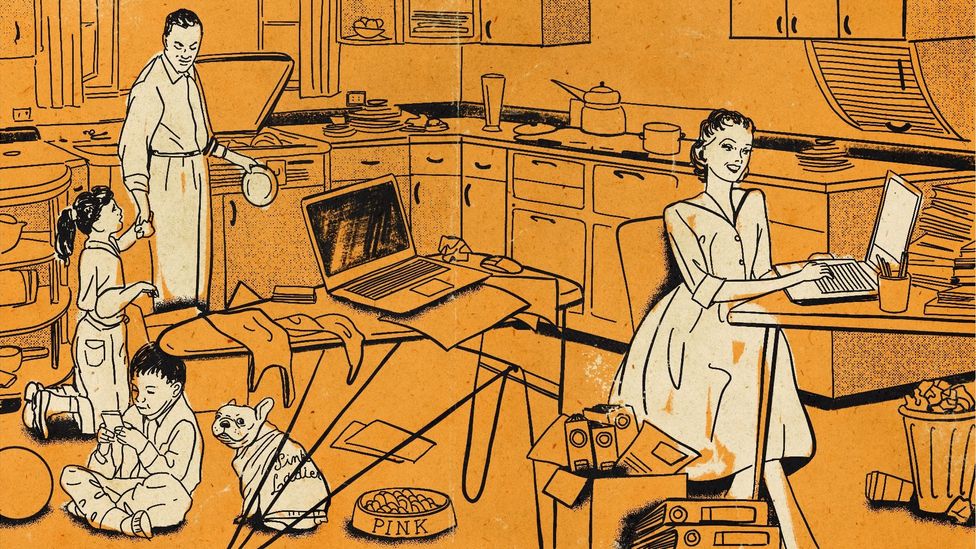
Traditionally in most cultures, it is the man which would spend the most hours each day at work and, as analysis from MenCare's 'State of the World's Fathers' report shows, this is still generally the case in most parts of the world. There can though, be a difference between being 'at work' and 'working'. For many people, 'working' doesn't entail going to the office or the factory, but staying at home or in the local community as a caregiver. This kind of work doesn't usually come with a financial benefit, of course, and according to the UN this unpaid care can include "meal preparation, cleaning, washing clothes, water and fuel collection and direct care of persons (including children, older persons, persons with disabilities, as well as able-bodied adults)".

As this infographic shows, it is the world's women that are putting in the largest amount of these unpaid hours and in every region, the total amount of time spent working, paid or unpaid, is higher for women than it is for men. With the exception of East Asia & the Pacific, where it is an almost 50:50 split, the majority of women's time spent working is unpaid.
Infographic: Women Work More Than Men | Statista